You started a symptom journal with great intentions. Maybe it was a dedicated health app, a notes file, a spreadsheet. Two weeks in, you skipped a day. Then three. Then you stopped opening it entirely. The problem almost never is motivation — it's friction. The tool asked too much of you at the exact moments you felt worst.
A good symptom tracker should do one thing above all else: get out of your way. It should be fast to open, fast to log, and fast to review when you're sitting in a doctor's office trying to remember whether that headache was Tuesday or Thursday. What follows is an honest look at what makes symptom tracking actually work, why most tools fail, and how TaskLoco's sticky-note approach fixes the core problem without adding new ones.
What to Look for in a Symptom Tracker
Before any app enters the picture, it helps to define what actually makes symptom tracking succeed or fail. Most people who abandon health logs do so for the same three reasons: logging takes too long, they forget to do it, or they can't find the entries when they need them. A good tracker solves all three — and nothing else matters nearly as much.
1. Speed of entry. On a bad symptom day, you are not going to fill out a multi-field form. You need to open something, write a sentence or two, attach a photo if you want, and close it. If that takes more than 30 seconds, it won't happen on the days that matter most. Look for a tool with minimal interface — the fewer taps between you and a blank entry, the better.
2. Reliable reminders. Consistent logging is the whole point. A tracker without reminders is a journal that depends entirely on willpower. The reminder needs to reach you — as a push notification on your phone or computer — and it needs to take you directly to the right place so you aren't hunting around once you get there.
3. Reviewability. Your symptom log is only valuable if you can make sense of it later. That means some form of calendar or timeline view, the ability to attach files like lab results or photos, and search that actually works. A wall of undated text entries is nearly impossible to present to a clinician. Organized, dated, searchable entries are immediately useful.
Why Dedicated Health Apps Keep Getting Abandoned
There are dozens of apps built specifically for symptom tracking. Most of them are genuinely thoughtful pieces of software. They have rating scales for pain levels, dropdown menus for symptom categories, trend graphs, and export-to-PDF features for your physician. And most people who download them stop using them within a month.
The pattern is consistent: the apps are optimized for the data they want to collect, not for the person doing the collecting. When you feel fine, filling out a structured form feels productive. When you're exhausted or in pain, every extra tap is a barrier. You end up with a beautifully structured dataset that covers only your good days — which is the opposite of what you need.
There's also the context problem. Symptoms don't happen in isolation. You want to note that you had that headache the same week you started the new medication, or that the fatigue hit right after you posted a stressful work deadline. Structured apps often don't have a good place for that kind of context. You're forced to choose a symptom from a list rather than describe what actually happened.
The other failure mode is app switching. Many people try to track symptoms in a notes app, reminders in a calendar app, and lab results in email. Nothing connects. When the appointment comes, you're piecing it together from three places under pressure.
How TaskLoco Works as a Symptom Tracker
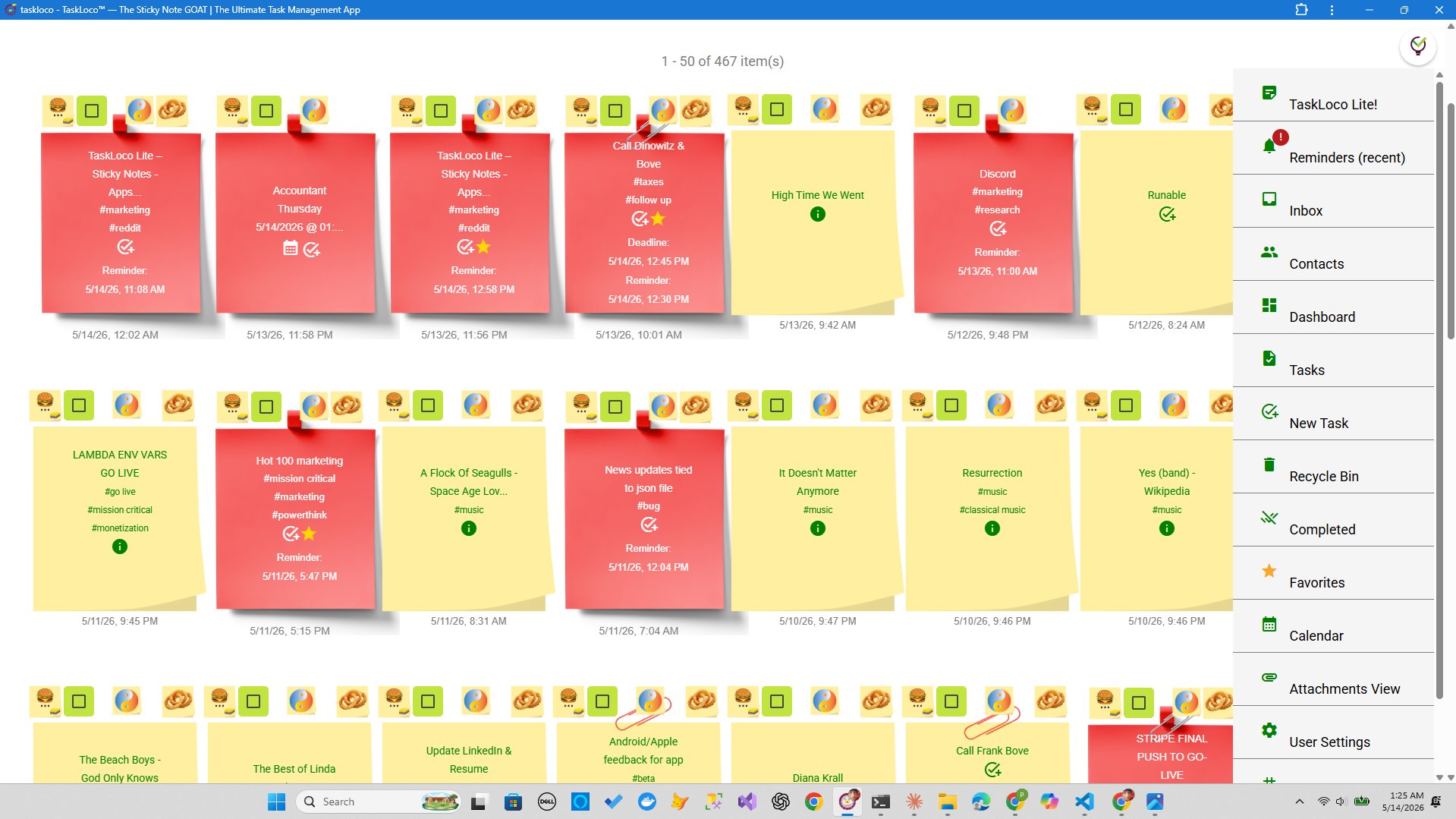
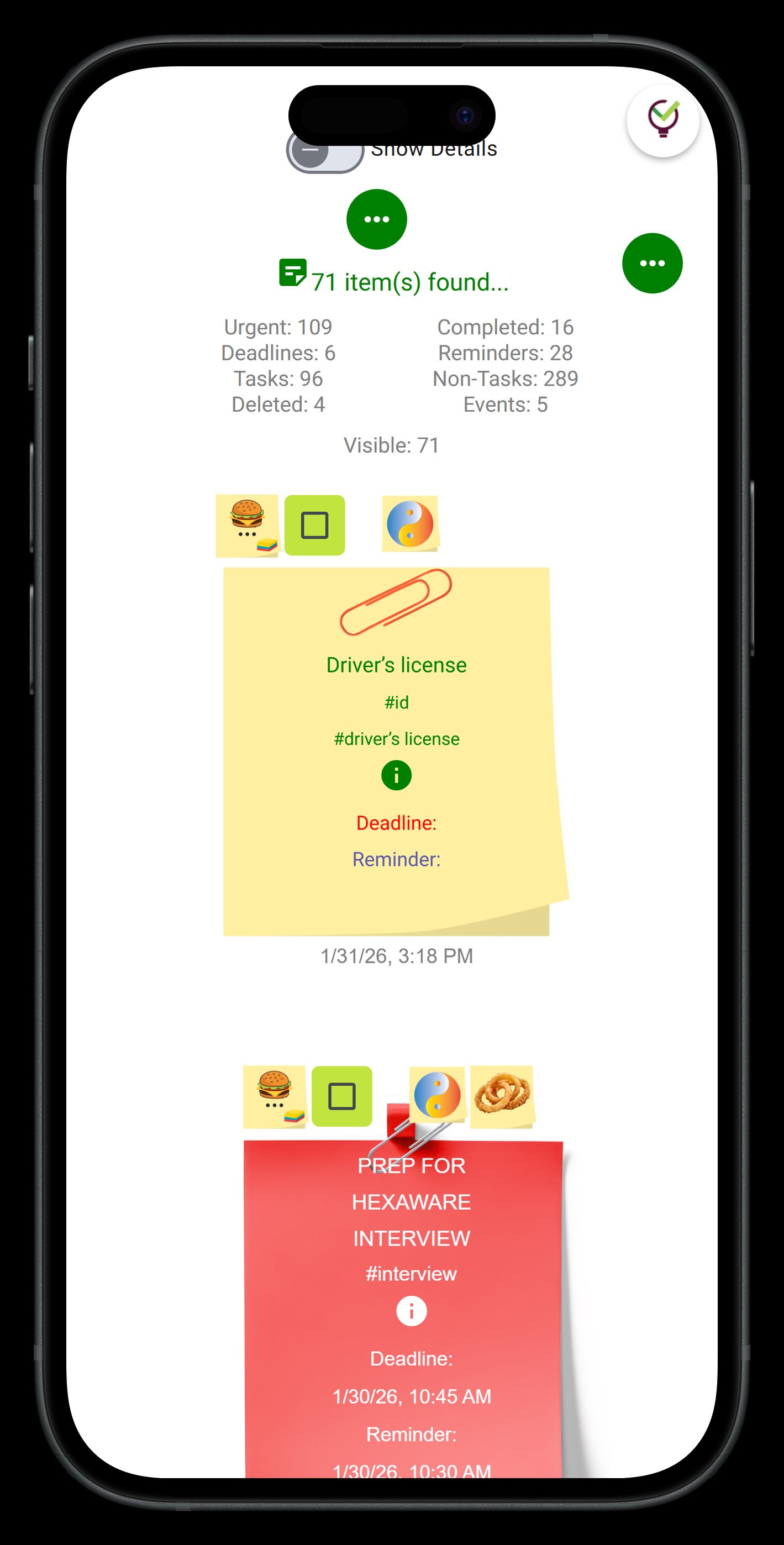
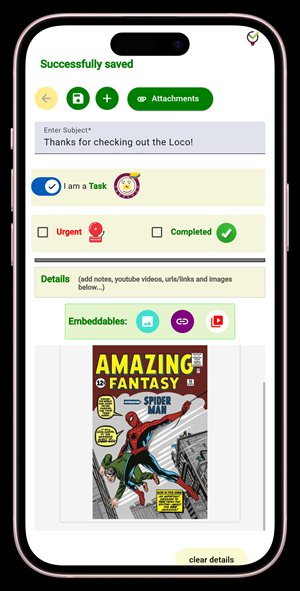
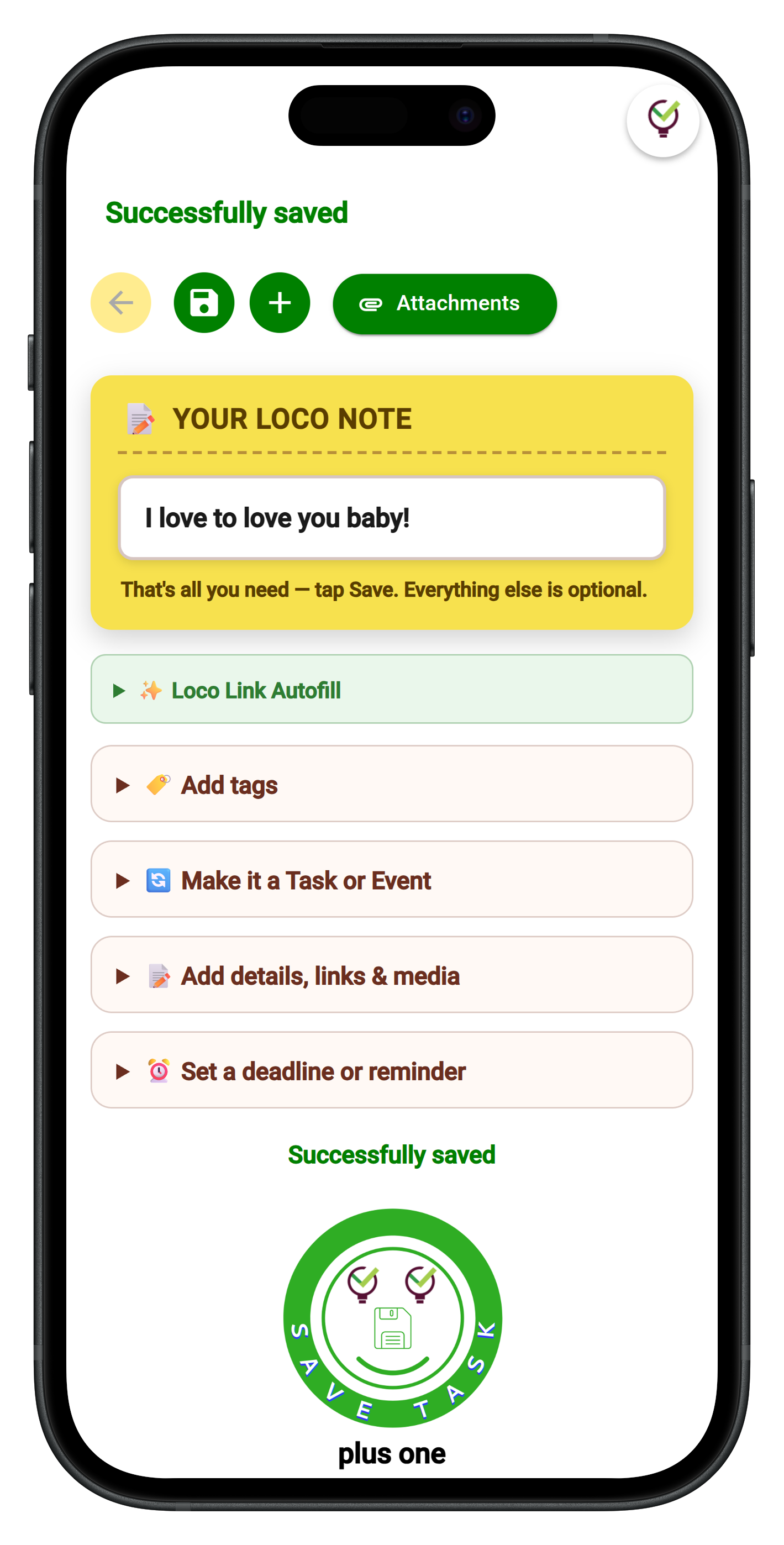
TaskLoco was built around sticky notes — the fastest, most natural unit of personal information that exists. You open a note, write what happened, add a file if you have one, set a reminder, and close it. That's the whole flow. On a rough day, that takes under a minute. On a better day, you can add more context, attach a photo of a rash or a lab result PDF, and tag it for easy searching later.
The reminder system is where TaskLoco earns its place in a health routine. Set a daily reminder at whatever time works for you — say, 9 PM — and it fires as a push notification to your phone and your computer. Tap it, and it deep-links directly back to that note. You're not dropped on a home screen hunting for the right entry. You land exactly where you need to be. Optional email notifications are available, and there's an optional SMS add-on as well, but the push notification is the core — it's fast, it's reliable, and it removes every possible excuse for skipping a day.
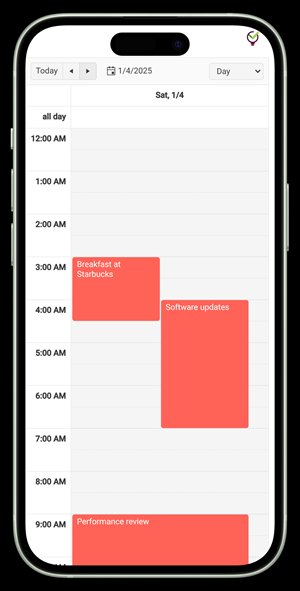
The calendar view in TaskLoco Premium lets you see your entries by date, which is exactly what you need when you're trying to reconstruct a timeline for a medical appointment. You can look at the week your symptoms spiked and see what notes you created, what files you attached, what reminders fired. It becomes a genuine medical log rather than a scattered pile of text.
File attachments are included with Premium — 10GB of storage. That's enough for years of lab result PDFs, prescription photos, imaging reports, and anything else your care team sends you. You don't need a separate folder or email search. The relevant file lives on the same note as the entry it belongs to.
Building a Symptom Log That Actually Holds Up
The practical setup takes about five minutes. Create a note for each symptom area you're tracking — one for pain levels, one for sleep, one for medication side effects, whatever fits your situation. Or go chronological and create a new note each day with the date in the title. Either approach works. TaskLoco's full-text search means you'll be able to find any entry regardless of how you organize it.
Set your daily reminder on whichever note you want to land on. When the push notification fires, you're one tap away from logging. If you want to attach a file — a photo from a dermatology visit, a PDF your pharmacist sent, a screenshot of a blood pressure reading — drag it in or tap to attach. It's stored directly on that note, not somewhere else that you'll have to remember.
When appointment day comes, open the calendar view and scroll to the period your doctor is asking about. You can walk through your entries in chronological order, show attached files, and give a coherent account of what happened and when. That's the whole point of keeping the log in the first place — and it's the part that most tracking systems fail to deliver because the data ends up scattered or structured in a way that's hard to explain out loud.
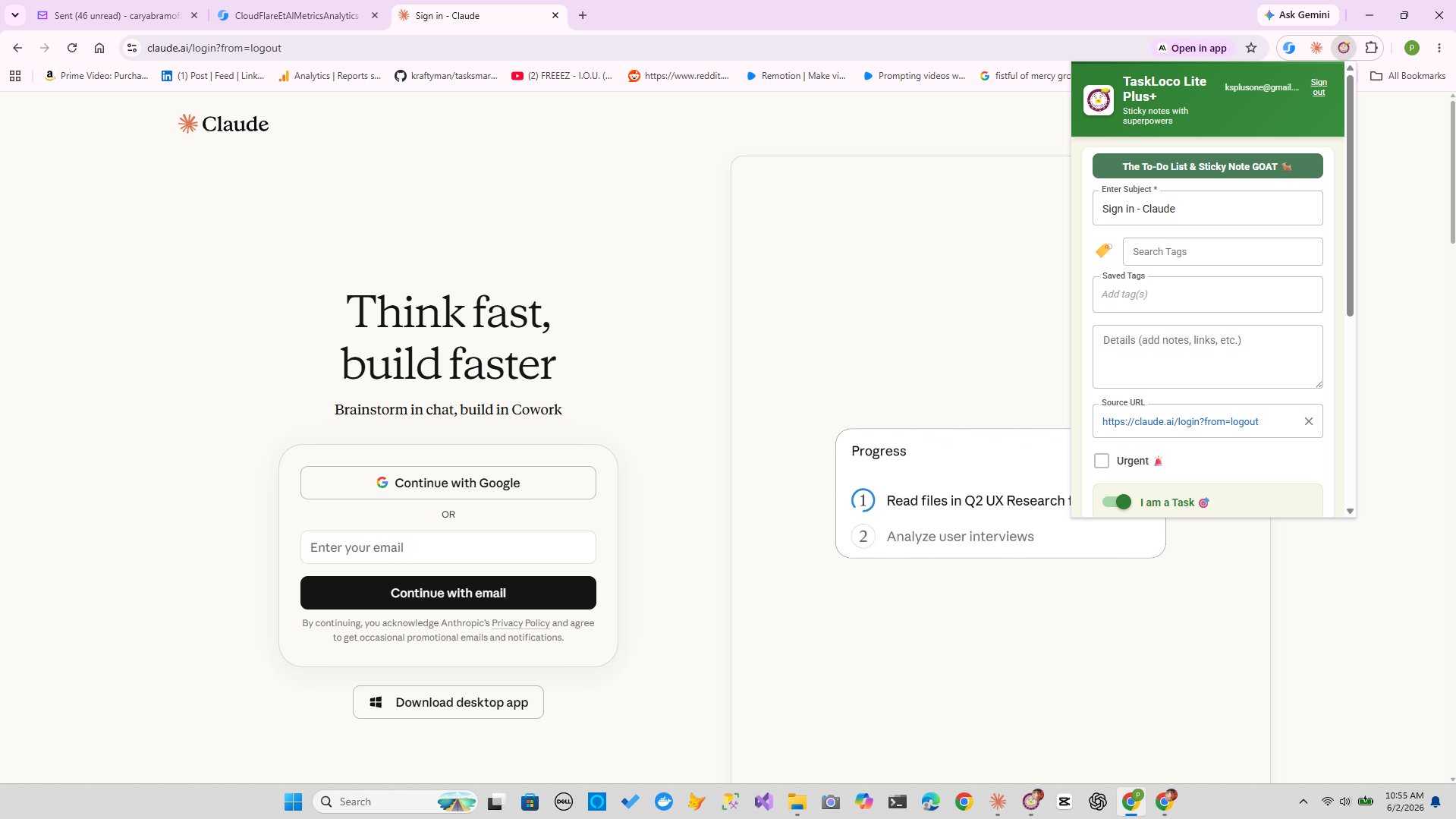
TaskLoco Lite Plus+ is free and syncs across your devices through the browser, which covers basic note-taking across phone and desktop. But for daily symptom tracking you'll want TaskLoco Premium: reminders, file attachments, calendar view, and unlimited notes. The free 7-day trial gives you the full experience before you commit to anything.
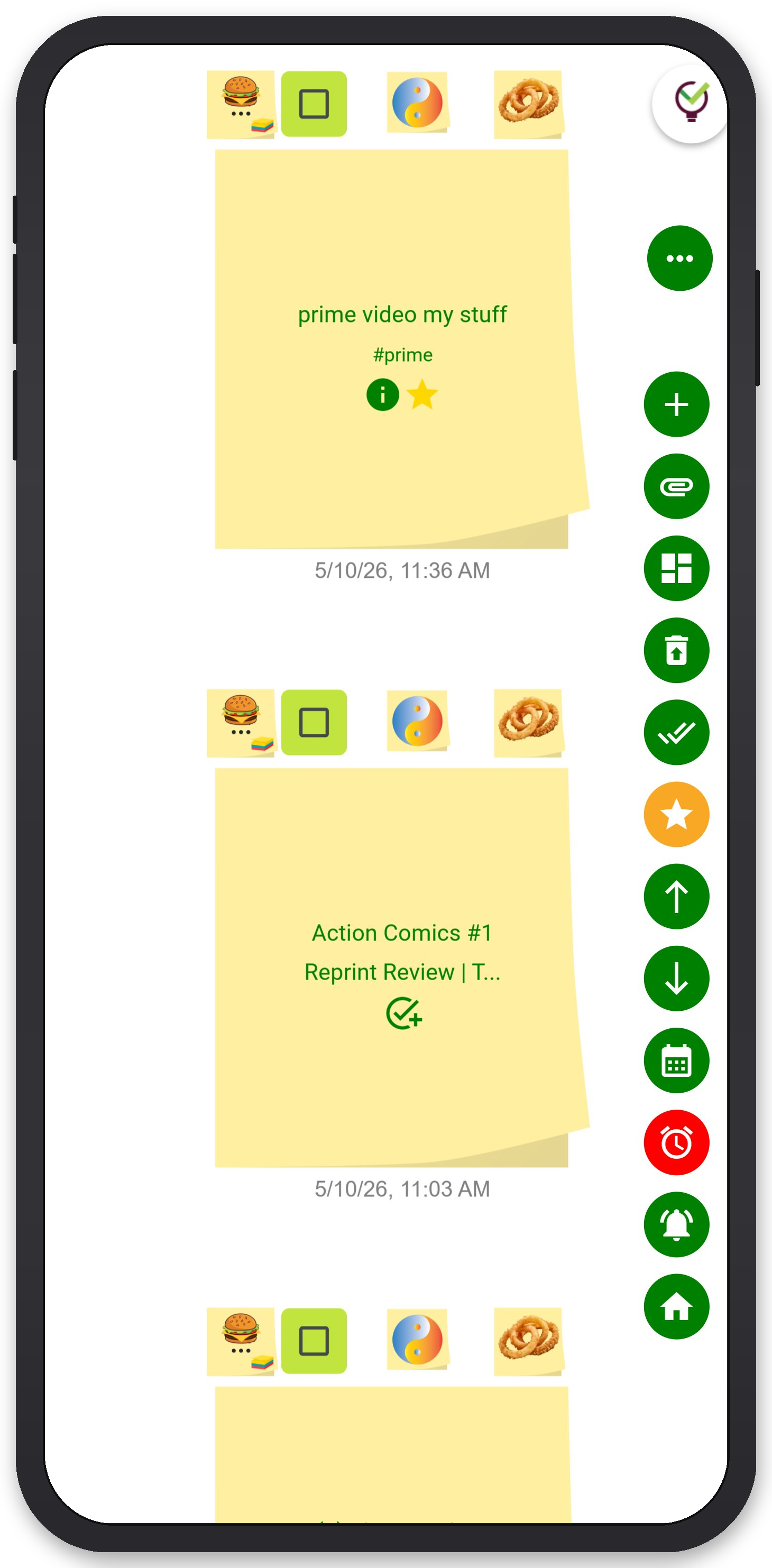
TaskLoco Premium is regularly $9.99/month per person. Right now, charter members can lock in 50% off the regular price — forever. That means $4.99/month per person today. And if our price ever goes up, you still pay half. Always.
Code CHARTER50 auto-applies at checkout. First 500 spots only — once they're gone, this offer is gone permanently. Act fast while spots last.
Every Premium subscription includes unlimited notes, 10GB file storage, reminders, calendar, and team sharing. Each team member requires a separate subscription. 7-day free trial — no charge until day 8. Cancel anytime.
Free Options: TaskLoco
TaskLoco Lite
- Native iPhone & Android app
- Completely anonymous — no sign-in
- Data stays on your device
- Up to 20 notes
- Free forever
TaskLoco Lite Plus+
- Web app + Chrome extension
- Sign in with Google
- Wall syncs across all devices
- Up to 30 notes
- Free forever
Lock In 50% Off — Forever
7-day free trial. No charge until day 8. CHARTER50 auto-applies at checkout.
🔒 Lock In My Charter SpotSee TaskLoco in Action
Frequently Asked Questions
Can I use TaskLoco as a daily symptom journal?
Yes — it's one of the most natural fits for the format. Create a note per day or per symptom category, write freely, attach files like lab results or photos, and set a daily reminder that deep-links you right back to the note. The calendar view in Premium lets you review entries by date, which is exactly what you need for medical appointments.
How does the reminder system work for daily logging?
TaskLoco reminders fire as push notifications to your phone and your computer. Tap the notification and you're taken directly back to the specific note — no hunting around. Optional email notifications are also available, and there's an optional SMS add-on. The push notification is the core mechanism, and the deep-link is the reason it actually works for daily habits.
Can I attach lab results and medical documents to my notes?
Yes. TaskLoco Premium includes 10GB of file storage. You can attach PDFs, photos, screenshots, or any other file type directly to a note. The file lives with the entry it belongs to — not in a separate folder you have to remember to check. Additional storage tiers (50GB, 200GB, 1TB) are available as stackable add-ons.
What's the difference between TaskLoco Lite, Lite Plus+, and Premium for health tracking?
TaskLoco Lite is a free native iPhone and Android app — anonymous, no sign-in, up to 20 notes stored only on your device, no reminders, no attachments, no sync. It can work for very casual logging but lacks everything you need for serious symptom tracking. Lite Plus+ is a free web app that syncs across devices and holds up to 30 notes, but still no reminders and no file attachments. TaskLoco Premium is the right tier for symptom tracking: unlimited notes, reminders with push notifications, 10GB file storage, and a calendar view. It runs as a web app on mobile through your browser and includes a 7-day free trial.
What is the pricing for TaskLoco Premium?
$9.99/month per person (currently $4.99/month per person for first 500 charter members with code CHARTER50)
Is there a way to review my symptom history by date?
Yes — TaskLoco Premium includes a calendar view that displays your notes and entries by date. When you need to reconstruct a timeline for a doctor's appointment, you can scroll through the calendar and see exactly what you logged and when. Combined with full-text search across all your notes and attachments, finding a specific entry from weeks ago takes seconds.
Do I need to create an account to start using TaskLoco?
It depends on which version you use. TaskLoco Lite — the native iPhone and Android app — requires no account and no sign-in at all. It's completely anonymous and stores notes only on your device. Lite Plus+ and Premium require a Google sign-in and run as web apps. If you want reminders, file attachments, and calendar view for real symptom tracking, Premium is what you need, and you can try it free for 7 days.
Born in Brooklyn. Powered by AWS. Your data stays yours.
TaskLoco is available on iPhone, Android, Chrome, and every web browser.