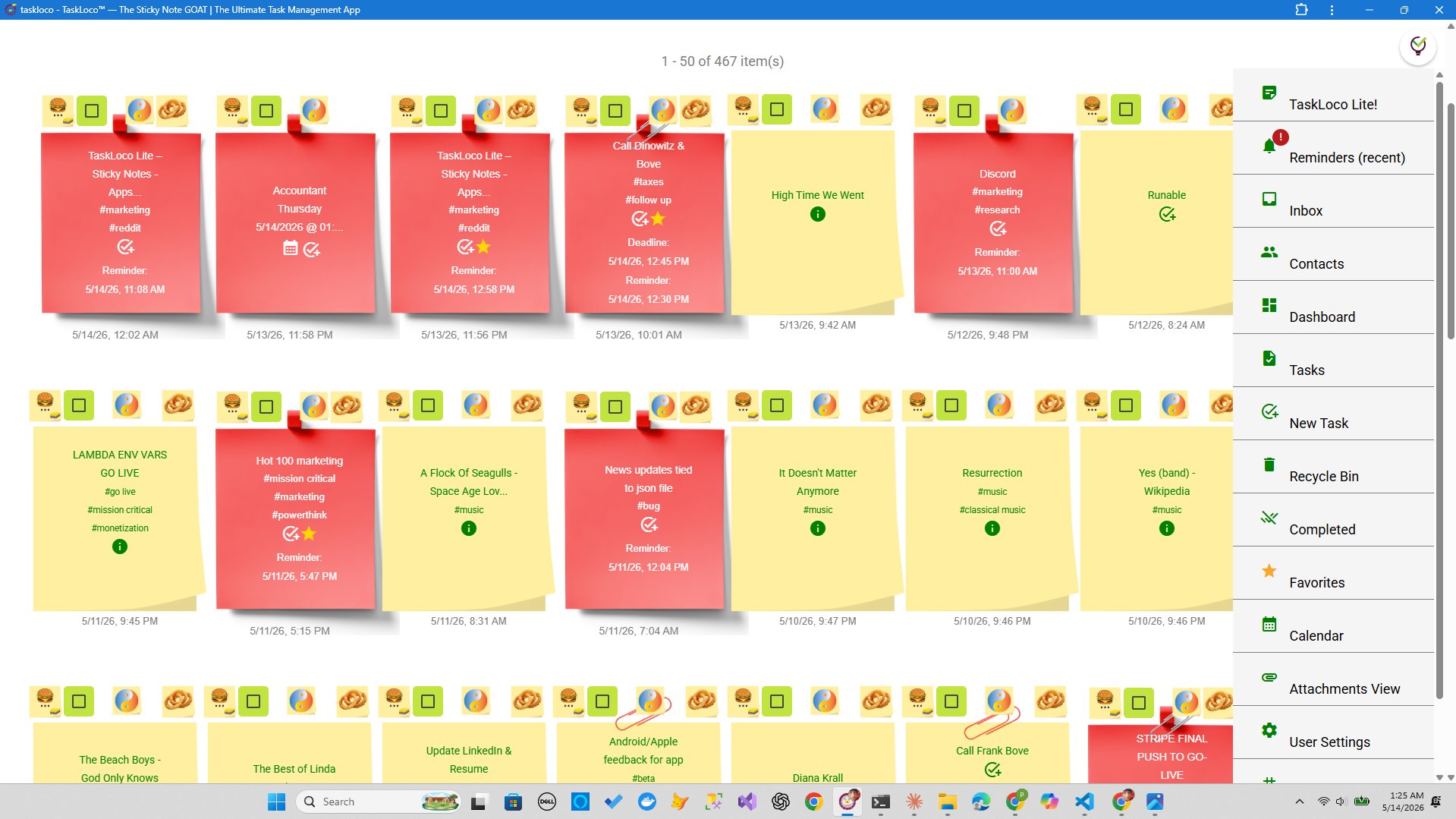
Lists are a lie for a lot of people. Not because lists don't work — they do, for linear thinkers who process one thing after another. But if you've ever stared at a bulleted to-do list and felt zero connection to it, you're probably a spatial thinker. You understand things by seeing where they sit in relation to everything else. A task buried at item 47 of a flat list might as well not exist. A note pinned in the top-left corner of your wall — bright yellow, next to two related ideas — is impossible to ignore.
A task wall is the physical or digital equivalent of covering a whiteboard with sticky notes, grouping them by project, color, or urgency, and being able to see the whole picture at a glance. For visual thinkers, this isn't a preference — it's how they actually get work done. This page explains what makes a great task wall, who benefits most from one, and why TaskLoco was built from the ground up to be the best digital version of it.
What to Look for in a Task Wall
Before recommending any specific tool, it's worth being clear about what a task wall actually is and what separates a useful one from a glorified list with a different skin.
A task wall is a spatial, visual workspace where individual tasks, notes, or ideas exist as discrete, movable objects — not rows in a table. The wall metaphor matters because it implies you can see many things simultaneously without scrolling through a hierarchy. The best task walls share three traits:
- Genuine spatial freedom. You should be able to place a note anywhere and group things by proximity, not just by tag or filter. If the layout is predetermined, it's not really a wall — it's a board with restrictions.
- Fast capture. Visual thinkers often have bursts of ideas that need to be captured immediately. A task wall that requires you to fill out a form, assign a project, choose a due date, and pick a priority before saving anything will lose you the thought. One-tap capture is non-negotiable.
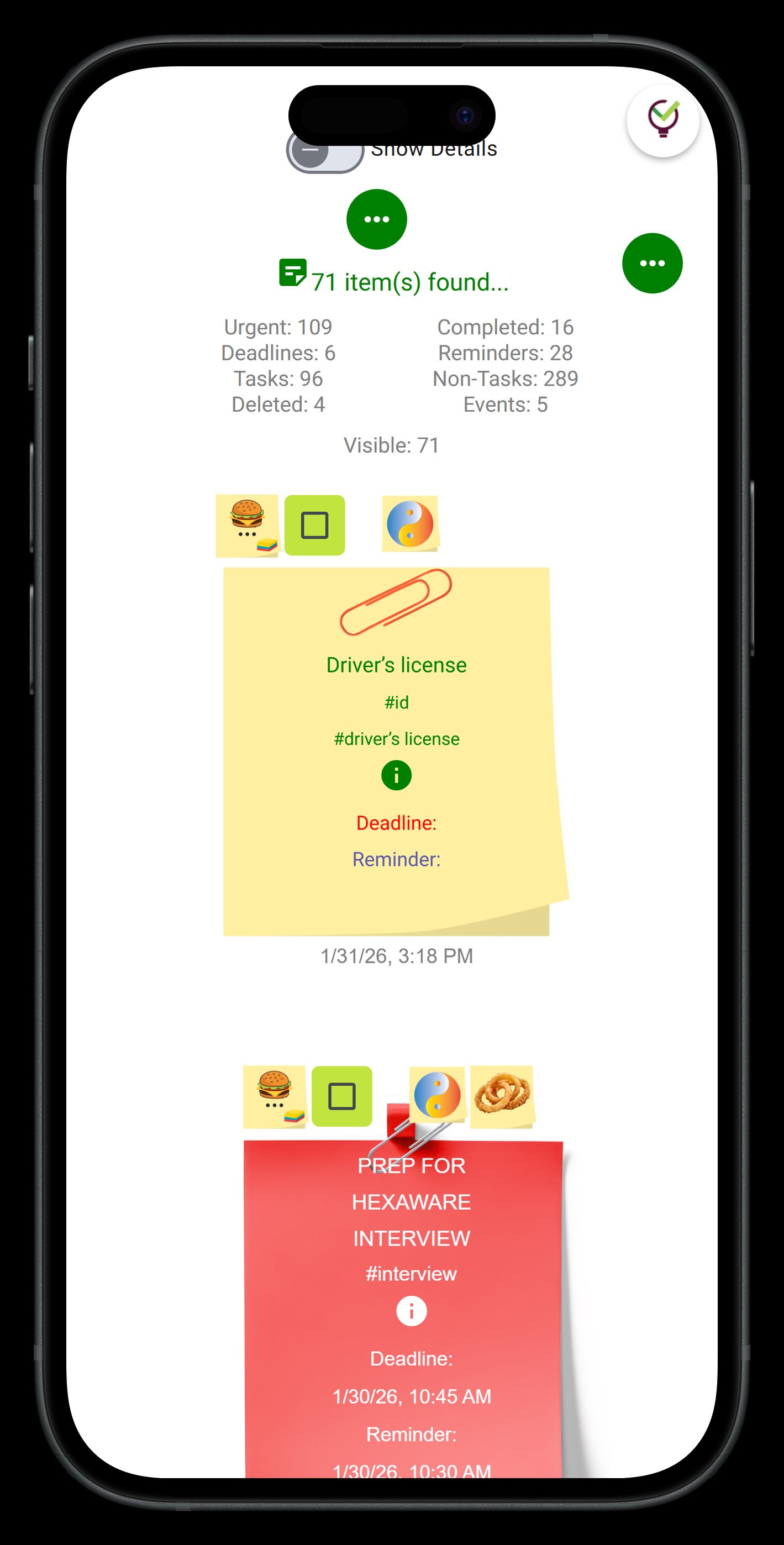
- Clarity at a glance. Color, size, and position should all carry meaning. A good task wall lets you understand the state of your work in about three seconds of looking at it — without reading every word. This is the whole point of thinking spatially.
Secondary criteria worth weighing: whether the tool works across your devices, whether it supports files and media inside notes, whether reminders exist to pull you back to a specific note, and whether you can share your wall with teammates without turning the whole thing into a permission management exercise.
Why Most Productivity Apps Fail Visual Thinkers
Most productivity software was designed by people who think in lists — and it shows. The dominant paradigm is: project → section → task → subtask. Everything has a parent. Everything has a rank. Nothing exists on its own. For someone whose brain naturally organizes by spatial relationship rather than hierarchy, this structure is actively hostile.
Kanban boards helped, but they introduced their own rigidity. Cards move left to right across fixed columns labeled To Do, In Progress, Done. That's one axis. One way to organize. If your mental model of a project involves clusters — related ideas that don't map cleanly to status — a three-column board doesn't capture it. You end up hacking the columns into something unintended, or abandoning the system entirely.
The deeper issue is that most tools prioritize reporting over thinking. They're built so a manager can see who's doing what, not so a person can externalize their mental model and actually clear their head. A task wall, by contrast, is a thinking tool first. The organization that emerges on the wall reflects how your brain actually works — not how a software architect decided projects should be structured.
What visual thinkers actually need:
- No forced hierarchy — notes exist at the same level unless you choose to group them
- Color as a real signal, not just decoration
- The ability to embed images and files directly in a note so context lives where the task lives
- Reminders that deep-link back to the specific note — not a generic notification that drops you at a dashboard
- Team sharing that works like sending someone a note, not granting access to a database row
TaskLoco: A Task Wall Built for the Way Visual Thinkers Actually Work
TaskLoco started as a literal digital sticky note app — and that origin matters. It wasn't retrofitted with visual features to compete with a trend. The wall metaphor is the product. Every design decision flows from the assumption that you want to see your notes spatially, capture ideas fast, and trust that the wall will remind you when things matter.
Here's what that looks like in practice:
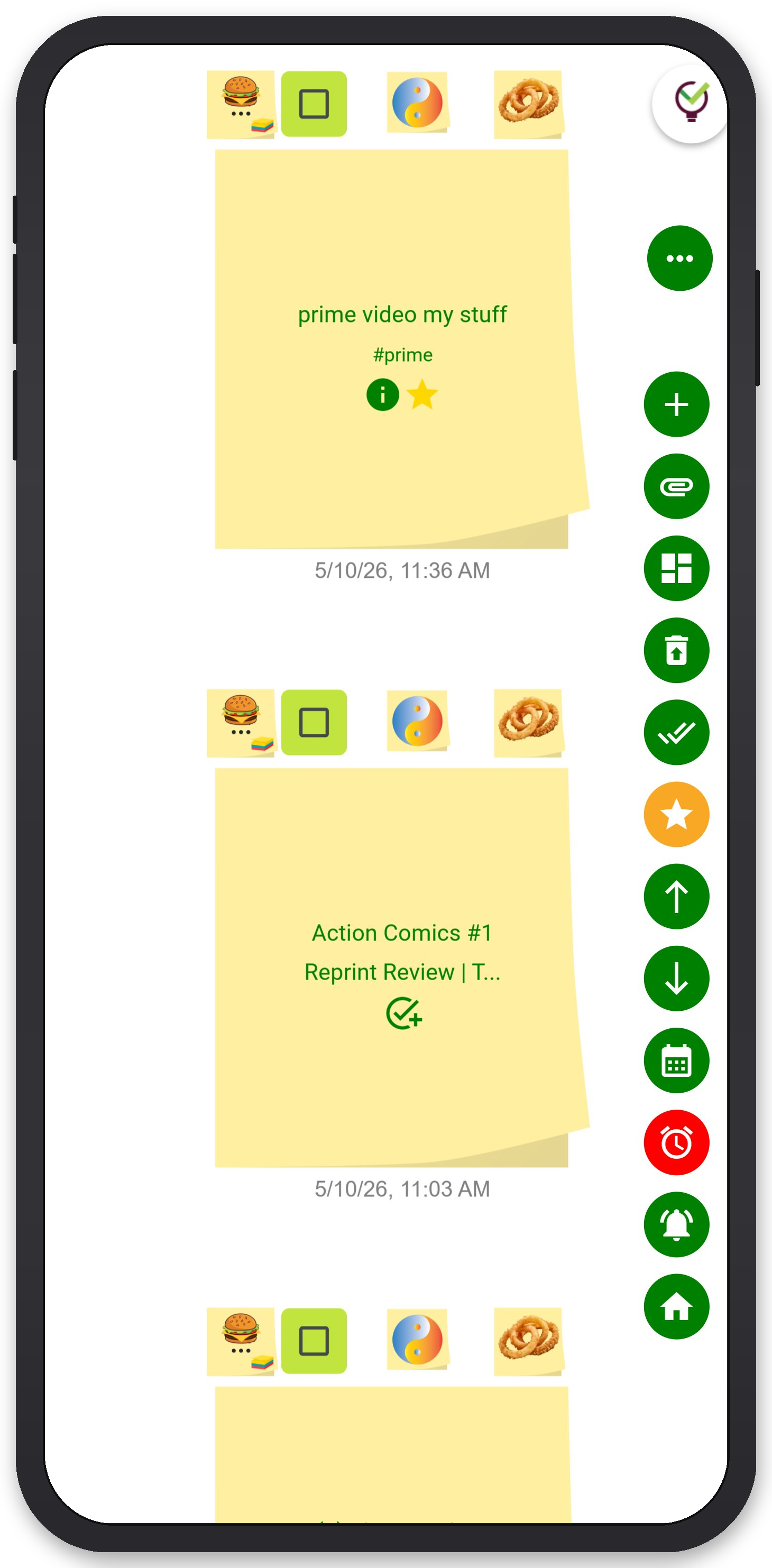
The wall is the home screen. When you open TaskLoco Premium, you see your notes — not a dashboard, not an inbox, not a feed. You see the wall. Notes are visible in their position, their color, their size. You scan and understand your situation without clicking into anything.
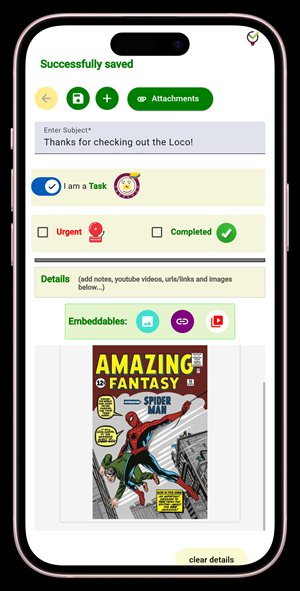
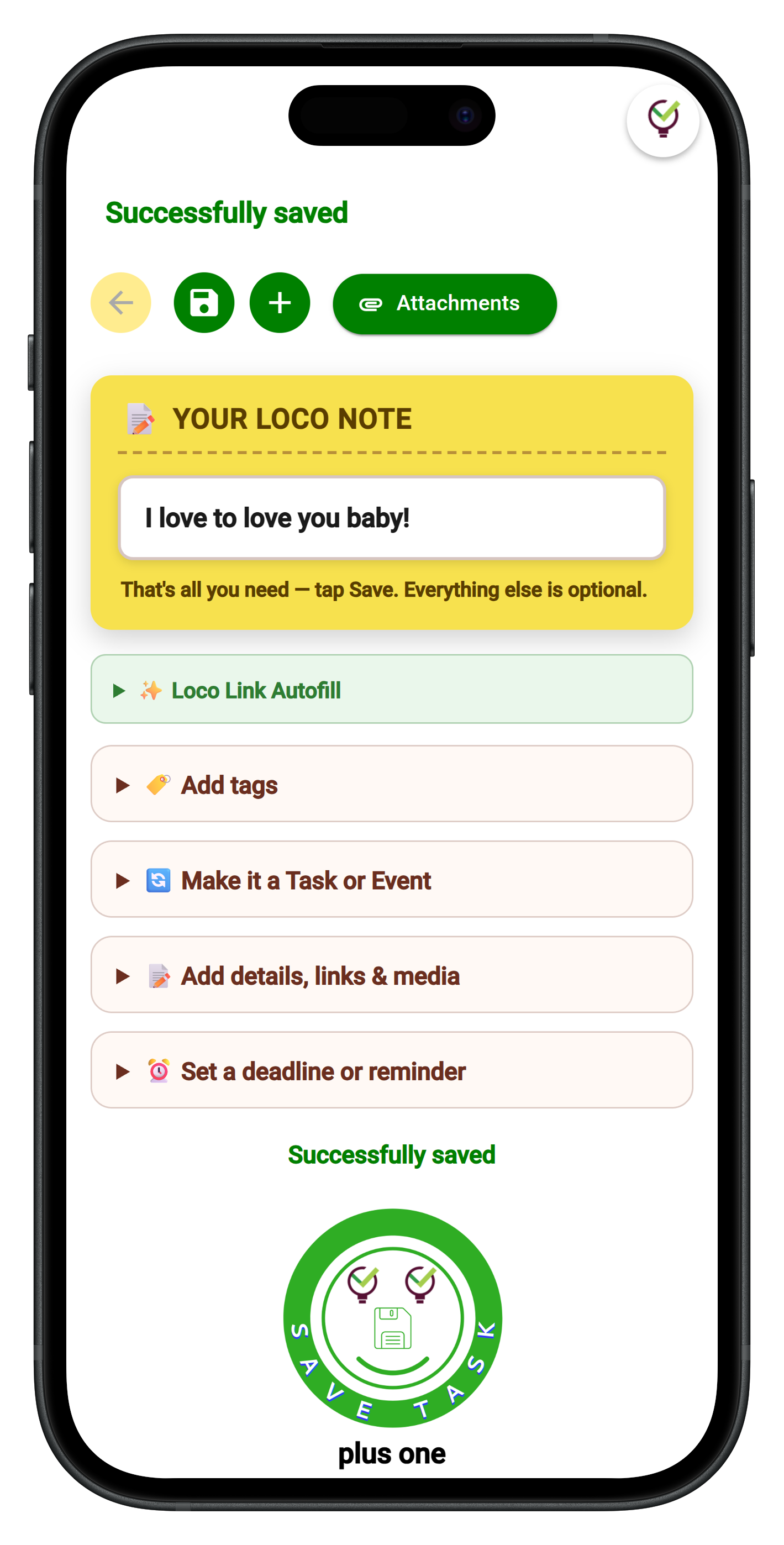
Capture is one tap. A new note opens instantly. Title, body, done. You can add files, embed images, and set a reminder — but none of that is required before saving. Capture first, organize later, or don't organize at all if the wall position already does the job.
Reminders deep-link back to the note. This is the detail that separates TaskLoco's reminder system from most tools. When a reminder fires — as a push notification to your phone or computer — tapping it takes you directly to the note itself, not to a task list where you have to find it again. Optional email and SMS channels are also available. For visual thinkers, this matters: the note is the context. Dropping you anywhere else means you have to reconstruct that context from scratch.
File attachments live inside the note. Each Premium note can hold files — images, PDFs, documents, whatever belongs to that task — up to the included 10GB. If you're a designer reviewing a comp, the comp lives in the note. If you're a writer reviewing a brief, the brief lives in the note. Nothing is in a separate folder you have to navigate to separately.
Team sharing works like sending a note. When you share a note in TaskLoco, the recipient gets a copy they can make their own — clone it, work with it, add to it. There's no permissions matrix to configure, no access levels to set. It works the way a physical sticky note works: you hand it to someone, and now they have it.
From Anonymous Free Tier to Full Wall: How TaskLoco Is Structured
TaskLoco has three tiers, and knowing what each one does — and doesn't do — helps you figure out where to start.
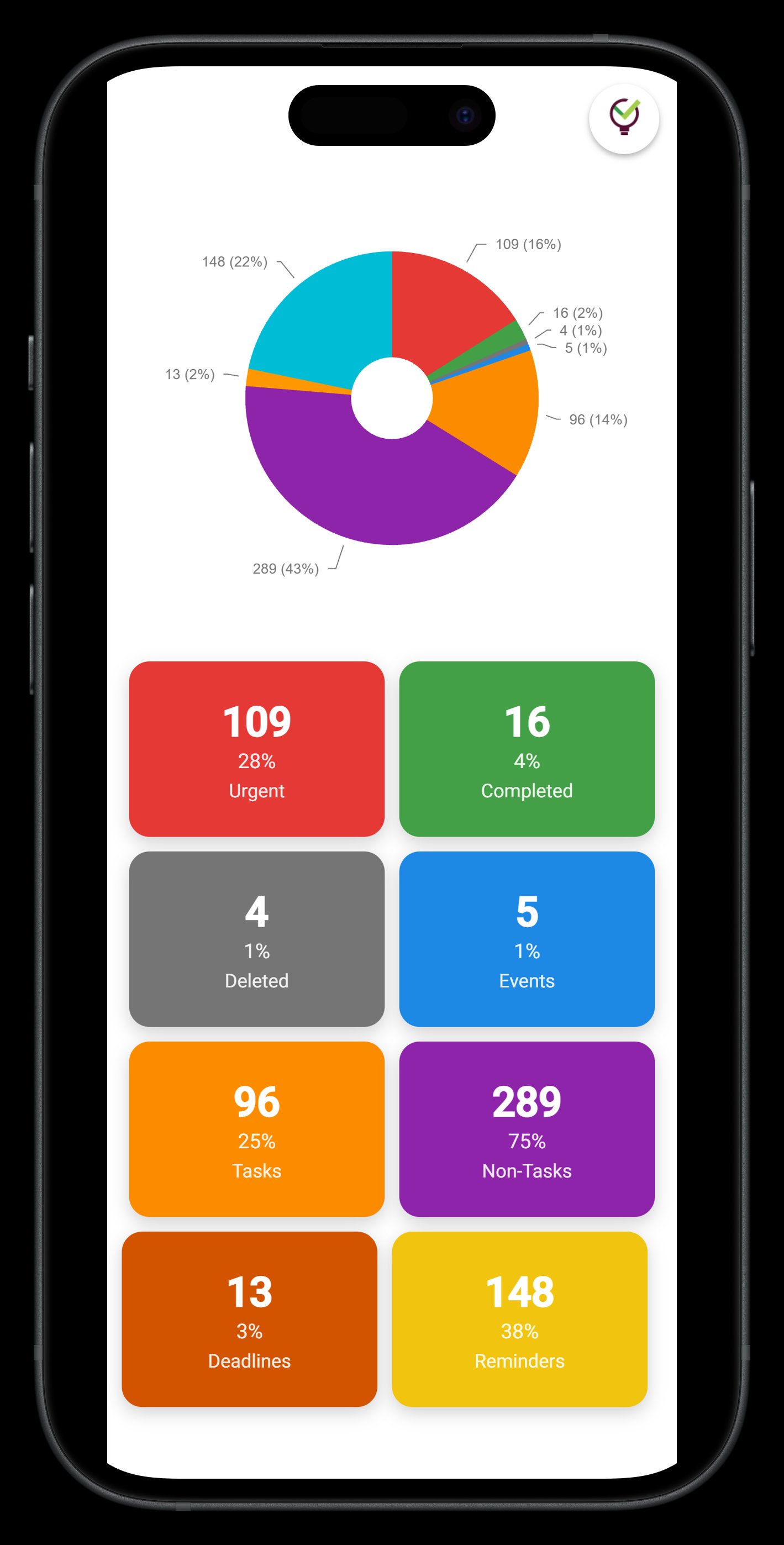
TaskLoco Lite is the native iPhone and Android app. It's completely free, requires no account, no email, no sign-in of any kind. Notes are stored as a JSON file on your device — nothing leaves your phone. You can store up to 20 notes. There's no sync, no reminders, no file attachments, and no sharing. It's intentionally minimal. Think of it as a digital sticky note pad that lives only on your phone. If you lose your phone, the notes are gone. It is not a team tool. It is a frictionless way to start.
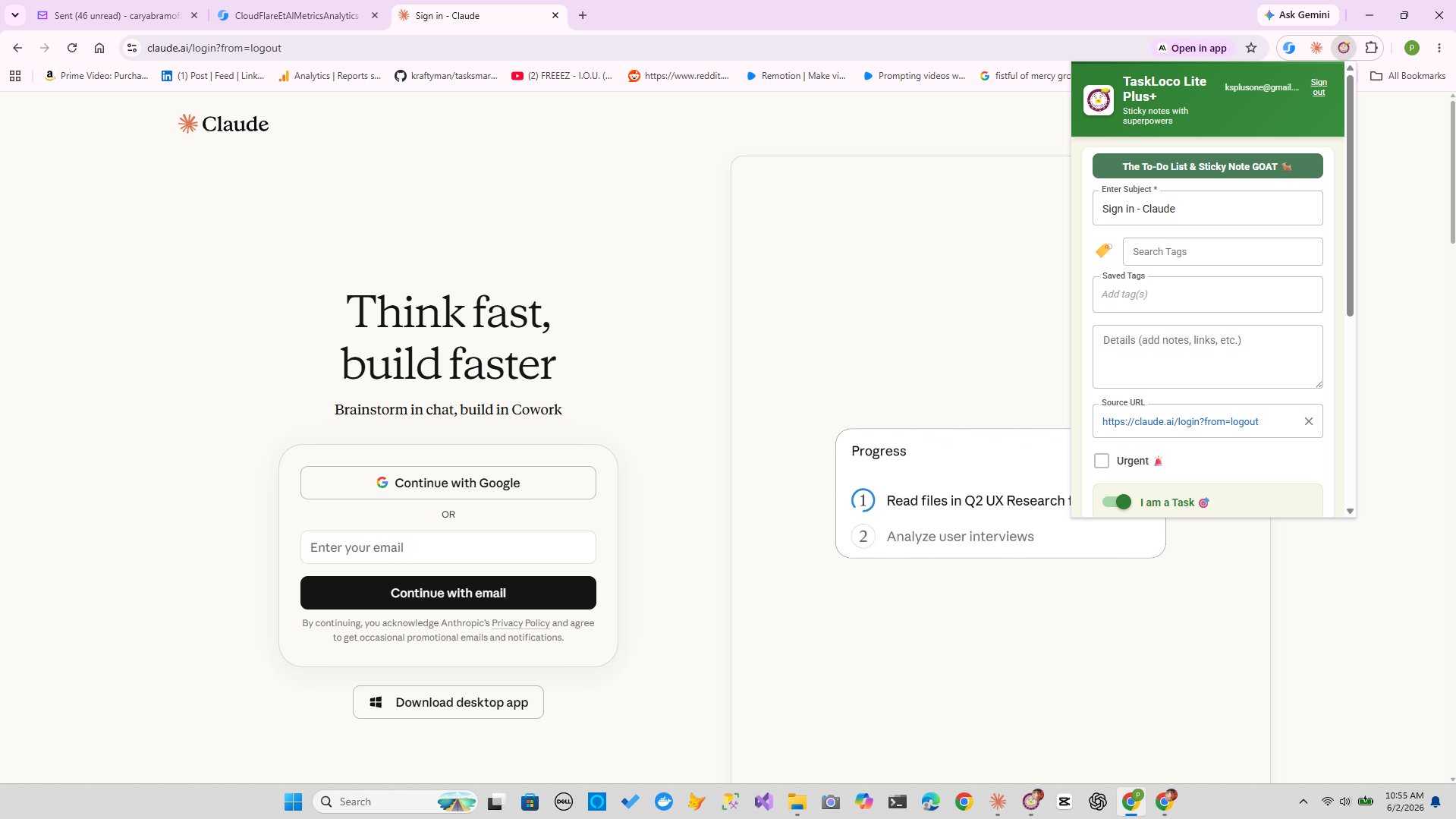
TaskLoco Lite Plus+ is the web app and Chrome extension, free with a Google sign-in. Up to 30 notes, synced across all your devices, accessible in any browser. The Chrome extension lets you capture any webpage in one click — a powerful feature for researchers, content creators, and anyone who finds things on the web they want to act on. No reminders, no file attachments, no team sharing, no calendar. It's the right free option when you want sync and you're not yet ready for Premium.
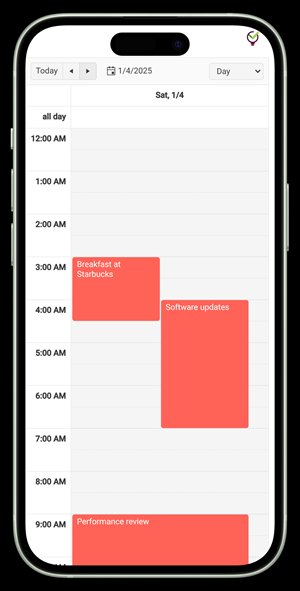
TaskLoco Premium is the full wall: unlimited notes, 10GB file storage (with add-on tiers up to 1TB), reminders with push notifications, calendar view, and team sharing. This is where visual thinkers get the full experience — a wall with no ceiling on how many notes you can pin, how many files you can attach, or how many teammates you can share with. Each team member needs their own Premium subscription.
The Chrome extension deserves a specific callout for visual thinkers who work on the web. If your workflow involves collecting references — design inspiration, research articles, competitor pages, client briefs — one click captures the page as a note. It's the fastest on-ramp from the web to your wall that exists.
TaskLoco Premium is regularly $9.99/month per person. Right now, charter members can lock in 50% off the regular price — forever. That means $4.99/month per person today. And if our price ever goes up, you still pay half. Always.
Code CHARTER50 auto-applies at checkout. First 500 spots only — once they're gone, this offer is gone permanently. Act fast while spots last.
Every Premium subscription includes unlimited notes, 10GB file storage, reminders, calendar, and team sharing. Each team member requires a separate subscription. 7-day free trial — no charge until day 8. Cancel anytime.
Free Options: TaskLoco
TaskLoco Lite
- Native iPhone & Android app
- Completely anonymous — no sign-in
- Data stays on your device
- Up to 20 notes
- Free forever
TaskLoco Lite Plus+
- Web app + Chrome extension
- Sign in with Google
- Wall syncs across all devices
- Up to 30 notes
- Free forever
Lock In 50% Off — Forever
7-day free trial. No charge until day 8. CHARTER50 auto-applies at checkout.
🔒 Lock In My Charter SpotSee TaskLoco in Action
Frequently Asked Questions
What exactly is a task wall and how is it different from a to-do list?
A to-do list is linear — items stack vertically in order, and you process them top to bottom. A task wall is spatial — notes exist as individual objects you can place anywhere, group by proximity, and see all at once. For visual thinkers, the wall mirrors how the brain actually holds information: in clusters and relationships, not in ranked rows. The difference in practice is that a wall makes your entire workload visible at a glance, while a list requires you to scroll, expand, and mentally reconstruct the picture every time you come back to it.
Is TaskLoco only for visual thinkers, or does it work for other styles too?
TaskLoco works for anyone who wants fast capture and a clear view of their tasks — but it's especially well-suited to people who think spatially. If you've always covered your physical desk or whiteboard with sticky notes and then felt lost when asked to use a project management app, TaskLoco is directly built for you. That said, linear thinkers who just want a clean, fast note-and-reminder tool find it just as useful. The wall doesn't force any particular organizational logic — you can arrange notes in neat rows if that's your style, or scatter them by instinct if that's yours.
Does TaskLoco work on mobile?
Yes, in two different ways. TaskLoco Lite is a native iPhone and Android app — free, anonymous, no sign-in, 20 notes stored locally on your device. Premium features like reminders (push notifications to your phone), team sharing, file attachments, and unlimited notes are all available through the browser on mobile.
Can I capture web pages and add them to my task wall?
Yes — TaskLoco's Chrome extension captures any webpage as a note in one click. For visual thinkers who collect references, inspiration, or research on the web, this is one of the most useful features in the product. The captured note lands on your wall immediately and syncs across all your devices (with Lite Plus+ or Premium). The Chrome extension is free.
How do reminders work on TaskLoco?
A TaskLoco reminder is delivered as a push notification to your phone and computer. The key feature for visual thinkers: tapping the notification takes you directly to the note itself — not a dashboard or a generic task list. That deep-link means you land right back in the context where the task lives. Optional email notifications are also available. SMS notifications are an optional add-on. Reminders are a Premium feature.
How does team sharing work on TaskLoco?
TaskLoco team sharing works the way a physical sticky note does: you share a note, and the recipient gets a version they can make their own — clone it, edit it, work with it independently. There's no permissions matrix, no access levels to configure. It's designed to feel like handing someone a note, not granting database access. Team sharing is a Premium feature, and each team member needs their own separate Premium subscription.
What is the pricing for TaskLoco Premium?
$9.99/month per person (currently $4.99/month per person for first 500 charter members with code CHARTER50)
Born in Brooklyn. Powered by AWS. Your data stays yours.
TaskLoco is available on iPhone, Android, Chrome, and every web browser.