You've done this before. Day one: motivation is high, you download the app, you set up your habits, you feel organized. Day two: you remember, but barely. Day three: you forget entirely, the streak breaks, and the app becomes just another icon you scroll past. The problem isn't your willpower — it's that most habit trackers are designed for people who already have perfect habits.
A genuinely useful visual habit builder works differently. It keeps your habits in front of you without demanding you perform a ritual every time. It gives you a spatial, visual sense of what you're working on — the same way a sticky note on your monitor is harder to ignore than a buried to-do list. And it uses smart reminders that bring you back to the exact note you need, not a generic dashboard that asks you to figure out what to do next. This article defines what that kind of tool actually looks like, and shows you what to demand before you hand over your habits to any app.
What to Look for in a Visual Habit Builder
Before you pick any tool, understand that most apps marketed as habit builders are really just streak counters wearing a habit costume. A streak counter rewards you for not breaking a chain — but it doesn't help you build the behavior itself. A real visual habit builder does something more fundamental: it makes your habits impossible to forget without making them feel like homework.
There are three criteria that actually separate effective visual habit tools from ones that become clutter by day four:
- Spatial visibility: Can you see your habits at a glance — not buried in menus, not collapsed under categories, but out in the open on a wall or board you actually look at during your day? Visibility is the first line of defense against forgetting.
- Friction-reducing reminders: Does the reminder take you directly to the habit, or does it take you to a home screen where you have to navigate? The difference between a reminder that deep-links to the specific note and one that just pings you is the difference between acting and ignoring.
- Flexibility without complexity: Can you jot a note, attach a reference photo, or add a quick reflection without filling out a form? Habits vary — some days you need a checkbox, other days you need to write two sentences about what happened. A good tool handles both without switching contexts.
Why Sticky Notes Are the Right Mental Model for Habits
There's a reason sticky notes have survived every wave of productivity software: they work on the same principle as spatial memory. When you put a physical note on your desk, your brain registers it as an object in space, not just an item in a list. That spatial encoding is why you remember to call your dentist when you see the note — and why you forget the moment you file it away.
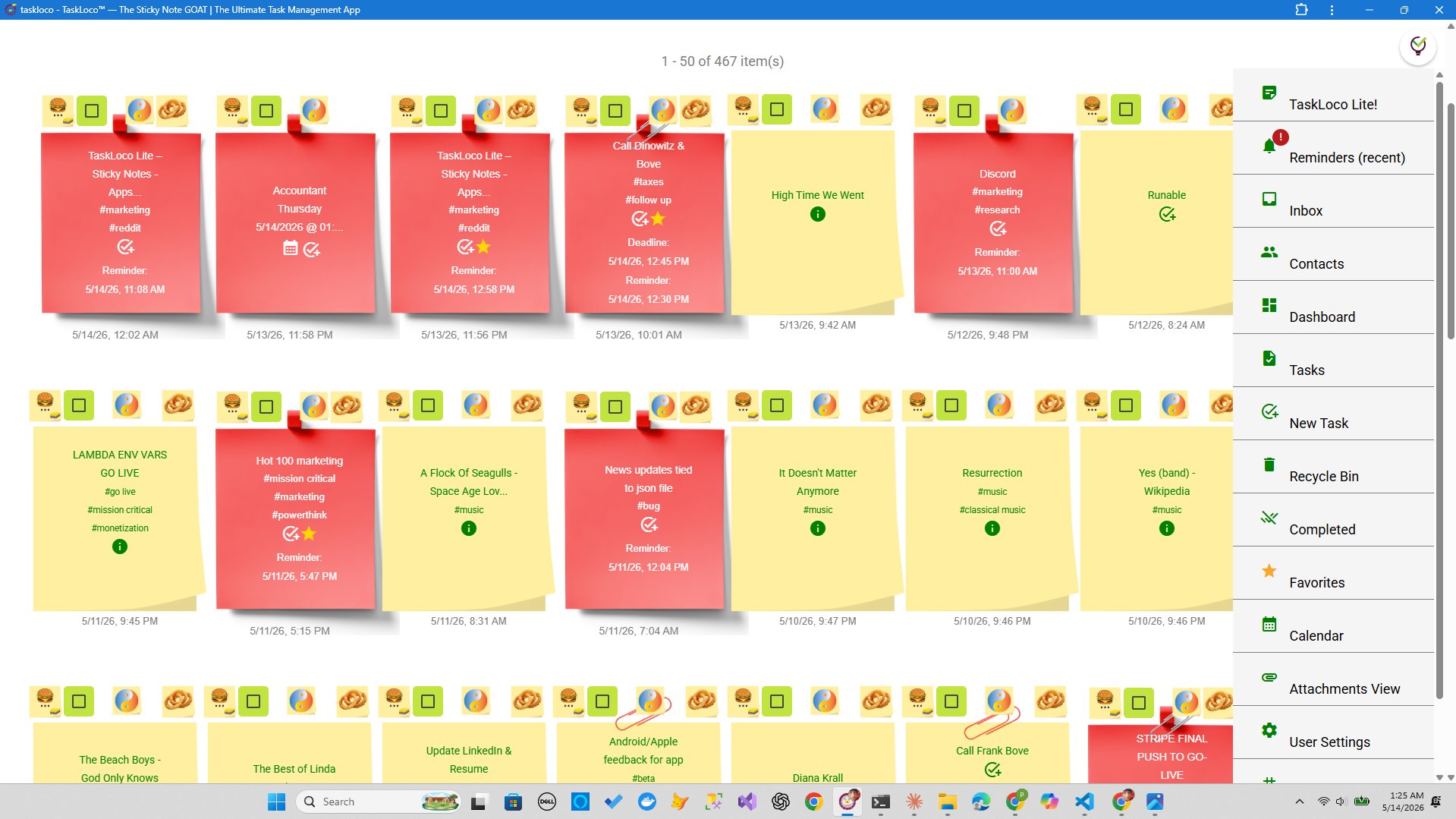
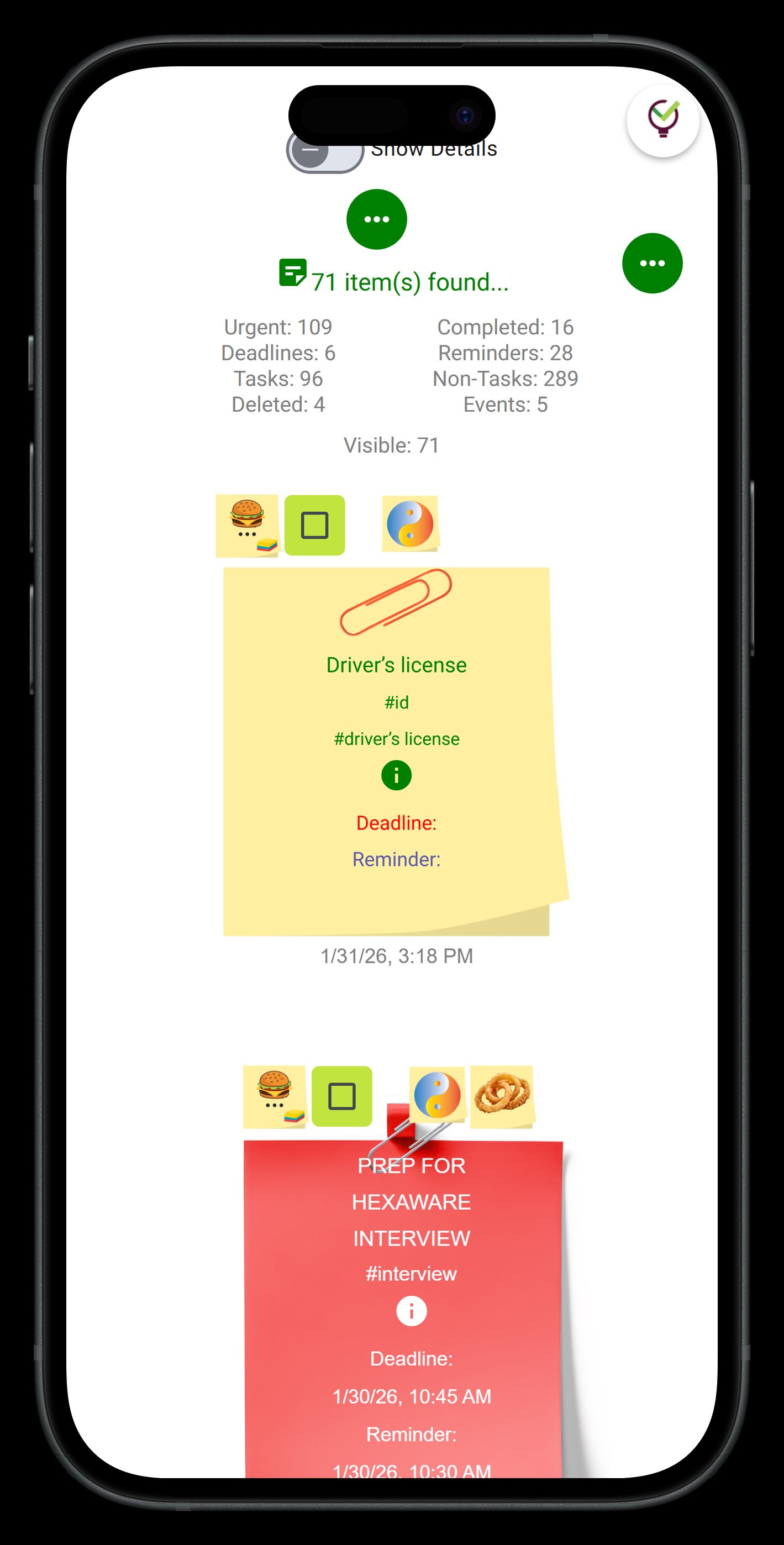
Digital habit apps mostly abandoned this model in favor of dashboards and metrics. That's not always wrong — data is useful once you've already built a habit. But for the first 21 days, what you need is visibility, not a graph of your failure rate. TaskLoco is built on the sticky-note metaphor at a fundamental level. Your habits, tasks, and reminders live on a visual wall that you can arrange spatially — group your morning habits in one column, your evening wind-down in another, your weekly check-ins in a third. The layout itself becomes a cue.
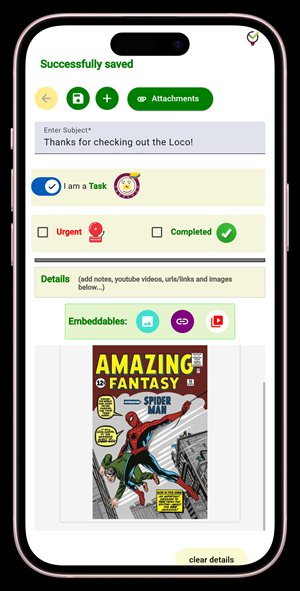
Each note on the wall can hold as much or as little as you need: a single line that says "drink water before coffee," or a full checklist with an embedded photo of the habit you're trying to build. You can attach a reference image — a workout plan, a recipe you're trying to cook three times a week, a screenshot of the goal you set — directly to the note. That reference stays with the habit instead of living in a separate folder you'll never open.
The Reminder Problem — and How TaskLoco Solves It
Here is the dirty secret of habit app reminders: most of them remind you to open the app, not to do the habit. You get a push notification that says "Time to check in!" and it takes you to the app's home screen. Now you have to remember which habit you were supposed to log, navigate to it, and perform an action — all before the moment passes. By the time you've done three taps, you've already decided it's not worth it.
TaskLoco Premium reminders work differently, and this difference is the entire reason they actually build habits. When a reminder fires, it arrives as a push notification — on your phone and your computer — and it deep-links directly back to the original note. One tap, and you're looking at the exact habit you set the reminder for. The checklist is right there. The attached photo is right there. Your previous note entries are right there. The habit context surrounds you instantly instead of requiring you to reconstruct it from scratch.
If push notifications aren't enough for a particular habit, you can layer on optional email notifications or an SMS add-on — both free additions, not premium upgrades on top of premium. This matters for habits where a phone notification is too easy to swipe away but an email or text feels more like an obligation.
How to Set Up a Habit Wall That Actually Works
The wall is only as good as how you build it. Here's an approach that works for people who've quit habit apps before — it prioritizes visibility over completeness.
Start with three habits maximum. Not ten. Not five. Three. Put each one on its own sticky note. Write the habit in plain language at the top: "Do 10 pushups before shower." Below that, add a short checklist for the week — Monday through Sunday, one line each. That's the entire structure. Don't over-engineer it on day one.
Arrange spatially by time of day. Morning habits in the left column, midday in the center, evening on the right. This turns your wall into a timeline your eyes can scan in under five seconds. You're not reading a list — you're reading a map of your day.
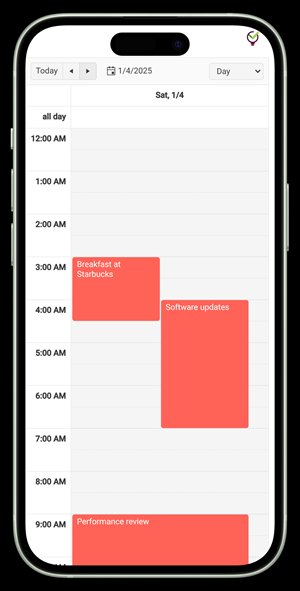
Set one reminder per habit, and make it contextual. A reminder for your morning habit should fire 10 minutes before you normally wake up, not at a random time. The push notification will deep-link you straight to that note the moment you pick up your phone. One tap, and you're checking in.
Attach one piece of reference media per habit if it helps. A photo of the form you're trying to hold for a stretch. A screenshot of the recipe. A selfie from a day you felt great after exercising. Visual anchors reinforce the reason you started. With TaskLoco Premium's 10GB file storage, you're not rationing attachments — add what's genuinely useful.
On day 21, if a habit has become automatic, archive the note and replace it with the next one. The wall stays current. You never get buried under habits you've already won.
TaskLoco Premium is regularly $9.99/month per person. Right now, charter members can lock in 50% off the regular price — forever. That means $4.99/month per person today. And if our price ever goes up, you still pay half. Always.
Code CHARTER50 auto-applies at checkout. First 500 spots only — once they're gone, this offer is gone permanently. Act fast while spots last.
Every Premium subscription includes unlimited notes, 10GB file storage, reminders, calendar, and team sharing. Each team member requires a separate subscription. 7-day free trial — no charge until day 8. Cancel anytime.
Free Options: TaskLoco
TaskLoco Lite
- Native iPhone & Android app
- Completely anonymous — no sign-in
- Data stays on your device
- Up to 20 notes
- Free forever
TaskLoco Lite Plus+
- Web app + Chrome extension
- Sign in with Google
- Wall syncs across all devices
- Up to 30 notes
- Free forever
Lock In 50% Off — Forever
7-day free trial. No charge until day 8. CHARTER50 auto-applies at checkout.
🔒 Lock In My Charter SpotSee TaskLoco in Action
Frequently Asked Questions
What makes a visual habit builder different from a regular habit tracker?
A regular habit tracker logs whether you did something. A visual habit builder keeps the habit in front of you spatially — on a wall or board you look at as part of your existing environment — so the act of noticing it becomes part of the cue. The difference is between a habit that's waiting to be remembered and one that's impossible to forget.
Why do most people quit habit apps by day three?
Two reasons: the app itself becomes a chore, and the reminders are too easy to dismiss. Most habit apps send you a generic notification that takes you to a dashboard where you have to navigate to the right habit. That navigation tax is enough friction to make people swipe away and promise they'll do it later. Later never comes. TaskLoco reminders deep-link directly to the habit note — one tap and you're already checking in.
How does TaskLoco work as a habit tracker?
Each habit lives on its own sticky note on your visual wall. You can write a checklist, add a reflection, attach a reference photo or file, and set a push notification reminder that fires at the right time and takes you directly back to that note. You arrange habits spatially by time of day so your wall becomes a visual map of your routine. TaskLoco Premium includes unlimited notes, 10GB file storage, reminders, calendar view, and team sharing — everything a serious habit practice needs without a steep learning curve.
Do I need the paid version of TaskLoco to track habits?
TaskLoco Lite (native iPhone and Android app) is completely free and anonymous — no sign-in, no account, up to 20 notes stored on your device. It works as a lightweight visual note wall for habits but has no reminders, no file attachments, and no sync. TaskLoco Lite Plus+ (free, web app and Chrome extension) gives you 30 notes synced across devices but still no reminders or attachments. For a real habit-building system with reminders that deep-link back to your notes and file attachments for reference media, TaskLoco Premium is the version you want. $9.99/month per person (currently $4.99/month per person for first 500 charter members with code CHARTER50)
How many habits should I track at once?
Three is the right number for most people, especially if you've quit habit apps before. Starting with ten habits feels ambitious and collapses under its own weight by day two. Three habits, each on its own note, arranged by time of day on your wall, with one reminder each — that structure is manageable enough to maintain and visible enough to actually work. Add more only after the first three feel automatic.
Can I attach photos or documents to my habit notes in TaskLoco?
Yes — TaskLoco Premium includes 10GB of file storage, and you can attach photos, documents, or any file directly to any note. This matters for habits because having a reference image (a workout diagram, a recipe, a before photo) attached to the habit note means the context is always right there when your reminder fires. No hunting through a separate folder. If you need more storage, additional tiers are available as stackable add-ons.
What platforms does TaskLoco run on?
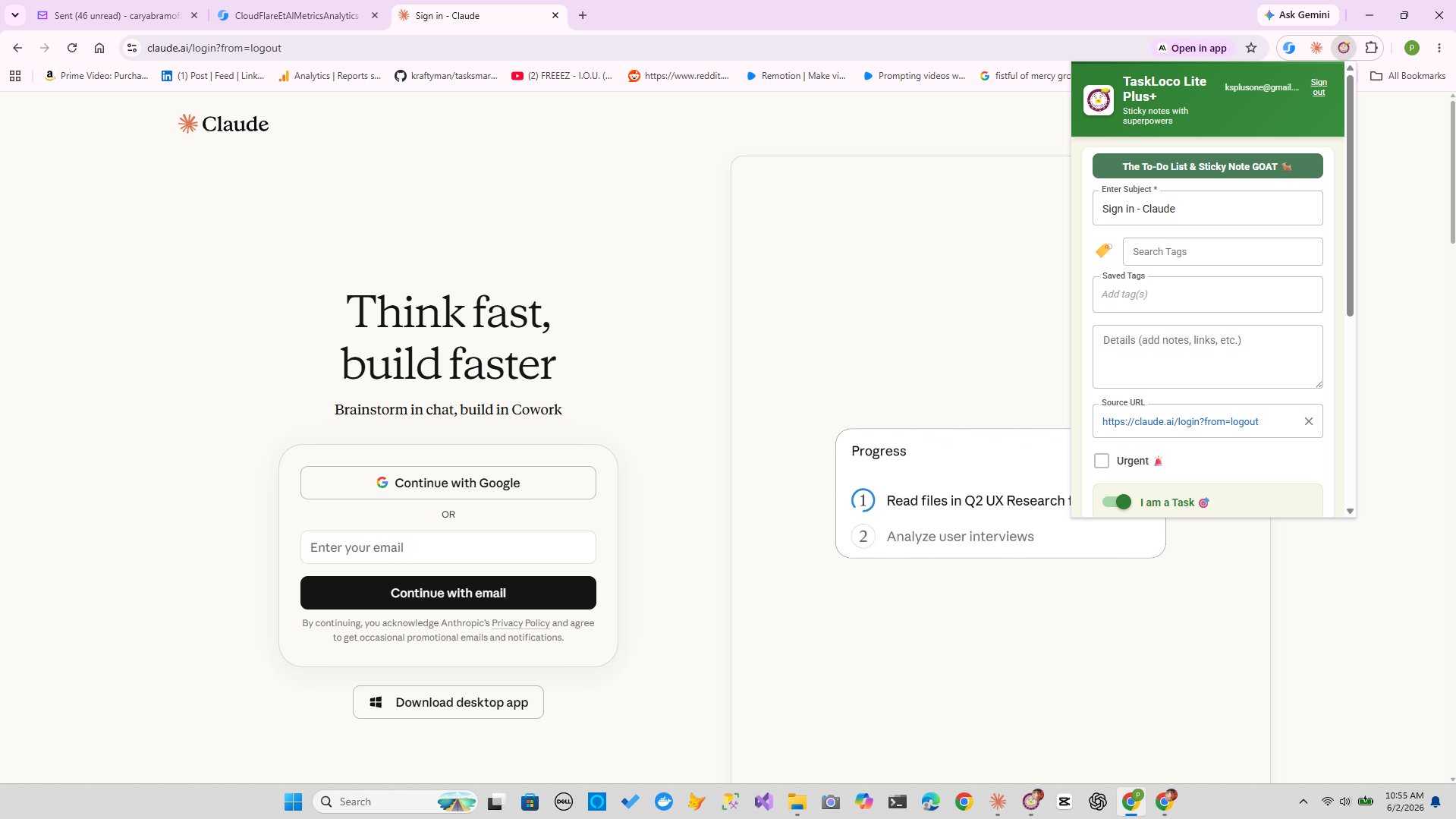
TaskLoco Lite is a native iPhone and Android app available in the App Store and Google Play — completely anonymous, no sign-in required, up to 20 notes stored locally on your device. TaskLoco Lite Plus+ and TaskLoco Premium run as a web app plus Chrome extension, accessible on any device through your browser, including on mobile through your phone's browser. The Chrome extension lets you capture any webpage to a note in one click — useful for saving habit research, recipes, or workout plans directly to your wall.
Born in Brooklyn. Powered by AWS. Your data stays yours.
TaskLoco is available on iPhone, Android, Chrome, and every web browser.