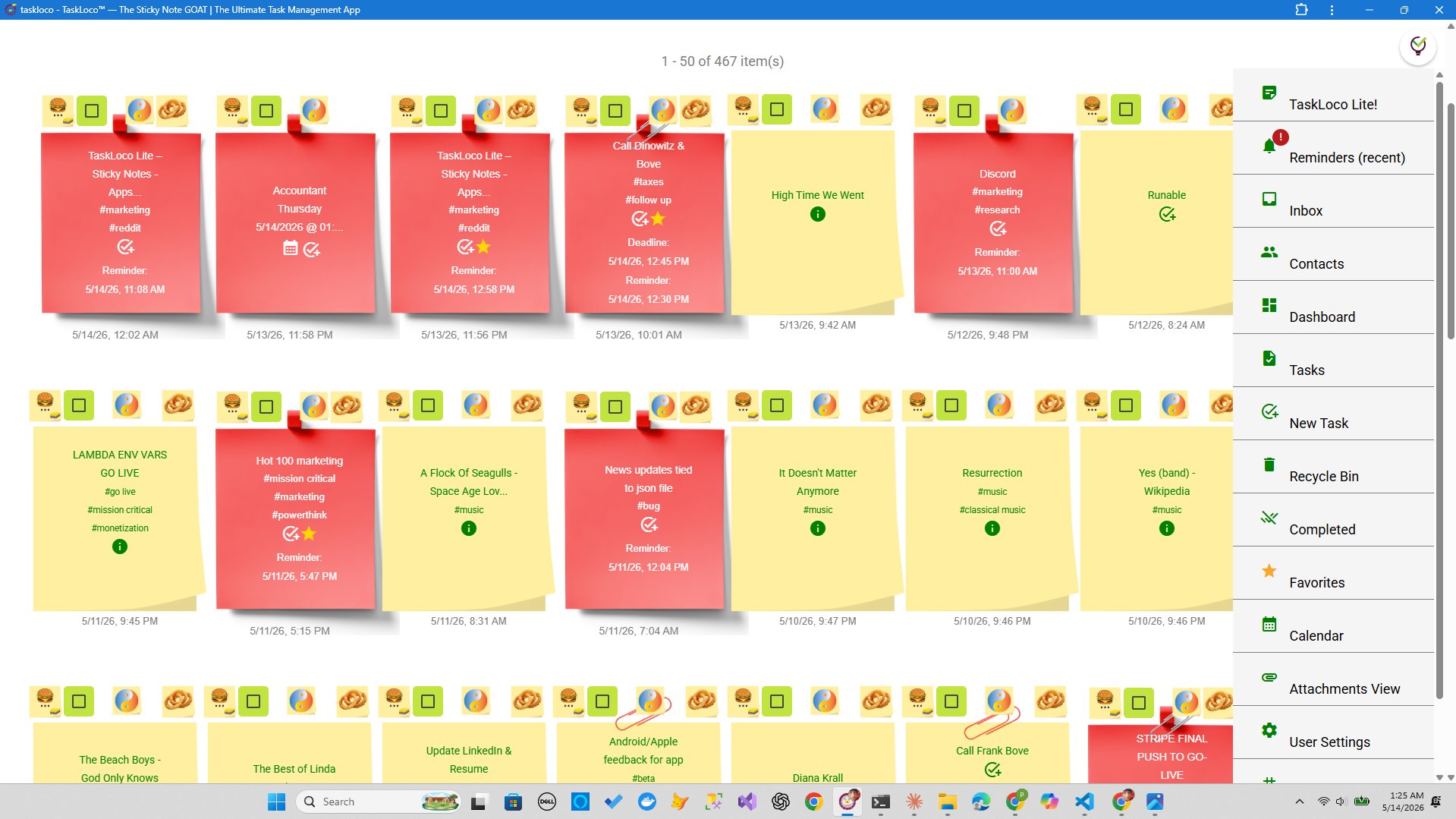
Most idea-capture systems fail the same way: you dump the idea in, feel productive for thirty seconds, and never look at it again. The problem isn't discipline — it's that the system hides your ideas the moment you add them. List apps bury things under scroll. Folders require you to remember what you named something six weeks ago. Spreadsheets punish you for being creative.
A visual idea bank works differently. It's a spatial, always-visible surface where ideas sit in view until you decide to act on them or let them go. When it's built right, you revisit it not because you scheduled a review but because you're pulled back by what you can see. This article breaks down what makes a visual idea bank worth keeping — and how TaskLoco's sticky-note wall turns that concept into a daily habit.
What to Look for in a Visual Idea Bank
Before picking a tool, it helps to understand what separates a visual idea bank that gets used from one that gets abandoned. There are three criteria that actually matter — and they have nothing to do with feature counts.
1. Friction at capture must be near zero. If saving an idea takes more than two taps or a copy-paste, you will skip it when it matters most — mid-conversation, mid-read, mid-shower thought that somehow survived to your desk. The best systems let you capture first and organize later, or not at all.
2. Ideas must stay visually present, not archived. The defining characteristic of a visual idea bank versus a note app is spatial persistence. You should be able to glance at your wall and see what's there without performing a search. Color, position, and card size all carry meaning. If your ideas disappear into a list, it's not a bank — it's a graveyard.
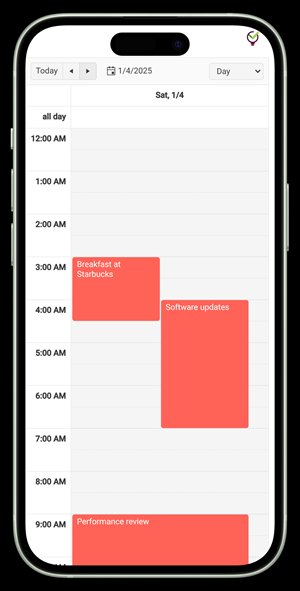
3. There must be a bridge between idea and action. An idea bank that never connects to your actual work is a creative hobby, not a productivity tool. The bridge can be a reminder, a task attached to the note, a calendar event, or a shared note that pulls in a collaborator. Without that bridge, ideas age in place and you stop trusting the system.
Why the Sticky-Note Wall Is the Right Mental Model
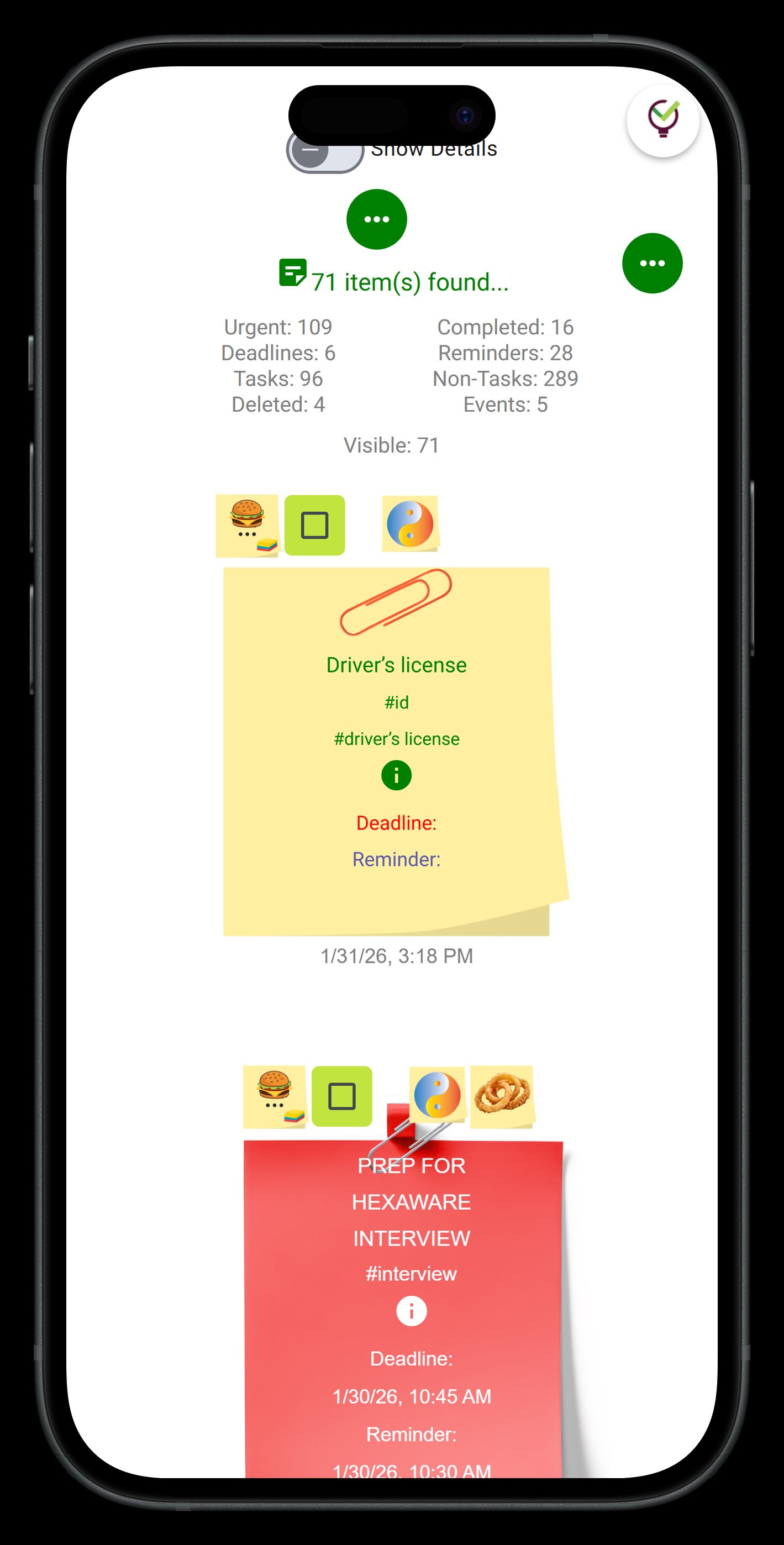
Physical sticky notes have been used in product studios, war rooms, and design sprints for decades — not because of nostalgia, but because the spatial model genuinely works. When ideas occupy positions in space, your brain builds a map. You remember where you put things. You notice clusters. You spot gaps. You feel the weight of a wall that's getting crowded.
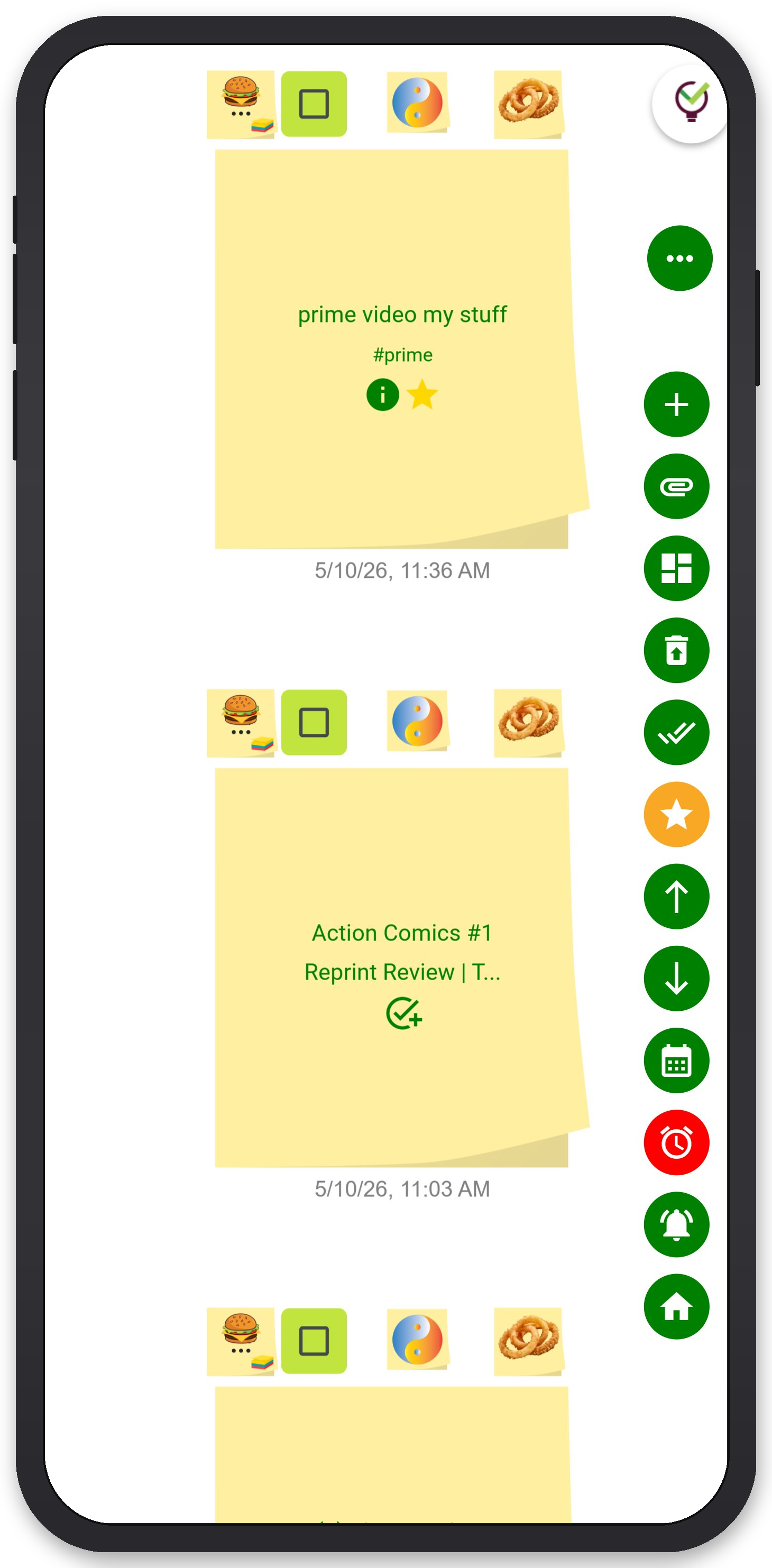
TaskLoco is built around exactly this model. Your wall is a free-form surface where each note is a card you can place, color-code, and expand. You can run a tight cluster of campaign ideas in one corner and a looser brainstorm for a future product in another — and you see both at a glance. There's no hierarchy you have to maintain, no parent-child folder structure to argue with yourself about.
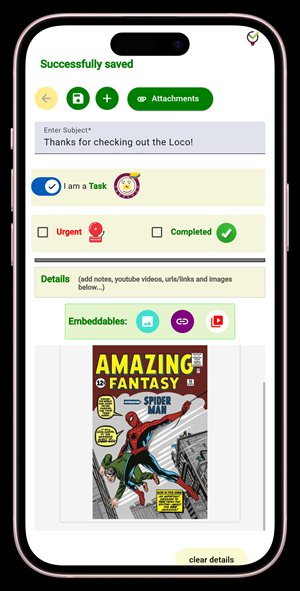
Notes on the wall support rich content: text, embedded images, and file attachments up to 10GB with Premium. You can photograph a whiteboard sketch, attach a PDF brief, or paste a URL — and the note stays connected to everything that context requires. When you come back a month later, you're not staring at a title wondering what you meant. You're looking at the whole thought.
Capture Fast, Revisit Naturally
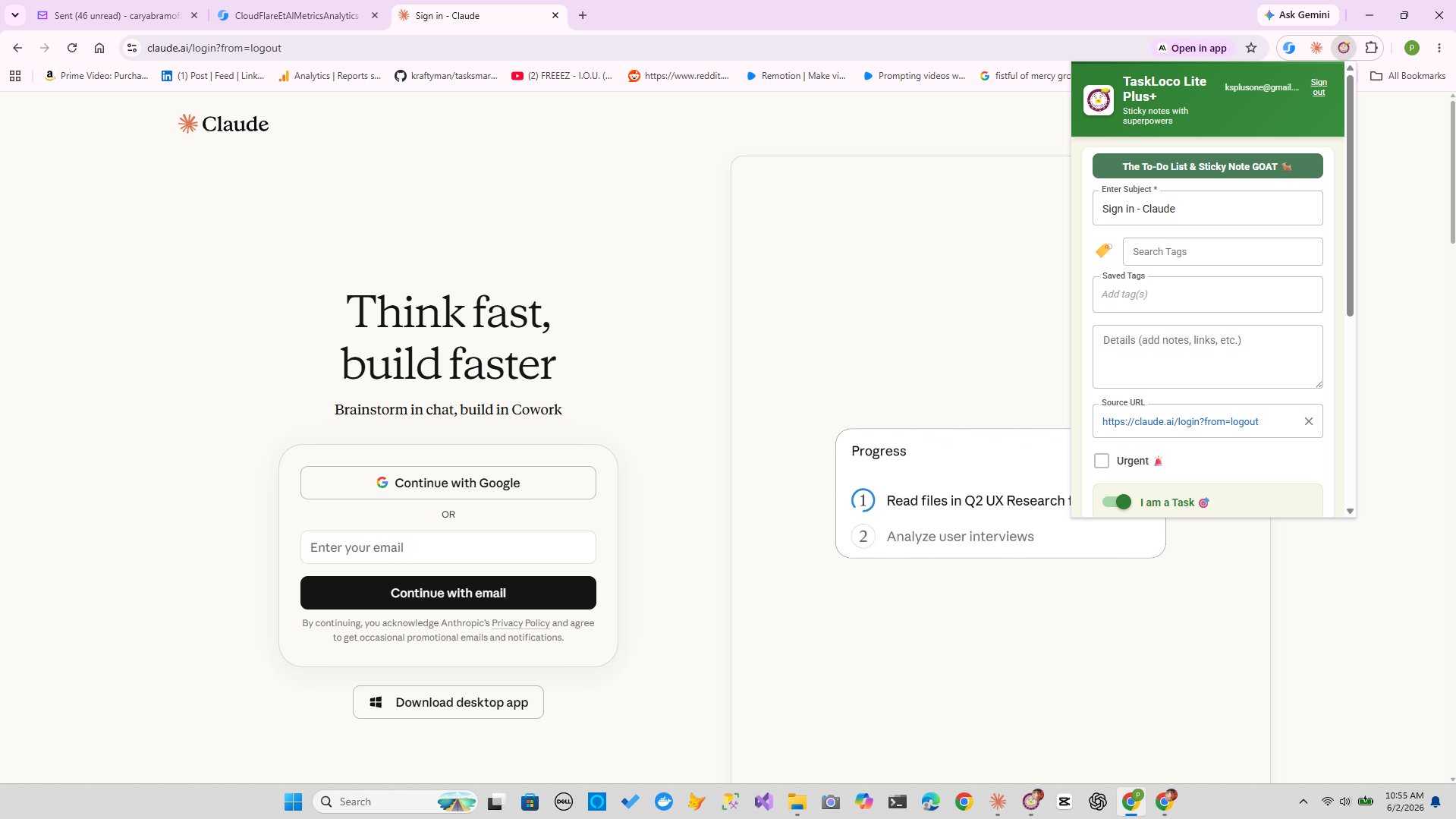
The capture problem is real. Ideas don't arrive when you're at your desk with a clean browser tab open. They arrive in the middle of reading an article, watching a video, or sitting in a meeting. TaskLoco's Chrome extension solves this directly: one click captures any webpage — title, URL, and selected text — into a new note without breaking your flow. You stay in context. The idea lands in your wall.
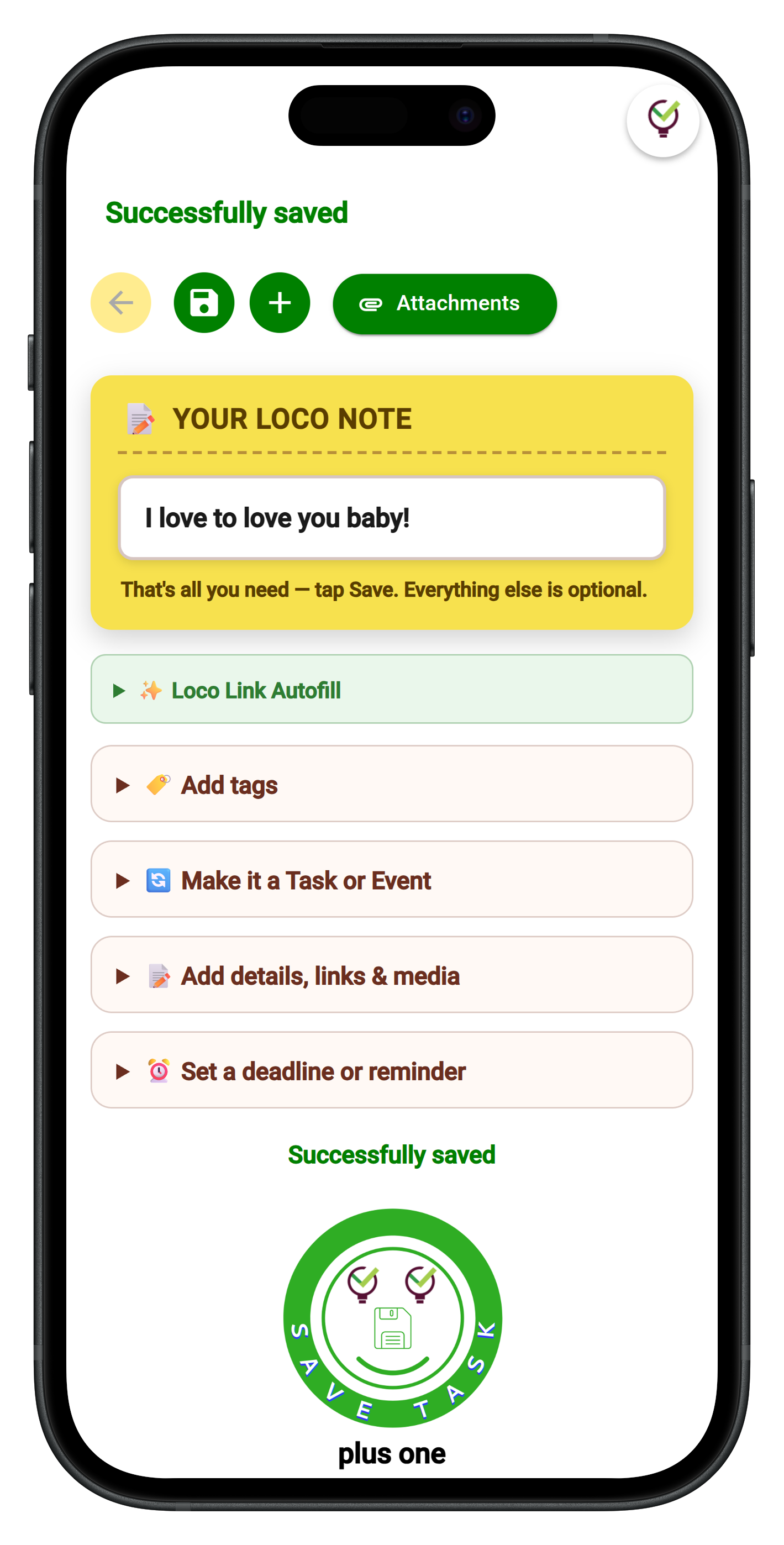
On mobile, the Lite Plus+ web app runs in your phone's browser and syncs every note across all your devices the moment you save. You can start a note on your phone during a commute and it's waiting on your desktop when you get in. No emailing yourself. No switching apps to find it.
Revisiting, though, is the harder problem — and it's where most systems quietly fail. TaskLoco Premium adds the bridge: a reminder that fires as a push notification to your phone and computer, and when you tap it, it deep-links straight back to the original note. Not to your inbox. Not to a home screen. To the exact idea that needs your attention. Optional email notifications are available too, and SMS is an optional add-on if you want it.
That deep-link is the difference between a reminder that interrupts you and one that actually moves something forward. You tap, you're in context, you act.
Keeping Ideas Alive When You're Working With Others
A solo idea bank is valuable. A shared one can change how a team thinks. TaskLoco Premium's team sharing works the way email does — you share a note and the recipient can clone it, make it their own, annotate it, and run with it. There are no permission tiers to configure, no admin dashboards to manage. You share, they get it, they own a copy. Clean and fast.
File attachments travel with the note. If you share a note that has a design mockup attached, the recipient gets the mockup too. The idea and its supporting material stay together. This matters when you're handing off a brief, running a creative review, or collecting input on something you've been building in your idea bank for weeks.
For people who want to start without committing, TaskLoco Lite is a completely free, anonymous native app on iPhone and Android — no sign-in, no account, stores up to 20 notes on your device. It's the lowest-friction way to try the sticky-note model before deciding whether Premium is worth it. Lite Plus+ is the free web app tier: sign in with Google, sync up to 30 notes across all your devices, and use the Chrome extension to capture from anywhere. Neither free tier includes reminders, file attachments, or team sharing — those are Premium features — but either one is a genuine starting point.
TaskLoco Premium is regularly $9.99/month per person. Right now, charter members can lock in 50% off the regular price — forever. That means $4.99/month per person today. And if our price ever goes up, you still pay half. Always.
Code CHARTER50 auto-applies at checkout. First 500 spots only — once they're gone, this offer is gone permanently. Act fast while spots last.
Every Premium subscription includes unlimited notes, 10GB file storage, reminders, calendar, and team sharing. Each team member requires a separate subscription. 7-day free trial — no charge until day 8. Cancel anytime.
Free Options: TaskLoco
TaskLoco Lite
- Native iPhone & Android app
- Completely anonymous — no sign-in
- Data stays on your device
- Up to 20 notes
- Free forever
TaskLoco Lite Plus+
- Web app + Chrome extension
- Sign in with Google
- Wall syncs across all devices
- Up to 30 notes
- Free forever
Lock In 50% Off — Forever
7-day free trial. No charge until day 8. CHARTER50 auto-applies at checkout.
🔒 Lock In My Charter SpotSee TaskLoco in Action
Frequently Asked Questions
What is a visual idea bank?
A visual idea bank is a spatial, always-visible surface — physical or digital — where you store ideas in a way that keeps them in front of you rather than archived away. Unlike a list or folder system, a visual bank uses position, color, and card layout so you can scan your ideas at a glance without searching. The goal is to make ideas feel alive rather than buried.
How is a visual idea bank different from regular notes?
Regular notes hide in lists. A visual idea bank keeps ideas spatially arranged so you can see them without performing a search. The spatial layout helps your brain build a mental map — you know where things live, you notice patterns, and you feel when the wall is getting crowded with a theme. That visibility is what makes you actually revisit it.
How does TaskLoco work as a visual idea bank?
TaskLoco's wall view is a free-form sticky-note surface where each idea gets its own card. You can color-code, cluster, and expand notes with text, images, and file attachments. Premium adds reminders that fire as push notifications and deep-link straight back to the original note — so when an idea is ready to become action, you're dropped directly into context.
Can I capture ideas quickly from the web?
Yes. TaskLoco's free Chrome extension captures any webpage — title, URL, and selected text — into a new note in one click. You stay in your browser, the idea lands in your wall, and you keep reading. It's designed for the moment when an idea arrives mid-flow and you can't afford to break your train of thought.
Does TaskLoco have a free version I can try?
Two of them. TaskLoco Lite is a completely free, anonymous native app on iPhone and Android — no sign-in required, up to 20 notes stored on your device. TaskLoco Lite Plus+ is the free web app tier — sign in with Google, sync up to 30 notes across all devices, and use the Chrome extension. Neither free tier includes reminders, file attachments, or team sharing, but both are real starting points for the visual idea bank model.
How do reminders work with idea notes in TaskLoco?
TaskLoco Premium reminders are delivered as push notifications to your phone and computer. The key feature: tapping the notification deep-links you straight back to the original note — not your home screen, not your inbox, but the exact idea that needs attention. Optional email notifications are available, and SMS is an optional add-on.
What does TaskLoco Premium cost?
$9.99/month per person (currently $4.99/month per person for first 500 charter members with code CHARTER50)
Born in Brooklyn. Powered by AWS. Your data stays yours.
TaskLoco is available on iPhone, Android, Chrome, and every web browser.