At some point in your first semester you realize that a single to-do list cannot hold a dissertation. A to-do list is linear. Grad school is not. You have a qualifying exam in six weeks, three seminar readings due Thursday, a draft your advisor has been waiting on since October, and a conference abstract you keep meaning to start. These things don't live in a column — they live in clusters, orbiting each other in ways that a bullet list completely fails to represent.
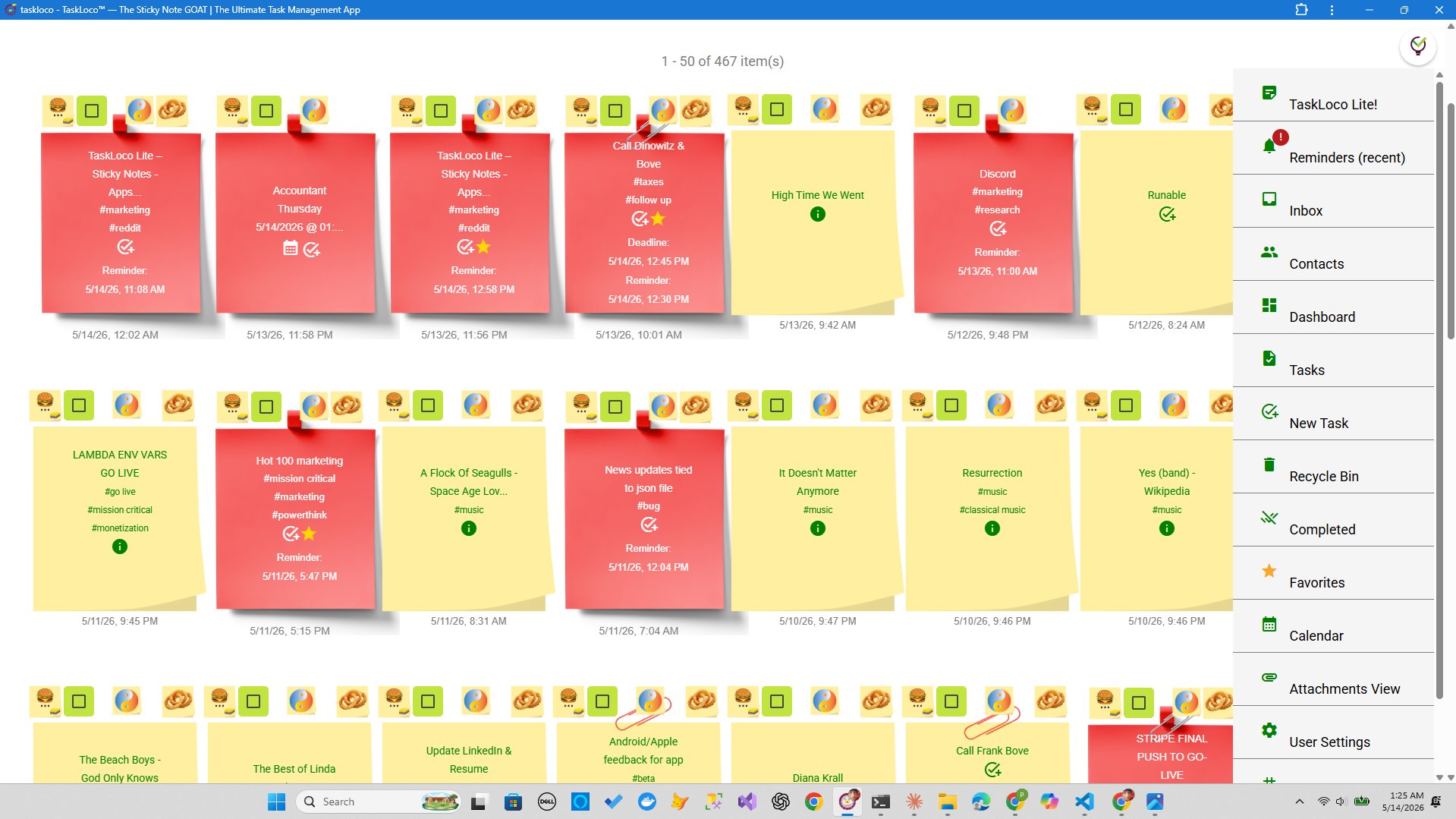
A visual planner treats your workload the way your brain actually sees it: spatially. You can group related tasks, move things around as priorities shift, attach files directly to the note they belong to, and set a reminder that fires a push notification straight to your phone or computer — and lands you back on exactly that note when you tap it. For grad students especially, that last part matters: the context is everything, and losing it costs hours.
What to Look for in a Visual Planner for Graduate School
Before recommending any specific tool, it's worth being clear about what actually makes a visual planner useful for grad students — because the needs here are different from a software team running sprints or a freelancer tracking invoices.
1. Spatial organization that mirrors how research actually works. Graduate work is non-linear. A planner that forces you into a single ordered list will always feel wrong. The right tool lets you place notes in clusters — one group for Chapter 2 drafts, another for your IRB timeline, another for seminar obligations — and rearrange them freely as the semester evolves. Kanban boards partially solve this; open sticky-note walls solve it better, because there's no forced column logic.
2. File attachments that live with the task, not in a separate folder. You will accumulate PDFs, annotated drafts, feedback from your advisor, IRB forms, conference programs. A planner that can't hold these forces you to maintain a parallel filing system, which means two places to search every time you need something. The best tools attach files directly to the note or task they belong to, so the context is always there.
3. Reminders that actually reach you. Email reminders are easy to miss. Calendar invites get buried. The most effective reminder systems deliver a push notification — to your phone and your computer — and ideally drop you directly into the task when you tap it. For deadline-dense environments like grad school, that deep-link back to the original note is the difference between acting on a reminder and dismissing it.
Secondary considerations worth evaluating: whether the tool has a usable free tier so you can try it without committing, whether it syncs across devices without asking you to manage exports, and whether the learning curve is low enough that you'll actually use it during crunch weeks — not just when you have time to tinker.
Why TaskLoco Fits Grad School Better Than Generic Productivity Tools
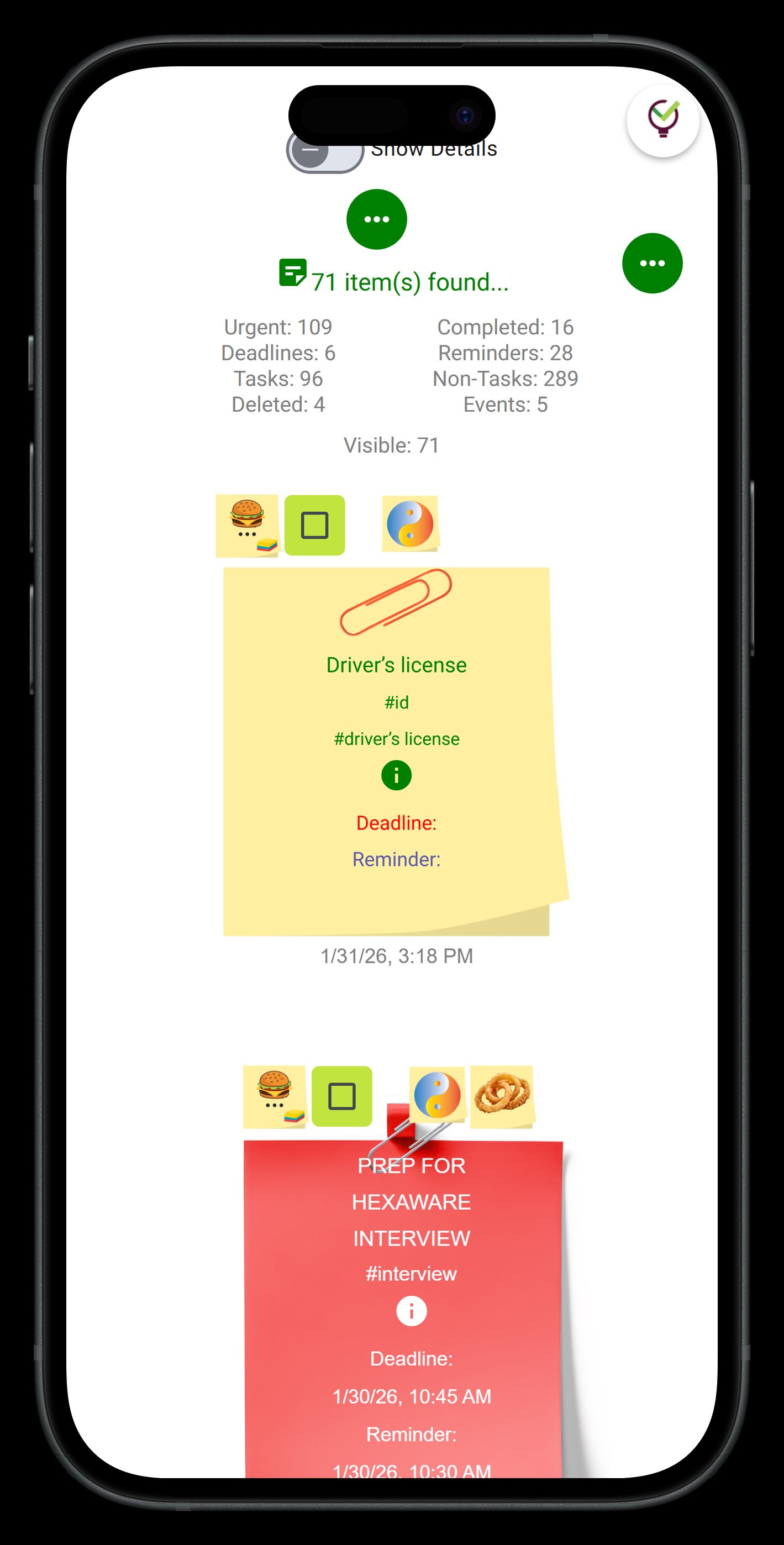
TaskLoco was built around the sticky note as a first-class object — not a widget bolted onto a project management platform. That distinction matters for grad students because the sticky note is already how most researchers think: a scrap of paper with one idea, pinned somewhere visible, moved when priorities change. TaskLoco digitizes that instinct without adding enterprise ceremony.
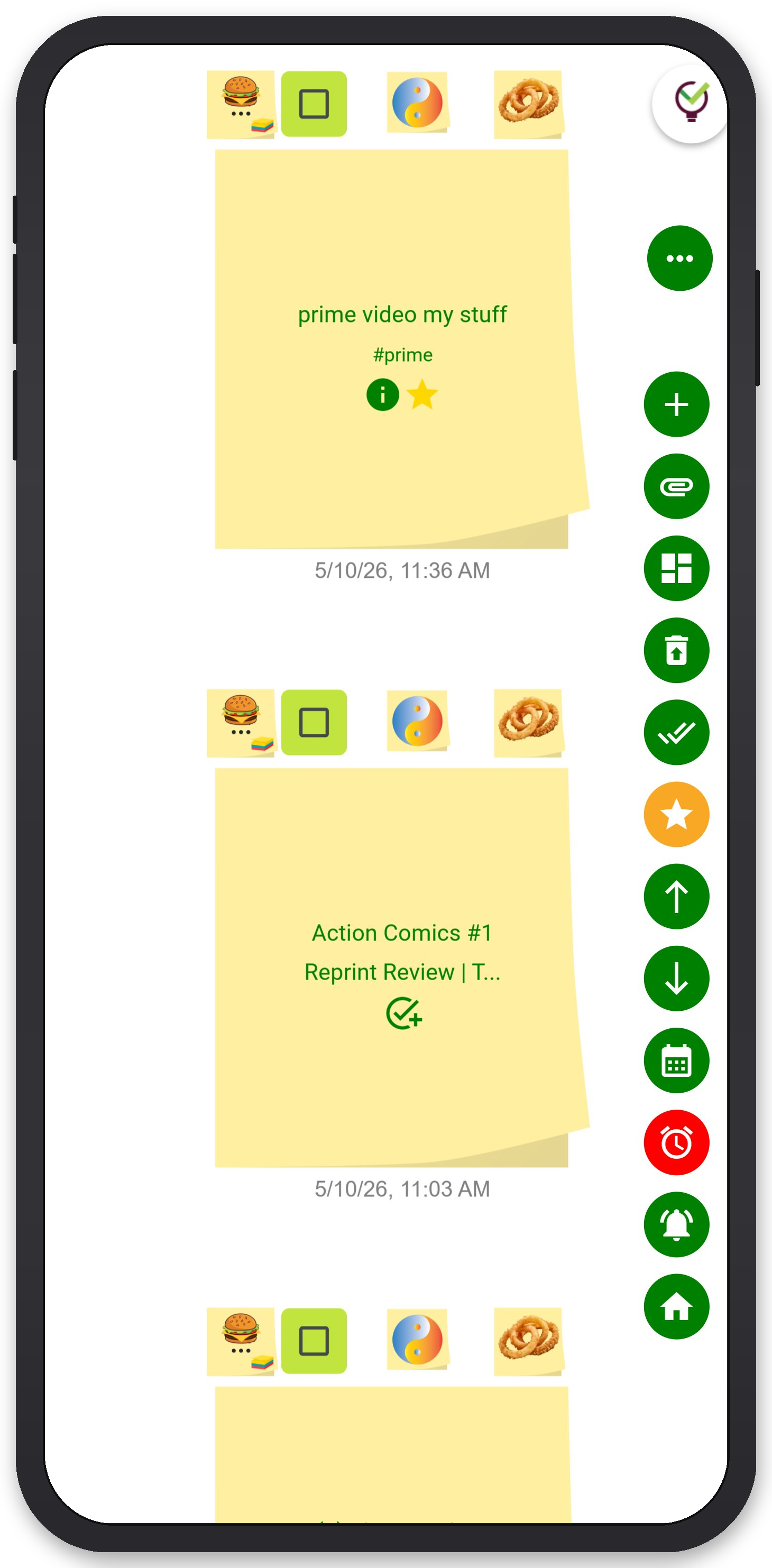
The wall view is the centerpiece. You can create as many notes as you need (unlimited on Premium), arrange them spatially, color-code by project or urgency, and attach files directly to each note. Your advisor sends back a marked-up draft? Attach it to the note for that chapter. You find a paper you need to read before your committee meeting? Create a note, paste the link or attach the PDF, set a reminder. When that reminder fires — as a push notification to your phone and computer — tapping it takes you directly back to that note. Not to a generic home screen. Back to the exact context.
That deep-link behavior is underrated. Most reminder tools remind you that something exists but not what it actually is. By the time you navigate back to the relevant task, you've lost the mental thread. TaskLoco's reminders are designed around the assumption that context is the whole point.
For research tasks specifically, the 10GB of file storage included with Premium is genuinely useful. Academic PDFs, exported Zotero references, annotated bibliographies, draft chapters — these aren't small files, and a planner that can actually hold them is meaningfully better than one that just links out to a cloud folder you have to manage separately.
Building Your Grad School System in TaskLoco
The most effective setup for a graduate student isn't complicated — it's consistent. Here's a structure that works for most programs:
- One cluster per major obligation: Dissertation, Coursework, Research Admin (IRB, grants, conference submissions), and Personal. Each cluster lives in its own region of the wall. Notes move between clusters as they evolve — a conference abstract might start in Research Admin and migrate to Dissertation when it becomes a chapter.
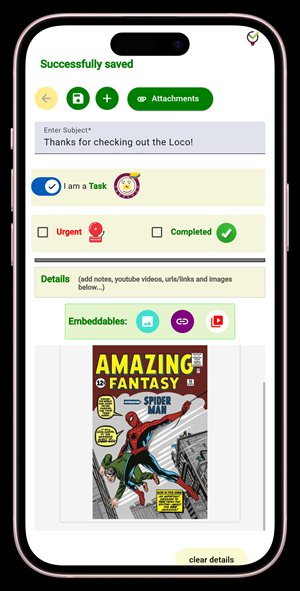
- Attach everything to the relevant note: Advisor feedback, draft chapters, reference PDFs, grading rubrics. The note is the container — not just a pointer to a folder somewhere else. Premium's 10GB storage means you won't hit a wall for a long time.
- Use reminders surgically, not liberally: Set a push-notification reminder on the three things that actually need to happen this week, not on everything. Reminders deep-link back to the note, so when one fires you're immediately in context — no search required.
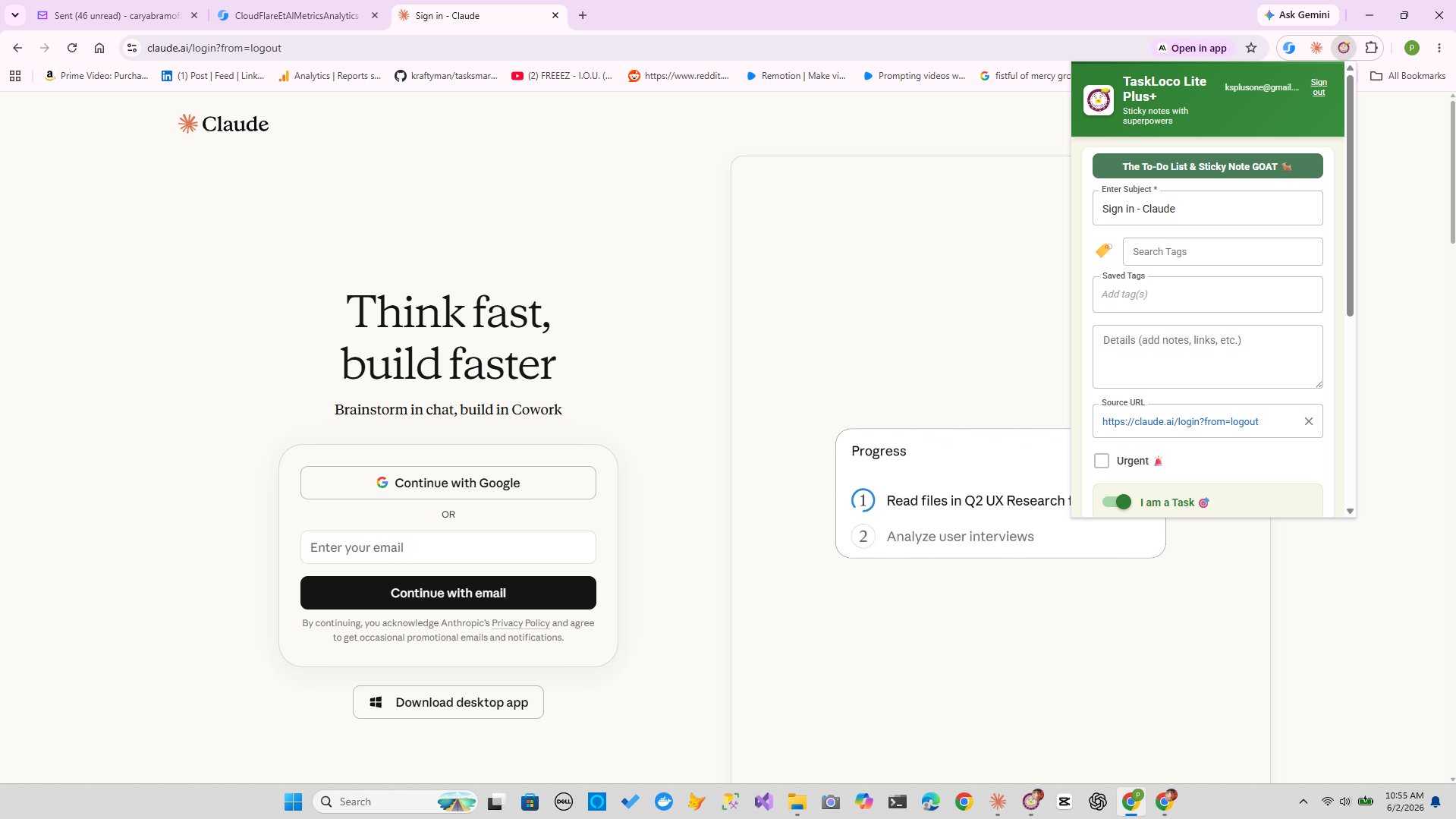
- Use the Chrome extension to capture instantly: When you find a paper, a call for papers, or a source mid-browsing, the Chrome extension captures it in one click without breaking your reading flow. That captured note lands on your wall immediately, ready to be sorted into the right cluster.
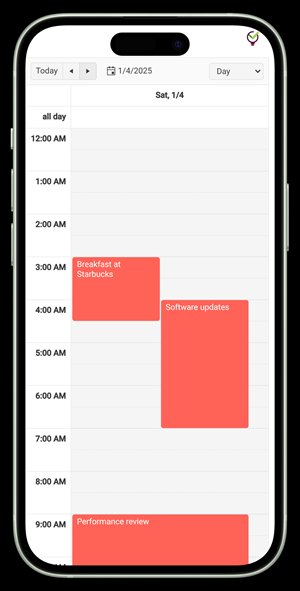
The calendar view in Premium gives you a timeline overlay on top of the wall — useful for the weeks before a submission deadline when you need to see how tasks fall against actual dates rather than just relative priority.
For students who want to share notes with a study partner, a co-author, or a lab group, Premium's team sharing works like sending an email: the recipient gets the note and can clone it as their own. There are no permissions levels to configure, no access management headaches. You share; they have it. That simplicity is deliberate and it's the right call for academic collaboration, where the overhead of a formal permissions system is pure friction.
TaskLoco Premium is regularly $9.99/month per person. Right now, charter members can lock in 50% off the regular price — forever. That means $4.99/month per person today. And if our price ever goes up, you still pay half. Always.
Code CHARTER50 auto-applies at checkout. First 500 spots only — once they're gone, this offer is gone permanently. Act fast while spots last.
Every Premium subscription includes unlimited notes, 10GB file storage, reminders, calendar, and team sharing. Each team member requires a separate subscription. 7-day free trial — no charge until day 8. Cancel anytime.
Free Options: TaskLoco
TaskLoco Lite
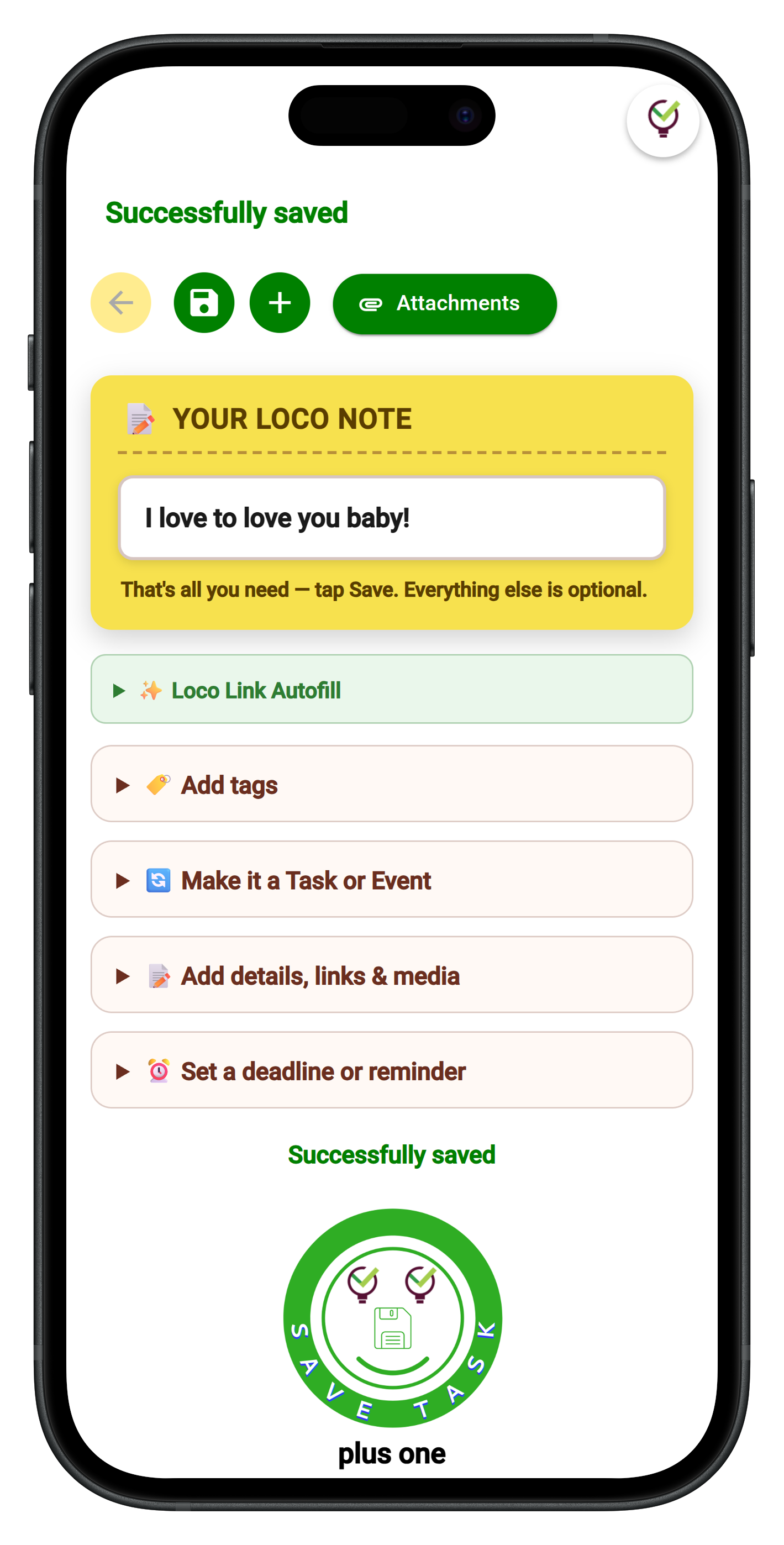
- Native iPhone & Android app
- Completely anonymous — no sign-in
- Data stays on your device
- Up to 20 notes
- Free forever
TaskLoco Lite Plus+
- Web app + Chrome extension
- Sign in with Google
- Wall syncs across all devices
- Up to 30 notes
- Free forever
Lock In 50% Off — Forever
7-day free trial. No charge until day 8. CHARTER50 auto-applies at checkout.
🔒 Lock In My Charter SpotSee TaskLoco in Action
Frequently Asked Questions
What is a visual planner and why does it work better for grad school than a to-do list?
A visual planner displays your tasks and notes spatially — in clusters, on a wall or board — rather than as a linear ordered list. Grad school involves multiple simultaneous obligations (dissertation, coursework, research admin, teaching) that have different timelines and different relationships to each other. A to-do list can't represent those relationships; a visual wall can. You can see at a glance that your conference abstract and your Chapter 3 draft are in the same research cluster, while your seminar readings and grading live separately. Rearranging is as fast as dragging.
Does TaskLoco have a free version I can use as a grad student?
Yes — two of them. TaskLoco Lite is the native iPhone and Android app: completely anonymous, no sign-in, stores up to 20 notes on your device. TaskLoco Lite Plus+ is the free web app and Chrome extension: sign in with Google, sync up to 30 notes across all your devices, and capture any webpage in one click. Neither free tier includes reminders, file attachments, or unlimited notes — those are Premium features — but Lite Plus+ is a genuinely useful free tool for students who need cross-device sync and fast browser capture.
Can I attach research papers and draft chapters to my notes in TaskLoco?
Yes, with TaskLoco Premium. File attachments are a Premium-only feature, and the plan includes 10GB of storage. You can attach PDFs, Word documents, images, and other file types directly to the note they belong to. If you need more storage, additional tiers (50GB, 200GB, 1TB) are available as add-ons. The free tiers — Lite and Lite Plus+ — do not support file attachments.
How do reminders work in TaskLoco?
Reminders in TaskLoco are delivered as push notifications to your phone and computer. When you tap the notification, it deep-links you directly back to the original note — so you land in context immediately, not on a generic home screen. Optional email notification is also available, and an optional SMS add-on is available as well. Reminders are a Premium-only feature and are not available on the free Lite or Lite Plus+ tiers.
How does the Chrome extension help with research?
The TaskLoco Chrome extension captures any webpage in one click. When you're reading a journal article, a call for papers, a source, or a conference announcement, you can clip it to your TaskLoco wall without leaving the tab. The captured note syncs immediately and can be sorted into whatever cluster it belongs to. The Chrome extension is part of the free Lite Plus+ tier — you don't need Premium to use it, though you'll get more out of it at Premium when you can attach files and set reminders on what you capture.
Can I share notes with a co-author or study group?
Yes — team sharing is a Premium feature and works simply: you share a note and the recipient gets it, can read it, and can clone it as their own. It functions like sending an email — no permissions levels, no access management, no admin overhead. Each person in your group needs their own Premium subscription; sharing is included in every Premium plan.
What's the pricing for TaskLoco Premium?
$9.99/month per person (currently $4.99/month per person for first 500 charter members with code CHARTER50)
Born in Brooklyn. Powered by AWS. Your data stays yours.
TaskLoco is available on iPhone, Android, Chrome, and every web browser.