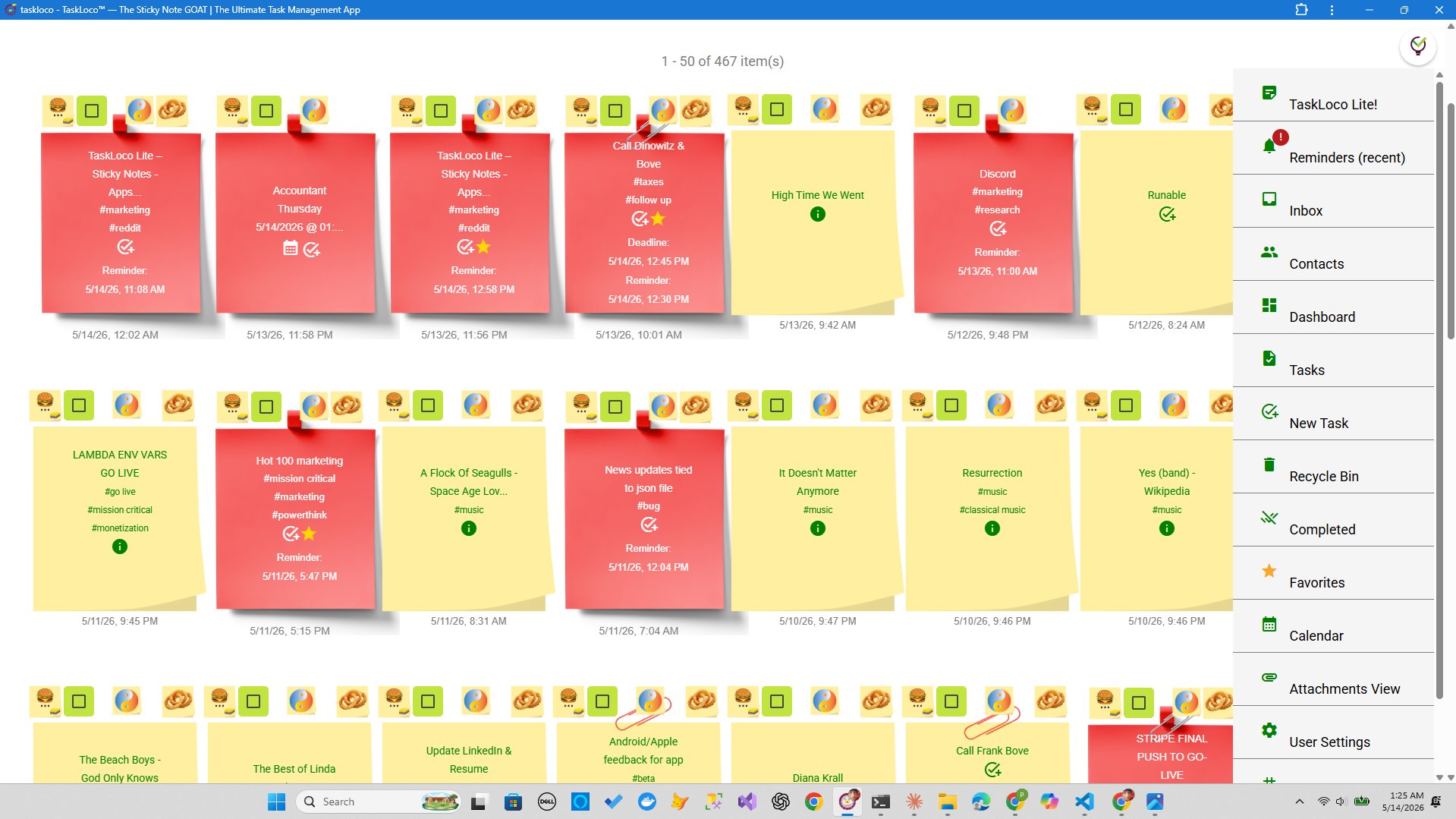
Every marketer and creator collects inspiration. The problem isn't finding good work — it's what happens after you screenshot it. That image lands in a camera roll alongside 4,000 other photos, or in a folder called 'inspo_final_v3,' and you never see it again when you actually need it. A swipe file is only useful if you can get back to what you saved.
The idea of a swipe file has been around since direct-response copywriters started clipping print ads. The concept is simple: save work that works, study it when you need to produce your own. What's changed is the medium. Today your swipe file might hold landing page screenshots, subject lines, video hooks, color palettes, brand decks, and campaign breakdowns — all in different formats, from different sources, piling up faster than you can tag them. The tool you use to hold all of it matters more than most people admit.
What to look for in a visual swipe file tool
Before picking any tool, it helps to agree on what a swipe file actually needs to do. At its core, a swipe file is a retrieval system. You are not just storing things — you are betting that you will be able to find the right thing, at the right moment, under deadline pressure. That changes which features actually matter.
1. Fast capture, zero friction. If saving something takes more than three seconds, you will stop doing it. The best tools meet you where you already are — in the browser, on your phone, or mid-scroll — and let you clip or paste without breaking your flow. A browser extension that grabs the current page in one click is not a luxury; it is the feature that determines whether your swipe file stays alive six months from now.
2. Visual layout you can actually scan. Swipe files are meant to trigger creative instincts. A flat list of text links does not do that. You need to see thumbnails, images, and notes arranged spatially so your eye can wander and make unexpected connections. A board or wall view — where you can move things around and group them by campaign, format, or mood — is what separates a real swipe file from a bookmarks folder.
3. File attachments and full-text search. Inspiration arrives in every format: PDFs, screenshots, short video clips, brand guidelines, annotated images. Your tool needs to hold all of it without forcing you into a separate storage system. And when you need something specific, you need to search across everything — not just titles, but the content of your notes too. Without that, a large swipe file becomes a black hole.
Why sticky notes are the right shape for a swipe file
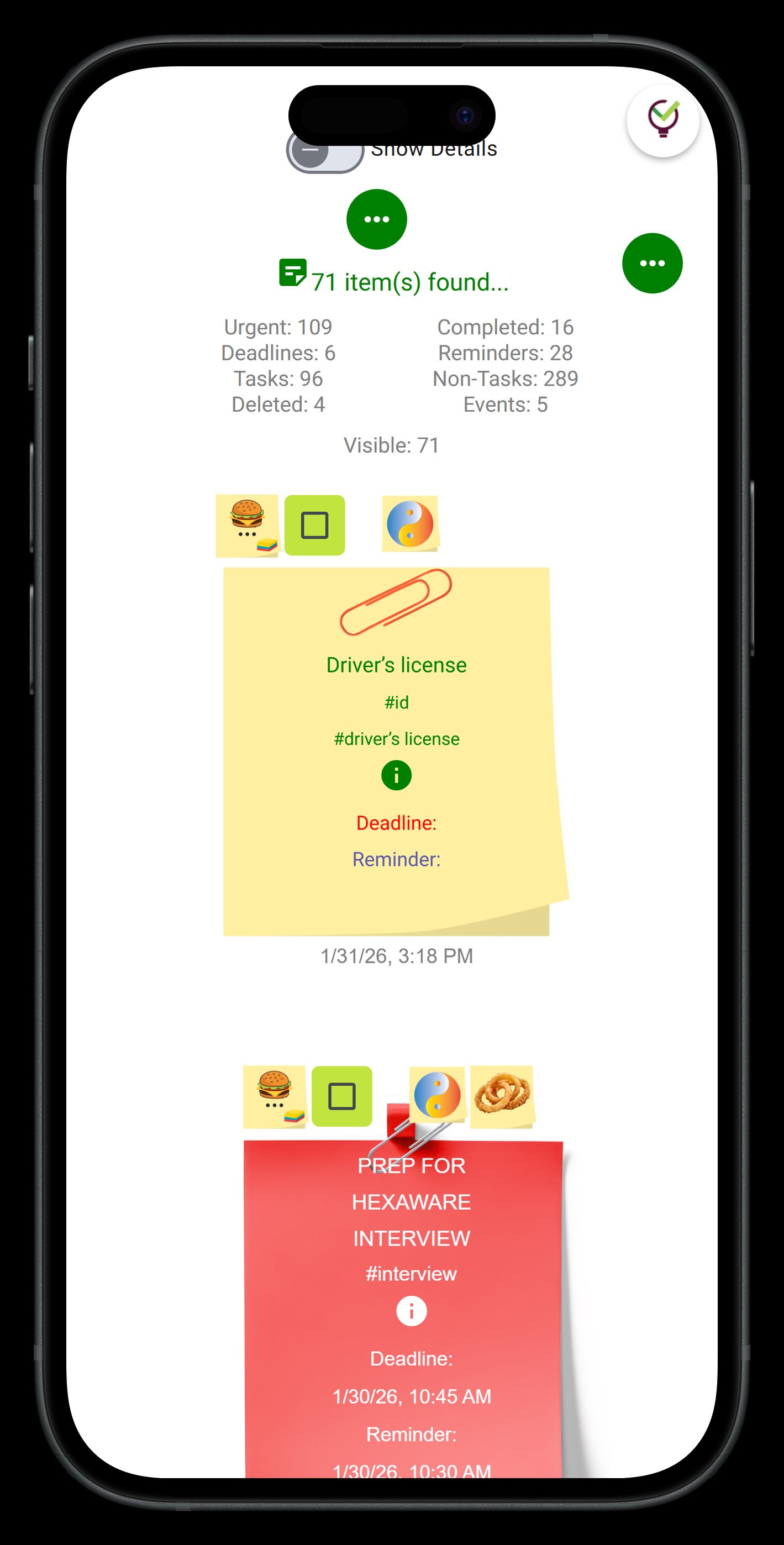
The sticky note is not a metaphor — it is actually the right unit of information for creative inspiration. Each piece of swipe is self-contained. A great headline, a clever CTA, a color palette that stopped you mid-scroll — none of these need a project hierarchy or a status column. They need a surface where you can pin them, annotate them, and move them around when you are planning a campaign.
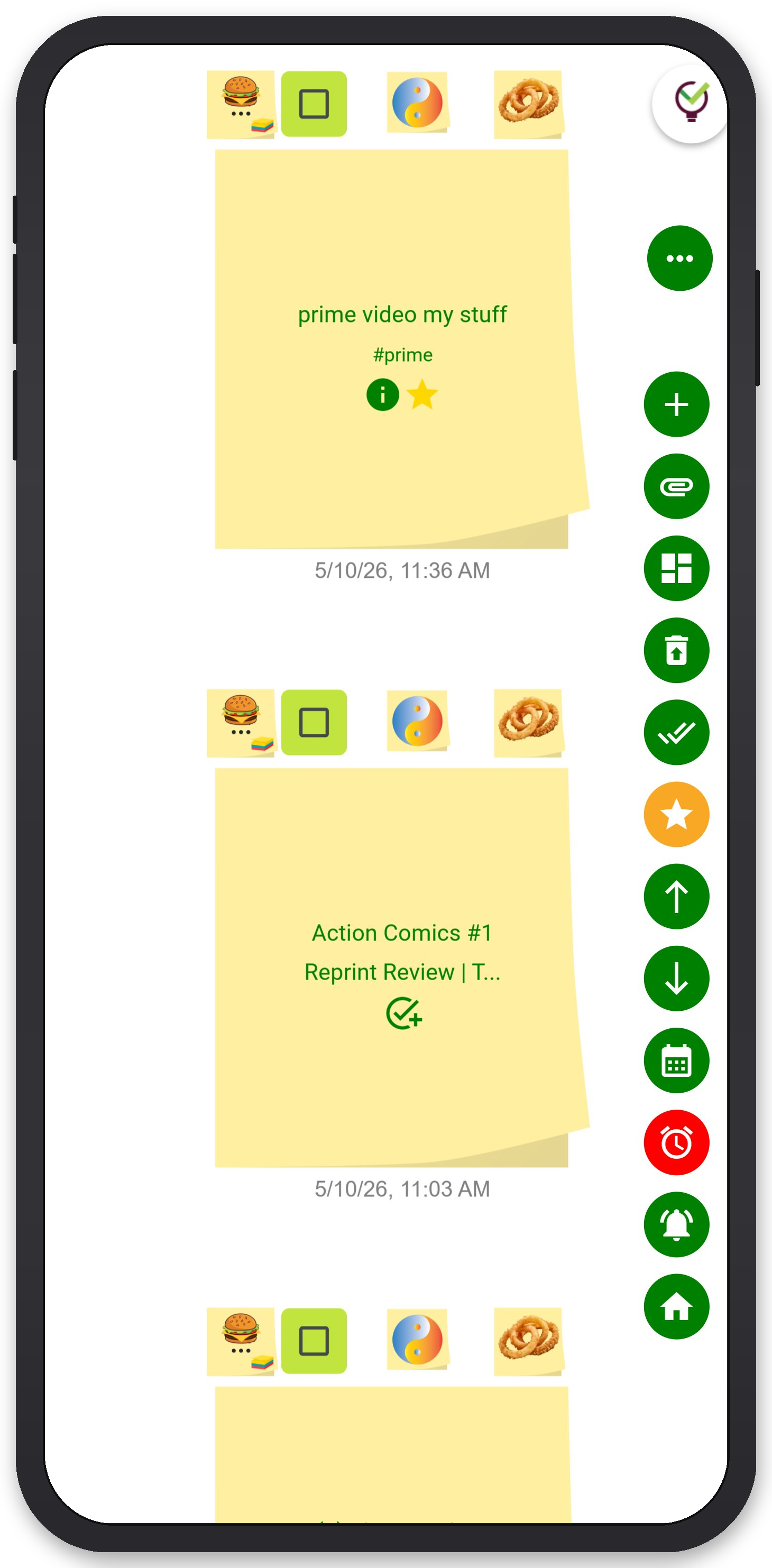
TaskLoco's wall view works exactly this way. Every note is a card you can place anywhere on a freeform canvas. You can cluster your email swipe separately from your social swipe. You can pull three notes together when you are working on a specific launch. You can attach the actual screenshot, PDF, or file directly to the note — no linking out to Google Drive, no separate upload step. The attachment lives with the idea, not somewhere else.
When you are ready to use something, a reminder fires as a push notification that deep-links you straight back to the original note. You are not hunting through a folder — you land exactly where you need to be. That is not a small thing when you are spinning up a campaign and need your reference material right now.
Capturing from the web without breaking your flow
The biggest failure mode for any swipe file is the friction between seeing something and saving it. Most people start with good intentions — they'll bookmark it, screenshot it, email it to themselves — and then the filing never happens. Three weeks later they vaguely remember seeing a killer subject line somewhere and spend twenty minutes trying to reconstruct it from memory.
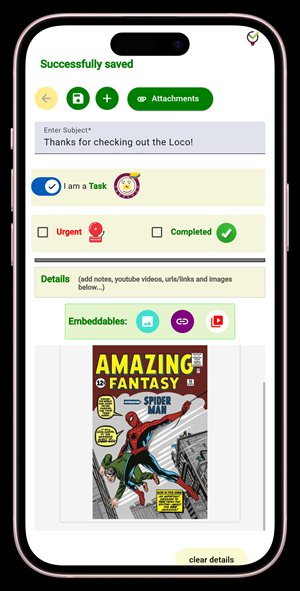
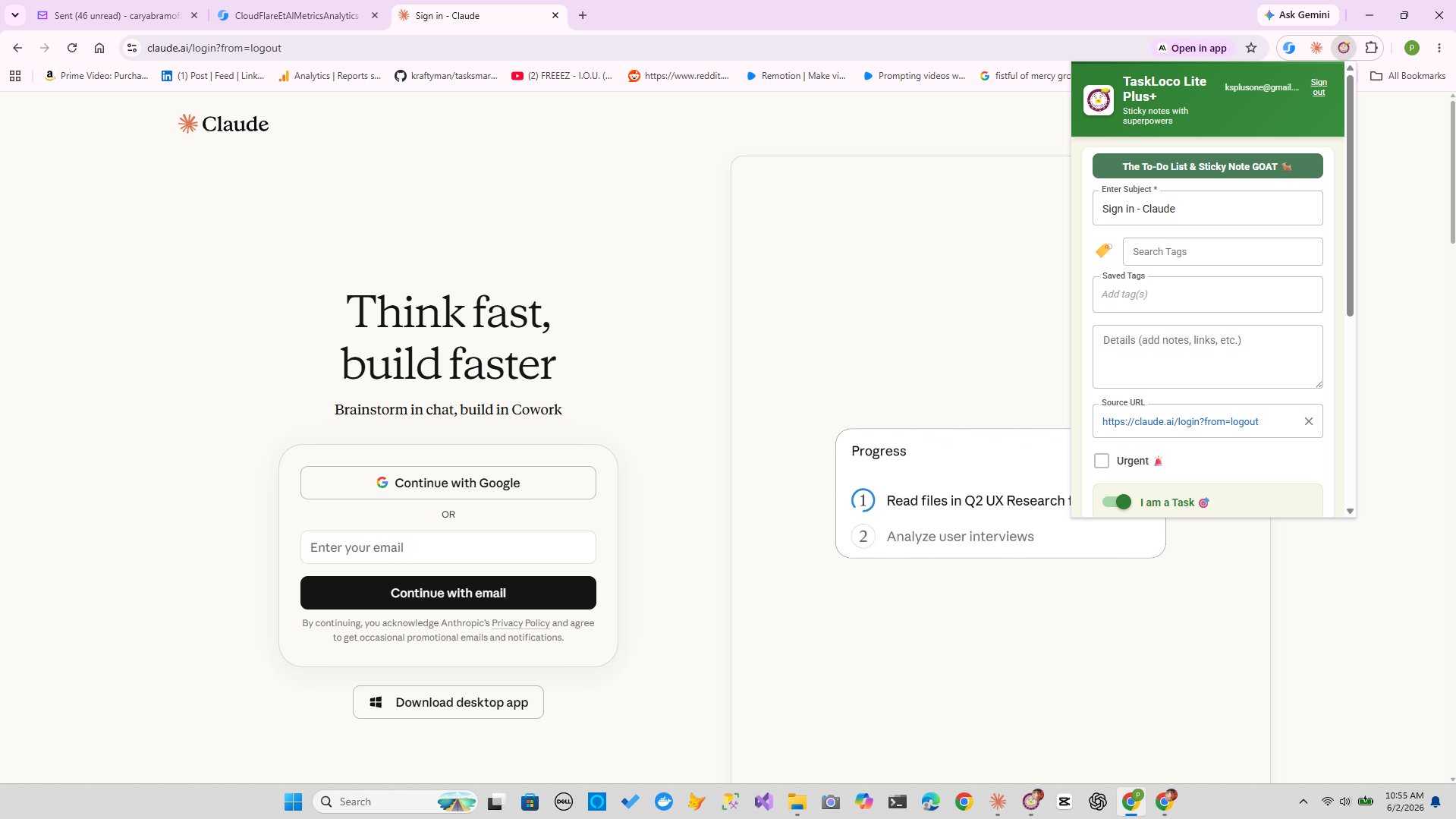
TaskLoco's Chrome extension closes that gap. One click captures the current page and drops it into your TaskLoco wall. You can add a note right there — what you liked about it, which campaign it's relevant to, what format you'd adapt it into — and move on. The capture takes under five seconds. The context you add takes another ten. That's the whole workflow.
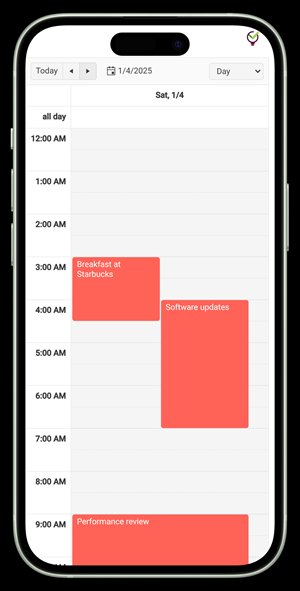
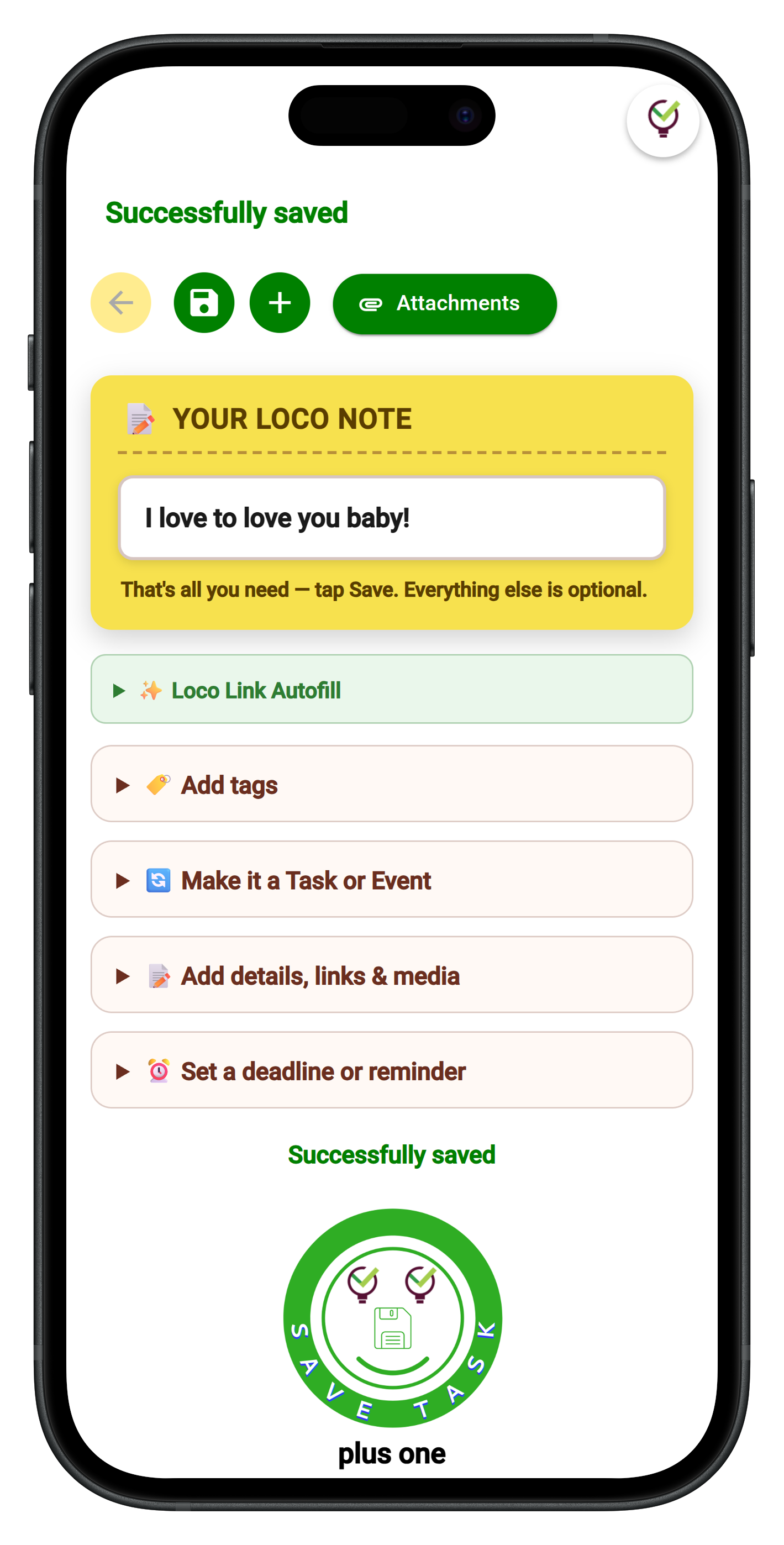
On mobile, the web app runs in your phone's browser, so your swipe file travels with you. Spot something on Instagram, in an email, at a conference? Open TaskLoco, create a note, attach the screenshot. Everything syncs in real time across every device through Lite Plus+ and Premium, so the note you created on your phone is waiting on your desktop when you sit down to work.
The Chrome extension is free — it works with Lite Plus+ and Premium accounts. For anyone doing serious creative research, it is the feature that makes the difference between a swipe file that grows organically and one that stays at 40 items forever.
TaskLoco Premium is regularly $9.99/month per person. Right now, charter members can lock in 50% off the regular price — forever. That means $4.99/month per person today. And if our price ever goes up, you still pay half. Always.
Code CHARTER50 auto-applies at checkout. First 500 spots only — once they're gone, this offer is gone permanently. Act fast while spots last.
Every Premium subscription includes unlimited notes, 10GB file storage, reminders, calendar, and team sharing. Each team member requires a separate subscription. 7-day free trial — no charge until day 8. Cancel anytime.
Free Options: TaskLoco
TaskLoco Lite
- Native iPhone & Android app
- Completely anonymous — no sign-in
- Data stays on your device
- Up to 20 notes
- Free forever
TaskLoco Lite Plus+
- Web app + Chrome extension
- Sign in with Google
- Wall syncs across all devices
- Up to 30 notes
- Free forever
Lock In 50% Off — Forever
7-day free trial. No charge until day 8. CHARTER50 auto-applies at checkout.
🔒 Lock In My Charter SpotSee TaskLoco in Action
Frequently Asked Questions
What is a swipe file and why do marketers use one?
A swipe file is a curated collection of creative work that inspires or informs your own output — headlines, ads, landing pages, email subject lines, design layouts, campaign structures. Marketers and copywriters keep them to study what works, reference proven patterns when starting new projects, and avoid the blank-page problem. The term comes from direct-response copywriters who would literally clip and file print ads they wanted to study. Today it is digital, but the purpose is identical: collect the best, retrieve it when you need it.
What is the best format for a visual swipe file?
A wall or board layout — where individual notes or cards are arranged spatially — is significantly more useful than a flat list or folder structure. Creative inspiration is visual and associative. Being able to see clusters of related material at a glance, move things around by campaign or format, and attach actual images directly to notes makes the swipe file a working creative tool rather than an archive. TaskLoco's wall view is designed exactly this way: sticky notes on a freeform canvas, with file attachments, annotations, and full-text search built in.
How do I quickly capture web pages to my swipe file?
The TaskLoco Chrome extension lets you capture any webpage in a single click, without leaving the tab you're on. It creates a new note in your TaskLoco wall with the page captured, and you can add annotations or tags immediately. The extension is free and works with both Lite Plus+ and Premium accounts. It is the fastest way to keep your swipe file growing without the friction that kills most people's capture habits.
Can I share my swipe file with teammates or clients?
Yes. In TaskLoco Premium, sharing a note works like sending an email — the person you share with receives a copy they can clone and adapt. There are no complex permissions or access levels. You can share individual notes with anyone, and they get their own version to work with. Your original stays exactly as you organized it. Each team member needs their own Premium subscription to share notes and access the full feature set.
How do I organize a swipe file so I can actually find things?
The two biggest organizational tools in a swipe file are spatial grouping and search. In TaskLoco, you can move notes around the wall to cluster related material — all your email swipe in one area, social in another, video hooks somewhere else. For retrieval, TaskLoco's full-text search covers the content of all your notes and attachments, so you can find something by what it said rather than trying to remember what you named it. Reminders also help: set one on a note and it fires as a push notification that deep-links you straight back to that specific piece of inspiration when you need it.
What file types can I save in a digital swipe file?
TaskLoco Premium accepts file attachments of any type directly on a note — screenshots, PDFs, short video clips, brand decks, annotated images, audio files. Each Premium subscription includes 10GB of file storage per person, with optional add-on tiers (50GB, 200GB, 1TB) if your swipe file grows into a serious archive. Attachments live with the note that gives them context, not in a separate folder you have to maintain alongside your notes.
Is TaskLoco free to try as a swipe file tool?
$9.99/month per person (currently $4.99/month per person for first 500 charter members with code CHARTER50)
Born in Brooklyn. Powered by AWS. Your data stays yours.
TaskLoco is available on iPhone, Android, Chrome, and every web browser.