You know what you need to do. You've known for an hour. You're just not doing it. That's not laziness — that's activation energy, and it's one of the most underrated reasons people stay stuck despite having good intentions, good tools, and plenty of time.
The term comes from chemistry: a reaction won't start until you supply enough energy to get it going. Human behavior works the same way. Every task has a startup cost — the mental effort to locate it, load the context, decide where to begin. When that cost feels too high, the brain quietly defers. Understanding this mechanism is the first step to building a system that defeats it.
What Activation Energy Means in a Productivity Context
In chemistry, activation energy is the minimum energy required to start a reaction. The reaction might be highly favorable — it will release a lot of energy once it runs — but if you don't clear the initial threshold, nothing happens. A match and a pile of wood is the classic image: the wood wants to burn, but it won't until you supply that first spark.
Applied to getting things done, activation energy is everything that stands between you and the first sentence typed, the first email sent, the first item crossed off. It includes:
- Context-loading cost — remembering where you left off, what the task actually requires, and what "done" looks like
- Decision cost — choosing which task to start when you haven't prioritized ahead of time
- Setup cost — opening apps, finding files, scrolling through lists to find the relevant item
- Emotional cost — the low-grade dread some tasks carry that makes the brain prefer almost anything else
Crucially, activation energy is not the same as the difficulty of the task itself. A five-minute email can have enormous activation energy if the context is murky or the emotional stakes feel high. A genuinely complex project can have low activation energy if everything is laid out clearly and you know exactly where to pick up.
When choosing any tool or system to help with this problem, three criteria actually matter: visibility (can you see what needs doing without hunting?), capture speed (can you get a new task into the system before the thought evaporates?), and re-entry clarity (when you come back to a task after a break, does the system tell you exactly where to start?). Everything else is secondary.
The Science Behind Why Starting Is So Hard
There's real neuroscience here, and it's useful to understand it rather than just feel bad about it. The prefrontal cortex — the part of the brain responsible for planning and initiating tasks — is metabolically expensive to run. When a task is ambiguous or emotionally loaded, the brain's threat-detection systems can effectively veto the prefrontal cortex's attempt to start, steering attention toward lower-resistance activities.
This is sometimes described as the "amygdala hijack" in the context of procrastination, but the everyday version is subtler: it's not panic, it's just a gentle, persistent preference for anything other than the hard thing. Scrolling your phone isn't more pleasurable than doing the work — it just has lower activation energy.
Research on habit formation adds another layer. Habits have low activation energy by definition — the cue-routine-reward loop is so well-worn that the brain doesn't need to make a decision. It just runs. This is why behavioral scientists consistently find that the most effective productivity interventions are not about willpower; they're about reducing decision points. Every decision you remove from the path to starting is a direct reduction in activation energy.
The practical takeaway: build systems that make the right action the obvious, default, low-friction action. Your notes should be where you already are. Your reminders should reach you where you actually look. Your tasks should be visible before you have to go looking for them.
Building a Low-Activation-Energy System Around Sticky Notes
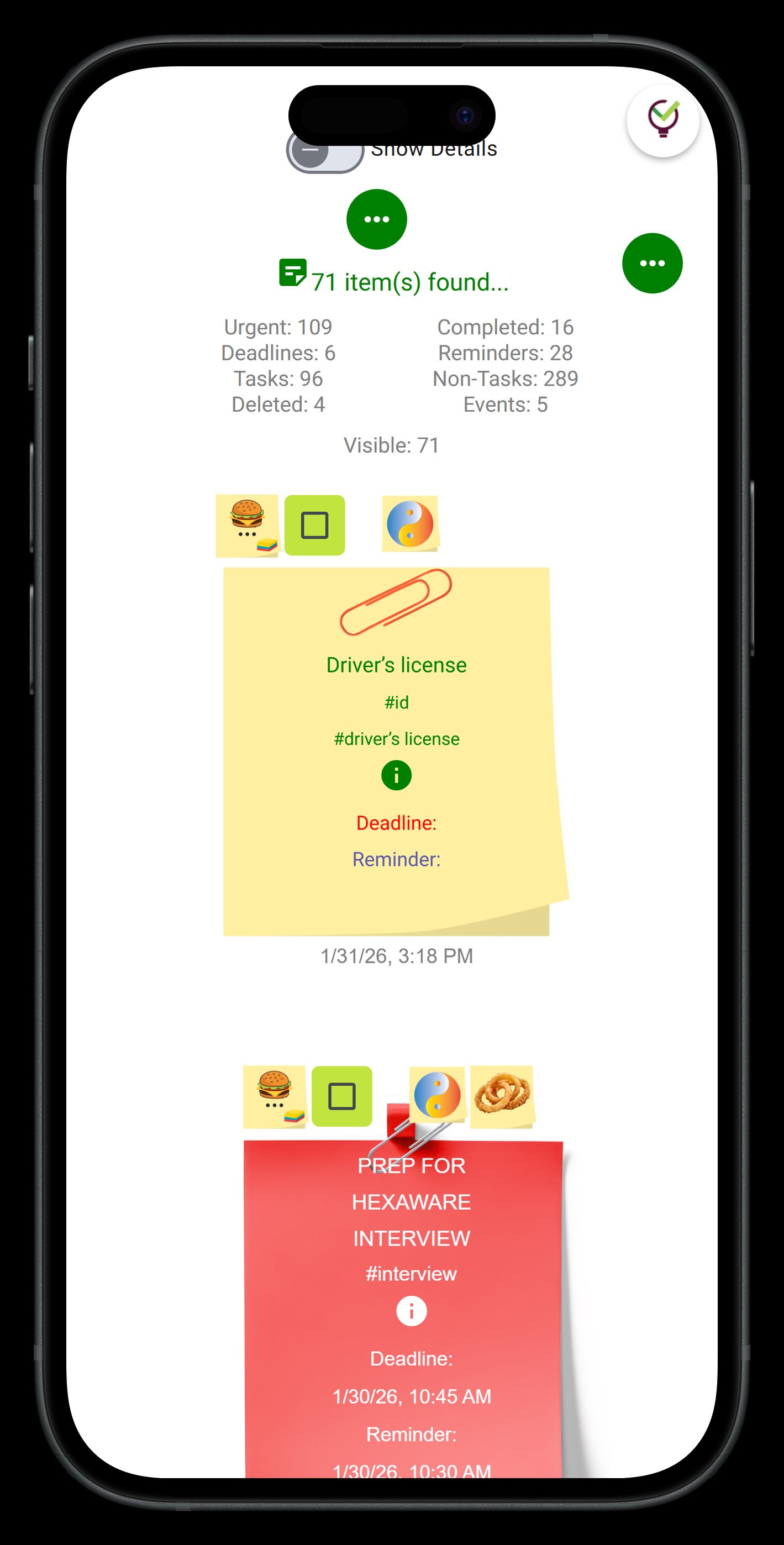
The enduring appeal of the physical sticky note is not nostalgia — it's behavioral design. A sticky note on your monitor has zero activation energy: it is already in your field of vision, it demands nothing, and it carries just enough context to eliminate the decision of what to do next. The problem with physical stickies is that they don't travel with you, they don't remind you, and they don't attach the files or links you need to actually do the thing.
A well-designed digital sticky note system solves all of that without adding the activation energy that traditional productivity apps pile on. The pattern that works looks like this:
- Instant capture — the moment a task surfaces, getting it into the system should take under five seconds. Friction at capture is fatal; you'll talk yourself out of it.
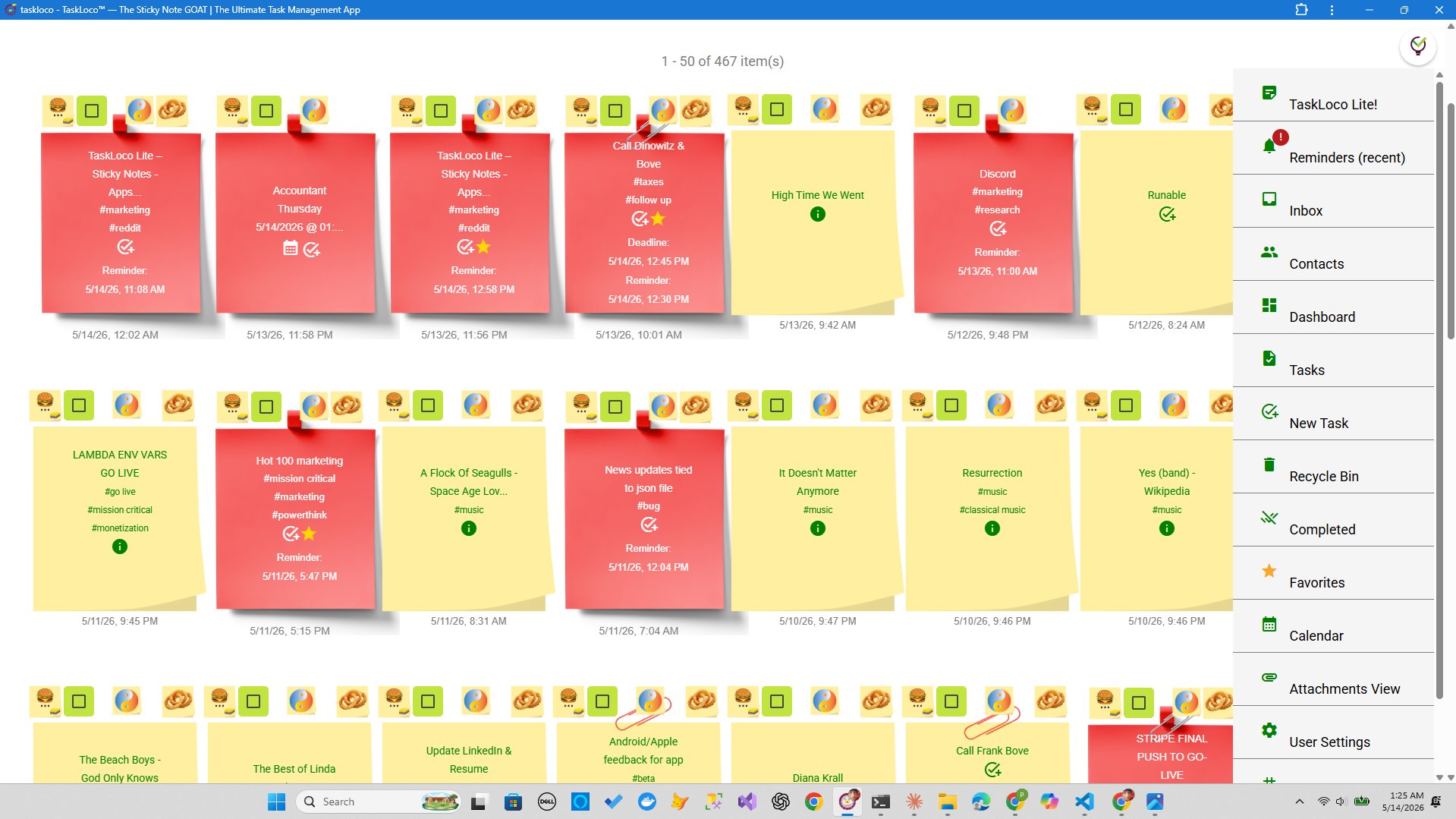
- Visible by default — your most important tasks should be visible without opening a dedicated app, drilling through menus, or loading a dashboard. A browser extension that puts your notes one click away, or a wall view that shows everything at once, serves this function.
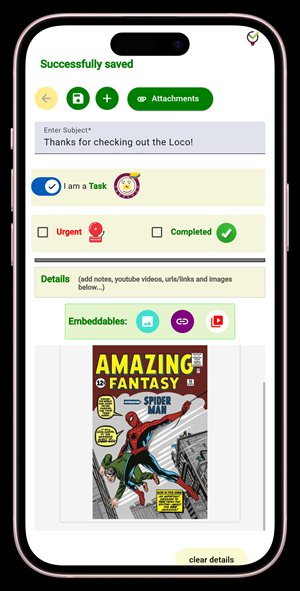
- Context-rich re-entry — when you return to a task after hours or days away, the note should tell you what you need to know: the relevant file, the link, the last thought you captured. This is where file attachments earn their keep — not as storage, but as activation-energy reducers.
- Reminders that reach you — a reminder buried in an app you have to remember to open is not a reminder. Push notifications delivered to your phone and computer, deep-linking directly back to the original note, collapse the gap between "I should do that" and "I am doing that."
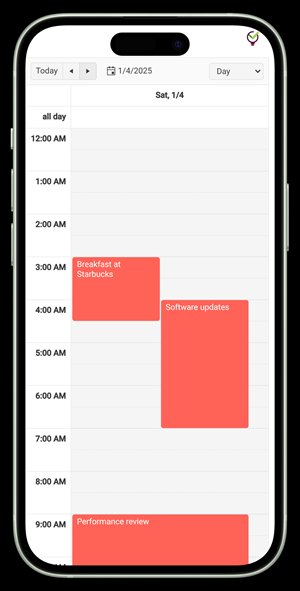
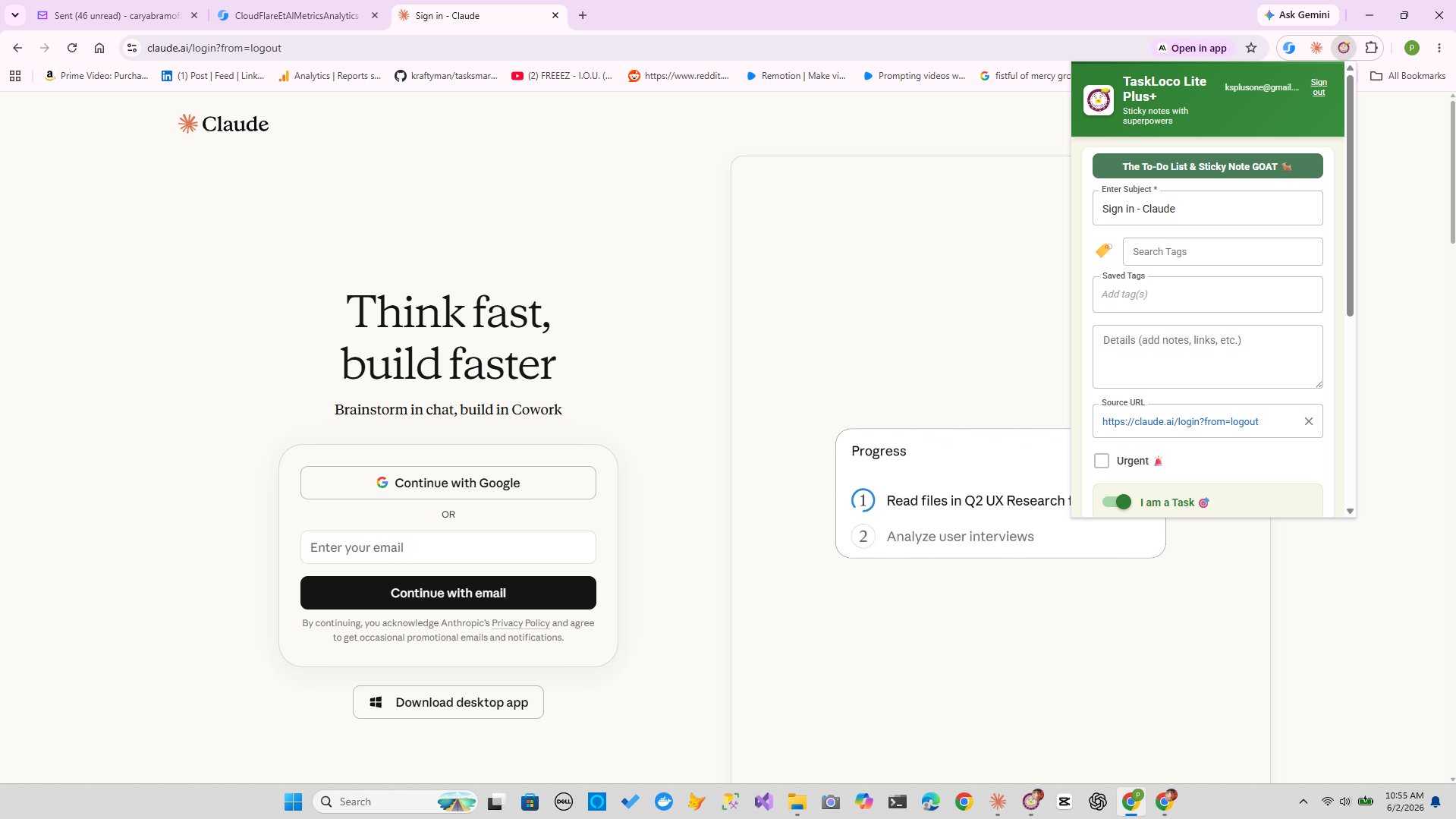
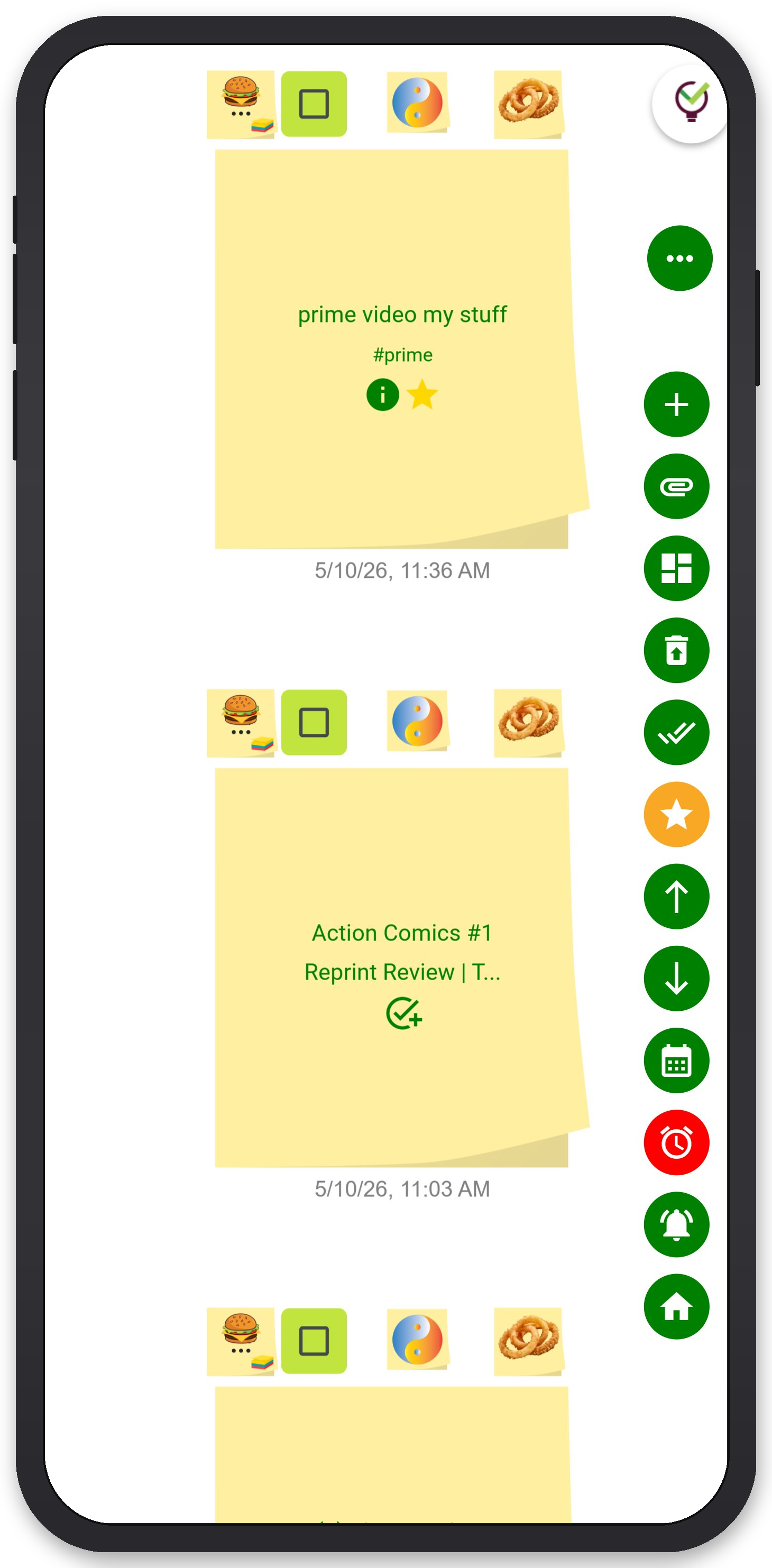
TaskLoco is built around exactly this pattern. The sticky note is the atomic unit — not a project, not a workspace, not a "team space." A note. It can hold a task, a file, a calendar event, or a reminder, and it lives in a visual wall you can scan in seconds. The Chrome extension captures any webpage into a note with one click, which is the single most effective capture-speed tool for anyone who works in a browser. When a reminder fires, it's a push notification that takes you directly back to the note — no hunting, no context-loading, no activation energy.
For teams, the sharing model matters too. TaskLoco's team sharing works like sending an email: the recipient gets the note, clones it, and makes it their own. No permissions to configure, no access levels to manage. That's low activation energy for collaboration — you share, they have it, everyone moves forward.
Practical Tactics: Lowering Activation Energy Starting Today
Systems matter, but tactics are where activation energy actually gets defeated in daily life. These are the moves that work, ranked roughly by impact:
1. End every session with a next action, not a status. "Working on report" has high activation energy tomorrow. "Open the report, write the conclusion section first" has almost none. The decision is already made.
2. Put your most important task where you can't miss it. If your task list lives inside an app you have to remember to open, you've already lost to activation energy. A visual sticky note wall, a pinned note in your browser extension, a push notification reminder — these put the task in your path rather than making you go find it.
3. Use the two-minute capture rule ruthlessly. If a task takes less than two minutes to capture, capture it immediately. The goal is an empty mental inbox — every task that lives in your head instead of a system is burning cognitive bandwidth and adding to tomorrow's activation energy.
4. Attach the file before you need it. Activation energy spikes when you start a task and immediately have to go find something. Attach the reference document, the image, the brief to the note itself. When the reminder fires, everything is already there.
5. Treat reminders as re-entry points, not alarms. A reminder that just says "do the thing" is only marginally better than nothing. A reminder that deep-links you directly into the note — where your context, your file, your last thought is already waiting — is a system. TaskLoco reminders work exactly this way: the push notification takes you back to the original note, not to a generic list.
6. Lower the bar for what counts as progress. Activation energy is highest at zero. Once you're moving, momentum builds. Design your tasks so that "doing the task" starts with something genuinely small — open the file, write one bullet, send one reply. The rest often follows on its own.
TaskLoco Premium is regularly $9.99/month per person. Right now, charter members can lock in 50% off the regular price — forever. That means $4.99/month per person today. And if our price ever goes up, you still pay half. Always.
Code CHARTER50 auto-applies at checkout. First 500 spots only — once they're gone, this offer is gone permanently. Act fast while spots last.
Every Premium subscription includes unlimited notes, 10GB file storage, reminders, calendar, and team sharing. Each team member requires a separate subscription. 7-day free trial — no charge until day 8. Cancel anytime.
Free Options: TaskLoco
TaskLoco Lite
- Native iPhone & Android app
- Completely anonymous — no sign-in
- Data stays on your device
- Up to 20 notes
- Free forever
TaskLoco Lite Plus+
- Web app + Chrome extension
- Sign in with Google
- Wall syncs across all devices
- Up to 30 notes
- Free forever
Lock In 50% Off — Forever
7-day free trial. No charge until day 8. CHARTER50 auto-applies at checkout.
🔒 Lock In My Charter SpotSee TaskLoco in Action
Frequently Asked Questions
What is activation energy in productivity?
Activation energy in productivity is the mental friction cost of starting a task — the effort required to locate the task, load the context, make a decision, and take the first action. It comes from the chemistry concept: a reaction won't proceed until a minimum energy threshold is crossed. In human behavior, tasks with high activation energy get deferred even when you have the time and the intention to do them. Reducing that friction — through better systems, visible task placement, and instant capture tools — is more effective than trying to increase motivation.
Why do I procrastinate on tasks I actually want to do?
Because procrastination is usually about activation energy, not interest. Even tasks you genuinely want to complete can have high activation energy if the context is ambiguous, the first step is unclear, or you have to hunt for the relevant files and information before you can start. The fix is almost always structural: write down the next physical action, attach the materials you'll need, and set a reminder that takes you directly back to the task with full context ready.
What kind of productivity tool best reduces activation energy?
The best tools for reducing activation energy share three traits: fast capture (getting a task into the system in under five seconds), high visibility (tasks appear without hunting), and rich re-entry context (when you return to a task, everything you need is already there). Sticky note apps with browser extensions, file attachments, and push notification reminders that deep-link back to the original note — like TaskLoco Premium — are specifically designed around this pattern. $9.99/month per person (currently $4.99/month per person for first 500 charter members with code CHARTER50)
How does the two-minute rule relate to activation energy?
David Allen's two-minute rule — if something takes less than two minutes, do it now — is fundamentally about activation energy. Tasks that sit in your head or on a backlog accrue a carrying cost: every time your brain notices them, it spends energy deferring the decision again. Doing them immediately, or capturing them instantly into a trusted system, eliminates that recurring cost. The capture step itself should take under five seconds; if it takes longer, most people won't do it consistently.
Does TaskLoco help with activation energy?
Yes — TaskLoco is built around the exact mechanics of activation energy reduction. The sticky note wall puts your tasks in front of you visually without requiring you to open a complex app. The Chrome extension captures any webpage into a note with one click, reducing capture friction to nearly zero. File attachments let you store the reference materials inside the note itself, so there's no hunting when you start. Reminders fire as push notifications that deep-link directly back to the note, collapsing the gap between the reminder and the task context. $9.99/month per person (currently $4.99/month per person for first 500 charter members with code CHARTER50)
What is the difference between TaskLoco Lite, Lite Plus+, and Premium for daily task management?
TaskLoco Lite is a free native iPhone and Android app — completely anonymous, no sign-in, stores up to 20 notes on your device only. It's a frictionless starting point but has no reminders, no file attachments, and no syncing. TaskLoco Lite Plus+ is a free web app and Chrome extension — sign in with Google, up to 30 notes, synced across all your devices. Still no reminders or file attachments. TaskLoco Premium is the full activation-energy system: unlimited notes, 10GB file storage, reminders delivered as push notifications that deep-link to the original note, calendar view, and team sharing. Each team member requires their own separate subscription. $9.99/month per person (currently $4.99/month per person for first 500 charter members with code CHARTER50)
Can I use TaskLoco on my phone and computer at the same time?
Yes. TaskLoco Lite Plus+ and Premium sync across all your devices through the web app — you access them through your phone's browser. The native App Store and Google Play app is TaskLoco Lite, which stores notes locally on the device only and does not sync. For a fully synced experience with reminders and file attachments, TaskLoco Premium via the web app is the right choice. Push notification reminders reach both your phone and your computer.
Born in Brooklyn. Powered by AWS. Your data stays yours.
TaskLoco is available on iPhone, Android, Chrome, and every web browser.