David Allen's Getting Things Done (GTD) methodology revolutionized how millions of people think about productivity. Instead of trying to remember everything, GTD creates external systems that your brain can trust completely.
The magic happens when you stop using your mind as a storage device and start using it as a processing machine. But GTD only works if your tools support the workflow — capture everything, clarify what it means, organize by context, reflect through regular reviews, and engage with confidence.
The Five Stages of GTD Workflow
David Allen's GTD system breaks down into five clear stages that transform mental chaos into actionable clarity. Each stage serves a specific purpose in maintaining what Allen calls 'mind like water' — a state where your brain is free to focus on the task at hand rather than trying to remember what else needs attention.
Capture: Get everything out of your head and into a trusted system. This means every task, idea, commitment, or 'someday maybe' thought goes into an external collection point. The key is having capture tools available everywhere — your phone, computer, notebook, or voice recorder.
Clarify: Process each captured item by asking 'What is it?' and 'Is it actionable?' If it's not actionable, either trash it, file it as reference, or add it to a 'someday/maybe' list. If it is actionable, define the very next physical action required.
Organize: Put action items into appropriate lists based on context — calls to make, errands to run, things to do at your computer. Projects (anything requiring more than one step) get their own tracking system.
Reflect: Regularly review your lists to keep them current and complete. This includes daily reviews of your calendar and next actions, plus weekly reviews of all your projects and commitments.
Engage: Choose what to do next based on context, time available, energy level, and priority. Because you trust your system, you can focus completely on the chosen task.
Why Most GTD Apps Fail the System
GTD isn't just about having digital lists — it's about creating a workflow that your mind trusts completely. Many productivity apps claim GTD compatibility but miss critical elements that make the methodology actually work in practice.
The biggest failure point is capture friction. If pulling out your phone, opening an app, navigating to the right project, and typing a task takes more than 10 seconds, your brain will start filtering what it bothers to capture. This defeats the core principle of getting everything out of your head.
Second, most apps force premature organization. GTD specifically separates capture from processing — you dump everything into an inbox first, then clarify and organize in a separate step. Apps that require choosing a project or context during capture break this workflow.
Third, many digital tools make the weekly review cumbersome. Allen emphasizes that reviewing all your projects and commitments weekly isn't optional — it's what maintains trust in the system. If reviewing everything takes more than 30 minutes, you'll skip it, and the system degrades.
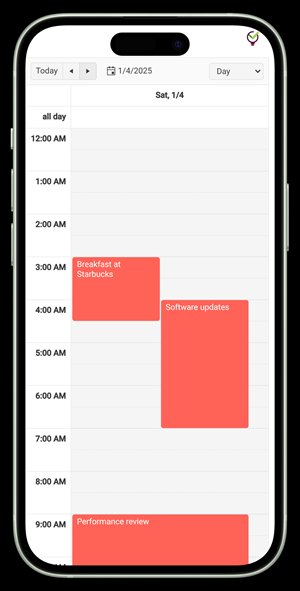
Finally, reminder systems often work against GTD principles. Allen advocates for context-based lists, not time-based scheduling for most tasks. The right GTD app reminds you of tasks when you're in the right place to do them, not at arbitrary times.
Digital vs Analog GTD Systems
David Allen originally designed GTD around paper-based tools — manila folders, legal pads, and label makers. The analog approach has undeniable advantages: zero boot time, no crashes, complete customization, and the cognitive benefits of handwriting for memory and creativity.
But digital GTD systems excel in areas where paper falls short. Search capabilities mean you can find any captured item instantly across months of data. Automatic backup ensures you never lose your trusted system to coffee spills or theft. Cross-device sync means your capture tool is always in your pocket.
The real power emerges in hybrid approaches. Many GTD practitioners capture digitally for speed and ubiquity, but review on paper for deeper thinking. Others use digital systems for routine task management but switch to paper for project planning and creative work.
Digital strengths: instant search, automatic backup, ubiquitous capture, easy reorganization, integration with email and calendar systems.
Analog strengths: no tech friction, better for brainstorming, completely reliable, easier to customize, no battery or network dependencies.
The key is choosing tools that support GTD principles rather than fighting them. Whether digital or analog, your system must handle rapid capture, clear inbox processing, context-based organization, and comprehensive review cycles.
TaskLoco's GTD-Friendly Design
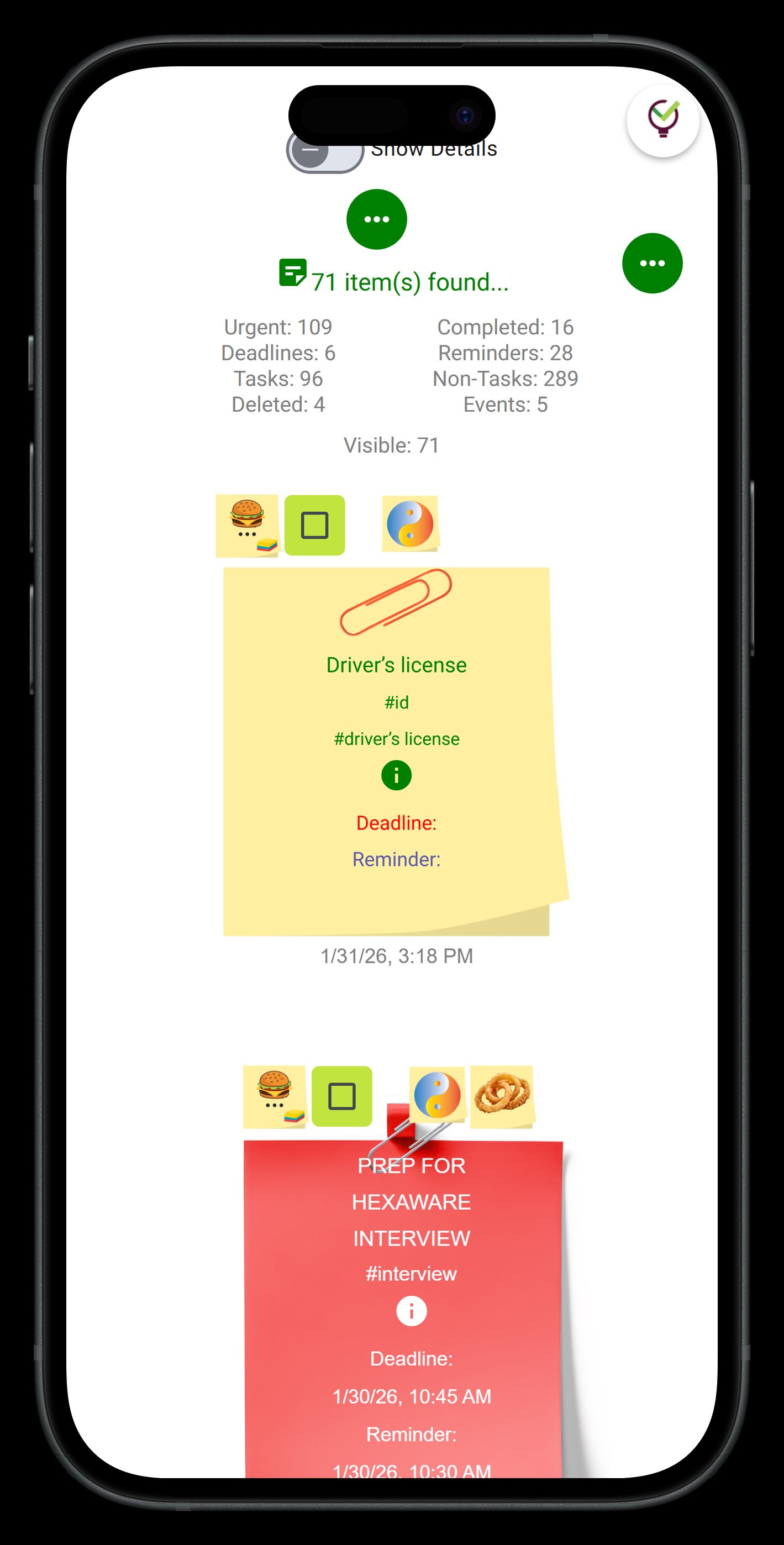
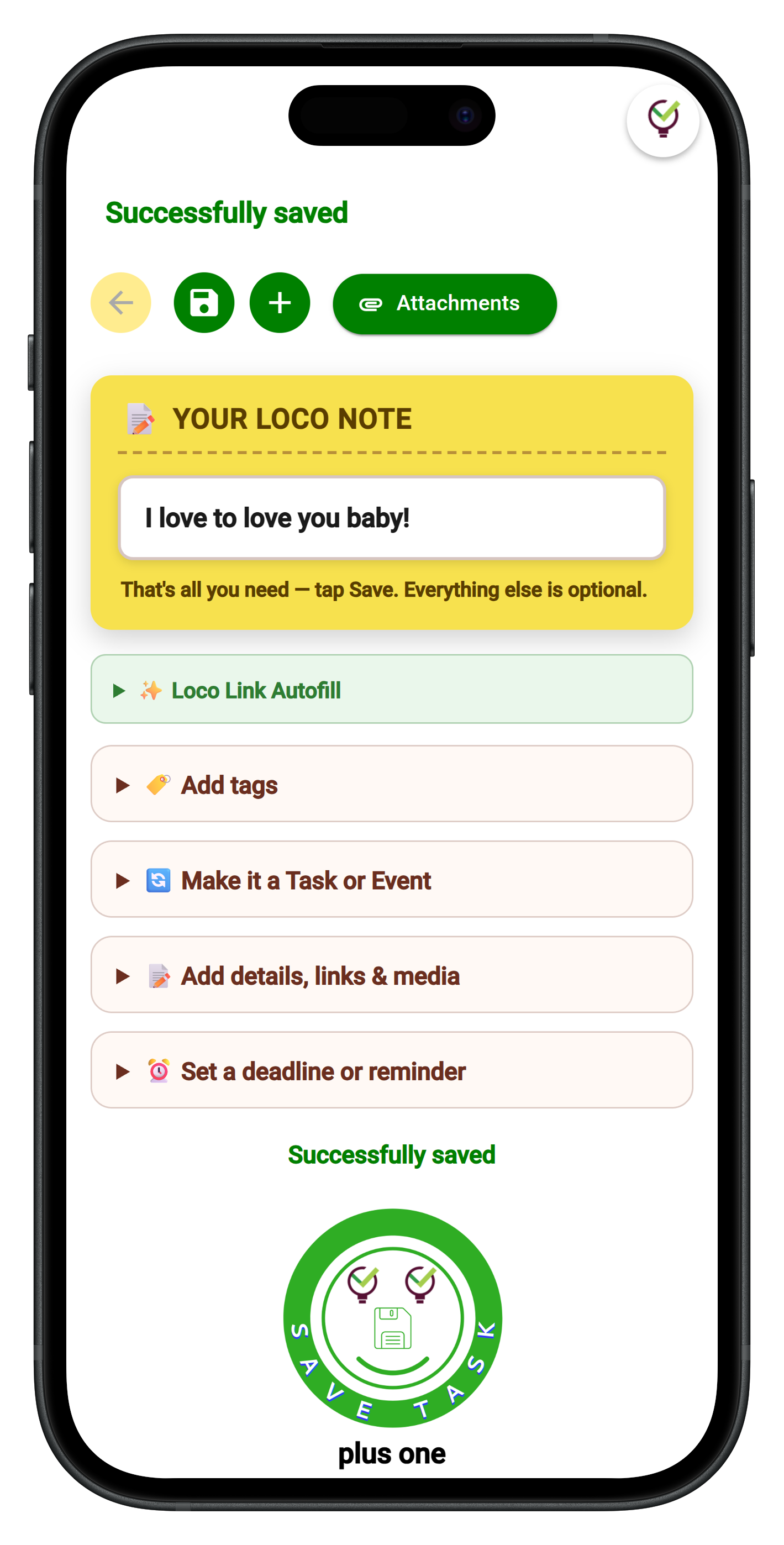
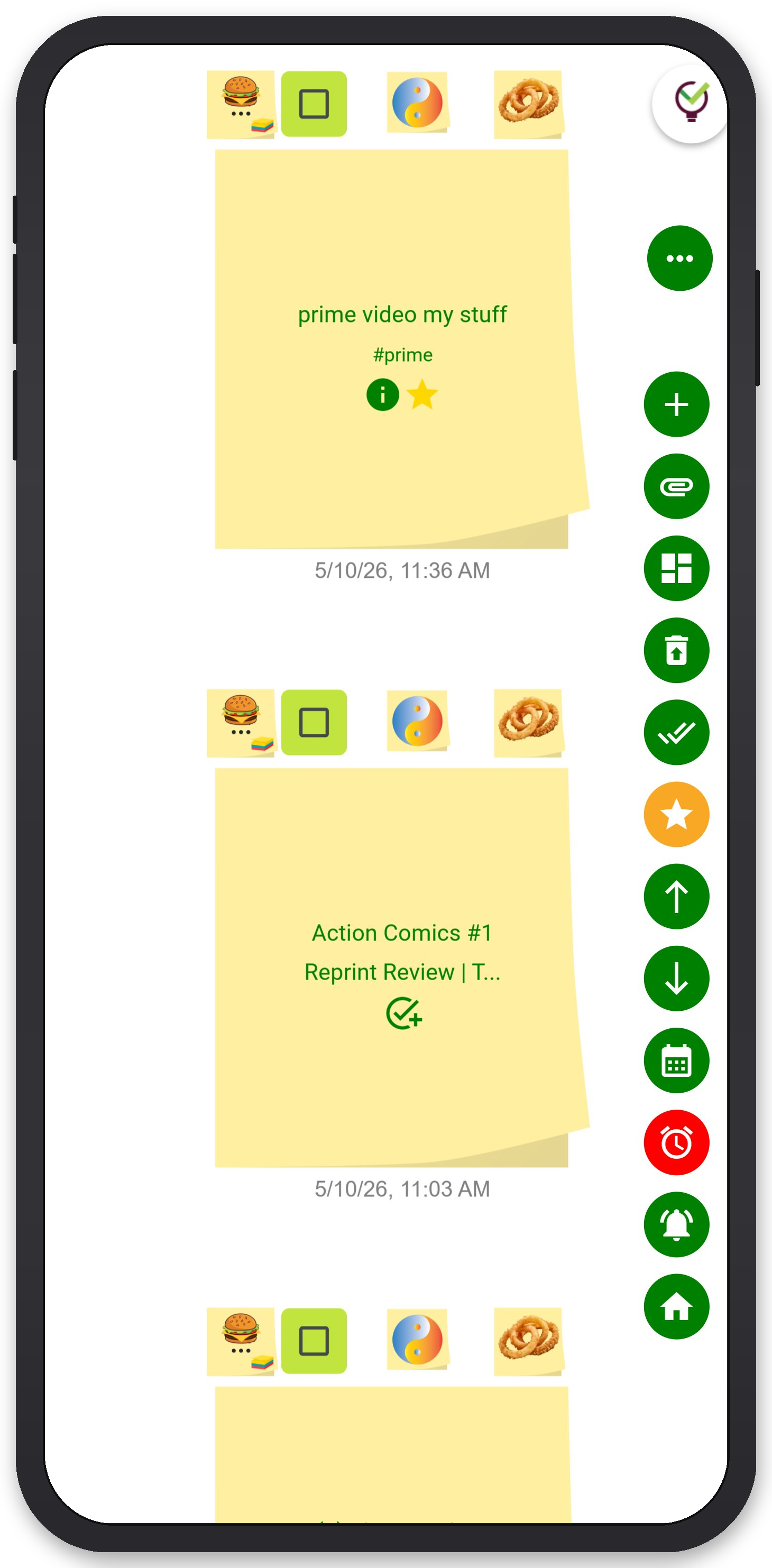
TaskLoco naturally supports GTD workflow without forcing rigid methodology adherence. The sticky note interface provides instant capture — tap to create a note, type your thought, done. No project selection, no category choices, no friction between brain and system.
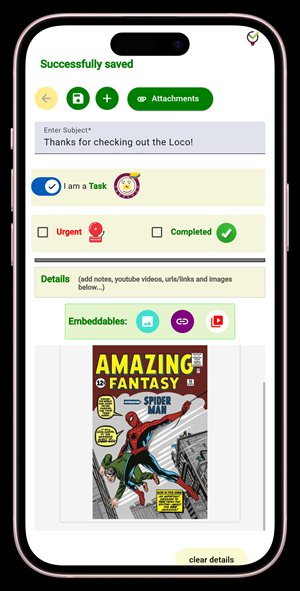
The design separates capture from processing. Notes land in your main view as unprocessed items. During clarification sessions, you can add reminders to actionable items, attach files to reference materials, or simply leave non-actionable notes as reference. The system doesn't force decisions during capture.
Context-based organization emerges naturally through TaskLoco's search and filtering. Create notes for different contexts — '@calls', '@errands', '@computer' — then filter your view to see only relevant actions based on where you are and what you can do.
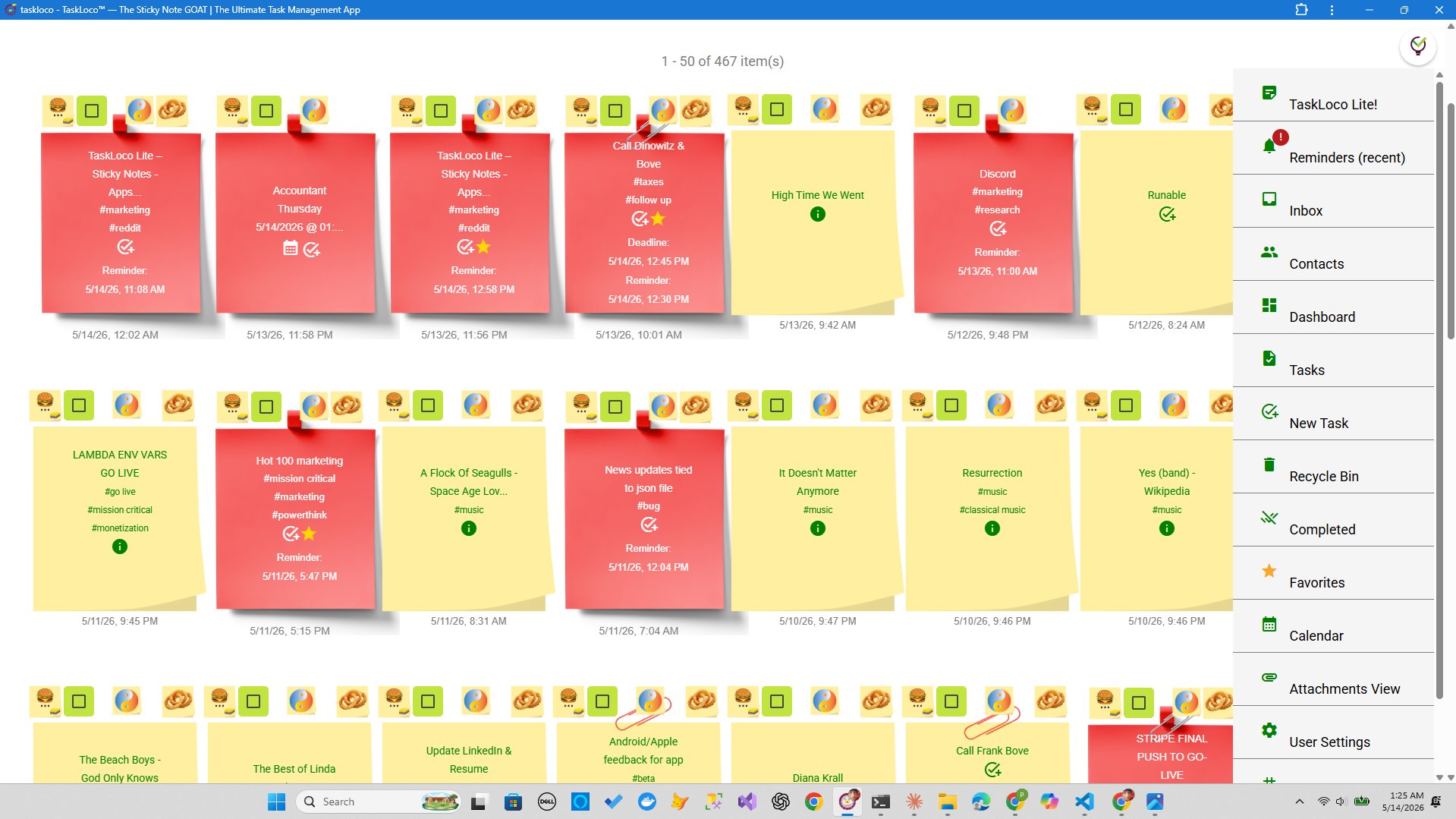
Weekly review becomes straightforward with TaskLoco's wall view showing all your notes at once. Scan for stale items, update project status, capture new commitments, and maintain the trusted system that keeps your mind clear and focused.
TaskLoco Premium is regularly $9.99/month per person. Right now, charter members can lock in 50% off the regular price — forever. That means $4.99/month per person today. And if our price ever goes up, you still pay half. Always.
Code CHARTER50 auto-applies at checkout. First 500 spots only — once they're gone, this offer is gone permanently. Act fast while spots last.
Every Premium subscription includes unlimited notes, 10GB file storage, reminders, calendar, and team sharing. Each team member requires a separate subscription. 7-day free trial — no charge until day 8. Cancel anytime.
Free Options: TaskLoco
TaskLoco Lite
- Native iPhone & Android app
- Completely anonymous — no sign-in
- Data stays on your device
- Up to 20 notes
- Free forever
TaskLoco Lite Plus+
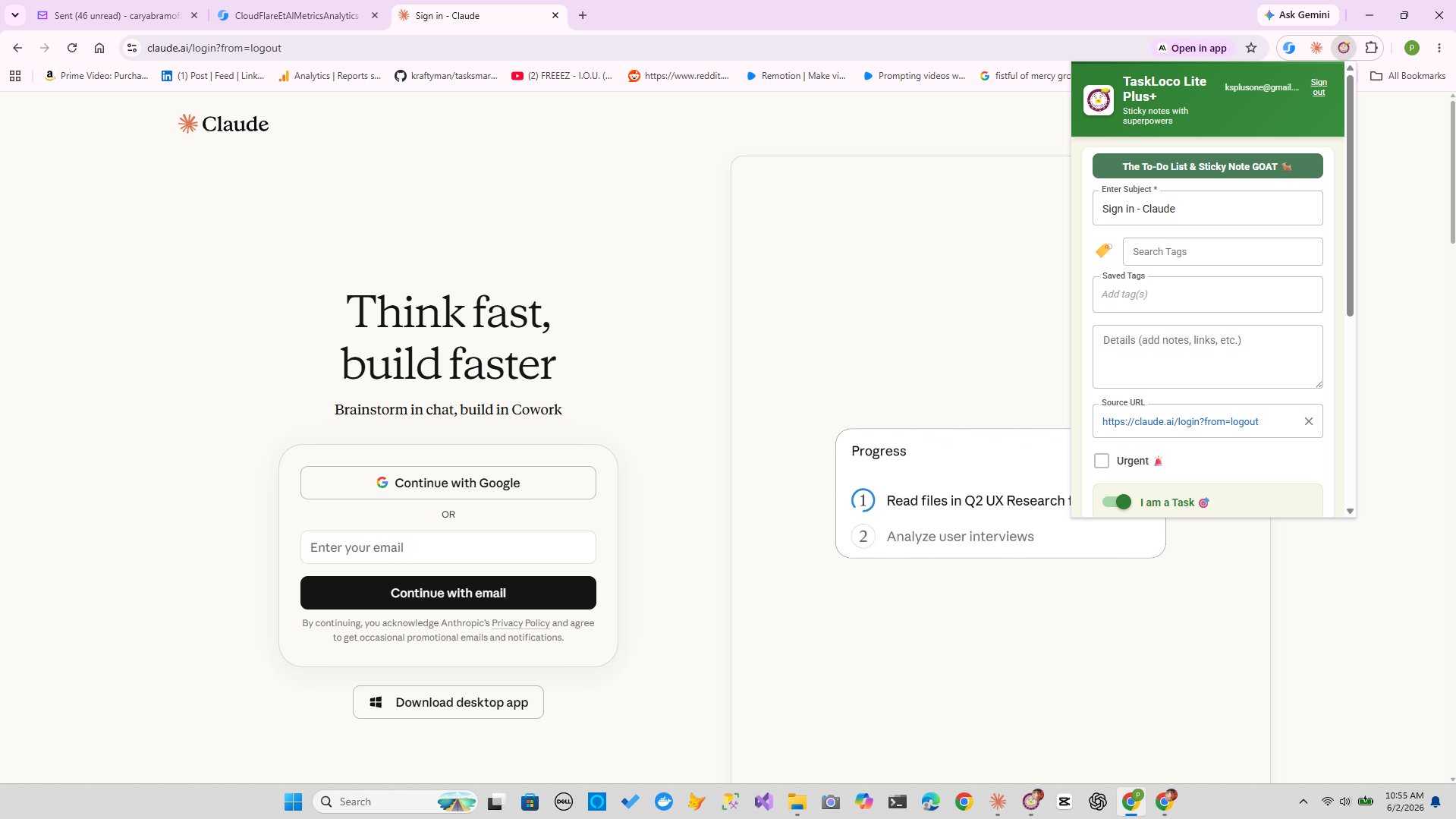
- Web app + Chrome extension
- Sign in with Google
- Wall syncs across all devices
- Up to 30 notes
- Free forever
Lock In 50% Off — Forever
7-day free trial. No charge until day 8. CHARTER50 auto-applies at checkout.
🔒 Lock In My Charter SpotSee TaskLoco in Action
Frequently Asked Questions
What makes a good GTD app for David Allen's methodology?
A good GTD app needs instant capture with zero friction, clear separation between inbox and organized lists, context-based organization, and tools that make weekly reviews fast and comprehensive. The system must be trustworthy enough that your brain stops trying to remember things.
Can I use TaskLoco for Getting Things Done workflow?
Yes, TaskLoco's design naturally supports GTD principles. Quick note capture works as inbox collection, the wall view enables comprehensive weekly reviews, and you can organize by context using tags or note content. $9.99/month per person (currently $4.99/month per person for first 500 charter members with code CHARTER50)
Should I use digital or paper for GTD implementation?
Both work, and many people use hybrid approaches. Digital excels at capture, search, and backup. Paper excels at brainstorming and review. Choose based on your work style, but ensure your system handles all five GTD workflow stages effectively.
How important is the weekly review in GTD systems?
The weekly review is absolutely critical — it's what maintains trust in your system. Without regular reviews, your lists become stale, projects stall, and your brain starts trying to remember things again. Plan 30-60 minutes weekly to review all projects and commitments.
What's the biggest mistake people make with GTD apps?
Adding too much friction to the capture process. If it takes more than 10 seconds to get a thought into your trusted system, your brain will start filtering what it bothers to capture. This breaks the fundamental GTD principle of getting everything out of your head.
Do GTD apps need special project management features?
Not necessarily. GTD focuses on next actions, not complex project dependencies. Simple lists organized by context often work better than elaborate project management tools. The key is supporting the five workflow stages: capture, clarify, organize, reflect, engage.
How do reminders fit into David Allen's GTD methodology?
GTD emphasizes context-based action lists over time-based reminders for most tasks. Reminders work best for time-sensitive items or tickler file functionality. The goal is seeing the right actions when you're in the right context to do them, not getting interrupted by irrelevant notifications.
Born in Brooklyn. Powered by AWS. Your data stays yours.
TaskLoco is available on iPhone, Android, Chrome, and every web browser.