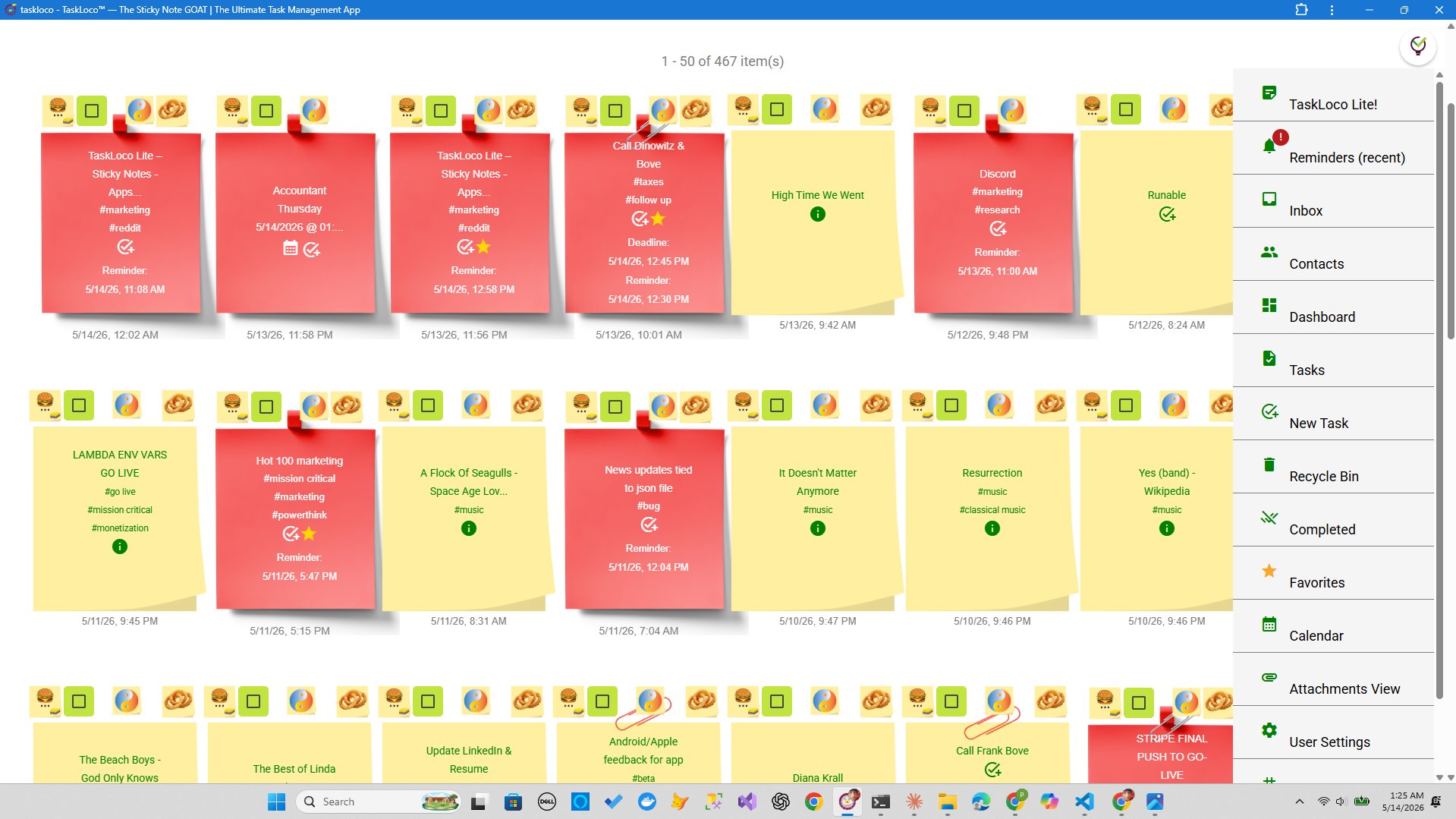
You open your task list. There are 47 items on it. Some are urgent, some are important, some are vague half-ideas you typed at midnight. You stare at it for four minutes, pick nothing, and open your email instead. That's decision paralysis — and it's not a focus problem or a laziness problem. It's a systems problem.
Decision paralysis in productivity contexts is the cognitive state where the volume, ambiguity, or weight of pending choices makes forward motion feel impossible. It's different from procrastination, which is avoidance driven by emotion. Paralysis is driven by overload. The brain genuinely cannot determine which path is most valuable, so it defaults to inaction. The good news: it's solvable. The solution is almost always structural — get the noise out of your head and into a system that imposes order on it.
What Actually Causes Decision Paralysis (and What a Good Productivity System Must Do About It)
Before picking any tool or method, it helps to understand what's actually happening when you freeze. Decision paralysis in a work context almost always comes from one of three root causes:
- Choice overload: Too many tasks in a flat, undifferentiated list. Every item looks equally important because nothing has been sorted, grouped, or visualized spatially.
- Missing context: Tasks without enough information to act on them. "Follow up on thing" is not actionable. The brain stalls because it can't complete the action without first reconstructing what the action is.
- High-stakes ambiguity: Decisions where the consequences feel large and the right answer isn't clear. These tasks linger at the top of every list forever because moving them requires a judgment call, not just execution.
A productivity system that actually helps with decision paralysis needs to do three things well. First, it must let you externalize — get every open loop out of your head and into a visible, trusted container. Second, it must help you differentiate — make it visually or structurally obvious which items are urgent, which are waiting, and which can be ignored for now. Third, it must have low enough friction that you don't avoid opening it. A system you don't use doesn't cure paralysis; it adds to it.
Secondary criteria worth weighing: Does it support context-rich notes (not just task titles)? Can you capture ideas instantly before they evaporate? Does it remind you without requiring you to remember to check it? These aren't luxury features — they are direct countermeasures to the three root causes above.
Why the Sticky-Note Model Beats Lists for Breaking Paralysis
Linear task lists are the dominant productivity format — and they are structurally terrible at reducing decision paralysis. A list forces you to process items sequentially. Your eye starts at item one and moves down, which means you're constantly re-encountering everything you haven't done yet. That accumulation creates a sense of debt that triggers avoidance, not action.
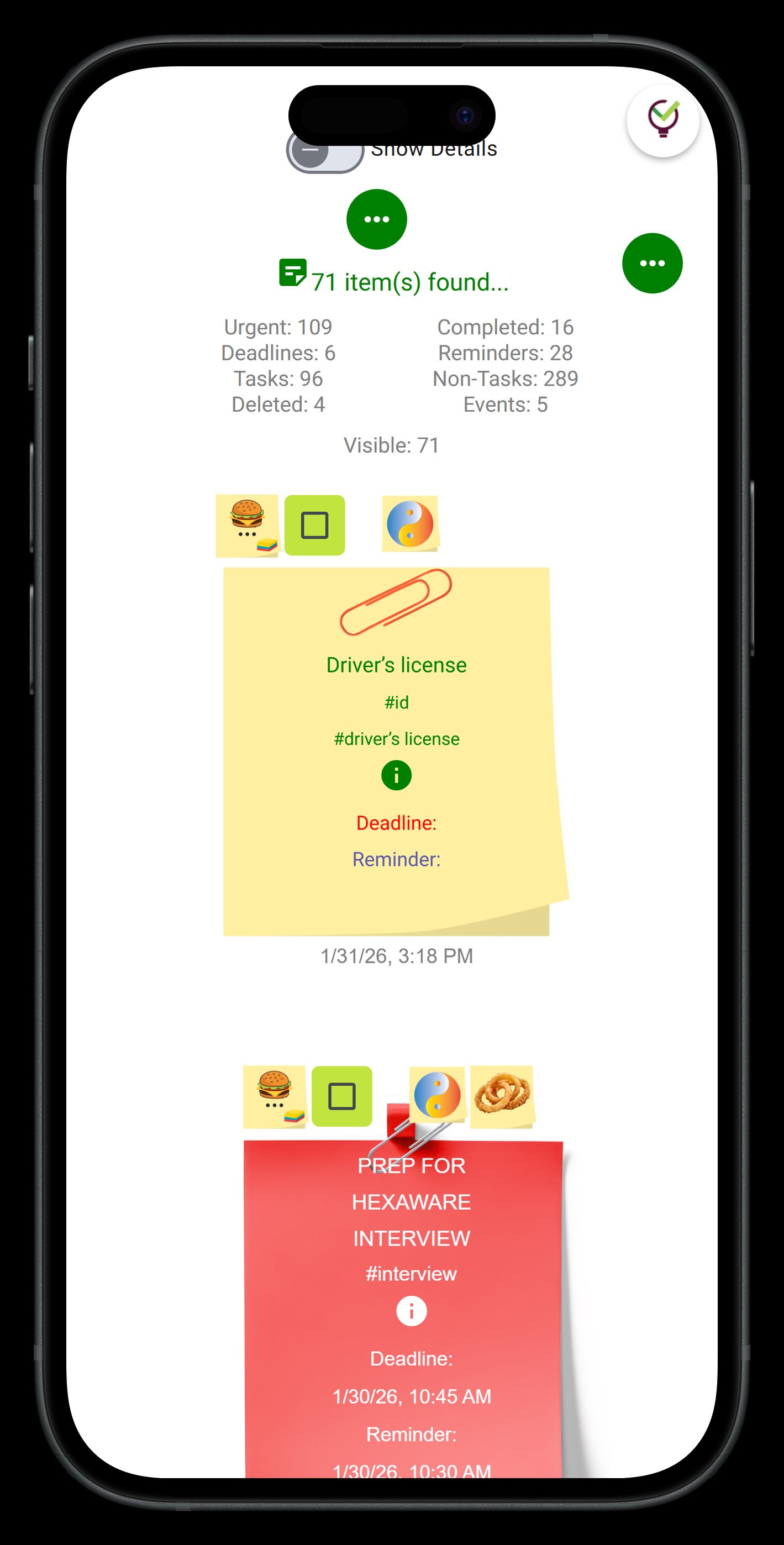
The sticky-note model works differently. Notes exist in two-dimensional space. You can cluster related items, push unimportant things to the edge of your view, and let the spatial arrangement itself encode priority. Your brain reads the board as a whole before it reads any individual note — which means you get orientation before you get overwhelmed. That single difference changes how decisions feel.
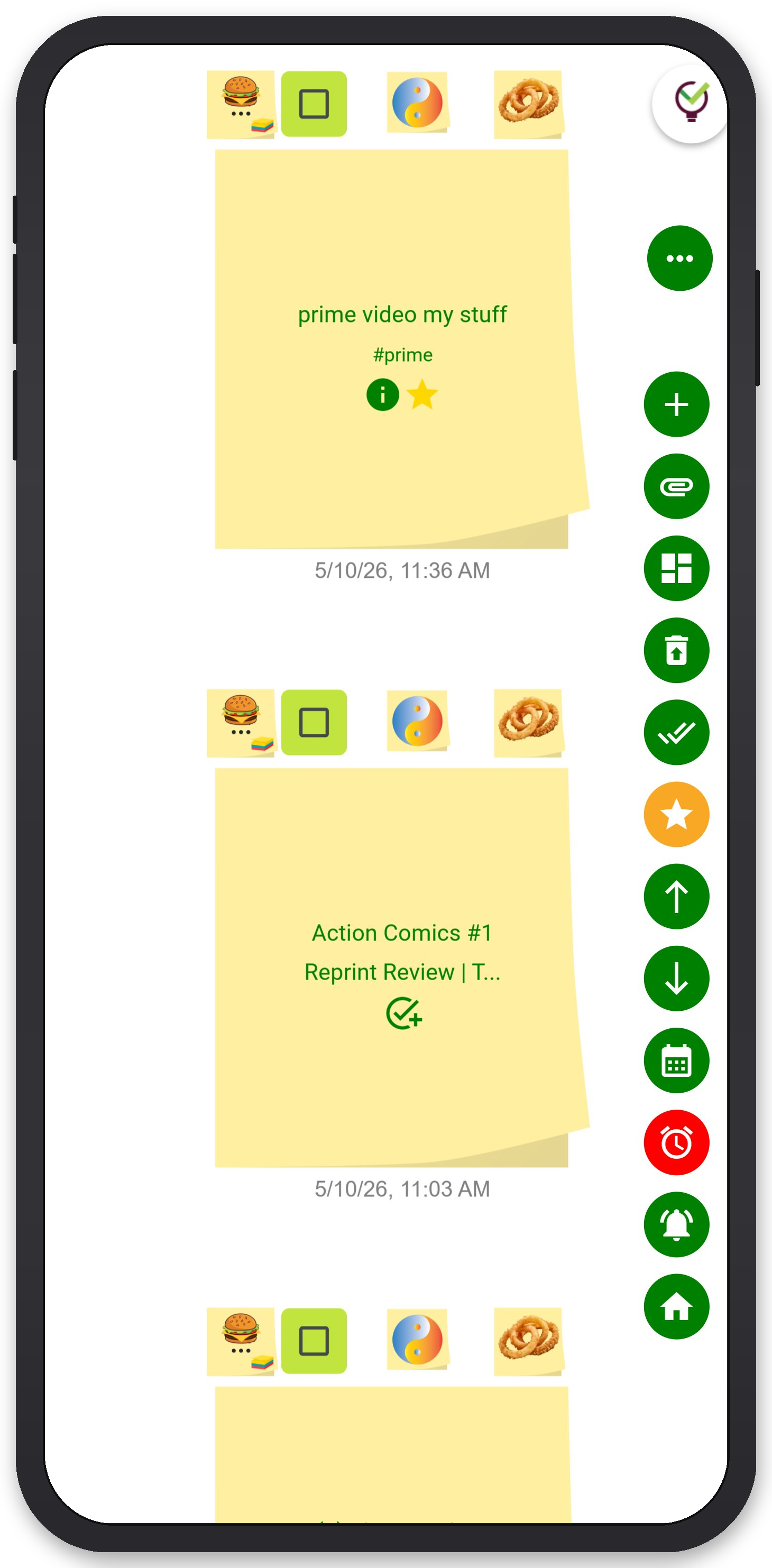
TaskLoco is built entirely around this model. Your Wall is a free-form board where every sticky note lives. You arrange them however your brain works — by project, by urgency, by day of the week, by whatever grouping makes your next move obvious. There are no mandatory hierarchies, no required fields, no folder structures to maintain. You capture and arrange; the system stays out of your way.
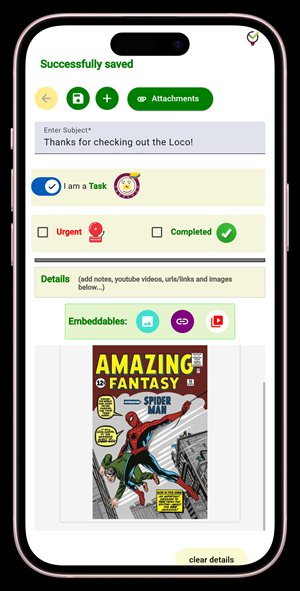
Each note in TaskLoco can hold as much or as little as you need. A note might be a single sentence or it might contain a full checklist, attached files, and a reminder — all without leaving the card. That context-richness directly addresses the second root cause of paralysis: missing information. When you open a note and everything you need to act is already there, the decision to start becomes trivial.
The Capture-and-Remind Loop: Closing Open Loops Before They Multiply
One of the most underappreciated drivers of decision paralysis is the open loop — a thought, task, or commitment that lives in your head instead of your system. Every open loop consumes working memory. By the time you have a dozen of them running, your brain is so busy maintaining the list it can't evaluate any individual item clearly. The result is that familiar foggy overwhelm where nothing seems doable.
The antidote is fast, frictionless capture. Not "open the app, find the right project, fill in the required fields, assign a due date" — that process has enough steps that your brain will decide it's not worth it and just try to remember instead. The capture needs to be: open app, type note, done. Three seconds.
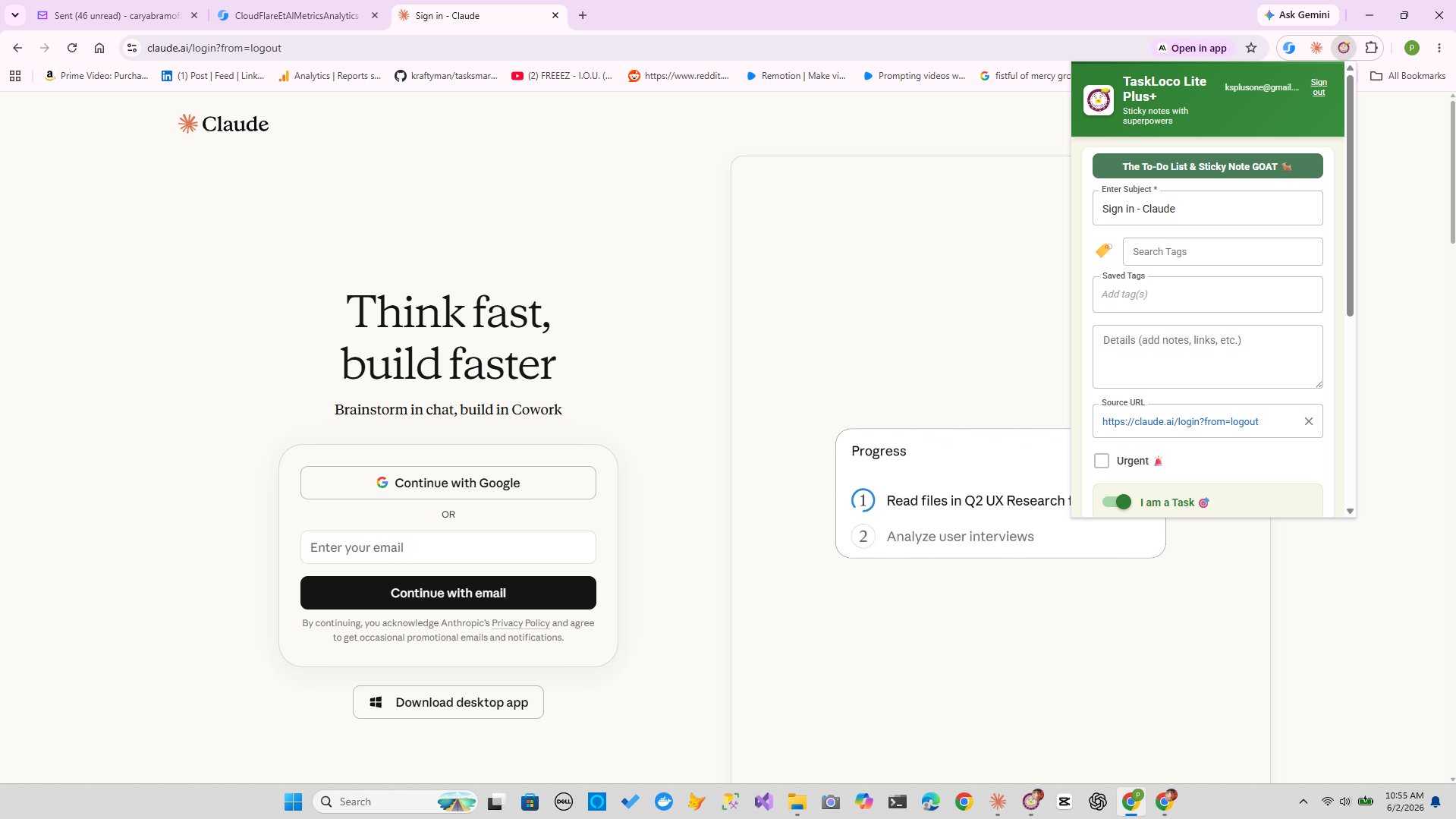
TaskLoco is designed for this. On the web or through the Chrome extension, you can capture a thought or clip a webpage in a single click. The Chrome extension is particularly valuable for the kind of paralysis that comes from browser tab hoarding — that habit of keeping 23 tabs open because "I'll deal with it later." One click turns the page into a note on your Wall, and the tab can close. Your browser becomes lighter; your system absorbs the intent.
But capture alone doesn't close the loop — reminders do. TaskLoco Premium reminders deep-link back to the original note, so when a push notification fires on your phone or computer, tapping it drops you directly into the note with all its context intact. You're not reminded that something exists; you're delivered to the place where you can act on it. That distinction matters enormously for breaking paralysis. Optional email and SMS notification channels are available as well, but the push notification is the core mechanism — immediate, direct, and actionable.
File attachments in Premium (10GB included) extend this further. Reference documents, screenshots, specs, contracts — anything that would otherwise require a context-reconstruction detour before you can act belongs in the note. When everything lives together, the moment you touch a task you can start working on it rather than spending five minutes finding the thing the task is about.
Building a Decision Paralysis System With TaskLoco: A Practical Setup
Knowing that you need external capture, visual differentiation, and context-rich notes is one thing. Having a concrete setup is another. Here's a practical starting configuration for using TaskLoco specifically to reduce decision paralysis:
- The Three-Zone Wall: Divide your Wall into three spatial regions: Now (things that need to happen today), Soon (this week), and Someday (no deadline, but don't want to lose). The physical separation removes the cognitive work of re-evaluating priority every time you look at your list. Your eye goes to Now, and that's where your decisions come from.
- One note per atomic action: Don't use a single note as a massive project dump. Each note should represent one action you could start without additional decisions. If a note requires three decisions before you can begin, it's not a task — it's a project. Break it down. Paralysis often lives inside vague notes masquerading as actionable items.
- Capture anything immediately, sort later: Don't let the friction of deciding where something goes stop you from capturing it. Drop it on the Wall anywhere. A weekly five-minute sort — moving notes to their right zones and splitting vague ones — is easier than the mental overhead of maintaining the system in your head between sessions.
- Use reminders as commitment devices: For tasks you keep avoiding, set a reminder. The push notification to your phone or computer, deep-linking directly to the note, creates a moment of forced decision. You're either going to do it or consciously defer it — and conscious deferral is far less paralyzing than passive avoidance.
- Use the Chrome extension to eliminate tab debt: Every open browser tab is an open loop. Clip the relevant ones into TaskLoco notes during a daily review, then close the tabs. Your browser and your brain both get lighter.
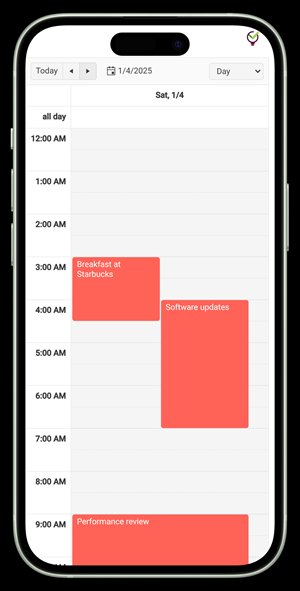
TaskLoco Lite (free, native iPhone and Android, anonymous, no sign-in required) is a low-commitment starting point if you want to experience the sticky-note model before committing. It stores up to 20 notes directly on your device with no account needed. Lite Plus+ (free, web app and Chrome extension, sign in with Google) gives you 30 notes synced across all your devices and the one-click Chrome extension capture. For the full system — unlimited notes, reminders, file attachments, calendar view, and team sharing — TaskLoco Premium is the complete version.
TaskLoco Premium is regularly $9.99/month per person. Right now, charter members can lock in 50% off the regular price — forever. That means $4.99/month per person today. And if our price ever goes up, you still pay half. Always.
Code CHARTER50 auto-applies at checkout. First 500 spots only — once they're gone, this offer is gone permanently. Act fast while spots last.
Every Premium subscription includes unlimited notes, 10GB file storage, reminders, calendar, and team sharing. Each team member requires a separate subscription. 7-day free trial — no charge until day 8. Cancel anytime.
Free Options: TaskLoco
TaskLoco Lite
- Native iPhone & Android app
- Completely anonymous — no sign-in
- Data stays on your device
- Up to 20 notes
- Free forever
TaskLoco Lite Plus+
- Web app + Chrome extension
- Sign in with Google
- Wall syncs across all devices
- Up to 30 notes
- Free forever
Lock In 50% Off — Forever
7-day free trial. No charge until day 8. CHARTER50 auto-applies at checkout.
🔒 Lock In My Charter SpotSee TaskLoco in Action
Frequently Asked Questions
What is decision paralysis in productivity?
Decision paralysis in a productivity context is the inability to choose and begin a task despite wanting to make progress. It's caused by choice overload (too many undifferentiated tasks), missing context (tasks that can't be acted on without additional research), or high-stakes ambiguity (decisions where the cost of choosing wrong feels large). It differs from procrastination in that it's driven by cognitive overload rather than emotional avoidance.
How does a sticky-note app help with decision paralysis?
Sticky-note apps place tasks in two-dimensional space rather than a sequential list. Your brain reads a spatial board as a whole before it reads individual items, so you get orientation before you get overwhelmed. You can physically cluster related work, push low-priority items to the edge, and let the arrangement encode priority without requiring you to process every item in order. TaskLoco's Wall view is built specifically for this — you see everything at once, spatially arranged, with no clicking into folders required.
What's the fastest way to stop overthinking and just start a task?
The fastest structural fix is to make your next action completely unambiguous before you need to act on it. That means: (1) writing notes with enough context that future-you can start without reconstruction, (2) breaking vague notes into atomic single actions, and (3) using a reminder that delivers you directly to the note rather than just alerting you that something exists. TaskLoco Premium reminders deep-link back to the original note — tap the push notification and you're already inside the task with all its context. That eliminates the gap between "I should do this" and "I'm doing this."
How do I use TaskLoco to organize overwhelming task lists?
Start with the Three-Zone Wall setup: divide your Wall spatially into Now, Soon, and Someday. Drop all existing tasks into rough zones without over-analyzing placement. Then run a five-minute weekly sort to refine. The spatial separation removes the cognitive work of re-evaluating priority every time you open your system — your eye goes to Now and that's where decisions come from. Make sure each note represents one atomic action, not an entire project. Vague notes are where paralysis hides.
Can I use TaskLoco for free to try the sticky-note approach?
Yes. TaskLoco Lite is a completely free native iPhone and Android app — no sign-in, no account, fully anonymous — that stores up to 20 notes directly on your device. It's the fastest way to experience the sticky-note model with zero commitment. TaskLoco Lite Plus+ is also free: a web app plus Chrome extension that gives you up to 30 notes synced across all your devices and the one-click page-capture Chrome extension. Neither free tier includes reminders, file attachments, or unlimited notes — those are Premium features. But either free tier is a genuine way to test whether the approach works for you before upgrading.
What's the difference between procrastination and decision paralysis?
Procrastination is avoidance driven by emotion — typically anxiety, boredom, or resentment about a specific task. The person knows what to do; they're avoiding the feeling associated with doing it. Decision paralysis is cognitive, not emotional — the brain genuinely cannot determine which of several options is most valuable given the available information and competing priorities. The treatments differ: procrastination responds to motivation and emotion-regulation techniques; paralysis responds to structural changes — better capture, visual organization, and reduced choice volume. Most people experiencing productivity paralysis are actually dealing with both simultaneously, which is why purely motivational advice rarely solves it.
How much does TaskLoco Premium cost?
$9.99/month per person (currently $4.99/month per person for first 500 charter members with code CHARTER50)
Born in Brooklyn. Powered by AWS. Your data stays yours.
TaskLoco is available on iPhone, Android, Chrome, and every web browser.