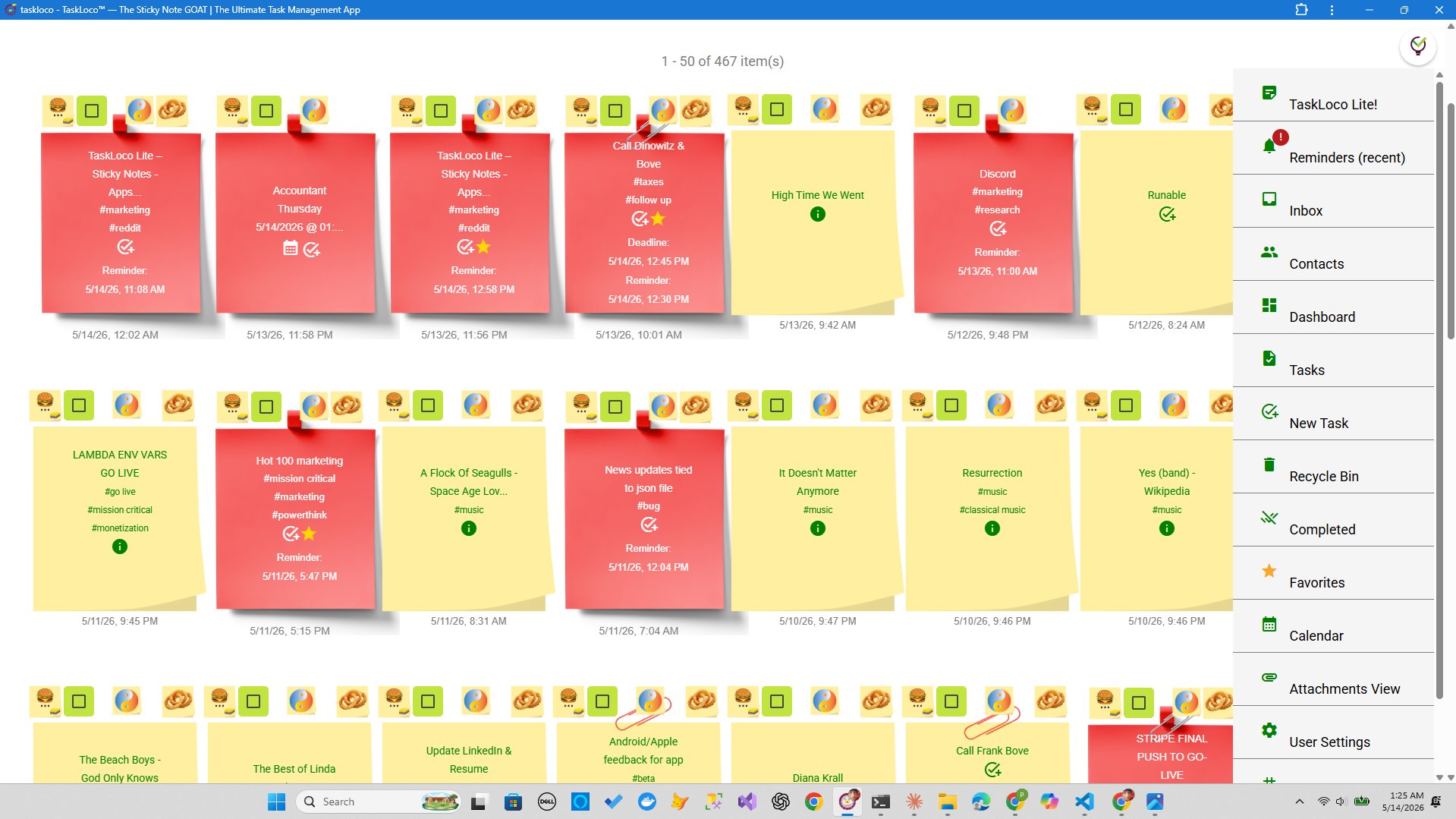
Deep work requires sustained focus on cognitively demanding tasks. Most people think the solution is blocking social media and news sites. But the real productivity killer isn't Facebook — it's having 47 browser tabs open, switching between 12 different apps, and losing track of what you were actually working on.
TaskLoco takes a different approach. Instead of blocking distractions, it eliminates the digital clutter that fragments your attention. One simple interface. Your tasks visible on your desktop. No context switching. No notification overwhelm. Just focus.
TaskLoco Premium is regularly $9.99/month per person. Right now, charter members can lock in 50% off the regular price — forever. That means $4.99/month per person today. And if our price ever goes up, you still pay half. Always.
Code CHARTER50 auto-applies at checkout. First 500 spots only — once they're gone, this offer is gone permanently. Act fast while spots last.
Every Premium subscription includes unlimited notes, 10GB file storage, reminders, calendar, and team sharing. Each team member requires a separate subscription. 7-day free trial — no charge until day 8. Cancel anytime.
Free Options: TaskLoco vs Deep Work Apps
TaskLoco Lite
- Native iPhone & Android app
- Completely anonymous — no sign-in
- Data stays on your device
- Up to 20 notes
- Free forever
TaskLoco Lite Plus+
- Web app + Chrome extension
- Sign in with Google
- Wall syncs across all devices
- Up to 30 notes
- Free forever
The Real Deep Work Problem: Tool Overwhelm
Deep work pioneer Cal Newport identified the core issue: our brains aren't wired for constant task switching. But here's what most people miss — the problem isn't just social media distractions. It's productivity tool chaos.
You start your day checking Slack, then switch to your project manager, then email, then your calendar app, then back to Slack because someone mentioned you. Each switch costs 15-20 minutes of focus recovery time. By lunch, you've context-switched 47 times and completed zero meaningful work.
Traditional deep work apps like Freedom ($2.50/month) and Cold Turkey ($39 one-time) block websites. That's useful, but it doesn't solve tool fragmentation. You're still juggling multiple productivity apps even with distractions blocked.
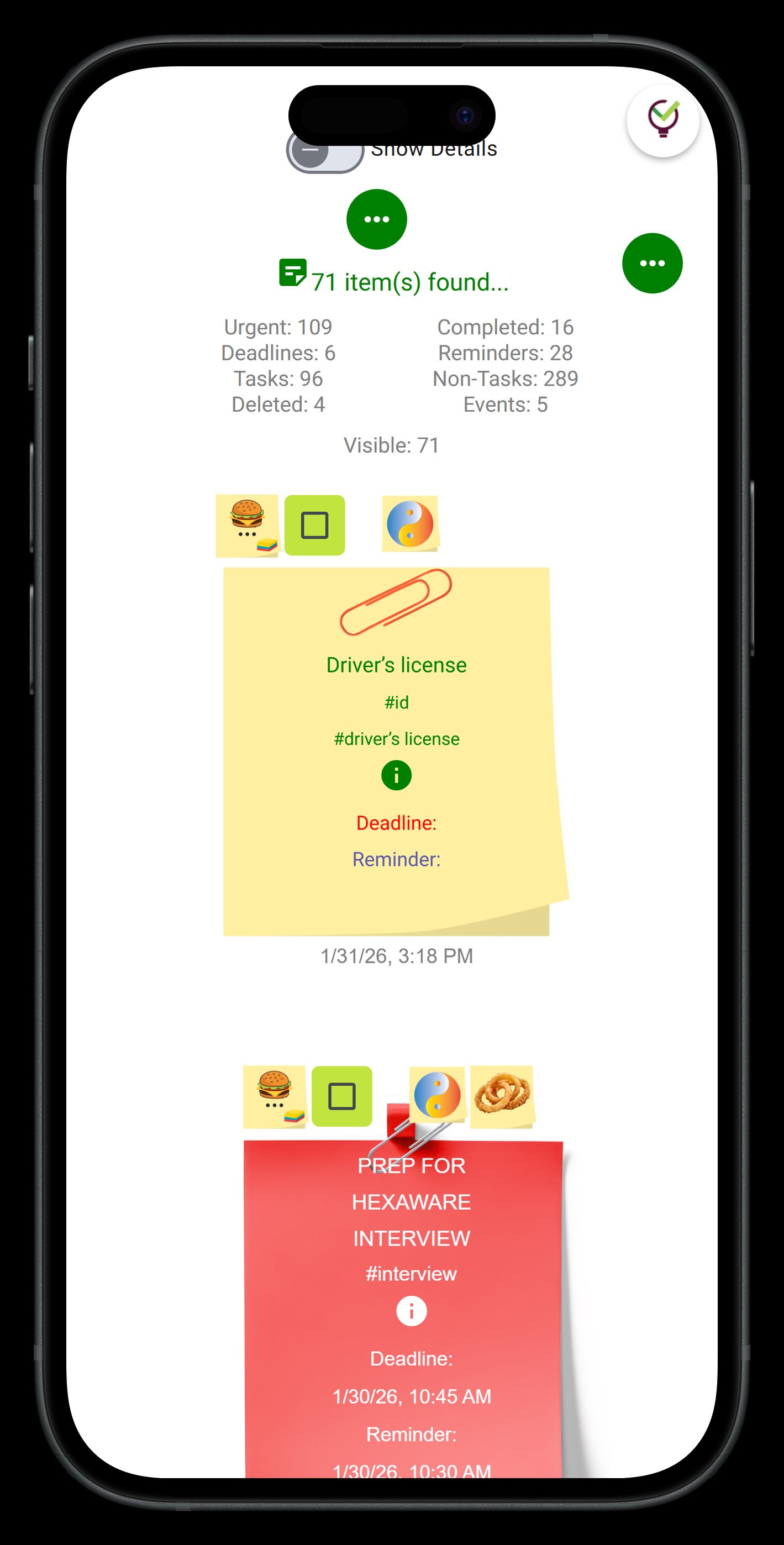
TaskLoco vs Website Blockers: Different Problems
Website blockers like Freedom ($2.50/month), Cold Turkey Pro ($39 one-time), and RescueTime ($12/month) tackle external distractions. TaskLoco solves internal productivity chaos.
Freedom blocks 500+ distracting websites across all your devices. Cold Turkey can block applications, not just websites. RescueTime tracks where you spend time and blocks unproductive sites. All useful tools for people whose main problem is impulse browsing.
But what if your problem isn't willpower — it's workflow? What if you're disciplined about avoiding social media but still can't focus because your productivity system is a mess? TaskLoco is built for this scenario.
You can use TaskLoco alongside website blockers. Many users run Freedom to block news sites while using TaskLoco to organize their actual work. They complement each other perfectly.
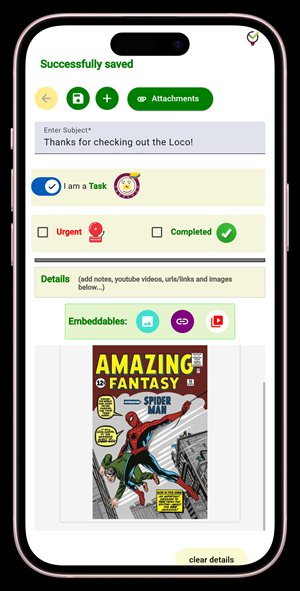
Focus vs Organization: Why Both Matter
Time tracking apps like RescueTime ($12/month) and Toggl ($9/month per user) measure focus but don't create it. Pomodoro apps like Forest ($3.99) gamify focus sessions but don't organize your work. TaskLoco does both.
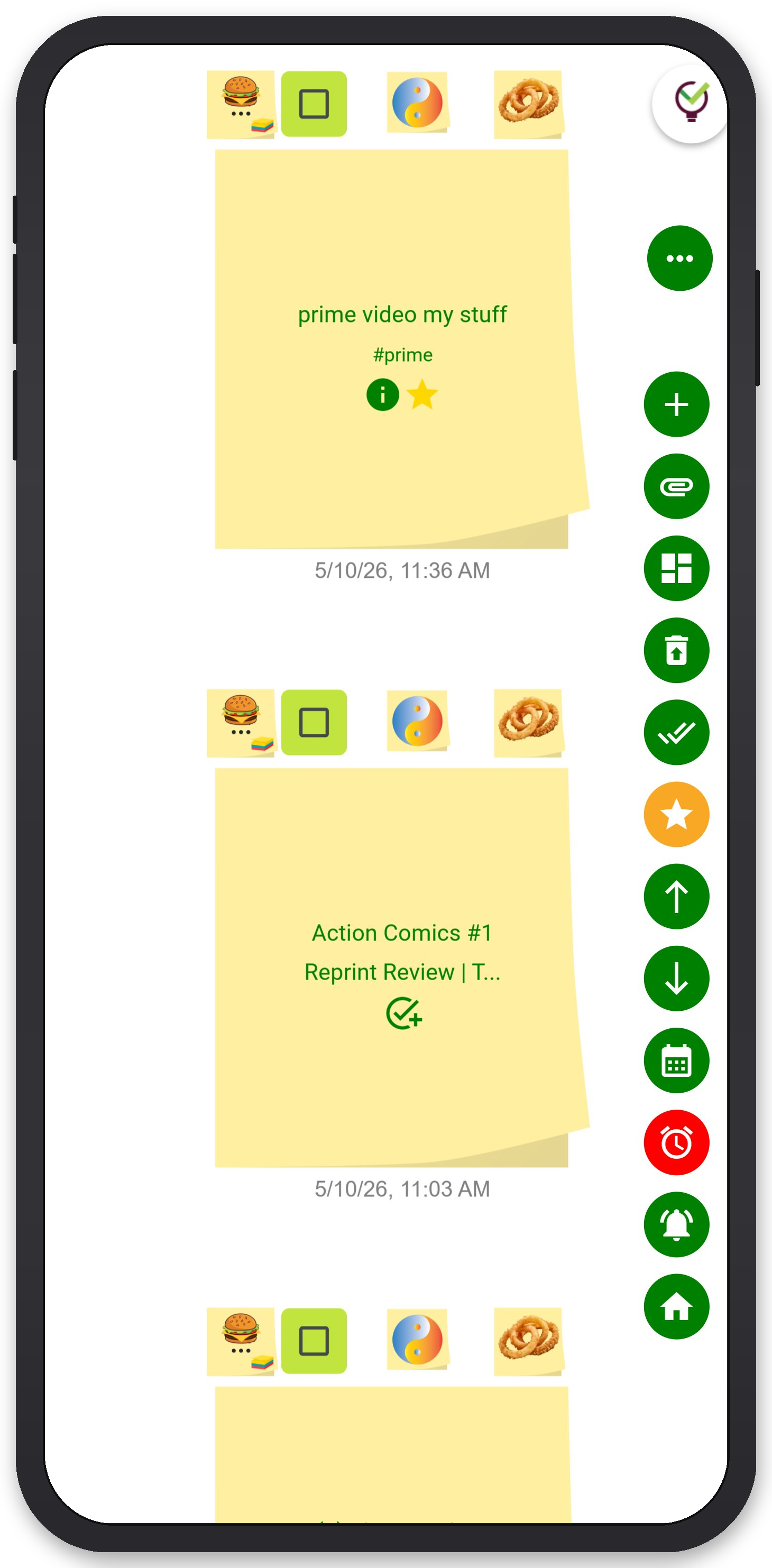
The sticky note interface naturally creates focus because everything is visual and immediate. No menus to navigate. No features to remember. You see your work, you click, you start. The cognitive load is near zero.
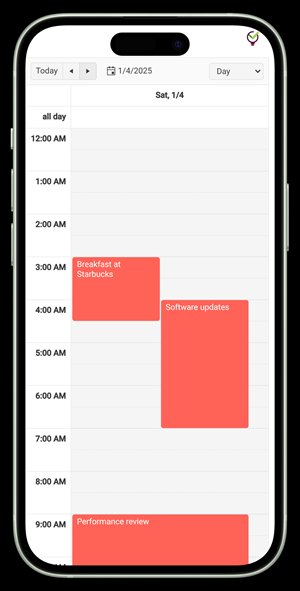
File attachments live inside notes — no switching to cloud storage. Reminders pop up without breaking flow. Calendar view shows deadlines without opening a separate app. Everything needed for deep work is contained in one simple interface.
Teams using TaskLoco for deep work sessions love the shared notes feature. Everyone can see project status without meetings or status updates. Less communication overhead means more time for actual work.
Pricing: Simple vs Complex Deep Work Stacks
Most people building a deep work system end up with multiple subscriptions: RescueTime for tracking ($12/month), Freedom for blocking ($2.50/month), Toggl for time management ($9/month per user), plus whatever project manager they're using ($10-20/month per user).
That's $33-43 per month per person for a fragmented system that still requires constant app switching. TaskLoco consolidates most of these needs into one interface for $9.99/month per person (currently $4.99/month per person for first 500 charter members with code CHARTER50).
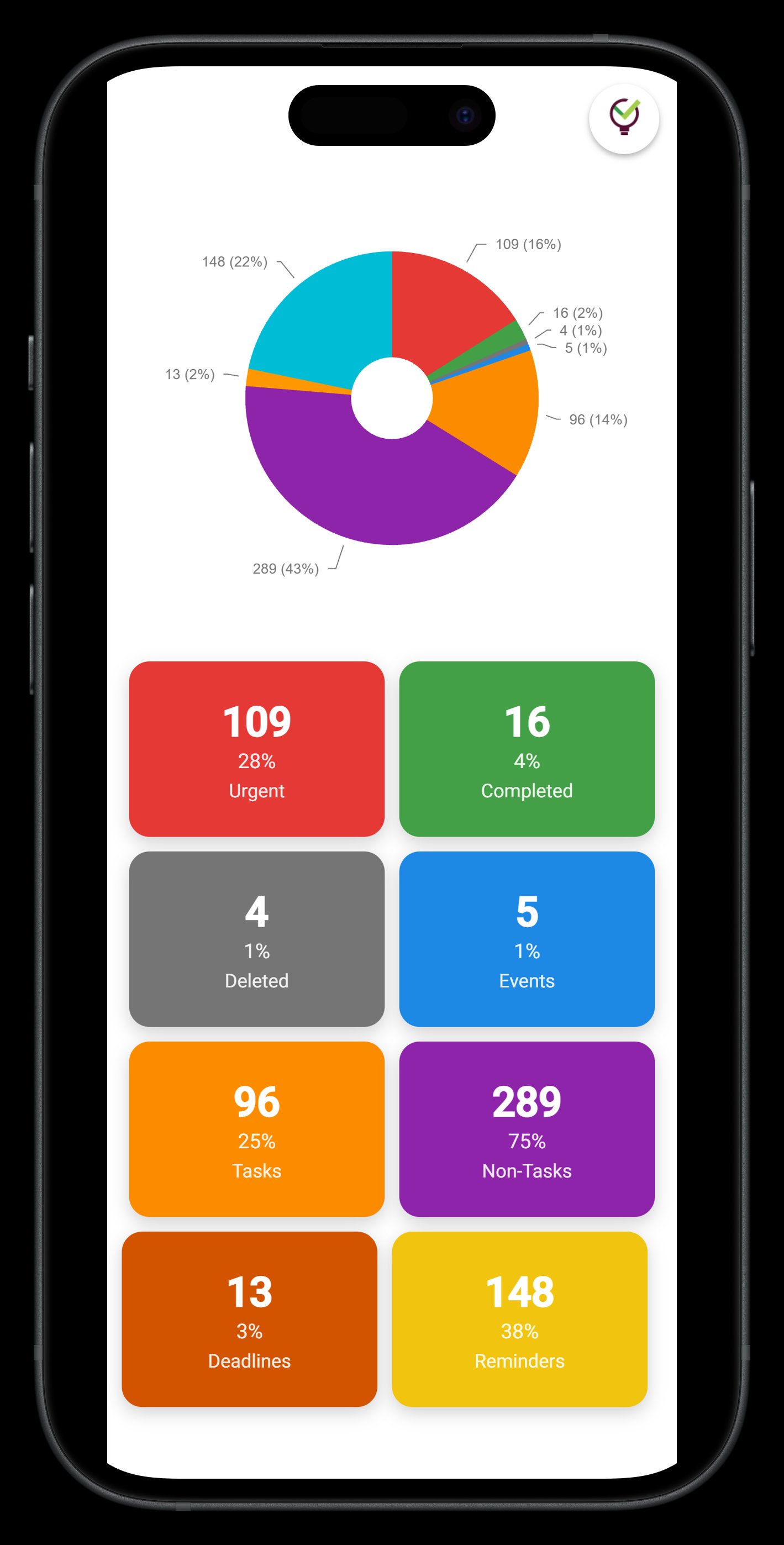
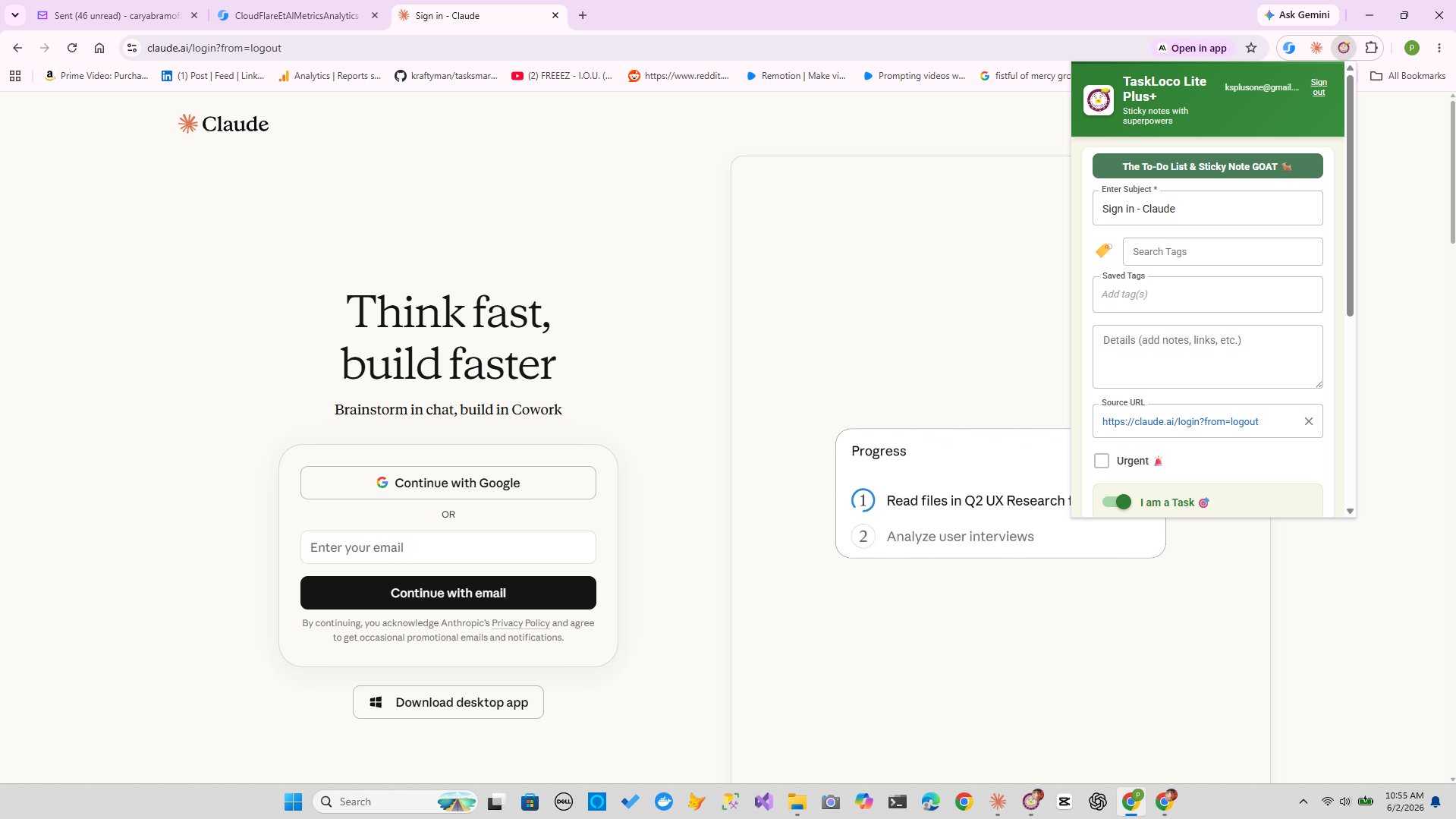
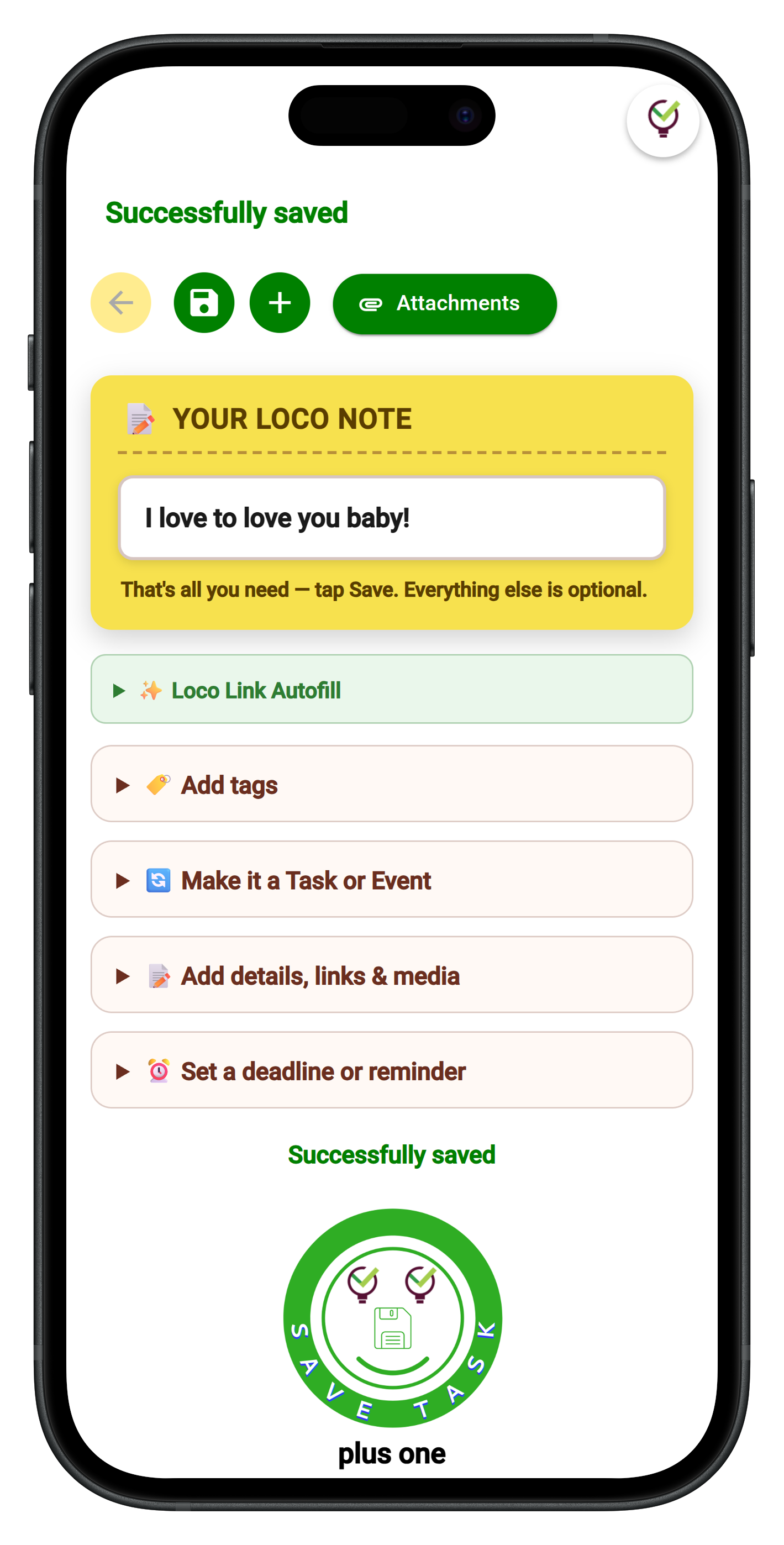
The Chrome extension captures research without breaking focus — one click saves any webpage as a note. The mobile apps handle quick capture when you're away from your desk. The 10GB file storage means reference materials live with your tasks.
For teams, the math gets even better. TaskLoco scales linearly — each person pays the same rate. Most enterprise tools have minimum seats or complex pricing tiers that punish small focused teams.
The Honest Comparison
| Feature | TaskLoco | Deep Work Apps |
|---|---|---|
| Free tier | Two free versions — Lite (20 notes, works offline) and Lite Plus+ (30 notes, synced) FREE | Limited free tiers — Freedom has 3 sessions/day, RescueTime basic tracking only |
| Website blocking | No website blocking — solves focus through workflow simplification | Advanced blocking — Freedom blocks 500+ sites, Cold Turkey blocks apps too |
| App switching elimination | Everything on desktop as sticky notes — tasks, files, calendar in one view | No solution for productivity tool fragmentation |
| Time tracking | No automatic time tracking — manual focus on task completion | RescueTime tracks everything, Toggl has detailed project timing |
| Cross-device sync | Full sync across web, iPhone, Android with Premium subscription | Mixed — Freedom syncs blocks, tracking apps sync data, varies by tool |
| File storage | 10GB included with Premium — files embedded directly in notes | No file storage — focus and blocking apps don't handle documents |
| Team collaboration | Shared notes with real-time updates and email notifications | No collaboration — most focus apps are individual-only |
| Offline access | TaskLoco Lite works completely offline, stores 20 notes locally FREE | Limited offline — some blockers work offline, tracking apps need internet |
| Browser extension | Chrome extension captures any webpage in one click FREE | Browser extensions mainly for blocking, not capturing content |
| Reminders and deadlines | Built-in reminders and calendar view with Premium | No reminder systems — focus on blocking and tracking, not scheduling |
| Monthly cost | $9.99/month per person (currently $4.99/month per person for first 500 charter members with code CHARTER50) per person | Freedom $2.50, RescueTime $12, Toggl $9 — often need multiple tools |
| Session blocking | No session-based blocking — permanent workflow simplification | Pomodoro timers, timed blocking sessions, focus session tracking |
| App complexity | Minimal interface — sticky notes on desktop, no menus or settings | Varies — some simple blockers, some complex tracking dashboards |
| Data export | Limited export options — mainly for backups | RescueTime and Toggl have extensive reporting and export features |
| Mobile apps | Native iPhone and Android apps for quick capture FREE | Most have mobile apps — Freedom blocks on mobile, tracking apps monitor phone usage |
| Setup complexity | Zero setup — create notes immediately, no configuration | Varies — blockers need site lists, tracking apps need category setup |
| Focus methodology | Eliminates digital clutter and context switching | Blocks external distractions but doesn't address internal workflow chaos |
Who Should Use Each
Use TaskLoco if…
- Your main focus problem is productivity tool fragmentation, not social media addiction
- You want everything — tasks, files, deadlines — visible on your desktop without app switching
- You need team coordination that doesn't require constant meetings or status updates
- You prefer workflow simplification over detailed time tracking and analytics
- You want to capture ideas quickly without breaking focus on your main work
Use Deep Work Apps if…
- Your primary issue is impulse browsing and you need strong website/app blocking
- You require detailed time tracking and productivity analytics to identify patterns
- You work in an environment where external internet distractions are the main focus killer
- You prefer timed work sessions (Pomodoro technique) over continuous workflow
- You need compliance reporting or detailed productivity metrics for management
Lock In 50% Off — Forever
7-day free trial. No charge until day 8. CHARTER50 auto-applies at checkout.
🔒 Lock In My Charter SpotSee TaskLoco in Action
Frequently Asked Questions
Can TaskLoco replace website blocking apps for deep work?
TaskLoco and website blockers solve different problems. TaskLoco eliminates productivity tool chaos and context switching. Website blockers prevent impulse browsing. Many users combine both — Freedom or Cold Turkey for distraction blocking, TaskLoco for workflow organization.
How does TaskLoco create deep work without time tracking?
TaskLoco creates focus by eliminating app switching and digital clutter. When everything you need is visible as desktop sticky notes, you naturally enter longer focus sessions. No need to track time when you're not constantly interrupted by tool switching.
Is TaskLoco cheaper than building a deep work app stack?
$9.99/month per person (currently $4.99/month per person for first 500 charter members with code CHARTER50). A typical deep work stack costs $30+ monthly (RescueTime $12, Freedom $2.50, project manager $15+, time tracker $9). TaskLoco consolidates most functionality into one simple interface.
Does TaskLoco work offline for distraction-free sessions?
TaskLoco Lite works completely offline with no internet connection required. Store up to 20 notes locally on your device. Perfect for airplane work or when you want zero internet connectivity during deep work sessions.
Can teams use TaskLoco for collaborative deep work?
Yes. Shared notes let teams see project status without meetings. Real-time updates mean less communication overhead. Each team member needs their own subscription, but everyone works from the same simple sticky note interface.
How do I capture research without breaking focus?
The TaskLoco Chrome extension captures any webpage in one click as a note. No bookmarking, no saving to separate apps. Research lives directly with your task notes, accessible without leaving your desktop workflow.
What if I need both TaskLoco and website blocking?
Perfect combination. Run Freedom or Cold Turkey to block distracting websites, use TaskLoco to organize your actual work. Website blockers handle external temptations, TaskLoco handles internal workflow chaos. Both address different aspects of focus.
Born in Brooklyn. Powered by AWS. Your data stays yours.
TaskLoco is available on iPhone, Android, Chrome, and every web browser.