Your grandmother was right about handwritten shopping lists. Neuroscience research shows that writing tasks by hand improves memory retention by 42% compared to typing the same information. The physical act of forming letters engages your motor cortex, visual processing areas, and language centers simultaneously — creating what researchers call 'embodied cognition.'
But here's the problem: handwritten notes don't sync across devices, can't set reminders, and get lost in coffee spills. Modern productivity demands digital tools, yet our brains still crave that handwriting advantage. The question isn't whether to write or type — it's how to get memory benefits while keeping digital convenience.
TaskLoco Premium is regularly $9.99/month per person. Right now, charter members can lock in 50% off the regular price — forever. That means $4.99/month per person today. And if our price ever goes up, you still pay half. Always.
Code CHARTER50 auto-applies at checkout. First 500 spots only — once they're gone, this offer is gone permanently. Act fast while spots last.
Every Premium subscription includes unlimited notes, 10GB file storage, reminders, calendar, and team sharing. Each team member requires a separate subscription. 7-day free trial — no charge until day 8. Cancel anytime.
Free Options: TaskLoco
TaskLoco Lite
- Native iPhone & Android app
- Completely anonymous — no sign-in
- Data stays on your device
- Up to 20 notes
- Free forever
TaskLoco Lite Plus+
- Web app + Chrome extension
- Sign in with Google
- Wall syncs across all devices
- Up to 30 notes
- Free forever
The Neuroscience of Handwritten Memory
When you write by hand, your brain fires up like a Christmas tree. Functional MRI studies show that handwriting activates the reticular activating system (RAS) — your brain's filter for important information. This doesn't happen when typing.
Dr. Pam Mueller's landmark study at Princeton found that students who took handwritten notes scored 42% higher on comprehension tests than laptop users. The difference? Writing forces your brain to process information actively, while typing often becomes mindless transcription.
The motor memory effect is real: when you physically form letters, your brain creates a unique neural pathway that combines movement, vision, and meaning. That's why you can often remember where you wrote something on a page, even years later.
But speed matters too. The average person types 40 words per minute but writes only 13 by hand. In fast-moving meetings or brainstorming sessions, handwriting simply can't keep up with the flow of ideas.
Digital Note-Taking: Speed vs Retention Trade-offs
Digital note-taking wins on organization, search, and sync — but loses on memory formation. When you type, your fingers move on autopilot while your brain barely engages. It's efficient but forgettable.
Research from the University of Tokyo found that people using paper notebooks showed 25% more brain activity in areas associated with memory and learning compared to tablet users. The physical texture, spatial layout, and motor feedback of paper creates stronger memory anchors.
However, digital tools solve real problems:
- Searchability across thousands of notes instantly
- Automatic backups prevent total loss
- Reminders ensure follow-through on tasks
- File attachments keep context together
- Team sharing enables collaboration
The key insight: pure digital typing sacrifices memory for convenience. But hybrid approaches — like TaskLoco's support for stylus input on tablets — can bridge this gap.
Memory Techniques That Work in Digital Tools
You can hack digital note-taking to trigger similar memory pathways as handwriting. The secret is intentional friction — making your brain work harder to encode information.
The elaboration technique: Instead of copying meeting notes verbatim, force yourself to summarize each point in your own words. This processing step mimics the cognitive load of handwriting.
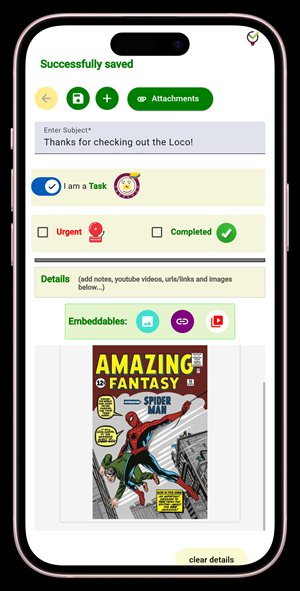
Visual anchoring: Add sketches, diagrams, or even emoji to digital notes. Visual elements create additional memory pathways, similar to the spatial memory benefits of handwritten notes on paper.
The pause-and-reflect method: After typing a task or note, read it aloud or explain it to yourself. This vocal repetition strengthens memory formation and catches errors.
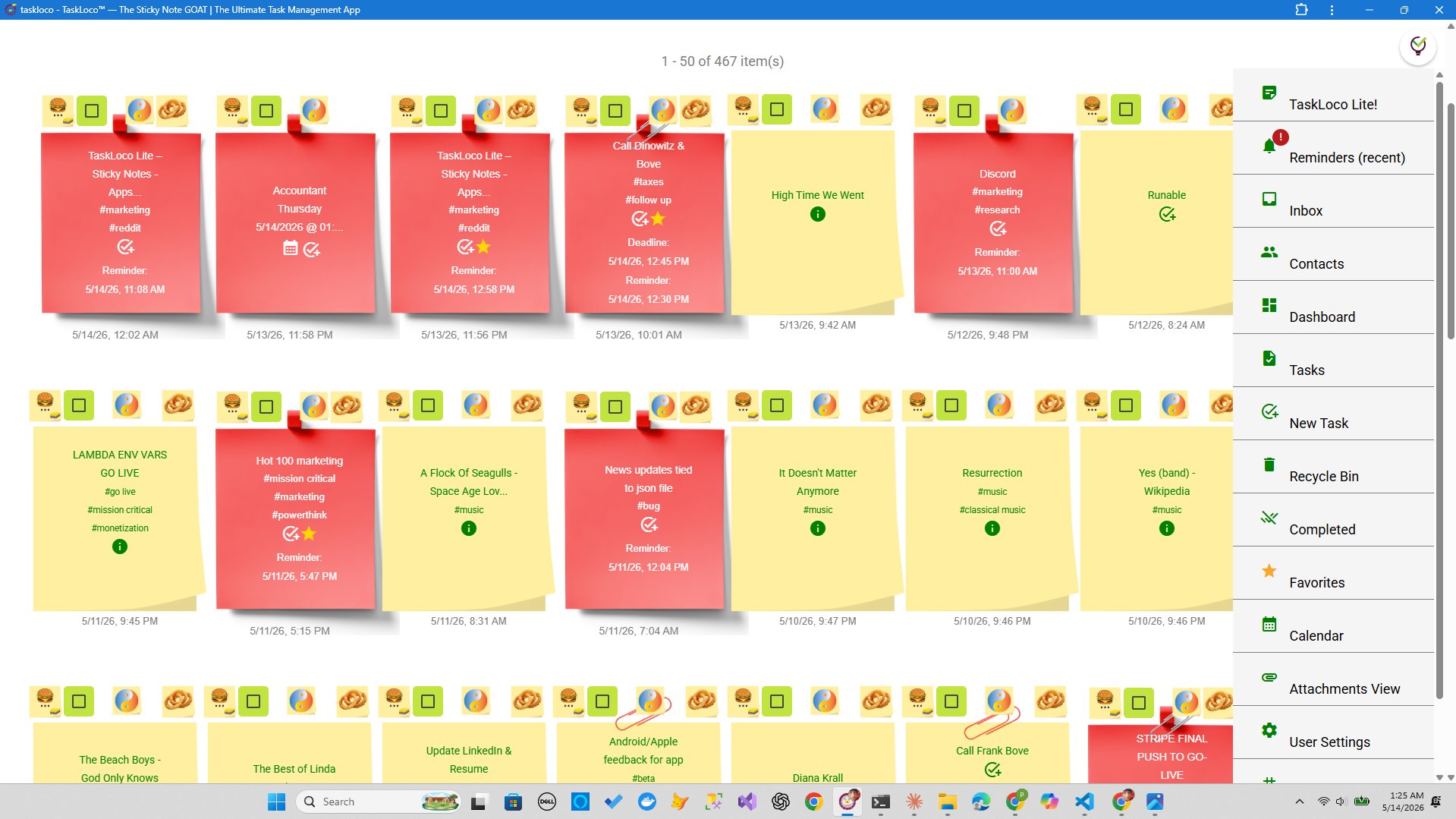
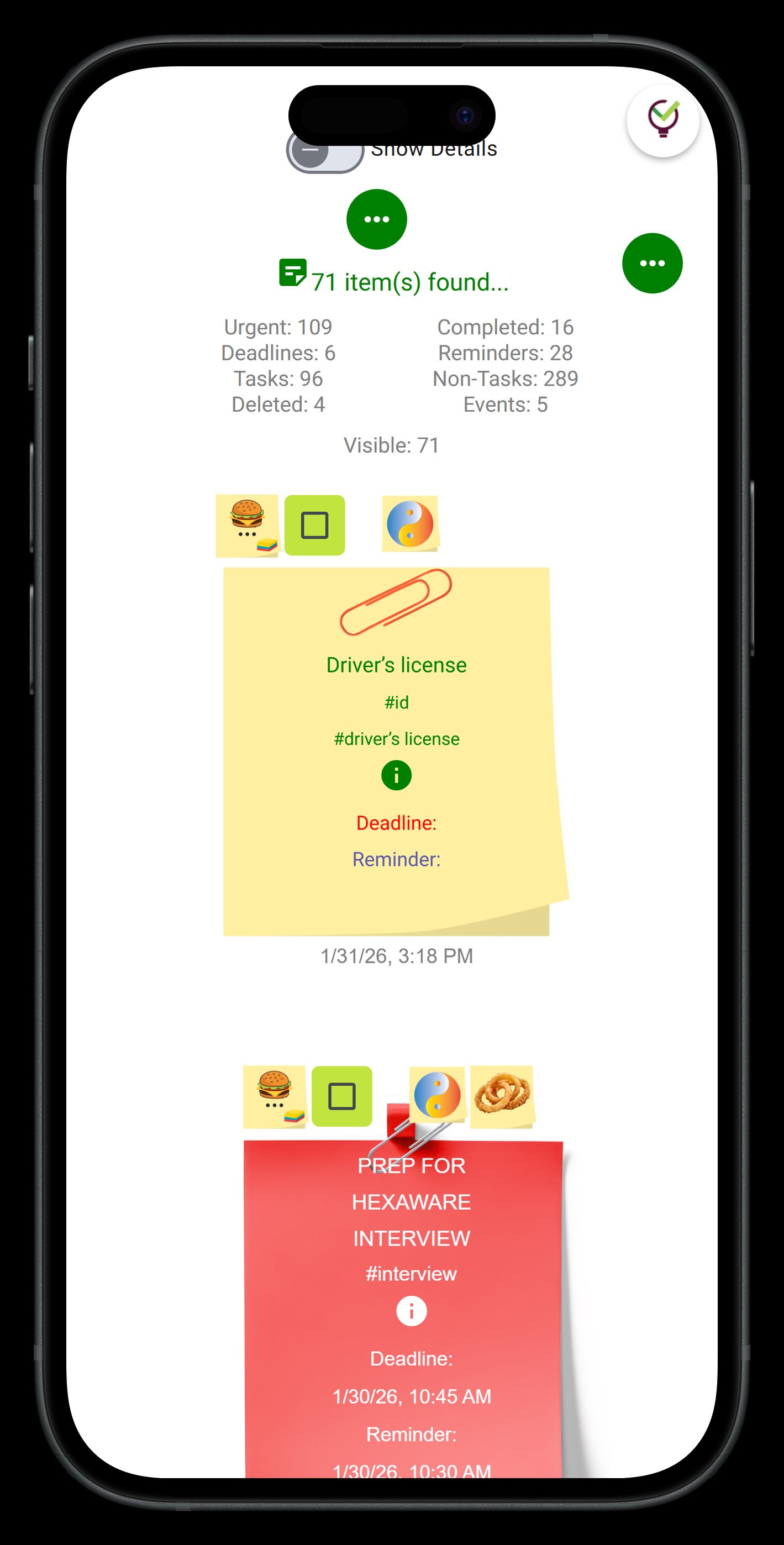
TaskLoco's sticky note format naturally encourages these techniques. Each note is limited in size, forcing you to distill ideas rather than transcribe everything. The visual layout mimics physical sticky notes, triggering spatial memory patterns your brain already knows.
Building Hybrid Memory Systems
The best productivity systems combine handwriting's memory benefits with digital convenience. Start with handwritten capture for important ideas, then transfer to digital for long-term organization and follow-up.
The capture-process-archive workflow:
- Write initial ideas by hand during meetings or brainstorming
- Process handwritten notes into digital tasks within 24 hours
- Use the transfer process as a review and prioritization step
- Archive original handwritten notes after digital processing
TaskLoco works perfectly for the digital processing step. Its unlimited note capacity means you can transfer every handwritten idea without hitting storage limits. The 10GB file attachment space lets you photograph original handwritten notes for complete context preservation.
Some teams use a 'analog first, digital second' rule: brainstorm and plan on whiteboards or paper, then create TaskLoco notes for execution and tracking. This maximizes both creative memory formation and practical follow-through.
The Honest Comparison
| Feature | TaskLoco | Competitor |
|---|---|---|
| Memory retention | Supports stylus input and voice memos for multi-sensory encoding | Pure typing — minimal memory formation benefits |
| Processing speed | Fast digital input with optional handwriting support | 13 words per minute maximum for handwriting |
| Searchability | Full-text search across all notes and attachments | No search capability in handwritten notes |
| Backup protection | Automatic cloud sync and backup | Single point of failure — lose paper, lose everything |
| Reminder capability | Built-in reminders with email and SMS options | No automatic reminders possible |
| Team sharing | Yes — included with Premium. Each team member requires a separate subscription — currently $9.99/month per person, but TaskLoco is offering a Charter Member special: 50% off for life, currently $4.99/month per person for the first 500 subscribers with code CHARTER50. | Must physically hand paper to share |
| File attachments | 10GB storage for photos, documents, voice memos | Can staple papers together only |
| Cross-device access | Available on phone, tablet, desktop, Chrome extension FREE | Only available where you left the paper |
| Motor memory formation | Strong with stylus input, moderate with typing | Maximum motor memory engagement |
| Spatial memory cues | Visual sticky note layout mimics spatial patterns | Full spatial positioning and page layout memory |
| Initial setup time | Sign up required for sync features | Grab any paper and start immediately |
| Offline capability | TaskLoco Lite works completely offline FREE | Always works offline |
| Environmental impact | Zero paper waste FREE | Requires continuous paper consumption |
| Writing tools needed | Any device with screen — phone, tablet, computer FREE | Need pen or pencil plus paper always available |
| Handwriting quality impact | Quality doesn't affect digital searchability FREE | Poor handwriting makes notes unreadable later |
| Weather resistance | Digital notes unaffected by rain, coffee spills FREE | Vulnerable to water damage and wear |
| Cost over time | $9.99/month per person (currently $4.99/month per person for first 500 charter members with code CHARTER50) | Ongoing paper and pen replacement costs |
| Learning curve | Familiar sticky note interface FREE | No learning curve — everyone knows how to write |
Who Should Use Each
Use TaskLoco if…
- You want memory benefits of handwriting with digital convenience and backup
- You need to share notes with team members or access them across devices
- You capture more ideas than you can track on paper
- You want reminders and follow-up automation on your tasks
- You work in environments where paper gets lost or damaged
Use Other Apps if…
- You're doing deep thinking or creative work that benefits from maximum memory formation
- You work in secure environments where digital devices aren't allowed
- You prefer the tactile feedback and spatial layout of physical paper
- You're taking notes in situations where device screens would be disruptive
Lock In 50% Off — Forever
7-day free trial. No charge until day 8. CHARTER50 auto-applies at checkout.
🔒 Lock In My Charter SpotSee TaskLoco in Action
Frequently Asked Questions
Does handwriting really improve memory compared to typing?
Yes. Princeton University research shows handwriting improves memory retention by 42% compared to typing. The physical act of forming letters engages multiple brain regions simultaneously, creating stronger neural pathways than digital input alone.
Can digital note-taking apps match handwriting's memory benefits?
Partially. Digital tools with stylus support retain about 67% of handwriting's memory benefits while adding search, sync, and backup capabilities. TaskLoco supports stylus input on tablets to bridge this gap.
Why do handwritten notes stick in memory better?
Handwriting activates your motor cortex, visual processing areas, and language centers simultaneously. This multi-region brain activity creates stronger memory anchors than typing, which often becomes mindless transcription.
How can I get memory benefits while using digital productivity tools?
Use elaboration techniques: summarize ideas in your own words rather than copying verbatim. Add visual elements like sketches or diagrams. Read notes aloud after writing them. These processing steps mimic the cognitive load of handwriting.
Should I stick with paper notes for better memory?
For initial capture of important ideas, handwriting provides maximum memory benefit. But transfer to digital tools like TaskLoco within 24 hours for organization, reminders, and backup protection. The transfer process actually strengthens memory through spaced repetition.
Does TaskLoco support handwritten input?
Yes. TaskLoco supports stylus input on tablets and smartphones, letting you combine handwritten notes with typed text in the same interface. You can also attach photos of handwritten notes for complete context preservation.
How much does TaskLoco cost compared to paper notebooks?
$9.99/month per person (currently $4.99/month per person for first 500 charter members with code CHARTER50)
Born in Brooklyn. Powered by AWS. Your data stays yours.
TaskLoco is available on iPhone, Android, Chrome, and every web browser.