Most people think dopamine is the "pleasure chemical" — something that floods your brain when something good happens. That's only half right, and the half that's wrong is the part that matters most for understanding motivation. Dopamine is primarily a signal of anticipated reward, not received reward. It fires hardest in the moment before you get what you want, not after.
This distinction — anticipation over satisfaction — explains a lot of puzzling human behavior: why finishing a project feels hollow, why the second scroll always leads to a third, why crossing something off a list can feel more motivating than the thing you were working toward. Once you understand what the dopamine system is actually doing, you can start designing work habits and environments that work with it instead of against it.
What the Dopamine Reward Loop Actually Is
The dopamine reward loop is a four-stage cycle rooted in the brain's mesolimbic pathway — sometimes called the reward pathway. The four stages are: cue, craving, response, and reward. This model, formalized through decades of neuroscience research beginning with Wolfram Schultz's work on primate neurons in the 1990s, underpins nearly every modern framework on habit formation, including James Clear's popularization in Atomic Habits.
Here is the critical finding Schultz's lab produced: dopamine neurons fire at the cue, not at the reward. When a monkey learned that a light predicted juice, the dopamine spike shifted from the juice delivery backward in time to the moment the light appeared. Once the association was fully learned, the juice itself produced almost no dopamine response at all — unless it was better than expected. What produces dopamine is the prediction of reward, not the reward itself. This is called reward prediction error.
The practical implication is counterintuitive: the most motivating moment in any task cycle is not completion — it is the moment you believe completion is possible and near. The brain is not rewarding you for finishing; it is energizing you to pursue. Satisfaction, ironically, tends to quiet the dopamine system rather than amplify it.
Where It Comes From — and Why It Evolved
The dopamine reward circuit did not evolve to make humans feel good. It evolved to make them move. Dopamine is fundamentally a locomotion and pursuit signal. Animals with disrupted dopamine systems do not become anhedonic in the sense of being sad — they become amotivated. They will not walk to food even when hungry. They lose the drive to initiate action, not the capacity to enjoy an outcome once placed in their mouth.
This evolutionary framing clarifies why the loop can be so easily hijacked. Social media, gambling, and junk food all exploit the same mechanism: they compress the cue-to-reward interval, increase reward unpredictability (variable ratio reinforcement is the most powerful schedule), and provide low-cost surrogates for the genuine rewards the system evolved to pursue — food, social status, safety, reproduction. The loop was calibrated for a world where rewards were hard to get and genuinely worth pursuing. Modern environments are not that world.
Variable ratio reinforcement — the same mechanism behind slot machines — is particularly powerful because unpredictable rewards generate stronger and more persistent dopamine anticipation than predictable ones. This is why the pull-to-refresh gesture on a phone is so compelling: you don't know if there will be something new. The uncertainty itself is the hook. Schultz's neurons fire harder when the probability of reward is around 50% than when it is certain.
Where the Loop Breaks Down
The dopamine reward loop has several well-documented failure modes that matter for anyone trying to build productive habits deliberately.
Tolerance and baseline drift. Repeated exposure to the same reward shrinks the dopamine response over time. This is why a completed task that felt satisfying in week one feels routine by week four. The brain recalibrates its prediction baseline upward, requiring either a larger reward or a novel one to produce the same motivational signal. Behavioral psychologists call this hedonic adaptation.
Reward substitution. If the brain can satisfy the anticipation phase cheaply — through a notification check, a quick social validation hit, or any other low-effort cue that mimics reward — it will. This substitution is particularly insidious because it consumes the dopamine signal without producing the real outcome. You get the neurological feeling of pursuit without the result, which over time trains the system toward shorter loops and lower ambitions.
Completion collapse. Because dopamine fires during anticipation, finishing a long project often produces a flatness rather than a high. The loop closes and the signal drops. People who have experienced this as a letdown after a major achievement are experiencing the system working exactly as designed — the drive existed to get you to the finish line, not to celebrate on the other side of it. The solution is not to pursue bigger highs but to start a new anticipation cycle quickly.
Broken feedback. The loop requires timely, legible feedback to reinforce the correct behaviors. When the connection between action and outcome is unclear, delayed, or absent, dopamine cannot do its job as a reinforcement signal. This is why vague goals are so hard to execute on: the brain cannot generate anticipation around an outcome it cannot concretely predict.
Designing Your Workflow Around the Loop
You cannot beat the dopamine system, but you can architect around its real mechanics. The goal is to create genuine anticipation cues, maintain unpredictability where it helps, deliver timely feedback, and avoid reward substitution traps.
A few principles that hold up against the neuroscience:
- Make the next action visible and specific. Vague tasks do not generate dopamine anticipation because the brain cannot model the reward. "Work on report" produces less motivational drive than "write the opening paragraph of the Q3 summary." Specificity creates a modelable outcome, which is what the prediction system needs.
- Keep loop length short enough to stay in the anticipation window. Multi-month projects have no inherent anticipation cue because the reward is too distant to feel probable. Break work into pieces where completion feels near — not to game yourself, but because the neuroscience of reward prediction error requires a close-enough horizon to activate.
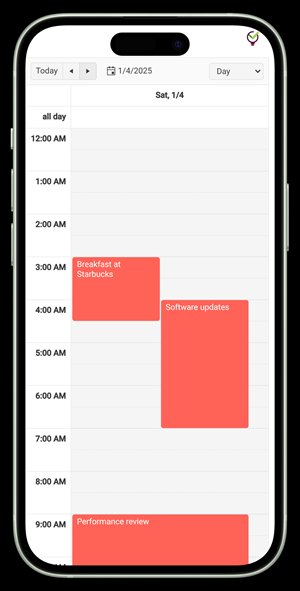
- Use reminders as re-entry cues, not just alerts. A reminder that pulls you back directly to the task creates a new cue-craving moment. A reminder that sits in an inbox and gets dismissed is reward substitution — the act of acknowledging the alert mimics responsiveness without generating action.
- Protect the loop from cheap substitutes. Batch low-signal activities — email, notifications, routine checking — so they don't continuously consume the anticipation signal that your real work needs.
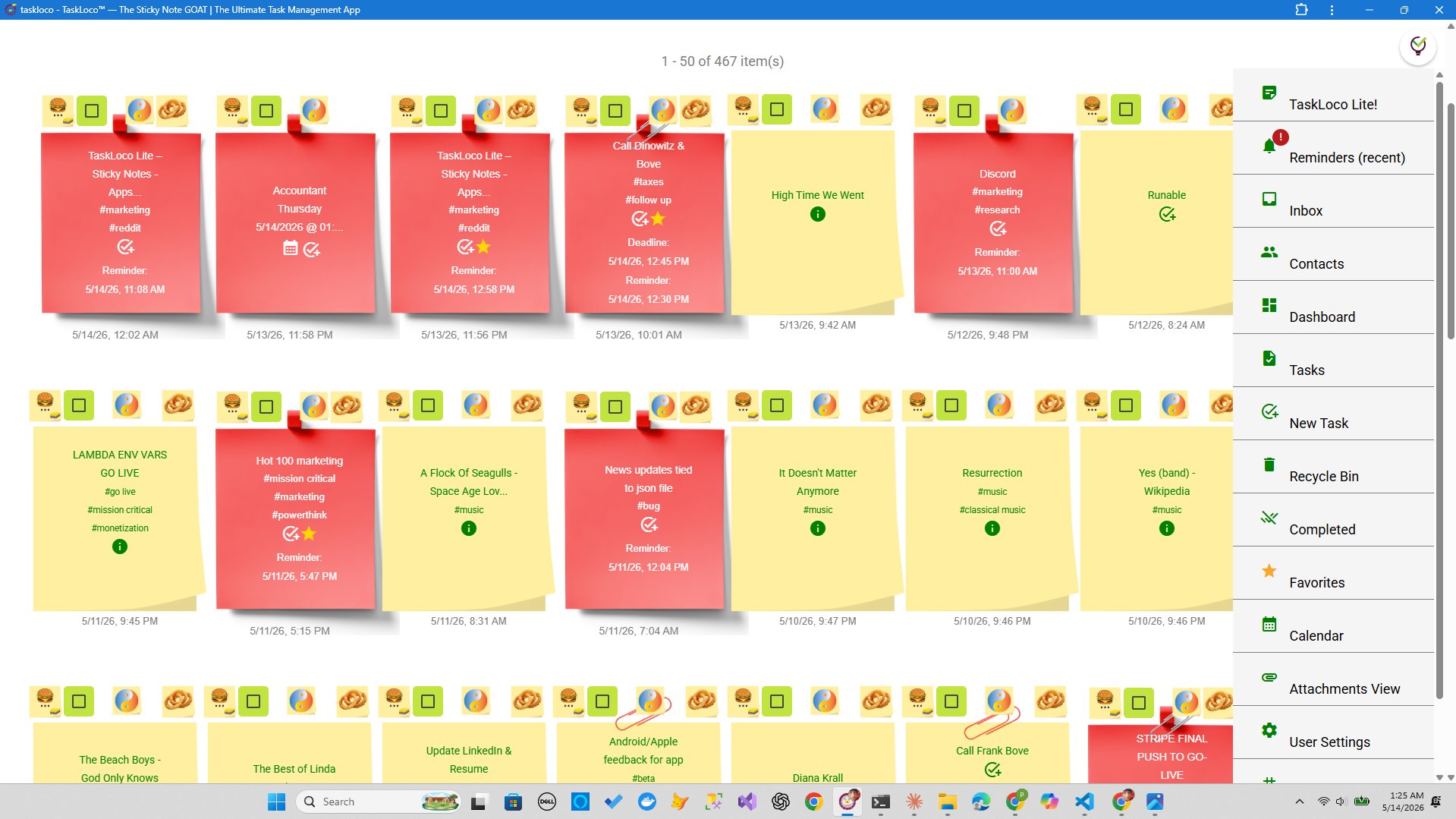
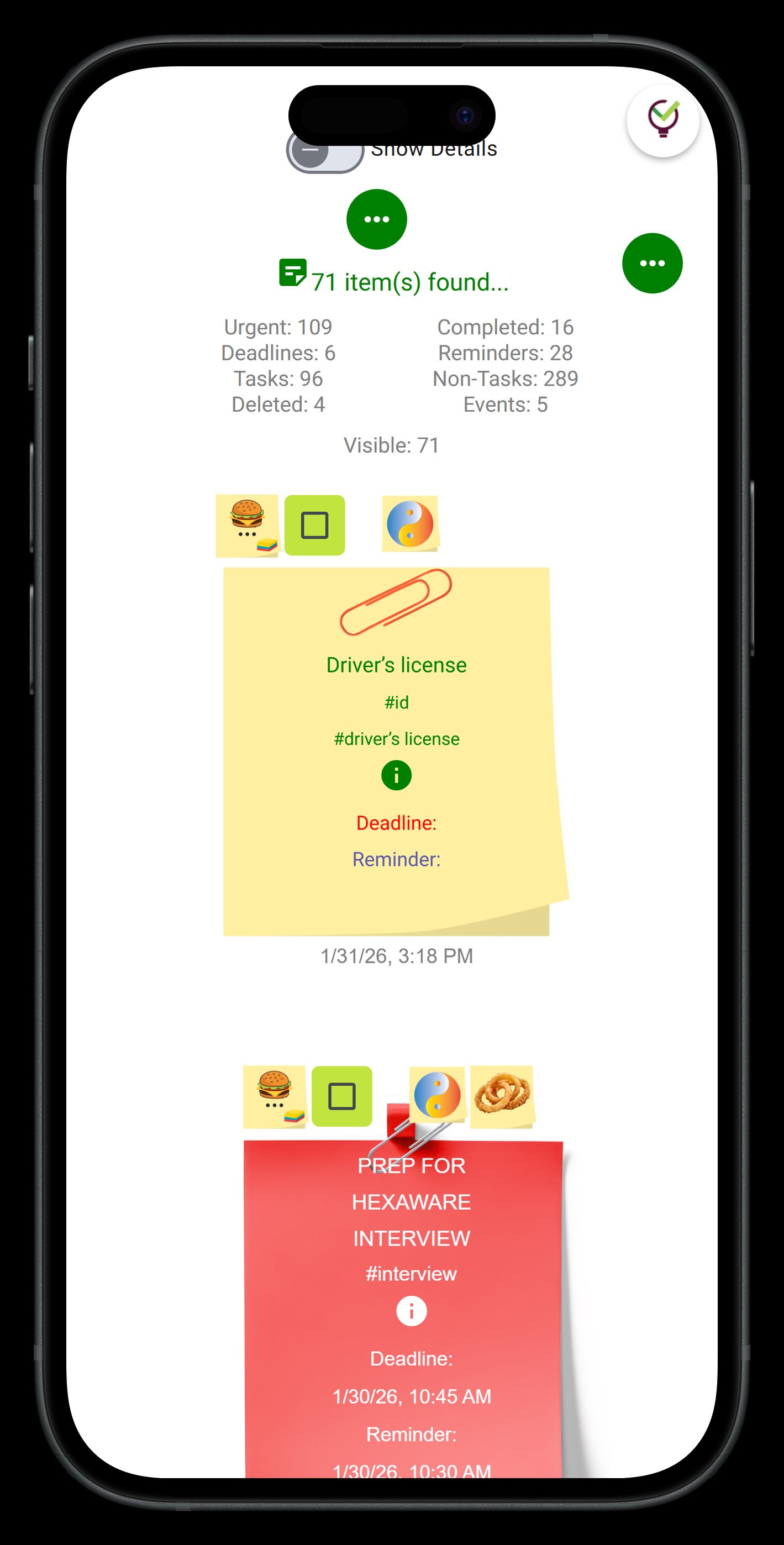
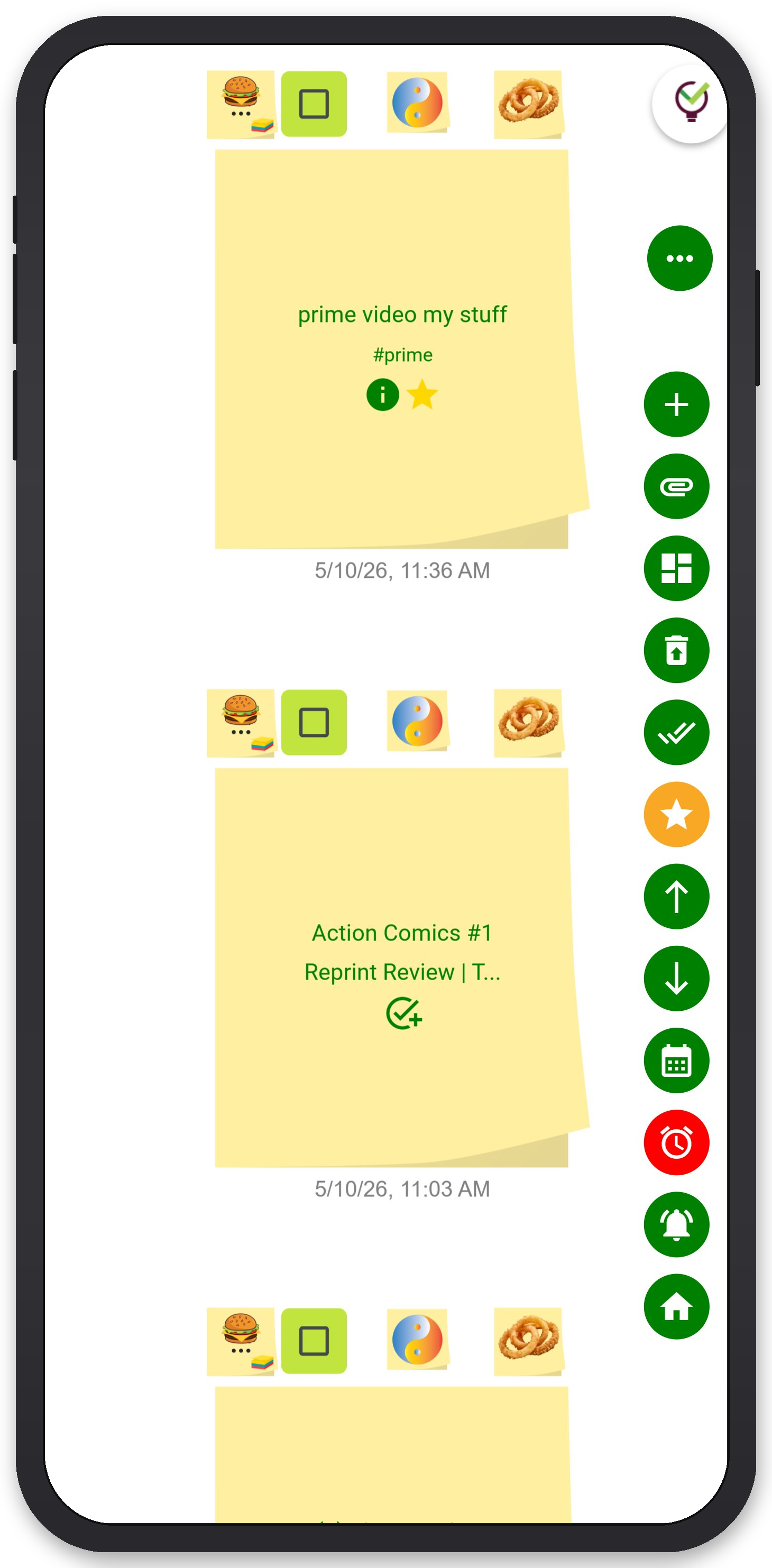
TaskLoco is built in a way that maps naturally to these principles. Notes on a visual wall are persistently visible, which maintains low-level anticipation cues throughout the day rather than requiring you to open a task manager, find the item, and remember why it mattered. Premium reminders deliver as push notifications that deep-link directly back to the original note — so the re-entry cue is immediate and contextual rather than a dead-end alert. The goal is never to trick your brain into working. It is to remove the friction between intention and the moment the dopamine signal needs to fire.
TaskLoco Premium is regularly $9.99/month per person. Right now, charter members can lock in 50% off the regular price — forever. That means $4.99/month per person today. And if our price ever goes up, you still pay half. Always.
Code CHARTER50 auto-applies at checkout. First 500 spots only — once they're gone, this offer is gone permanently. Act fast while spots last.
Every Premium subscription includes unlimited notes, 10GB file storage, reminders, calendar, and team sharing. Each team member requires a separate subscription. 7-day free trial — no charge until day 8. Cancel anytime.
Free Options: TaskLoco
TaskLoco Lite
- Native iPhone & Android app
- Completely anonymous — no sign-in
- Data stays on your device
- Up to 20 notes
- Free forever
TaskLoco Lite Plus+
- Web app + Chrome extension
- Sign in with Google
- Wall syncs across all devices
- Up to 30 notes
- Free forever
Lock In 50% Off — Forever
7-day free trial. No charge until day 8. CHARTER50 auto-applies at checkout.
🔒 Lock In My Charter SpotSee TaskLoco in Action
Frequently Asked Questions
What is the dopamine reward loop in simple terms?
It is a four-stage neurological cycle — cue, craving, response, reward — driven by the brain's mesolimbic pathway. The key insight is that dopamine fires at the anticipation of a reward, not at its receipt. Your brain is energizing you to pursue, not celebrating that you arrived.
Does dopamine actually make you feel pleasure?
Only indirectly. Dopamine primarily drives motivation and anticipation. The 'pleasure' component of reward is handled more by opioid systems in the brain. Dopamine is better understood as a pursuit signal than a pleasure signal — it makes you want things, not necessarily enjoy them once you have them.
Why does finishing a big project sometimes feel anticlimactic?
Because the dopamine signal that powered your pursuit was firing during the anticipation phase, not at completion. Once the reward is received and the prediction resolves, the signal drops. This is the system working correctly. The practical fix is to begin a new anticipation cycle quickly — start the next project before the last one fully closes.
What is reward prediction error?
Reward prediction error is the difference between what the brain predicted would happen and what actually happened. When an outcome is better than predicted, dopamine surges. When it matches the prediction, the response is flat. When it is worse, dopamine dips below baseline. This mechanism is how the brain updates its model of the world and reinforces behaviors that produced better-than-expected outcomes.
Why is variable reward more addictive than consistent reward?
Because unpredictable rewards generate stronger dopamine anticipation than certain ones. When you don't know if a reward will arrive, your brain treats the probabilistic situation as a high-value target and fires dopamine more intensely in the pursuit phase. This is the same principle behind slot machines and the pull-to-refresh gesture on social apps — uncertainty amplifies the craving signal.
How do I use the dopamine reward loop to build better habits?
Focus on three things: make your next action specific and visible so the brain can model a real reward; keep anticipation windows short enough that completion feels achievable soon; and avoid reward substitution — don't let cheap activities like checking notifications consume the motivational signal you need for real work. Timely, legible feedback connecting action to outcome is essential.
How does TaskLoco relate to the dopamine reward loop?
TaskLoco's visual note wall keeps active tasks persistently visible, which sustains low-level anticipation cues throughout the day. Premium reminders deliver as push notifications that deep-link directly back to the original note, creating a clean re-entry cue rather than a dead-end alert. The design keeps real-work feedback loops short and legible — which is what the dopamine system actually needs to stay pointed at meaningful work. $9.99/month per person (currently $4.99/month per person for first 500 charter members with code CHARTER50)
Born in Brooklyn. Powered by AWS. Your data stays yours.
TaskLoco is available on iPhone, Android, Chrome, and every web browser.