Time management has a PR problem. You can block out a perfect calendar, color-code every hour, and still produce mediocre work — because the 2 PM slot you reserved for deep thinking happens to be when your brain turns to soup. That's not a scheduling failure. That's an energy failure. And no amount of time-blocking fixes it.
Energy management, on the other hand, can feel like soft productivity advice — the kind that sounds compelling in a TED talk and falls apart Monday morning when you actually have deadlines. The honest truth is that neither framework is complete on its own. Time management without energy awareness is a calendar full of wishful thinking. Energy management without time structure is a vague intention to 'work when you feel good.' What actually moves the needle is using both — and having a system that makes it frictionless to do so. That's exactly the gap TaskLoco was built to close.
What Time Management Gets Right — and Where It Breaks Down
Time management is a real discipline with real results. It forces prioritization. It prevents tasks from expanding to fill all available space. Techniques like time-blocking, the Pomodoro method, and MIT (Most Important Task) frameworks have helped millions of people get more done. If you've never structured your day deliberately, starting with time management will almost certainly improve your output.
The problem emerges at the execution layer. Time management assumes you show up to every block as a more or less equal version of yourself. You don't. Research on ultradian rhythms consistently shows that humans cycle through roughly 90–120 minute peaks and troughs of cognitive performance throughout the day. Schedule a complex analysis during a trough and you'll spend twice as long getting half as far. Schedule it at your peak and the same task feels almost easy.
Time management also tends to optimize for volume — fitting more in — rather than for quality. A packed calendar feels productive. A calendar where the hardest task lands at your sharpest hour, and administrative work fills the recovery gaps, actually is productive.
What Energy Management Gets Right — and Where It Needs Help
Energy management reframes productivity around a simple observation: your cognitive, emotional, and physical energy are finite and fluctuate. Rather than asking 'when can I schedule this?' it asks 'when will I be in the best state to actually do this well?' That's a better question.
The four dimensions most practitioners work with are physical (sleep, movement, nutrition), emotional (stress, relationships, mindset), mental (focus, cognitive load), and purposeful (meaning, motivation). When all four are aligned, you produce your best work. When one is depleted, everything downstream suffers.
But here's where energy management can fall flat in practice: awareness without structure. Knowing you do your best thinking between 9 and 11 AM is valuable insight — until Tuesday arrives and you've got four unread emails, a Slack thread, and a half-finished task from last week all competing for that window. Without a capture system and a prioritization layer, energy management becomes a philosophy rather than a practice.
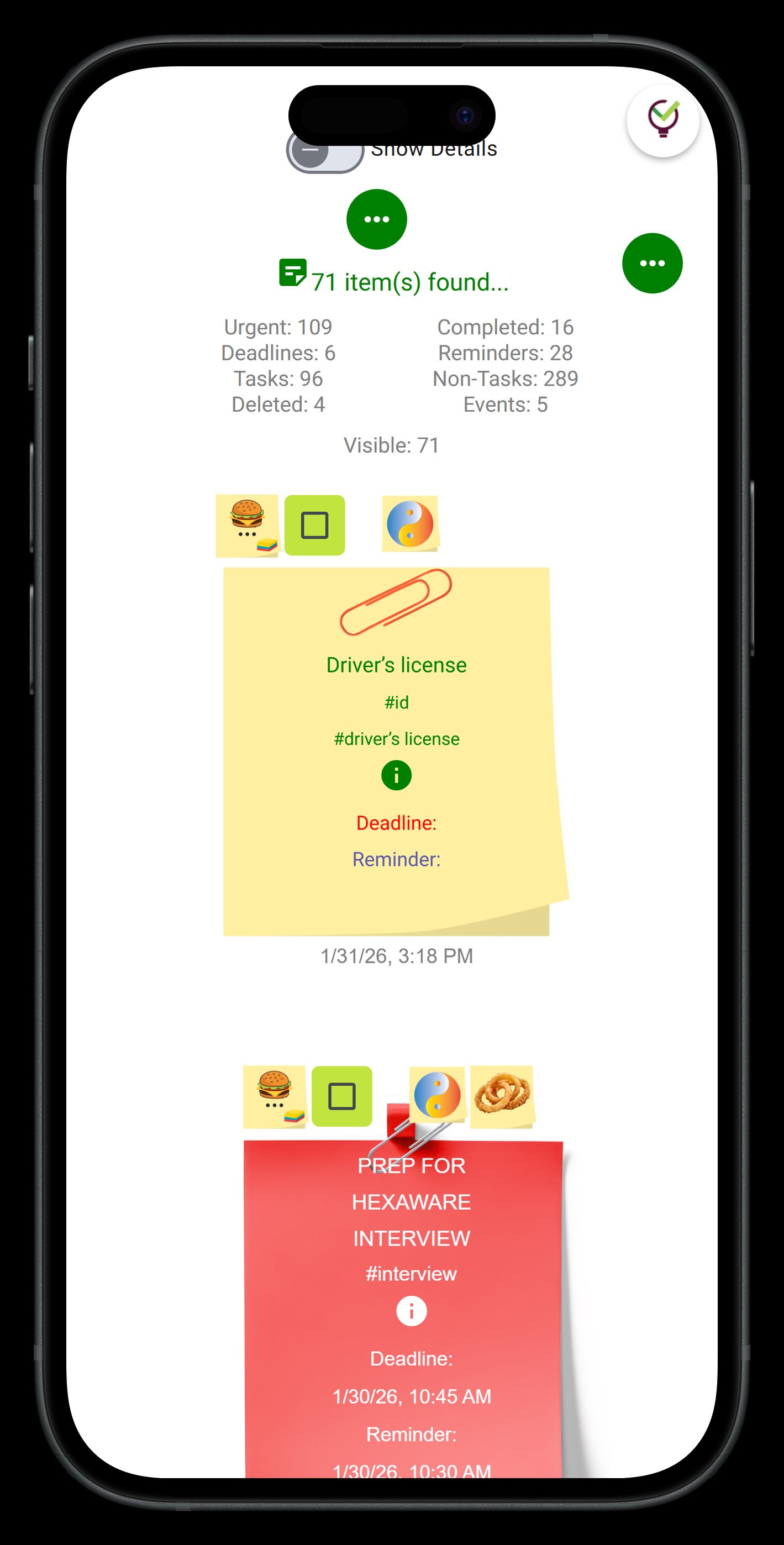
This is where a tool like TaskLoco earns its place. When a task is captured as a sticky note the moment it appears — before it evaporates — tagged with a rough energy demand (deep work vs. admin vs. quick reply), and surfaced via a push notification reminder that deep-links directly back to the note, the energy-aware plan actually survives contact with a real workday.
How to Combine Both Frameworks Into One Working System
The most effective productivity system isn't a choice between energy and time — it's a three-step loop: capture everything, categorize by energy demand, and schedule against your actual energy map.
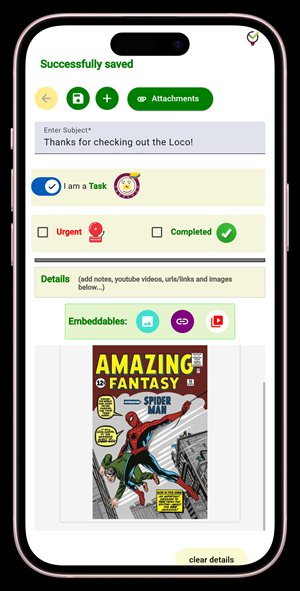
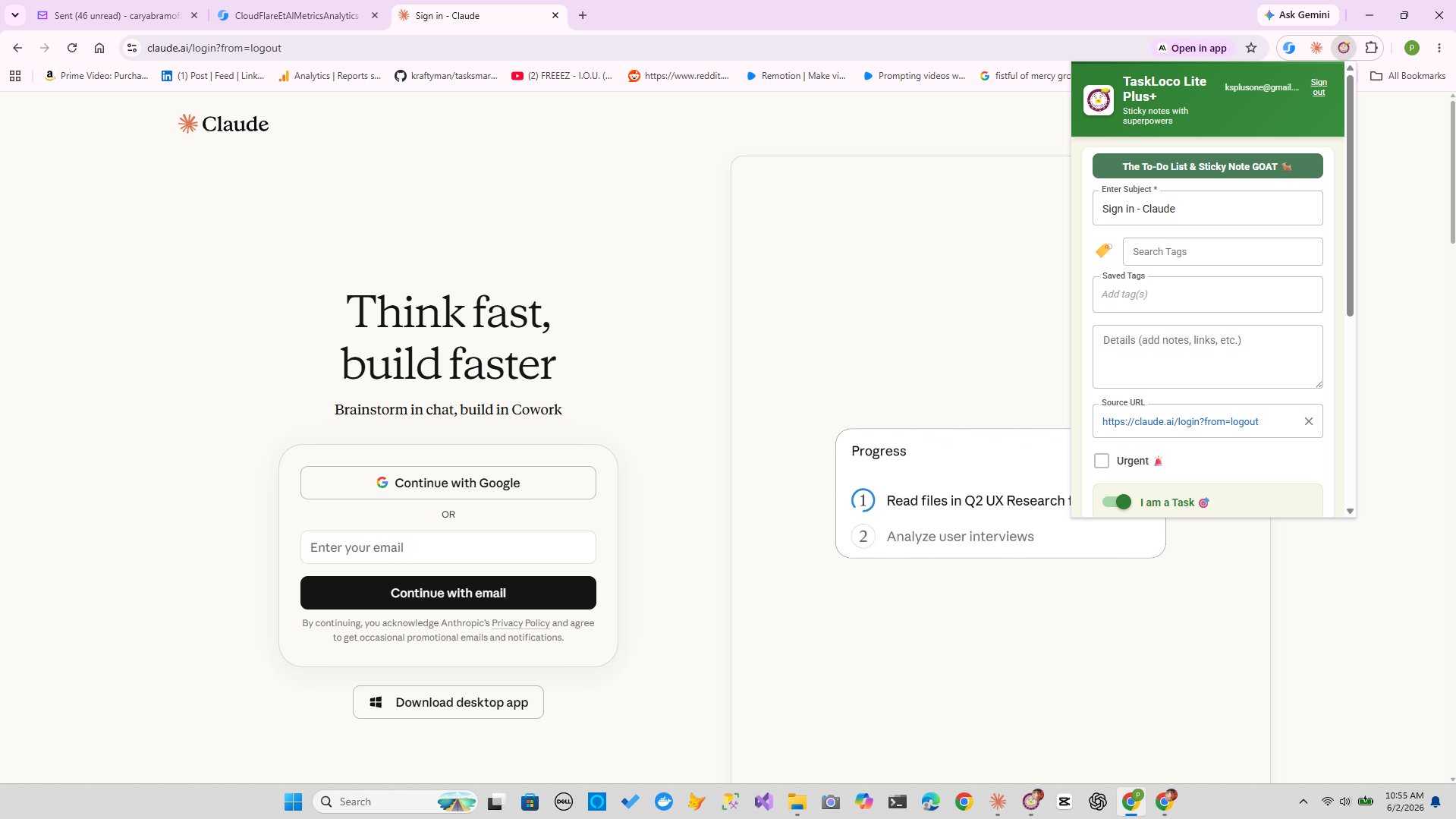
Step 1 — Capture without friction. Every task, idea, or commitment needs to land somewhere the moment it appears, or it competes for mental RAM indefinitely. TaskLoco's sticky-note model is purpose-built for this. On desktop, notes go up instantly. With the Chrome extension, you can clip a webpage into a note in one click — no copy-paste, no tab-switching. On mobile, you open the web app and it's there. The capture barrier is essentially zero.
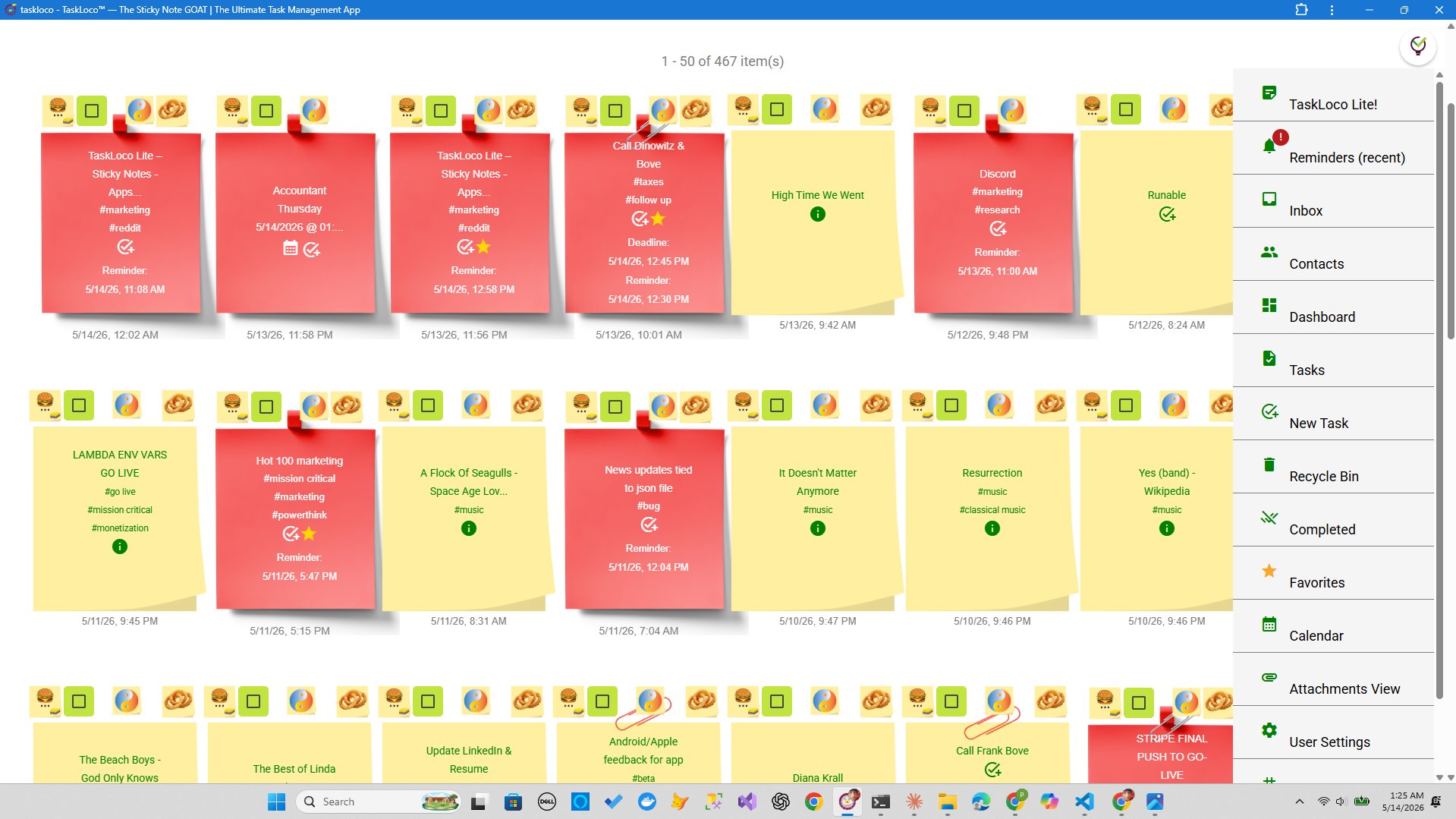
Step 2 — Sort by energy demand. Once captured, tag or color-code notes by the kind of energy they require. Deep-focus work (writing, analysis, code) belongs at your peak windows. Low-demand work (email replies, filing, routine admin) fills your troughs. TaskLoco's wall view lets you see all your notes simultaneously and rearrange them visually — which makes this categorization fast and intuitive rather than a chore inside nested menus.
Step 3 — Schedule with reminders tied to your energy map. This is where TaskLoco's calendar view and reminders close the loop. Set a push notification reminder on any note and it fires at the exact time you've designated — then deep-links you directly back to that note, so there's zero friction between 'I need to do this' and 'I am now doing this.' Optional email and SMS channels mean the reminder reaches you however you prefer.
Attach reference files directly to the note — research docs, screenshots, briefs — so when the reminder fires, everything you need is already there. No hunting across apps, no lost context.
Building Your Personal Energy-Time Map
Before you can schedule against your energy, you need data. Spend one week logging your perceived mental sharpness every 90 minutes on a simple 1–5 scale. Do this without changing your behavior. By Friday you'll have a rough but reliable personal energy map — your natural peak windows, your post-lunch trough, your secondary afternoon rebound (most people have one around 4–5 PM that goes completely wasted).
Once you have that map, the scheduling logic is straightforward: protect your peak hours for work that requires your best thinking, block your low-energy windows for necessary but low-stakes tasks, and use transitions between them for the quick-capture and organization work that keeps your system clean.
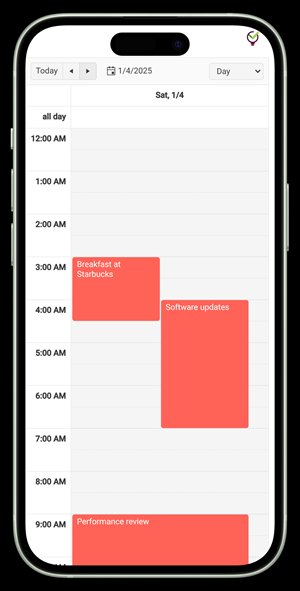
TaskLoco's calendar view makes this visual. Notes with reminders show up on the calendar, so you can see at a glance whether your deep-work tasks are landing in peak windows or getting buried in the wrong hours. If the distribution looks wrong, drag and reset. The calendar isn't a rigid schedule — it's a checkpoint.
For teams, the picture extends further. Shared notes in TaskLoco mean a team lead can assign a task by sharing a note — the recipient clones it, makes it their own, and works from their own copy with their own reminders. No permission layers, no access hierarchies. Just a note that moves from one person's system to another the way an email would, but with the full task context already attached. Each person manages their own energy-time alignment within their own workspace.
TaskLoco Premium is regularly $9.99/month per person. Right now, charter members can lock in 50% off the regular price — forever. That means $4.99/month per person today. And if our price ever goes up, you still pay half. Always.
Code CHARTER50 auto-applies at checkout. First 500 spots only — once they're gone, this offer is gone permanently. Act fast while spots last.
Every Premium subscription includes unlimited notes, 10GB file storage, reminders, calendar, and team sharing. Each team member requires a separate subscription. 7-day free trial — no charge until day 8. Cancel anytime.
Free Options: TaskLoco vs Energy Management
TaskLoco Lite
- Native iPhone & Android app
- Completely anonymous — no sign-in
- Data stays on your device
- Up to 20 notes
- Free forever
TaskLoco Lite Plus+
- Web app + Chrome extension
- Sign in with Google
- Wall syncs across all devices
- Up to 30 notes
- Free forever
Lock In 50% Off — Forever
7-day free trial. No charge until day 8. CHARTER50 auto-applies at checkout.
🔒 Lock In My Charter SpotSee TaskLoco in Action
Frequently Asked Questions
Is energy management better than time management?
Neither is better on its own. Time management gives you structure — it ensures tasks get scheduled and deadlines get met. Energy management ensures the work scheduled in those slots is actually done well. The productivity gains come when you stack both: use time management to create the container, use energy management to decide what goes inside each container. A calendar app handles the former; a system like TaskLoco that lets you capture, tag, and attach context to every task handles the latter.
What is the difference between time management and energy management?
Time management is about when you work. It focuses on scheduling, prioritizing, and protecting time blocks. Energy management is about how well you work at any given moment — managing physical, mental, emotional, and purposeful energy so your peak cognitive capacity aligns with your most demanding tasks. Time is fixed at 24 hours per day. Energy is variable and can be actively managed through sleep, movement, recovery, and smart task scheduling.
How do I manage my energy throughout the workday?
Start by tracking your mental sharpness every 90 minutes for a week to identify your natural peak and trough windows. Then: schedule deep-focus work during peaks, handle low-demand tasks during troughs, and protect transitions with brief physical movement. Capture every incoming task immediately so it doesn't drain mental energy as ambient worry. TaskLoco's sticky-note system is built for exactly this kind of low-friction capture — notes go up in seconds, attachments keep context in one place, and push notification reminders fire at the right moment and deep-link you straight back to the task.
What is the best tool for energy and time management?
The best tool is one with near-zero capture friction and enough structure to schedule tasks without overwhelming you with complexity. TaskLoco hits that balance: a sticky-note wall for visual task capture and sorting, a calendar view for scheduling, push notification reminders that deep-link back to individual notes, 10GB file storage per person to keep reference material attached to the right task, and team sharing that works the way email does — share a note, recipient clones it and owns it. $9.99/month per person (currently $4.99/month per person for first 500 charter members with code CHARTER50)
What are the four types of energy in energy management?
The four energy dimensions most commonly referenced — popularized by Tony Schwartz and Jim Loehr's work — are: Physical (the foundation — sleep quality, nutrition, movement), Emotional (the quality of your internal state — stress, positivity, relationships), Mental (focus, attention, cognitive load management), and Purposeful (meaning and motivation — the 'why' behind the work). Depletion in any one layer drags down the others. Most productivity breakdowns trace back to physical or emotional energy running low, not a lack of time.
How does TaskLoco help with energy management?
TaskLoco doesn't claim to measure your energy — that's your job. What it does is remove every friction point that bleeds energy needlessly. Capturing a task takes seconds. The Chrome extension clips any webpage into a note in one click. The wall view lets you see and sort all tasks visually so prioritization is a visual drag, not a menu dive. Push notification reminders fire at the moment you've designated and open the exact note — so you're not hunting for context when the alert fires. Attach your reference files to the note and they're there when you need them. The system stays out of your way so your energy goes to the actual work.
Can TaskLoco be used for team productivity?
Yes. TaskLoco Premium includes full team sharing — share a note with a teammate and they receive it the way they'd receive an email, clone it into their own workspace, and manage it with their own reminders and attachments. No permission configurations, no access levels to set up. Each team member manages their own energy-time alignment within their own workspace. Each person requires their own individual Premium subscription. $9.99/month per person (currently $4.99/month per person for first 500 charter members with code CHARTER50)
Born in Brooklyn. Powered by AWS. Your data stays yours.
TaskLoco is available on iPhone, Android, Chrome, and every web browser.