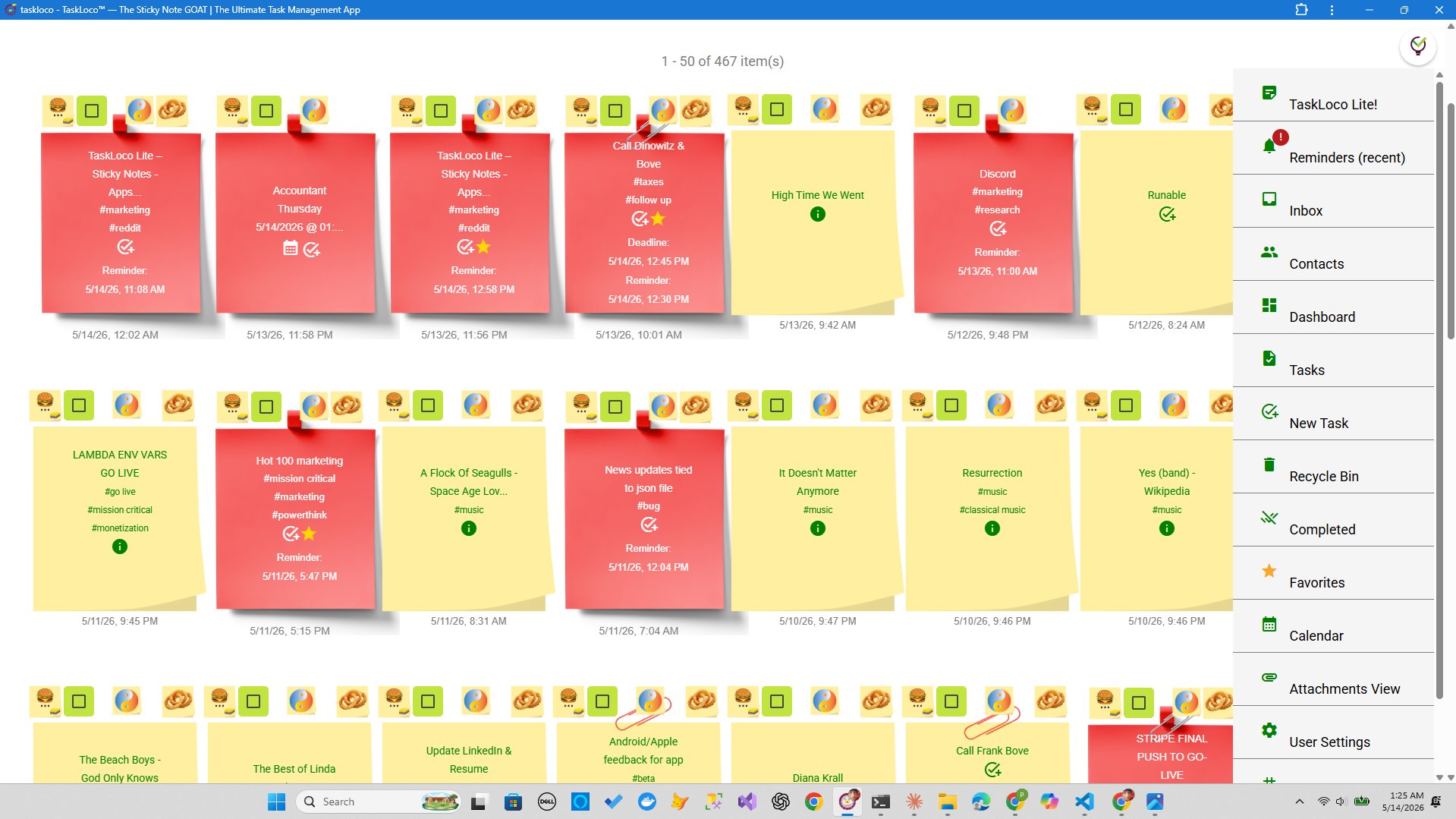
Your brain is terrible at remembering things but excellent at recognizing patterns and solving problems. David Allen figured this out decades ago when he created the Getting Things Done (GTD) methodology. The core insight: get everything out of your head and into a trusted system.
Most GTD apps turn simple capture into complex project management nightmares. TaskLoco does the opposite — it's designed around the sticky note, the perfect GTD capture tool. Write it down fast, organize it later, execute when ready.
TaskLoco Premium is regularly $9.99/month per person. Right now, charter members can lock in 50% off the regular price — forever. That means $4.99/month per person today. And if our price ever goes up, you still pay half. Always.
Code CHARTER50 auto-applies at checkout. First 500 spots only — once they're gone, this offer is gone permanently. Act fast while spots last.
Every Premium subscription includes unlimited notes, 10GB file storage, reminders, calendar, and team sharing. Each team member requires a separate subscription. 7-day free trial — no charge until day 8. Cancel anytime.
Free Options: TaskLoco vs GTD methodologies
TaskLoco Lite
- Native iPhone & Android app
- Completely anonymous — no sign-in
- Data stays on your device
- Up to 20 notes
- Free forever
TaskLoco Lite Plus+
- Web app + Chrome extension
- Sign in with Google
- Wall syncs across all devices
- Up to 30 notes
- Free forever
The GTD Capture Problem
Getting Things Done works because it separates capture from processing. You dump everything into an inbox first, then decide what each item means during processing. The problem? Most productivity apps force you to categorize, prioritize, and organize during capture.
Traditional GTD tools like OmniFocus require you to choose projects, contexts, and due dates upfront. That's not capture — that's processing. By the time you've filled out all the fields, you've forgotten what you were supposed to remember.
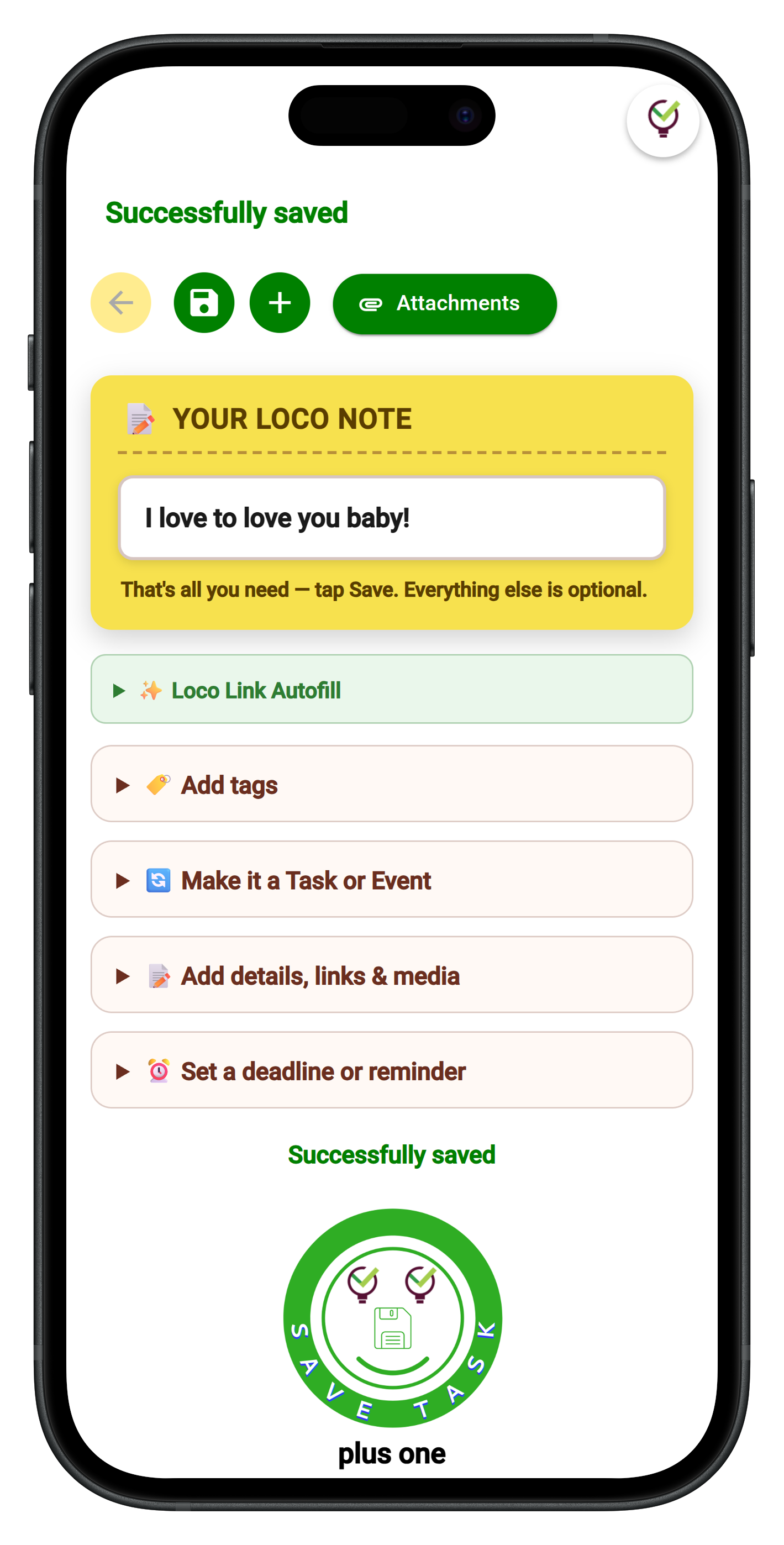
The sticky note is the perfect GTD tool because it's frictionless. One thought, one note. No forms to fill out, no decisions to make. Just brain to paper in under two seconds.
From Capture to Action
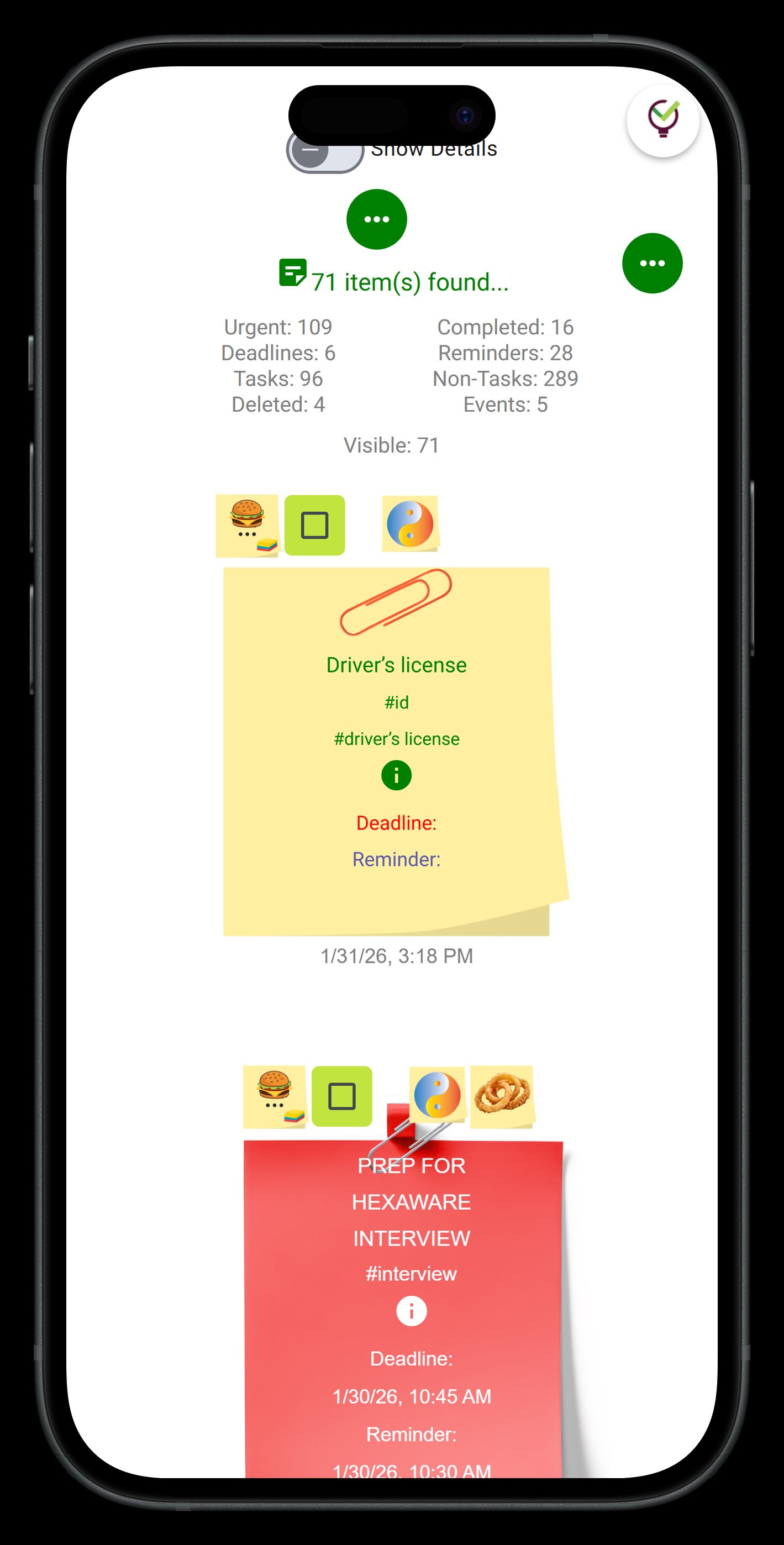
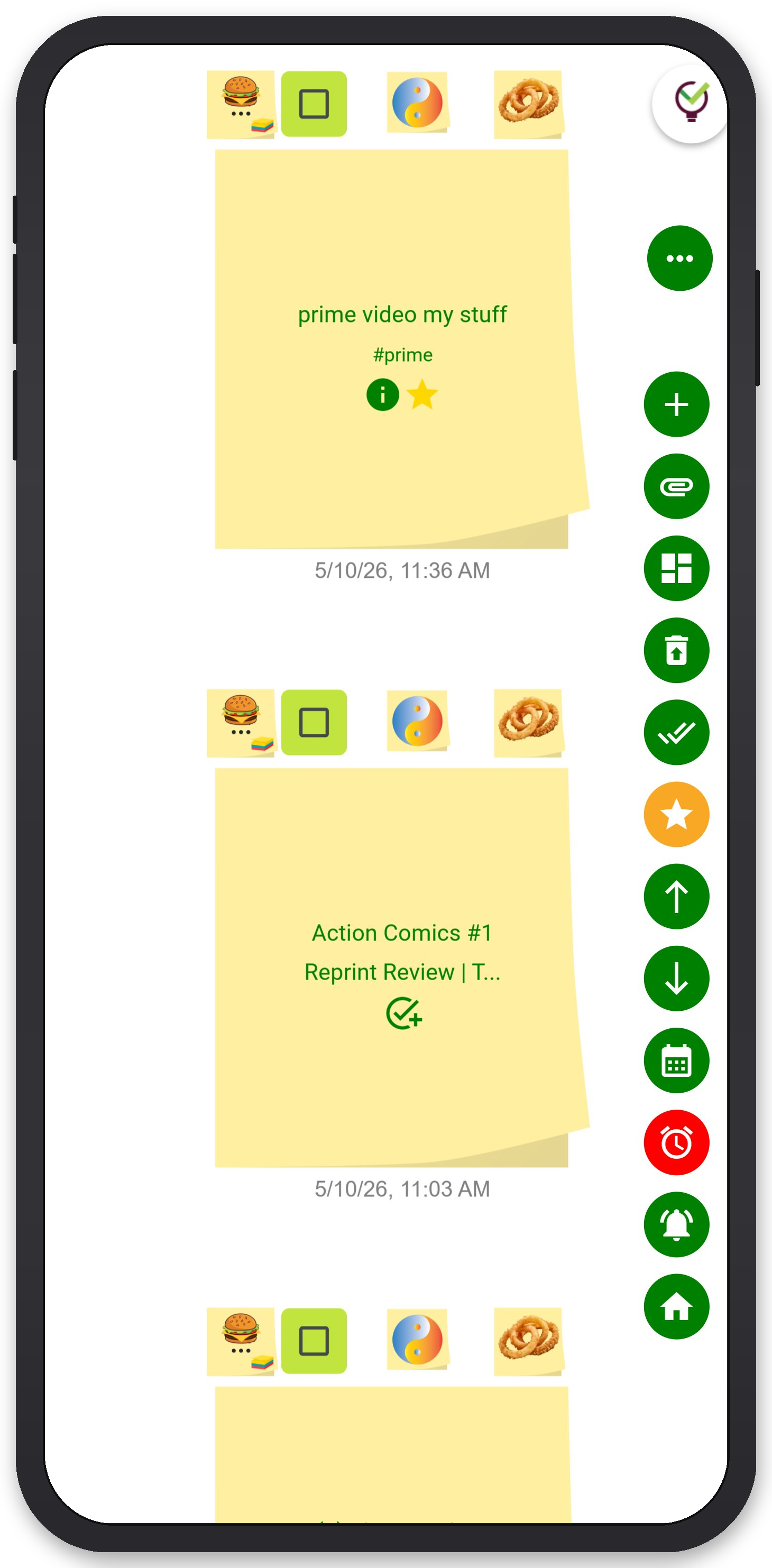
The GTD weekly review is where magic happens. You process your inbox, clarify what each item means, and organize everything into actionable systems. TaskLoco makes this review effortless with visual note organization.
Drag notes around your wall to create natural groupings. Color-code by project or context. Add reminders to transform someday/maybe items into next actions with specific dates.
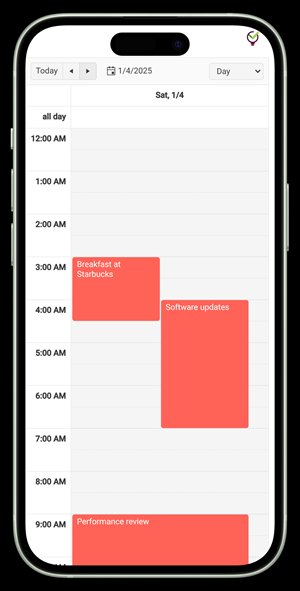
The calendar view shows all your reminders in timeline format. Reference materials attach directly to notes — no more hunting through email or file folders for that important document you referenced three weeks ago.
The One-Click Capture System
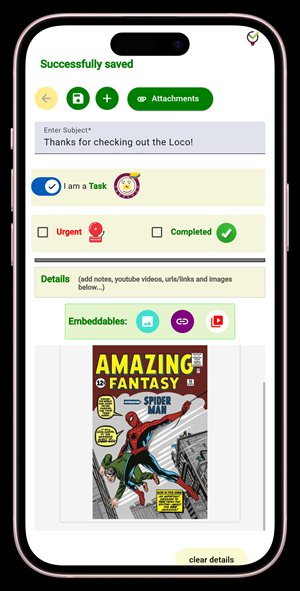
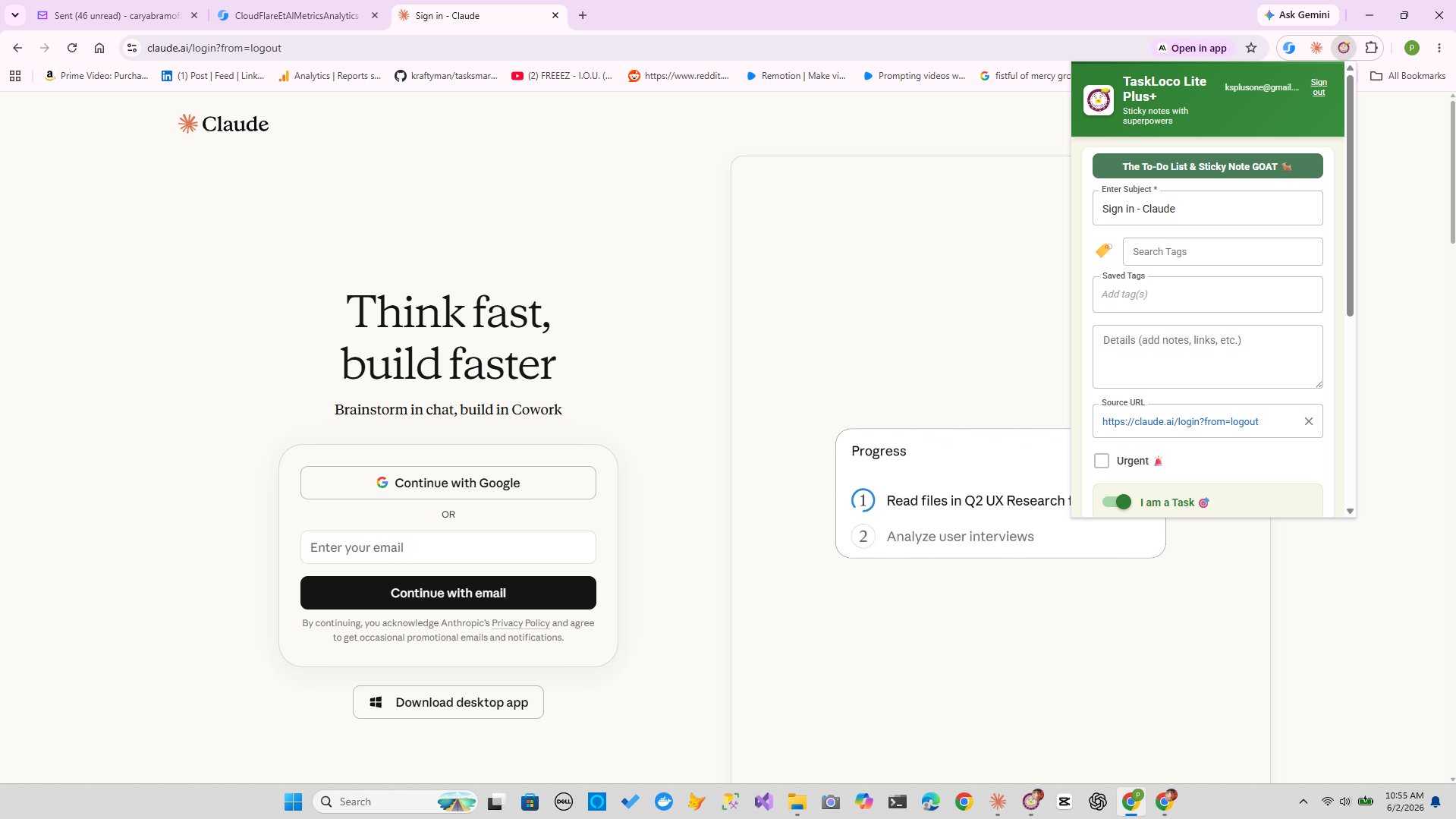
GTD capture must be faster than thinking. The moment you have friction, you start trusting your brain again instead of your system. TaskLoco's Chrome extension captures any webpage in one click — no context switching, no copy-paste, no lost thoughts.
Reading an article you want to reference later? One click saves it as a note. Found a product you might buy? Captured. Saw a restaurant recommendation? Saved. Your browser becomes a GTD capture machine.
Mobile apps handle offline capture when you're away from your desk. Ideas don't wait for WiFi. TaskLoco Lite stores 20 notes locally with zero setup — not even an email address required.
Beyond Personal Productivity
GTD principles scale beautifully to teams, but most implementations fail because they add complexity instead of maintaining simplicity. TaskLoco preserves the sticky note simplicity while adding team sharing.
Share individual notes or entire walls with teammates. Everyone sees updates in real-time, but each person maintains their own organization system. No forced project structures or approval workflows — just shared visibility when you need it.
Email notifications keep everyone informed without creating inbox clutter. Turn them off entirely, get daily summaries, or receive instant updates — your choice per shared note.
The Honest Comparison
| Feature | TaskLoco | GTD methodologies |
|---|---|---|
| Free tier | Two options: Lite (20 notes, offline) or Lite Plus+ (30 notes, synced) FREE | Most GTD apps offer limited trials only |
| Capture speed | One-click Chrome extension, instant mobile capture, no forms | OmniFocus requires project/context selection upfront |
| Offline access | TaskLoco Lite works completely offline, no account required FREE | Most GTD apps require internet connection |
| Visual organization | Drag and drop notes on visual wall, natural groupings | Traditional GTD apps use lists and folders only |
| Learning curve | Sticky notes — everyone already knows how to use them | OmniFocus requires extensive setup and training |
| File attachments | 10GB storage included, attach directly to notes | Many GTD apps charge extra for file storage |
| Team sharing | Yes — included with Premium. Each team member requires a separate subscription — currently $9.99/month per person, but TaskLoco is offering a Charter Member special: 50% off for life, currently $4.99/month per person for the first 500 subscribers with code CHARTER50. | Most GTD tools are personal-only or require enterprise plans |
| Calendar integration | Built-in calendar view for all reminders | Usually requires separate calendar app or complex setup |
| Mobile apps | Native iPhone and Android apps, work offline FREE | Good mobile apps exist but often lack full feature parity |
| Search functionality | Full-text search across notes and attachments | Search quality varies widely among GTD apps |
| Pricing simplicity | $9.99/month per person (currently $4.99/month per person for first 500 charter members with code CHARTER50) | OmniFocus charges $50-100+ upfront per device |
| Project dependencies | Not supported — use separate project management tools | OmniFocus supports complex project hierarchies |
| Advanced contexts | Use note colors and wall organization instead | Dedicated GTD apps have sophisticated context systems |
| Automation | Limited to email notifications and reminders | Tools like Todoist offer extensive automation rules |
| Weekly review tools | Manual visual review of wall layout | Dedicated GTD apps often include review workflows |
| Natural language input | Type exactly what you want — no parsing needed | Some apps parse 'Call John Tuesday 2pm' automatically |
| Cross-platform sync | Web, iPhone, Android, Chrome extension all sync | Sync quality varies, often requires multiple app purchases |
| Data ownership | Export all notes, cancel anytime | Export capabilities vary by app |
| Setup time | Start using immediately, no configuration required FREE | GTD apps typically require significant initial setup |
Who Should Use Each
Use TaskLoco if…
- You want GTD capture without complex project management overhead
- You prefer visual organization over rigid folder structures
- You need team sharing that doesn't require enterprise workflows
- You want one tool that works across all devices without multiple purchases
- You value simplicity over advanced automation and context systems
Use GTD methodologies if…
- You need sophisticated project dependencies and hierarchies beyond simple notes
- You want advanced context systems with location and time-based filtering
- You prefer extensive automation rules and natural language task parsing
- You require dedicated weekly review workflows and GTD-specific features
- You're willing to invest time in complex setup for maximum customization
Lock In 50% Off — Forever
7-day free trial. No charge until day 8. CHARTER50 auto-applies at checkout.
🔒 Lock In My Charter SpotSee TaskLoco in Action
Frequently Asked Questions
Is TaskLoco a proper Getting Things Done app?
TaskLoco follows core GTD principles: frictionless capture, separate processing, trusted system, and regular review. It uses sticky notes instead of traditional task lists, but implements the same workflow of brain dump to organized action.
How much does TaskLoco cost compared to other GTD apps?
$9.99/month per person (currently $4.99/month per person for first 500 charter members with code CHARTER50)
Can TaskLoco handle complex GTD project hierarchies?
TaskLoco excels at capture and simple organization but doesn't support complex project dependencies or hierarchies. For advanced project management, consider OmniFocus or dedicated project tools alongside TaskLoco for capture.
Does TaskLoco work offline for GTD capture?
Yes. TaskLoco Lite works completely offline with no account required, storing up to 20 notes locally. Perfect for capturing thoughts when away from internet access.
How does TaskLoco handle GTD weekly reviews?
TaskLoco provides visual wall organization for manual review. Drag notes around, color-code by project or context, and use the calendar view to see upcoming reminders. No automated review workflows — you control the process.
Can teams use TaskLoco for shared GTD workflows?
Yes. Share individual notes or entire walls with teammates. Each person maintains their own organization system while sharing visibility on relevant items. Real-time updates and email notifications keep everyone informed.
What GTD features does TaskLoco not support?
TaskLoco doesn't include advanced contexts, project dependencies, natural language parsing, or automated workflows. It focuses on capture and simple organization rather than complex GTD implementations.
Born in Brooklyn. Powered by AWS. Your data stays yours.
TaskLoco is available on iPhone, Android, Chrome, and every web browser.