Getting Things Done (GTD) isn't just another productivity method — it's the system that taught an entire generation to stop keeping everything in their head. David Allen's 2001 book introduced millions to the radical idea that your brain is for having ideas, not storing them.
The method's genius lies in its simplicity: five clear steps that turn overwhelming chaos into manageable action. Apps like Todoist exploded in popularity precisely because they made GTD's concepts digital and portable, turning abstract principles into clickable reality.
The Five Pillars of Getting Things Done
GTD rests on five fundamental steps that transform how you handle incoming information and commitments. Each step builds on the previous one, creating a comprehensive system for managing everything from grocery lists to major projects.
Capture: Write down every task, idea, and commitment in a trusted system. Your inbox becomes the single entry point for everything demanding your attention. The key insight: if it's in your head, it's not in the system.
Clarify: Process each captured item with ruthless clarity. Is it actionable? If yes, what's the very next physical action required? If it takes less than two minutes, do it immediately. Otherwise, delegate or defer.
Organize: Sort clarified items into appropriate lists and folders. Next Actions go by context (@calls, @errands, @computer). Projects with multiple steps get their own tracking. Someday/Maybe holds future possibilities.
Reflect: Weekly reviews keep the system current and your mind clear. Review all lists, update project statuses, and capture new commitments that emerged during the week.
Engage: Choose actions based on context, time available, and energy level. Trust the system to surface the right work at the right moment.
Why Todoist Became the GTD Standard
Todoist didn't invent GTD, but it made the methodology accessible to millions who found David Allen's original system too complex for daily use. The app's structure mirrors GTD's core concepts while eliminating much of the manual overhead.
Projects in Todoist naturally map to GTD projects — any outcome requiring multiple steps. Labels replace the traditional context lists (@calls becomes @phone), making it easy to see all calls you need to make regardless of which project they belong to. Filters create dynamic views that surface exactly what you need when you need it.
The inbox feature captures everything instantly, whether you're at your desk or walking down the street. Natural language parsing means 'Call dentist tomorrow @phone' automatically creates a task due tomorrow with the phone label attached. This friction-free capture keeps items out of your head and into the system.
Todoist's weekly and monthly views support GTD's crucial reflection step. You can see project progress, identify stalled initiatives, and plan upcoming work — all essential for maintaining the trusted system that makes GTD work.
Where GTD Breaks Down in Practice
Despite its influence, pure GTD creates problems that real users encounter daily. The system assumes you have complete control over your schedule and priorities — a luxury most people don't possess in interrupt-driven work environments.
The weekly review, while theoretically essential, becomes a massive time commitment as your system grows. Many GTD practitioners report spending 2-3 hours every week just maintaining their lists, which feels counterproductive when you're drowning in actual work.
Context switching, GTD's core organizational principle, doesn't match how most knowledge work happens today. The @computer context becomes meaningless when everything happens on screens. Modern work requires deeper focus periods, not rapid context-based task switching.
GTD also struggles with collaborative work. The system was designed for individual productivity when most important work happens in teams. Shared projects, dependencies, and handoffs don't fit neatly into personal GTD lists, creating gaps between your pristine system and messy reality.
TaskLoco's Take on GTD Principles
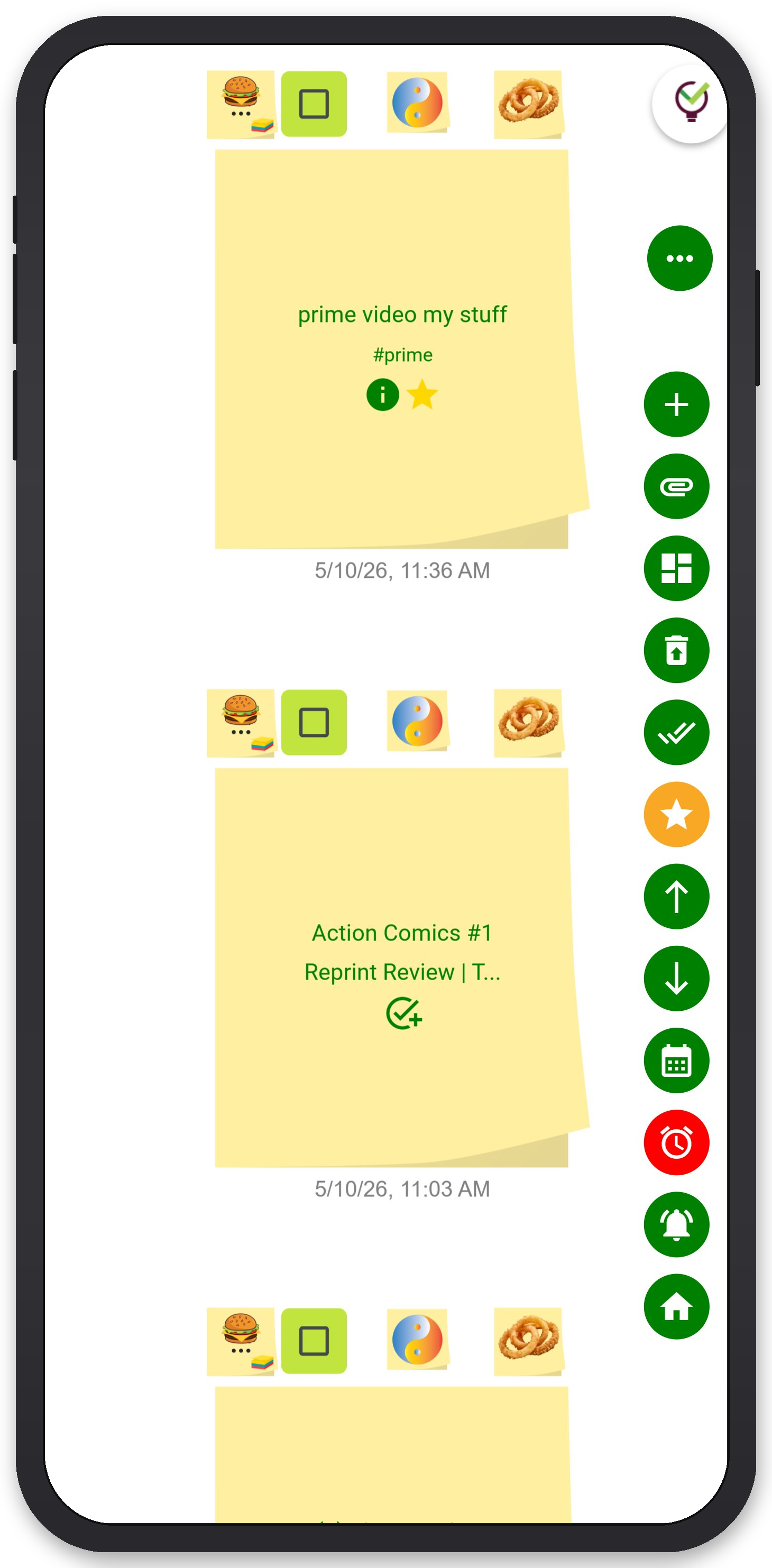
TaskLoco adopts GTD's best insights — immediate capture, clear next actions, and trusted external storage — while avoiding the system's complexity overhead. Instead of elaborate context systems, you get simple sticky notes that work like your brain actually thinks.
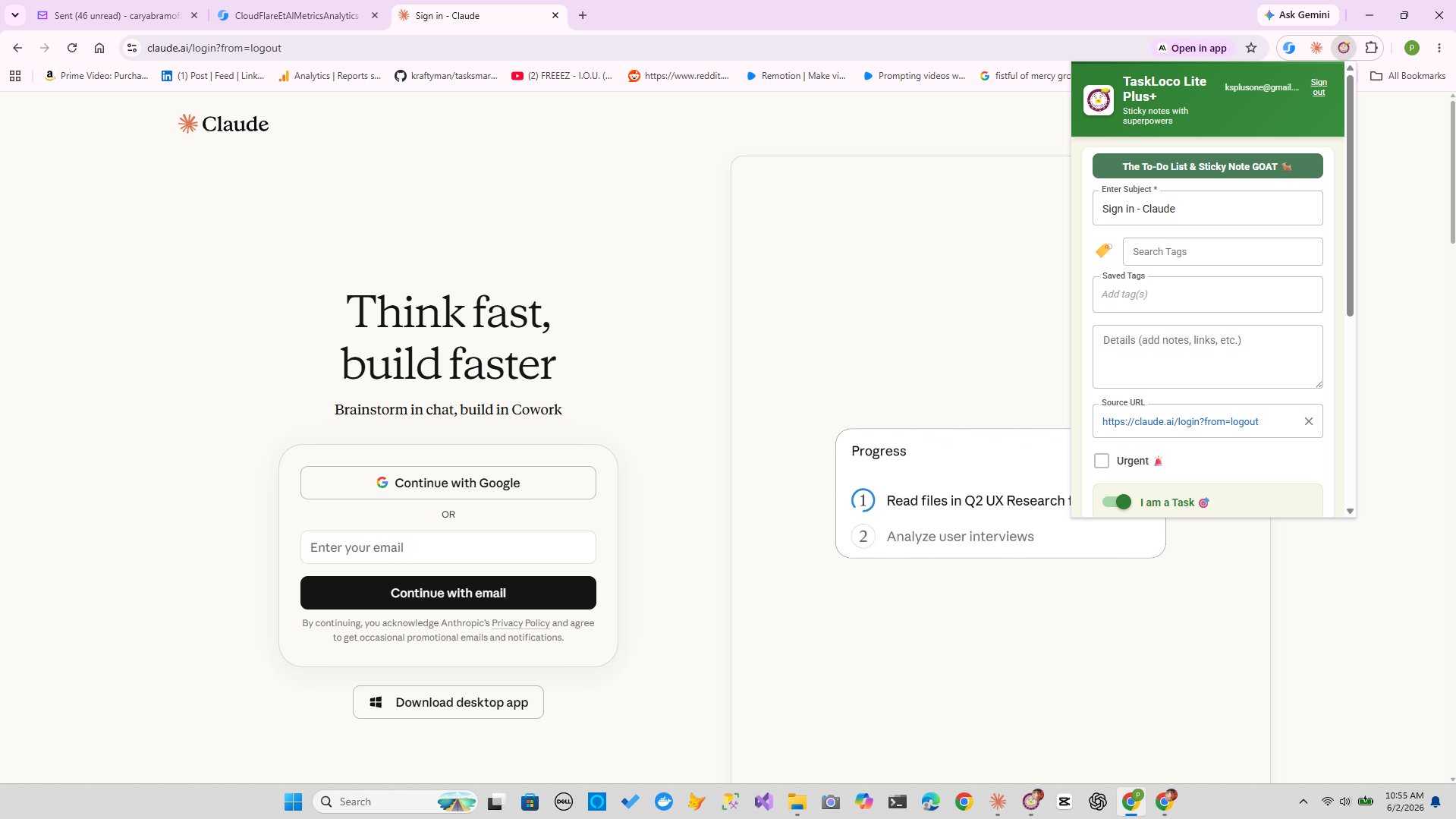
The capture principle stays central: when something hits your mind, it goes straight into a note via the Chrome extension, mobile web app, or desktop. But rather than forcing every item through GTD's multi-step clarification process, TaskLoco lets you capture and organize naturally, adding structure when it actually helps.
Reminders replace the need for constant weekly reviews. Set a reminder on any note, and it deep-links back to the original context when you need it. Files attach directly to notes, keeping related materials together without complex organizational schemes.
TaskLoco Premium is regularly $9.99/month per person. Right now, charter members can lock in 50% off the regular price — forever. That means $4.99/month per person today. And if our price ever goes up, you still pay half. Always.
Code CHARTER50 auto-applies at checkout. First 500 spots only — once they're gone, this offer is gone permanently. Act fast while spots last.
Every Premium subscription includes unlimited notes, 10GB file storage, reminders, calendar, and team sharing. Each team member requires a separate subscription. 7-day free trial — no charge until day 8. Cancel anytime.
Free Options: TaskLoco
TaskLoco Lite
- Native iPhone & Android app
- Completely anonymous — no sign-in
- Data stays on your device
- Up to 20 notes
- Free forever
TaskLoco Lite Plus+
- Web app + Chrome extension
- Sign in with Google
- Wall syncs across all devices
- Up to 30 notes
- Free forever
Lock In 50% Off — Forever
7-day free trial. No charge until day 8. CHARTER50 auto-applies at checkout.
🔒 Lock In My Charter SpotSee TaskLoco in Action
Frequently Asked Questions
What are the five steps of Getting Things Done?
GTD's five steps are: (1) Capture everything in a trusted system, (2) Clarify what each item means and what action it requires, (3) Organize items by context and priority, (4) Reflect weekly to keep the system current, and (5) Engage with confidence knowing your system contains everything important.
Why did Todoist become popular with GTD users?
Todoist's structure naturally supports GTD principles. Projects map to GTD projects, labels replace context lists like @calls and @errands, the inbox enables quick capture, and filters create the dynamic views GTD requires. It automated much of GTD's manual organizational overhead.
What are the main problems with GTD in practice?
GTD requires significant maintenance time (weekly reviews can take 2-3 hours), assumes complete schedule control most people don't have, relies on context switching that doesn't match modern knowledge work, and struggles with collaborative projects and team dependencies.
Is GTD still relevant for modern productivity?
GTD's core insights remain valuable: capture everything externally, clarify next actions, and maintain a trusted system. However, the full methodology often creates more overhead than benefit. Modern tools work best when they adopt GTD's principles without requiring its complex maintenance routines.
How does TaskLoco relate to GTD principles?
TaskLoco adopts GTD's best concepts — immediate capture, external storage, and clear next actions — while avoiding the complex organizational overhead. You get the mental clarity benefits without the maintenance burden. $9.99/month per person (currently $4.99/month per person for first 500 charter members with code CHARTER50)
Can you do GTD without a digital app?
Yes, David Allen's original system used paper notebooks and physical filing systems. However, digital tools make capture faster, searching easier, and maintenance less time-consuming. The principles work regardless of medium, but implementation effort varies significantly.
What's the difference between GTD and simple to-do lists?
GTD is a complete workflow system that processes all inputs systematically, while to-do lists just track tasks. GTD includes capture methods, clarification processes, context-based organization, regular review cycles, and engagement strategies. Simple lists lack this systematic approach to managing commitments.
Born in Brooklyn. Powered by AWS. Your data stays yours.
TaskLoco is available on iPhone, Android, Chrome, and every web browser.