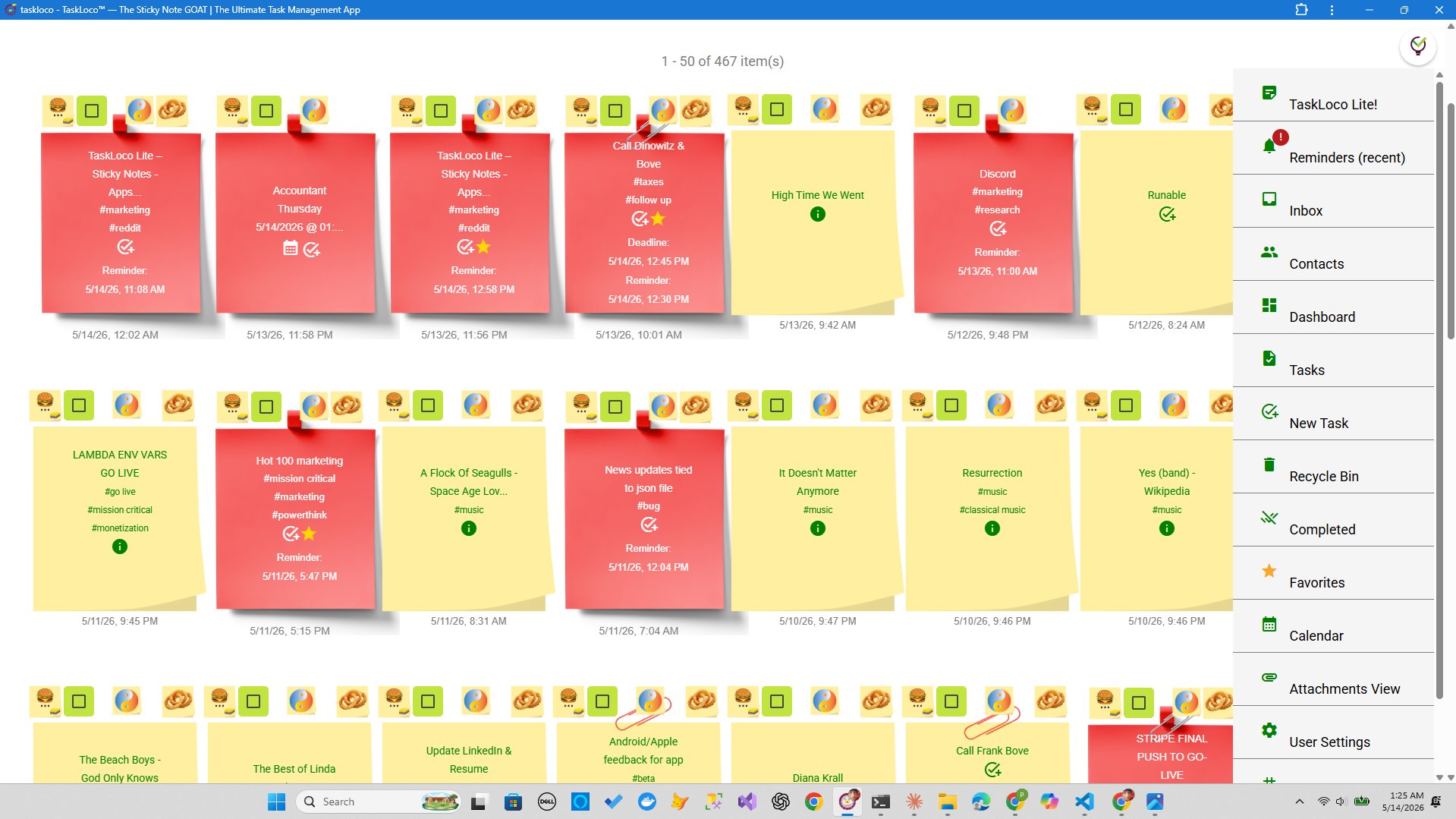
David Allen's Getting Things Done system works best when you can capture thoughts instantly, process them quickly, and review everything regularly. Most iPhone GTD apps fail the capture test — by the time you navigate through project hierarchies and contexts, the thought is gone.
TaskLoco takes a different approach. Every thought becomes a sticky note. No projects, no contexts, no elaborate setup. Just capture, process, and organize naturally. The iPhone app works completely offline, syncs when connected, and costs less than competitors' one-time fees as a monthly subscription.
TaskLoco Premium is regularly $9.99/month per person. Right now, charter members can lock in 50% off the regular price — forever. That means $4.99/month per person today. And if our price ever goes up, you still pay half. Always.
Code CHARTER50 auto-applies at checkout. First 500 spots only — once they're gone, this offer is gone permanently. Act fast while spots last.
Every Premium subscription includes unlimited notes, 10GB file storage, reminders, calendar, and team sharing. Each team member requires a separate subscription. 7-day free trial — no charge until day 8. Cancel anytime.
Free Options: TaskLoco vs Things
TaskLoco Lite
- Native iPhone & Android app
- Completely anonymous — no sign-in
- Data stays on your device
- Up to 20 notes
- Free forever
TaskLoco Lite Plus+
- Web app + Chrome extension
- Sign in with Google
- Wall syncs across all devices
- Up to 30 notes
- Free forever
Capture Speed: Why Sticky Notes Beat Complex Systems
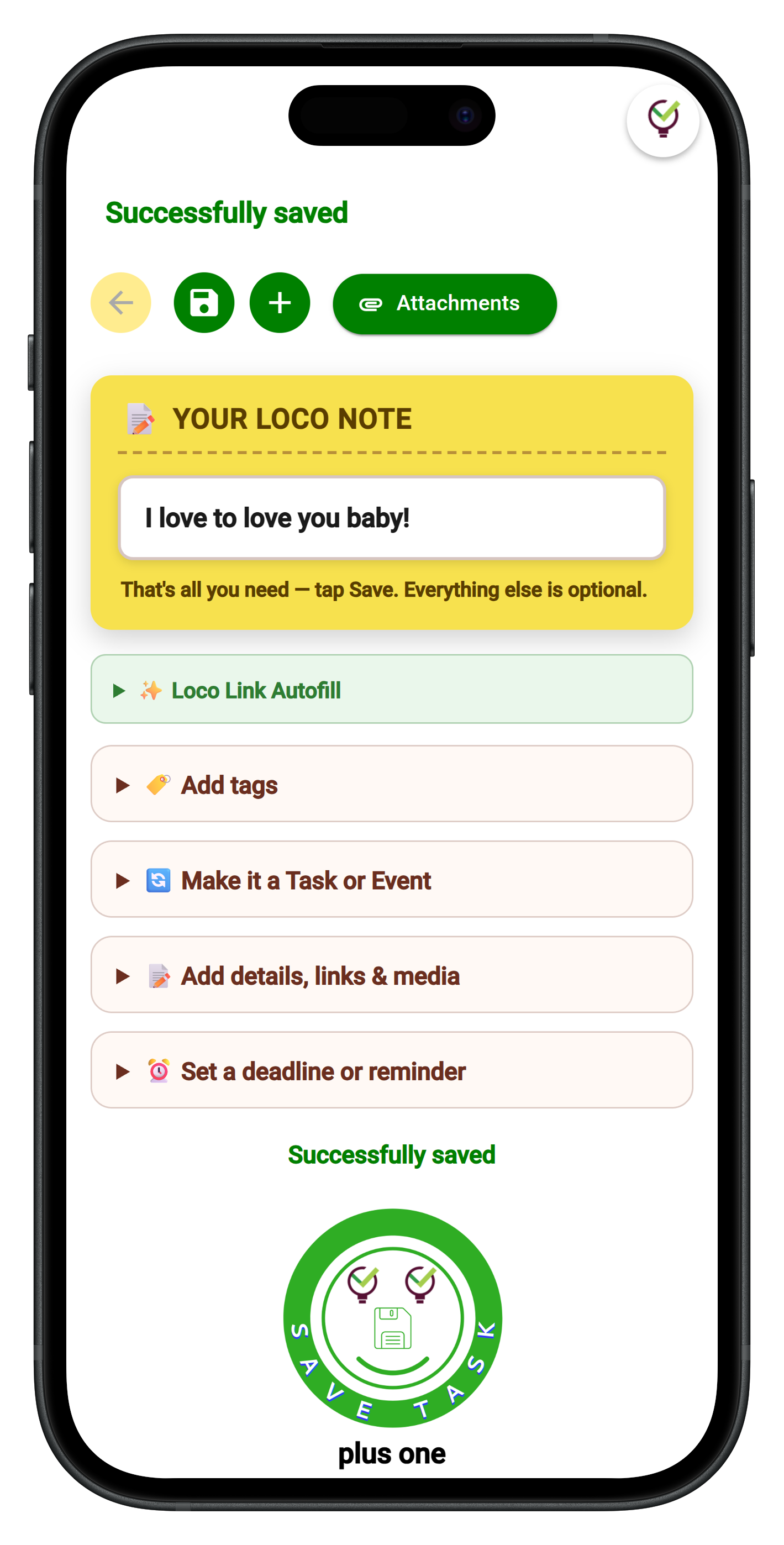
GTD's first rule: capture everything immediately. The faster you capture, the more likely you'll trust your system. TaskLoco's iPhone app opens to a blank note instantly — no project selection, no context menus, no mandatory fields.
Things requires you to choose an area, maybe a project, possibly a deadline. OmniFocus wants contexts, projects, and defer dates. Both apps make you think about organization during capture, which violates GTD's core principle.
The sticky note approach mirrors how your brain actually works. See something that needs attention? Slap it on a note. Process it later during your weekly review. The cognitive load is minimal, so you actually capture everything instead of letting thoughts slip away while navigating app hierarchies.
Processing and Organization: Simple vs Complex
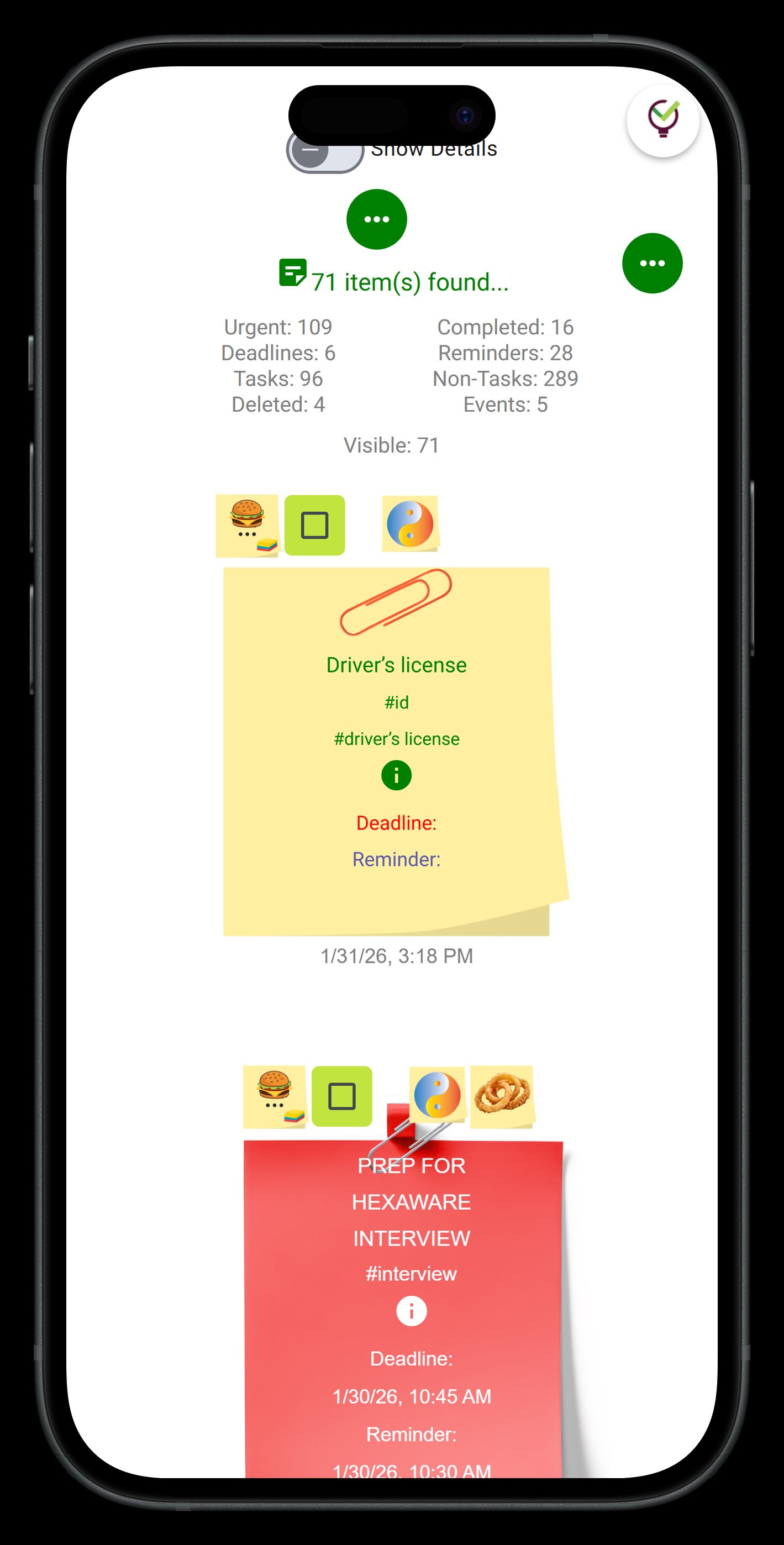
During GTD processing, you decide what each captured item means and where it belongs. TaskLoco lets you drag notes around visually, group them by color, or search through everything at once. The simplicity keeps processing fast.
Things organizes by Areas and Projects with beautiful animations and thoughtful design. It's genuinely pleasant to use, but the visual polish comes with cognitive overhead. Each item needs the right bucket, which slows down processing.
OmniFocus offers the most powerful organization with contexts, projects, folders, and perspectives. Power users love the flexibility, but GTD beginners often get lost in the options. The learning curve is steep, and setup takes hours.
For pure GTD implementation, simpler usually wins. You want to process your inbox quickly, not spend time perfecting your organizational system. TaskLoco's visual approach lets you see everything at once and group things naturally.
Review and Reminders: Staying Current
GTD's weekly review keeps your system current and trustworthy. TaskLoco makes this easy with visual scanning — you can see all your notes at once and quickly identify what needs attention. Color coding helps spot patterns and priorities.
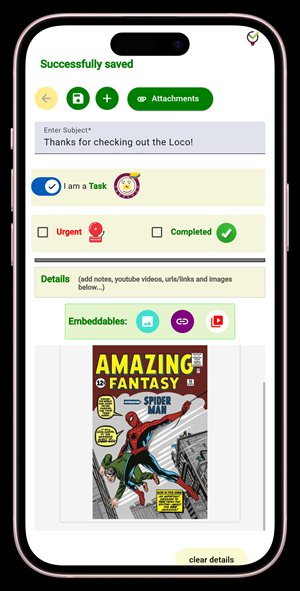
TaskLoco Premium adds location and time-based reminders that actually work reliably on iPhone. Set a reminder to review your vacation planning notes when you arrive at the airport, or get nudged about grocery items when you're near the store.
Things integrates beautifully with iPhone's natural scheduling features and has reliable notifications. The Today view surfaces what matters now without overwhelming you with everything.
OmniFocus offers the most sophisticated review features with custom perspectives and automated defer dates. You can build complex review workflows, but that complexity can become a productivity trap if you spend more time managing the system than actually getting things done.
Cost and Value for GTD Implementation
TaskLoco offers the most affordable path to GTD on iPhone. The free Lite version handles basic capture and processing with 20 notes stored locally. No account required, works completely offline, perfect for testing GTD without commitment.
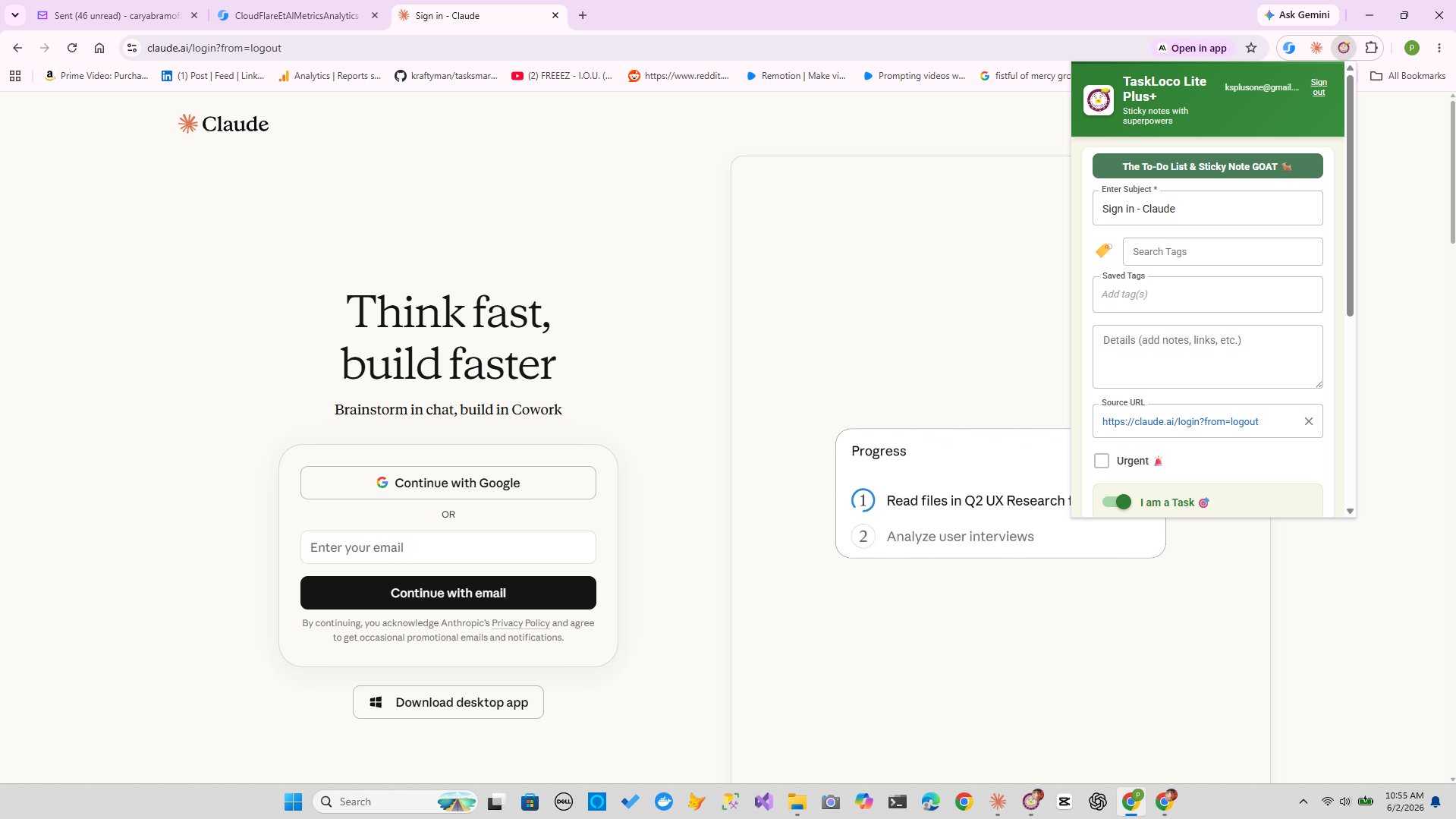
TaskLoco Lite Plus+ is also free but requires sign-in and internet connection. You get 30 notes with sync across devices plus the Chrome extension for web capture. Still no reminders or file attachments, but enough for serious GTD experimentation.
Things costs $49.99 upfront for iPhone (plus $49.99 for Mac if you want desktop sync). It's beautifully designed and works reliably, but the one-time cost feels steep for an app you might not stick with long-term.
OmniFocus costs $99.99 for iPhone Pro (basic version is $39.99 but lacks essential features). The power is undeniable, but the price reflects complexity most GTD practitioners don't actually need.
For most people trying GTD, starting free with TaskLoco Lite makes sense. If you stick with the system and need reminders or team sharing, Premium costs less annually than competitors charge upfront.
The Honest Comparison
| Feature | TaskLoco | Things |
|---|---|---|
| Free tier | Two free options — Lite (20 notes, offline) and Lite Plus+ (30 notes, synced) FREE | No free version — $49.99 upfront purchase required |
| Offline capture | TaskLoco Lite works completely offline, no account needed FREE | Requires iCloud sync and internet connection |
| Instant capture speed | Opens directly to blank note, no navigation required | Must select area/project during capture |
| Visual organization | Drag and drop sticky notes, color coding, visual grouping | List-based with areas and projects hierarchy |
| Cross-device sync | Free with Lite Plus+, included in Premium FREE | Requires separate Mac purchase ($49.99) for desktop sync |
| File attachments | 10GB included with Premium subscription | No file attachments — links only |
| Location reminders | Built into Premium with reliable iPhone integration | Excellent location-based reminders with Maps integration |
| Design polish | Clean sticky note interface, functional focus | Award-winning design with smooth animations and beautiful typography |
| Natural language input | No parsing — you type exactly what you want | Intelligent date and time parsing from natural language |
| Recurring tasks | Manual only — create new notes for recurring items | Full recurring task support with flexible patterns |
| Project templates | No templates — each note is independent | Reusable project templates for repeated workflows |
| Team collaboration | Shared notes with real-time sync in Premium | Personal productivity only — no team features |
| Search functionality | Full-text search across all notes and file attachments | Excellent search with smart suggestions and filters |
| Web capture | Free Chrome extension captures any webpage in one click FREE | No web capture — must use share sheet from browser |
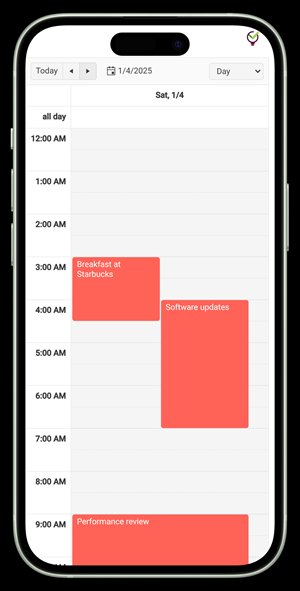
| Calendar integration | Built-in calendar view shows all notes with dates | Deep integration with iOS Calendar and EventKit |
| Automation support | No shortcuts or automation features | Full iOS Shortcuts support with custom actions |
| Widgets | No home screen widgets available | Multiple widget options for Today view and quick capture |
| Apple Watch app | No Apple Watch companion app | Full Apple Watch app with quick capture and reminders |
| Long-term cost | $9.99/month per person (currently $4.99/month per person for first 500 charter members with code CHARTER50) | $49.99 one-time (iPhone) + $49.99 (Mac) for full sync |
Who Should Use Each
Use TaskLoco if…
- You want to try GTD without upfront costs or complex setup
- You need offline capture for areas with poor cell signal
- You prefer visual organization over hierarchical lists
- You want team collaboration features for shared projects
- You like the simplicity of sticky notes over complex project management
Use Things if…
- You value beautiful design and smooth animations in daily use
- You need sophisticated natural language parsing for quick entry
- You want deep iOS integration with Shortcuts and Apple Watch
- You prefer one-time purchases over ongoing subscriptions
- You need advanced recurring task patterns and project templates
Lock In 50% Off — Forever
7-day free trial. No charge until day 8. CHARTER50 auto-applies at checkout.
🔒 Lock In My Charter SpotSee TaskLoco in Action
Frequently Asked Questions
Can I use TaskLoco for GTD without paying anything?
Yes. TaskLoco Lite is completely free and works offline with no account required. You get 20 notes stored locally on your iPhone, which is enough for basic GTD capture and processing. TaskLoco Lite Plus+ is also free but requires internet and gives you 30 synced notes plus the Chrome extension.
How much does TaskLoco cost compared to Things or OmniFocus?
$9.99/month per person (currently $4.99/month per person for first 500 charter members with code CHARTER50)
Does TaskLoco work offline for GTD capture?
TaskLoco Lite works completely offline with no internet connection required. It stores up to 20 notes locally on your iPhone in a JSON file. Perfect for airplane capture or areas with poor signal. TaskLoco Lite Plus+ and Premium require internet for syncing but you can still capture notes offline and they'll sync when connected.
Can I import my Things or OmniFocus data into TaskLoco?
TaskLoco doesn't have automatic import from Things or OmniFocus. You'll need to manually recreate your active projects and tasks as sticky notes. The simple format makes migration quick — most people find they can rebuild their system in under an hour.
Does TaskLoco have natural language parsing like Things?
No. TaskLoco doesn't parse dates or times from natural language. You type exactly what you want on each note. For reminders, you set them manually using the date/time picker in Premium. This gives you complete control but requires more explicit input than Things' intelligent parsing.
Which GTD app works best for teams?
TaskLoco Premium includes team sharing with real-time sync, making it the only option among these three for collaborative GTD. Things and OmniFocus are personal productivity tools only. Each TaskLoco team member needs their own Premium subscription, but you can share notes and projects seamlessly.
Should I start with free TaskLoco or buy Things upfront?
Start with TaskLoco Lite (free, offline) to test whether GTD works for you personally. If you stick with the system for a month, try TaskLoco Lite Plus+ (also free) for cross-device sync. Only upgrade to Premium or consider Things if you know you'll use GTD long-term. Most people quit within 6 weeks, so free trials prevent expensive mistakes.
Born in Brooklyn. Powered by AWS. Your data stays yours.
TaskLoco is available on iPhone, Android, Chrome, and every web browser.