You said you'd follow up. You had an idea you were going to write down. You promised yourself you'd get back to that email. Now it's three days later and that thing — whatever it was — is still bouncing around the back of your head, burning a tiny slice of mental energy every hour you don't deal with it. That's an open loop.
David Allen built an entire productivity system around one insight: your brain is terrible at storage and excellent at processing. Every unresolved commitment you've handed it to 'remember' is a tax on your thinking. The fix isn't willpower or a better calendar — it's a system that earns your brain's trust. Here's how to build one, step by step, starting today with no app required.
Step 1 — Do a Full Capture (Empty Everything Out of Your Head)
The first move is a brain dump, and you should do it all at once the first time. Grab paper, a whiteboard, or any blank document and write down every single thing that has your attention. Every project you've said yes to. Every email you're avoiding. Every errand you've been meaning to run. Every idea you keep meaning to develop. Every conversation you said you'd follow up on.
Don't organize yet. Don't prioritize. Just externalize. The goal is to get everything out of your head and into a place you can look at. Most people who do this for the first time fill two or three pages and feel a strange combination of overwhelmed and relieved — overwhelmed because they didn't realize how much was in there, relieved because now they can actually see it.
Good capture tools at this stage: a legal pad, sticky notes on a wall, a blank note in any app, or even a voice memo you'll transcribe later. The medium doesn't matter yet. Completeness does.
Step 2 — Process Each Item: Decide, Delegate, Delete, or Defer
Capture without processing is just a longer worry list. The second step is going through every item you captured and making a decision about it. This is where most productivity systems live or die — people capture fine, then stall on processing because it requires actual decisions.
For each item, ask one question: What is the next physical action? Not 'think about the project' — that's not an action. Not 'handle the Johnson account' — that's a project. The next physical action is something concrete a human body can do: write a draft, send an email, call a number, open a file and type. If you can't name the next physical action, the loop stays open in your head even if it's on a list.
Then apply the simplest triage in productivity:
- Do it now — if it takes under two minutes, do it immediately. Don't log it.
- Delegate it — if someone else should own it, hand it off and log that you're waiting for their response.
- Delete it — if it's no longer relevant, cross it off. Don't carry dead weight.
- Defer it — if it's real but not now, put it on a dated list or a 'someday/maybe' list, and trust the system to surface it at the right time.
The 'waiting for' category is especially important. Loops stay open because you handed something off and then had no system to follow up. Every delegation needs a record: who has it, what you asked for, and when you expect a response.
Step 3 — Review Consistently (This Is the Part Everyone Skips)
A capture-and-process system only earns your brain's trust if you actually look at it. The fatal mistake is building a list and then checking it sporadically. Your brain will stop trusting the system — it'll go back to trying to remember everything itself, and the loops will re-open.
The minimum viable review habit is a weekly review: once a week, sit down with your full list, close out everything you've completed, process anything new that came in since the last review, and scan what's coming up. This takes 20–30 minutes done well. Skip it two weeks in a row and your list becomes a graveyard of stale tasks that demotivates rather than focuses.
Beyond the weekly review, a quick daily scan — five minutes each morning — is enough to know what today's focus is. You're not re-processing everything. You're just asking: what are the two or three things that, if done today, would close the most important loops?
The review is also where you catch loops that have been on your list too long. If something has been sitting for three weeks untouched, one of three things is true: you've been avoiding it (why?), it's no longer relevant (delete it), or it's not broken down into a concrete action (fix that now). A good review forces honesty about what's actually happening versus what you intended to happen.
How TaskLoco Fits Into This System
The method above works on paper, in a spreadsheet, or in any notes app. But if you want a single place to capture, process, and review — one that follows you across every device and surfaces your loops at the right moment — TaskLoco is built exactly for this.
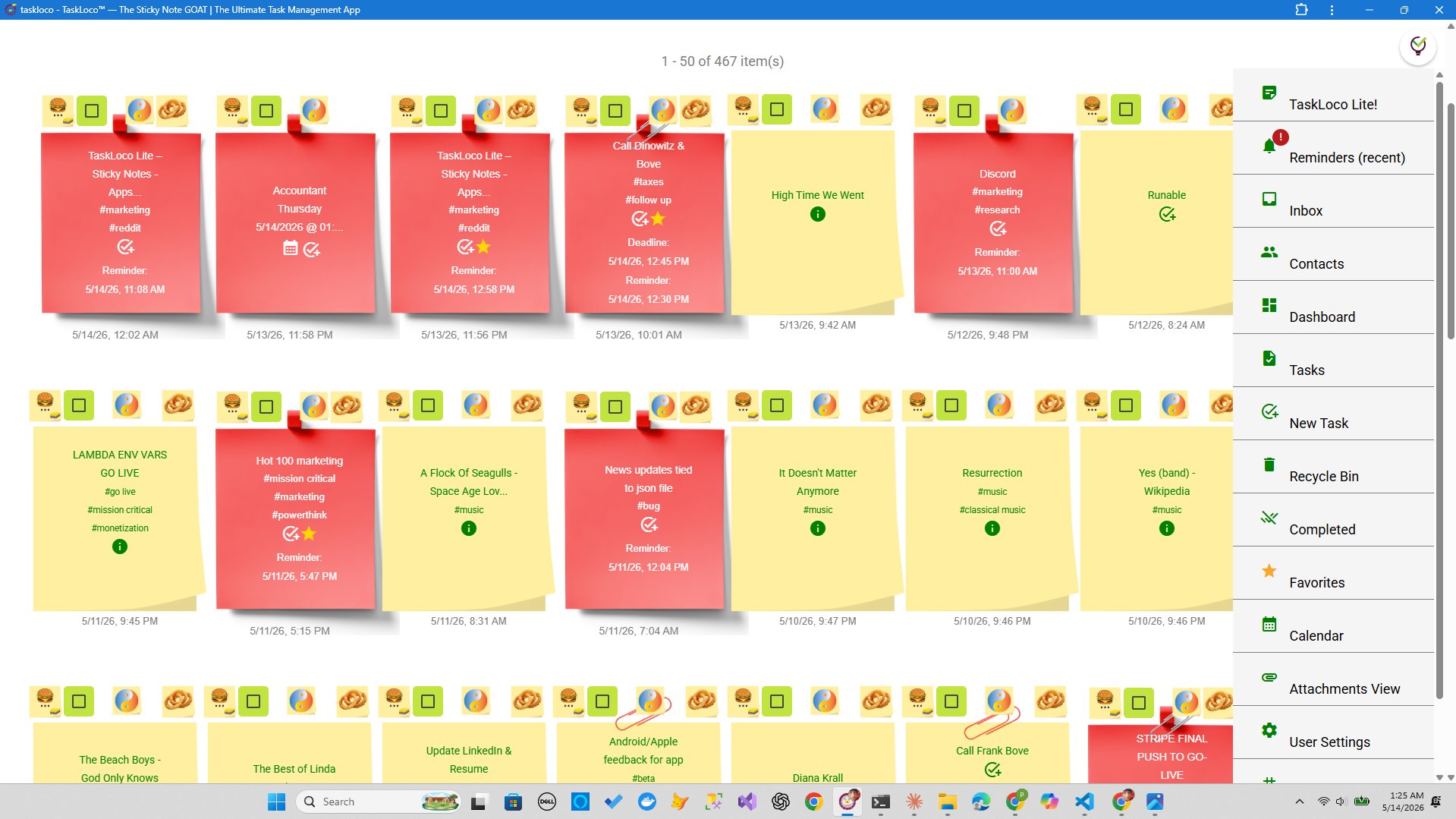
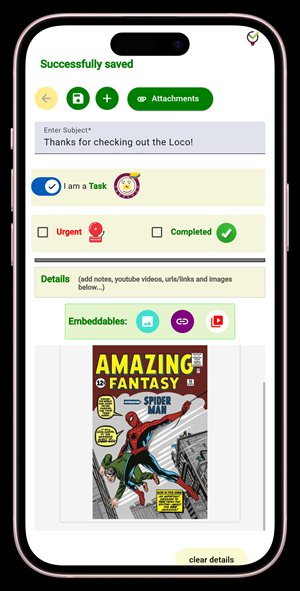
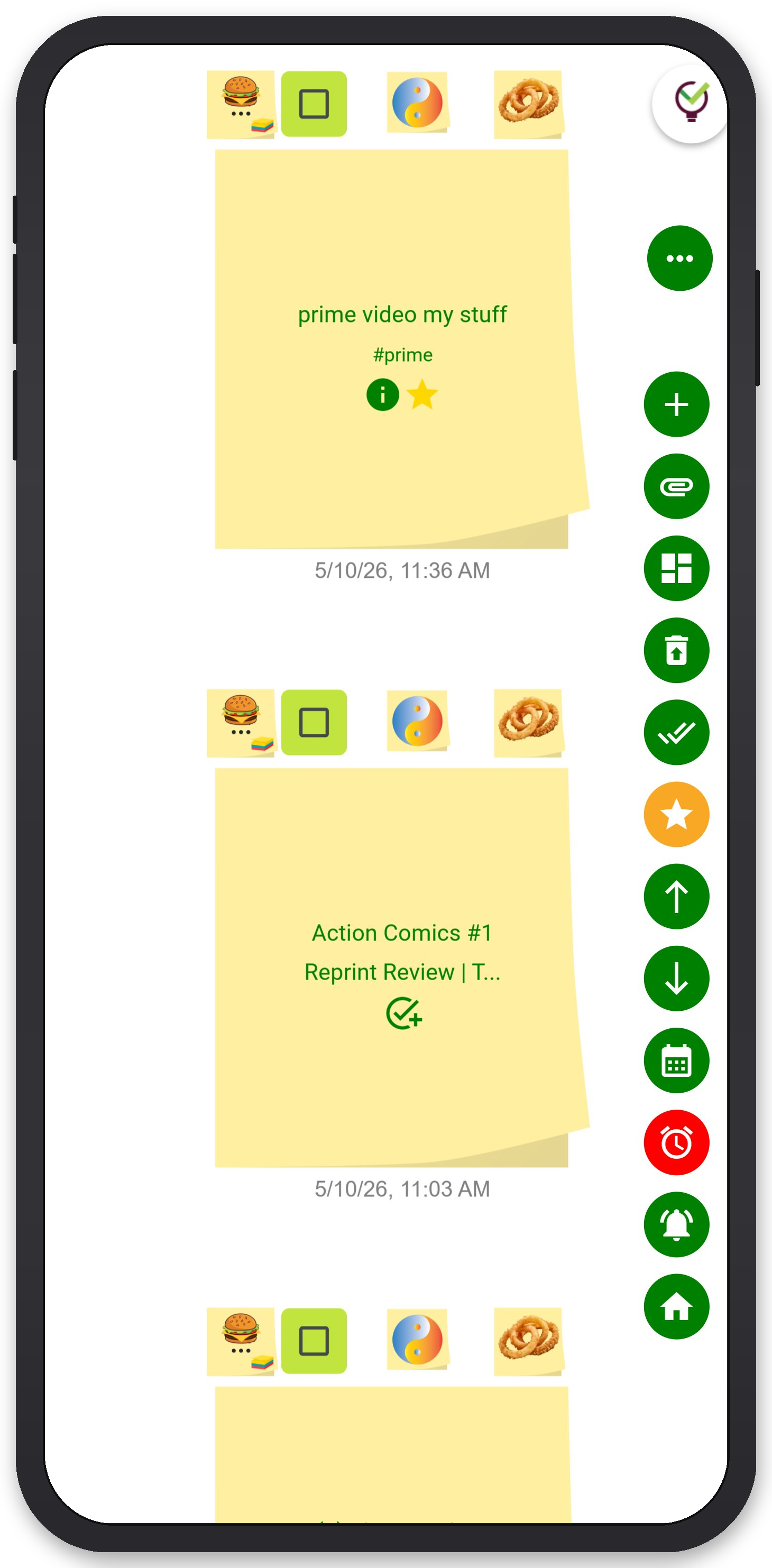
The core interaction in TaskLoco is a sticky note. That's intentional. Sticky notes map directly to the capture step: one thought, one note, fast. The wall view lets you lay everything out visually, the same way you'd post notes on a physical board during a brain dump. When you're ready to process, you add tasks, attach files, and set reminders — all inside the same note, so context never gets separated from action.
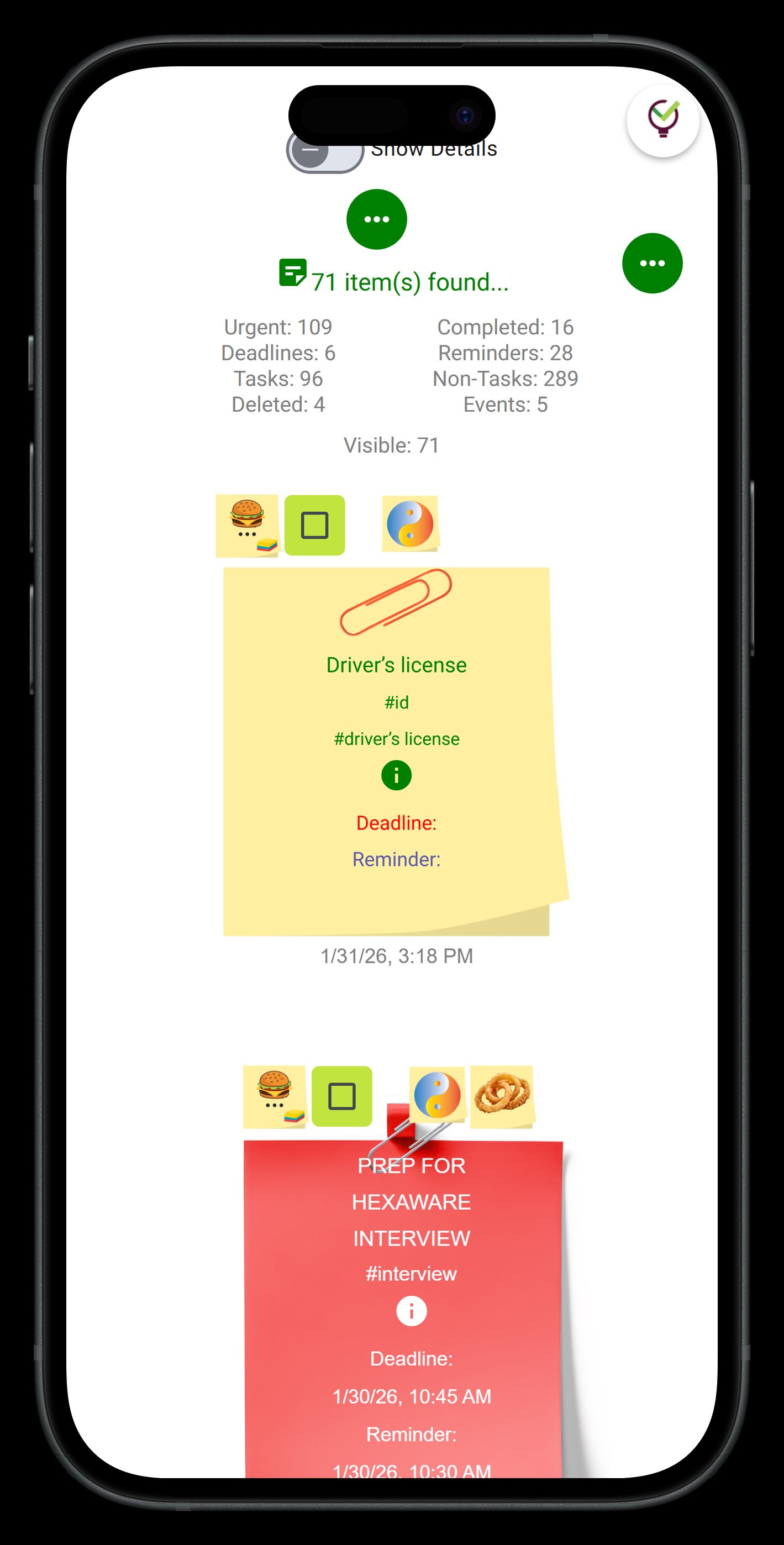
The reminder system is where TaskLoco closes loops that paper can't. Reminders deliver as push notifications directly to your phone and computer, deep-linking back to the exact note so you land right where you need to be — no hunting, no context-switching. Optional email and SMS notifications are available as additional channels if you want them. That 'waiting for' item you delegated? Set a reminder on the note. When it fires, you're one tap from the full context of what you asked for and who has it.
For teams, TaskLoco's sharing works the way email works: you send a note, the recipient clones it and owns their copy. No permissions to configure, no access levels to manage. The loop you handed off becomes their note to close. You keep yours as the record that you sent it.
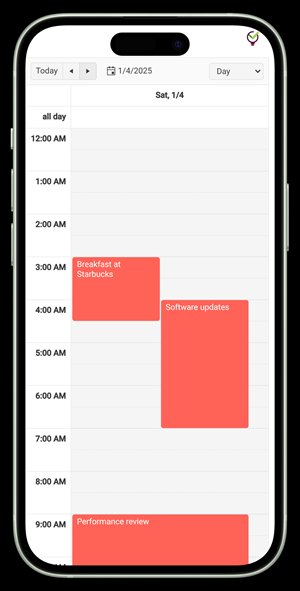
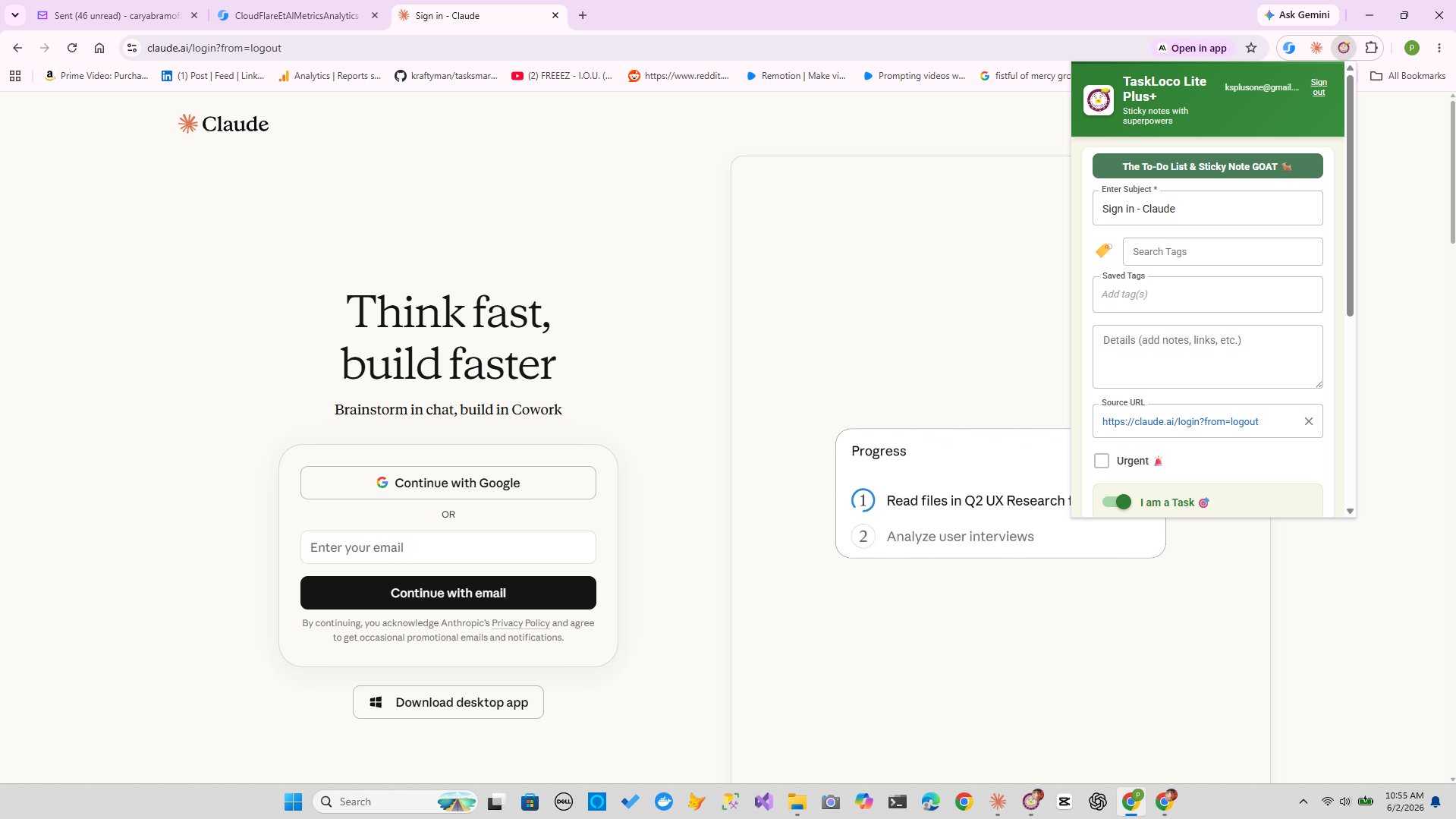
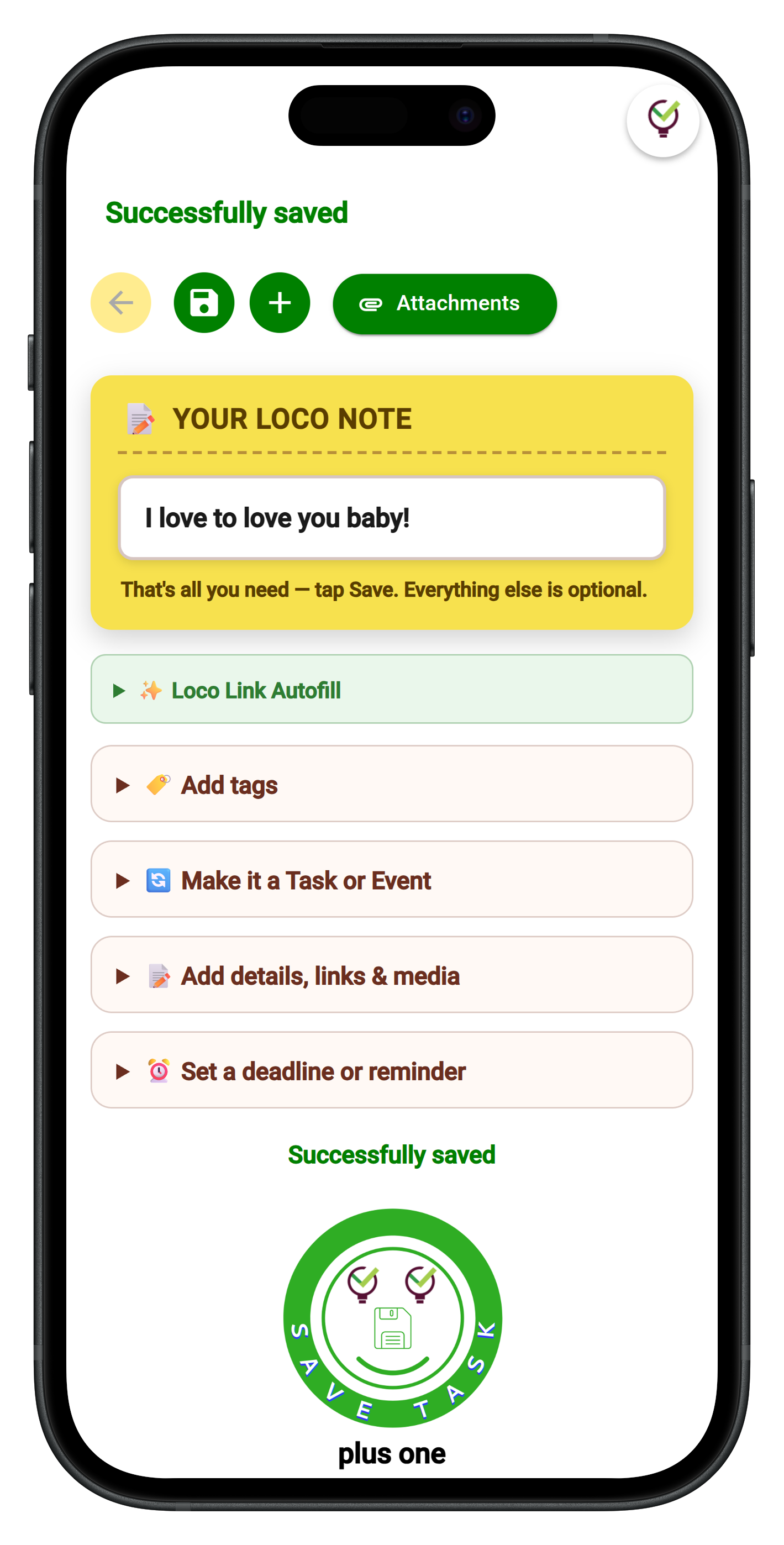
TaskLoco Lite is a free native app on iPhone and Android — completely anonymous, no sign-in required, stores up to 20 notes on your device. It's the fastest way to capture during a meeting or a walk. For cross-device sync, Lite Plus+ is free and runs in your browser and Chrome extension, storing up to 30 notes synced across all your devices. When you're ready for reminders, file attachments, unlimited notes, calendar view, and team sharing, that's TaskLoco Premium.
TaskLoco Premium is regularly $9.99/month per person. Right now, charter members can lock in 50% off the regular price — forever. That means $4.99/month per person today. And if our price ever goes up, you still pay half. Always.
Code CHARTER50 auto-applies at checkout. First 500 spots only — once they're gone, this offer is gone permanently. Act fast while spots last.
Every Premium subscription includes unlimited notes, 10GB file storage, reminders, calendar, and team sharing. Each team member requires a separate subscription. 7-day free trial — no charge until day 8. Cancel anytime.
Free Options: TaskLoco
TaskLoco Lite
- Native iPhone & Android app
- Completely anonymous — no sign-in
- Data stays on your device
- Up to 20 notes
- Free forever
TaskLoco Lite Plus+
- Web app + Chrome extension
- Sign in with Google
- Wall syncs across all devices
- Up to 30 notes
- Free forever
Lock In 50% Off — Forever
7-day free trial. No charge until day 8. CHARTER50 auto-applies at checkout.
🔒 Lock In My Charter SpotSee TaskLoco in Action
Frequently Asked Questions
What exactly is an 'open loop' in productivity?
An open loop is any commitment, task, idea, or unresolved situation that your brain is still tracking because you haven't decided what to do with it. It doesn't have to be a big project — a text you meant to reply to, a book recommendation you didn't write down, a bill you haven't paid — all of these are open loops. The term comes from David Allen's GTD methodology, which is built on the idea that open loops drain cognitive bandwidth until you close them by capturing and processing them.
Why do open loops cause so much mental stress?
Your brain interprets an unresolved commitment as an ongoing threat to your reliability and reputation. It doesn't distinguish between 'I need to remember to buy milk' and 'I need to close a million-dollar deal' — both get the same anxious re-surfacing treatment. Research on the Zeigarnik effect shows that the mind dwells on incomplete tasks significantly more than completed ones. Multiply that by 20 or 40 open loops and you have constant low-grade cognitive noise that makes focus and deep work nearly impossible.
How do you do a brain dump effectively?
Set aside 30–60 minutes with no interruptions. Use any blank medium — paper, a whiteboard, a notes app. Write down everything that has your attention: projects, tasks, ideas, worries, errands, conversations you need to have, things you're waiting on, things you've been avoiding. Do not organize or evaluate as you go. The goal is completeness, not structure. When you think you're done, sit quietly for two minutes — more things will surface. A thorough first brain dump typically fills two to four pages for most people.
What's the difference between a task and a next action?
A task is a label. A next action is a concrete physical step a human body can take right now. 'Fix the proposal' is a task. 'Open proposal_v3.docx and rewrite the executive summary section' is a next action. The distinction matters because your brain can actually execute on a next action — it knows exactly what to do. Vague tasks sit on lists indefinitely because every time you look at them, you have to re-decide what to do, which costs energy and invites avoidance.
How often should you review your open loops list?
At minimum: a five-minute scan each morning and a thorough 20–30 minute weekly review. The morning scan tells you what today's focus is. The weekly review closes out completed items, processes anything new, and catches anything that's been sitting too long without a decision. If you skip the weekly review for more than two weeks, your list becomes unreliable and your brain stops trusting it — loops will re-open in your head even if they're written down.
What should go on a 'someday/maybe' list vs. a real task list?
A someday/maybe list holds things that are genuinely interesting or potentially valuable but have no real deadline and aren't active commitments right now. Learn Portuguese, start a podcast, read a specific book — these don't belong on your active task list, where they'll just create noise. They belong on a separate list you review periodically (monthly or quarterly) to see if any have become actual priorities. The point is to get them out of your head without losing them permanently.
Can TaskLoco help manage open loops across a team?
Yes. TaskLoco Premium includes full team sharing: you send a note, and the recipient clones it and owns their copy — no permissions to configure. Reminders fire as push notifications and deep-link back to the exact note so there's never any question about context. Every team member needs their own Premium subscription. $9.99/month per person (currently $4.99/month per person for first 500 charter members with code CHARTER50)
Born in Brooklyn. Powered by AWS. Your data stays yours.
TaskLoco is available on iPhone, Android, Chrome, and every web browser.