Burnout doesn't mean you stop caring. Usually it means you cared too much, for too long, with too little recovery. The cruel irony is that when burnout hits hardest, the to-do list doesn't shrink — it just becomes impossible to face. Everything feels urgent, nothing gets done, and the guilt of inaction makes the exhaustion worse.
This isn't a listicle about drinking more water or taking a five-minute walk. It's a practical framework for how to keep moving when your brain is running on fumes — without making the burnout worse in the process. These are methods grounded in how exhausted brains actually work, not how we wish they worked.
Stop Managing Tasks. Start Managing Energy.
Conventional productivity advice assumes a full tank. When you're burned out, you don't have a time management problem — you have an energy management problem. Working longer to catch up is the exact wrong move. Your first job is triage, not throughput.
The single most effective thing you can do today is cut your task list to three items. Not three categories. Three specific, completable tasks. Research on decision fatigue shows that the act of choosing what to work on depletes the same mental resources you need to actually do the work. A long to-do list doesn't motivate — it paralyzes. A short one creates forward motion.
Pick your three using one filter: what has a real consequence if it doesn't happen today? Not "what feels urgent" — urgency is a feeling, not a fact. If an email can wait 48 hours without anything breaking, it waits. If a deliverable has a hard deadline, it makes the list. This single filter removes roughly 60–70% of the noise most people carry around all day.
Once you have your three, sequence them by energy, not by deadline. Do the hardest one first, while whatever cognitive reserve you have is freshest. This is the core of the "eat the frog" principle, and it works specifically because it prevents the mental overhead of dreading a hard task all day.
Build a Burnout-Safe Work Structure
Burned-out brains struggle with open-ended time. Sitting down to "work for the afternoon" is a recipe for two hours of staring at a screen and then spiraling into guilt. What actually works is structured bursts with non-negotiable stops built in.
Try working in 25-minute focused blocks with a genuine 10-minute break — not a "quick check of your phone" break, but a physical break. Stand up. Look out a window. The Pomodoro Technique gets mocked for being simple, but the reason it works for burned-out people specifically is that it converts an overwhelming open workday into a series of short, survivable sprints. You're not working until the project is done. You're working for 25 minutes. That's manageable.
More importantly: set a hard stop time for your workday and treat it like an external appointment. One of the most consistent patterns in burnout research is that people in recovery extend their workday trying to compensate for low productivity, which reduces sleep and recovery, which reduces tomorrow's productivity further. It's a spiral. The hard stop breaks it.
- Pick a stop time — not when the list is done, but when the clock hits a number you chose in advance.
- Write tomorrow's three tasks before you stop today — this offloads the planning anxiety that otherwise follows you into the evening.
- Protect your transition — the 30 minutes after work ends should not involve checking messages. This is the single most protective behavior against burnout deepening.
If your environment allows it, physically changing location for different types of work can help too. Your brain associates locations with mental states. Working from the same chair for deep focus work, email, and "trying to decompress" trains your brain to stay in a half-alert, half-exhausted middle state. Mixing it up — even moving to a different room — can meaningfully shift your mental mode.
What to Do About the Cognitive Load of 'Everything Else'
One of the most exhausting things about burnout isn't the work itself — it's the mental weight of everything you're not doing. The tasks you're avoiding, the messages you haven't answered, the projects in a vague state of "I should deal with that." This ambient cognitive load is a massive energy drain, and it's almost entirely invisible.
The fix isn't a productivity app. It's a brain dump. Take 15 minutes — right now, before reading another section — and write down every single thing that's living in your head as something you "should" do. Not in a priority system. Not organized. Just get it out of your skull and onto paper or a screen. Research by David Allen (the Getting Things Done methodology) consistently shows that open loops in your working memory consume cognitive resources continuously, whether you're thinking about them or not. The physical act of writing them down closes the loop temporarily and reduces mental load.
Once everything is out, go through the list with three labels: Do (it has a real near-term consequence), Defer (real but not now), or Delete (it's on the list because of obligation or guilt, not actual consequence). Most people are shocked by how many items fall into Delete. You've been carrying weight you didn't have to carry.
After the brain dump, resist the urge to immediately build a complex organizational system. The goal is relief, not infrastructure. Get it out, triage it roughly, and work from your three-item daily list. The system can get more sophisticated when you have more capacity.
How TaskLoco Fits Into Burnout Recovery
If you've done the brain dump, the triage, and you're working with a three-item daily list — you need a system to hold it that doesn't add friction. Complex project management tools with dashboards, automations, and nested subtasks are exactly the wrong tool here. The overhead of maintaining a complicated system while burned out is itself a drain.
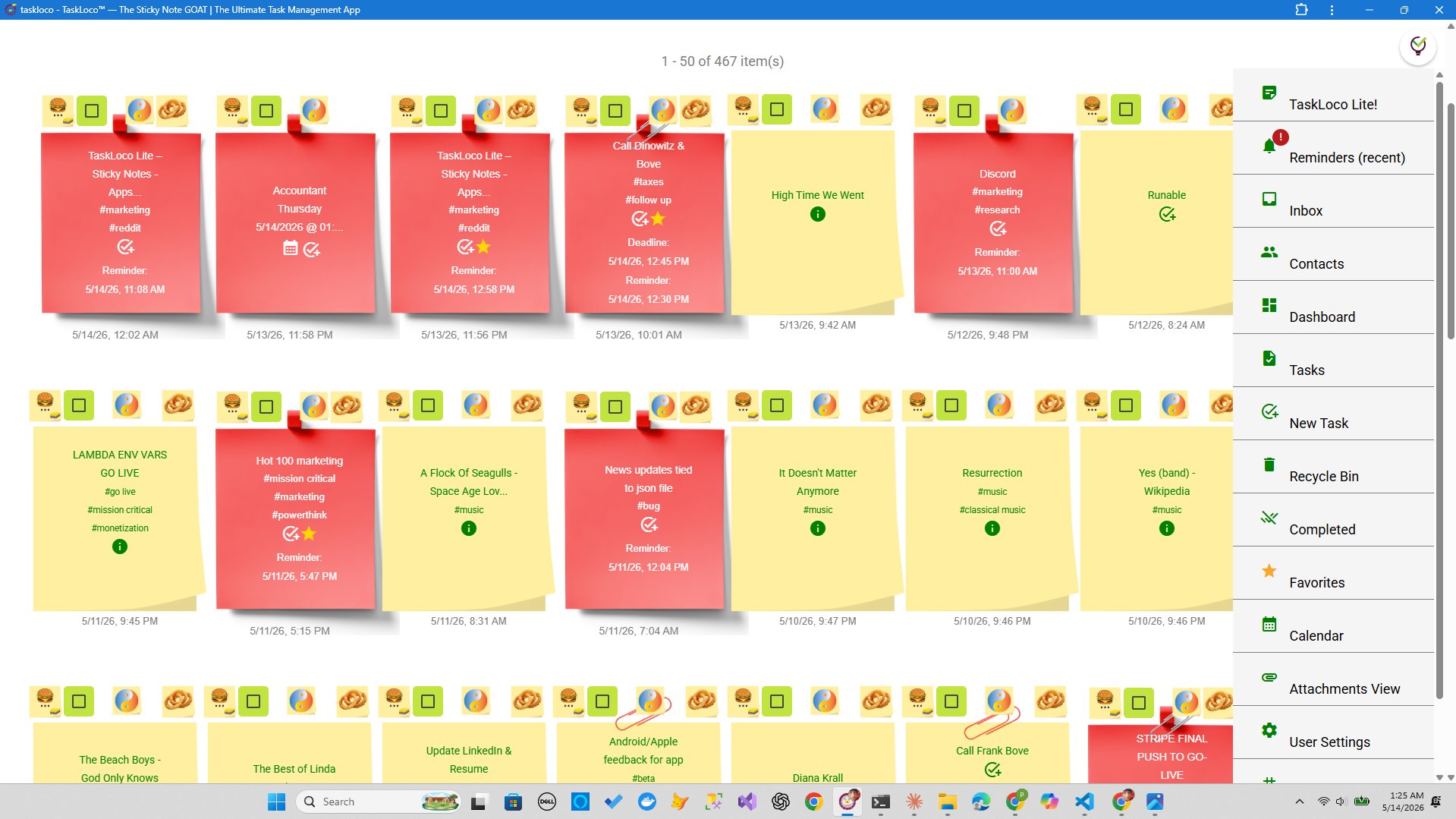
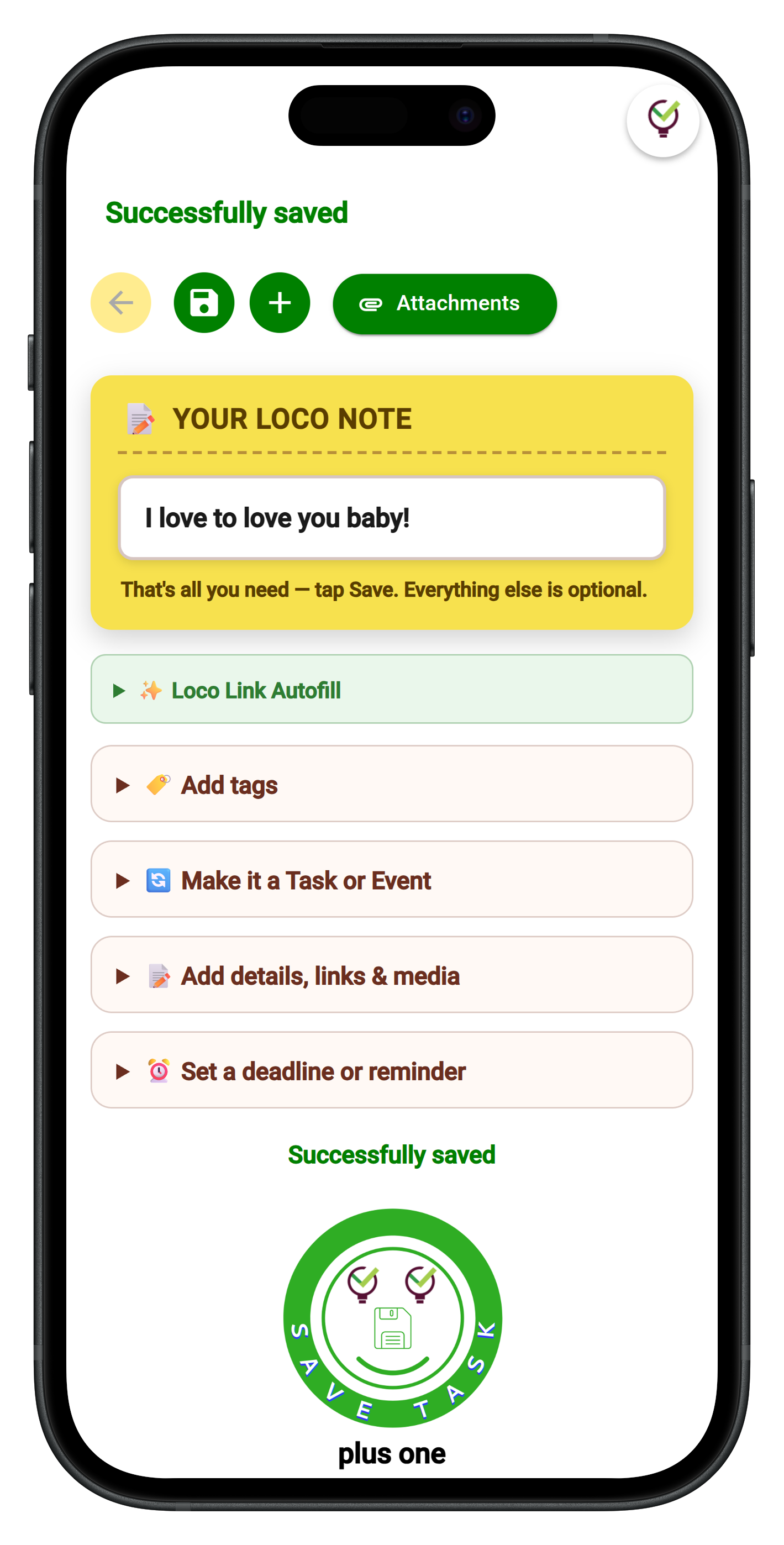
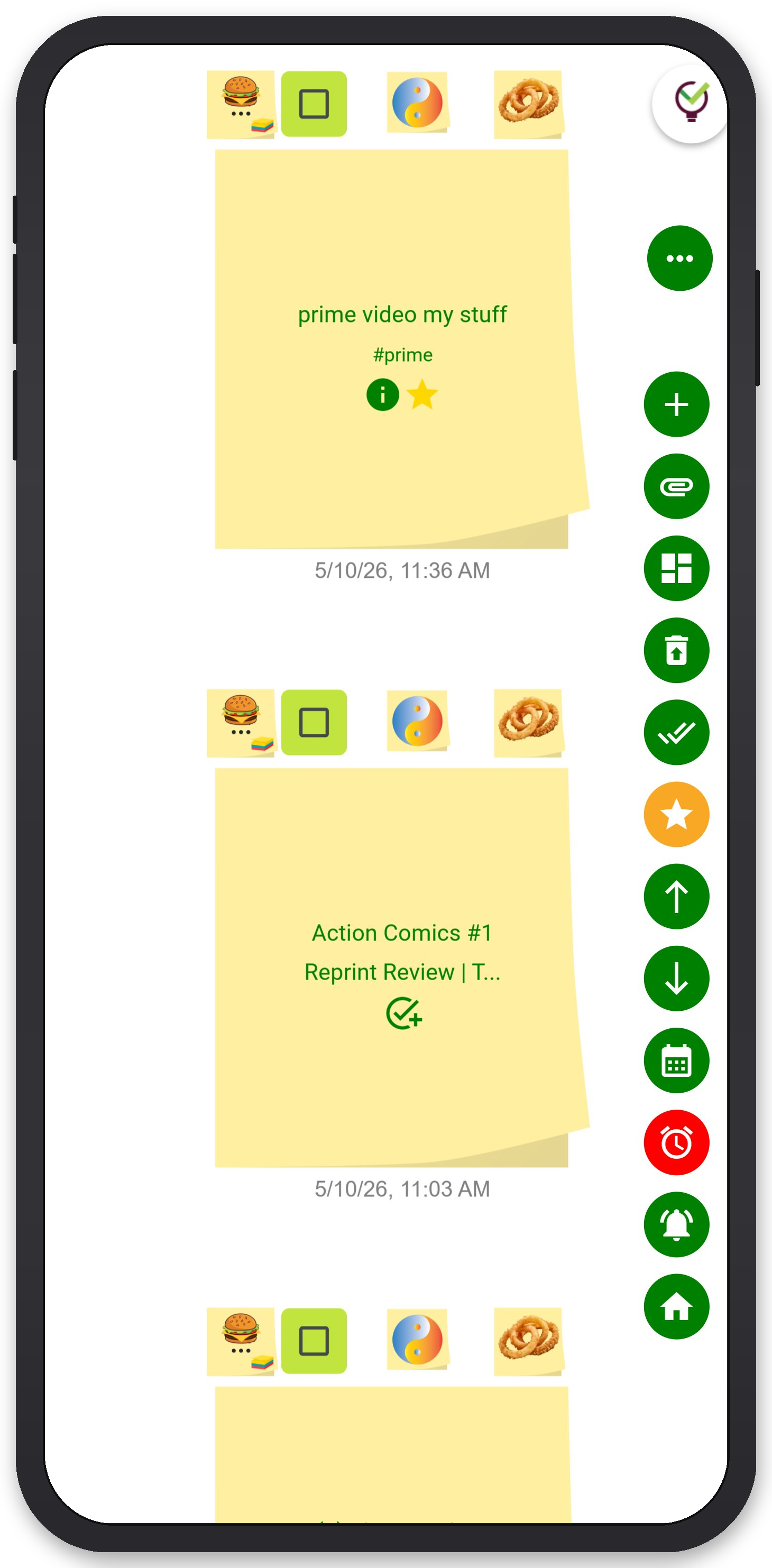
TaskLoco is built around sticky notes, which is a surprisingly good fit for how burned-out people need to work. A note is low-stakes. You can write one thing on it. You can move it. You can throw it away. There's no sense of a "system" to maintain, no guilt when you skip a status update, no interface to learn.
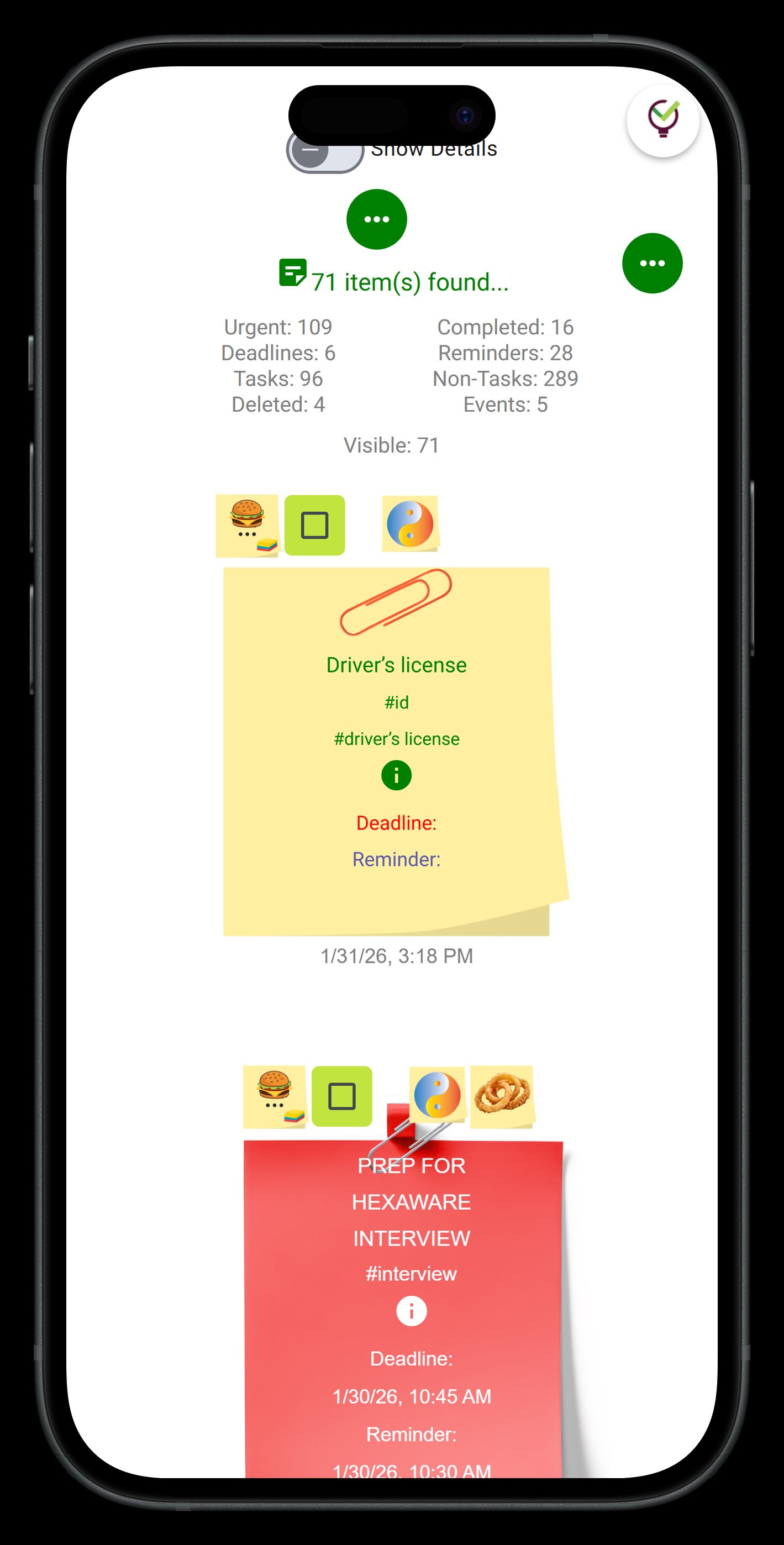
The three-task method maps cleanly: one note per task, your daily three visible on your wall. When a task is done, the note is gone. TaskLoco Premium adds reminders that deep-link back to the original note — so when the reminder fires as a push notification, one tap takes you straight to the context, not to a generic app home screen. That's meaningful when your brain is running low. Less hunting, less friction, more doing.
The team sharing feature works the same way — shared notes land in a teammate's wall like an email they can make their own, with no permission structures to navigate. If you're managing people while burned out, reducing the coordination overhead matters. A shared note with context beats a long Slack thread or a status meeting.
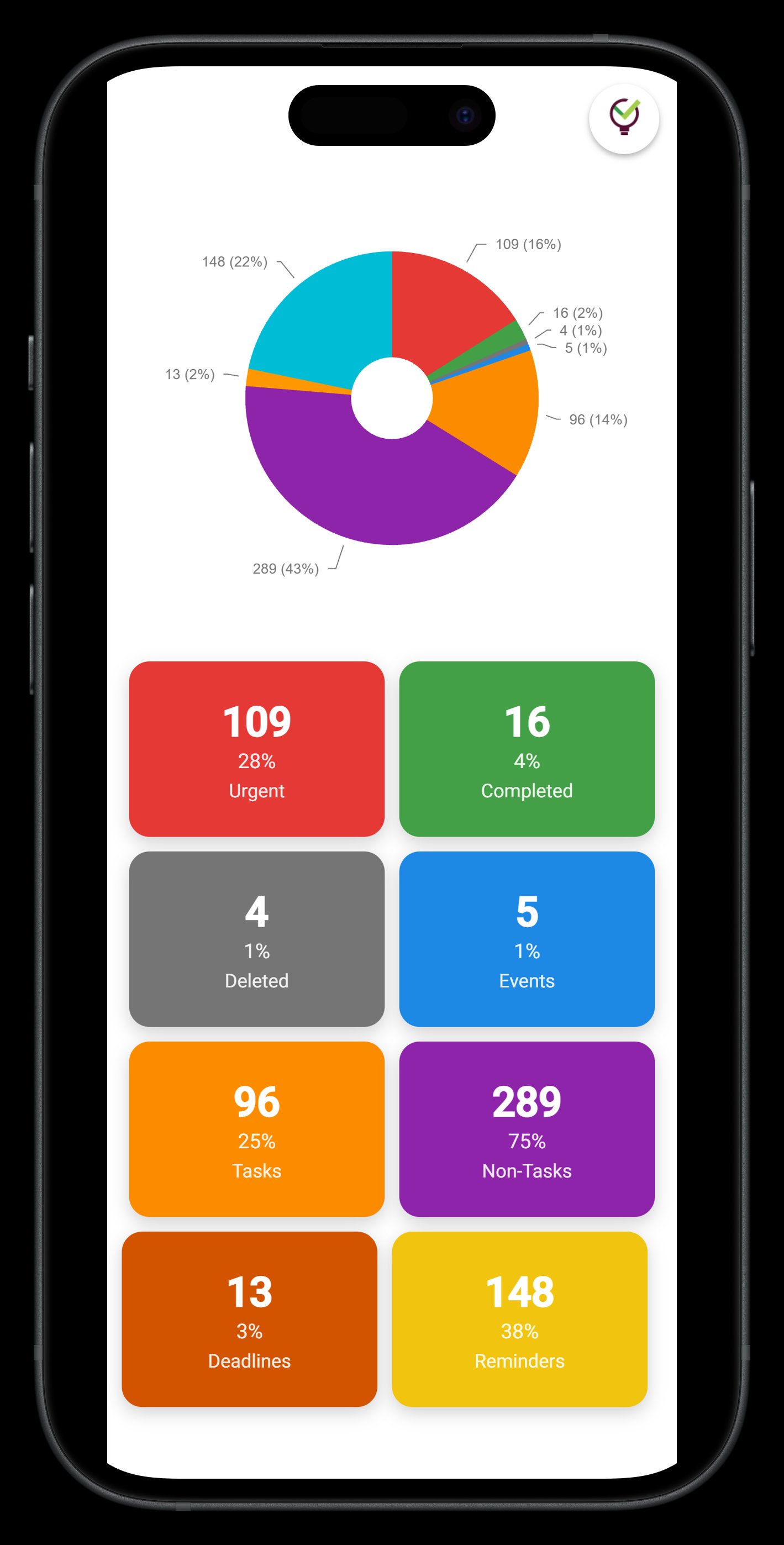
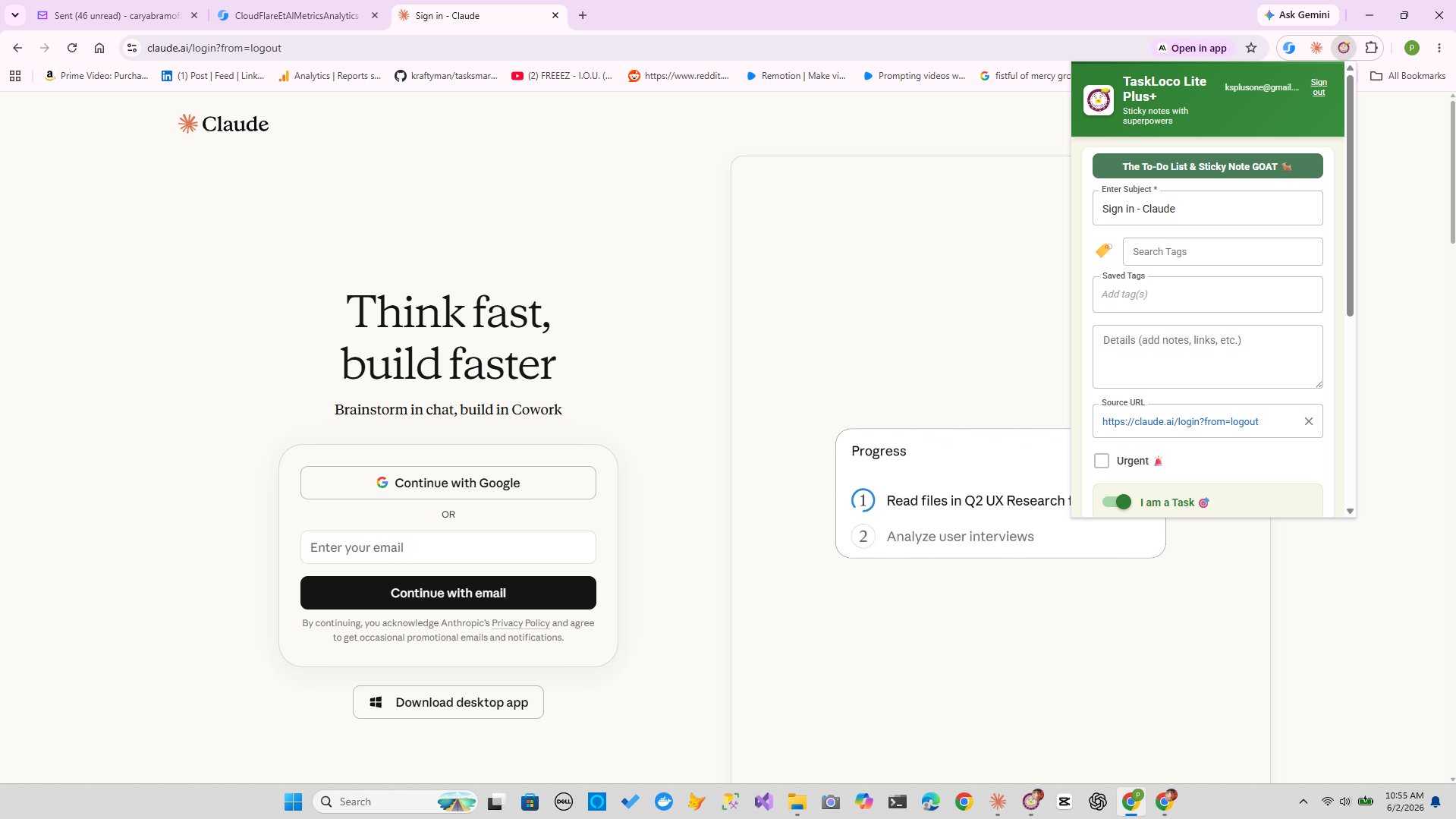
TaskLoco Lite is a free native app for iPhone and Android — no sign-in, completely anonymous, stores up to 20 notes on your device. If you just need a low-friction place to hold your daily three without committing to anything, that's the right starting point. Lite Plus+ is free for the web, syncs across devices, and gives you up to 30 notes. Premium adds reminders, file attachments, unlimited notes, calendar view, and team sharing.
TaskLoco Premium is regularly $9.99/month per person. Right now, charter members can lock in 50% off the regular price — forever. That means $4.99/month per person today. And if our price ever goes up, you still pay half. Always.
Code CHARTER50 auto-applies at checkout. First 500 spots only — once they're gone, this offer is gone permanently. Act fast while spots last.
Every Premium subscription includes unlimited notes, 10GB file storage, reminders, calendar, and team sharing. Each team member requires a separate subscription. 7-day free trial — no charge until day 8. Cancel anytime.
Free Options: TaskLoco
TaskLoco Lite
- Native iPhone & Android app
- Completely anonymous — no sign-in
- Data stays on your device
- Up to 20 notes
- Free forever
TaskLoco Lite Plus+
- Web app + Chrome extension
- Sign in with Google
- Wall syncs across all devices
- Up to 30 notes
- Free forever
Lock In 50% Off — Forever
7-day free trial. No charge until day 8. CHARTER50 auto-applies at checkout.
🔒 Lock In My Charter SpotSee TaskLoco in Action
Frequently Asked Questions
Is it okay to be unproductive when burned out?
Yes — and recognizing it matters. Burnout is a physiological state, not a motivation problem. Pushing through without adjusting how you work typically extends the burnout rather than resolving it. The goal during burnout isn't to maintain normal output. It's to do the minimum viable set of things that matter while actively protecting your recovery. That's not laziness. That's triage.
What is the best productivity method when you're exhausted?
The three-task method paired with structured work blocks (like 25-minute sprints) consistently outperforms longer, open-ended work sessions for exhausted people. The reason: both methods reduce the cognitive overhead of deciding what to do and for how long. When your brain is depleted, decision fatigue is a real barrier. Removing it — even artificially — frees up capacity to actually do the work.
How do you stop procrastinating when burned out?
Procrastination during burnout is usually avoidance of a task that feels overwhelming — not laziness. The fix is to make the task smaller until it no longer feels threatening. Instead of "write the report," the task is "open the document and write one sentence." This sounds almost too simple, but starting is the hardest part. Once you've started, continuation is significantly easier. Pair this with a timer — even five minutes — to remove the open-endedness that makes starting feel impossible.
How do you prioritize tasks when everything feels urgent?
Apply a single filter: what has a real, external consequence if it doesn't happen today? Not internal guilt, not perceived urgency — actual consequences. A deadline that moves a project backward. A client who needs a response to proceed. An invoice that affects cash flow. Anything that doesn't meet that bar isn't urgent today, regardless of how it feels. This filter typically removes 60–70% of what most people treat as urgent.
Can you recover from burnout while still working?
Yes, but it requires structural changes, not willpower. The key behaviors are: setting a hard stop time each day, protecting transition time after work, reducing your active task list aggressively, and eliminating low-value drains (unnecessary meetings, status updates that exist for optics, notifications that fragment focus). Working through burnout without these changes typically deepens it. With them, most people can stabilize and begin recovering while still meeting core obligations.
What app is good for managing tasks when burned out?
The best tool is the one with the least friction. Complex project management platforms add cognitive overhead — learning curves, status fields to update, dashboards to maintain. When you're burned out, that overhead competes directly with the capacity you need for actual work. A sticky note-based system like TaskLoco keeps tasks visible and simple. TaskLoco Lite is free, native on iPhone and Android, requires no account, and stores up to 20 notes on your device — a deliberately minimal starting point. TaskLoco Premium adds reminders that deep-link back to the original note, file attachments, unlimited notes, and calendar view for when you need more structure without more complexity. $9.99/month per person (currently $4.99/month per person for first 500 charter members with code CHARTER50)
How long does burnout last?
Burnout duration varies significantly based on severity and whether the underlying conditions change. Mild burnout with active recovery behaviors (sleep protection, workload reduction, boundary-setting) can resolve in a few weeks. Chronic burnout in unchanged environments can persist for months or longer. The biggest predictor isn't time — it's whether the conditions that caused the burnout are addressed. Working harder in the same conditions while hoping to recover is not a recovery strategy.
Born in Brooklyn. Powered by AWS. Your data stays yours.
TaskLoco is available on iPhone, Android, Chrome, and every web browser.