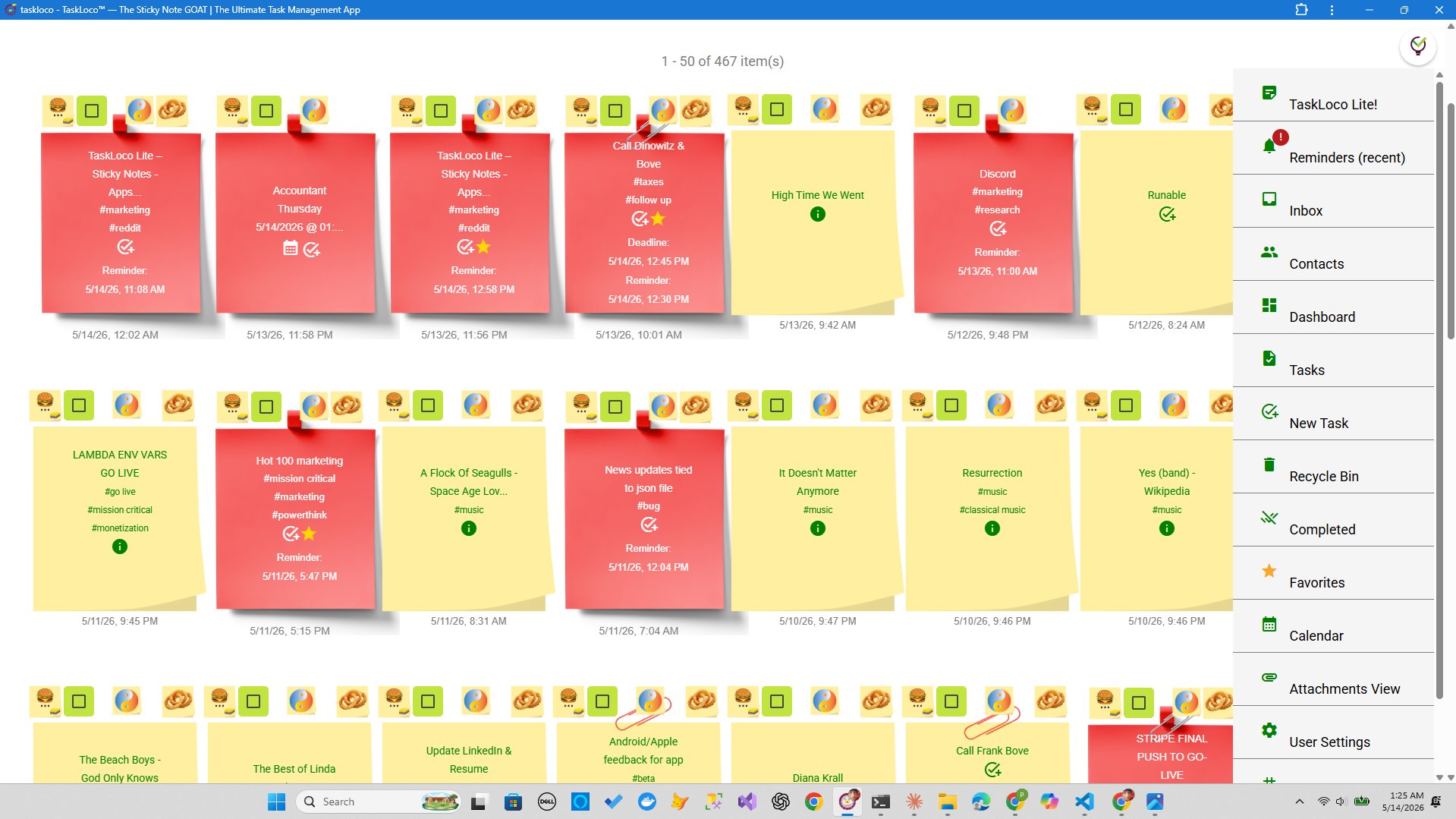
Your brain is incredible at making connections, but terrible at remembering details. That's where a "second brain" comes in — a digital system that captures your thoughts, organizes your knowledge, and helps you think better over time.
The concept, popularized by Tiago Forte, involves creating a personal knowledge management system using digital tools. But here's the thing: the best second brain is the one you'll actually use. Some people need complex databases and relations. Others thrive with simple, visual sticky notes that mirror how their mind works naturally.
TaskLoco Premium is regularly $9.99/month per person. Right now, charter members can lock in 50% off the regular price — forever. That means $4.99/month per person today. And if our price ever goes up, you still pay half. Always.
Code CHARTER50 auto-applies at checkout. First 500 spots only — once they're gone, this offer is gone permanently. Act fast while spots last.
Every Premium subscription includes unlimited notes, 10GB file storage, reminders, calendar, and team sharing. Each team member requires a separate subscription. 7-day free trial — no charge until day 8. Cancel anytime.
Free Options: TaskLoco vs Notion
TaskLoco Lite
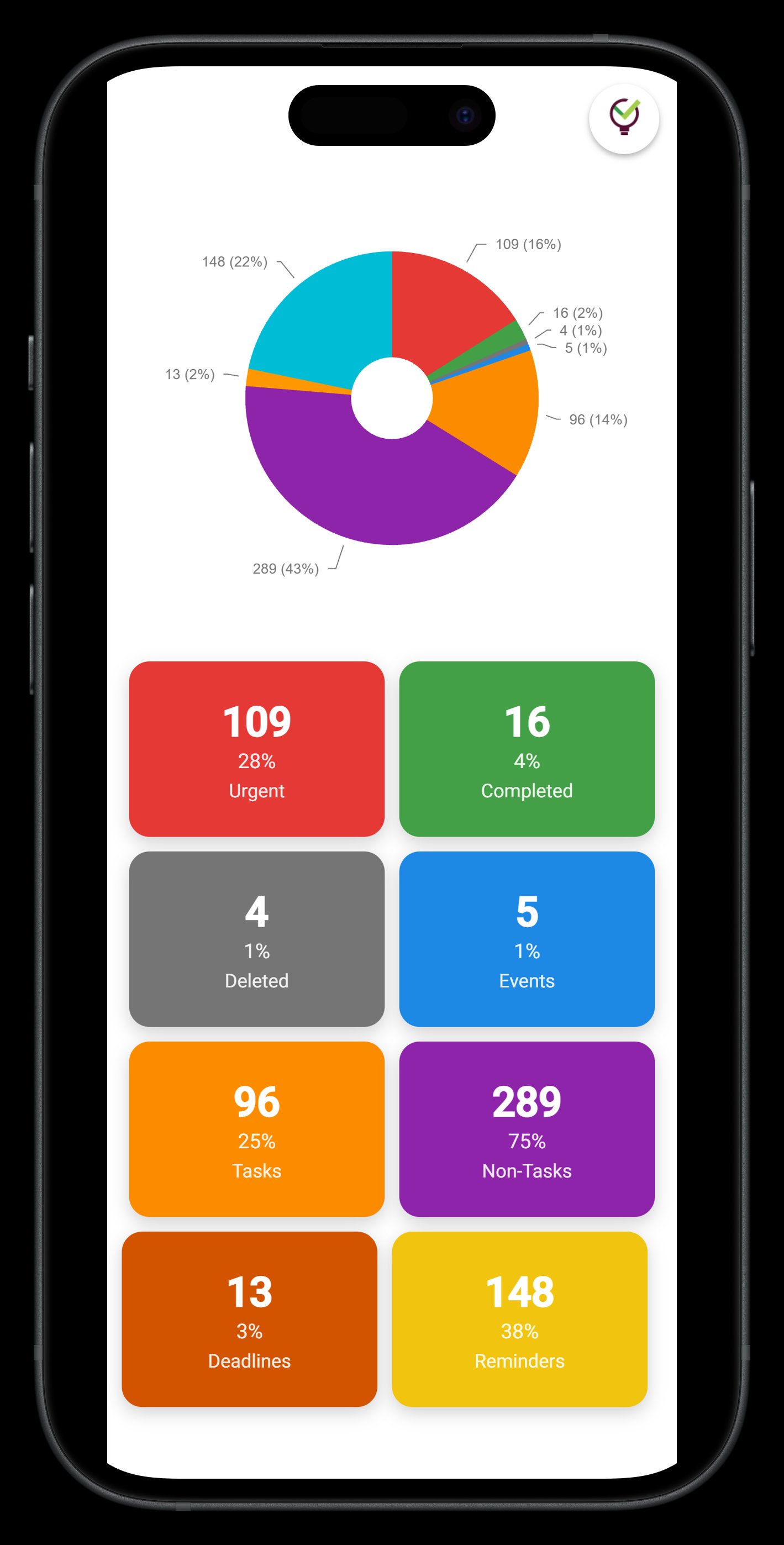
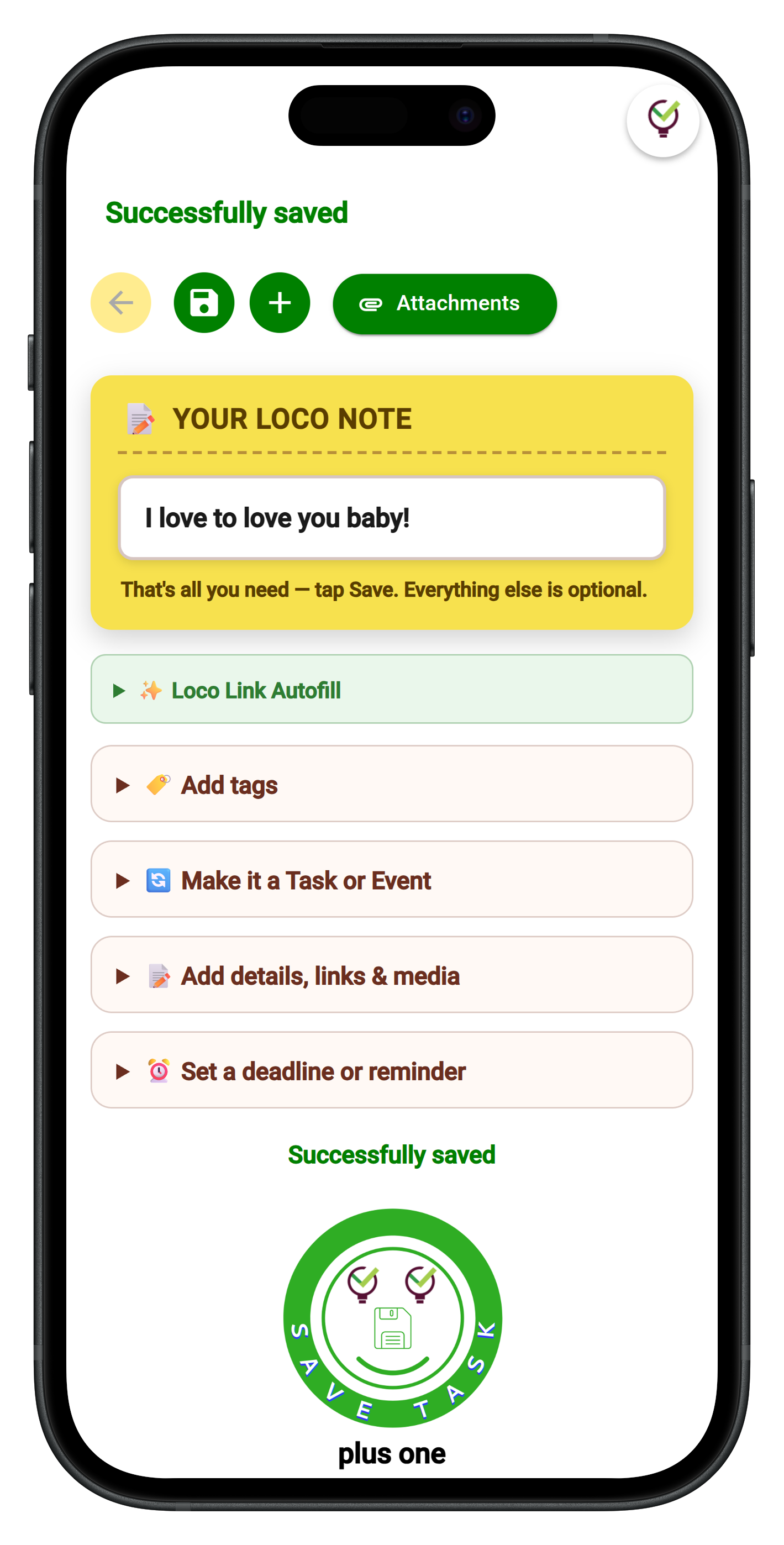
- Native iPhone & Android app
- Completely anonymous — no sign-in
- Data stays on your device
- Up to 20 notes
- Free forever
TaskLoco Lite Plus+
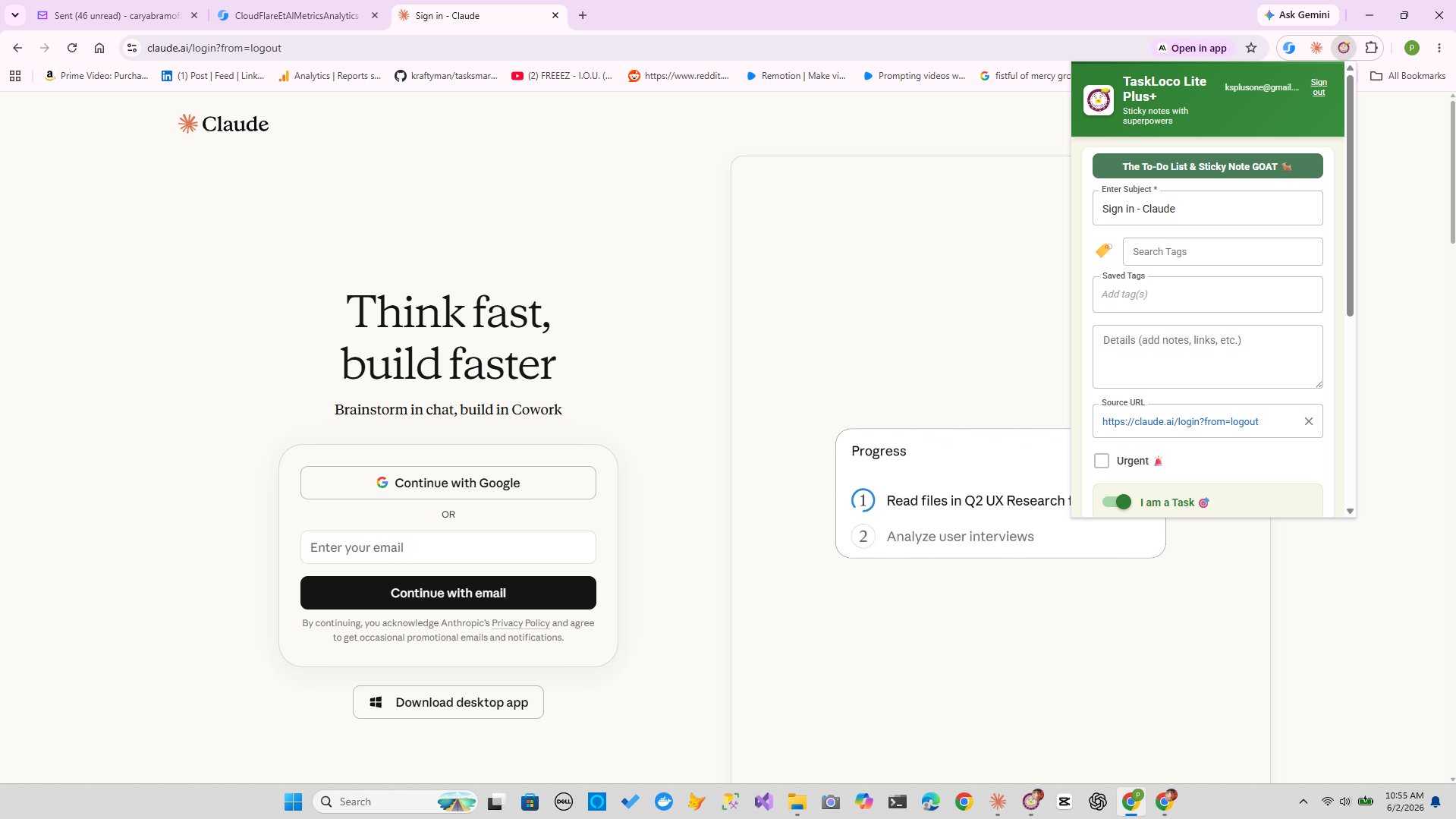
- Web app + Chrome extension
- Sign in with Google
- Wall syncs across all devices
- Up to 30 notes
- Free forever
The CODE Method: Capture, Organize, Distill, Express
Tiago Forte's Building a Second Brain methodology breaks down into four steps: Capture interesting information, Organize it for action, Distill the key insights, and Express your knowledge through creative work.
The capture phase is crucial — you need a system that's always available and friction-free. TaskLoco's Chrome extension lets you capture any webpage in one click, while the mobile apps work offline when inspiration strikes. Notion requires you to navigate to the right database and fill out properties, which creates friction when you just want to quickly save a thought.
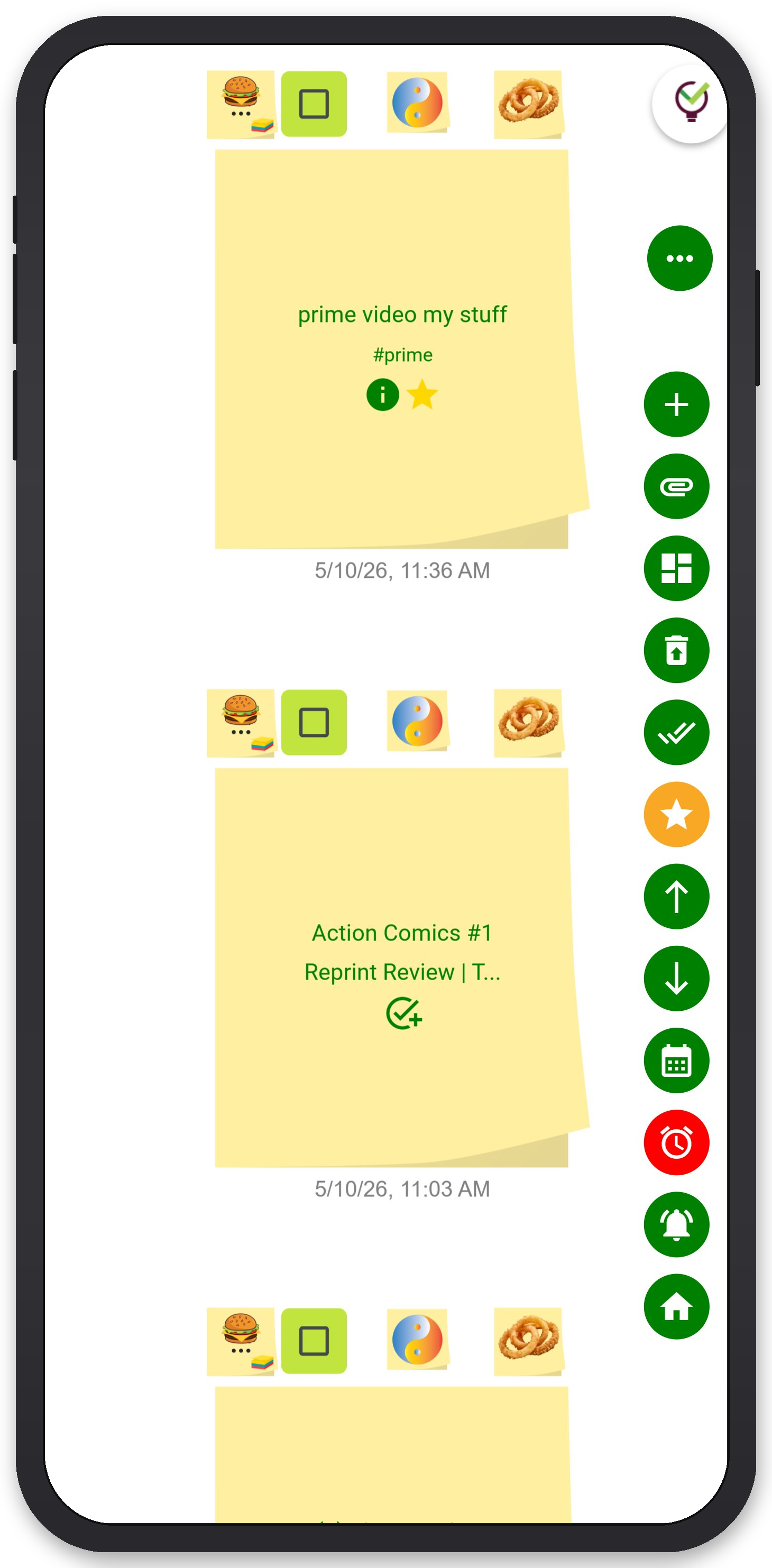
For organization, TaskLoco uses visual walls where you can drag and group notes spatially, mimicking how your brain naturally clusters related ideas. Notion uses hierarchical databases with rigid structures that work well for structured information but can feel overwhelming for creative exploration.
Progressive Summarization: From Raw Notes to Refined Knowledge
Progressive summarization is the heart of the second brain system. You start with raw captured information, then gradually highlight and distill the most important parts over multiple passes. This transforms scattered notes into actionable knowledge.
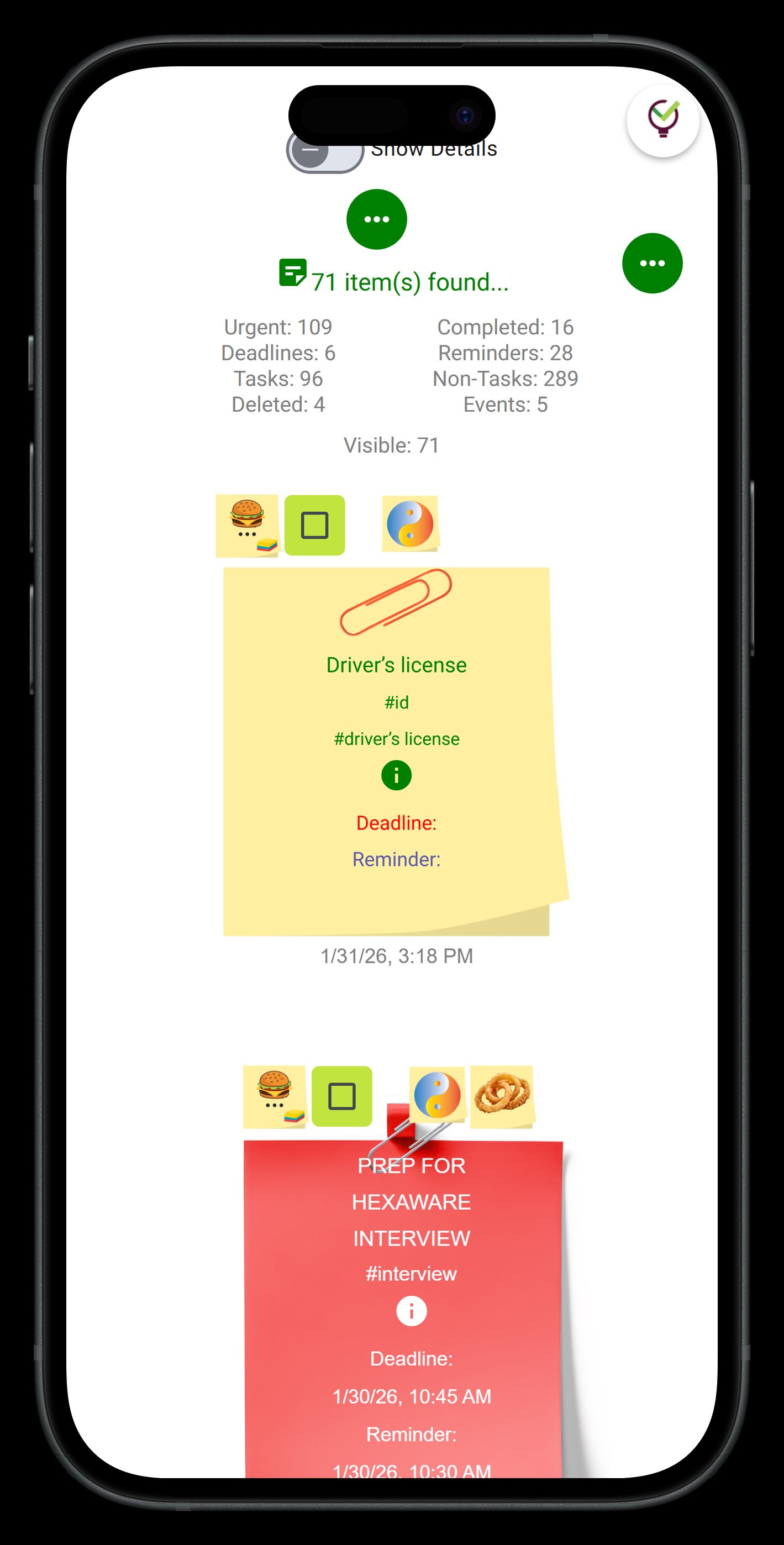
TaskLoco supports this through its visual highlighting and tagging system. You can quickly scan your notes wall, spot patterns, and create new notes that synthesize insights from multiple sources. The spatial layout helps you see connections that might be hidden in a linear database structure.
Notion excels at this with its database relations and roll-up properties. You can create sophisticated systems that automatically aggregate information from multiple sources. However, this power comes with complexity — setting up these systems requires significant upfront work and ongoing maintenance.
File Management and Knowledge Preservation
A second brain isn't just text — it's PDFs, images, audio recordings, and documents that contain valuable knowledge. Your system needs to handle these gracefully while keeping them searchable and accessible.
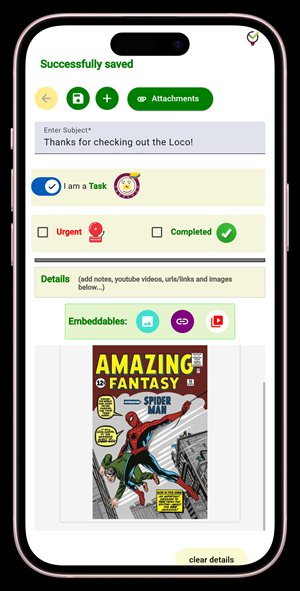
TaskLoco Premium includes 10GB of file storage with full-text search across attachments. You can embed images directly in notes, attach PDFs, and even record voice memos. Files are stored securely and accessible from any device. Additional storage is available in 10GB, 50GB, 200GB, and 1TB tiers that stack up to 100x.
Notion offers unlimited file uploads on paid plans, but files larger than 5MB require external hosting on the free tier. The real strength is in how Notion can display and manipulate different file types within its database structure. You can create galleries of images, embed videos, and create rich media experiences.
Both tools backup your data to the cloud, but TaskLoco's simpler structure makes it easier to export if you ever need to migrate. Notion's complex database relationships can create vendor lock-in.
Making Your Second Brain Actionable
The ultimate test of a second brain system is whether it helps you take action. Information without action is just digital hoarding. Your system needs to surface relevant knowledge when you need it and help you move from consuming to creating.
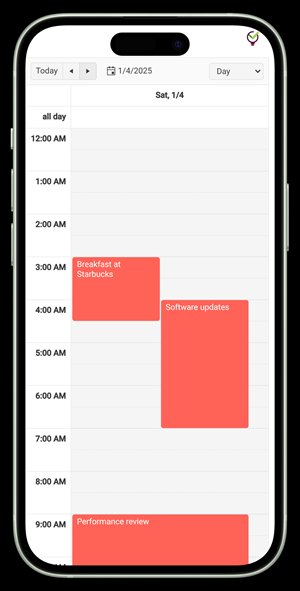
TaskLoco's reminder system and calendar view help transform captured information into scheduled actions. You can set deadlines on notes, create recurring reminders, and see your knowledge work alongside your other commitments. The visual wall layout makes it easy to spot neglected projects and stalled ideas.
Notion's strength is in creating workflows that automatically surface relevant information. You can build templates that guide you through creative processes, set up automated reminders based on complex criteria, and create dashboards that show your knowledge work at a glance.
The Honest Comparison
| Feature | TaskLoco | Notion |
|---|---|---|
| Quick capture | One-click Chrome extension, offline mobile apps, no forms to fill | Database entry required, slower capture process |
| Free tier | Two options: Lite (20 notes, offline) or Lite Plus+ (30 notes, synced) FREE | Personal plan with basic features, file size limits |
| Visual organization | Spatial walls, drag-and-drop grouping, visual clustering | List and board views, but primarily database-driven |
| File attachments | 10GB included, full-text search, embed images in notes | Unlimited files on paid plans, rich media embedding |
| Database functionality | Simple tagging and search, no databases | Full relational databases, formulas, roll-ups, views |
| Templates | Basic note templates | Extensive template library, custom templates |
| Offline access | Full offline mode in Lite version, read-only in Premium FREE | Limited offline capabilities |
| Search capabilities | Full-text search across notes and file contents | Advanced search with filters, database queries |
| Mobile experience | Native iPhone and Android apps, works offline FREE | Mobile app available but limited compared to desktop |
| Learning curve | Immediate — like digital sticky notes | Steep learning curve, requires training |
| Team collaboration | Shared walls with real-time sync | Advanced collaboration features, comments, mentions |
| API access | No API currently available | Full API for integrations and automation |
| Pricing transparency | $9.99/month per person (currently $4.99/month per person for first 500 charter members with code CHARTER50) | $8/month per user (Plus), $15/month per user (Business) |
| Data export | JSON export of all notes and attachments | HTML and CSV export, but complex database structure |
| Custom workflows | Basic reminders and calendar integration | Advanced automation with databases and formulas |
| Web clipper quality | Clean text extraction, image capture FREE | Full page capture but can be cluttered |
| Reminders and scheduling | Built-in reminders with calendar view | Basic reminder functionality |
| Setup complexity | Start using immediately, no configuration needed | Requires significant setup for optimal use |
Who Should Use Each
Use TaskLoco if…
- You want to start building your second brain today without learning complex systems
- You prefer visual, spatial organization over structured databases
- You need reliable offline access for capturing thoughts anywhere
- You want simple pricing without user minimums or complex tiers
- You value quick capture over sophisticated data relationships
Use Notion if…
- You need complex database functionality with relations and formulas
- You're building knowledge systems for large teams with varied needs
- You want extensive third-party integrations and API access
- You need advanced automation and workflow capabilities
- You're comfortable with a learning curve in exchange for powerful features
Lock In 50% Off — Forever
7-day free trial. No charge until day 8. CHARTER50 auto-applies at checkout.
🔒 Lock In My Charter SpotSee TaskLoco in Action
Frequently Asked Questions
What is a second brain and why do I need one?
A second brain is a digital system for capturing, organizing, and retrieving your thoughts and knowledge. Your biological brain excels at making connections but struggles with remembering details. A second brain stores those details so you can focus on thinking, not remembering.
How much does TaskLoco cost compared to Notion?
$9.99/month per person (currently $4.99/month per person for first 500 charter members with code CHARTER50)
Can I build a second brain for free?
Yes, both TaskLoco and Notion offer free tiers. TaskLoco Lite works completely offline with 20 notes and requires no sign-in. TaskLoco Lite Plus+ syncs 30 notes across devices. Notion's free Personal plan includes basic features but limits file uploads to 5MB.
Which tool is better for beginners?
TaskLoco is significantly easier for beginners. It works like digital sticky notes — you can start capturing and organizing thoughts immediately. Notion has a steep learning curve and requires understanding databases, properties, and relations before you can build effective systems.
How do I capture information quickly while reading online?
TaskLoco's Chrome extension captures any webpage in one click, extracting clean text and images. Notion's web clipper captures full pages but often includes extra formatting. For speed, TaskLoco wins. For complete page preservation, Notion has the edge.
Can I access my second brain offline?
TaskLoco Lite works completely offline with no internet connection required. TaskLoco Premium syncs when online but allows read-only access offline. Notion requires internet connectivity for most functions, though some cached content remains available offline.
Should I use progressive summarization in my second brain?
Progressive summarization helps transform raw captures into refined knowledge. Start by capturing everything, then gradually highlight and distill the most important parts over multiple passes. Both TaskLoco and Notion support this workflow, but TaskLoco's visual approach makes pattern recognition easier.
Born in Brooklyn. Powered by AWS. Your data stays yours.
TaskLoco is available on iPhone, Android, Chrome, and every web browser.