You found a great YouTube video mid-afternoon, told yourself you'd watch it later, and then closed the tab. Sound familiar? The problem isn't discipline — it's that browser tabs aren't designed to survive the day, let alone sync to your phone for the commute home. A real watch-later list needs to be intentional, visual, and available on every screen you own.
The good news: building one isn't complicated. You don't need a new subscription or a complex productivity setup. You need a clear method and a tool that fits into how you actually browse. This guide covers exactly how to do it, starting with the simplest no-frills approaches and building up to the one that genuinely works across every device.
The No-App Method: What Works Without Any Tool
Before reaching for an extension or app, it helps to understand why the obvious solutions keep failing — and what you can do right now to improve things without installing anything.
YouTube's native Watch Later playlist is the most overlooked option for videos. Click the clock icon on any video thumbnail and it gets added automatically. It syncs across the YouTube app on iOS, Android, and the web. The limitation is obvious: it only works for YouTube. The moment you want to save an article, a podcast page, or a video from Vimeo, you're back to square one.
Browser bookmarks in a dedicated folder are the next step up. Create a folder called "Watch Later" and drag tabs into it. Most browsers now sync bookmarks across devices if you're signed in — Chrome syncs to the Android Chrome app and to desktop. The problem is that bookmarks are text-only lists. There's no visual preview, no quick glance to remind you what something actually is, and no way to distinguish a 4-minute clip from a 2-hour documentary at a glance.
A shared notes document — a Google Doc or Apple Note you paste links into — is another approach people use. It syncs reliably and works on every device. The downside: you have to manually copy the URL, switch apps, paste it in, and add a title so you know what it is later. It's three to five steps per save, which means you either forget to do it or you do it inconsistently enough that the list becomes unreliable.
What Makes a Watch-Later List Actually Usable
A watch-later list fails for one of three reasons: saving is too slow so you skip it, the list isn't visible so you forget to check it, or the list doesn't follow you across devices so it's only useful in one context. Solve all three and the habit sticks.
Saving has to be one action. If saving a link requires more than a single click or tap, you'll do it sometimes but not consistently. The friction doesn't sound like much in theory, but in practice it means half your good finds never make the list.
The list has to be visual. A column of blue hyperlinks looks the same whether it's a recipe, a documentary, or a tutorial. A watch-later list that shows you a titled note or a video thumbnail makes it dramatically easier to decide what to watch next. You actually use the list instead of ignoring it.
It has to sync without effort. If you save something on your laptop and have to remember to sync or export before your phone has access to it, the list isn't really cross-device — it's cross-device in theory. True sync means you save on one device and it appears on every other device automatically, without any action on your part.
Tags and search also matter more than most people expect. Once a list grows beyond twenty or thirty items, being able to filter by "YouTube" or "cooking" or "work" is the difference between a list you curate and a list you quietly abandon.
How to Build It With the Sticky Note Web Clipper
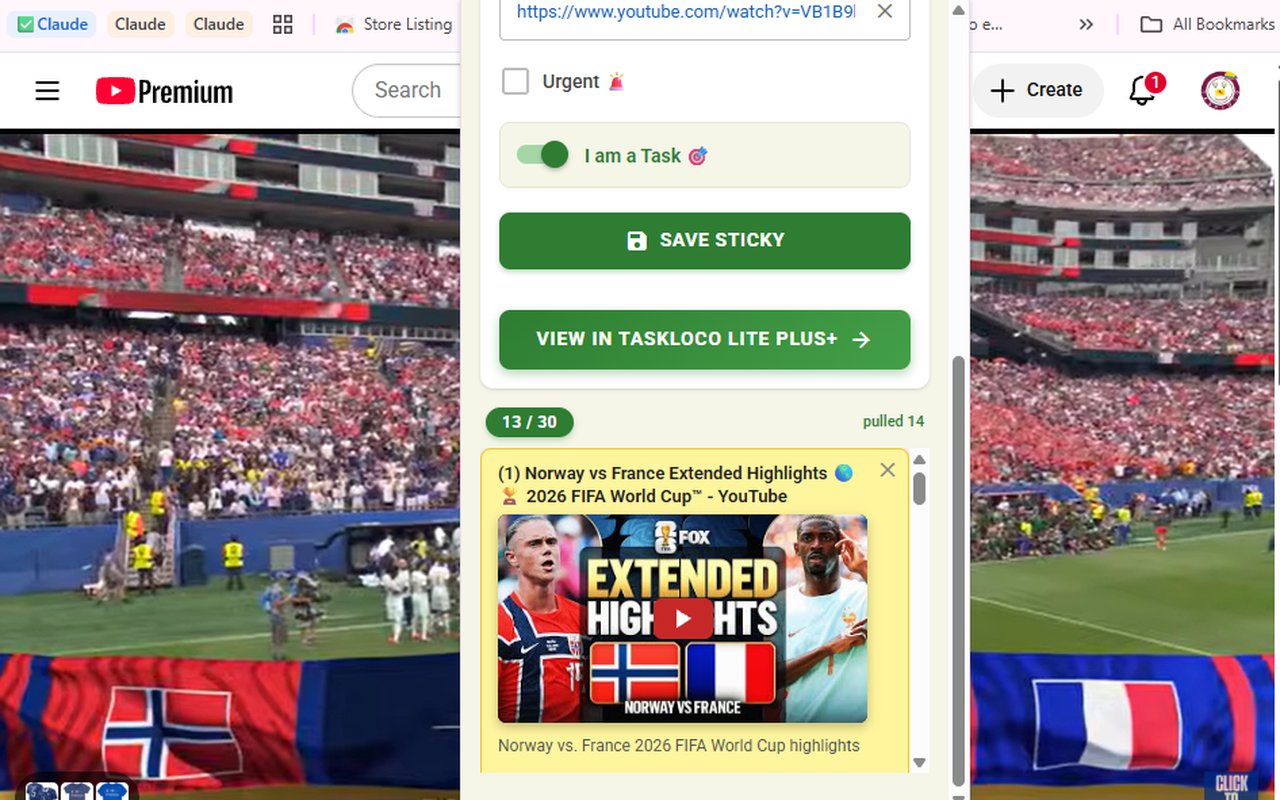
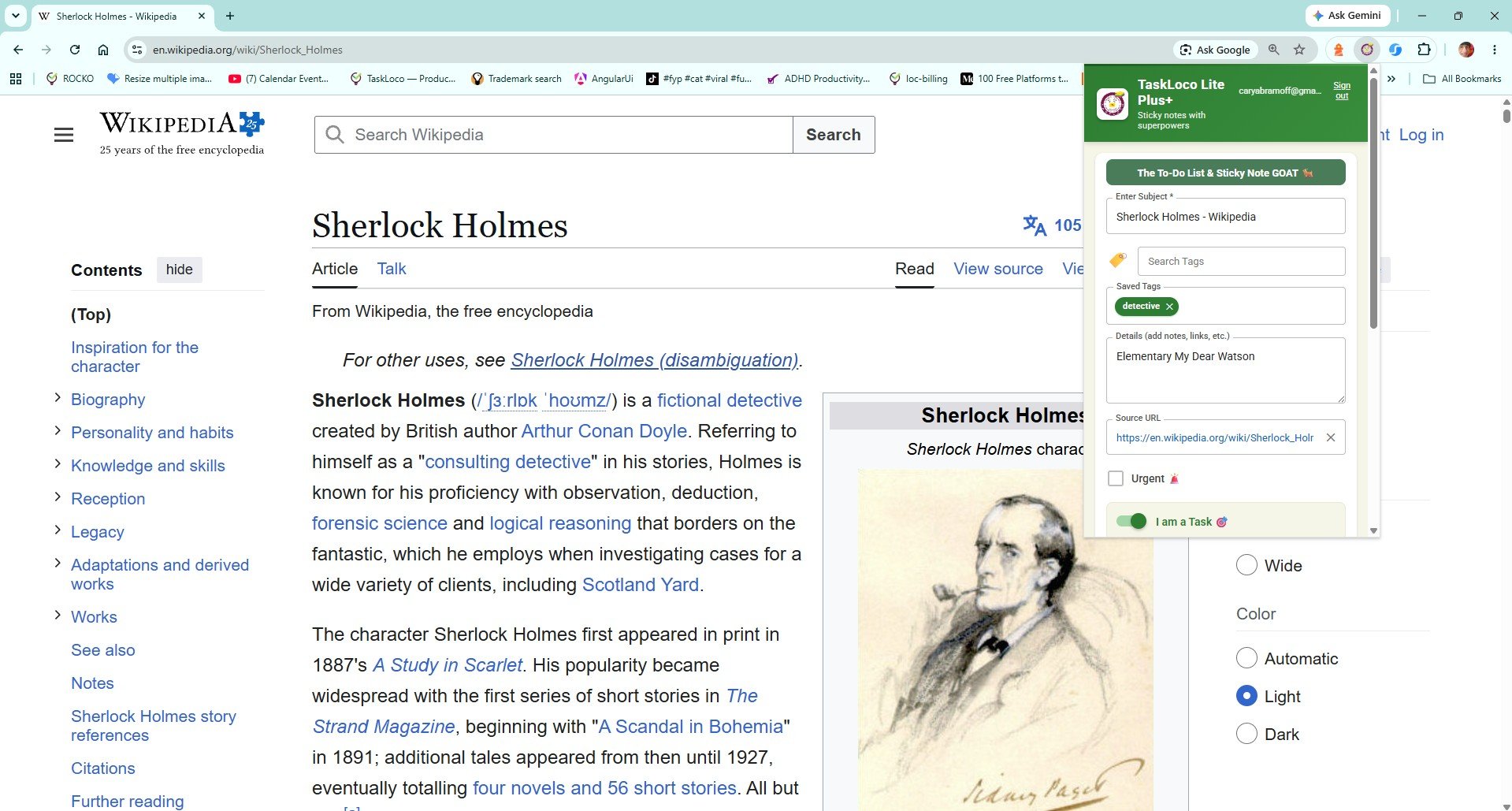
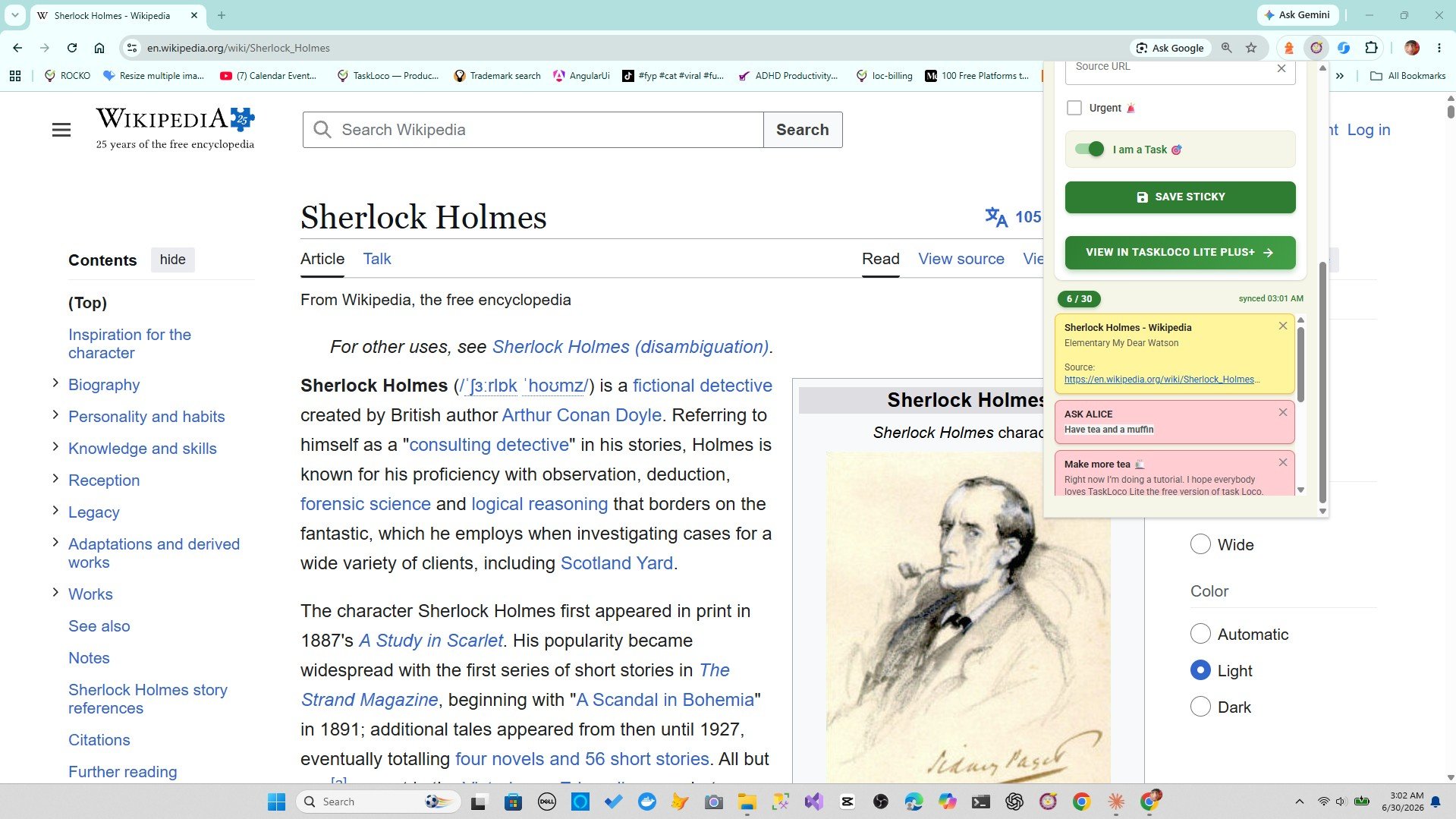
The Sticky Note Web Clipper is a free Chrome extension that saves any page you're on as a visual sticky note in one click. The title and URL fill in automatically. For YouTube videos specifically, the video embeds directly inside the note — you can play it without leaving your watch-later wall.
Here's the practical setup:
- Install the extension from the Chrome Web Store — it's free, and you sign in with Google.
- Browse as normal. When you land on a video, article, or page you want to come back to, click the clipper icon in the Chrome toolbar. Done. The page is saved as a sticky note in your TaskLoco wall.
- Tag it. Add a tag like "watch" or "research" or "cooking" right in the note. You can do this in a second and it makes filtering your list later much faster.
- Open TaskLoco on your phone. Your saved notes sync automatically across the web app, iPhone, and Android. The wall looks the same on every screen.
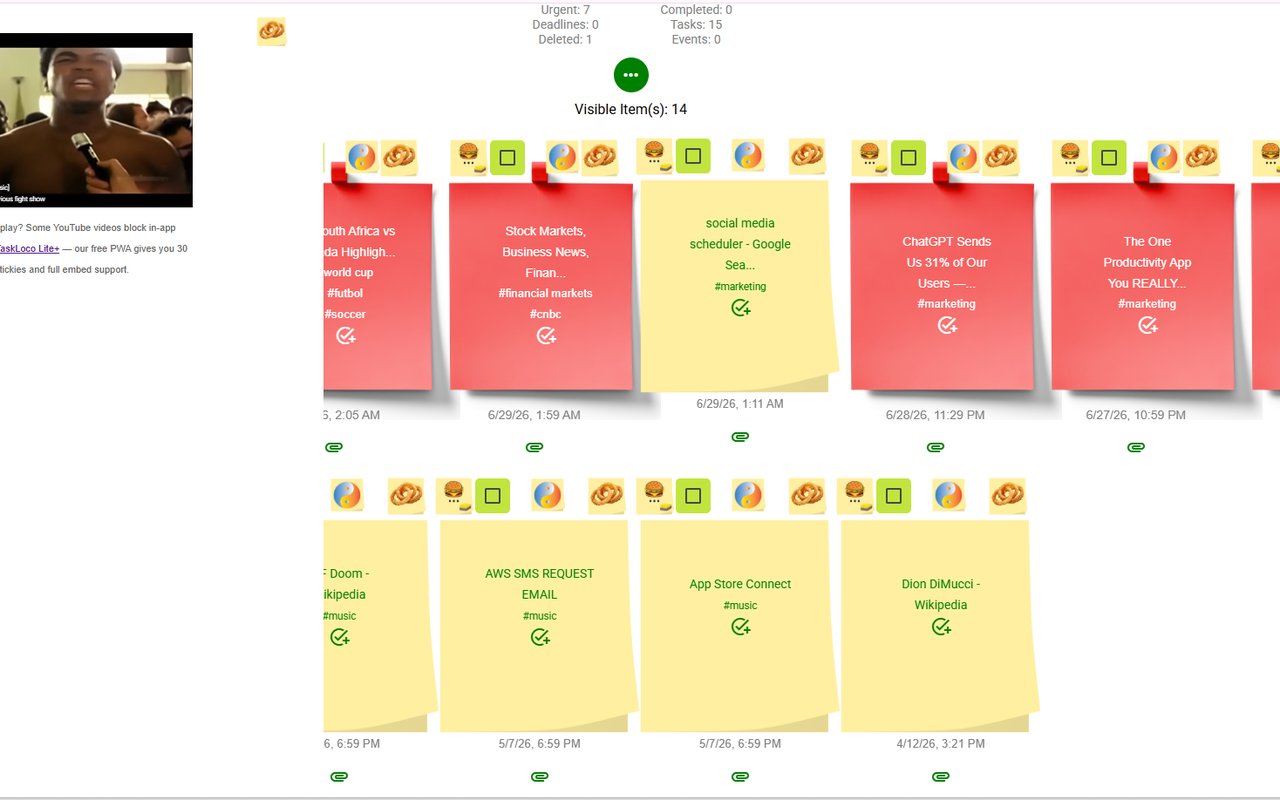
The visual wall format is what makes this genuinely different from a bookmark folder. Each saved item is a distinct note you can see at a glance. YouTube videos show an embedded player directly in the note — you can start watching from your phone or desktop without hunting for the original URL.
If you want to organize your list further, you can arrange notes on the wall, add personal comments to a note before saving, and use search to find anything by title or tag. None of that requires a paid plan — the clipper and the free TaskLoco tier cover the full save-and-browse workflow.
Making the Habit Stick: Tips for Keeping Your List Fresh
The best watch-later system is one you actually clear. A list that grows indefinitely isn't a watch-later list — it's a digital graveyard. A few habits keep it genuinely useful.
Set a weekly sweep. Once a week, open your saved notes and delete anything you're no longer interested in. This sounds obvious but most people skip it. The act of removing things is what keeps the list from feeling overwhelming. If a note has been sitting for more than two weeks and you still haven't watched it, there's a good chance you never will.
Save with context. When you clip something, add a quick personal note to yourself — "shared by Marco", "referenced in the design article", "for the trip research". When you come back to the list, that context makes the item feel relevant again instead of mysterious.
Use tags deliberately. A single tag per item is enough. Don't over-engineer it. "work", "watch", "read", "recipe" — four tags cover most cases. When you open the wall on your phone and only want to watch something short, filtering by "watch" gives you the right items instantly.
Don't save everything. The temptation with a frictionless clipper is to save every link you hover over. Be selective. If you wouldn't actually click play tonight or this weekend, it probably doesn't belong on the list. Saving is free — but your attention isn't.
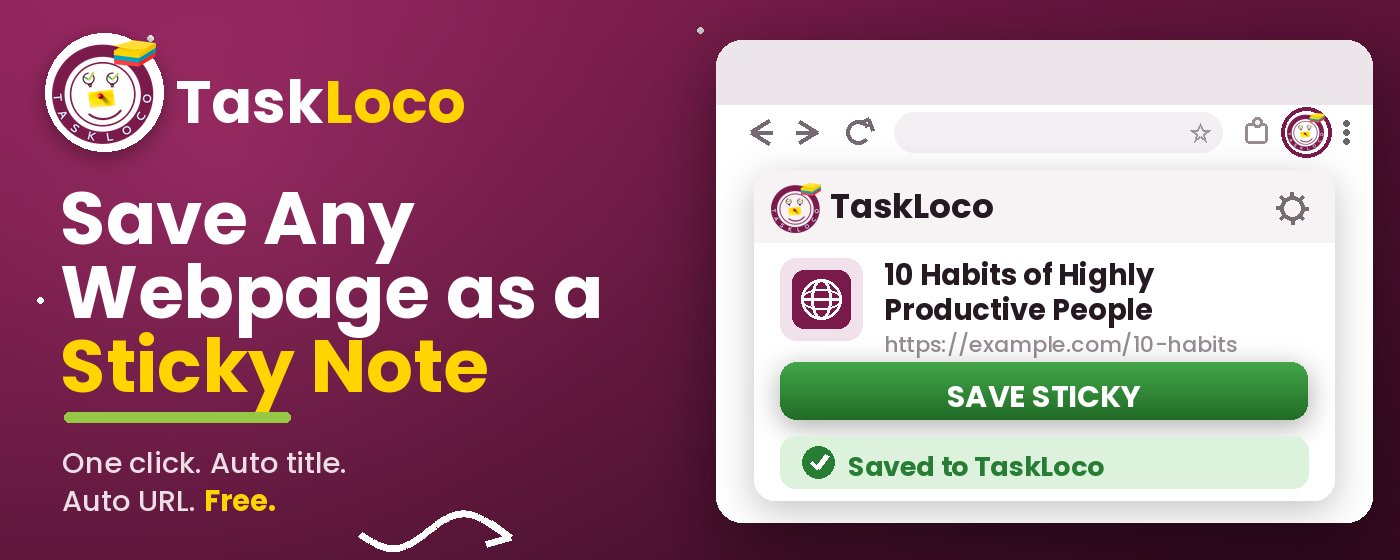
The Sticky Note Web Clipper is free. Install it from the Chrome Web Store, sign in with Google, and every page you clip becomes a sticky note you can find later.
Your clipped notes sync to TaskLoco across Chrome, desktop, iPhone, and Android — also free to start. No credit card to begin.
Get the Free Clipper
Sticky Note Web Clipper
- Free Chrome extension
- One-click save — any page, article, or video
- Title & URL auto-filled
- Tags & search
- Free forever
Synced to TaskLoco
- Sign in free with Google
- Your wall on Chrome, desktop, iPhone, Android
- YouTube videos embed & play in notes
- Visual sticky-note wall
- Free to start
Add It to Chrome — Free
One click saves any page, article, or YouTube video as a sticky note. Title and URL auto-filled.
Add to Chrome — FreeSee TaskLoco in Action
Frequently Asked Questions
What's the easiest way to build a watch-later list that works on both phone and laptop?
The easiest method is the Sticky Note Web Clipper — a free Chrome extension. One click saves the current page as a sticky note with the title and URL auto-filled. Your notes sync to the TaskLoco app on iPhone, Android, and desktop automatically. YouTube videos embed inside the note so you can play them from any device.
Does YouTube's Watch Later list sync across devices?
Yes — YouTube's native Watch Later playlist syncs across the YouTube app on iOS, Android, and the web, as long as you're signed in to the same Google account. The limitation is that it only captures YouTube videos. If you want to save articles, other video platforms, or mixed content, you need a solution that isn't platform-locked.
Can I save YouTube videos to my watch-later list with the Sticky Note Web Clipper?
Yes. When you clip a YouTube page, the video embeds directly inside the sticky note. You can play it from the note on any device without going back to YouTube. This makes your watch-later wall double as an embedded video player for everything you've saved.
Do browser bookmarks sync across devices for a watch-later list?
Chrome bookmarks sync across devices if you're signed in to your Google account — including to the Chrome app on Android. The limitation is that bookmarks are plain text lists with no visual preview, no tags, and no way to embed or preview content. They work as a basic list but they're hard to browse and easy to forget about.
Is the Sticky Note Web Clipper free?
Yes — the extension is completely free. TaskLoco, where your saved notes live, also has a free tier. Install the clipper from the Chrome Web Store, sign in with Google, and you can start saving pages immediately with no payment required.
How do I organize my watch-later list so I can actually find things?
The most practical approach is to use a simple tag system — one or two tags per saved item, like "watch", "work", or "recipe". The Sticky Note Web Clipper lets you add tags to notes, and TaskLoco's search finds any saved item by title or tag instantly. Keep the tag vocabulary small and you'll actually use it.
What happens to my saved watch-later list if I close the browser?
If your list lives in open tabs, closing the browser loses it. If you've used the Sticky Note Web Clipper, your notes are saved to your TaskLoco account — they survive browser restarts, device switches, and everything else. Open TaskLoco on any device and your full list is there.
Born in Brooklyn. Powered by AWS. Your data stays yours.
TaskLoco is available on iPhone, Android, Chrome, and every web browser.