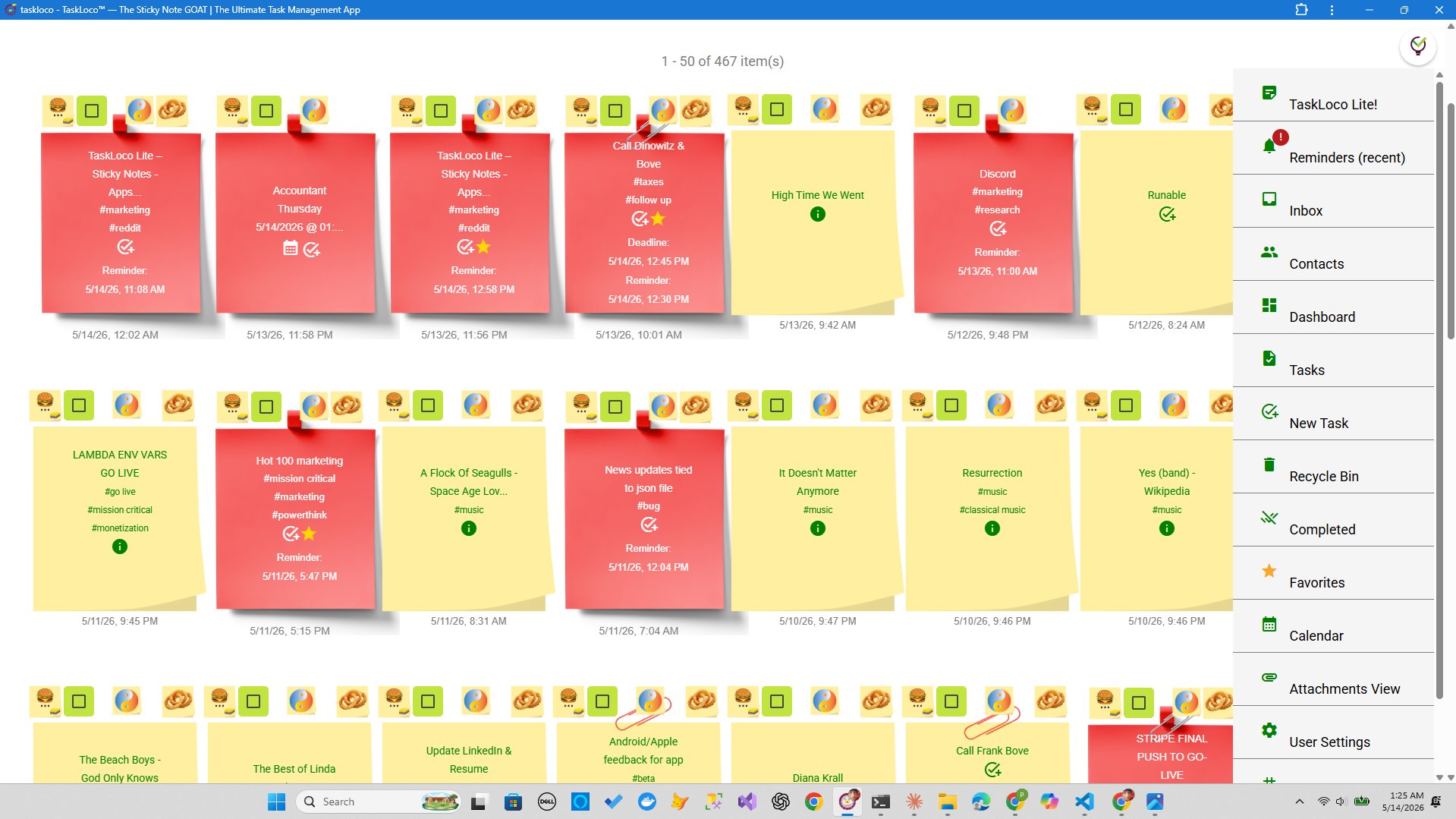
You found an amazing article, tutorial, or resource online. You want to save it for later, but bookmarks feel useless and screenshots cut off half the content. There's a better way.
Here are seven proven methods to capture web pages, from simple browser tricks to dedicated tools that save full content with one click. We'll cover what works, what doesn't, and which method fits your actual workflow.
TaskLoco Premium is regularly $9.99/month per person. Right now, charter members can lock in 50% off the regular price — forever. That means $4.99/month per person today. And if our price ever goes up, you still pay half. Always.
Code CHARTER50 auto-applies at checkout. First 500 spots only — once they're gone, this offer is gone permanently. Act fast while spots last.
Every Premium subscription includes unlimited notes, 10GB file storage, reminders, calendar, and team sharing. Each team member requires a separate subscription. 7-day free trial — no charge until day 8. Cancel anytime.
Free Options: TaskLoco vs Browser Bookmarks
TaskLoco Lite
- Native iPhone & Android app
- Completely anonymous — no sign-in
- Data stays on your device
- Up to 20 notes
- Free forever
TaskLoco Lite Plus+
- Web app + Chrome extension
- Sign in with Google
- Wall syncs across all devices
- Up to 30 notes
- Free forever
Browser Extensions: One-Click Capture
Browser extensions offer the fastest way to capture web pages. Install once, then click to save any page instantly.
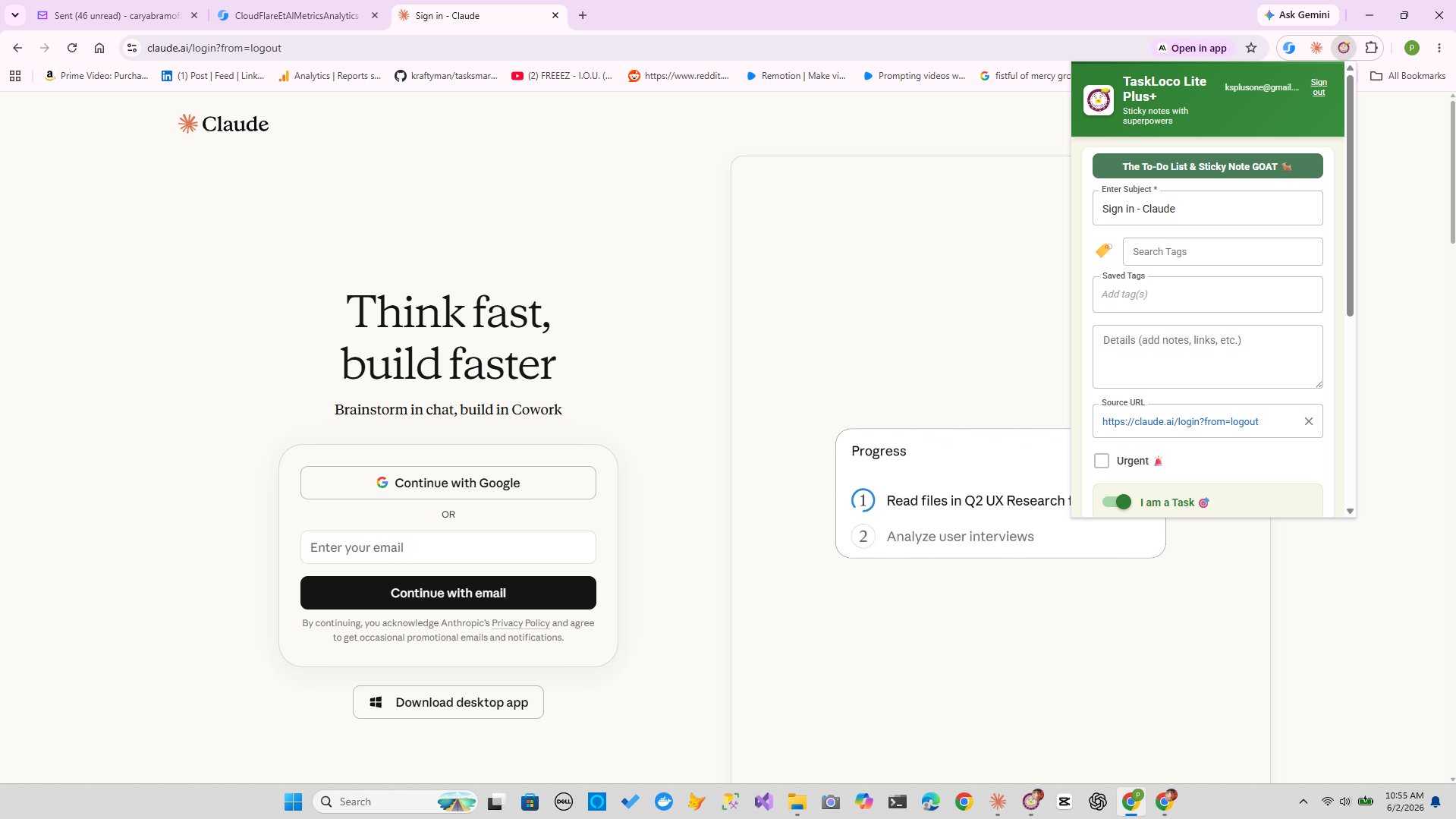
TaskLoco Chrome Extension captures the full webpage content in one click — not just a bookmark, but the actual text and images saved to your notes. Works with TaskLoco Lite Plus+ (free, 30 notes max) or Premium (unlimited notes). The extension auto-syncs across all your devices.
Pocket saves articles for later reading with a clean, distraction-free view. Free tier includes unlimited saves but limits features. Premium costs $4.99/month and adds full-text search and unlimited highlighting.
Evernote Web Clipper lets you save full pages, simplified articles, or just selected text. Evernote Personal costs $7.99/month, Professional runs $9.99/month per user.
Built-in Browser Tools
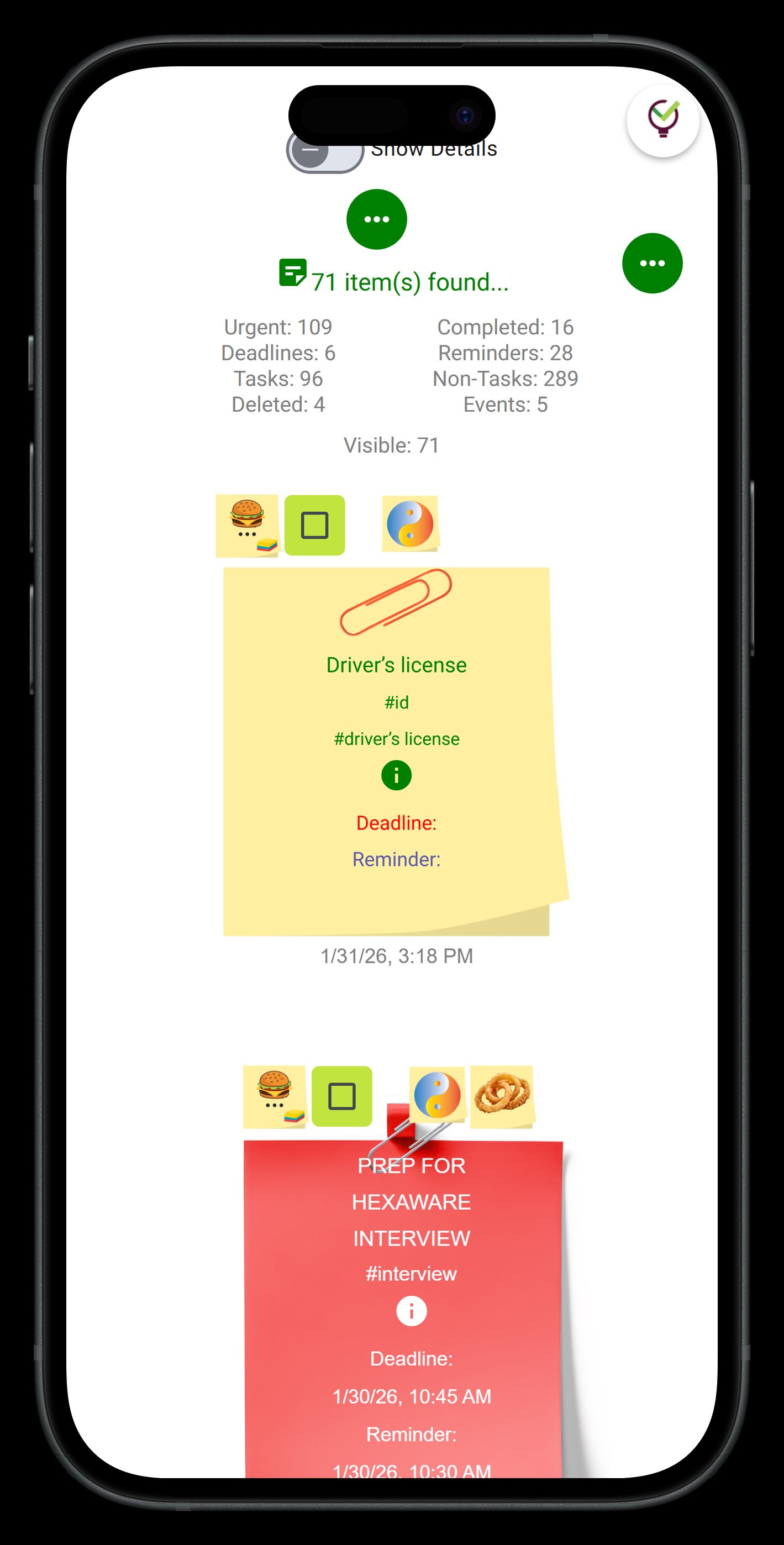
Every major browser includes basic webpage saving tools. They're free but limited compared to dedicated extensions.
Bookmarks save webpage URLs but not content. If the page changes or gets deleted, your bookmark becomes useless. Good for sites you visit regularly, terrible for preserving specific content.
Browser PDF Export (Ctrl+P → Save as PDF) captures the full page as it appears. Works offline forever, but PDFs aren't searchable across multiple saves and eat up storage space quickly.
Reading Lists (Safari) or Reading Mode (Firefox) save simplified article text without ads and clutter. Content stays readable even if the original page changes, but you lose images and formatting.
Chrome's "Save Page As" downloads the complete HTML file with all assets. Preserves everything but creates a messy folder of files that's impossible to organize or search later.
Screenshot and Note-Taking Apps
Screenshot tools capture exactly what you see on screen. They work for short pages but fail on long-form content that requires scrolling.
Full-page screenshot extensions like GoFullPage capture entire webpages as single images. The image preserves everything visually but text isn't selectable or searchable.
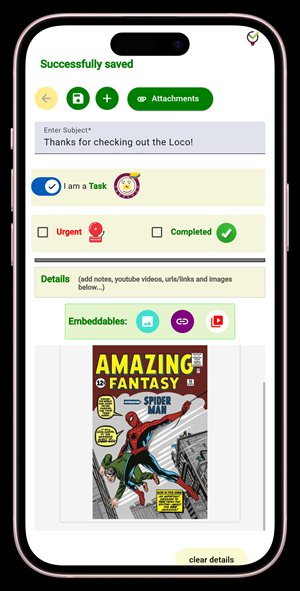
Notion Web Clipper saves webpage content directly into your Notion workspace. Free for personal use, but Notion Plus costs $8/month per user for teams.
Obsidian Web Clipper captures pages as markdown files in your vault. Obsidian is free for personal use, commercial license costs $50/year per user.
Apple Notes and Google Keep let you paste URLs that auto-expand into preview cards. Quick for mobile but previews often break when the source page changes.
Copy-Paste and Manual Methods
Sometimes the old-school approach works best, especially when you only need specific parts of a webpage.
Select and copy text into any notes app. You control exactly what gets saved, but you lose links, formatting, and context. Works great for quotes and key facts.
Email yourself the link with a note about why you saved it. Your email becomes a searchable archive, but managing hundreds of saved links gets messy fast.
Copy URL to clipboard manager apps like CopyClip (Mac) or ClipClip (Windows). Better than losing links in browser history, but still just saves URLs, not content.
Print to PDF with notes — many browsers let you add comments when printing to PDF. Preserves content forever and adds your own context, but creates large files that are hard to organize.
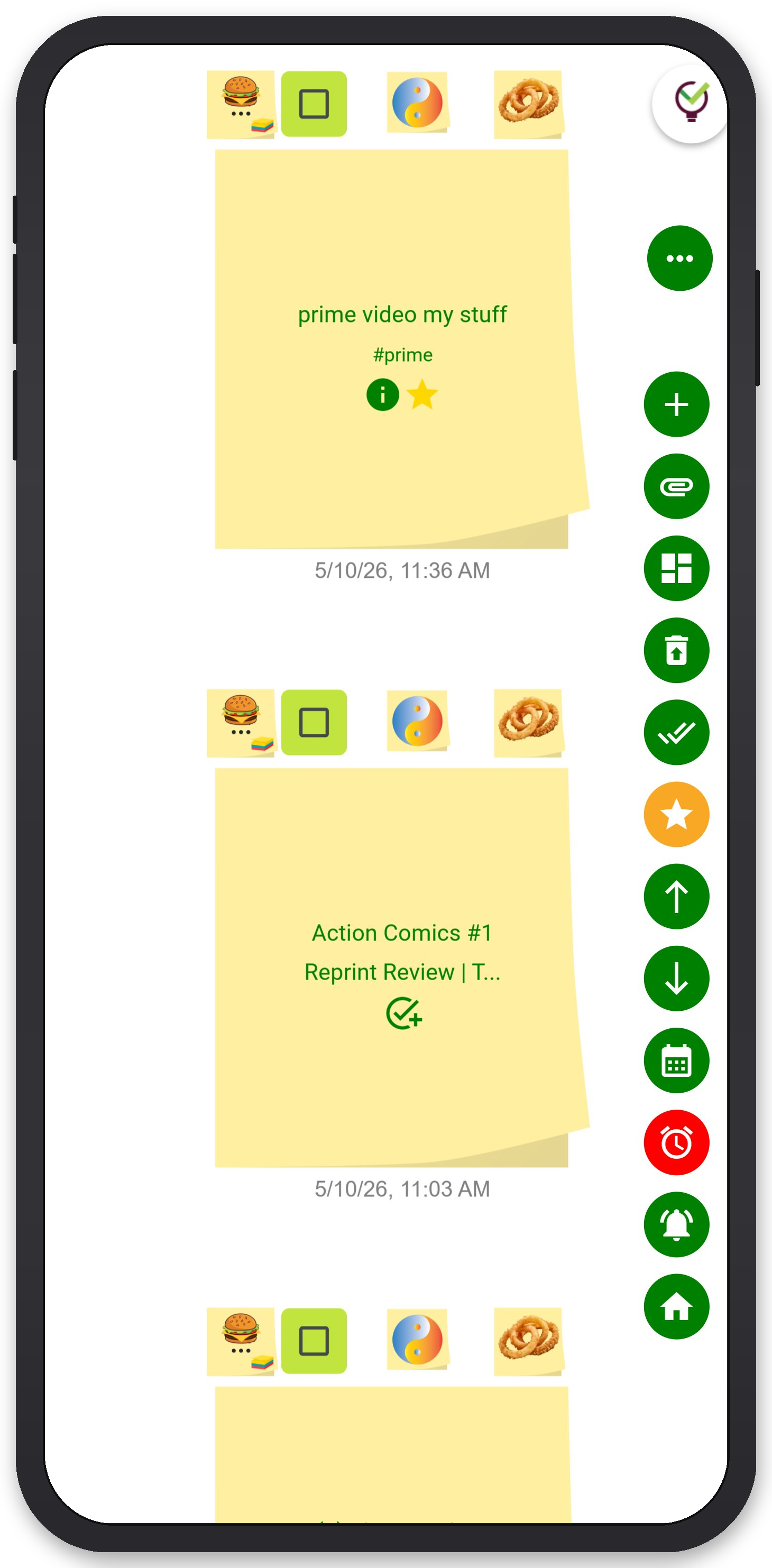
The Honest Comparison
| Feature | TaskLoco | Browser Bookmarks |
|---|---|---|
| One-click capture | Chrome extension saves full content instantly | Bookmarks only save links, not content |
| Offline access | Saved content works without internet (Lite app only) FREE | Bookmarks require internet to load pages |
| Full-text search | Search across all captured content | Browser search only finds bookmark titles |
| Content preservation | Saves actual text and images permanently | Content lost if original page changes |
| Organization | Notes, tags, and categories | Basic bookmark folders only |
| Mobile access | Native iPhone and Android apps FREE | Bookmark sync across devices |
| File attachments | 10GB storage for PDFs, images, documents | No file storage |
| Setup time | Install extension once, then one-click saves | No setup needed — bookmarks built into browser |
| Cost | $9.99/month per person (currently $4.99/month per person for first 500 charter members with code CHARTER50) | Completely free |
| Cross-device sync | Syncs across web, iPhone, Android automatically | Browser bookmark sync only |
| Privacy | Your data stays private, no tracking FREE | Browser data shared with provider |
| Sharing | Share captured content with team members | Can share bookmark links only |
| Reminders | Set reminders to revisit saved content | No reminder system |
| Content editing | Add your own notes and comments to saved pages | Cannot edit or annotate bookmarks |
| Bulk operations | Select and organize multiple captures at once | Limited bookmark management tools |
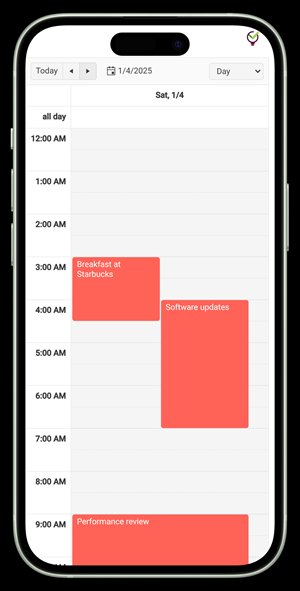
| Calendar integration | View saved content by date in calendar view | No calendar or timeline view |
Who Should Use Each
Use TaskLoco if…
- You want to preserve actual webpage content, not just links
- You need to search across everything you've saved
- You want one-click capture without switching between apps
- You need offline access to saved content
- You want to add your own notes and reminders to saved pages
Use Browser Bookmarks if…
- You only need to remember URLs, not preserve content
- You want completely free with no ongoing costs
- You rarely revisit saved links and don't need organization
- You already use browser bookmarks and they work for your needs
Lock In 50% Off — Forever
7-day free trial. No charge until day 8. CHARTER50 auto-applies at checkout.
🔒 Lock In My Charter SpotSee TaskLoco in Action
Frequently Asked Questions
What's the fastest way to capture a webpage?
Browser extensions like TaskLoco's Chrome extension offer one-click capture. Install once, then click the extension icon to save any webpage instantly with full content preserved.
Do browser bookmarks save webpage content?
No. Bookmarks only save the URL link. If the original webpage changes or gets deleted, your bookmark becomes useless. To preserve content, use a capture tool or save as PDF.
How much does TaskLoco cost for webpage capture?
$9.99/month per person (currently $4.99/month per person for first 500 charter members with code CHARTER50)
Can I capture webpages on mobile?
Yes. TaskLoco has native iPhone and Android apps that sync with the Chrome extension. You can capture pages on desktop and access them on mobile, or use mobile share sheets to save content directly from any app.
What happens if a webpage I saved gets deleted?
With TaskLoco, your saved content stays accessible forever because it captures the actual text and images, not just the link. Browser bookmarks break when pages get deleted, but captured content remains intact.
Can I search through captured webpage content?
Yes with TaskLoco Premium — it includes full-text search across all your captured content. Browser bookmarks only let you search bookmark titles, not the actual webpage content.
Is there a free way to capture webpages?
TaskLoco Lite Plus+ includes the Chrome extension for free with up to 30 captured pages. For unlimited captures, you need Premium. Browser PDF export is also free but creates large files that are hard to organize.
Born in Brooklyn. Powered by AWS. Your data stays yours.
TaskLoco is available on iPhone, Android, Chrome, and every web browser.