Every project starts the same way: you open a tab to read something useful, then another, then another. By the time you actually need those pages, half the tabs are gone and your bookmarks folder is a graveyard of unlabeled links you saved six months ago. The research is technically there — it's just nowhere near usable.
Keeping project links and notes together is not a storage problem, it's a workflow problem. The gap between finding something and actually saving it with enough context to remember why you saved it is where most research dies. What you need is a system that collapses that gap to almost nothing — something you can trigger in one second without leaving the page you're on.
The Real Problem: Friction Between Finding and Saving
Most people already have a place they intend to save things — a bookmarks folder, a notes app, a shared doc. The system breaks down not because the destination is wrong but because getting things there requires too many steps. You find a great article, think "I'll save that properly later," and later never comes.
The friction is usually the same few things: you have to switch out of the browser, paste a URL, give the item a name, put it in the right folder, maybe add a note. That's five decisions for every single link. Multiply that across a research-heavy project and the system collapses under its own weight.
A reliable collection system needs to satisfy three conditions: it has to work where you already are (the browser), it has to be fast enough that you actually use it, and it has to store items in a way that's easy to scan later. A text list of raw URLs fails the third condition. Browser bookmarks fail all three the moment a project grows beyond a handful of pages.
A Practical Method: Build a Visual Link Wall for Your Project
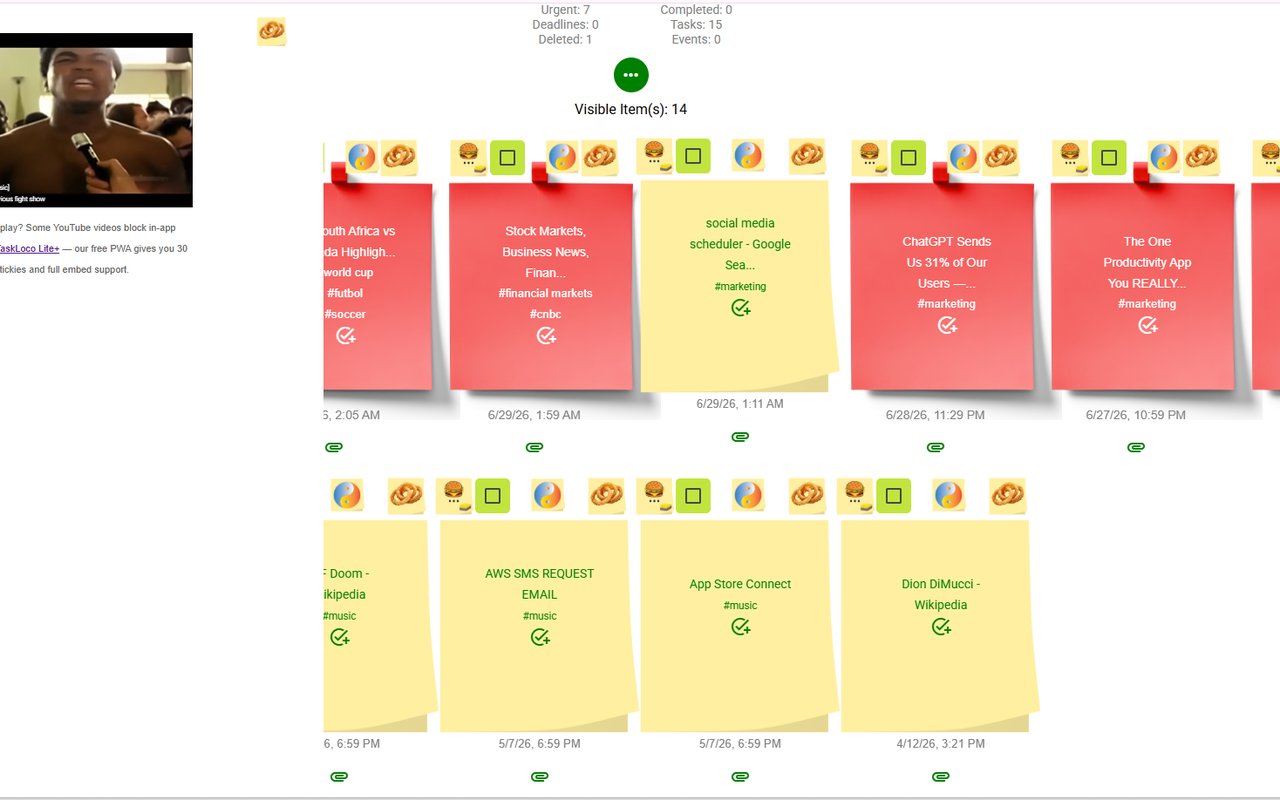
The most effective approach researchers, writers, and students use is to treat saved links as visual objects, not entries in a list. When each saved item shows a title, a URL, and any note you attached to it, you can scan your collection at a glance instead of clicking every item to remember what it was.
Here's how to set this up without any particular tool:
- Create one dedicated place per project — a board, a folder, a wall — not a general "reading list." Mixing projects in one place is just a bigger pile.
- Save items the moment you find them, not at the end of a session. Context decays fast; a link saved at 11pm with no note is nearly useless by morning.
- Write one sentence when you save — why does this link matter to this project? That sentence is worth more than the link itself when you return to the material a week later.
- Use tags or labels consistently — even just two or three per project ("source", "background", "to-read") makes a collection searchable instead of just chronological.
- Keep YouTube and video links with your other sources — videos are research too, and they should live in the same place as your articles, not scattered across browser history.
The goal is a collection you can hand to yourself two weeks from now and immediately understand. Visual layout, saved titles, and short notes are what make that possible.
Why Browser Bookmarks Fail for Project Research
Browser bookmarks were built for personal favorites — sites you return to regularly, like tools or homepages. They were not built for project research, and it shows. A few honest limitations worth knowing:
- No visual layout. Every bookmark looks identical: a favicon and a title. There's no way to see at a glance what a collection of bookmarks is about without clicking through each one.
- No inline notes. You can't attach a reason or a thought to a bookmark without using a separate app, which defeats the purpose.
- Folder management becomes a project of its own. Once you have more than twenty bookmarks, organizing them takes as long as doing the actual work.
- No sync between browsers or devices that just works. If you bookmark something on Chrome at your desk, it's not reliably on your phone unless you've set sync up correctly and it's cooperating that day.
- YouTube videos are just links. A bookmarked YouTube page is a dead URL. You still have to navigate to it, open YouTube, find the video, and start watching.
None of this means bookmarks are useless — for a handful of personal favorites, they're fine. For a living research collection tied to a project with a deadline, they create more work than they save.
One Practical Way to Pull This Together: The Sticky Note Web Clipper
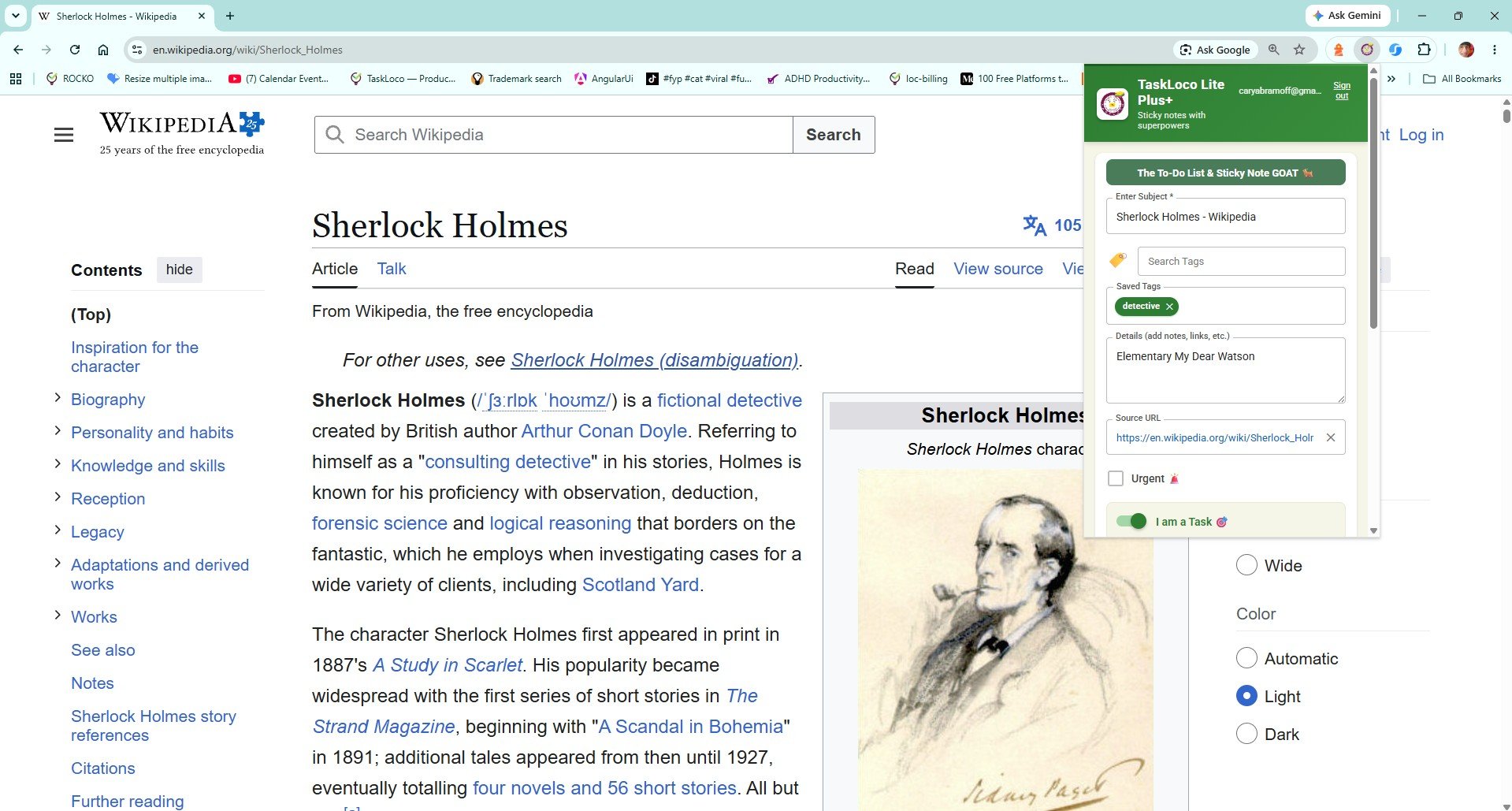
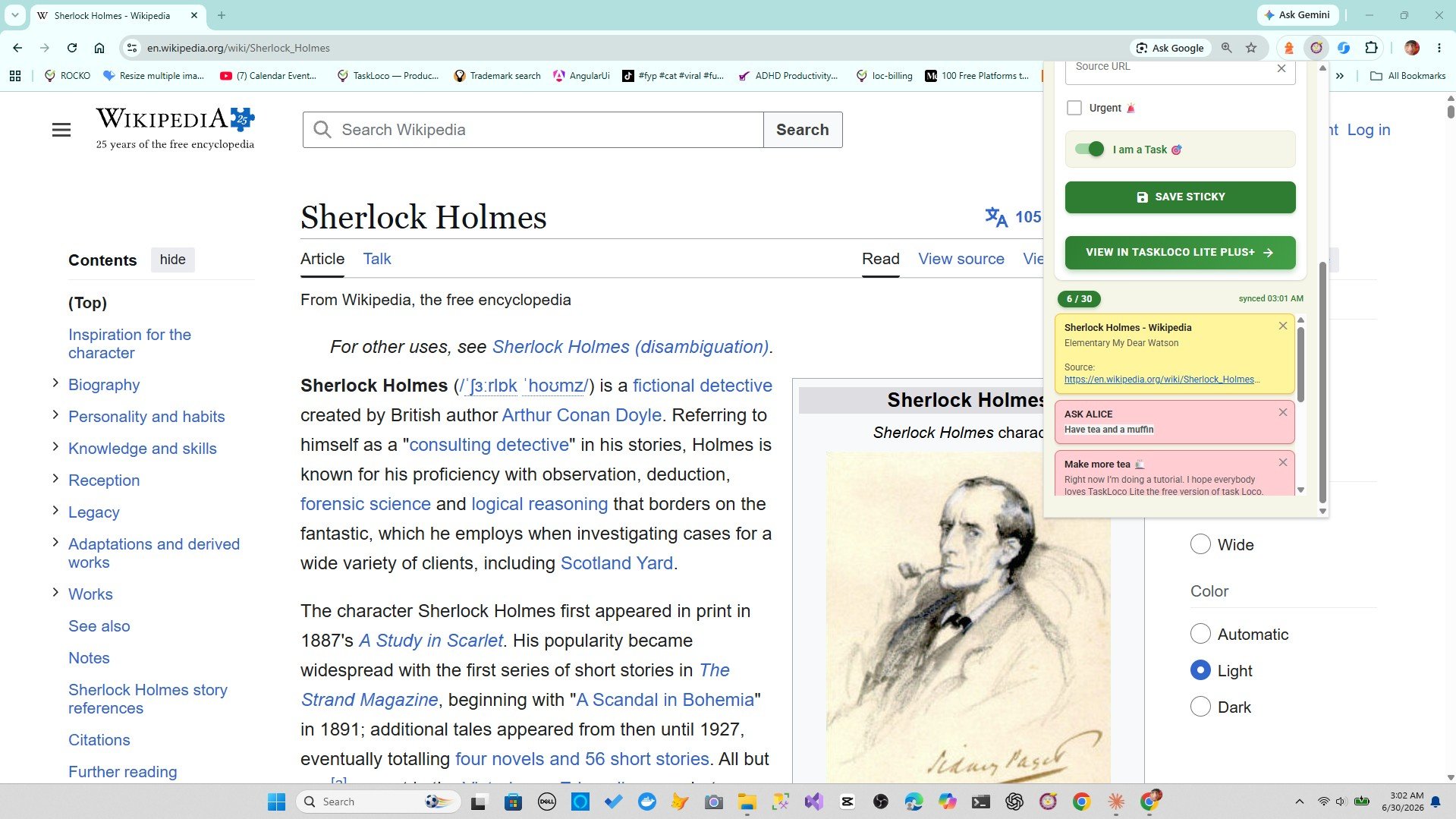
If you want to apply the visual, one-note-per-item method described above without building a manual system, the Sticky Note Web Clipper is worth a look. It's a free Chrome extension that turns any page you're viewing into a sticky note in one click — the title and URL are filled in automatically, so there's nothing to type unless you want to add a note.
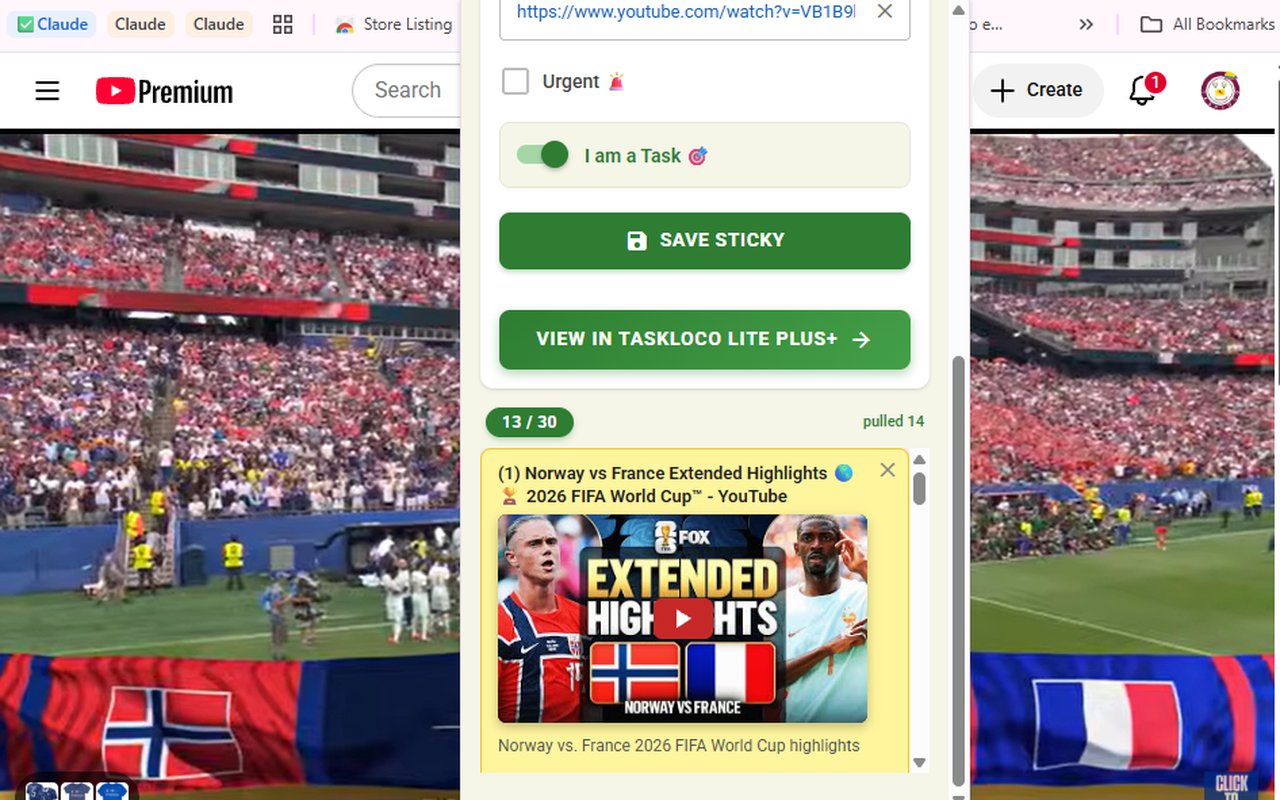
The workflow is simple: you find something useful while browsing, click the toolbar icon, and it's saved as a visual note. Articles, news pages, research sources, and YouTube videos all clip the same way. YouTube videos embed directly inside the note and play there — you don't lose your place or have to hunt for the video again.
Tags and search mean you can find what you saved by topic rather than scrolling through everything in order. And because notes are visual rather than list-based, scanning your project wall actually tells you something about the shape of your research — what's covered, what's missing, where the gaps are.
The extension is free to install from the Chrome Web Store. Sign in with Google, and your first clipped note is saved in under ten seconds. If you're already sold on the method above, this is the fastest way to start using it today — add it to Chrome and try it on the next page you'd normally bookmark and forget.
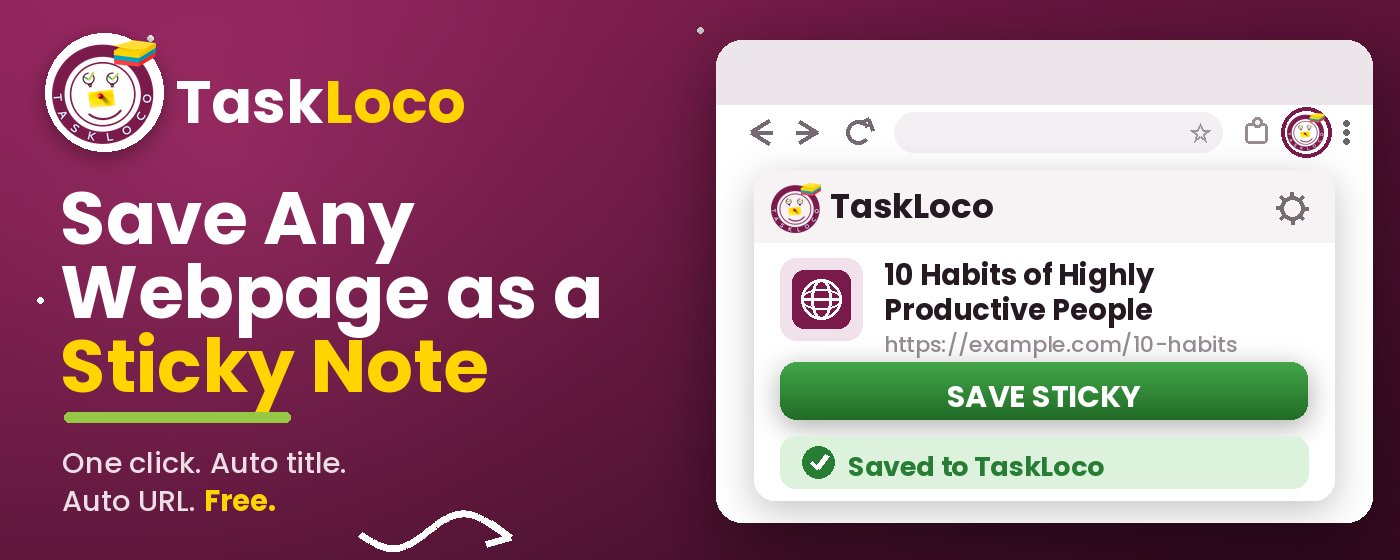
The Sticky Note Web Clipper is free. Install it from the Chrome Web Store, sign in with Google, and every page you clip becomes a sticky note you can find later.
Your clipped notes sync to TaskLoco across Chrome, desktop, iPhone, and Android — also free to start. No credit card to begin.
Get the Free Clipper
Sticky Note Web Clipper
- Free Chrome extension
- One-click save — any page, article, or video
- Title & URL auto-filled
- Tags & search
- Free forever
Synced to TaskLoco
- Sign in free with Google
- Your wall on Chrome, desktop, iPhone, Android
- YouTube videos embed & play in notes
- Visual sticky-note wall
- Free to start
Add It to Chrome — Free
One click saves any page, article, or YouTube video as a sticky note. Title and URL auto-filled.
Add to Chrome — FreeSee TaskLoco in Action
Frequently Asked Questions
What's the best way to collect links for a research project?
Save each link as a named, visual item — not a raw URL in a list — so you can scan what you've collected at a glance. The Sticky Note Web Clipper does this in one click: it saves the current page as a sticky note with the title and URL auto-filled, keeping all your project links in one visual workspace.
How do I keep project notes and links together without switching between apps?
Install the Sticky Note Web Clipper in Chrome. Every time you find something relevant while browsing, click the toolbar icon and it's saved as a note — title, URL, and any comment you add — without leaving the browser. Everything lands in one place automatically.
Can I save YouTube videos along with my other project links?
Yes. The Sticky Note Web Clipper saves YouTube pages as sticky notes just like any other URL, but the video embeds inside the note and plays directly there. Your video sources live alongside your articles and pages in the same project collection.
Why don't browser bookmarks work well for project research?
Bookmarks store links but no context — every saved item looks identical, there's no space for a note explaining why you saved it, and the folder system becomes unwieldy as a project grows. They were designed for personal favorites you visit often, not for a living research collection you need to scan and search.
Is the Sticky Note Web Clipper free?
Yes — the extension is completely free. Install it from the Chrome Web Store, sign in with Google, and start clipping. TaskLoco, where your saved notes live, also has a free tier.
Will my saved links be available on my phone, not just my computer?
Yes. Notes saved with the Sticky Note Web Clipper sync to TaskLoco, which is available on iPhone, Android, and any browser. Clip something on your laptop and it's there when you open TaskLoco on your phone.
How do I add context to a saved link so I remember why I saved it?
When you clip a page with the Sticky Note Web Clipper, you can add a note right inside the sticky note before saving — one sentence explaining why it matters to your project. That note travels with the link so you always know the reason it's in your collection.
Born in Brooklyn. Powered by AWS. Your data stays yours.
TaskLoco is available on iPhone, Android, Chrome, and every web browser.