Everyone falls off. A week of bad sleep, a project that exploded, a life event that scrambled everything — and suddenly your routine, your goals, and your sense of forward motion are gone. What makes it worse is the guilt spiral: the longer you stay off track, the harder it feels to restart, because now you're not just behind — you feel like a person who can't keep commitments.
Here's the truth no productivity influencer wants to sell you: getting back on track has nothing to do with motivation or discipline. It has to do with reducing the friction of the first step until it becomes impossible to refuse. This guide gives you the real method — the psychology behind why we stall, a concrete reset process, and a sustainable way to stay moving once you've restarted.
Why You Fell Off — And Why That's Not the Real Problem
Before you can get back on track, it helps to understand why the track disappears in the first place. Most people attribute it to laziness or lack of willpower. Both explanations are wrong, and believing them makes recovery harder.
The real culprits are almost always one of three things: an all-or-nothing mindset, an overloaded system, or a goal that no longer fits your actual life. The all-or-nothing mindset is the most common — it's the belief that if you missed Monday's workout, the whole week is ruined, so you might as well start fresh on the first of next month. That logic compounds. Before long, you're waiting for January.
An overloaded system fails differently. You built a perfect routine in a perfect week, then life happened — a deadline, an illness, a disruption — and the whole system collapsed because it had no slack. Systems with no slack aren't resilient; they're fragile. And fragile systems stay broken.
Finally, some goals fall apart because they were never really yours. You set them because they seemed like the right thing to want, not because they connected to anything you actually care about. If you find yourself repeatedly falling off the same goal, it's worth asking: do I actually want this outcome, or did I want to be the kind of person who wants it?
The Reset Process: A Step-by-Step Method That Works
This is not a motivational framework. It is a practical sequence you can start today, in the next thirty minutes, with no special tools required.
Step 1: Do a brain dump. Get everything out of your head and onto paper or a screen. Every task, every obligation, every thing you told yourself you'd do. Don't organize it yet — just empty the queue. The goal is to stop holding it all in working memory, which is exhausting and distorting. Most people discover their list is shorter than the anxiety made it feel.
Step 2: Triage ruthlessly. Go through the list and mark each item one of three ways: still matters and I'm doing it, still matters but I'm deferring it consciously, or no longer matters — off the list. That third category is more powerful than people expect. Deleting an item you were never going to do anyway is a genuine act of progress.
Step 3: Identify your one next action. Not your five priorities. Not your weekly plan. Just the single most important thing you could do in the next two hours. Write it down. Make it specific and completable — not "work on the report" but "write the introduction section of the report."
Step 4: Do the one thing. Before you reorganize your system, before you find the perfect app, before you reset your calendar — do the one thing. Completion creates momentum. Reorganization does not.
Step 5: Rebuild the minimum viable routine. Once you've done the one thing, don't immediately try to restore your full system. Build the smallest version of your routine that keeps you moving: one anchor habit per day, one short planning session per week, one honest weekly review. Start small and add back gradually.
How to Stay on Track Once You've Restarted
The restart is actually the easy part — the hard part is not falling off again in two weeks. Most people treat staying on track as a willpower problem. It isn't. It's a design problem. The question is: how do you design your environment and your system so that following through is the path of least resistance?
Remove decisions from your routine. Every time you have to decide whether to do something, you create an opportunity to opt out. Decisions take energy. The more you pre-decide — same time, same place, same trigger — the less energy the habit costs and the more likely it sticks.
Track completion, not effort. Don't grade yourself on how hard you tried. Mark things done or not done. This sounds harsh, but it builds accurate self-knowledge. You stop telling yourself a story about how much you're doing and start seeing clearly what's actually getting finished. That data is useful. The story is not.
Build in a weekly reset. Every week, take fifteen minutes to review what happened, clear out completed items, and identify the three most important things for the coming week. This is the single highest-leverage habit for staying on track over time. It catches drift early, before it becomes a full collapse.
Create a "catch-all" capture system. One of the biggest reasons people fall off is that new things land in their head and have nowhere to go. Without a trusted capture system, everything lives in your brain, competing for attention. The moment you can trust that captured items won't be lost, your brain stops trying to hold them — and you free up the cognitive space to actually focus.
One Practical Way to Apply This: TaskLoco
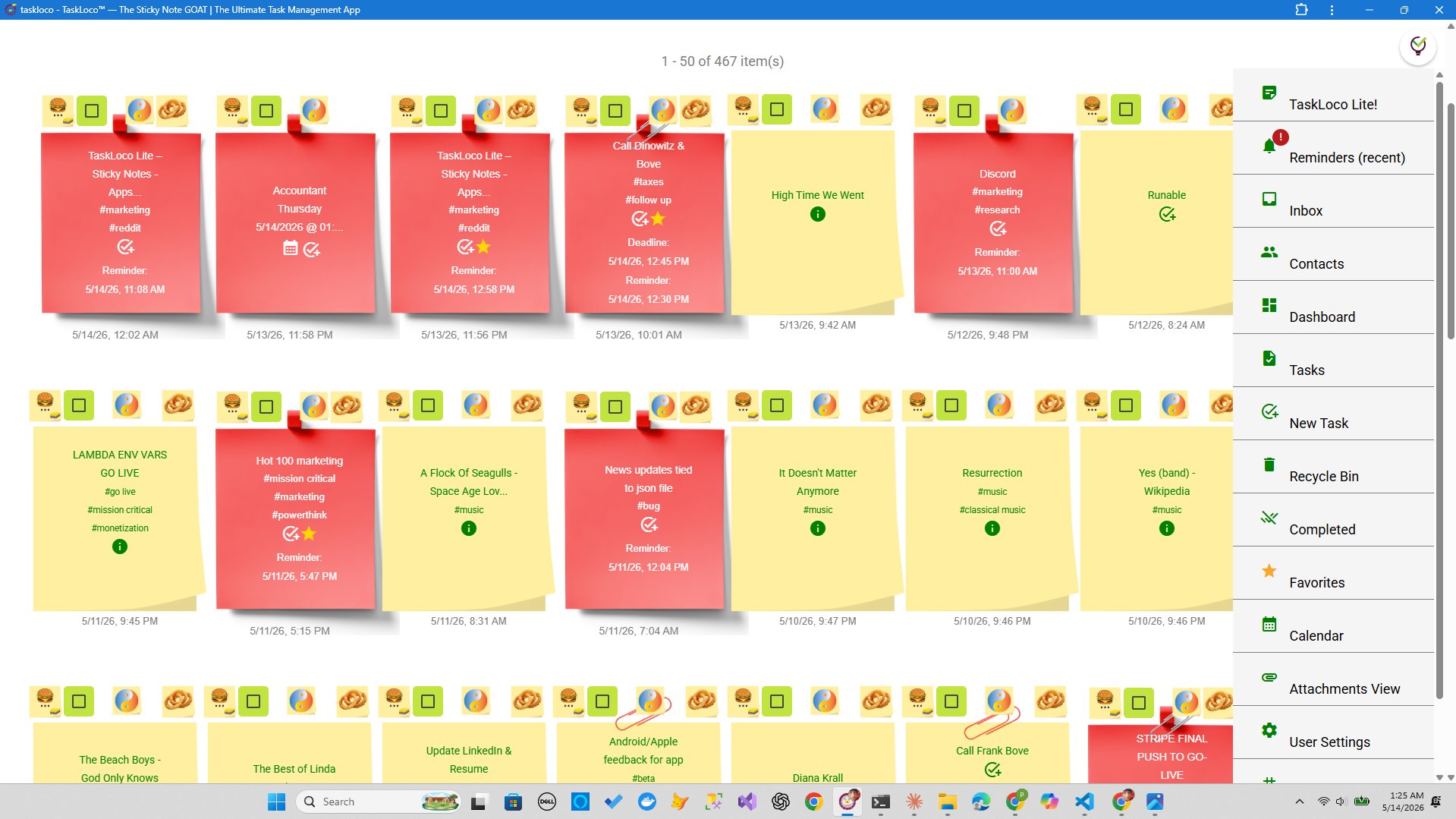
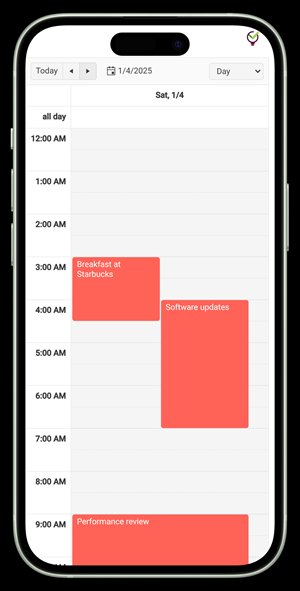
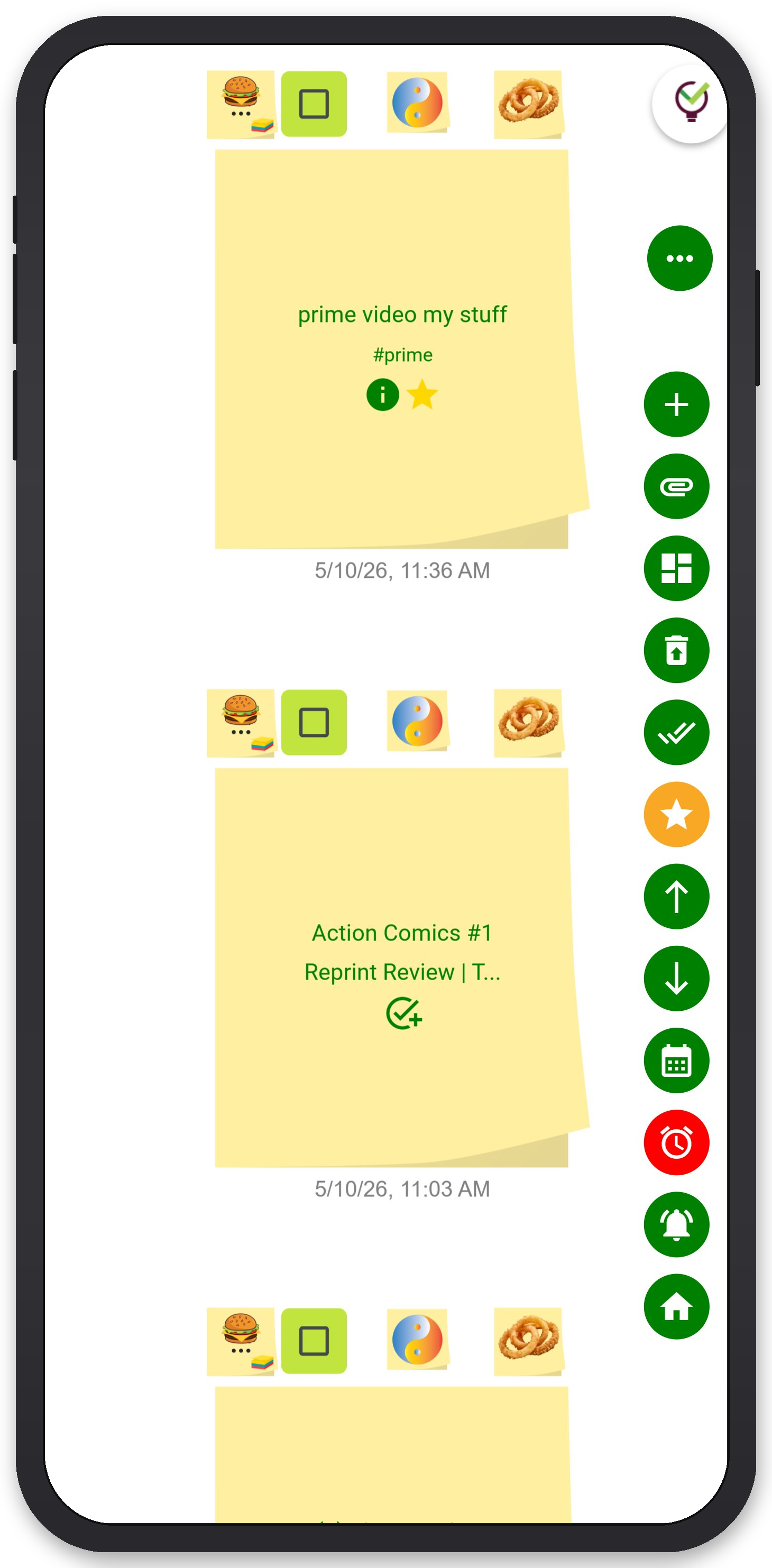
If you want a capture-and-organize system that gets out of your way, TaskLoco is worth a look. It's built around the sticky note model — the same physical system people have used on whiteboards for decades — but digital, so your notes follow you across devices and connect to reminders and a calendar view.
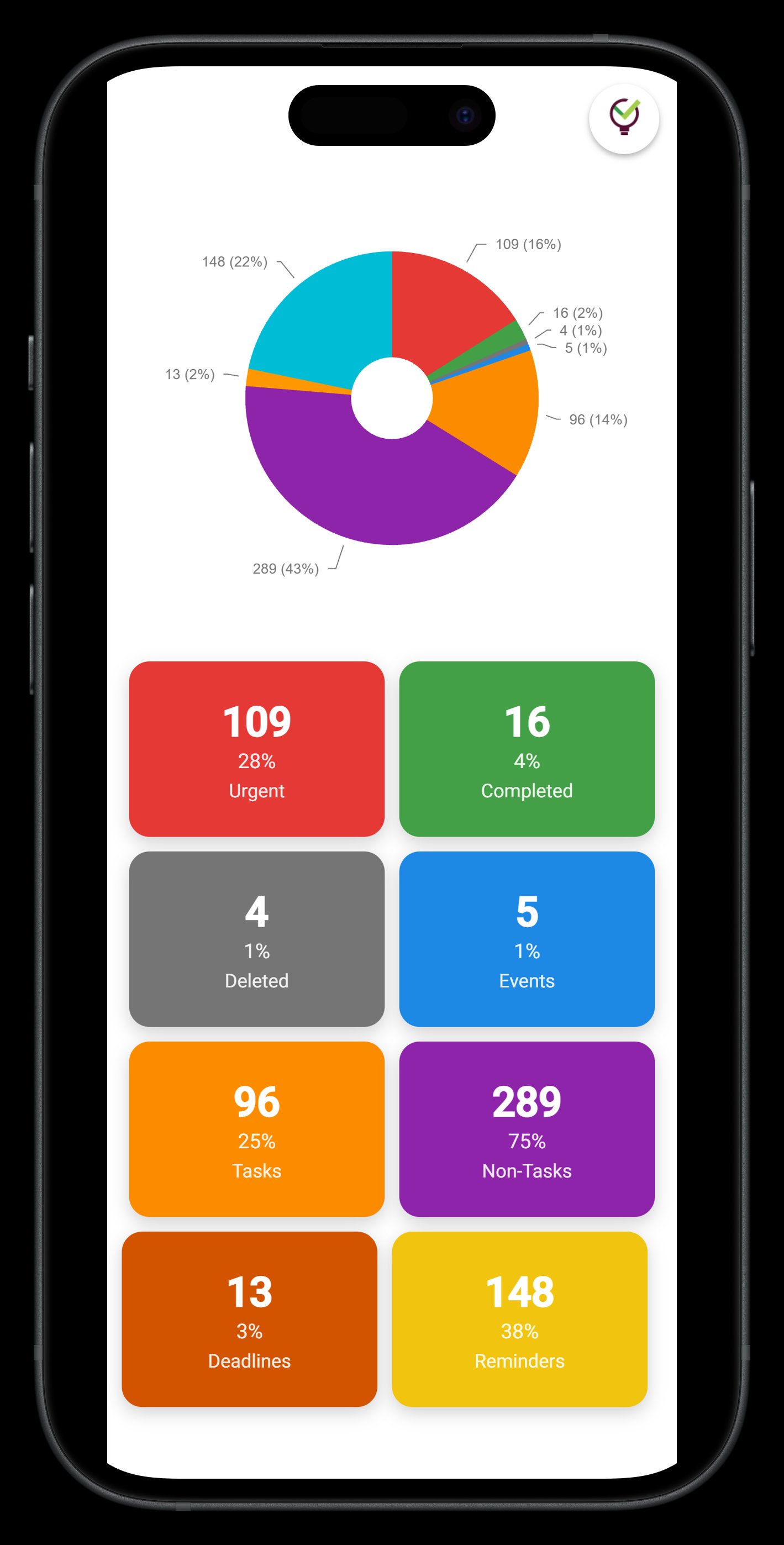
The brain dump step is where TaskLoco earns its place. Open a new note for every item on your brain dump, drop them onto the wall view, and start triaging by moving and grouping. You can see everything at once, which is exactly what triage requires. Notes that still matter stay; ones that don't get deleted with no ceremony.
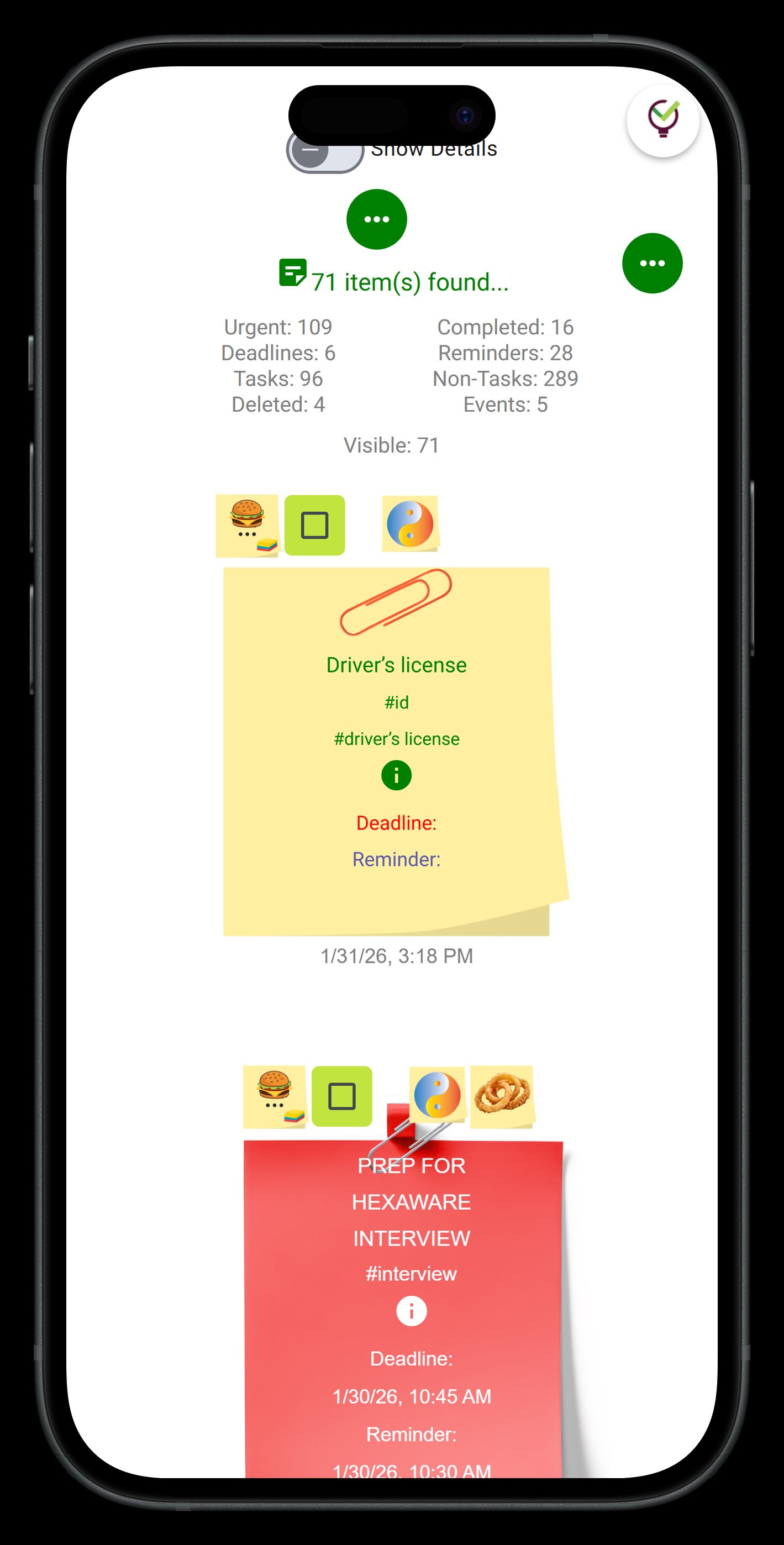
For the "one next action" step, TaskLoco's reminder system keeps that single task front of mind. Reminders are delivered as push notifications directly to your phone and computer — with a deep link back to the exact note, so you land right where the work is, not in an inbox hunting for context. Optional email and SMS notifications are available if you want additional channels.
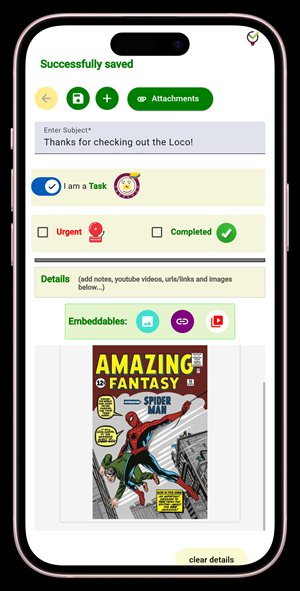
The weekly reset integrates naturally into the wall view: you can see completed and open notes side by side, which makes the fifteen-minute weekly review fast and honest. File attachments (10GB included with Premium) mean your reference material lives next to the task, not scattered across three other apps.
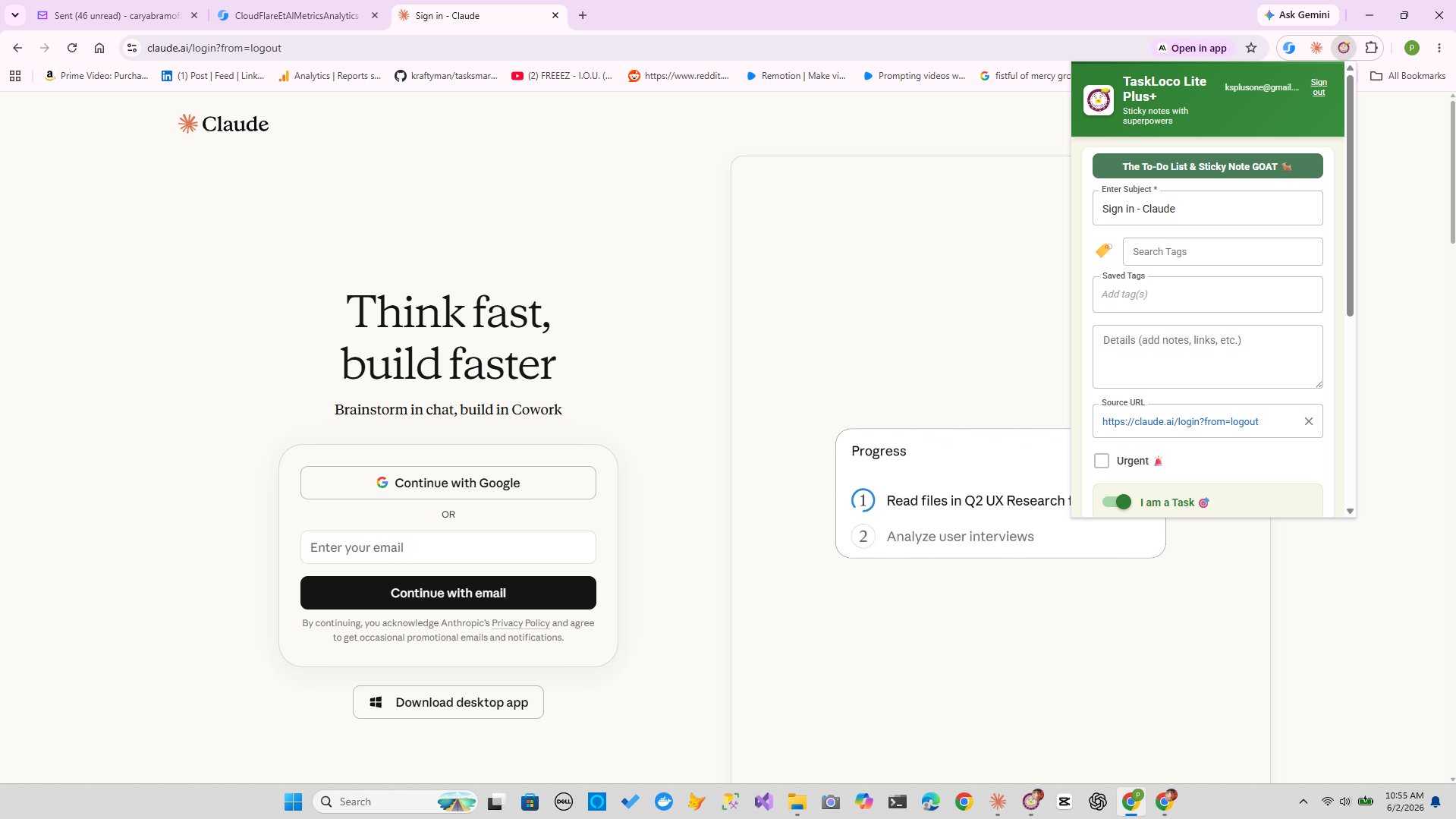
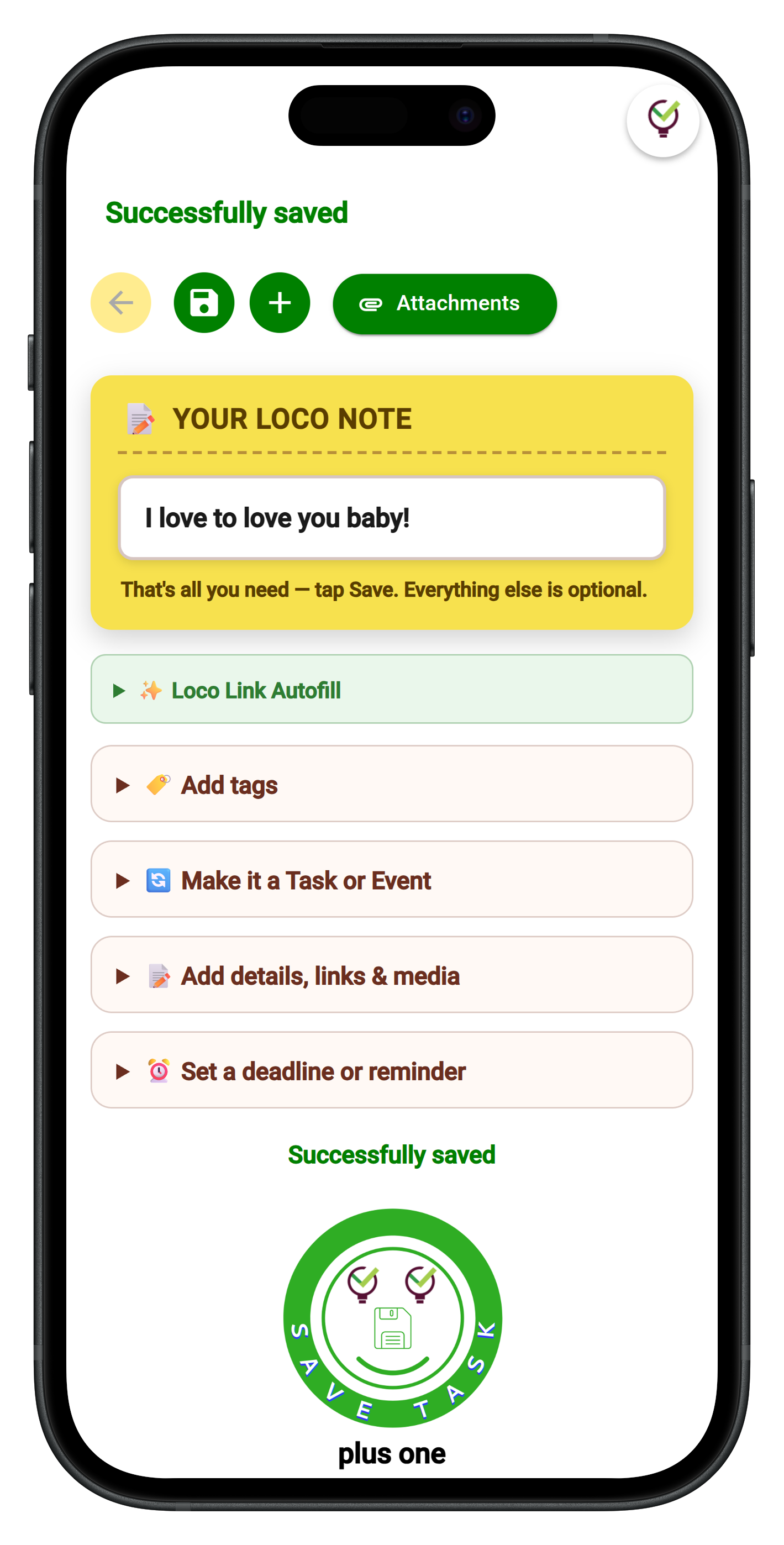
TaskLoco Lite is a free native app for iPhone and Android — completely anonymous, no sign-in required, up to 20 notes stored on your device. It's a solid no-commitment starting point for the brain dump process. TaskLoco Lite Plus+ is free on the web and Chrome extension — up to 30 notes, synced across your devices, with one-click webpage capture. If your needs grow, Premium adds unlimited notes, reminders, calendar, team sharing, and file storage.
TaskLoco Premium is regularly $9.99/month per person. Right now, charter members can lock in 50% off the regular price — forever. That means $4.99/month per person today. And if our price ever goes up, you still pay half. Always.
Code CHARTER50 auto-applies at checkout. First 500 spots only — once they're gone, this offer is gone permanently. Act fast while spots last.
Every Premium subscription includes unlimited notes, 10GB file storage, reminders, calendar, and team sharing. Each team member requires a separate subscription. 7-day free trial — no charge until day 8. Cancel anytime.
Free Options: TaskLoco
TaskLoco Lite
- Native iPhone & Android app
- Completely anonymous — no sign-in
- Data stays on your device
- Up to 20 notes
- Free forever
TaskLoco Lite Plus+
- Web app + Chrome extension
- Sign in with Google
- Wall syncs across all devices
- Up to 30 notes
- Free forever
Lock In 50% Off — Forever
7-day free trial. No charge until day 8. CHARTER50 auto-applies at checkout.
🔒 Lock In My Charter SpotSee TaskLoco in Action
Frequently Asked Questions
How do I get back on track when I feel overwhelmed?
Start with a brain dump: get every open task and obligation out of your head and onto paper or a screen. Don't organize yet — just empty the queue. Then pick the single most important completable action and do it before you touch anything else. Overwhelm is almost always caused by holding too much in working memory. Externalizing the list reduces the cognitive load immediately.
How long does it take to get back on track?
You can begin recovering in one session — roughly thirty minutes to an hour for a proper brain dump and triage. Rebuilding a reliable routine typically takes one to three weeks of consistent small actions. The mistake most people make is trying to restore everything at once. A minimum viable routine — one anchor habit, one brief planning session per week — will get you further faster than an ambitious system you can't sustain.
Why do I keep falling off track even when I start strong?
Usually because the system has no slack. When your routine only works under ideal conditions, any disruption collapses it. Build a version of your routine that can absorb a bad day — something so small you can do it even when tired, sick, or busy. Resilient systems are intentionally underpowered at first. You add complexity only after the core habit is truly solid.
Should I start fresh or pick up where I left off?
Depends on how long you've been off track. If it's been a few days, pick up where you left off — starting fresh burns more energy on setup than it saves. If it's been weeks, a brief reset makes sense: review what's still relevant, delete what isn't, and identify the one next action. Either way, the priority is completing something today, not designing the perfect restart.
What's the best way to organize tasks when getting back on track?
Don't over-organize at the start. The goal of the reset phase is action, not structure. Do the brain dump, triage the list into "still doing," "deferring," and "deleting," and identify one next action. Once you've completed that first action, you can build a light organizational structure — grouping related tasks, setting a few key reminders, scheduling a weekly review. Complexity comes after momentum, not before it.
How do I stop losing track of tasks I capture?
You need a single trusted capture location — one place where everything goes. The moment you have two or three capture systems (a notes app, a to-do app, sticky notes on the desk, emails to yourself), you stop trusting any of them, and items get lost. Pick one place, use it exclusively for at least two weeks, and do a weekly review to process what's there. The system only works if you trust it, and you only trust it if it's the only one.
Does TaskLoco help with getting back on track?
TaskLoco is well-suited to the brain dump and triage steps because the wall view lets you create a note for each open item and see everything at once. Push notification reminders deep-link back to the original note, so when a reminder fires you land directly on the relevant task — no hunting required. The free Lite app (iPhone and Android, no sign-in needed) handles up to 20 notes on your device as a no-commitment starting point. Lite Plus+ (free, web and Chrome extension) syncs up to 30 notes across your devices. Premium adds unlimited notes, reminders, calendar, file attachments, and team sharing. $9.99/month per person (currently $4.99/month per person for first 500 charter members with code CHARTER50)
Born in Brooklyn. Powered by AWS. Your data stays yours.
TaskLoco is available on iPhone, Android, Chrome, and every web browser.