You remember the feeling: you read half an article at breakfast, meant to finish it, and now it's gone. You've checked your history, scrolled through a dozen tabs, and typed half-remembered phrases into Google. Nothing. The article existed. You just didn't save it at the right moment.
This happens to almost everyone, and the reason isn't poor memory — it's a missing habit and a missing tool. Browser history is a river; it only flows one direction. Bookmarks require you to actually bookmark things. Open tabs get closed. The real fix is capturing interesting pages at the moment you see them, with as little friction as possible, so your future self has a fighting chance.
Why You Keep Forgetting Articles (It's Not Your Fault)
The problem is structural, not personal. When you browse, your brain is in a scanning mode — absorbing headlines, skimming paragraphs, forming impressions. It isn't logging precise details like URLs or publication names. So the moment you close a tab or switch contexts, the specific location of that article dissolves into a vague feeling that you read something good about that topic once.
Browser history technically records everything, but searching it is painful. You'd need to remember when you visited the page, approximately what the title was, or which site it lived on. If you're fuzzy on all three — which you usually are with something you skimmed at 7am — history search fails you.
Open tabs feel like a solution, but they're really just deferred forgetting. Studies on tab behavior consistently find that most tabs older than a day never get revisited. You accumulate them, your browser slows down, and eventually you do a mass-close in a moment of frustration. The article goes with them.
The Real Methods That Actually Work
There are several practical approaches to this problem, and they work at different points in the workflow. The key is picking something that fits into the moment you're already in — not something that requires you to stop and organize.
- Capture immediately, organize later. The most reliable habit is saving first and worrying about categorization second. Any system that requires you to pick a folder, write a description, or decide where something goes in the moment is a system you'll skip when you're busy. Save it fast; sort it later.
- Use your browser history strategically. If you didn't save something but you know roughly when you saw it, go to
chrome://historyand scroll by date. This works best within the same day. After 48 hours, the signal-to-noise ratio drops sharply and you're scrolling through hundreds of entries. - Search your email and messaging apps. Did someone send you the article? Did you text it to yourself? A quick search in Gmail or your messaging app for a keyword you remember from the headline can surface it surprisingly fast.
- Search the topic, not the title. You probably don't remember the exact headline, but you remember the idea. Go back to the source — search Google for the topic plus a detail you remember. If you can recall even one unusual phrase from the article, put it in quotes. Google's verbatim search can pin down a specific page from a fragment.
- Check your social feeds. If you saw the article on Twitter, LinkedIn, or Reddit, go back to the feed or search for the topic on that platform. News articles tend to get reshared, so even if the original post has scrolled away, others may have shared the same piece.
These recovery methods work. But they are all reactive — you're spending time hunting for something you already consumed. The better habit is a proactive one.
The Habit That Eliminates the Problem: Capture on First Sight
Every time you find yourself thinking "I'll come back to this," that is the exact moment to save it. Not after you finish your coffee. Not when you have a spare minute. Right now, while you're looking at it.
The barrier to this habit has always been friction. If saving requires opening a new app, copying a URL, pasting it somewhere, and adding a label — you won't do it consistently. You'll do it for the articles that feel important enough in the moment, and you'll skip it for the ones that are mildly interesting, which is ironically the category you'll most regret losing.
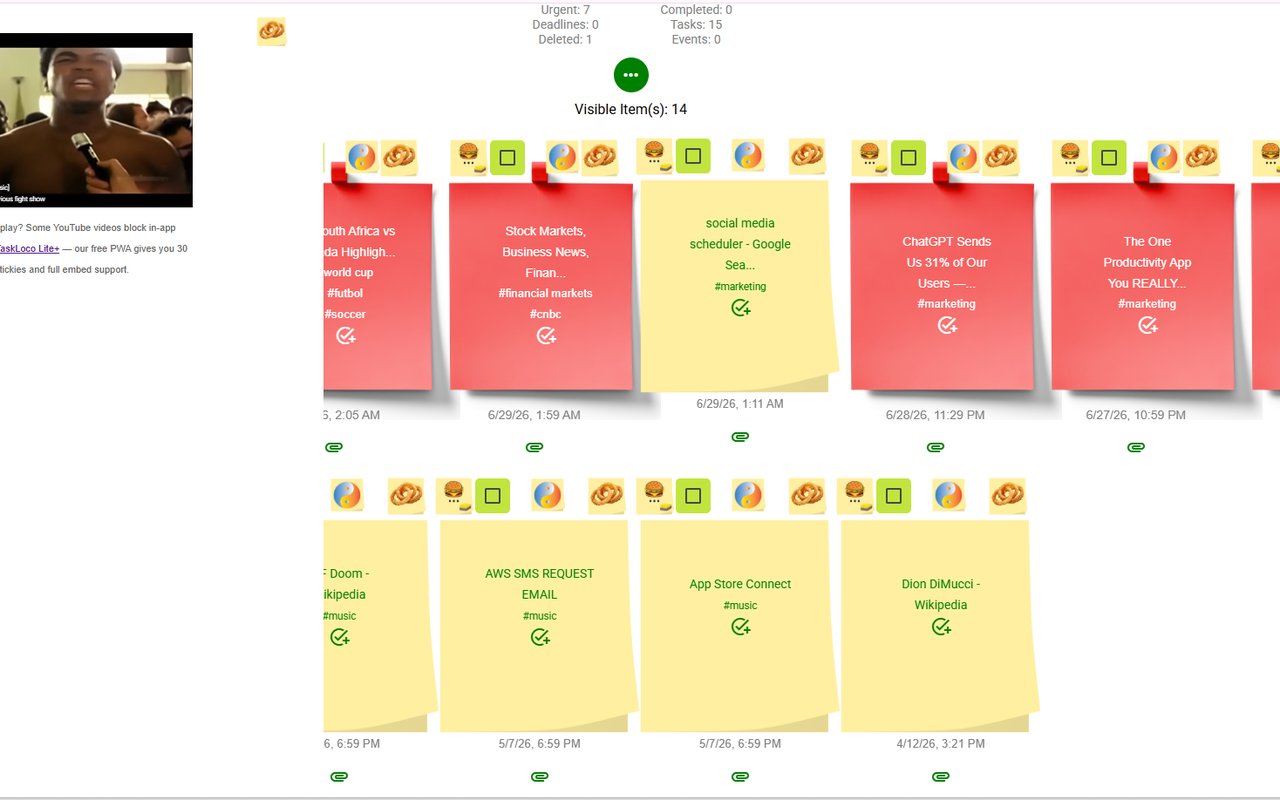
The habit works best when the tool is always present and takes one action. A toolbar icon you can click without leaving the page you're on. A saved note that shows you the title and the URL without you typing anything. A visual format so that when you come back to your saved items, you can scan them like sticky notes on a wall rather than scrolling a plain list of links.
It also helps to pair this habit with a light review. Even once a week, spending five minutes going through what you've saved keeps it from becoming a graveyard. Delete what's no longer relevant. Actually read the ones you marked for later. The capture habit only pays off if revisiting is also easy — which means your saved items need to be searchable and visual, not buried in a folder you never open.
One Practical Way to Apply This: The Sticky Note Web Clipper
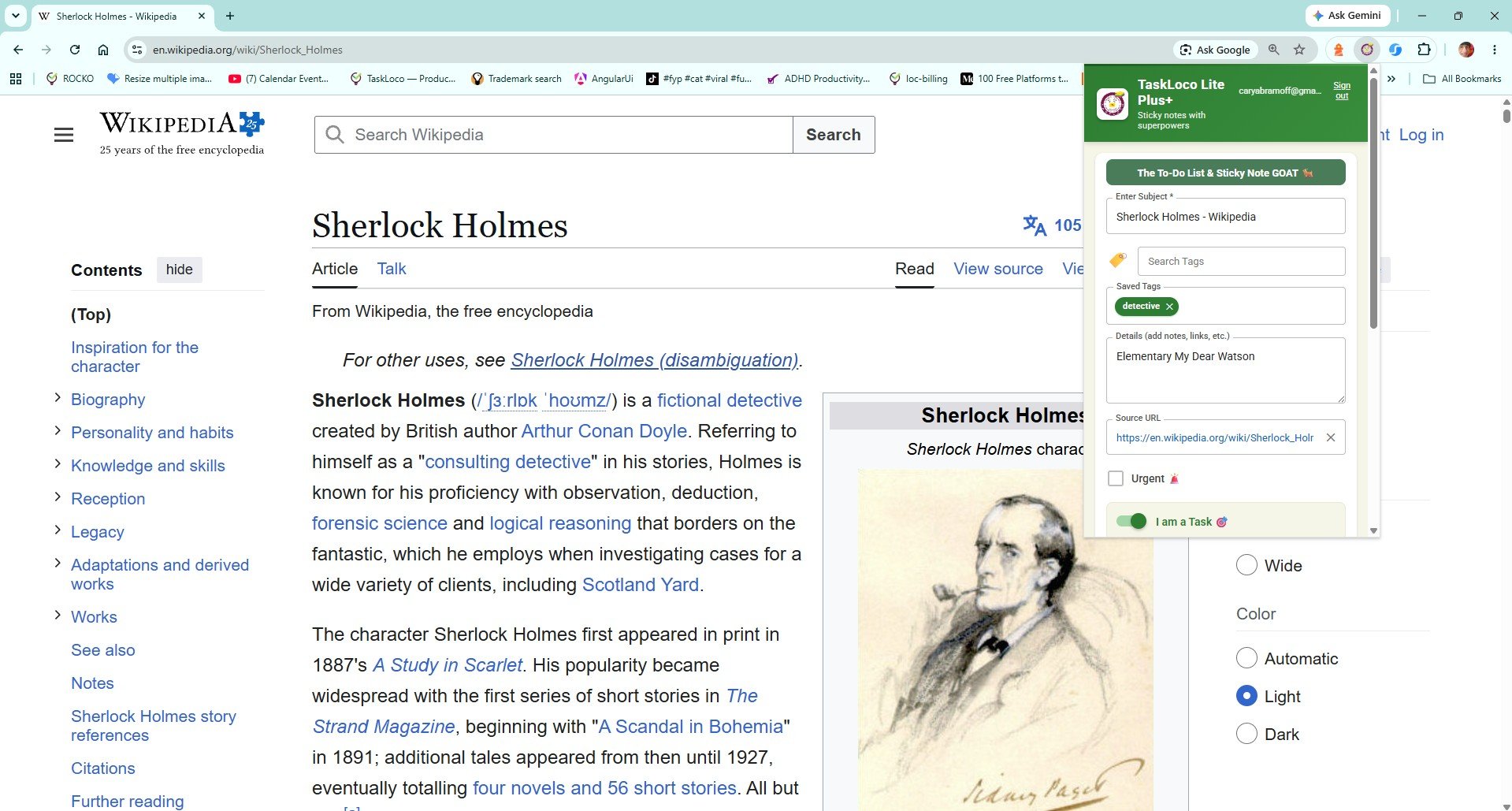
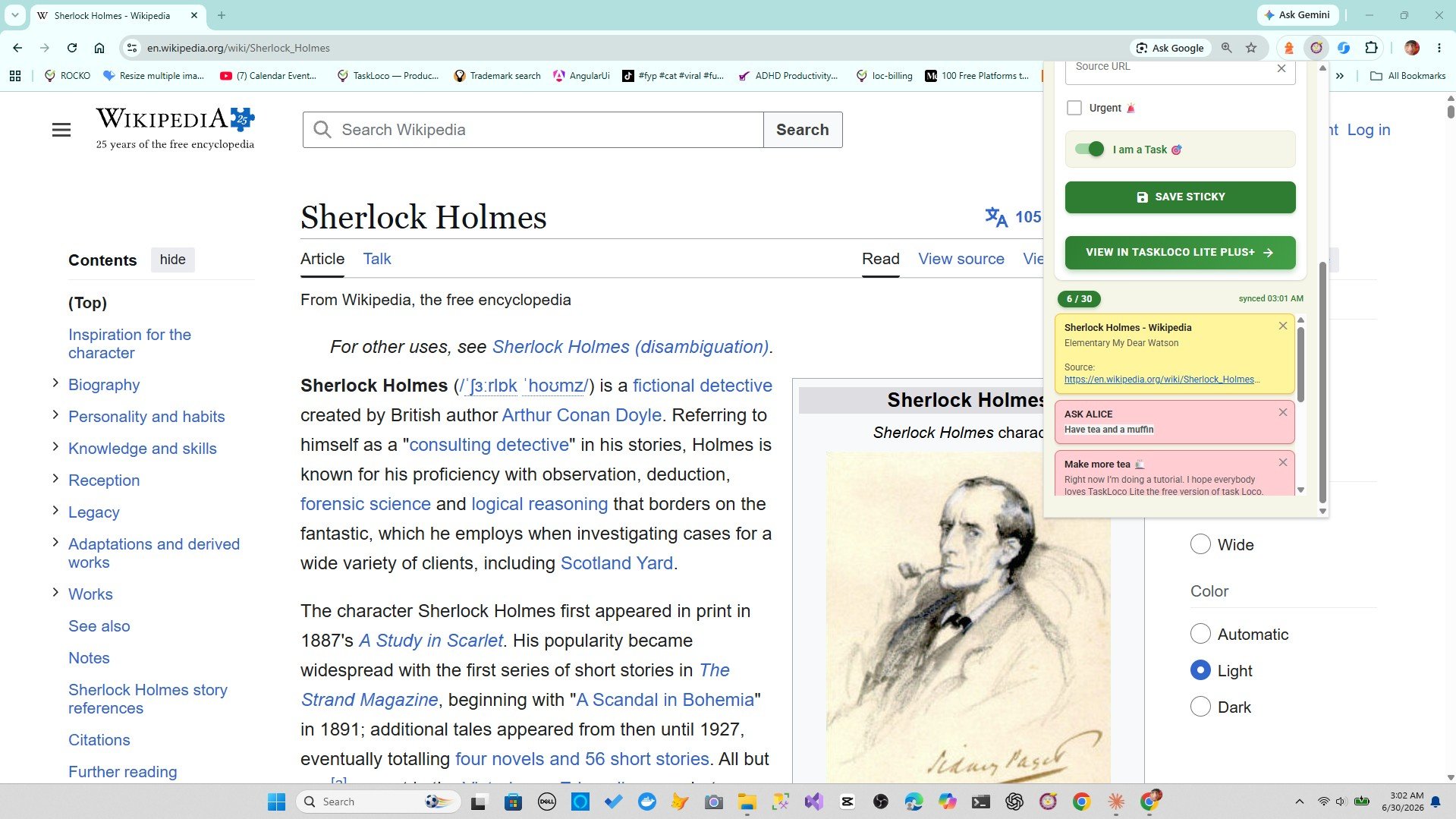
If you want to put the capture-on-first-sight habit into practice right now, the Sticky Note Web Clipper is worth installing. It's a free Chrome extension from TaskLoco that adds a single toolbar icon to your browser. When you see a page you want to keep — an article, a research source, a YouTube video — you click the icon once. The page is saved as a visual sticky note with the title and URL already filled in. You don't type anything. You don't pick a folder. You just click and move on.
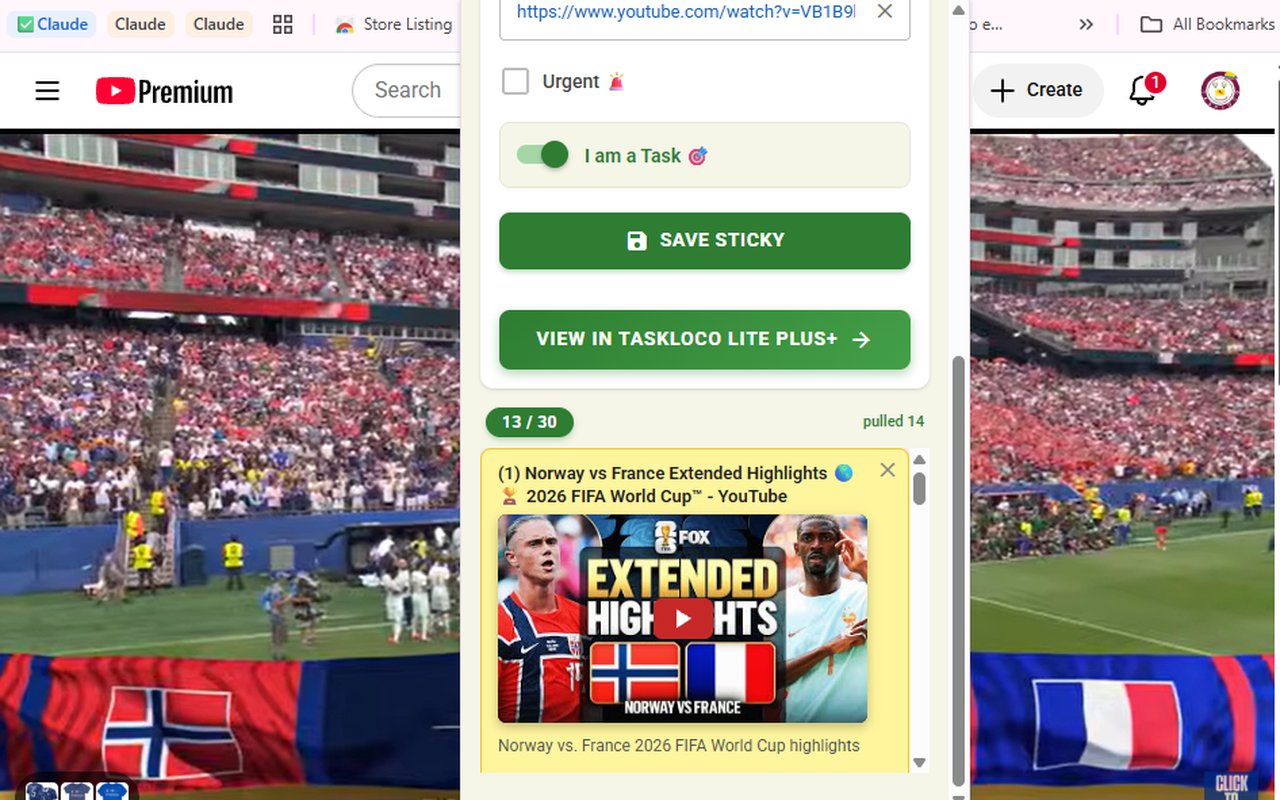
Saved notes live in TaskLoco and sync to your phone and desktop, so if you clipped something on your laptop this morning, it's there on your iPhone when you want to read it tonight. YouTube videos embed directly inside the note and play without opening a separate tab, which is genuinely useful for video content you clip mid-watch.
Tags and search make it easy to find things again. If you saved a dozen articles about a topic, searching a keyword surfaces them instantly — no scrolling through a long history list. The visual wall format also helps: notes look like sticky notes rather than a plain link list, so your brain can scan them the way it scans a physical corkboard.
The extension is free, TaskLoco has a free tier to get started, and signing in takes one click with Google. It's the kind of tool that fits the habit you're trying to build rather than adding steps to it.
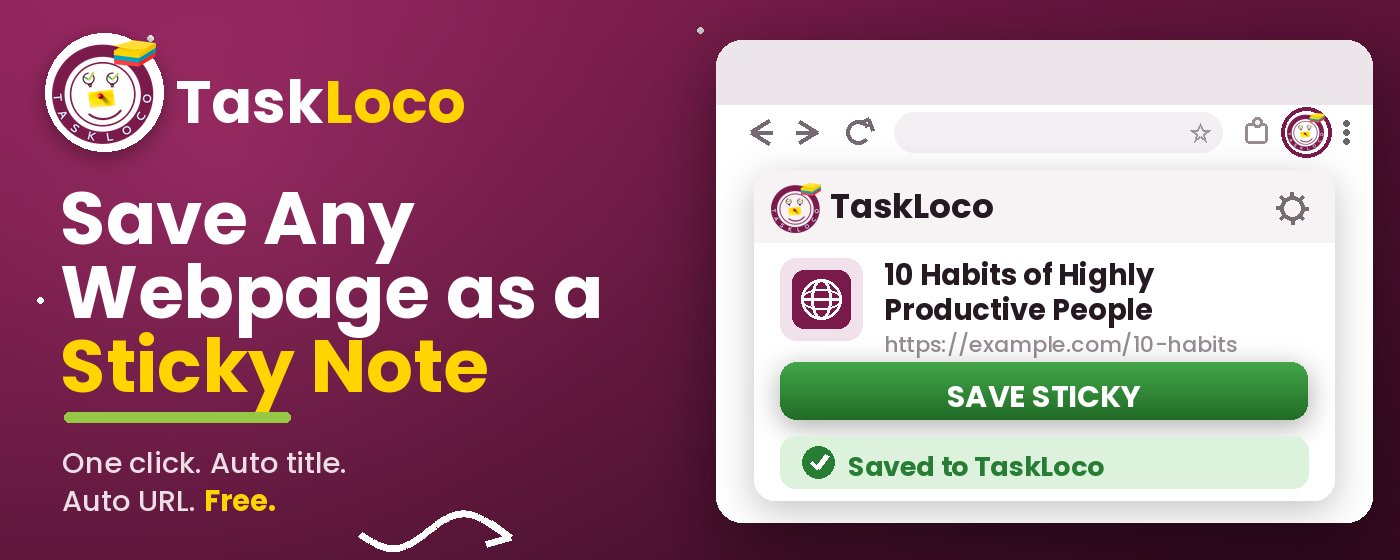
The Sticky Note Web Clipper is free. Install it from the Chrome Web Store, sign in with Google, and every page you clip becomes a sticky note you can find later.
Your clipped notes sync to TaskLoco across Chrome, desktop, iPhone, and Android — also free to start. No credit card to begin.
Get the Free Clipper
Sticky Note Web Clipper
- Free Chrome extension
- One-click save — any page, article, or video
- Title & URL auto-filled
- Tags & search
- Free forever
Synced to TaskLoco
- Sign in free with Google
- Your wall on Chrome, desktop, iPhone, Android
- YouTube videos embed & play in notes
- Visual sticky-note wall
- Free to start
Add It to Chrome — Free
One click saves any page, article, or YouTube video as a sticky note. Title and URL auto-filled.
Add to Chrome — FreeSee TaskLoco in Action
Frequently Asked Questions
How do I find an article I saw this morning but didn't save?
Start with your browser history — go to chrome://history and scroll to the time you were browsing this morning. If that doesn't work, search your email or messaging apps for any keywords you remember. You can also search Google for the topic plus a distinctive phrase from the article, using quote marks around any specific wording you recall. Social platforms like Twitter or Reddit are useful if the article came from a shared link.
Why do I keep losing articles I meant to read later?
The most common reason is relying on open tabs as a holding area. Tabs look like a queue, but in practice most tabs you open never get revisited — especially after the first day. The fix is capturing pages into a dedicated place the moment you see them, not leaving them open and hoping you'll come back.
What's the fastest way to save a webpage so I don't lose it?
The fastest method is a browser extension that sits in your toolbar and saves the current page in one click with no typing required. The Sticky Note Web Clipper does exactly this — click the icon, and the page is saved as a sticky note with the title and URL auto-filled. It takes about one second and you never leave the page you're on.
Is the Sticky Note Web Clipper free?
Yes — the extension is completely free. TaskLoco also has a free tier, so you can install the clipper, sign in with Google, and start saving pages without paying anything.
Does it work for YouTube videos, not just articles?
Yes. When you clip a YouTube video using the Sticky Note Web Clipper, the video embeds directly inside the saved note and plays there — you don't need to open a separate tab. It's useful for saving talks, tutorials, or videos you want to finish watching later.
Will my saved articles be available on my phone?
Yes. Notes you clip in Chrome sync to TaskLoco, which is available on iPhone, Android, and desktop. So if you save something on your laptop in the morning, you can read it on your phone later without any extra steps.
What should I do right now to stop losing articles in the future?
Build the capture habit: whenever you see a page you want to keep, save it immediately rather than leaving it in a tab or trusting your memory. Install the free Sticky Note Web Clipper from the Chrome Web Store — it adds a one-click button to your toolbar so saving anything takes less than a second. Start clipping, and the problem mostly solves itself.
Born in Brooklyn. Powered by AWS. Your data stays yours.
TaskLoco is available on iPhone, Android, Chrome, and every web browser.