You're in the middle of the workday and you stumble across a blog post that looks genuinely worth reading — a deep-dive on a topic you care about, a recipe, a travel piece, something that has nothing to do with the spreadsheet you're supposed to be finishing. You don't have time now. So what do you do?
Most people either leave the tab open (and lose it when Chrome restarts), bookmark it (and never find it again), or copy the URL into a notes app and forget what it was about. None of these work reliably. This guide walks through the real options — from the dead-simple to the actually dependable — so you can pick the one that fits how your brain works after a long day.
The Quick Methods That Work Without Any App
If you just need something fast and you're not ready to add anything to your browser, here are the methods that actually hold up:
- Email it to yourself. Copy the URL, open a new email tab, paste the link, and send it to your personal address. This works well because your inbox is something you'll actually open later. The downside is that these emails pile up and become noise unless you move them to a dedicated folder immediately.
- Drop it into a notes app you already use. Apple Notes, Google Keep, or even a plain text file on your desktop. Paste the URL and write a quick word about why you saved it — even just "interesting" or "try this recipe." That context is what separates links you'll click from links you'll skip.
- Use Chrome's Reading List. In Chrome, you can right-click a tab and choose "Add to Reading List," or use the star icon to access the reading list panel. It's built in, no install required, and it keeps the URL separate from your bookmarks. The honest limitation: it doesn't sync well to mobile unless you're signed into Chrome, and the list has no visual layout — it's just a wall of titles.
Why Bookmarks Keep Failing You
Browser bookmarks are the default answer most people land on, and they work fine for the first dozen or so. After that, the folder structure falls apart. You either forget which folder you put something in, or you stop using folders entirely and dump everything into Bookmarks Bar until it overflows. The result is a graveyard of links with no memory of why you saved any of them.
The core problem is that bookmarks are purely functional — a title and a URL, displayed as a list. There's no visual cue, no tag system most people actually use, and no quick way to scan what you have. When you get home from work, tired, you're not going to sort through a flat list of 400 links to find the one article you wanted.
A few things that genuinely help if you want to stick with bookmarks:
- Create one folder called "Read This Week" and move things out of it on a schedule. Don't let it become permanent storage.
- Edit the bookmark name right when you save it — add a word or two that describes why it matters to you, not just the article's original title.
- Use Chrome's built-in bookmark search (Ctrl+Shift+O or Cmd+Shift+O) to search by keyword rather than browsing folders.
These habits help. But if you find yourself saving more than a few links a week, bookmarks stop being a system and start being friction.
How a Visual Sticky Note Changes the Habit
The reason most read-later systems fail isn't laziness — it's that the saved item doesn't look like anything. A URL in a list has no weight, no color, no context. Your brain doesn't connect it to the moment you saved it or the reason you wanted to.
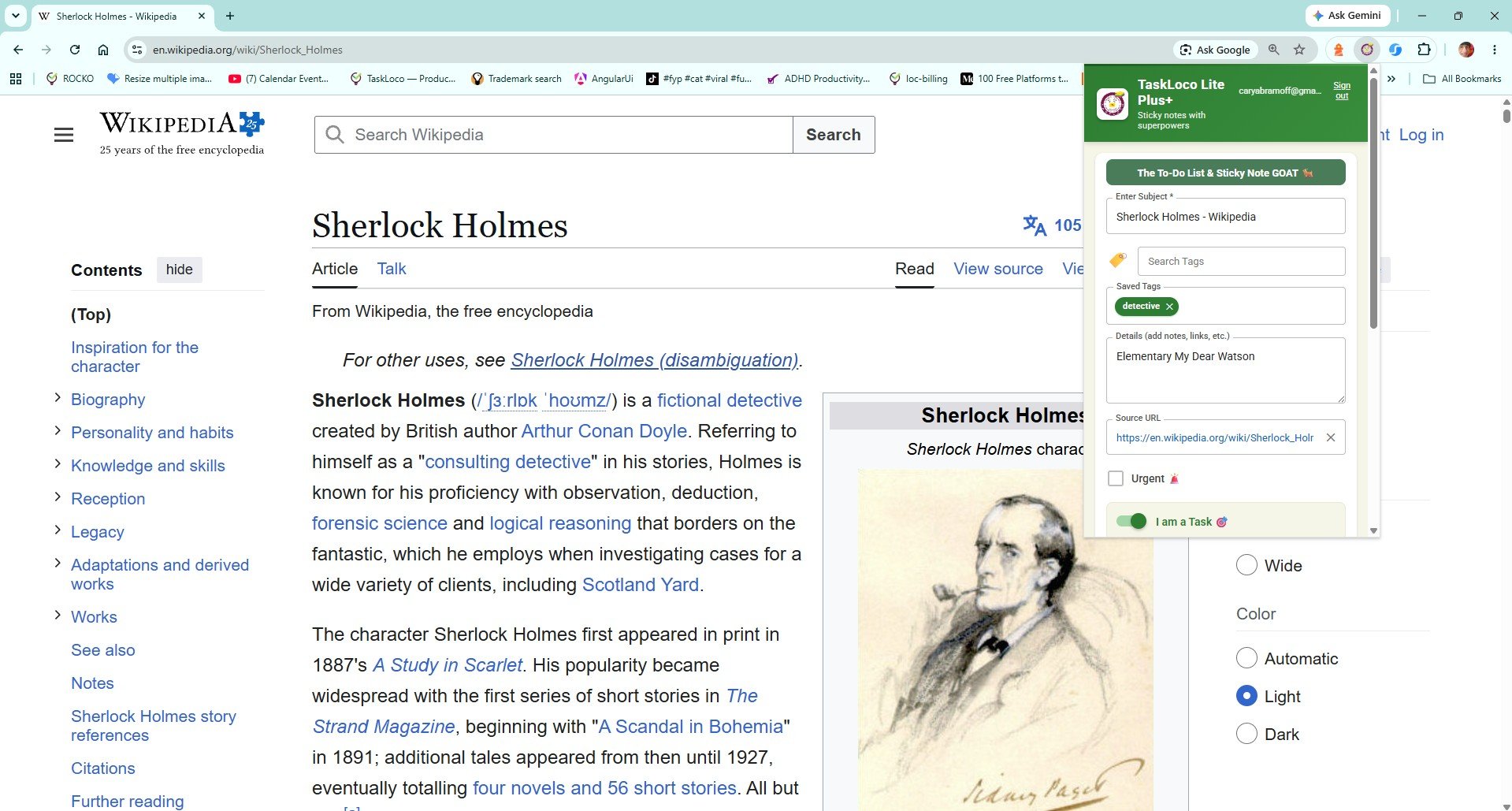
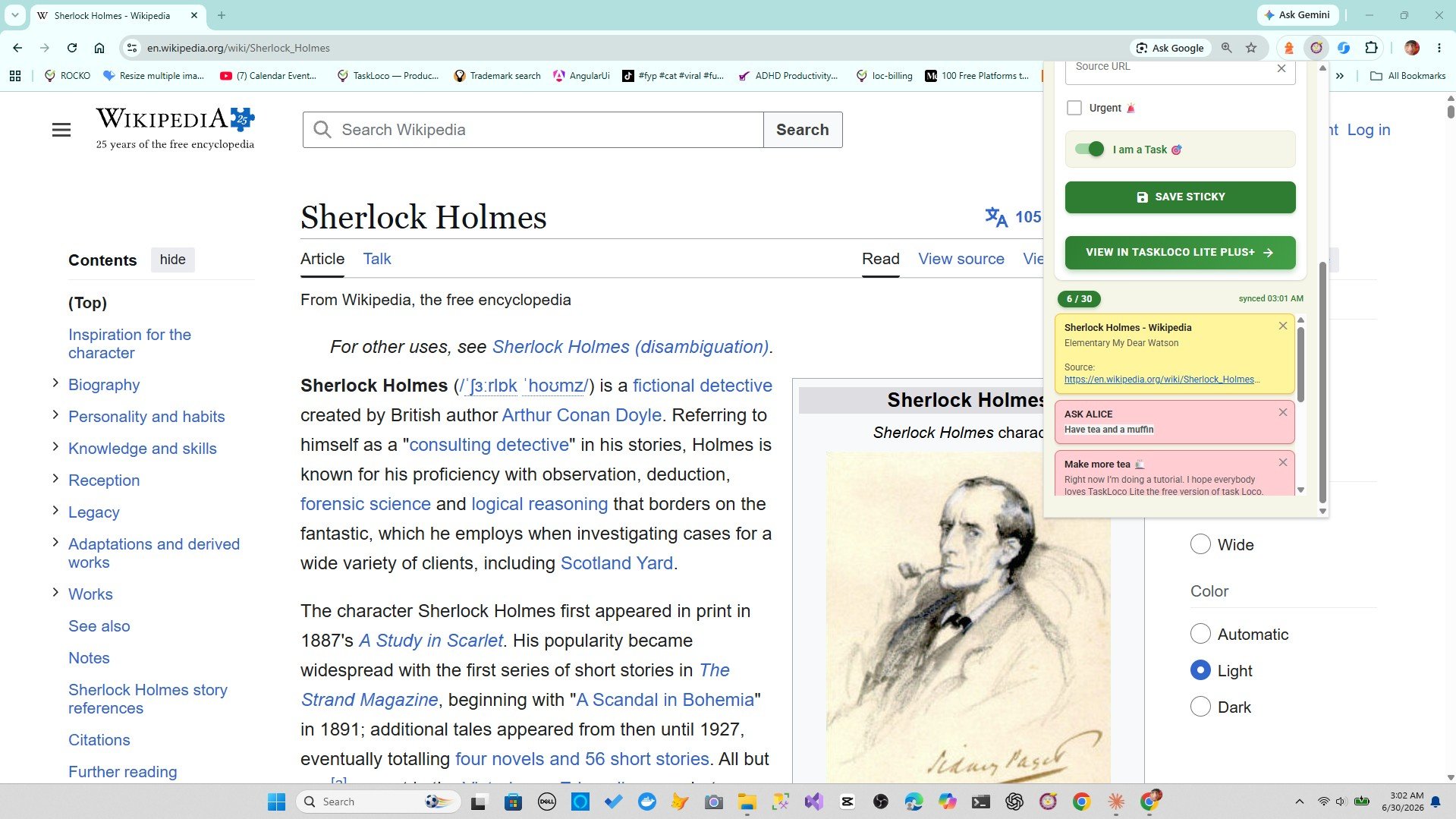
The Sticky Note Web Clipper — a free Chrome extension — takes a different approach. When you click the toolbar icon on any blog post, it saves the page as a visual sticky note with the title and URL already filled in. You can add a quick note or tag before closing it, or just let it sit. The note appears on your TaskLoco wall, which you can access from your phone or desktop browser when you get home.
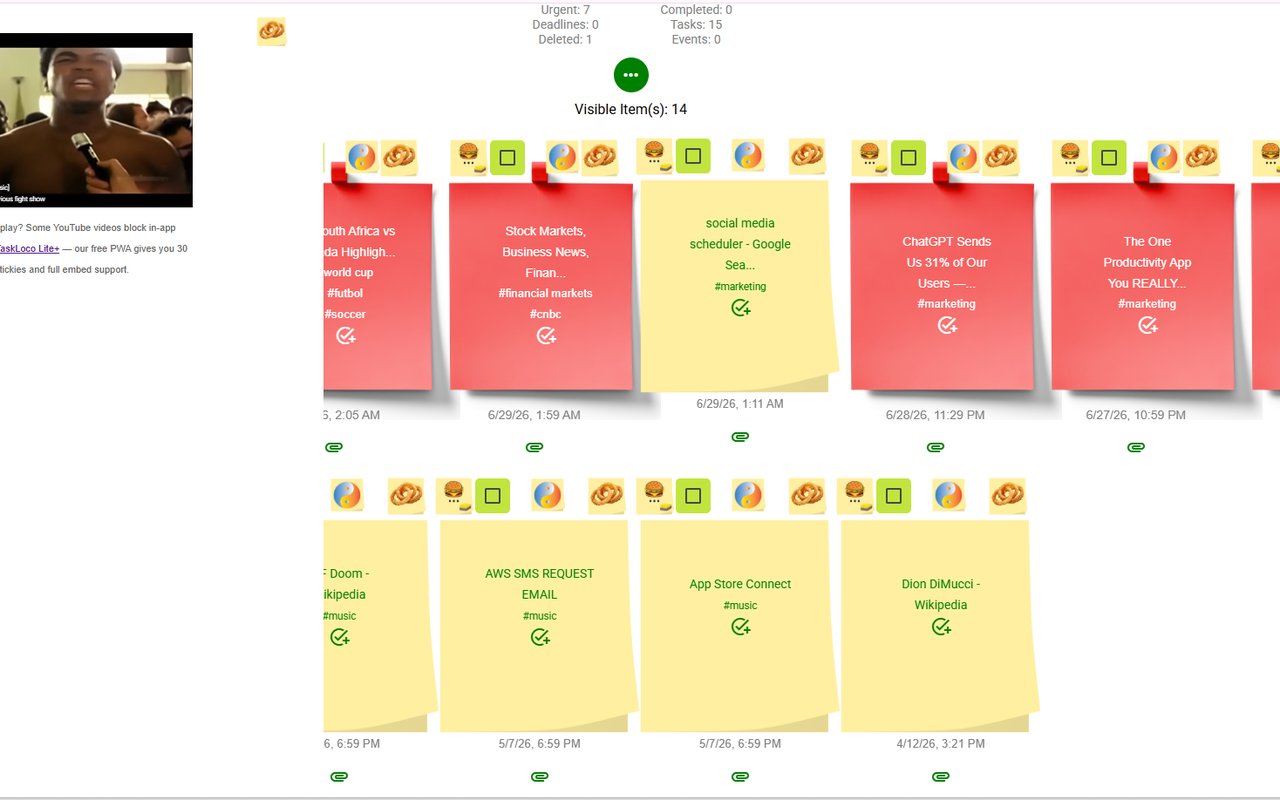
The visual format does something simple but effective: it makes the saved item feel like something. You see the post title in a card on a wall, not buried in a list. When you open TaskLoco on your phone on the couch that evening, the post is there, looking like it's waiting for you — because it is.
The extension is free. Sign in with Google, click the icon once on any page, and the note is created. No copying, no pasting, no folder decisions in the moment.
Building a Simple After-Work Reading Habit That Sticks
Saving is only half the battle. The other half is actually reading what you saved. Here's what tends to work:
- Save with intent, not with hope. Before you clip something, ask yourself: would I spend 10 minutes reading this tonight, or am I just saving it to feel productive? Saving fewer things on purpose means your saved list stays meaningful.
- Use tags the moment you save. Even one-word tags like "career," "health," or "recipe" mean that later you can filter by what you're in the mood for — not just hunt through everything you've ever saved.
- Set a loose reading window. Some people do it with morning coffee, others after dinner. The specific time matters less than the consistency. If you clip a post in the morning, it's sitting on your TaskLoco wall by evening, accessible on your phone wherever you end up.
- Review and clear out weekly. If a post has been sitting unread for a week, it probably isn't getting read. Delete it without guilt. The clipper makes saving so frictionless that you'll save more than you can read — and that's fine as long as you prune regularly.
The systems that last are the ones with almost no friction at the point of saving and a clear, low-pressure time to consume. One click to save, a comfortable chair later — that's the whole workflow.
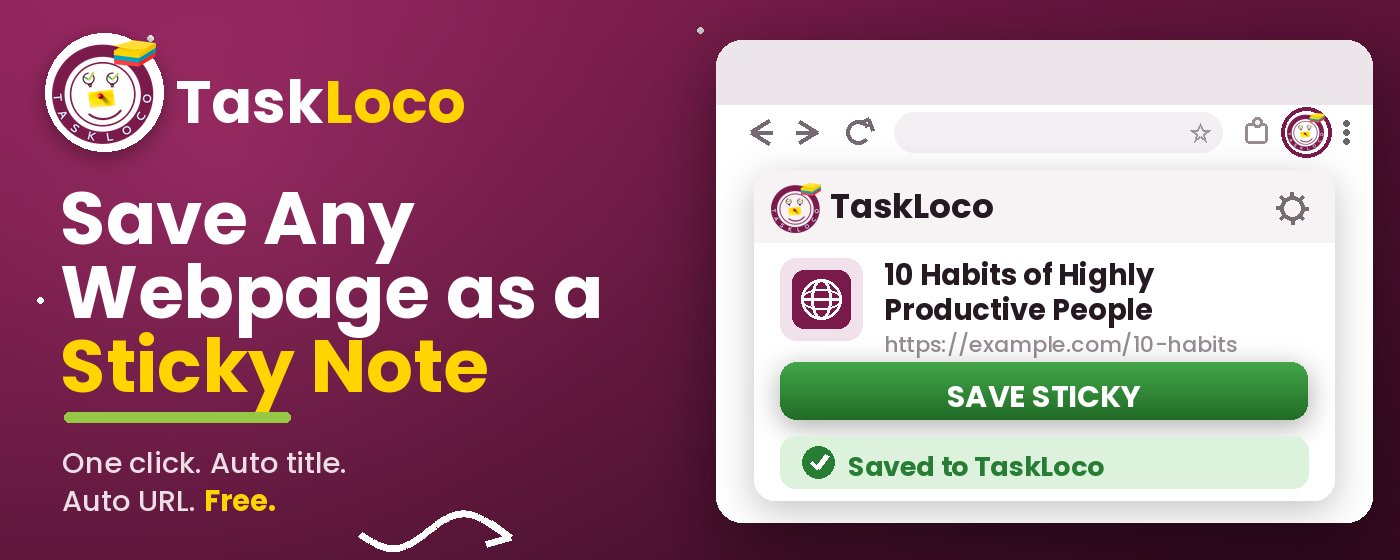
The Sticky Note Web Clipper is free. Install it from the Chrome Web Store, sign in with Google, and every page you clip becomes a sticky note you can find later.
Your clipped notes sync to TaskLoco across Chrome, desktop, iPhone, and Android — also free to start. No credit card to begin.
Get the Free Clipper
Sticky Note Web Clipper
- Free Chrome extension
- One-click save — any page, article, or video
- Title & URL auto-filled
- Tags & search
- Free forever
Synced to TaskLoco
- Sign in free with Google
- Your wall on Chrome, desktop, iPhone, Android
- YouTube videos embed & play in notes
- Visual sticky-note wall
- Free to start
Add It to Chrome — Free
One click saves any page, article, or YouTube video as a sticky note. Title and URL auto-filled.
Add to Chrome — FreeSee TaskLoco in Action
Frequently Asked Questions
What's the fastest way to save a blog post to read later?
Click the Sticky Note Web Clipper icon in your Chrome toolbar. The post is saved as a visual sticky note with the title and URL auto-filled in under a second. No copying, no pasting, no folder decisions required.
Will my saved posts be available on my phone after work?
Yes. Notes saved with the Sticky Note Web Clipper sync to TaskLoco, which you can access on your iPhone, Android, or any desktop browser. Sign in with the same Google account and everything you clipped during the day is waiting for you.
Is the Sticky Note Web Clipper free?
Yes — the extension is completely free. TaskLoco also has a free tier. Install it from the Chrome Web Store, sign in with Google, and start clipping right away.
How is this different from just bookmarking the page?
Bookmarks save a title and URL in a list. The Sticky Note Web Clipper saves the page as a visual sticky note you can tag, search, and actually see on a wall layout. The visual format makes it far easier to find and remember what you saved — and actually go back to read it.
Can I save YouTube videos the same way as blog posts?
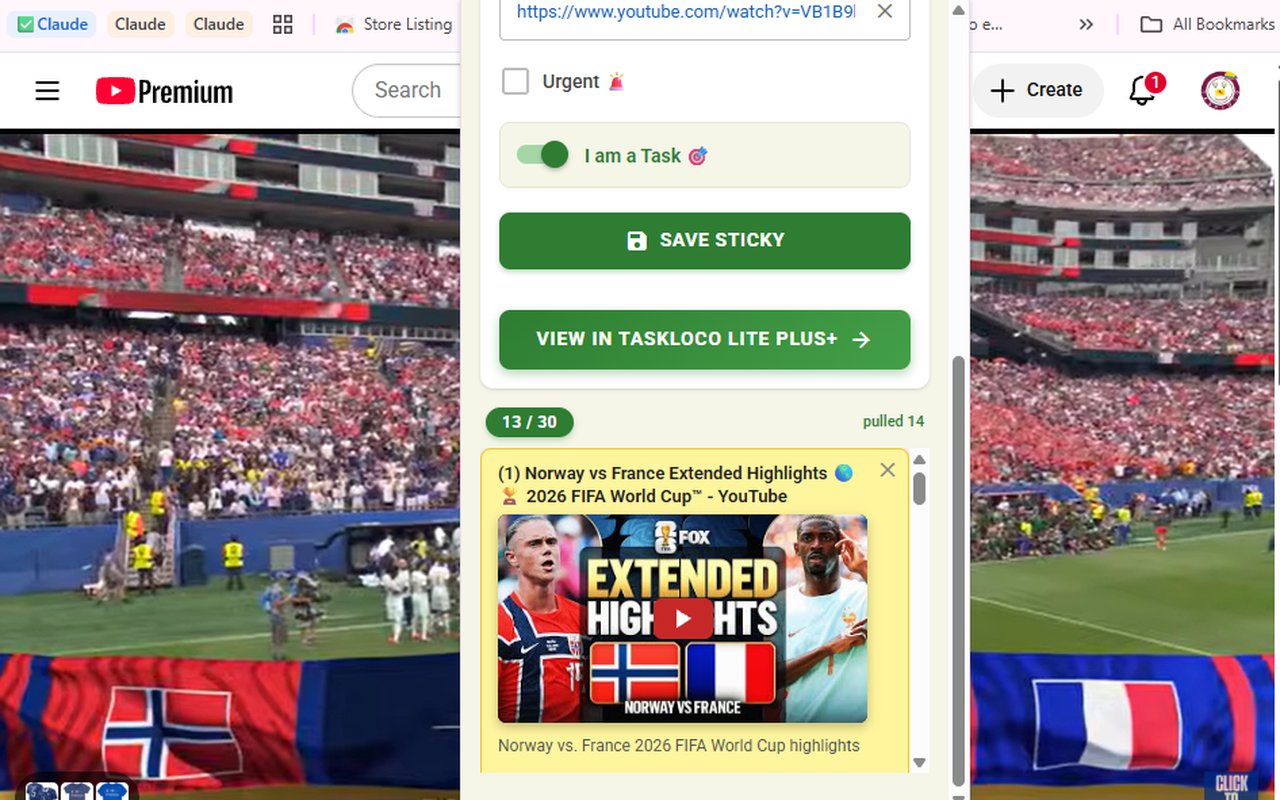
Yes. Clip any YouTube video with the extension and it saves as a sticky note with an embedded player. You can watch the video directly inside the note without opening a new tab — useful if you saved a tutorial or video essay alongside an article.
What if I save things but never get around to reading them?
That's a habit issue, not a tool issue. The most effective fix is to add a one-word tag when you save (like "tonight" or "weekend") so you can filter by intent later, and to do a weekly clear-out — if something has sat unread for a week, delete it. The clipper makes saving so fast that it's easy to over-save; pruning regularly keeps the list meaningful.
Do I need to create an account to use the Sticky Note Web Clipper?
Sign-in is free with your Google account — no separate username or password to create. Install the extension from the Chrome Web Store, click Sign in with Google, and you're ready to start clipping immediately.
Born in Brooklyn. Powered by AWS. Your data stays yours.
TaskLoco is available on iPhone, Android, Chrome, and every web browser.