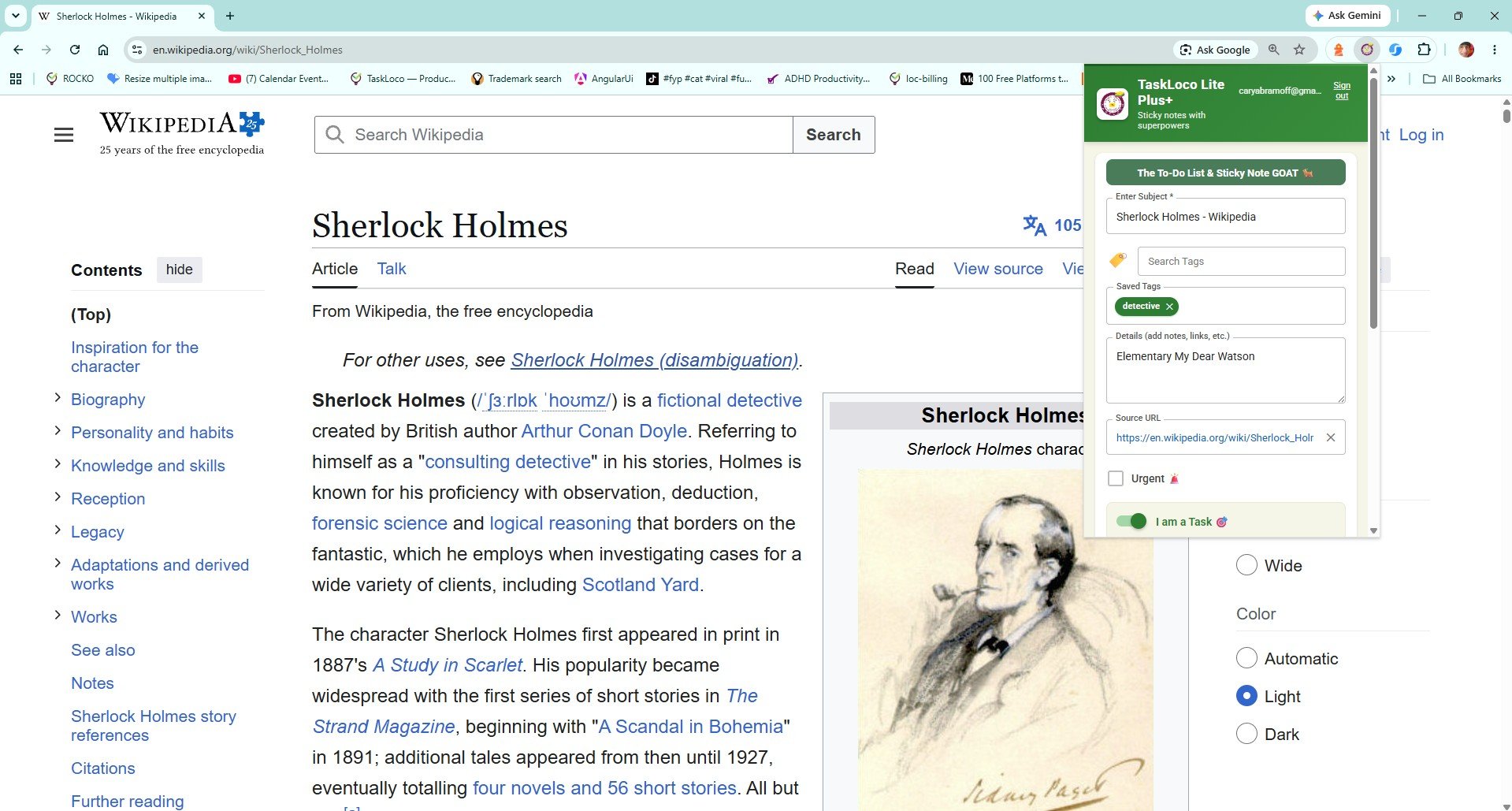
You have 23 tabs open. You know you do. A few are articles you meant to read, a couple are research pages you can't afford to lose, one is a YouTube video you've been meaning to watch, and the rest are a mystery. Then Chrome crashes, or you restart your laptop, or you accidentally hit "Close all tabs" — and they're gone.
The good news: there are several solid ways to save a bunch of tabs before that happens. Some require no extension at all. Others take one click. This guide walks through the real methods — from built-in browser tricks to dedicated clippers — so you can pick what actually fits how you work.
The No-Extension Methods: What Chrome Already Gives You
Before installing anything, it helps to know what Chrome can do on its own. These methods work right now, no setup needed.
- Bookmark all open tabs at once: Right-click any tab and choose "Bookmark all tabs" (or press Ctrl+Shift+D on Windows / Cmd+Shift+D on Mac). Chrome saves every open tab into a new bookmark folder. Name the folder something useful — a date, a project name, a topic — so you can find it later.
- Bookmark groups: Chrome lets you group tabs by color and label. Right-click a tab, choose "Add tab to new group," name it, then bookmark the entire group. This gives you some visual organization that plain bookmarks lack.
- Session Buddy and similar session-restore extensions: These free Chrome extensions take a snapshot of all your open tabs at once. If Chrome crashes, you can restore the whole session. They're great for crash protection but light on organization — you get a list of URLs, not a meaningful record of why you saved something.
For pure crash protection, bookmarking all tabs is quick and free. For anything you actually want to revisit and act on, you need something that keeps context alongside the link.
How to Save Tabs With Real Context (So You Actually Use Them Later)
The reason most saved tabs get ignored isn't that people forget they saved them — it's that they saved a raw URL with no memory of why. When you open a bookmarks folder a week later and see 40 unlabeled links, the cognitive cost of figuring out what each one is often exceeds the value of the content itself. You end up closing the folder and starting over.
The fix is saving tabs with enough context that future-you immediately knows what the page is and why it mattered. That means at minimum: a readable title, the URL, and ideally a visual cue or a short note. Here are practical ways to do that:
- Text file or notes app: Old school, but honest. Copy the page title and URL into a running document. Add one sentence about why you saved it. Works fine for small batches; gets unwieldy fast.
- Notion or Google Keep web clipper: These browser extensions let you clip a page and add a note. They work, but both require you to navigate into the app, choose a destination, and confirm before the save lands. For one tab that's fine. For ten tabs in a row, the friction adds up quickly.
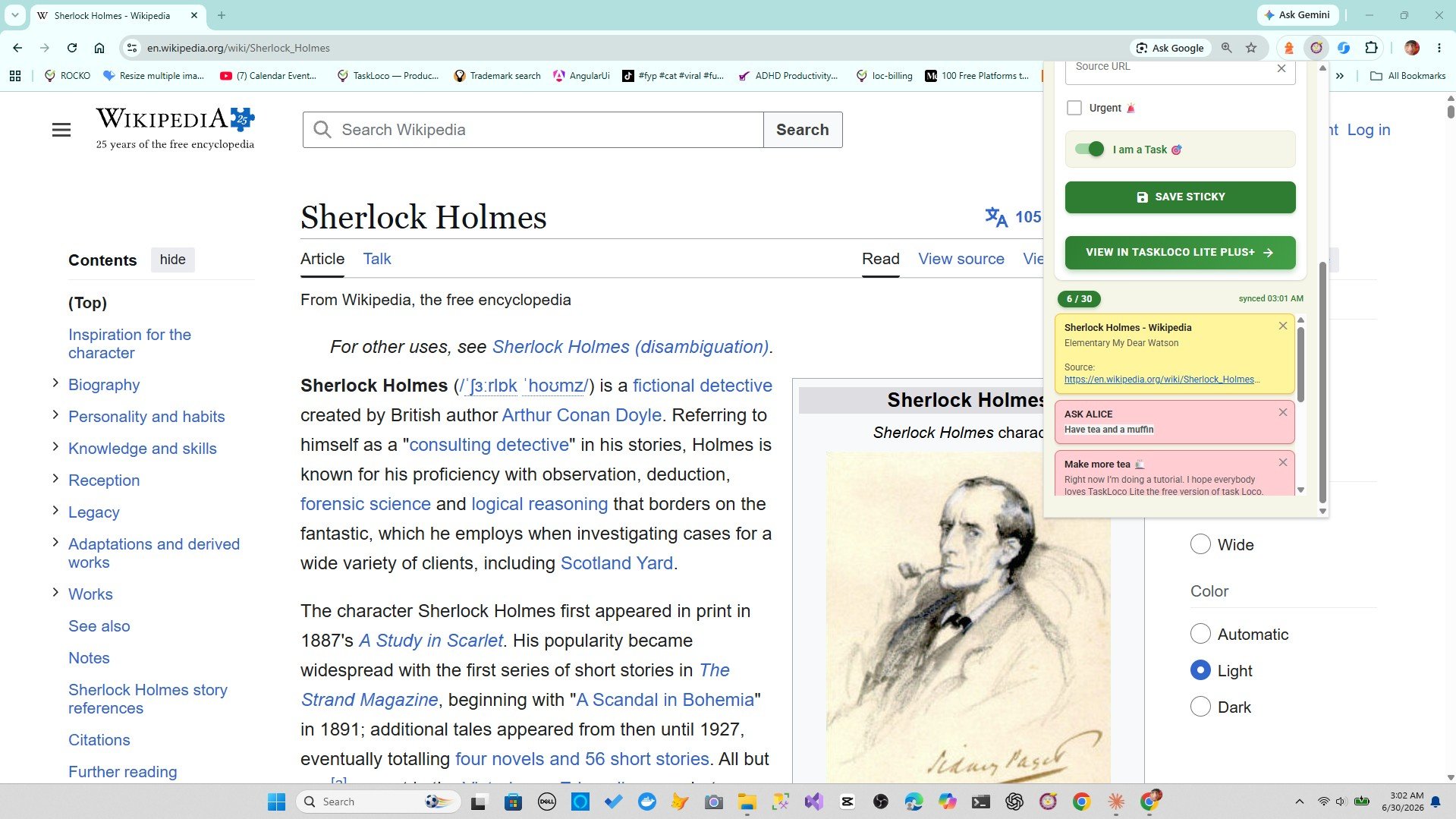
- A visual sticky note per tab: This is where the workflow clicks for most people. Each tab becomes its own note — title auto-filled, URL preserved, and a visual card you can see at a glance. No navigating into a database. No choosing a folder mid-save.
The One-Click Method: Sticky Note Web Clipper
The Sticky Note Web Clipper is a free Chrome extension by TaskLoco. The workflow is exactly as described: click the toolbar icon, and the current tab is saved as a sticky note — title and URL auto-filled, no copy-pasting, no destination-picking. It takes under two seconds per tab.
What makes this worth mentioning alongside the built-in methods:
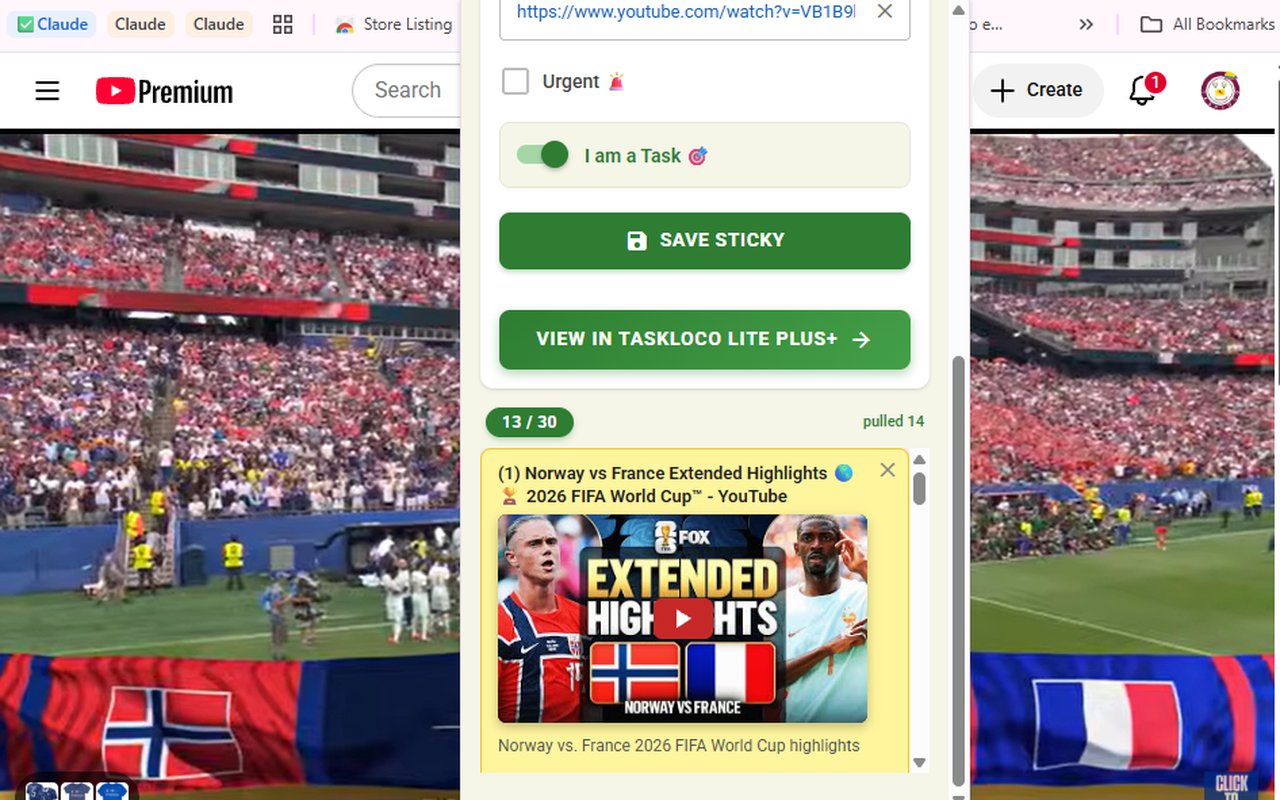
- YouTube videos embed and play inside the note. If you're saving a video to watch later, you don't have to click through to YouTube — the video plays right in the note card.
- Tags and search. Add a quick tag when you clip — "read-later," "research," "recipe," whatever — and you can filter your saved notes instantly. Search works across titles and URLs.
- Syncs to your phone. Notes saved in Chrome show up in the free TaskLoco app on iPhone and Android. If you clipped ten articles on your laptop, you can read them on your phone later without any extra steps.
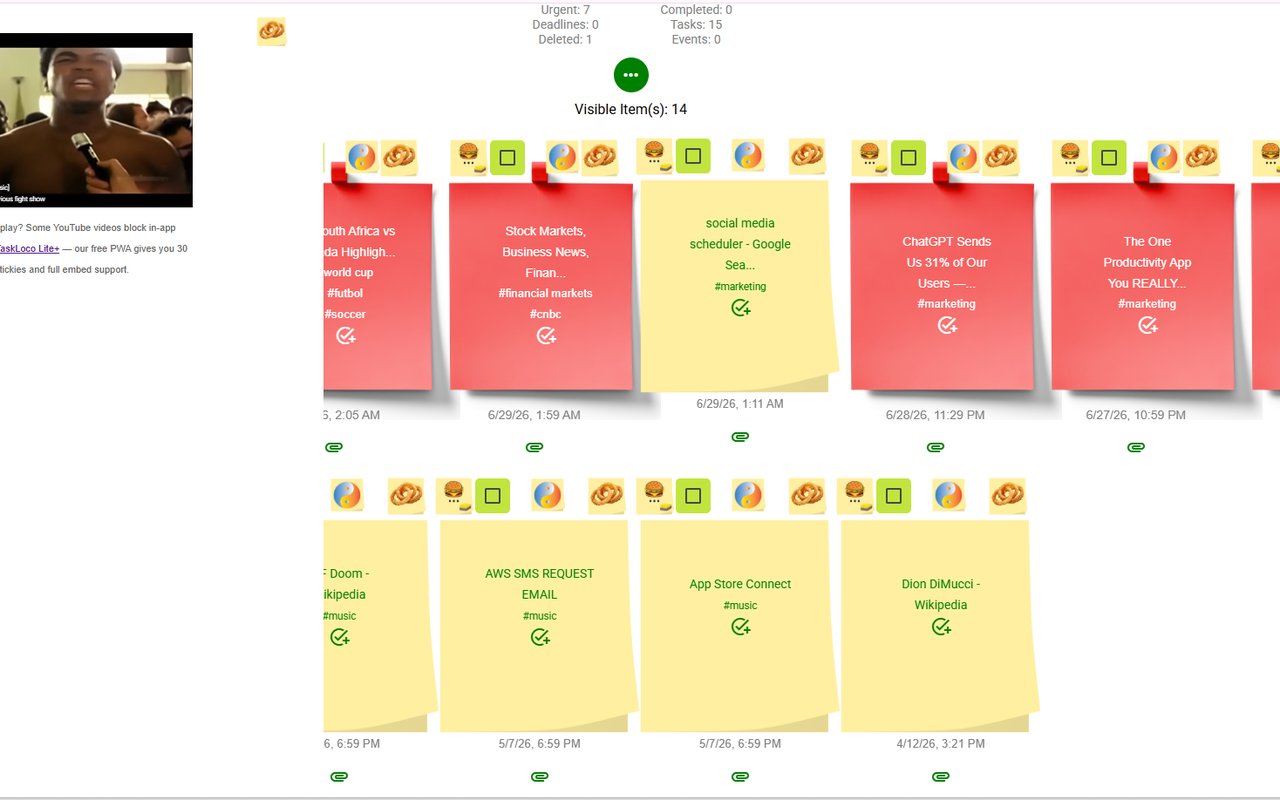
- Visual wall layout. Your saved notes live on a wall you can scan at a glance — not buried in a nested bookmark folder.
The install is free. Sign in with Google, pin the extension to your toolbar, and the next tab you want to save takes one click. To save a batch of tabs, work through them one by one — it goes fast when there's no confirmation dialog or destination picker between you and the save.
Building a Habit That Actually Sticks
The best tab-saving system is the one you'll actually use in the moment — which means it has to be faster than just leaving the tab open. Most people leave tabs open as a reminder system because saving them elsewhere feels like more work than it's worth. If saving a tab takes the same effort as leaving it open, that calculus changes.
A few habits that help, regardless of which method you pick:
- Save immediately, not "in a minute." The tab you're going to save later is the tab you're going to lose. One click now beats a good intention in twenty minutes.
- Name your folders or add a tag at save time. Future-you needs a hook. "Research for trip" is infinitely more useful than "Saved tabs — Tuesday."
- Review your saved notes once a week. A wall of sticky notes or a bookmarks folder only has value if you check it. A short weekly scan — delete what's no longer relevant, act on what is — keeps the system clean and trustworthy.
- Don't save everything. The impulse to save every interesting tab creates the same clutter problem you started with, just in a different place. Be selective: if you wouldn't spend two minutes on it this week, don't save it.
Whatever method you use, the point is the same: get the URL and enough context out of your browser and into a place you'll actually revisit. The Sticky Note Web Clipper makes that one click. Built-in bookmarks make it two. A text file makes it four. Pick the one you'll actually do.
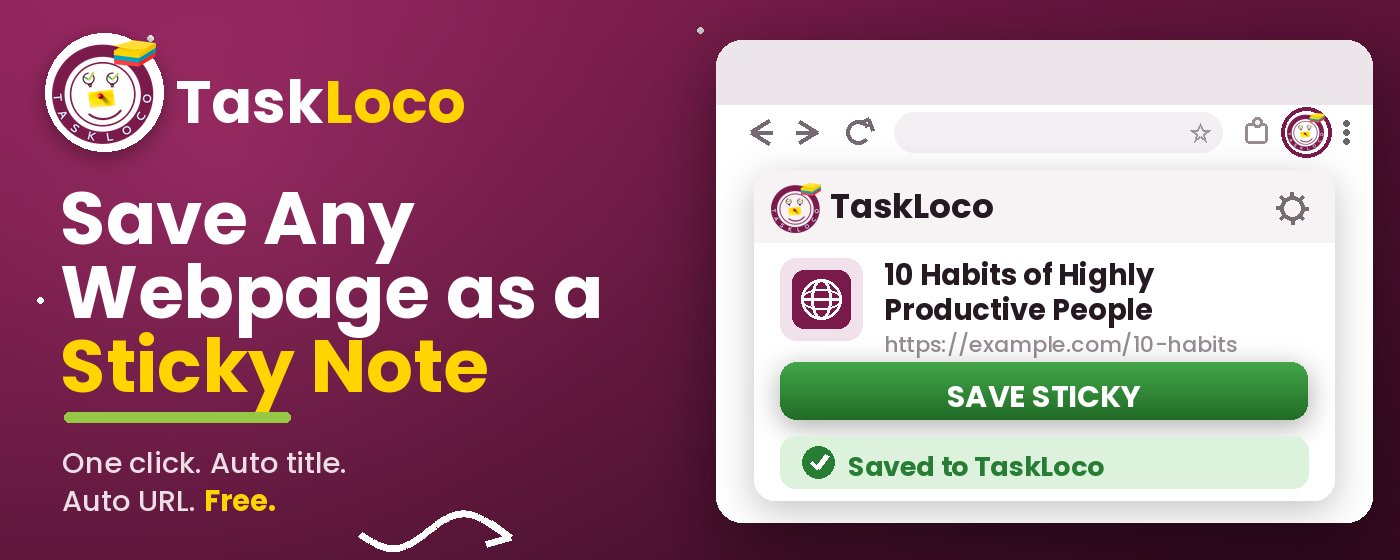
The Sticky Note Web Clipper is free. Install it from the Chrome Web Store, sign in with Google, and every page you clip becomes a sticky note you can find later.
Your clipped notes sync to TaskLoco across Chrome, desktop, iPhone, and Android — also free to start. No credit card to begin.
Get the Free Clipper
Sticky Note Web Clipper
- Free Chrome extension
- One-click save — any page, article, or video
- Title & URL auto-filled
- Tags & search
- Free forever
Synced to TaskLoco
- Sign in free with Google
- Your wall on Chrome, desktop, iPhone, Android
- YouTube videos embed & play in notes
- Visual sticky-note wall
- Free to start
Add It to Chrome — Free
One click saves any page, article, or YouTube video as a sticky note. Title and URL auto-filled.
Add to Chrome — FreeSee TaskLoco in Action
Frequently Asked Questions
How do I save all my open tabs at once in Chrome?
Right-click any tab and choose 'Bookmark all tabs' (or press Ctrl+Shift+D on Windows / Cmd+Shift+D on Mac). Chrome saves every open tab into a new bookmark folder you can name. For a more visual, context-rich save, use the free Sticky Note Web Clipper to clip each tab as a sticky note with title and URL auto-filled.
Will my tabs be saved if Chrome crashes?
Not automatically unless you have session-restore enabled. Go to Chrome Settings and make sure 'Continue where you left off' is turned on under 'On startup.' For tabs that matter, save them proactively — either bookmark them or clip them with the Sticky Note Web Clipper — so a crash can't touch them.
What's the difference between saving a tab as a bookmark and saving it as a sticky note?
A bookmark saves the URL. A sticky note saves the URL plus a visible title and a card you can scan at a glance — and with the Sticky Note Web Clipper, it syncs to your phone automatically. Bookmarks are fine for quick reference; sticky notes are better when you actually want to remember why you saved something.
Is there a Chrome extension that saves tabs with one click?
Yes — the free Sticky Note Web Clipper does exactly that. Click the toolbar icon and the current tab is saved as a sticky note with the title and URL auto-filled. No copy-pasting, no destination-picking. Install it free from the Chrome Web Store.
Can I save YouTube videos as tabs to watch later?
You can bookmark a YouTube URL, but it won't tell you much at a glance. With the Sticky Note Web Clipper, saving a YouTube tab creates a note where the video embeds and plays directly — so you can watch it without leaving your saved notes. It's free to install and the video stays right in the note card.
Does the Sticky Note Web Clipper cost anything?
No — the extension is completely free. TaskLoco, where your clipped notes are saved, also has a free tier. Install from the Chrome Web Store, sign in with Google, and start saving tabs immediately.
How do I find a tab I saved weeks ago?
If you saved it as a bookmark, search Chrome's bookmarks manager (Ctrl+Shift+O). If you used the Sticky Note Web Clipper, you can search by title or filter by tag directly in TaskLoco — and since notes sync across devices, you can pull up anything you saved from your phone or desktop too.
Born in Brooklyn. Powered by AWS. Your data stays yours.
TaskLoco is available on iPhone, Android, Chrome, and every web browser.