You find a job posting that looks perfect. You bookmark it, plan to apply later, and come back the next morning — only to hit a 404. The company filled it, the ATS pulled the listing, or the recruiter quietly took it down. Either way, your bookmark is now a dead link pointing at nothing.
This happens constantly, and it is not bad luck — it is just how job postings work. They are among the most ephemeral pages on the internet. The fix is simple: stop treating job postings like something you can revisit at a URL, and start treating them like something you need to capture immediately, the same way you would screenshot a receipt. This guide walks you through how to do that without any special tools and then shows the fastest method if you are doing this regularly.
Why Job Postings Disappear So Fast
Job boards and company career pages are not archives. When a role is filled, paused, or removed from an ATS (applicant tracking system), the listing typically unpublishes automatically. On LinkedIn, postings can close within 24 to 48 hours for high-demand roles. On company websites, a posting often vanishes the second a candidate is moved to offer stage — which could be weeks before you ever see a rejection email.
There is also the reposting trap: a company takes down a listing, reworks the requirements, and reposts it under a different URL. If you saved only the link, you lose the original wording — and the original wording matters. Job descriptions tell you exactly what to mirror in your cover letter and resume. Lose the text, and you are writing blind.
Even cached versions are unreliable. Google's cache updates frequently and does not guarantee the version you saw. The Wayback Machine is hit-or-miss on ATS-hosted pages because many block crawlers. Your only reliable move is to save it yourself, the moment you find it.
How to Save a Job Posting Right Now — No Special Tools Needed
If you do not have a clipper installed yet, you still have solid options. Here is what works:
- Print to PDF. In Chrome or any browser, press Ctrl+P (or Cmd+P on Mac), then choose Save as PDF instead of a printer. This captures the full page exactly as it looks. Name the file with the company and role so you can find it later. The downside: PDFs pile up in your Downloads folder fast and are annoying to search.
- Copy and paste into a document. Select all the text on the page, paste it into a Google Doc or Word file. You lose formatting and images, but you keep every word. This is the most portable option — easy to search, easy to reference while writing your resume.
- Take a full-page screenshot. Tools like the built-in Chrome screenshot (in DevTools, under the three-dot menu) or a browser extension can capture the entire scrollable page as one image. Good for visual reference but harder to search through later.
- Use the browser's Reading List. Chrome has a built-in Reading List (the bookmark icon with a clock). It saves a snapshot of the page content. It is not a true archive, but it works better than a plain bookmark for short-term reference.
Any of these methods works in a pinch. The real problem shows up when you are tracking ten or twenty postings at once. At that point, a Downloads folder full of PDFs or a Google Doc per job becomes its own mess to manage.
How to Stay Organized When You Are Tracking Multiple Postings
Serious job searching means managing a pipeline, not just saving individual pages. You need to know which postings you have already saved, which ones you have applied to, which ones are still open, and which ones you are researching. That is a real organizational problem, and a bookmark folder does not solve it.
A few approaches that actually work:
- A dedicated spreadsheet. Columns for company, role, URL, date saved, application status, and notes. Tedious to maintain, but it scales. Copy the job description text into a notes column or a linked doc. If you are applying to more than a handful of roles, this is the most reliable low-tech system.
- A dedicated browser profile or bookmark folder. Create a Chrome profile just for job searching. Any posting you find gets bookmarked into a structured folder system — Saved, Applied, Interviewing. Still vulnerable to dead links, but at least it is contained and separate from your regular browsing.
- A note per posting in any notes app. Create a note for each job you are seriously considering. Paste in the full description, add your own notes about the company, and link to the original posting. Apps like Apple Notes, Notion, or Google Keep all work for this — the key is creating the note while the page is open, not later when you are trying to reconstruct what the posting said.
The friction in all of these methods is the same: you have to stop what you are doing, open something else, and manually transfer information. For occasional saves that is fine. For active job hunting it slows you down enough that you start skipping it — and then a posting disappears and you are annoyed.
How the Sticky Note Web Clipper Makes This a One-Click Habit
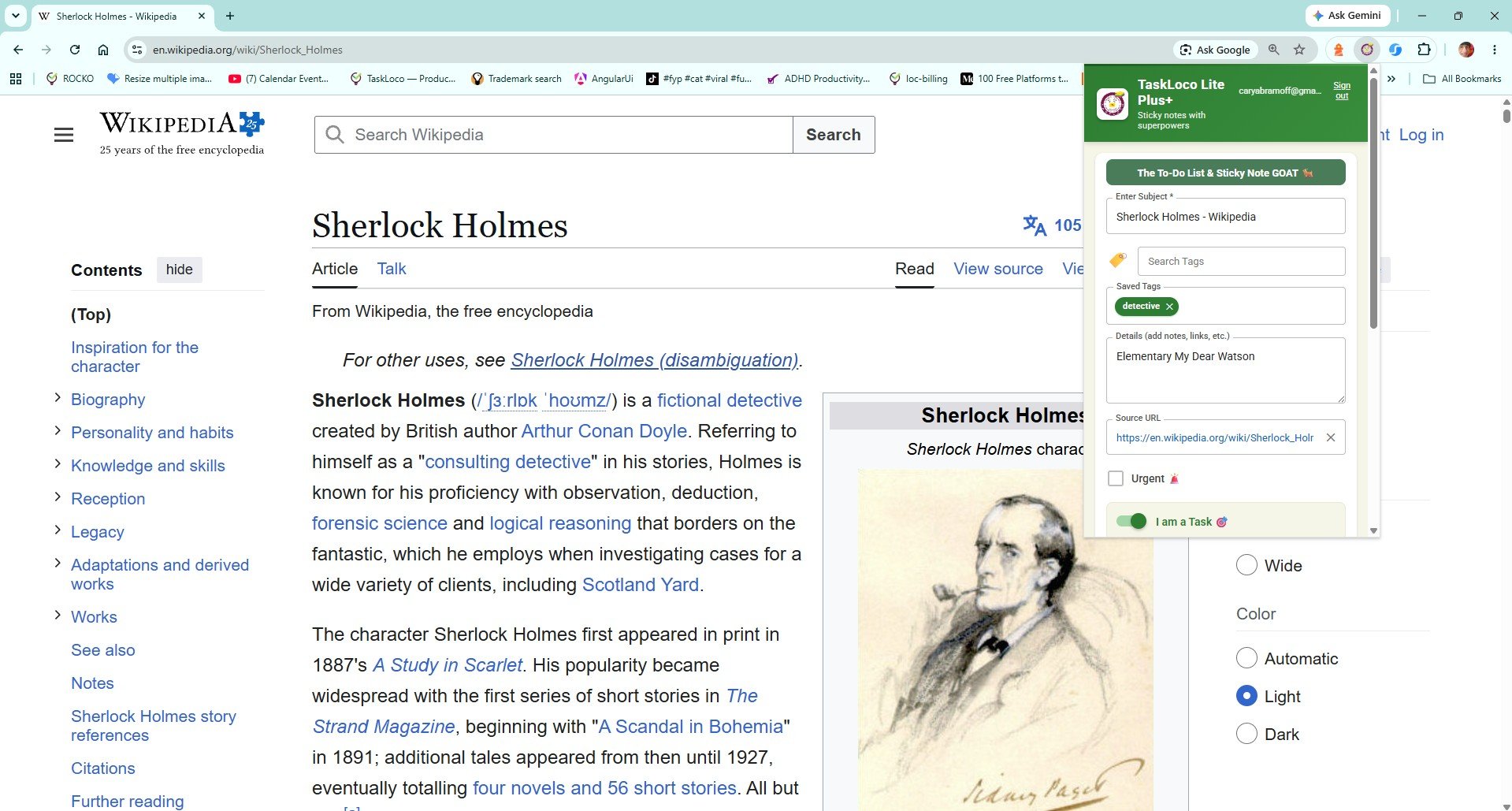
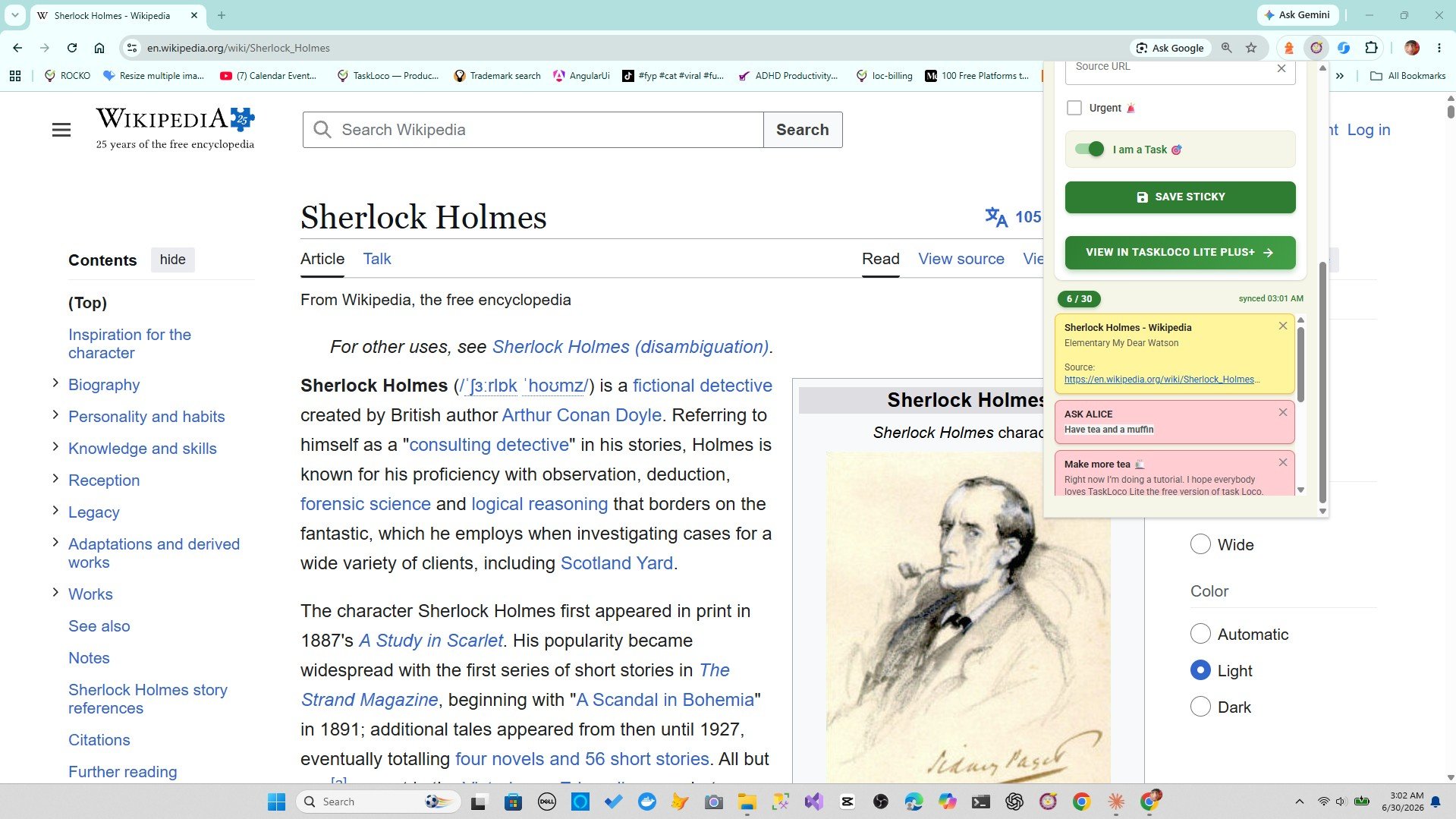
The Sticky Note Web Clipper is a free Chrome extension that turns any open tab into a saved sticky note in a single click. When you are on a job posting, you click the toolbar icon, and the page title and URL are auto-filled into a new note. You can add your own tags — applied, research, dream job — and type any quick thoughts directly into the note before moving on.
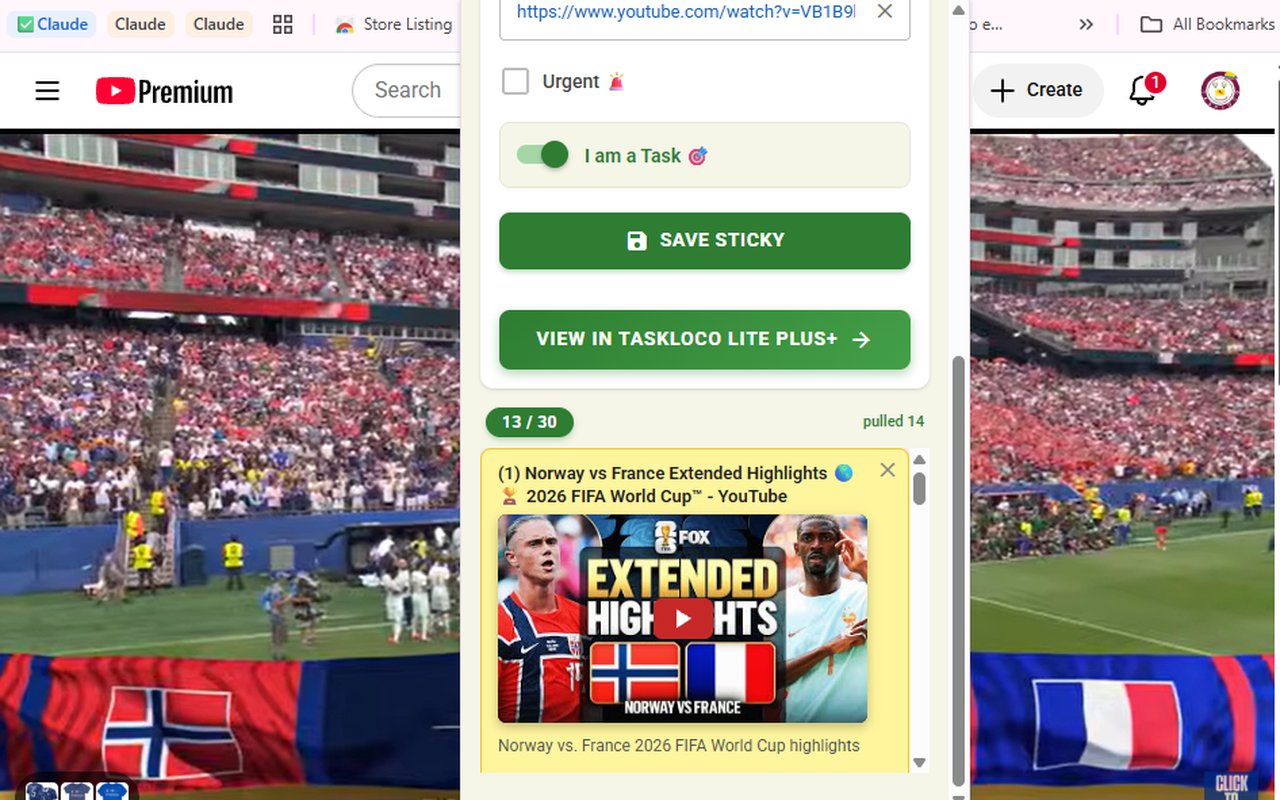
The note lives in TaskLoco, which syncs to your phone and desktop for free. That means if you are browsing job boards on your laptop and want to review your saved postings from your phone before an interview, everything is already there. No emailing yourself links. No opening a spreadsheet on your phone.
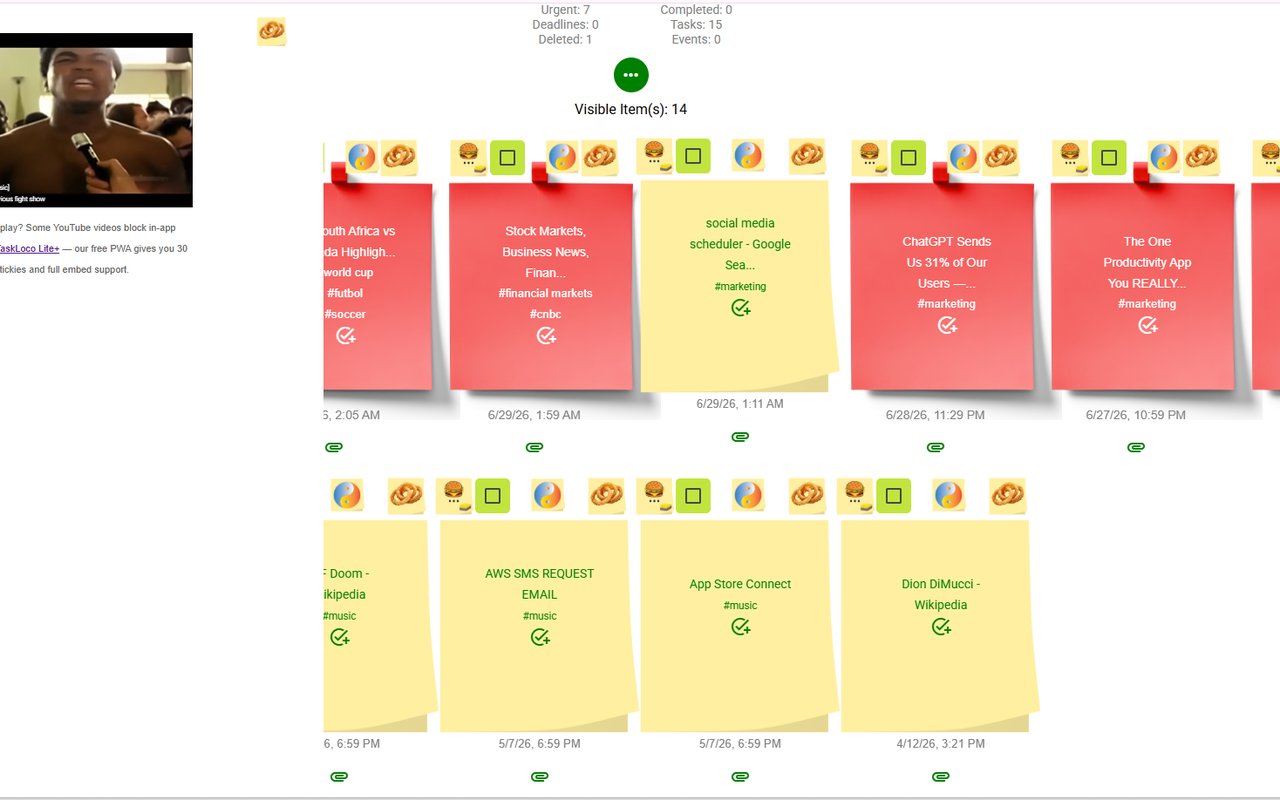
The practical difference from a bookmark is visual layout. Your saved postings appear as a wall of sticky notes — you can see them all at once, move them around, and tag them to filter by status. When you need to write a cover letter and want to pull up what the job description said, you search by company name or role title and the note is there with the original URL plus any notes you added.
It does not replace the other methods above — if you need a PDF for your records, still print one. But for the habit of immediately capturing a posting the moment you find it, a one-click clipper is genuinely faster than any manual alternative, which means you are far more likely to actually do it.
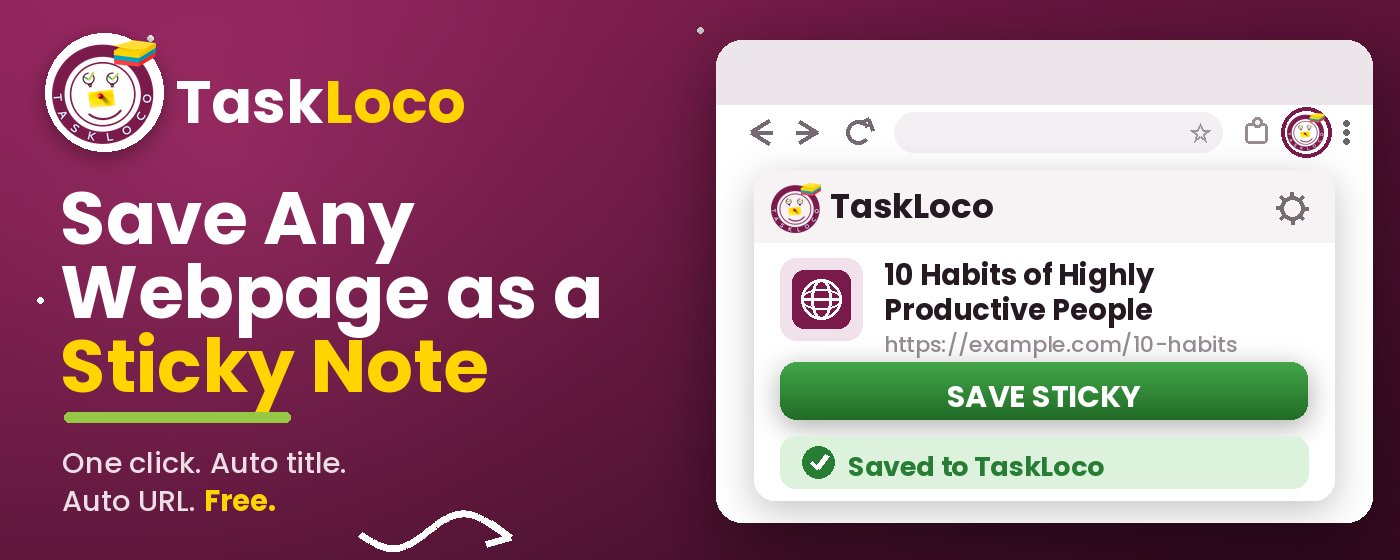
The Sticky Note Web Clipper is free. Install it from the Chrome Web Store, sign in with Google, and every page you clip becomes a sticky note you can find later.
Your clipped notes sync to TaskLoco across Chrome, desktop, iPhone, and Android — also free to start. No credit card to begin.
Get the Free Clipper
Sticky Note Web Clipper
- Free Chrome extension
- One-click save — any page, article, or video
- Title & URL auto-filled
- Tags & search
- Free forever
Synced to TaskLoco
- Sign in free with Google
- Your wall on Chrome, desktop, iPhone, Android
- YouTube videos embed & play in notes
- Visual sticky-note wall
- Free to start
Add It to Chrome — Free
One click saves any page, article, or YouTube video as a sticky note. Title and URL auto-filled.
Add to Chrome — FreeSee TaskLoco in Action
Frequently Asked Questions
What is the fastest way to save a job posting before it disappears?
Click the Sticky Note Web Clipper icon in your Chrome toolbar. The posting is saved as a sticky note with the title and URL auto-filled in under three seconds. For a no-extension fallback, use Ctrl+P and save as PDF immediately — but the clipper is faster when you are saving many postings.
Does saving a bookmark actually preserve a job posting?
No. A bookmark saves the URL, not the content. If the company removes the posting, the bookmark becomes a dead link. To preserve the actual text and details, you need to save the page content itself — via PDF, copy-paste into a note, or a web clipper that captures the page.
Can I save a job posting on LinkedIn before it closes?
Yes. While the LinkedIn posting is open in Chrome, click the Sticky Note Web Clipper toolbar icon. The note saves the page title and URL. You can also copy the job description text into the note body before closing the tab. Once the posting is taken down, LinkedIn will show an error, but your saved note remains.
How do I organize job postings I have saved so I can track my applications?
Tag each saved note by status — something like 'saved', 'applied', or 'interviewing'. In TaskLoco, you can search and filter by tag, so you can pull up every posting you have applied to without scrolling through everything. The visual wall layout also lets you see all your active postings at a glance.
Is the Sticky Note Web Clipper free?
Yes — the extension is completely free. Install it from the Chrome Web Store, sign in with Google, and start clipping. TaskLoco, where your notes sync, also has a free tier.
Will my saved notes still be accessible on my phone?
Yes. Notes saved with the Sticky Note Web Clipper sync to TaskLoco, which is accessible on iPhone, Android, and desktop. So a posting you clip on your laptop is readable on your phone before an interview, no extra steps required.
What should I save from a job posting besides the URL?
Save the full job description text — requirements, responsibilities, and preferred qualifications. This is what you will mirror in your resume bullets and cover letter. Also note the date you found it, the hiring manager's name if visible, and any specific tools or skills called out. All of this can go directly into a note alongside the clipped URL.
Born in Brooklyn. Powered by AWS. Your data stays yours.
TaskLoco is available on iPhone, Android, Chrome, and every web browser.