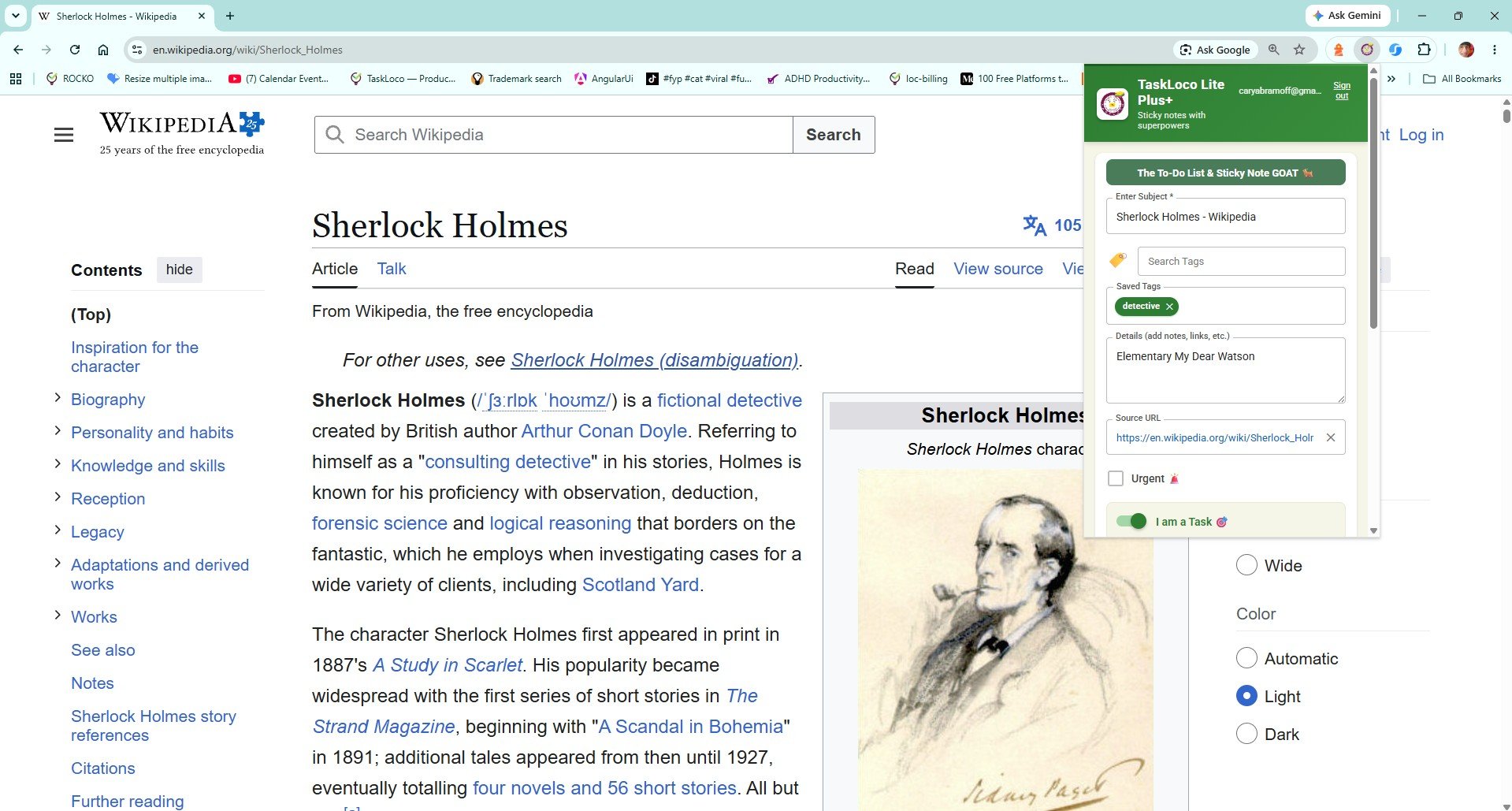
You found something worth keeping — an article, a recipe, a YouTube video, a product page — and your first instinct was to email it to yourself. We've all done it. Your inbox is full of links with no subject line, no context, and no chance you'll remember why you saved them. There's a better way, and it takes less time than opening a new email.
The email-to-self habit persists because it feels fast. But it isn't, really. You switch apps, type or paste the URL, send it, then dig through your inbox later to find it buried under everything else. What you actually need is a way to capture a link in the moment, keep it visible, and find it again without a search expedition. This guide covers several real methods — including a one-click option that makes the email habit feel embarrassing in retrospect.
The Methods That Actually Work (No App Required)
Before reaching for any tool, it helps to understand why the email habit fails: it has no structure. A link dropped into your inbox is just noise competing with everything else. Any good alternative needs to get the link out of your communication stream and into a place dedicated to things you want to revisit.
- Browser bookmarks: Built into every browser, zero friction to add. The problem is organization — most people's bookmark bar becomes a graveyard of folders they never open. Bookmarks also give you no visual context, just a title and a URL. If you save twenty articles in a week, you'll have no memory of why half of them mattered.
- Reading list (Safari or Chrome): A slightly better bookmark. Safari's Reading List and Chrome's reading list sidebar let you save pages for later with one click. They sync across devices if you're signed into the browser. Still text-only, still easy to forget, and not built for anything beyond short-term queuing.
- Copy the URL into a notes app: Open Apple Notes, Notion, Google Keep, or whatever you use, paste the link, maybe add a sentence of context. This works and is genuinely better than email. The downside is friction — you're switching apps, opening a new note, and doing the work manually every single time.
- Share sheet on mobile: On iPhone or Android, the share button lets you send a link to apps like Notes, Reminders, or Keep. This is one of the better no-extension options on mobile. On desktop, you lose this convenience almost entirely.
Why Bookmarks Alone Keep Letting You Down
Bookmarks have been the default answer to this problem for decades, and they've never quite solved it. Here's what keeps going wrong:
No visual context. A bookmark is a title and a URL. That's it. When you come back to a folder called "Articles" containing forty-three items, there's nothing to remind you why any of them seemed important. The brain is much better at recognizing images and layouts than parsing a list of page titles.
Folders become the new inbox. The moment you try to organize bookmarks, you're making a micro-decision about where each one goes. Over time, folders multiply, naming conventions drift, and you end up with the same organizational chaos you were trying to escape — just with more clicks to get there.
They don't travel well. Bookmarks technically sync if you're signed into Chrome or Safari, but they live in the browser. They're not designed to be reviewed on your phone the same way you'd scroll through notes or a task list. The experience is clunky, and most people never actually use synced bookmarks on mobile.
No notes, no tags, no search that matters. You can search bookmarks by title, but you can't add context, tag by topic, or search content you remember but didn't save in the title. A system you can't query is a system you'll stop trusting — and stop using.
None of this means bookmarks are worthless. For permanent reference links — your bank, your project management tool, your go-to research databases — bookmarks are fine. For the flow of interesting things you discover while browsing, they consistently fail.
One-Click Options That Beat Email and Bookmarks
Once you accept that neither email nor plain bookmarks is the right tool, the next question is: what is? The honest answer is a dedicated web clipper — a browser extension whose entire job is to capture pages cleanly and make them easy to find later.
Evernote Web Clipper has been around for years and does more than most people need — it can clip full pages, simplified articles, and screenshots into Evernote notebooks. If you're already deep in the Evernote ecosystem, it's a natural fit. If you're not, onboarding just to capture links is overkill.
Notion Web Clipper works similarly for Notion users. Same trade-off: powerful if you already live in Notion, unnecessarily complex if you just want to save a link fast.
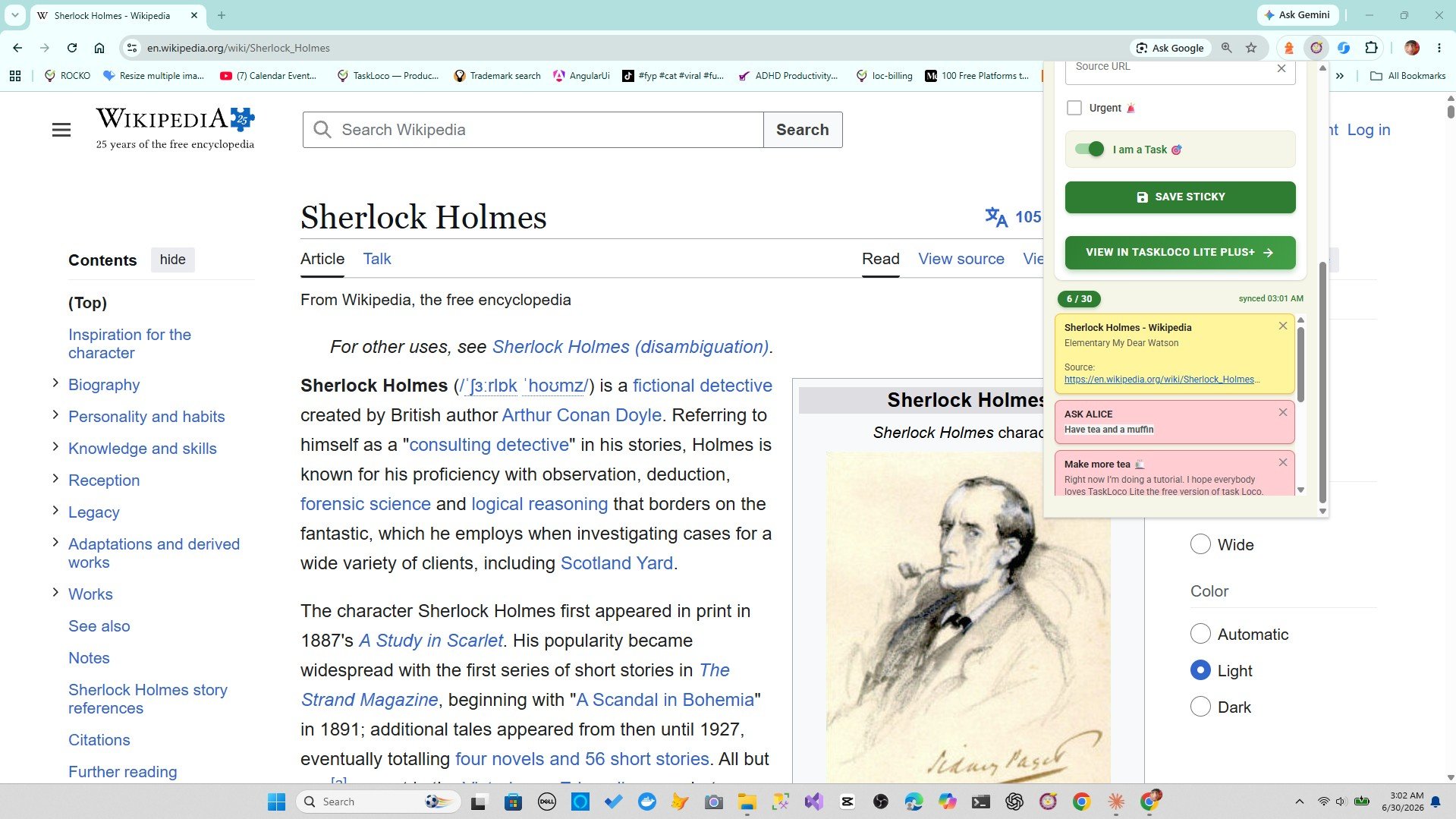
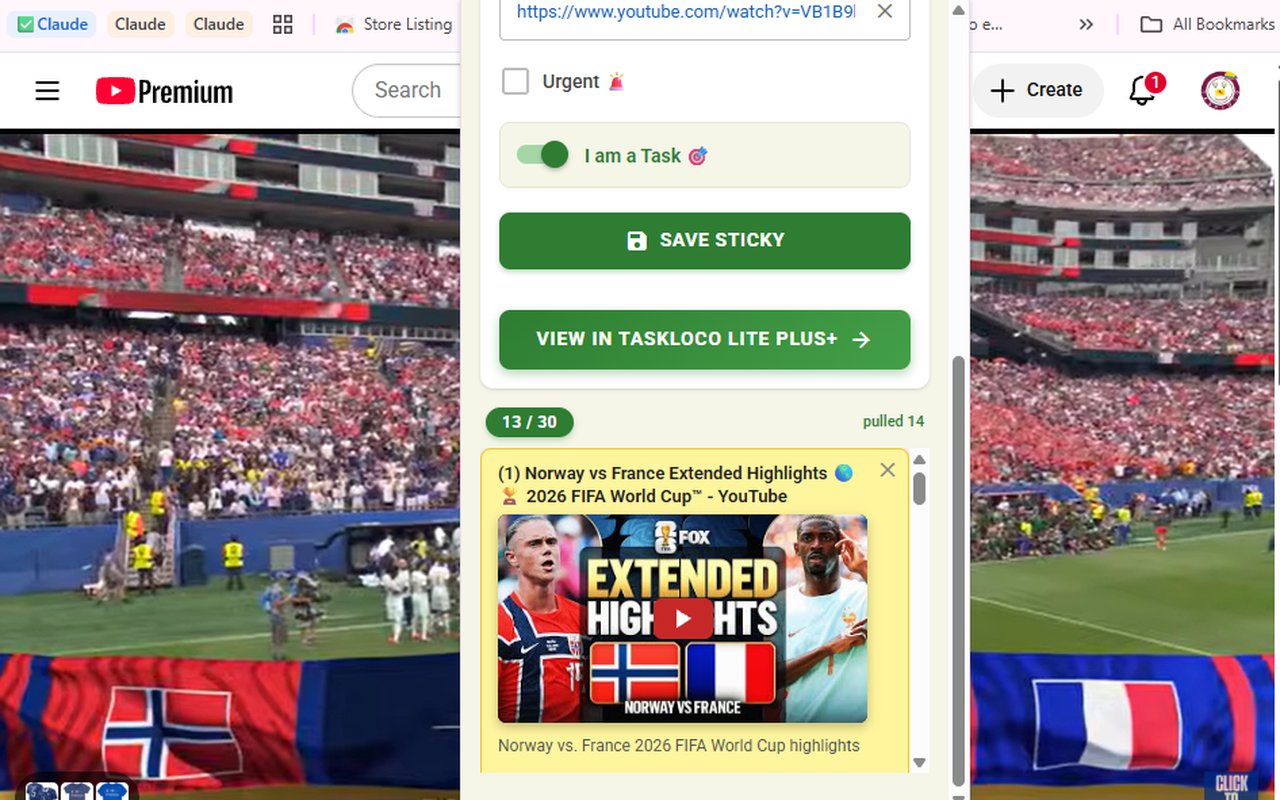
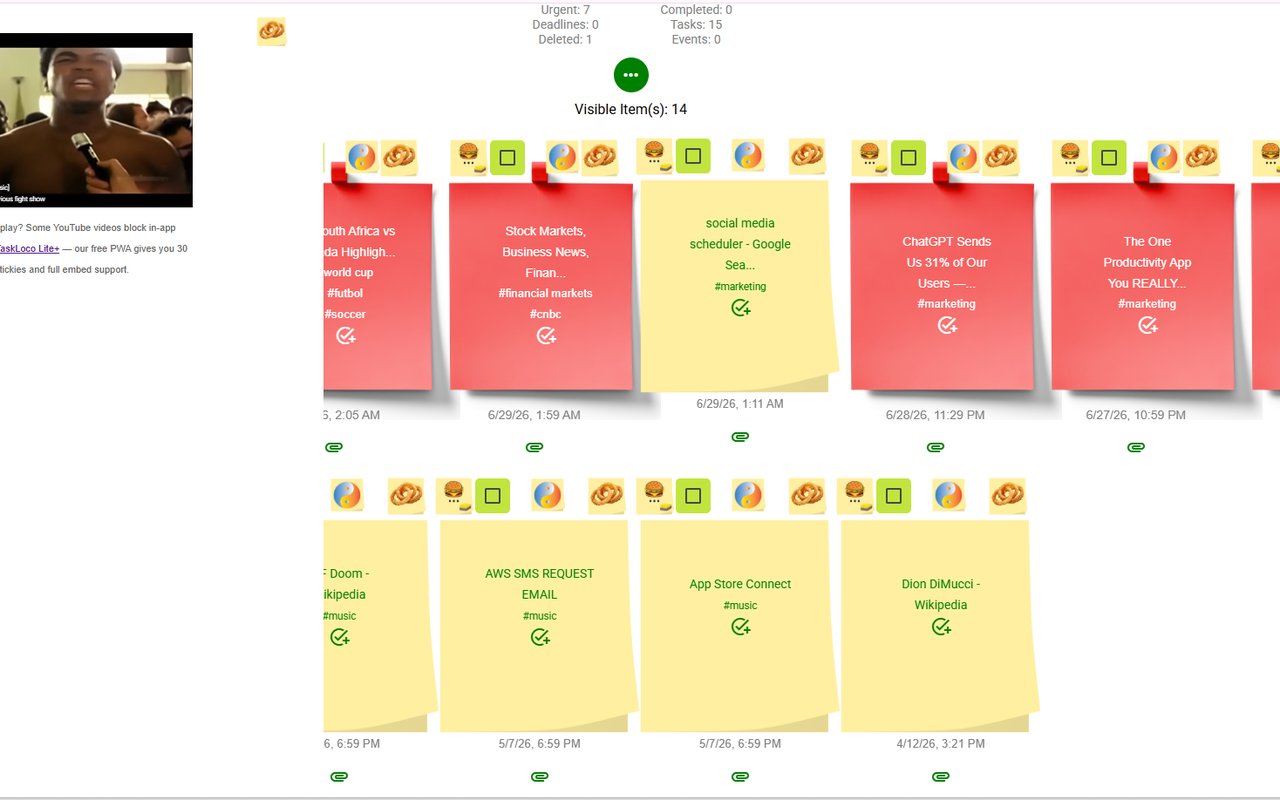
The Sticky Note Web Clipper for Chrome takes a different approach. Click the toolbar icon once, and the current page is saved as a visual sticky note — title and URL auto-filled, no form to complete, no folder to choose. YouTube videos embed directly inside the note and play without leaving your wall. Everything lands on a visual board in TaskLoco, which syncs to your phone and desktop automatically. You sign in free with Google and start clipping in under a minute.
The distinction matters because the bottleneck is almost always friction. The moment a tool asks you to think — which notebook, which folder, what title — you're out of the flow. The best link-saving habit is one that costs you almost nothing to execute in the moment.
Make the Sticky Note Web Clipper Your Default Save Habit
Switching from email-to-self to a real clipping workflow is easier than it sounds, because you're not building a new habit from scratch — you're replacing a bad one with a better one that takes the same instinct (I want to save this) and makes the execution faster.
Install the Sticky Note Web Clipper from the Chrome Web Store for free. Sign in with Google. Pin the extension to your toolbar so the icon is always one click away. That's the setup — it takes about ninety seconds.
From there, the workflow is: see something worth keeping, click the icon, done. The note is on your wall. The title is filled in. The URL is there. If you want to add a tag or a quick note for context, you can, but you don't have to. The link is captured and it will be there when you need it.
Because notes sync to TaskLoco, they're available on your phone and desktop without any extra steps. If you saved a recipe article on your laptop during lunch, it's on your phone when you're at the grocery store. If you clipped a YouTube tutorial at work, it's on your home screen when you're ready to watch it. That sync is built in, and it works through the free tier.
The result: your inbox stops filling up with links, your bookmarks stop being a dumping ground, and you actually revisit the things you save — because they're visual, searchable, and always in the same place.
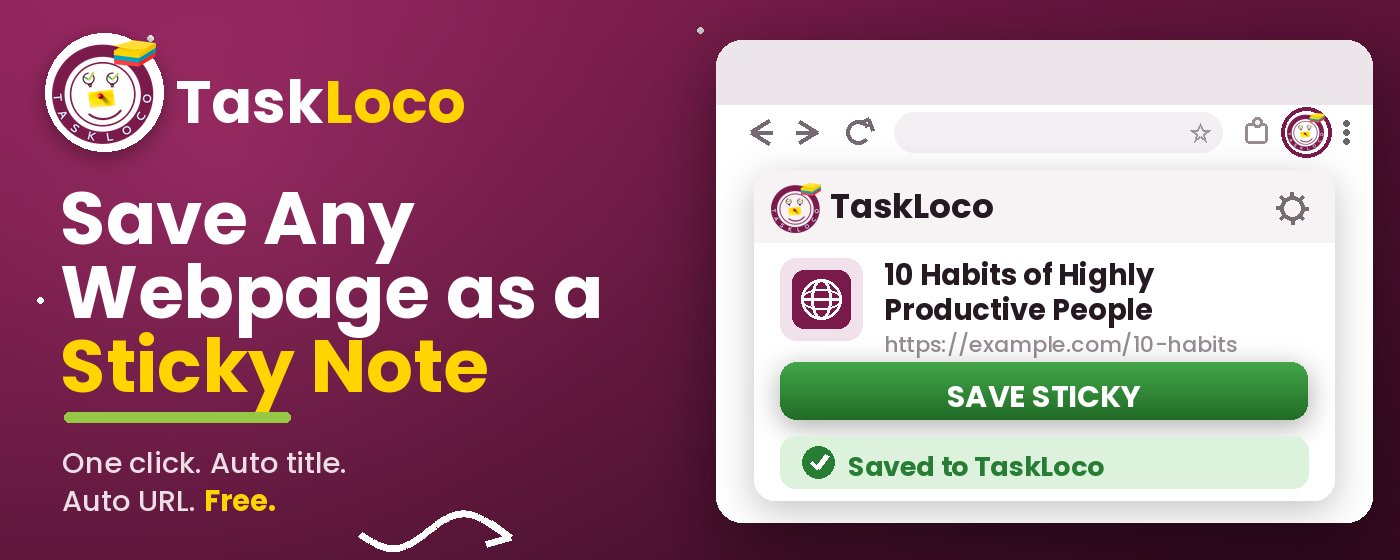
The Sticky Note Web Clipper is free. Install it from the Chrome Web Store, sign in with Google, and every page you clip becomes a sticky note you can find later.
Your clipped notes sync to TaskLoco across Chrome, desktop, iPhone, and Android — also free to start. No credit card to begin.
Get the Free Clipper
Sticky Note Web Clipper
- Free Chrome extension
- One-click save — any page, article, or video
- Title & URL auto-filled
- Tags & search
- Free forever
Synced to TaskLoco
- Sign in free with Google
- Your wall on Chrome, desktop, iPhone, Android
- YouTube videos embed & play in notes
- Visual sticky-note wall
- Free to start
Add It to Chrome — Free
One click saves any page, article, or YouTube video as a sticky note. Title and URL auto-filled.
Add to Chrome — FreeSee TaskLoco in Action
Frequently Asked Questions
What is the fastest way to save a link without emailing it to yourself?
Use a one-click browser extension. The free Sticky Note Web Clipper for Chrome captures the current page as a sticky note — title and URL auto-filled — the moment you click the toolbar icon. No copy-paste, no app switching, no email thread to dig through later.
Why shouldn't I just use bookmarks to save links?
Bookmarks work for permanent reference pages, but they fail for the flow of interesting things you discover while browsing. There's no visual context, no easy way to add notes, and most people's bookmark folders turn into disorganized lists they never actually use. A visual clipper keeps things you save visible and searchable in a way bookmarks don't.
Can I save YouTube videos, not just articles and webpages?
Yes. The Sticky Note Web Clipper saves YouTube videos as sticky notes that embed the video and let you play it directly inside the note — no separate tab needed. This works the same as saving any other page: one click on the toolbar icon while the video is open.
Will my saved links be available on my phone?
Yes. Notes you clip in Chrome sync to TaskLoco, which is available on iPhone, Android, and desktop. Save something on your laptop and it's on your phone without any extra steps. Sign-in is free with Google.
Is the Sticky Note Web Clipper free?
Yes — the extension is completely free. TaskLoco, where your notes sync, also has a free tier. Install from the Chrome Web Store, sign in with Google, and you're clipping immediately.
How is this different from Evernote Web Clipper or Notion Web Clipper?
Both of those clippers are powerful but assume you're already invested in their respective ecosystems. The Sticky Note Web Clipper is purpose-built for fast, visual, one-click saving — no notebooks to configure, no databases to set up. If you want to capture a link the moment you see it and find it again quickly, it's the more direct tool.
What if I want to add context to a link when I save it?
After clipping, you can open the note on your TaskLoco wall and add text, tags, or any context you want. But you don't have to do this at the moment of saving — the one-click capture gets the link off the page and into your wall instantly, and you can annotate it whenever it's convenient.
Born in Brooklyn. Powered by AWS. Your data stays yours.
TaskLoco is available on iPhone, Android, Chrome, and every web browser.