You're scrolling LinkedIn and someone posts something genuinely useful — a hiring insight, a market observation, a framework you've never seen laid out that clearly. You know you won't remember it tomorrow. So what do you do?
Most people either screenshot it, drop the URL in their notes app, or just like the post and hope the algorithm resurfaces it. None of those actually work. Screenshots pile up with no context. Notes apps get cluttered. The algorithm doesn't owe you a rerun. This guide walks through every real option for saving LinkedIn posts — including the native LinkedIn save feature most people overlook — so you can pick what actually fits your workflow.
Use LinkedIn's Built-In Save Feature (and Why It Falls Short)
LinkedIn has a native save feature that most users never find. Here's how to use it:
- Click the three dots (…) in the top-right corner of any post.
- Select Save from the dropdown menu.
- To find saved posts later, go to your profile, click Resources, then My Items — or navigate directly to linkedin.com/my-items/saved-posts.
That's legitimately useful for quick saves when you're already on mobile or don't want to leave LinkedIn. The problem is what happens afterward.
There's also a subtle platform risk: if the person who posted deletes their post or their account, your saved link goes nowhere. You're not saving the content — you're saving a pointer to content that can disappear. For anything you genuinely need to reference, that's a real limitation.
Other Ways People Save LinkedIn Posts (and the Real Trade-offs)
Before landing on a permanent system, it's worth knowing what most people try first:
- Bookmarking in Chrome: Fast, but bookmarks have no visual layout, no tagging structure most people actually maintain, and no way to add context. A folder called 'LinkedIn' with 200 bookmarks is functionally useless.
- Copy-pasting into a notes app: Gives you the text, loses the source URL unless you paste that too, and requires you to manually title and organize everything. High friction means you stop doing it.
- Screenshotting: Works for preserving exactly what was said, but screenshots aren't searchable by content, don't store the URL, and pile up in your camera roll with no organization.
- Sharing to yourself (email or DM): Works as a short-term alert but terrible as a reference system. Your inbox and DMs aren't built for retrieval.
The pattern across all of these: the saving step is easy enough, but the finding it again step fails. A good system has to handle both sides of that equation.
A Better System: Save LinkedIn Posts as Visual Sticky Notes in One Click
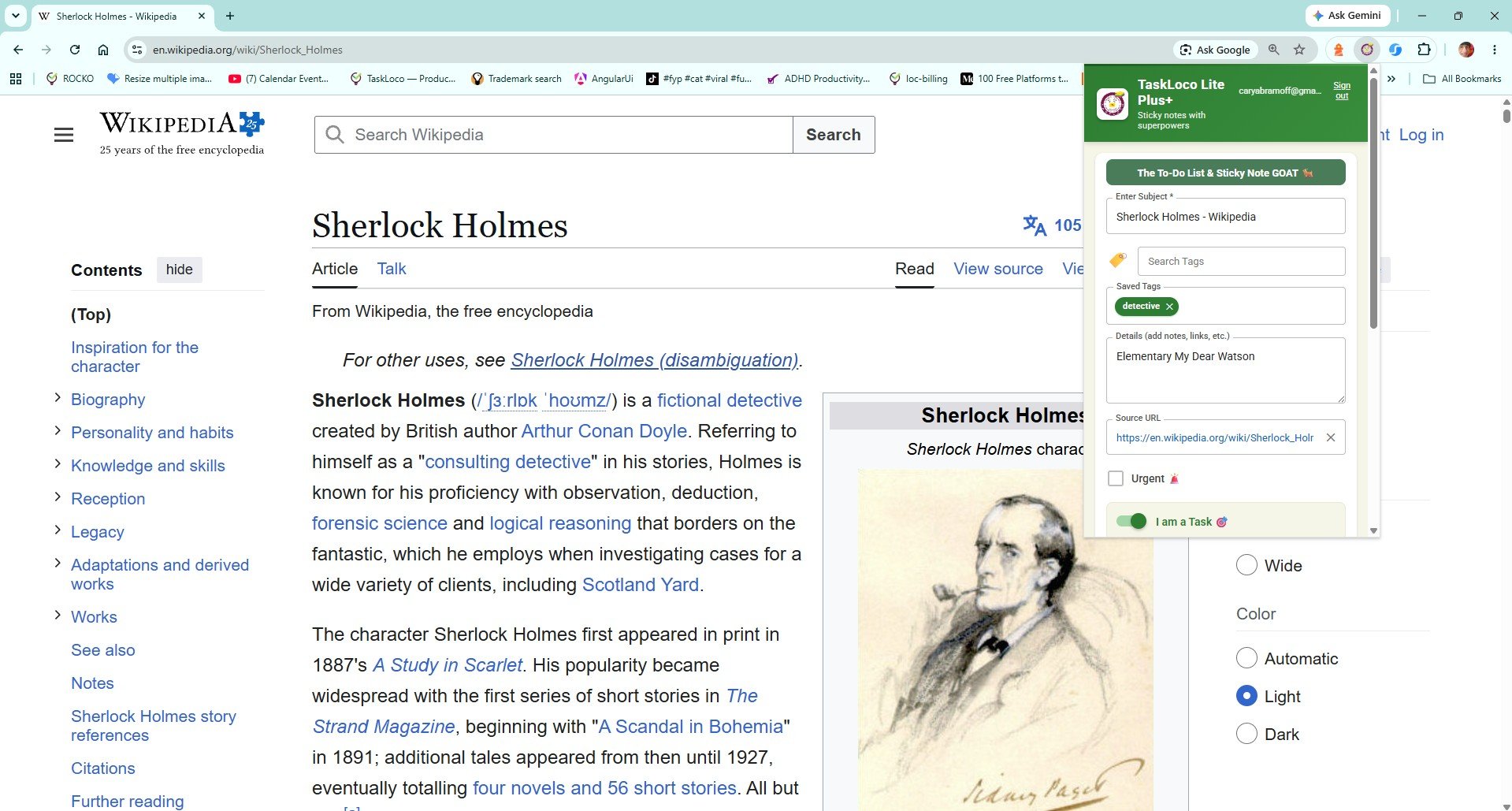
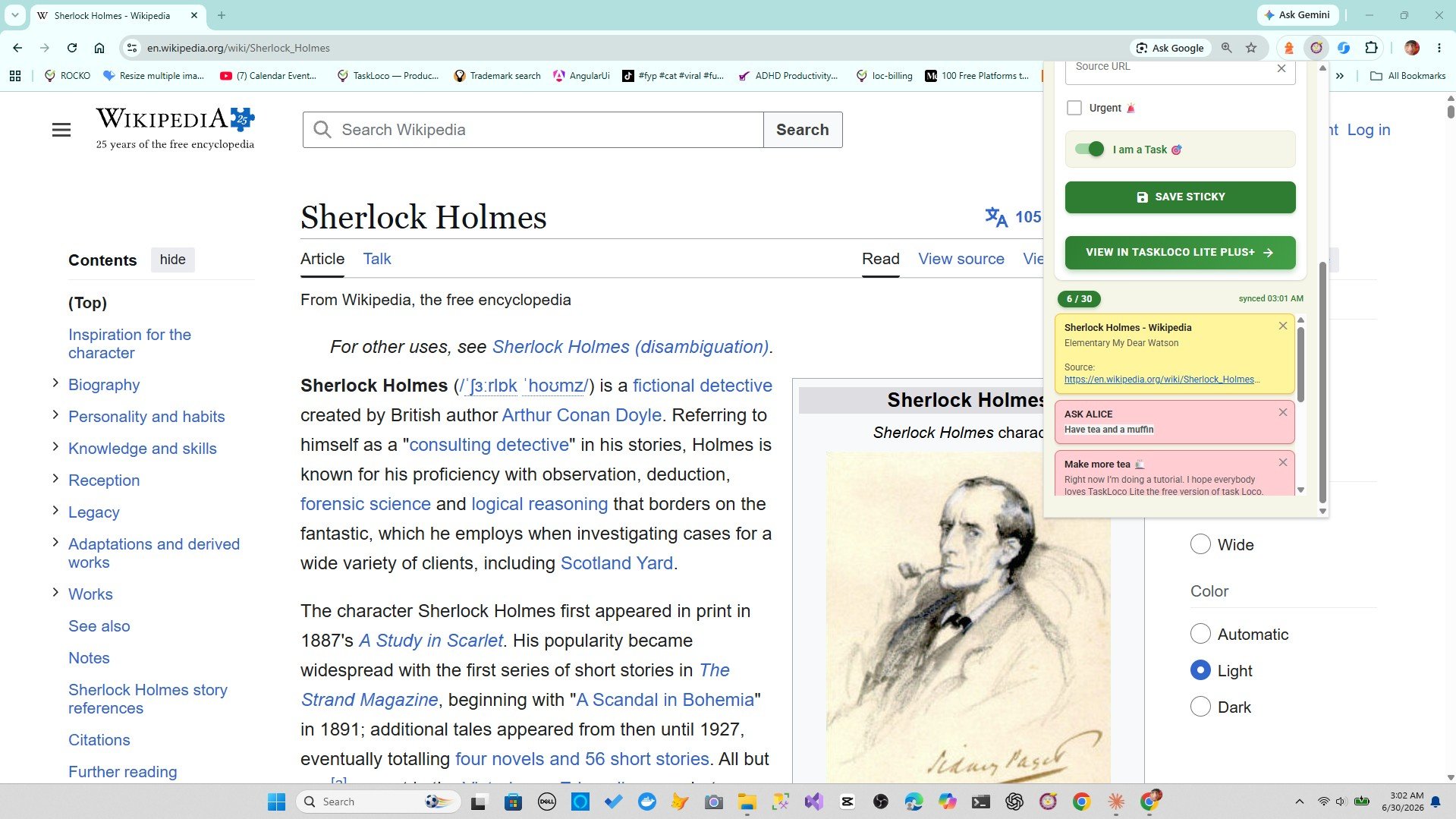
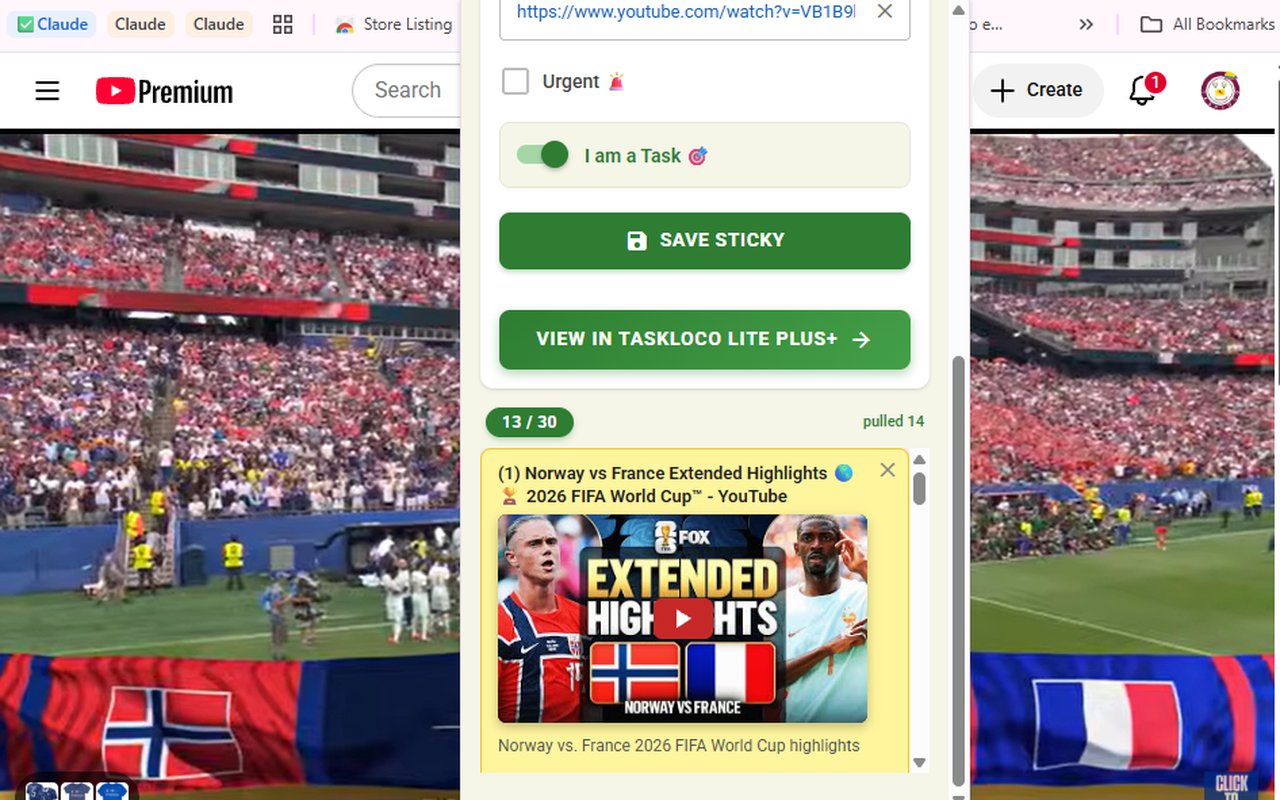
The Sticky Note Web Clipper is a free Chrome extension from TaskLoco. When you're on a LinkedIn post — or any page — you click the extension icon in your browser toolbar once, and it saves the page as a sticky note with the title and URL already filled in. No copy-pasting, no separate tab, no form to fill out.
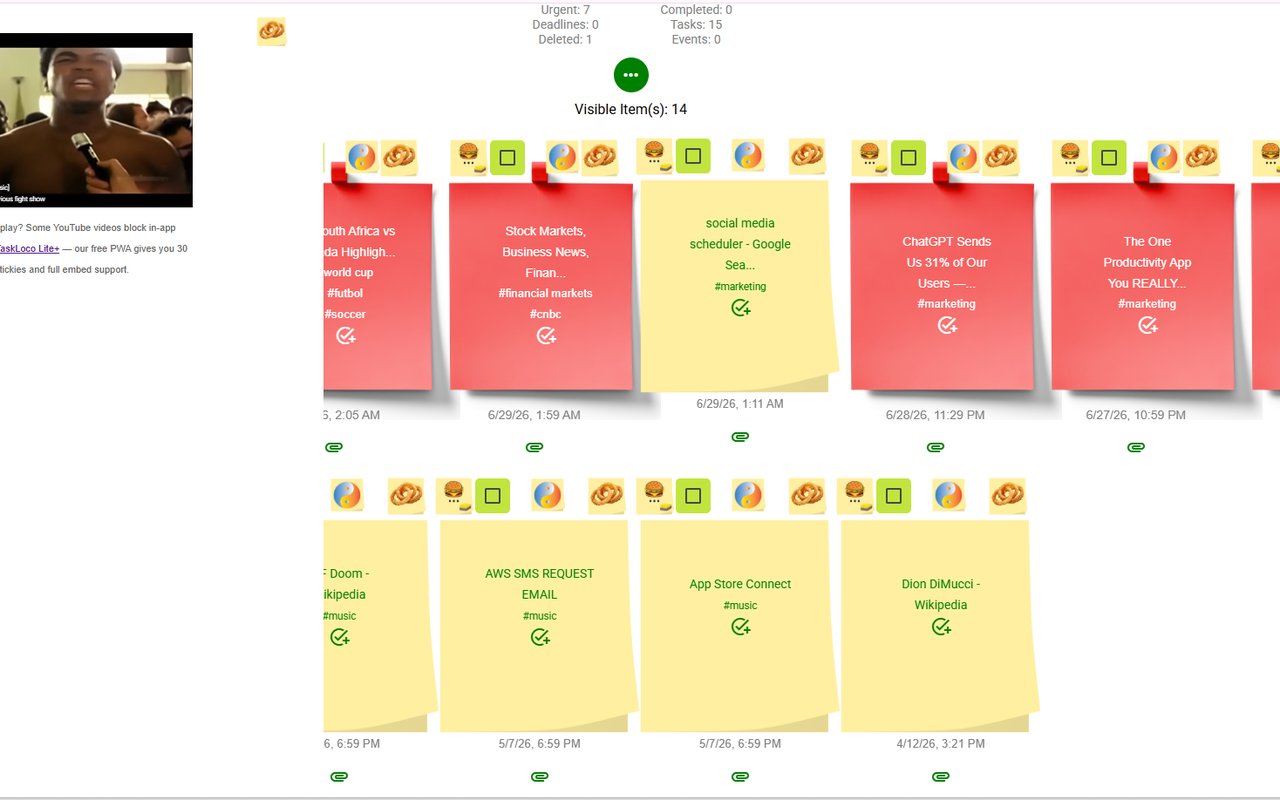
What makes this different from a bookmark is the format. Each saved item is a visual sticky note you can see on a wall, add tags to, and search by keyword. If you saved a post about negotiating equity compensation, you can search 'equity' weeks later and find it immediately rather than scrolling a flat list.
Everything saved through the clipper syncs to TaskLoco, which is available on desktop, iPhone, and Android. So a post you clip on your work laptop shows up on your phone the next morning when you remember you wanted to share it with someone. Sign-in is free with Google and takes about ten seconds.
Building a LinkedIn Reference Library That You'll Actually Use
Saving one post is easy. Building a collection of LinkedIn insights you can actually navigate is a different challenge. Here's what works:
- Tag by topic, not by date. Tags like 'job-search', 'leadership', 'salary', or 'founder-advice' let you pull up a relevant cluster fast. Date-based organization only helps if you remember when you saw something, which you usually don't.
- Add one line of context when you save. Why did this post matter? 'Good framing for negotiation conversations' takes five seconds to write and makes the note ten times more useful than a bare URL.
- Save the thread, not just the top post. If the value is in the comments, open the full post view (click the timestamp to get a direct URL) before clipping. That URL captures the post in context.
- Review what you've saved periodically. A saved post you never act on is just digital clutter. A short weekly scan of recent saves turns a passive collection into something you actually reference and use.
The Sticky Note Web Clipper handles the capture step so fast that it stops feeling like a chore. When saving something takes one click, you actually do it consistently — and consistent saving is what makes the library valuable over time.
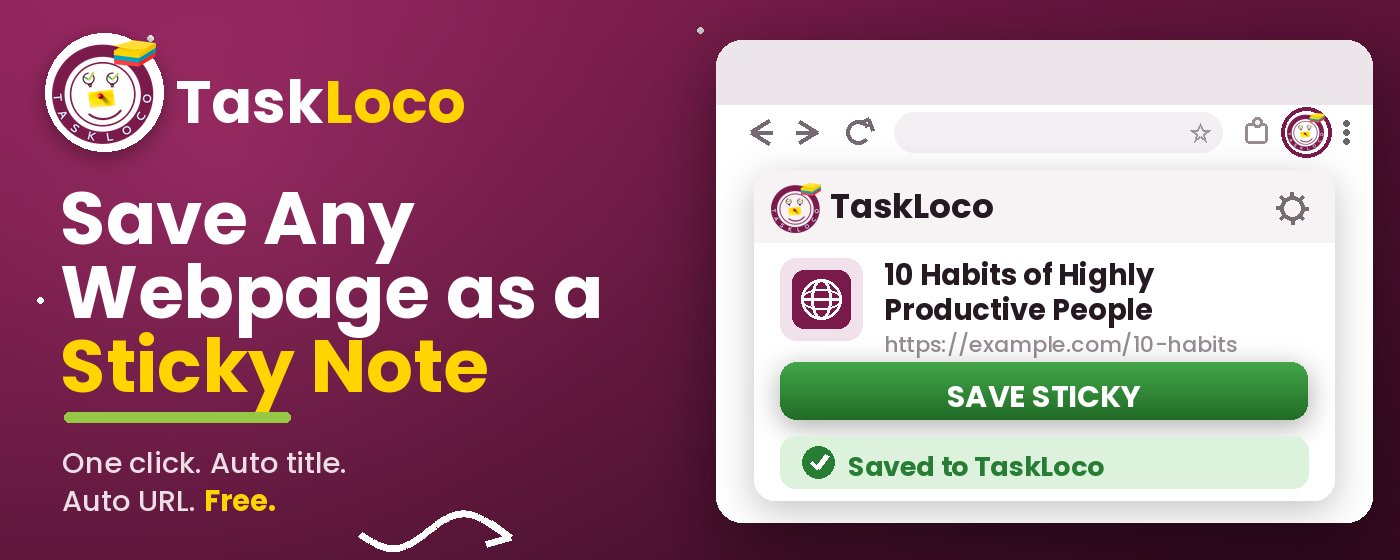
The Sticky Note Web Clipper is free. Install it from the Chrome Web Store, sign in with Google, and every page you clip becomes a sticky note you can find later.
Your clipped notes sync to TaskLoco across Chrome, desktop, iPhone, and Android — also free to start. No credit card to begin.
Get the Free Clipper
Sticky Note Web Clipper
- Free Chrome extension
- One-click save — any page, article, or video
- Title & URL auto-filled
- Tags & search
- Free forever
Synced to TaskLoco
- Sign in free with Google
- Your wall on Chrome, desktop, iPhone, Android
- YouTube videos embed & play in notes
- Visual sticky-note wall
- Free to start
Add It to Chrome — Free
One click saves any page, article, or YouTube video as a sticky note. Title and URL auto-filled.
Add to Chrome — FreeSee TaskLoco in Action
Frequently Asked Questions
How do I find my saved posts on LinkedIn?
Go to your LinkedIn profile, click 'Resources,' then 'My Items,' and select 'Saved posts.' Alternatively, navigate directly to linkedin.com/my-items/saved-posts. Note that this list is flat and unsearchable, so finding a specific saved post gets harder as the list grows.
Can LinkedIn posts be deleted after I save them?
Yes. LinkedIn's native save only saves a link to the post — if the author deletes the post or their account, or if LinkedIn removes it, your saved item becomes a dead link. The Sticky Note Web Clipper saves the URL at the time of clipping; you can also copy the post text into the note body if you need to preserve the actual content.
Is there a way to organize saved LinkedIn posts by topic?
Not natively inside LinkedIn. LinkedIn's saved posts are a single unfiltered list with no folders, tags, or search. If you save posts through the Sticky Note Web Clipper instead, you can add tags and search by keyword across everything you've saved.
Does the Sticky Note Web Clipper work on LinkedIn?
Yes. Any LinkedIn post page with its own URL can be saved with one click using the clipper. The extension captures the page title and URL automatically. You can then add tags or a note about why you saved it before closing the note.
Is the Sticky Note Web Clipper free?
Yes — the extension is free, and TaskLoco has a free tier. Install it from the Chrome Web Store, sign in with Google, and start clipping immediately. There's nothing to pay to save and organize LinkedIn posts.
Will my saved LinkedIn posts sync to my phone?
If you save posts using the Sticky Note Web Clipper, everything syncs to TaskLoco, which is available on desktop, iPhone, and Android. A post you clip on your laptop shows up in TaskLoco on your phone. LinkedIn's native saved posts are accessible on mobile through the LinkedIn app but only within LinkedIn itself.
What's the best way to save a LinkedIn post I want to share later?
Open the full post by clicking its timestamp to get a direct URL, then click the Sticky Note Web Clipper icon in your Chrome toolbar. The note saves with the URL auto-filled. Add a quick tag like 'to-share' so you can pull it up when you need it. Because it syncs to your phone via TaskLoco, you'll have it ready wherever you are.
Born in Brooklyn. Powered by AWS. Your data stays yours.
TaskLoco is available on iPhone, Android, Chrome, and every web browser.