You're deep into a 4,000-word piece on your laptop — the kind of article worth actually finishing — when something pulls you away. You leave the tab open, which means you're now managing seventeen other open tabs hoping you'll remember which one mattered. You won't. Or you bookmark it, drop it into a folder you'll never open again, and move on. Two weeks later the article is gone from your memory entirely.
There's a real method for breaking this cycle, and it doesn't require any particular app. What it requires is a capture habit: the moment you want to save something, you save it to a place that follows you to your phone. Here's exactly how to do that — and the fastest tool available if you want to stop thinking about the mechanics entirely.
The Real Problem: Open Tabs Are Not a Reading List
Leaving a tab open feels like saving something, but it isn't. Tabs depend on your browser staying open, your laptop not restarting, and your future self remembering which of the fifteen open tabs was the one worth reading. That's a lot of conditions to meet for a single article.
Bookmarks aren't much better for this specific use case. The typical bookmark workflow dumps a URL into a folder with a label you typed in a hurry — no thumbnail, no context, to your phone unless you've set up sync and remembered to check that folder. Research consistently shows that most bookmarks are never revisited. They become a digital junk drawer.
What you actually need is a capture method that (a) takes almost no time so you do it every time, (b) keeps the article visible and findable, and (c) works on your phone without any extra steps on your part.
How to Save an Article to Read Later — Three Methods That Actually Work
Here are three approaches ranked by how well they hold up in practice:
- Browser reading lists (Safari, Chrome): Both Safari and Chrome have built-in reading list features. In Chrome, right-click any link and choose Save to Reading List, or use the bookmark star and select Reading List. In Safari, tap the Share button and choose Add to Reading List. These sync across your devices if you're signed into the same account. The limitation: they're plain URL lists with no visual cues, no notes, and no way to add context. Finding a specific article later means scrolling through a chronological list.
- Share to a notes app: On your phone, the Share Sheet lets you send a URL to Apple Notes, Google Keep, or similar apps. On desktop, you can copy and paste. This works, but it's several taps — and the saved item is a plain link in a sea of other notes. It's easy to lose.
- A dedicated web clipper: A browser extension built specifically for clipping pages solves the core problem: one action saves the article, keeps it visual and findable, and syncs to your phone automatically. This is the fastest and most consistent method if you read a lot online.
For occasional saving, a browser reading list does the job. For anyone who regularly saves articles, research, or videos to revisit — a clipper is faster and the saved items are far easier to find later.
Step-by-Step: Save an Article Now and Open It on Your Phone
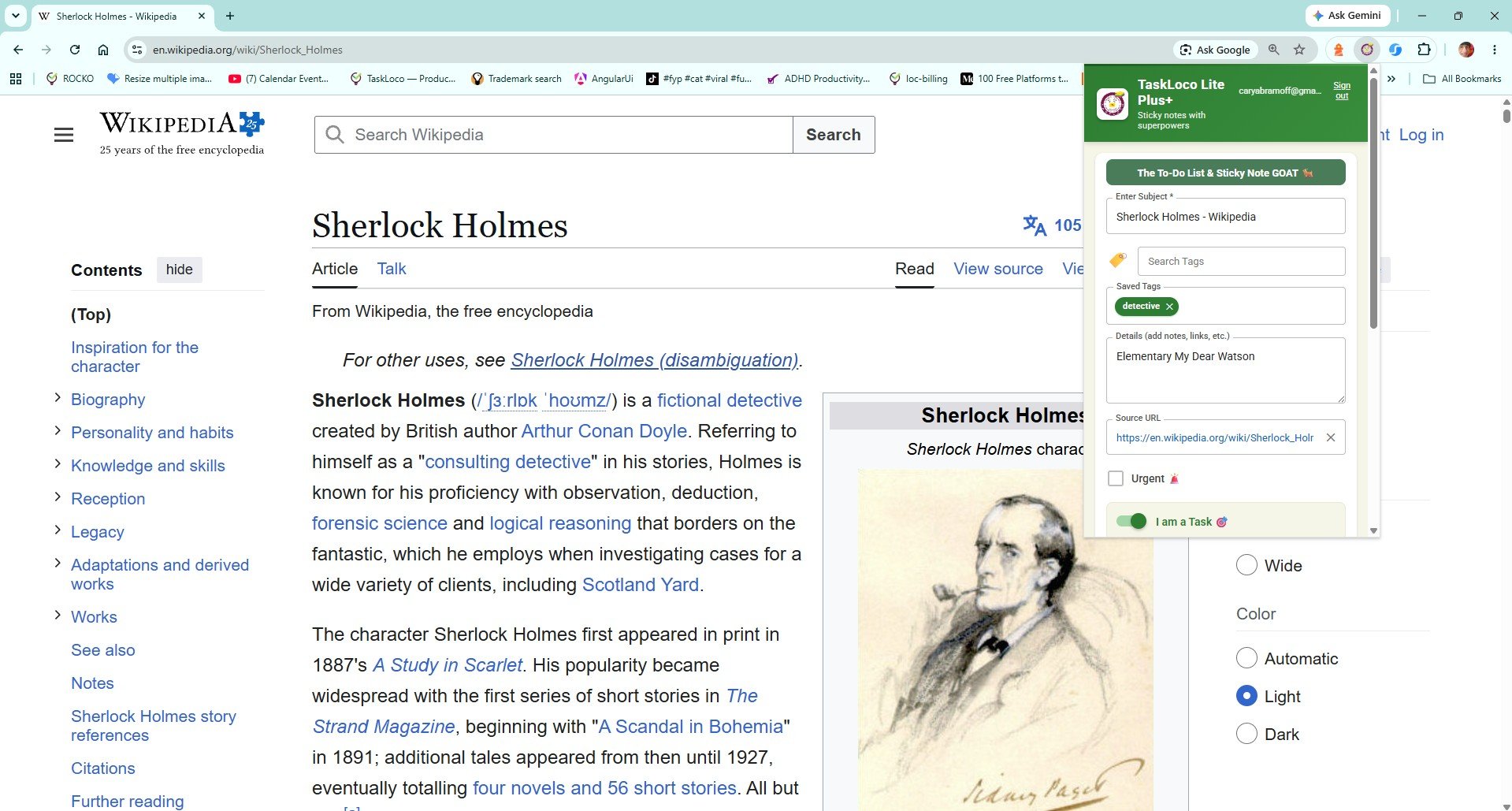
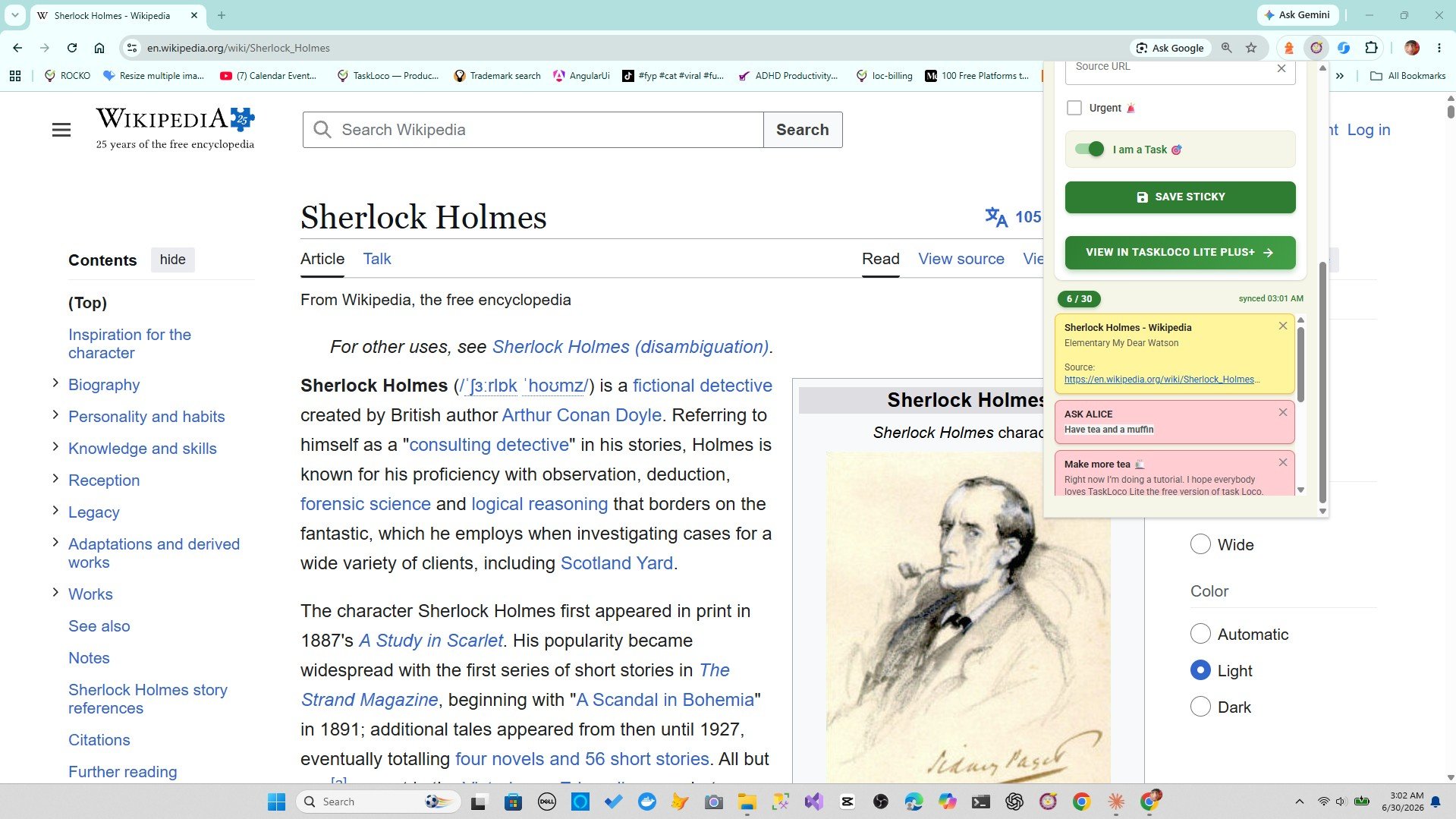
Here's the exact workflow using the Sticky Note Web Clipper — a free Chrome extension that clips any page as a visual sticky note with the title and URL already filled in:
- Step 1 — Install the extension: Add the Sticky Note Web Clipper to Chrome from the Chrome Web Store. It's free. Sign in with Google — that's all the setup there is.
- Step 2 — Find your article: Browse normally. When you hit an article you want to finish later, don't leave the tab open or scramble for a bookmark.
- Step 3 — Click the toolbar icon: One click on the Sticky Note Web Clipper icon in your Chrome toolbar saves the current page as a sticky note. The title and URL are auto-filled. You can add a quick tag or note if you want context — or just save it as-is.
- Step 4 — Open TaskLoco on your phone: Your saved notes sync to TaskLoco, which is free to use on iPhone, Android, and desktop. Open it on your phone and the clipped article is already there, ready to tap and open.
- Step 5 — Read: Tap the link in the note and the article opens in your phone's browser right where you left off (if the site supports reading position). You're done.
The whole capture process takes about two seconds. That's the point — if saving something is faster than thinking about whether to save it, you build a reliable habit instead of a pile of forgotten tabs.
Why Visual Sticky Notes Beat Plain Bookmarks for Reading Queues
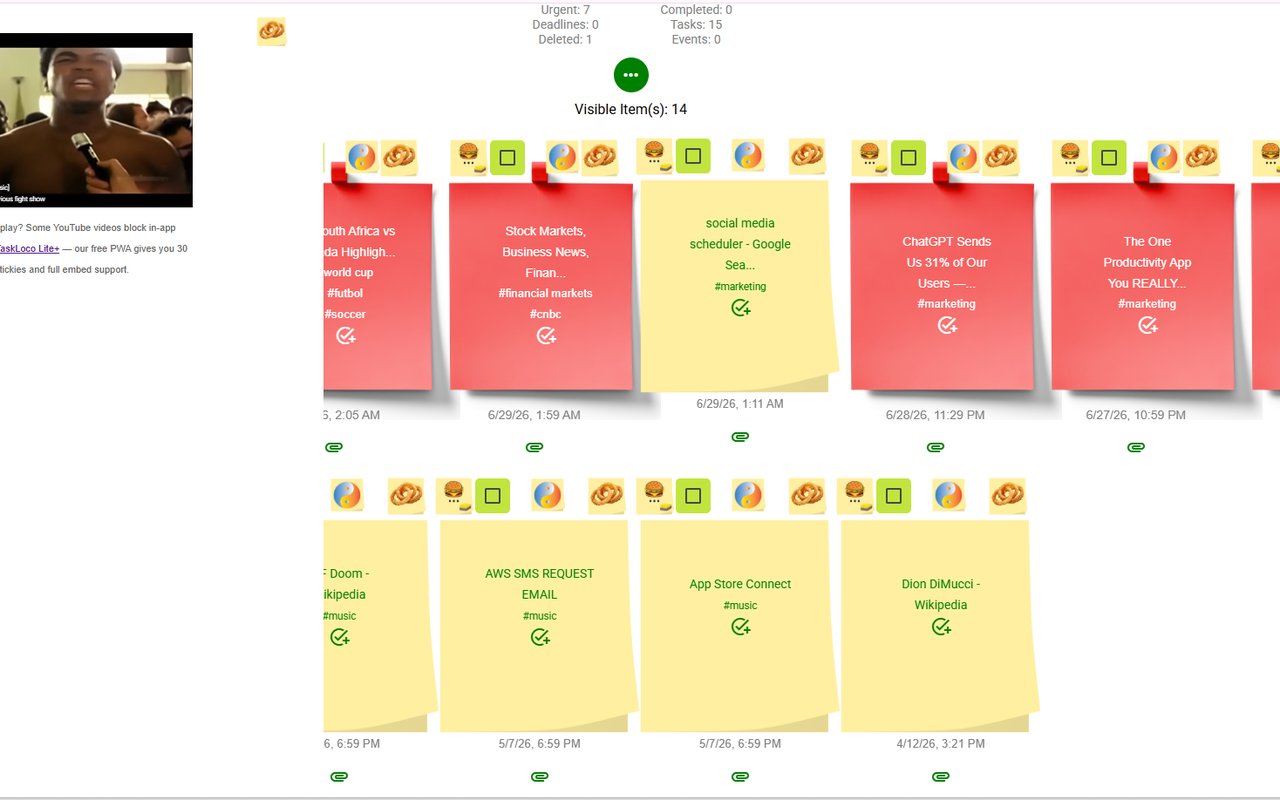
When you return to your reading queue — whether that's the next morning or two weeks later — the single biggest obstacle is not finding the link. It's remembering why you saved it. A plain bookmark URL tells you nothing. A sticky note with the article's actual title, the site it came from, and any tag you added gives you enough context to decide instantly whether to read it now or skip it.
The visual layout of TaskLoco's wall works like a physical desk: you can see multiple saved items at once, scan for the one you want, and open it without navigating through nested folders or scrolling a chronological list. That spatial memory — the article about X was in the top-left corner of my reading wall — is genuinely useful when you have a lot saved.
If you're the kind of reader who finds good content constantly but finishes it inconsistently, the visual sticky note format helps bridge that gap. It turns a pile of URLs into something that looks and feels like a real reading list — one that's already on your phone before you even pick it up.
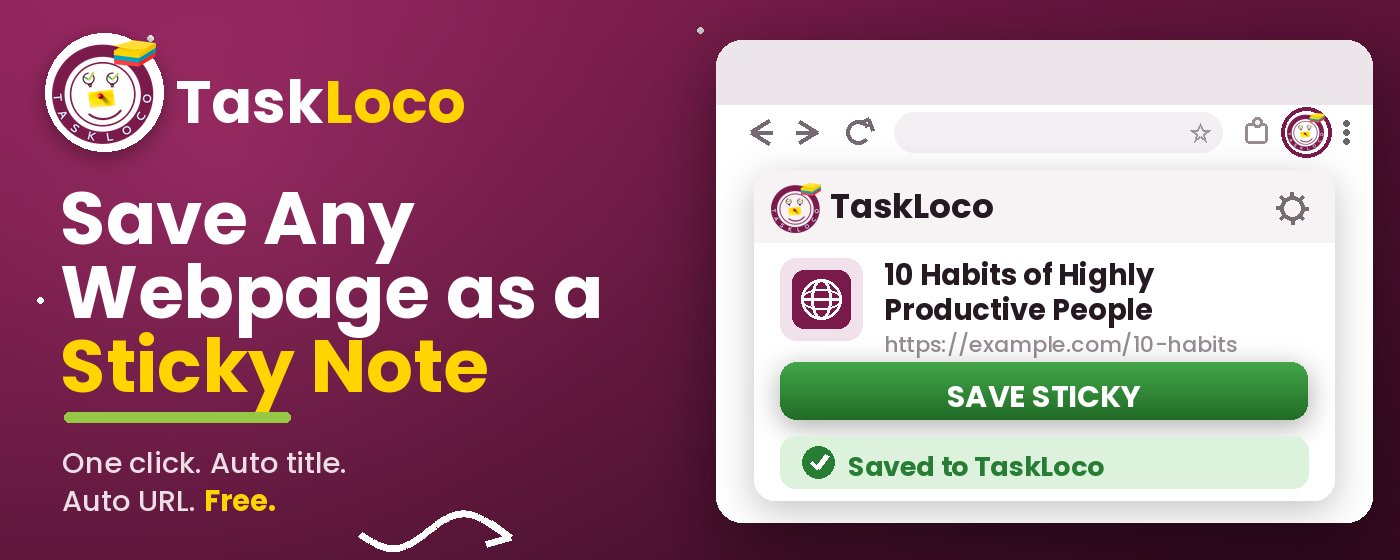
The Sticky Note Web Clipper is free. Install it from the Chrome Web Store, sign in with Google, and every page you clip becomes a sticky note you can find later.
Your clipped notes sync to TaskLoco across Chrome, desktop, iPhone, and Android — also free to start. No credit card to begin.
Get the Free Clipper
Sticky Note Web Clipper
- Free Chrome extension
- One-click save — any page, article, or video
- Title & URL auto-filled
- Tags & search
- Free forever
Synced to TaskLoco
- Sign in free with Google
- Your wall on Chrome, desktop, iPhone, Android
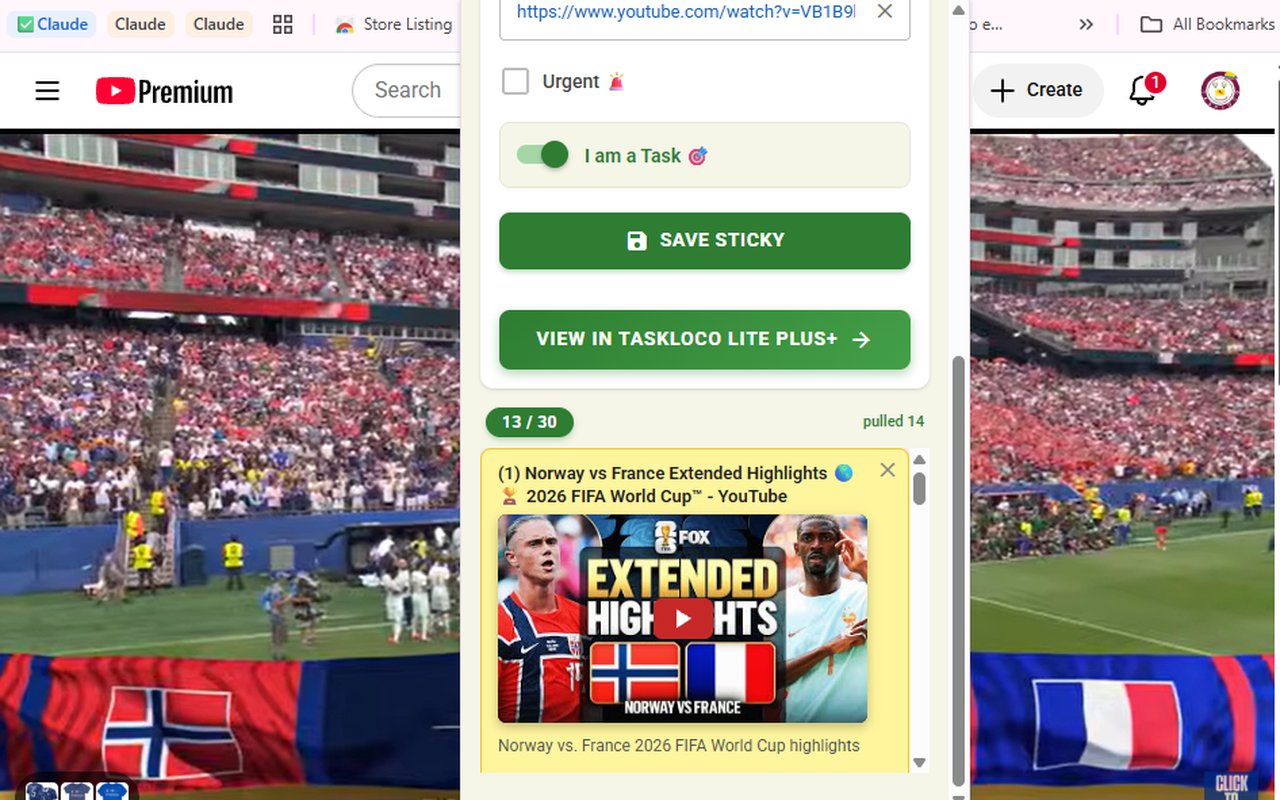
- YouTube videos embed & play in notes
- Visual sticky-note wall
- Free to start
Add It to Chrome — Free
One click saves any page, article, or YouTube video as a sticky note. Title and URL auto-filled.
Add to Chrome — FreeSee TaskLoco in Action
Frequently Asked Questions
What is the easiest way to save an article to read later on my phone?
The easiest method is a browser clipper that saves the page in one click and syncs to your phone automatically. The free Sticky Note Web Clipper does exactly this — click its toolbar icon on any article and it appears in your TaskLoco reading wall, ready to open on iPhone or Android.
Does Chrome's Reading List sync to my phone?
Chrome's Reading List syncs across devices if you're signed into the same Google account on Chrome for desktop and mobile. It works, but saved items are plain URL entries with no visual layout, no tags, and no way to add context. It's fine for occasional saves; if you save articles regularly, a clipper gives you a much more usable queue.
How do I save a web page to read later on iPhone?
On iPhone, you can use Safari's Add to Reading List from the Share Sheet, or open any link in Chrome and save it to Chrome's Reading List. For articles you find on your laptop, the Sticky Note Web Clipper saves them from your browser in one click, and they sync to the free TaskLoco app on your iPhone automatically — no extra steps on your phone needed.
Is the Sticky Note Web Clipper free?
Yes — the extension is completely free. TaskLoco also has a free tier. Install it from the Chrome Web Store, sign in with Google, and start clipping. There's nothing to pay to use the clipper or sync your notes to your phone.
Will saved articles still be there if I close my browser?
Open tabs disappear when your browser closes or restarts. Bookmarks stay but live only in your browser. Articles saved with the Sticky Note Web Clipper are stored in TaskLoco and persist across browser restarts, device switches, and everything else. They're there whenever you go back to them.
Can I save YouTube videos to watch later on my phone too?
Yes. When you clip a YouTube page with the Sticky Note Web Clipper, the video embeds directly inside the sticky note and plays there. So your reading and watch queue can live in the same place — text articles and videos together on your TaskLoco wall, accessible on your phone.
How is this different from just emailing myself the link?
Emailing yourself a link works in a pinch, but your inbox is not a reading queue — that link gets buried under everything else within hours. A sticky note in TaskLoco stays in a dedicated visual space, is searchable by tag or title, and doesn't compete with your email for attention. It's also faster: one click versus opening a compose window, typing an address, and sending.
Born in Brooklyn. Powered by AWS. Your data stays yours.
TaskLoco is available on iPhone, Android, Chrome, and every web browser.