You're reading something good — a tutorial, a product page, a video — and you think, I'll come back to this. You bookmark it, or leave the tab open, or paste the link into a notes app. Three days later, you can't find it. That's not a memory problem. That's a system problem.
Marking something as "to do later" requires more than saving a URL. It requires capturing enough context that when you return, you remember why it mattered — and it needs to live somewhere you'll actually look. This guide walks through how to do that properly, with or without any tool at all.
The Real Problem With Saving for Later
Most people treat saving and acting as two separate events. They save dozens of pages, then never create a clear signal that any of them require action. The result is a graveyard of bookmarks or a browser with thirty open tabs that becomes too stressful to close.
The fix is to capture intent at the moment you save. When you find a page worth returning to, you need to answer two questions before you close it:
- What do I need to do with this? Read it, watch it, buy it, reference it, share it?
- Where will I see it again? A list you actually check, not a folder you forget exists.
If your saving method can't carry that intent forward, it's not really saving — it's just delaying the loss.
How to Do This Without Any Special Tool
If you want a no-app method that actually works, here's the honest version: open a plain text file or a notes app you already use daily, and paste the URL with a one-line note about what you need to do. Something like: "Read this before buying — price comparison" or "Watch later — JS tutorial for the sidebar project."
The critical part is the label. The URL alone tells you nothing when you scan the list a week later. The one-line note is what makes it actionable.
To make this system hold up:
- Keep one list, not scattered notes across five apps.
- Review it on a schedule — Friday afternoon, Monday morning, whatever works. If you never look at the list, it's useless.
- Delete ruthlessly. If you haven't acted on something after two weeks, either do it now or accept you never will.
This approach costs nothing and works immediately. The limitation is friction: copying URLs, writing context, switching apps, then remembering to review a plain text file takes enough steps that most people stop doing it within a week.
How Browser Bookmarks Fall Short for Action Items
Bookmarks are fast to create but terrible for action items. The core issue is that they're designed for reference — things you'll look up again someday — not for tasks you need to act on. When you bookmark a page you intend to do something with, it immediately competes with every other bookmark you've ever saved, with no visual distinction between "read this once and done" and "do this by Friday."
Folders help a little. A folder called "To Do" is better than no system. But bookmarks have no visual preview, no tags that surface in search the way you'd want, and — most critically — no sync that puts them in front of you on your phone when you're actually thinking about the task. Most people have a bookmark folder they created in good faith and haven't opened in months.
Open tabs are even worse as an action system. They create the illusion of not having lost the page, while steadily consuming memory and making your browser feel like a cluttered desk. Tabs don't age gracefully. They pile up, and eventually you close them in a panic during a restart and lose everything.
A One-Click Way to Capture Pages as Action Items
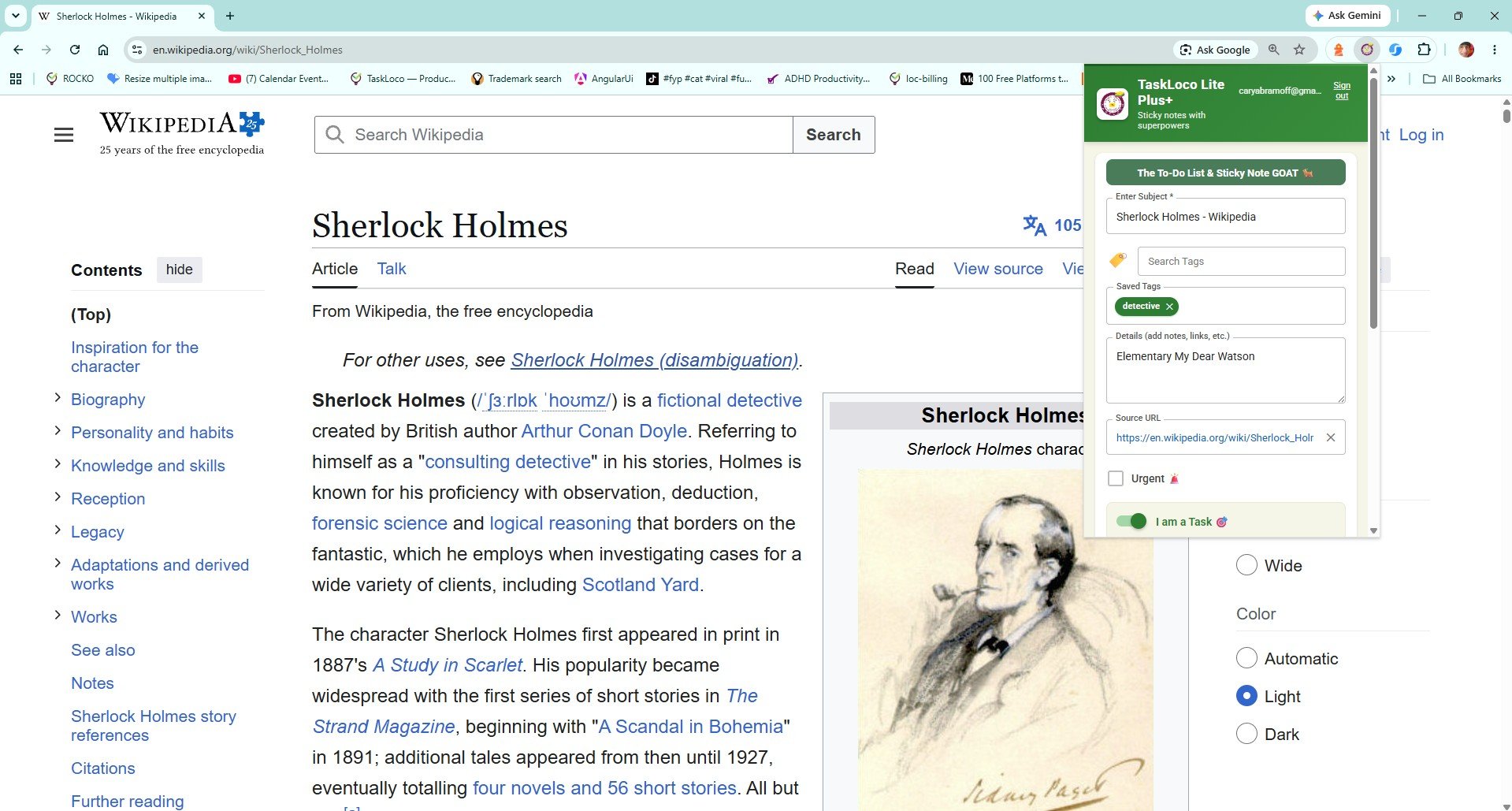
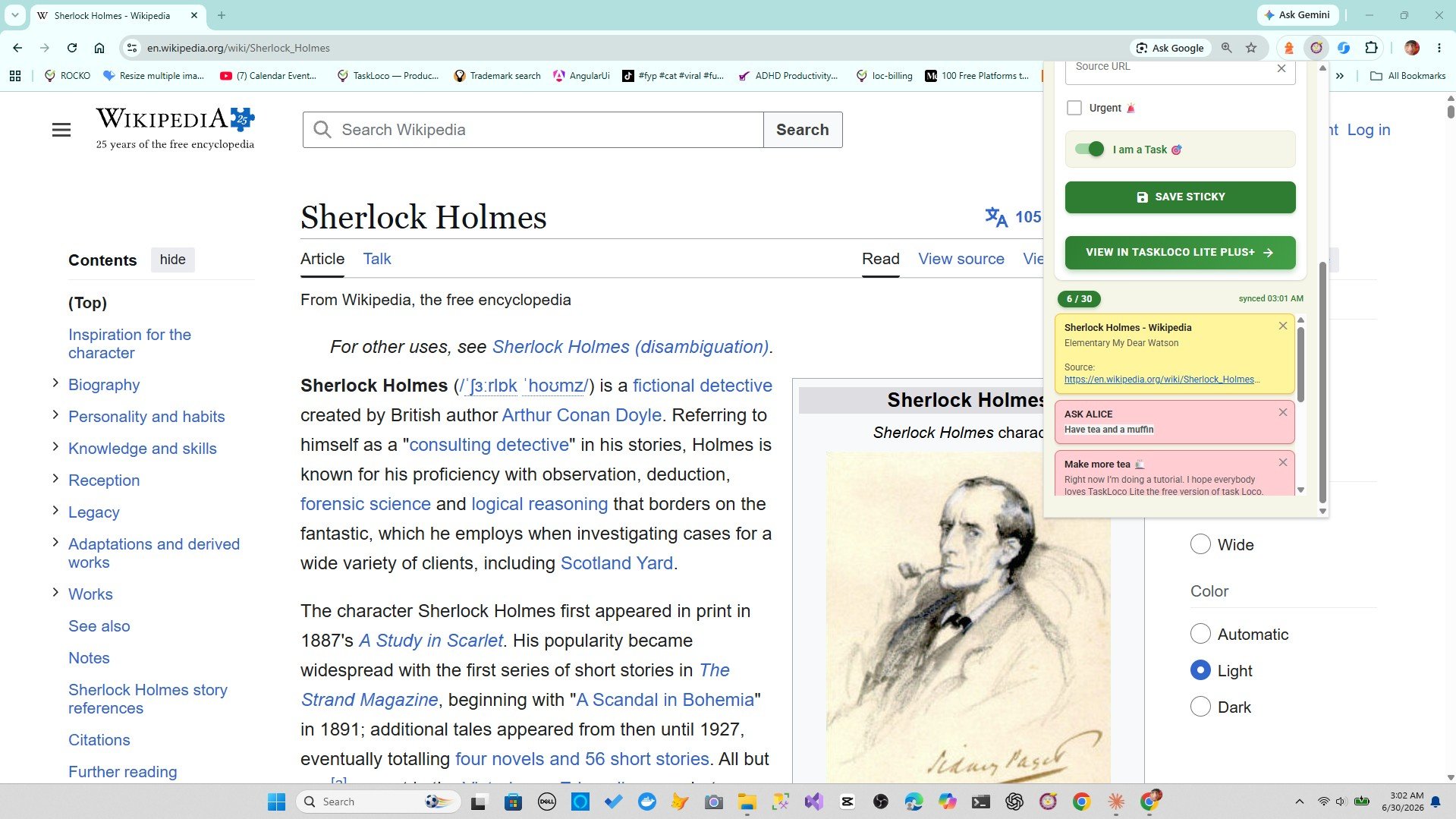
The Sticky Note Web Clipper (a free Chrome extension by TaskLoco) is built for exactly this workflow. When you're on a page you need to act on, you click the toolbar icon once. The extension saves the page as a visual sticky note — title and URL already filled in — and it lands on your TaskLoco wall where you can see it, tag it, and search it.
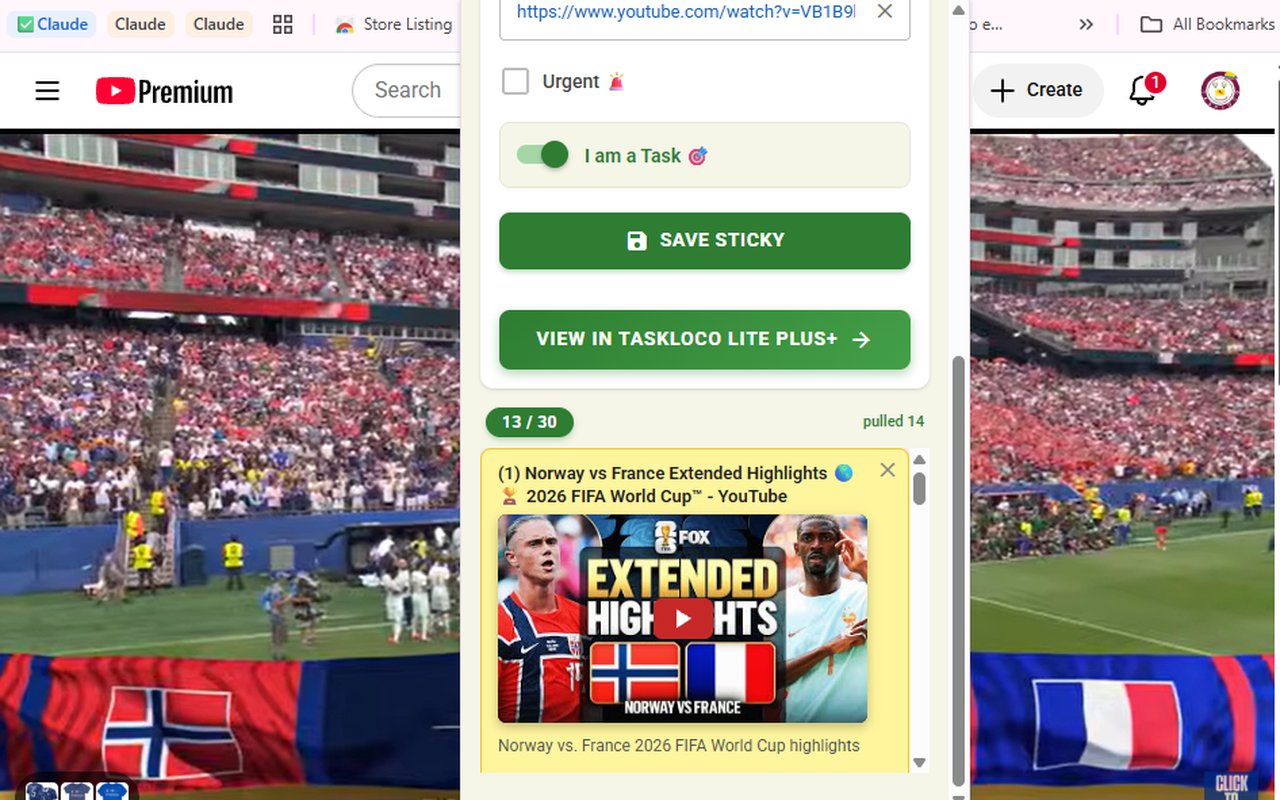
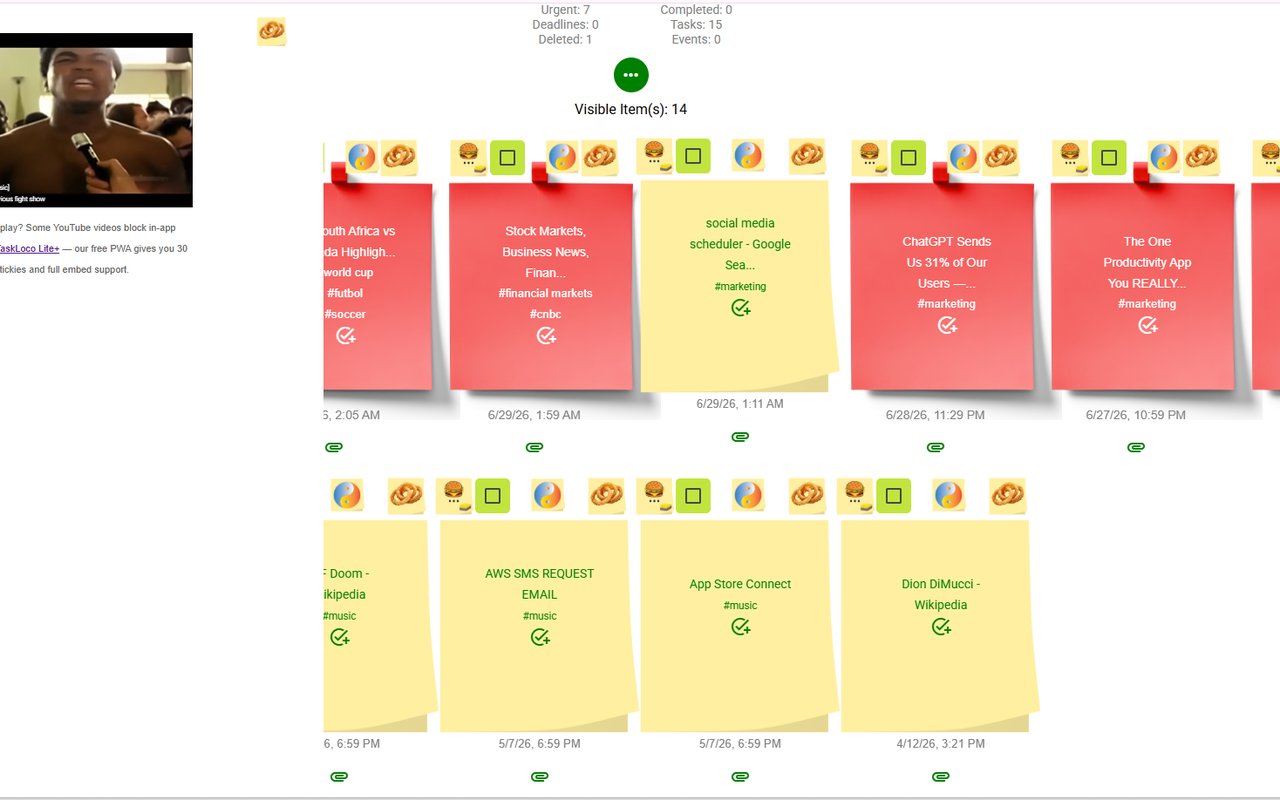
The visual format matters more than it sounds. Instead of a flat list of URLs, you see actual cards. You can add a quick note to yourself — "watch before Thursday," "read before deciding" — right on the note. YouTube videos embed and play inside the note directly, so a tutorial you saved is one tap away from playing, not buried in a folder.
Because the wall syncs to the TaskLoco app on iPhone and Android, what you clip from your laptop appears on your phone. If your action items need to follow you, they do. Sign-in is free with Google, and the extension itself is free — no credit card, no trial period.
This doesn't replace a proper task manager for complex work. But for the specific problem of "I found something on the web I need to act on later," one click and a visible sticky note is hard to beat.
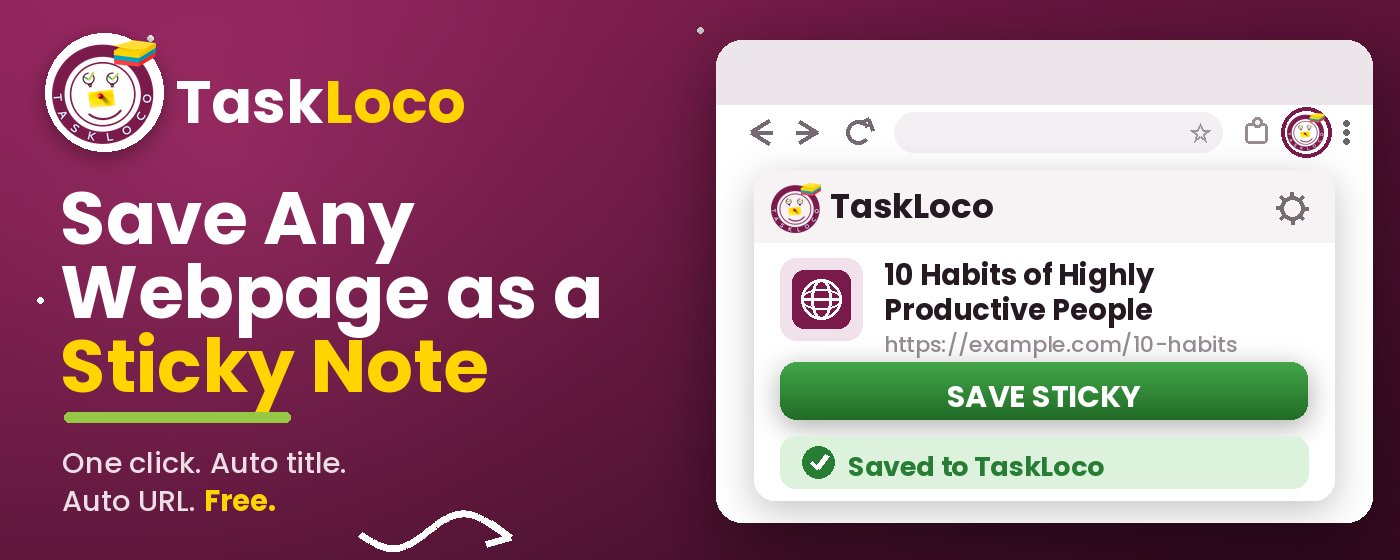
The Sticky Note Web Clipper is free. Install it from the Chrome Web Store, sign in with Google, and every page you clip becomes a sticky note you can find later.
Your clipped notes sync to TaskLoco across Chrome, desktop, iPhone, and Android — also free to start. No credit card to begin.
Get the Free Clipper
Sticky Note Web Clipper
- Free Chrome extension
- One-click save — any page, article, or video
- Title & URL auto-filled
- Tags & search
- Free forever
Synced to TaskLoco
- Sign in free with Google
- Your wall on Chrome, desktop, iPhone, Android
- YouTube videos embed & play in notes
- Visual sticky-note wall
- Free to start
Add It to Chrome — Free
One click saves any page, article, or YouTube video as a sticky note. Title and URL auto-filled.
Add to Chrome — FreeSee TaskLoco in Action
Frequently Asked Questions
What's the fastest way to save a webpage to read or act on later?
Click a browser extension that saves it instantly. The Sticky Note Web Clipper saves the current page as a sticky note in one click — title and URL auto-filled — so you're not copying links or switching apps. It's free and takes seconds to install.
Why don't bookmarks work well for action items?
Bookmarks are designed for reference, not tasks. They have no visual preview, no way to attach intent or context, and no mechanism to surface the right item at the right time. They also don't reliably sync to your phone in a format that feels like an action list. A saved page with a quick note in a visual format is far easier to act on than a URL buried in a folder.
Can I add a personal note when I save a page?
Yes. When you clip a page with the Sticky Note Web Clipper, you can add your own text to the note — so you can write 'finish reading before call' or 'buy this if review checks out' right alongside the saved URL. That context is what makes it an action item rather than just a saved link.
Does it work for saving YouTube videos to watch later?
Yes. The Sticky Note Web Clipper saves YouTube videos as embedded notes — the video plays directly inside the note without opening a new tab or going back to YouTube. It's a much cleaner way to queue videos than YouTube's own Watch Later playlist, which can get out of hand fast.
Will my saved pages be available on my phone?
Yes. Notes you clip in Chrome sync to your TaskLoco account, which is accessible on iPhone, Android, and desktop. Sign in with Google and everything you saved from your laptop is visible on your phone. No manual export, no extra steps.
Is the Sticky Note Web Clipper free?
Yes — the extension is completely free. TaskLoco also has a free tier. Install it from the Chrome Web Store, sign in with Google, and start saving pages right away. No credit card needed.
How is this different from leaving a tab open to come back to it?
Open tabs feel safe but they're fragile — a browser crash, a restart, or an accidental close and they're gone. They also pile up fast and give you no way to prioritize or label what each one was for. A clipped sticky note is permanent, searchable, tagged, and available on your phone. It's the difference between a sticky note on your desk and a Post-it you almost dropped.
Born in Brooklyn. Powered by AWS. Your data stays yours.
TaskLoco is available on iPhone, Android, Chrome, and every web browser.