You found the page. It's exactly what you needed — a recipe, a research source, a product, a YouTube video, a news piece. You tell yourself you'll come back to it. Then the tab closes, the browser restarts, or you simply open twelve other things and it's gone. This is not a memory problem. It's a capture problem.
Saving something the instant you find it is the only reliable method. The longer the gap between discovery and saving, the higher the chance you lose it. This guide walks through how to actually do that — the real mechanics, the habits that work, and why the tool you use matters more than most people think.
The Core Method: Capture First, Organize Later
The biggest mistake people make with saving web content is trying to file it perfectly at the moment of discovery. You find an article, you think "where does this belong?" — and in the time it takes to decide, you've lost the thread of what you were doing, or worse, you've talked yourself out of saving it at all.
The right mental model is capture-first, organize-later. Your only job in the moment is to get the thing saved. Organization can happen in five seconds or five minutes — but saving has to happen now.
This is why the tool you use for that first capture step matters so much. If saving requires copying a URL, switching apps, pasting into a note, adding a title, and then filing it — that's five steps too many. You will skip it. Not because you're lazy, but because friction compounds. Every extra step multiplies the chance you don't finish the action.
The best capture systems share one trait: they reduce saving to a reflex. You see it, you save it, you move on. Everything else happens later when you have the headspace to deal with it.
What Actually Works — and What Doesn't
Here's an honest breakdown of the common ways people try to save pages, and where each one breaks down:
- Leaving the tab open: This feels like saving but it isn't. Tabs get closed in browser crashes, accidental swipes, or mass-close sessions. More importantly, thirty open tabs is not an organizational system — it's a queue you will never finish.
- Browser bookmarks: More durable than open tabs, but they age badly. A list of unsorted bookmarks grows into a graveyard. With no visual preview, no title editing, and no search that surfaces context, you often can't tell what a bookmark is without clicking it. Most people have hundreds of bookmarks they will never look at again.
- Copy-pasting into a notes app: Works, but it requires you to switch apps, create or find a note, paste the URL, write a title, and then remember to go back to what you were doing. That's enough friction to skip nine times out of ten.
- Emailing yourself the link: A genuine workaround that people still use — but it means your saved research lives in your inbox, mixed in with everything else, unsearchable by topic, and invisible until you go looking for it.
- Pocket / Instapaper / read-it-later apps: Excellent for long-form articles you genuinely plan to read. Less useful for saving a YouTube video, a product page, a source you want to cite, or anything that isn't strictly a reading-oriented piece of content.
The pattern is clear: most saving methods either add too much friction upfront or create a pile of unsorted links that's just as hard to navigate as not saving at all. What you actually want is something that saves instantly and stays findable afterward.
How the Sticky Note Web Clipper Closes the Gap
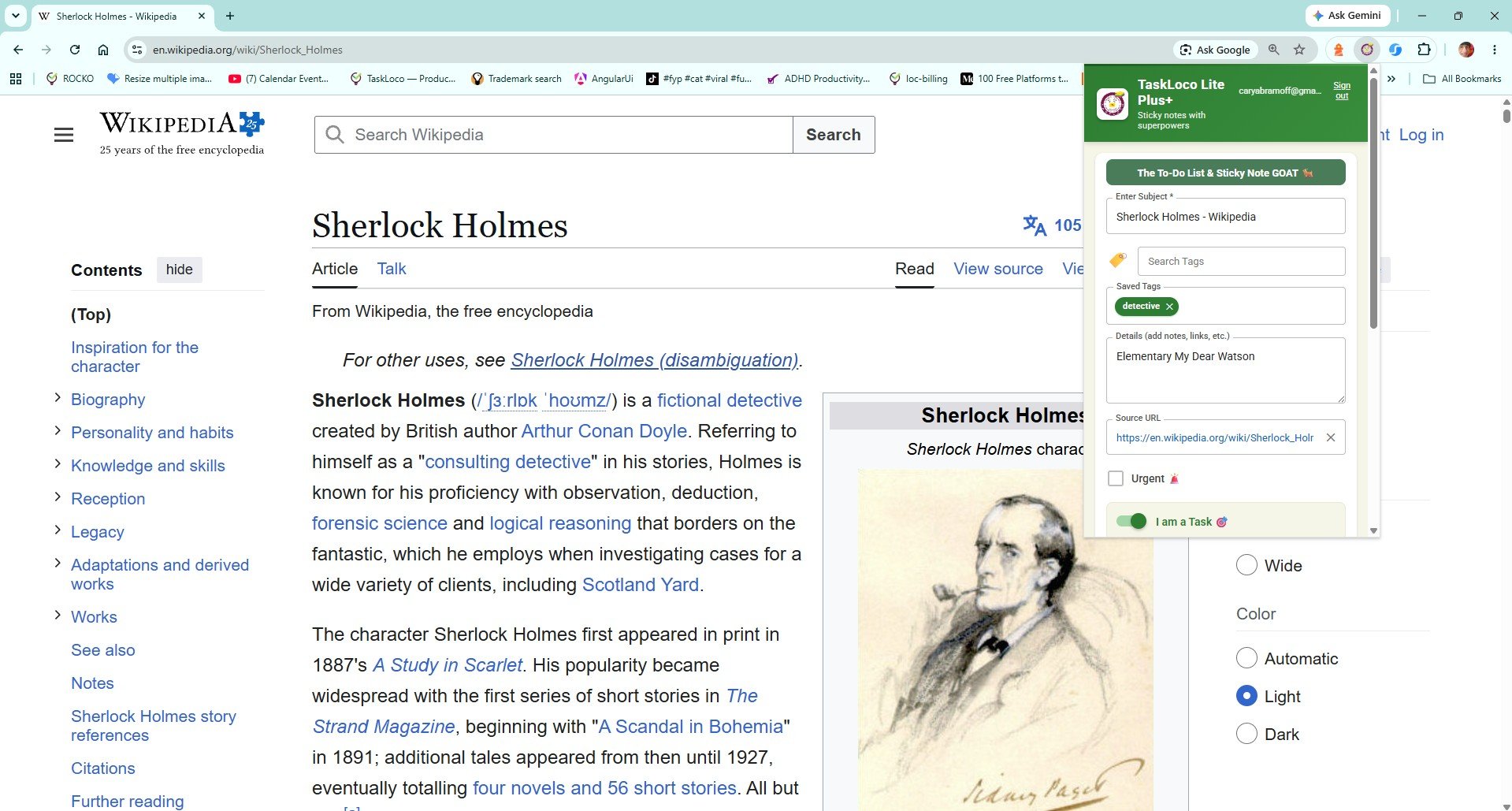
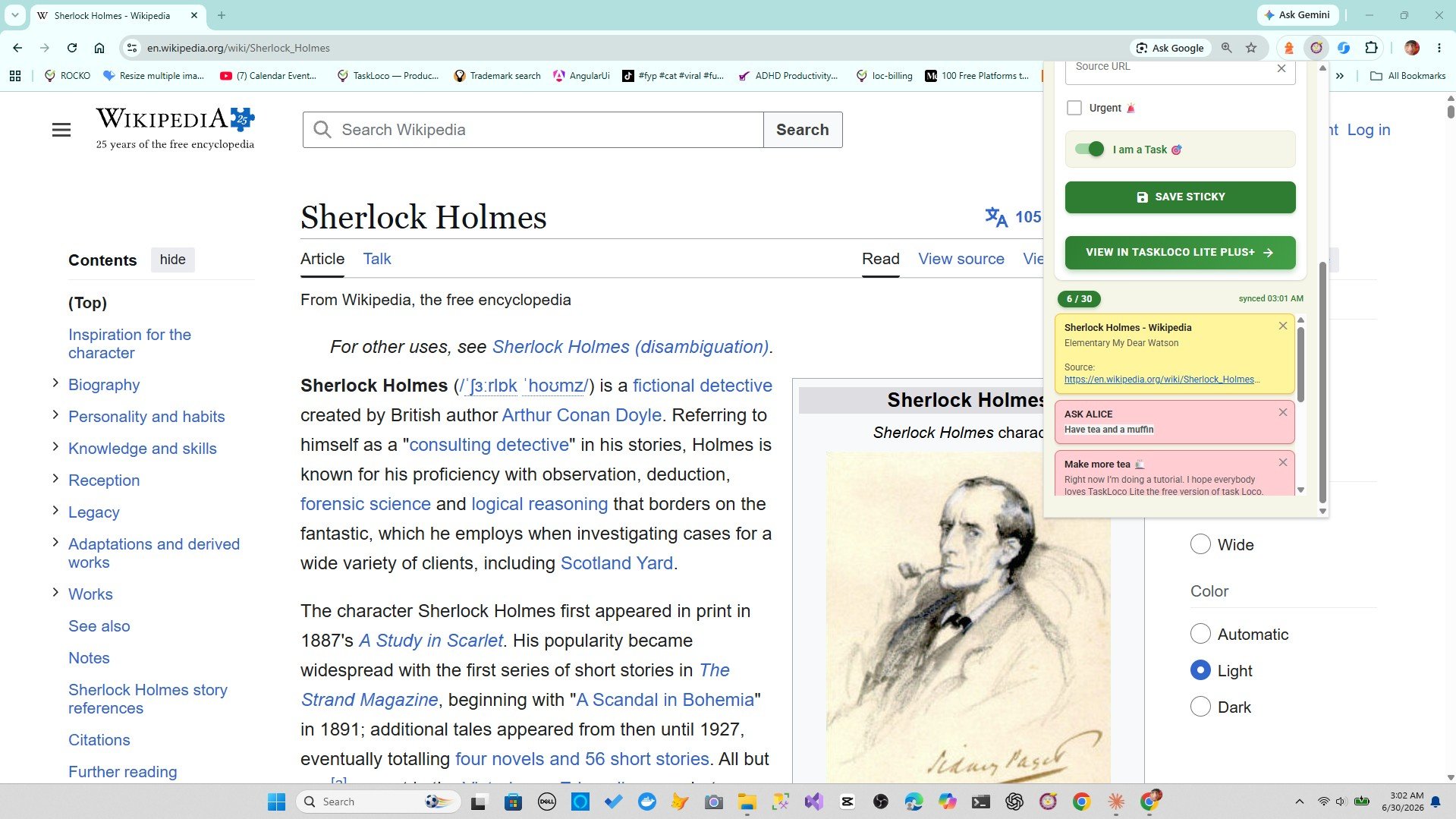
The Sticky Note Web Clipper is a free Chrome extension that reduces saving a page to a single click. When you're on any page — an article, a YouTube video, a research source, a product listing — you click the toolbar icon. The page is saved as a visual sticky note, with the title and URL already filled in. That's it. You're done. You can keep browsing.
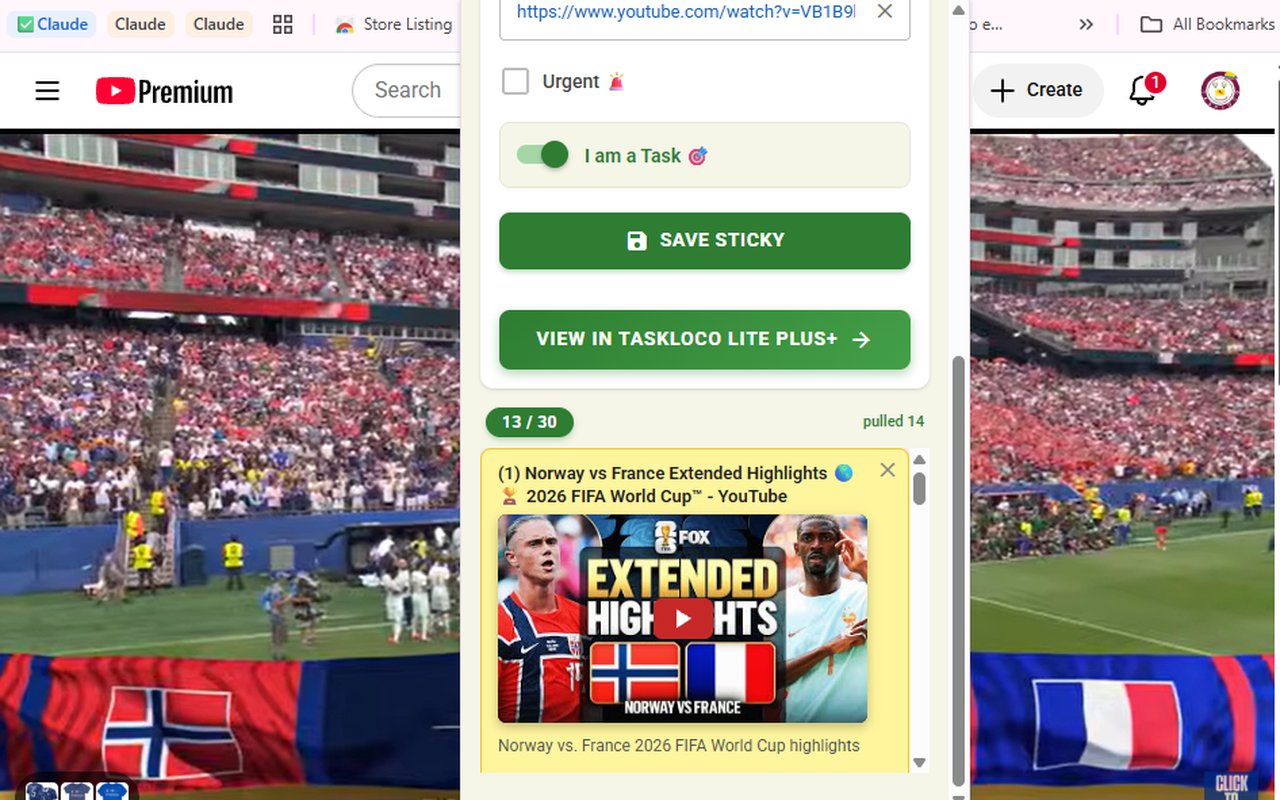
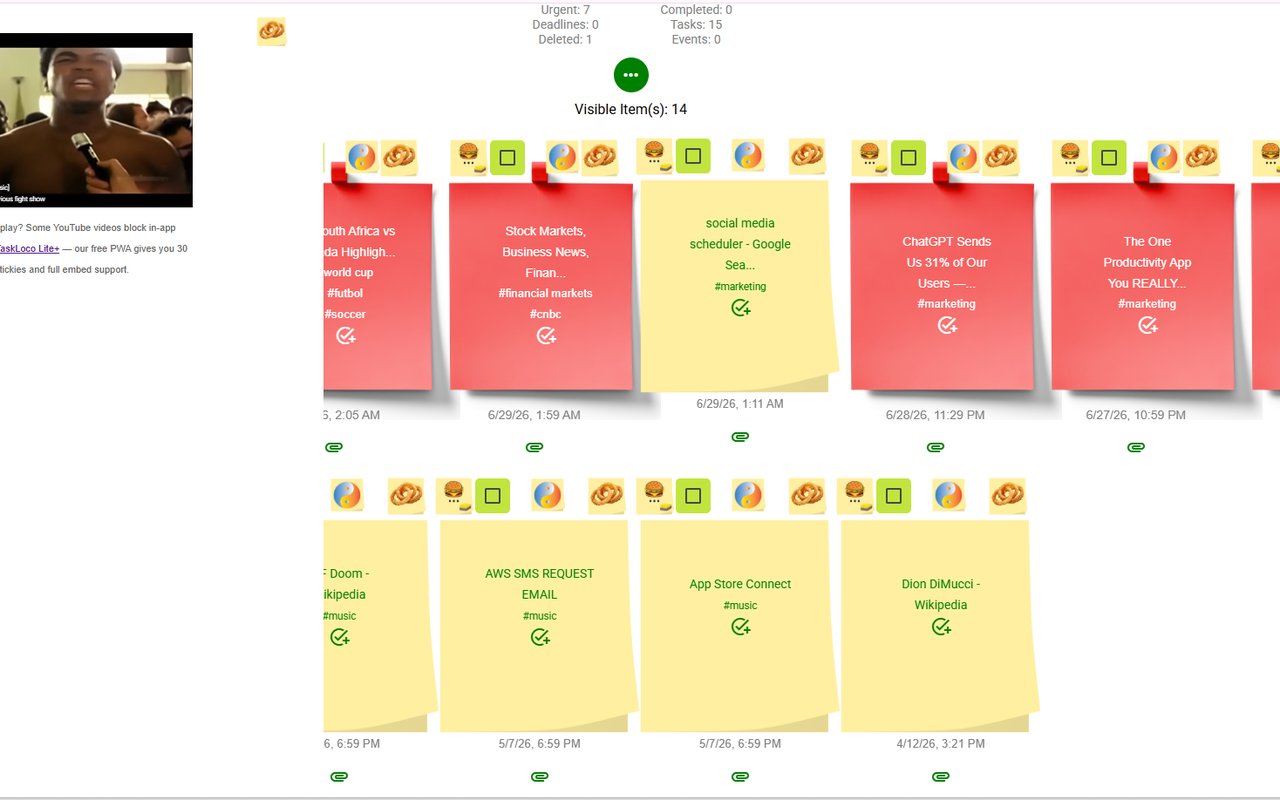
What comes out the other end isn't a flat list of URLs. It's a visual wall of sticky notes in TaskLoco, your free workspace that syncs across Chrome, desktop, iPhone, and Android. Each note shows the page title and is directly linkable. YouTube videos embed inside the note and play right there — you don't have to go back to YouTube to remember what the video was.
This matters because findability is the other half of saving. Clipping something into a black hole is no better than losing it. With tags and search built into TaskLoco, you can pull up anything you've saved by topic, keyword, or title — even if you clipped it weeks ago and barely remember the wording.
Sign in with Google, install the extension from the Chrome Web Store, and the first thing you clip is already waiting for you across every device you use. There's no setup beyond that.
Building the Habit: Make Saving a Reflex
Even with the right tool, saving-as-a-habit takes a little deliberate reinforcement at first. A few things that help:
- Save before you read, not after. If you find a page worth reading, clip it immediately, then read it. If you read it first and then try to decide whether to save it, you'll often convince yourself you've already absorbed it — and lose the source.
- Don't save to decide. Save to remember. Clip anything that seems potentially useful, without overthinking. Storage is not the constraint. Attention is. The cost of clipping something you don't need is effectively zero. The cost of not clipping something you do need is often significant.
- Review your wall once a week, not in real time. The point of a capture system is to defer the organizational decision. Set a short weekly habit of skimming your saved notes, adding tags, and deleting the ones that no longer matter. This keeps the wall useful without slowing down your capture habit.
- Use the mobile sync as a cross-device capture loop. Clip on desktop during research. Review on your phone during downtime. Act on what you saved when you're back at a keyboard. The Sticky Note Web Clipper's sync to the TaskLoco app on iPhone and Android makes this loop work without any manual export or sharing step.
The goal isn't a perfect archive. It's a reliable capture habit that means you never again lose something because you found it at the wrong moment. Install the free clipper, clip the next page you find interesting, and the habit starts immediately — no configuration required.
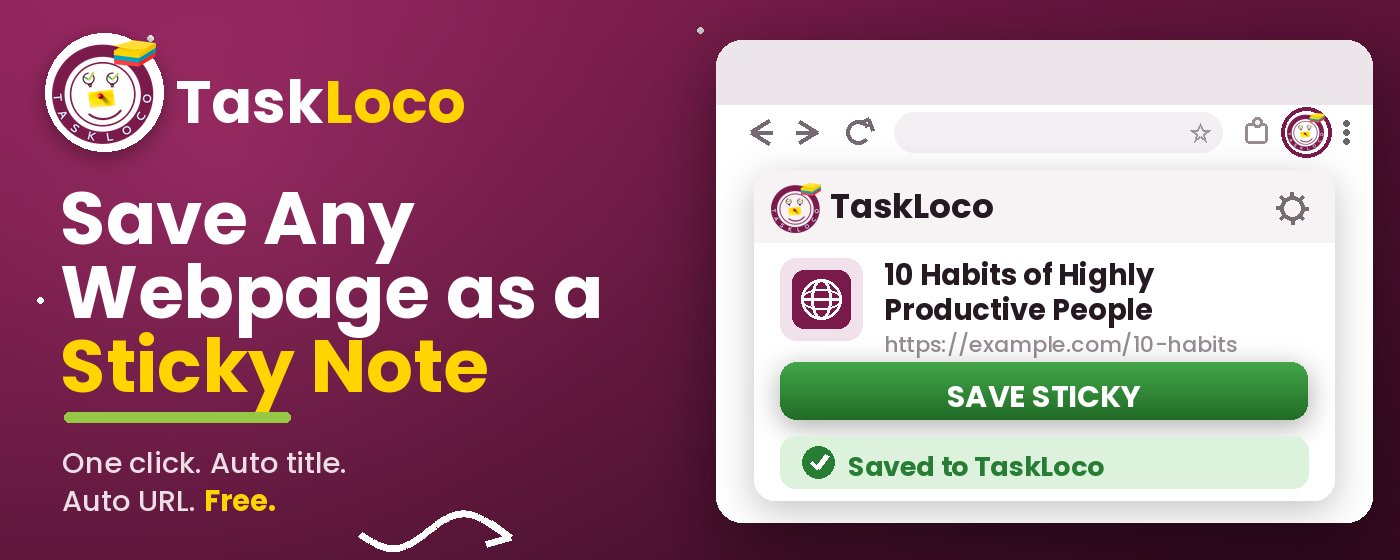
The Sticky Note Web Clipper is free. Install it from the Chrome Web Store, sign in with Google, and every page you clip becomes a sticky note you can find later.
Your clipped notes sync to TaskLoco across Chrome, desktop, iPhone, and Android — also free to start. No credit card to begin.
Get the Free Clipper
Sticky Note Web Clipper
- Free Chrome extension
- One-click save — any page, article, or video
- Title & URL auto-filled
- Tags & search
- Free forever
Synced to TaskLoco
- Sign in free with Google
- Your wall on Chrome, desktop, iPhone, Android
- YouTube videos embed & play in notes
- Visual sticky-note wall
- Free to start
Add It to Chrome — Free
One click saves any page, article, or YouTube video as a sticky note. Title and URL auto-filled.
Add to Chrome — FreeSee TaskLoco in Action
Frequently Asked Questions
What's the fastest way to save a webpage you just found?
Click the Sticky Note Web Clipper icon in your Chrome toolbar. The page is saved as a sticky note with the title and URL auto-filled — no copy-pasting, no switching apps. It's the closest thing to zero-friction capture available in a browser.
Why do open tabs fail as a saving method?
Open tabs feel like a queue but function like a memory leak. Browser crashes, accidental closes, and session restores all eat tabs you meant to keep. More importantly, thirty open tabs gives you no way to search, sort, or understand what you saved — it's just a pile. A proper clip gives the page a permanent home outside your browser session.
Can I save YouTube videos, not just articles?
Yes. The Sticky Note Web Clipper saves any page you're on, including YouTube. When you clip a YouTube video, it embeds inside the sticky note in TaskLoco and plays directly there — so you don't have to go back to YouTube to remember what the video was or re-find it.
Is the Sticky Note Web Clipper free?
Yes — the extension is free, and TaskLoco has a free tier. Install it from the Chrome Web Store, sign in with Google, and start clipping. No payment required to get started.
Will my saved pages be available on my phone?
Yes. Notes you clip in Chrome sync automatically to TaskLoco, which is available on iPhone, Android, and desktop. Clip something during research on your laptop and it's waiting on your phone without any manual step.
How is this different from browser bookmarks?
Browser bookmarks are a flat list with no visual preview and minimal search. They age badly — most people have hundreds of bookmarks they'll never look at again because there's no context around them. The Sticky Note Web Clipper saves pages as visual notes you can tag and search, making it realistic to actually find something you saved weeks later.
Do I need to organize clips the moment I save them?
No — and that's the point. Clip immediately, organize later. The capture step should be a reflex. Tags and search in TaskLoco let you find clips by keyword or topic whenever you need them, so you don't have to make filing decisions in the moment of discovery.
Born in Brooklyn. Powered by AWS. Your data stays yours.
TaskLoco is available on iPhone, Android, Chrome, and every web browser.