You're reading something genuinely useful — an article, a how-to, a product page, a YouTube video — and you think I'll come back to this later. You don't. You close the tab, or it gets buried under twelve others, or your browser crashes and the session is gone. The information disappears and you spend twenty minutes trying to find it again on Google, except now you can't remember what it was even called.
This is one of the most common and most fixable problems in everyday browsing. The fix is not willpower or a better tab management habit. It's capturing the page immediately, the second it's worth saving, with zero friction. This guide walks through every realistic method — from the things built into your browser to a one-click clipper that turns any page into a sticky note you can actually find later.
Why Bookmarks and Open Tabs Keep Failing You
Browser bookmarks have been around for decades and almost nobody uses their saved bookmarks effectively. That is not a personal failing — it is a design problem. When you bookmark a page, you get a text link in a flat list or a folder you will probably never open again. There is no image, no context, no reminder of why you saved it. Three weeks later, a bookmark labeled "How to…" tells you nothing.
Open tabs are even worse as a saving strategy. Keeping a tab open because you might read it is just anxiety in browser form. Heavy tab users routinely accumulate dozens of pinned tabs that never get read. The tab title is truncated to five characters. The page slows down your browser. And when Chrome updates or your laptop restarts, entire tab sessions can vanish.
A third common workaround — copying the URL and pasting it into a notes app — works, but it is a four-step process (copy URL, open notes app, create new note, paste) that most people skip when they're in the middle of reading something. Friction kills follow-through.
The Right Way to Save a Page While You're Reading It
The best method is the one that happens at the moment you decide a page is worth saving — not ten minutes later, not after you've finished reading, not after you've switched windows. Here is what actually works:
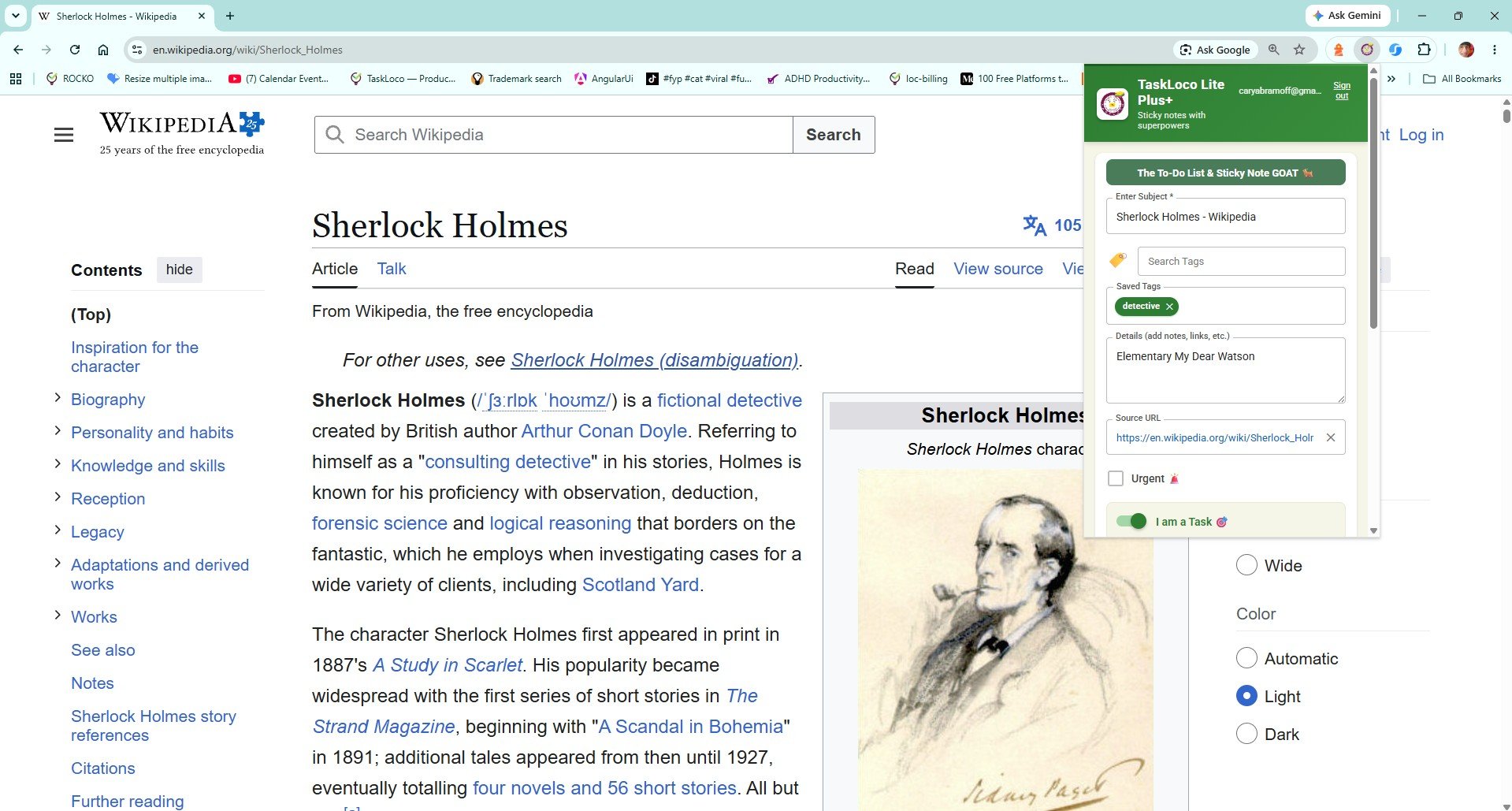
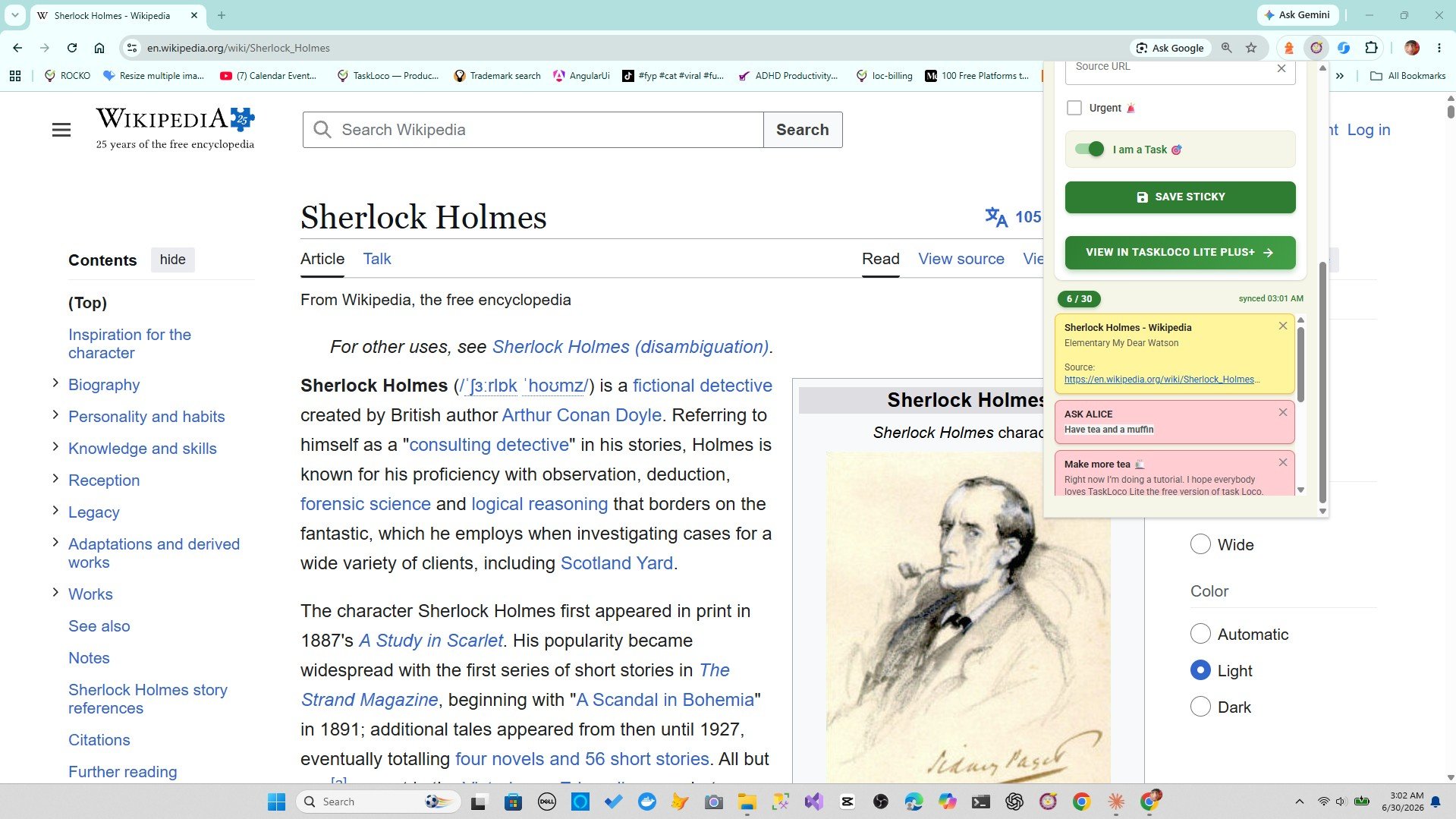
- Use a browser extension that captures in one click. A toolbar icon you can hit without leaving the page is the lowest-friction option that exists. The page title and URL fill themselves in. You do not have to type anything.
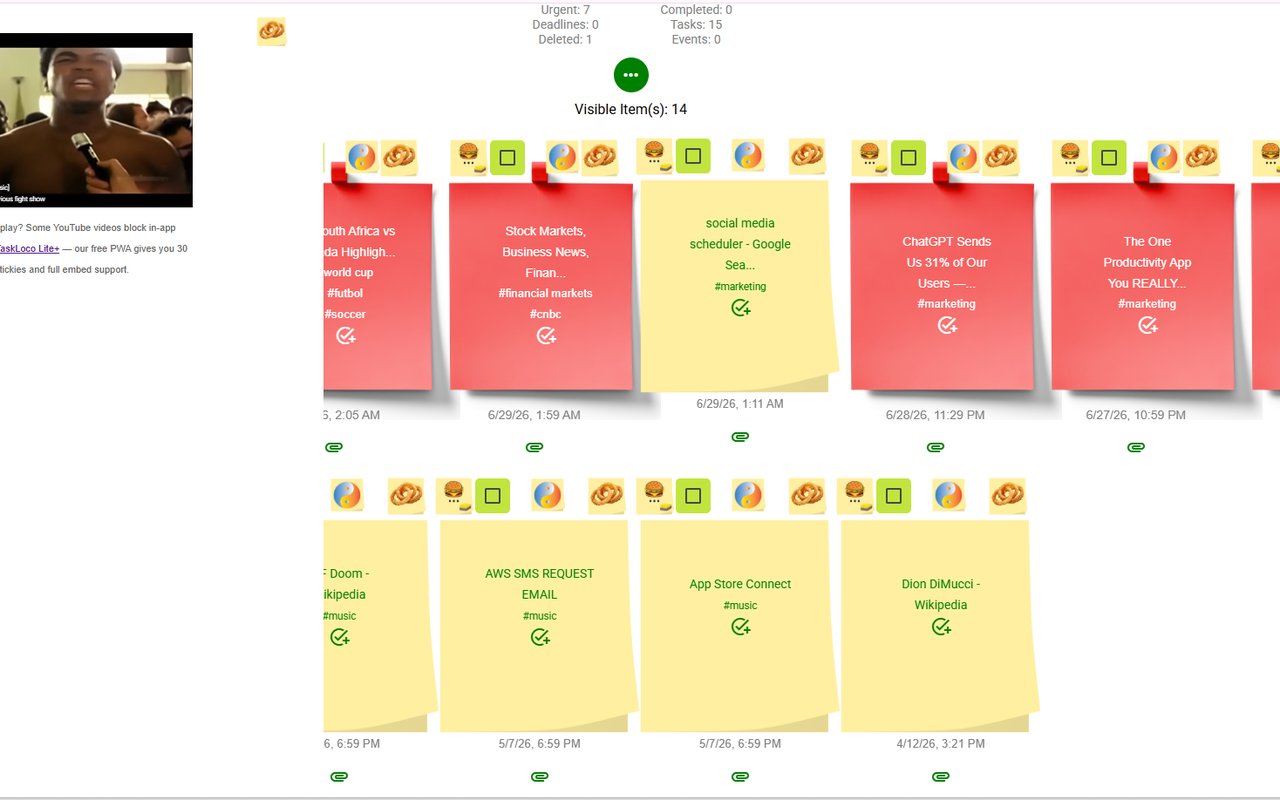
- Save to something visual. If what you save looks like the page — a card, a note with a title you recognise — you are far more likely to return to it. A wall of visual notes beats a list of URLs every time.
- Make sure it syncs. If you save something on your laptop but can only access it on your laptop, you will still lose it when you're on your phone on the train and want to show someone. Your saved pages should follow you.
- Add a tag or a quick note at the moment of saving. You know right now why this page matters. Write it down in two words while the context is fresh. You will not remember later.
None of these steps require any specific tool — you could do most of this manually with a combination of copy-paste and a notes app. But every extra step is a step where you give up. The fewer steps, the more you actually save and the more you actually use what you saved.
How the Sticky Note Web Clipper Makes This Effortless
The Sticky Note Web Clipper is a free Chrome extension that puts a single toolbar button in your browser. When you click it on any page — an article, a news story, a research source, a YouTube video — it saves that page instantly as a sticky note, with the title and URL already filled in. No copy-pasting, no switching apps, no typing.
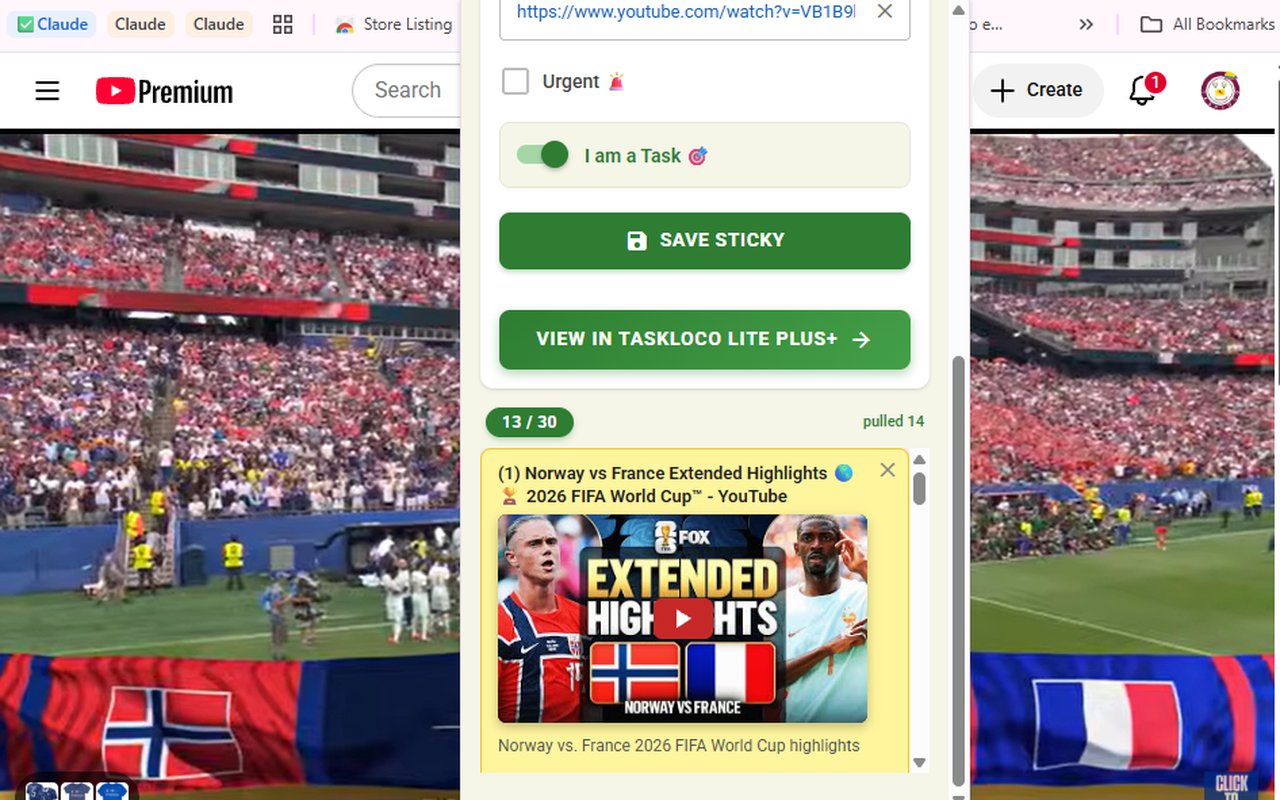
For YouTube videos specifically, the saved note does more than just store the link. The video embeds directly inside the note and plays there, so you don't have to click through to YouTube every time you want to watch something you clipped earlier.
Every note you save lands on your TaskLoco wall — a visual space that looks like a board of sticky notes rather than a list of URLs. You can see what you saved at a glance, search by title or tag, and find things in seconds instead of digging through a bookmarks folder. The wall syncs across Chrome, desktop, iPhone, and Android, so a page you clip on your laptop is waiting for you on your phone without any extra steps.
If you have ever lost a page you wish you'd kept, this is the fix. It costs nothing and takes about thirty seconds to set up.
Making What You Save Actually Useful
Saving pages is only half the problem. The other half is being able to find them and act on them. A few habits that make a real difference:
- Tag immediately. When you clip something, add one or two tags — recipe, research, gift idea, read later. The Sticky Note Web Clipper supports tags, and they make search dramatically faster later.
- Keep related clips together. Group notes by project or topic on your TaskLoco wall so that when you return to a task, everything you have saved for it is already in one place. You're not hunting across tabs, browser history, and four different notes apps.
- Clip at the moment of interest, not later. The urge to save something is strongest when you're reading it. Act on that urge immediately. Even if you plan to read the whole article, clip it first so that if you get interrupted, it's already saved.
- Use search, not memory. You don't need to remember exactly what you saved or when. Type a word from the title or a tag into the search bar and it surfaces. This is why visual notes with real titles beat raw bookmarks — the title is the search term.
These habits work regardless of which tool you use. But they are much easier to stick to when the saving step itself takes one click instead of five. Reduce friction at the capture step and everything downstream gets easier.
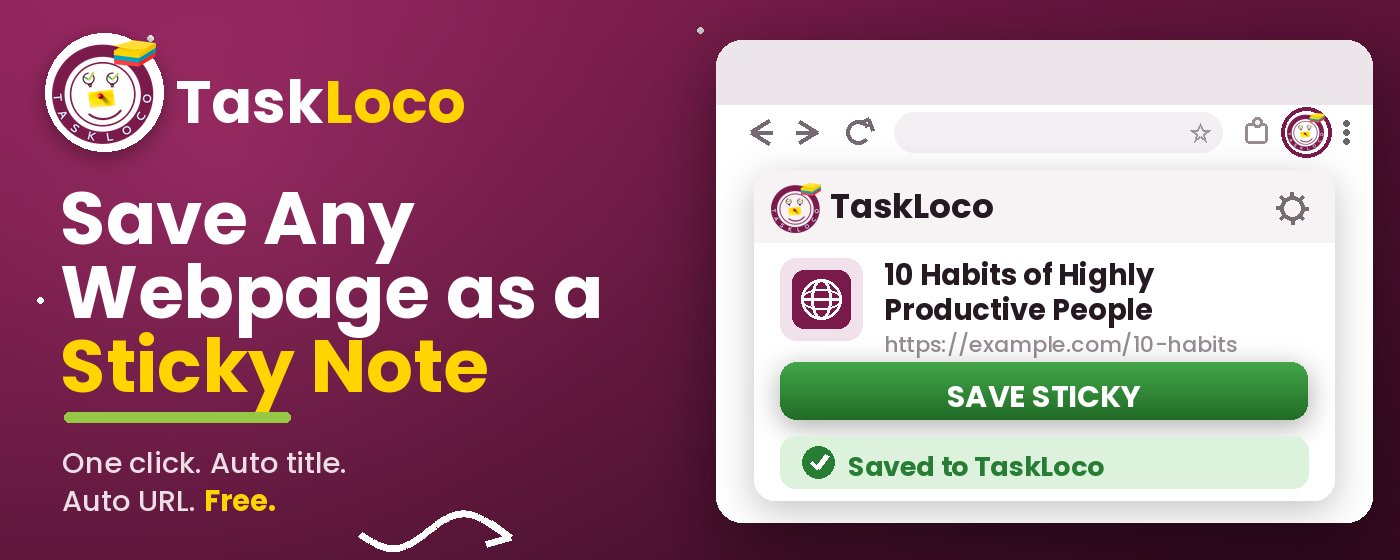
The Sticky Note Web Clipper is free. Install it from the Chrome Web Store, sign in with Google, and every page you clip becomes a sticky note you can find later.
Your clipped notes sync to TaskLoco across Chrome, desktop, iPhone, and Android — also free to start. No credit card to begin.
Get the Free Clipper
Sticky Note Web Clipper
- Free Chrome extension
- One-click save — any page, article, or video
- Title & URL auto-filled
- Tags & search
- Free forever
Synced to TaskLoco
- Sign in free with Google
- Your wall on Chrome, desktop, iPhone, Android
- YouTube videos embed & play in notes
- Visual sticky-note wall
- Free to start
Add It to Chrome — Free
One click saves any page, article, or YouTube video as a sticky note. Title and URL auto-filled.
Add to Chrome — FreeSee TaskLoco in Action
Frequently Asked Questions
What is the quickest way to save a page I'm currently reading?
Install the free Sticky Note Web Clipper for Chrome. Click the toolbar icon once while you're on the page, and it saves instantly as a sticky note with the title and URL already filled in — no typing, no copy-pasting, no switching apps.
Why do I keep losing pages I meant to read later?
Bookmarks and open tabs both require you to remember why you saved something, with no visual cue to help. Tabs get closed or lost in browser restarts. Bookmarks turn into a list of links you never revisit. The fix is capturing pages as visual notes the moment you find them, in one click, so you can actually find them again later.
Can I save YouTube videos so I can find them later?
Yes. When you clip a YouTube page with the Sticky Note Web Clipper, the video embeds directly inside the saved note and plays there — you don't need to click back to YouTube. It's one of the most useful things the clipper does that a bookmark simply cannot.
Will my saved pages be available on my phone, not just my laptop?
Yes. Everything you clip syncs to TaskLoco, which is available on Chrome, desktop, iPhone, and Android. Clip a page on your laptop and it's on your phone without any extra steps.
Is the Sticky Note Web Clipper free?
Yes — the extension is completely free. TaskLoco, where your saved notes live, also has a free tier. Install from the Chrome Web Store, sign in with Google, and start clipping immediately.
How is this different from just bookmarking a page?
A bookmark is a text link in a list. A sticky note from the clipper is a visual card with a recognisable title, the source URL, any tags you add, and — for YouTube — an embedded video that plays in place. When you return to your saved items, you can see at a glance what each one is and why it mattered, instead of staring at a folder of cryptic link titles.
Can I add notes about why I saved a page?
Yes. After clipping, you can add a short note or tags to the saved card — so you capture not just the page, but the context. That two-word reminder you write at the moment of saving is often the thing that makes you actually act on it later.
Born in Brooklyn. Powered by AWS. Your data stays yours.
TaskLoco is available on iPhone, Android, Chrome, and every web browser.