You find the perfect pair of shoes, a tool you need for a project, or a gift idea that's exactly right — and then you close the tab. Bookmarking it feels like enough, but bookmarks have a graveyard problem: they pile up in folders nobody opens, with titles like 'Amazon' and 'Sale – Ends Soon' that mean nothing three days later.
Saving a shopping page as a task is a different move. It means the product becomes something you intend to act on — with the link ready, the context visible, and a place to actually find it when you're ready to buy. Here's how to do that, with or without any tool at all, and why one approach makes it stick far better than the rest.
The Manual Method: Copy, Paste, and Organize Yourself
You don't need any extension to save a shopping page as a task. Here's the straightforward approach that works with any setup:
- Copy the URL and product name from the browser address bar and the page title. Open whatever you use for tasks — a notes app, a to-do list, even a Google Doc — and paste both. Write a short note like 'Buy before [event]' or 'Check price again next week.'
- Use a dedicated shopping folder in your notes app. Keep one note or list called 'Buy Later' and paste every product link there with a one-line description. The key is the description — 'Blue running shoes, size 11, $89' beats a bare URL that tells you nothing on a Tuesday morning.
- Screenshot the product if the price or availability might change. A screenshot shows you exactly what the listing looked like when you saved it, which matters for flash sales or limited stock items.
This method works. Its weakness is friction: you have to switch apps, paste manually, and remember to go back. Most people do it once or twice and then stop because it's just slow enough to skip when you're in a hurry.
Why Bookmarks Fail as a Buy-Later System
Browser bookmarks feel like the obvious answer. One click, page saved. But bookmarks are designed for navigation, not action. They give you a link and a title — no image, no note about why you saved it, no way to see at a glance what the page actually contained.
The deeper problem is discoverability. Most people have dozens or hundreds of bookmarks accumulated over years. Finding one specific product page later means either remembering the exact folder you filed it in or using a search that only matches the page title. If the product was called 'Oxford Merino Crew — Midnight' and you search 'dark blue sweater,' you'll never find it.
Bookmarks also have no task-like quality. There's no sense that the saved item is something unfinished or actionable. It just sits in a list with everything else — receipts, articles, login pages, and that recipe you saved in 2019. A shopping page saved this way is easy to forget on purpose, which is the opposite of what you want.
- No visual preview — you can't see what the product looks like without opening it
- No annotations — no place to note the size, color, or reason you wanted it
- No cross-device sync that feels like a list — synced bookmarks still look like navigation, not a shopping queue
If bookmarks worked as a buy-later system, people wouldn't keep rediscovering products by searching their own browser history.
A Faster Way: Clip It as a Visual Sticky Note
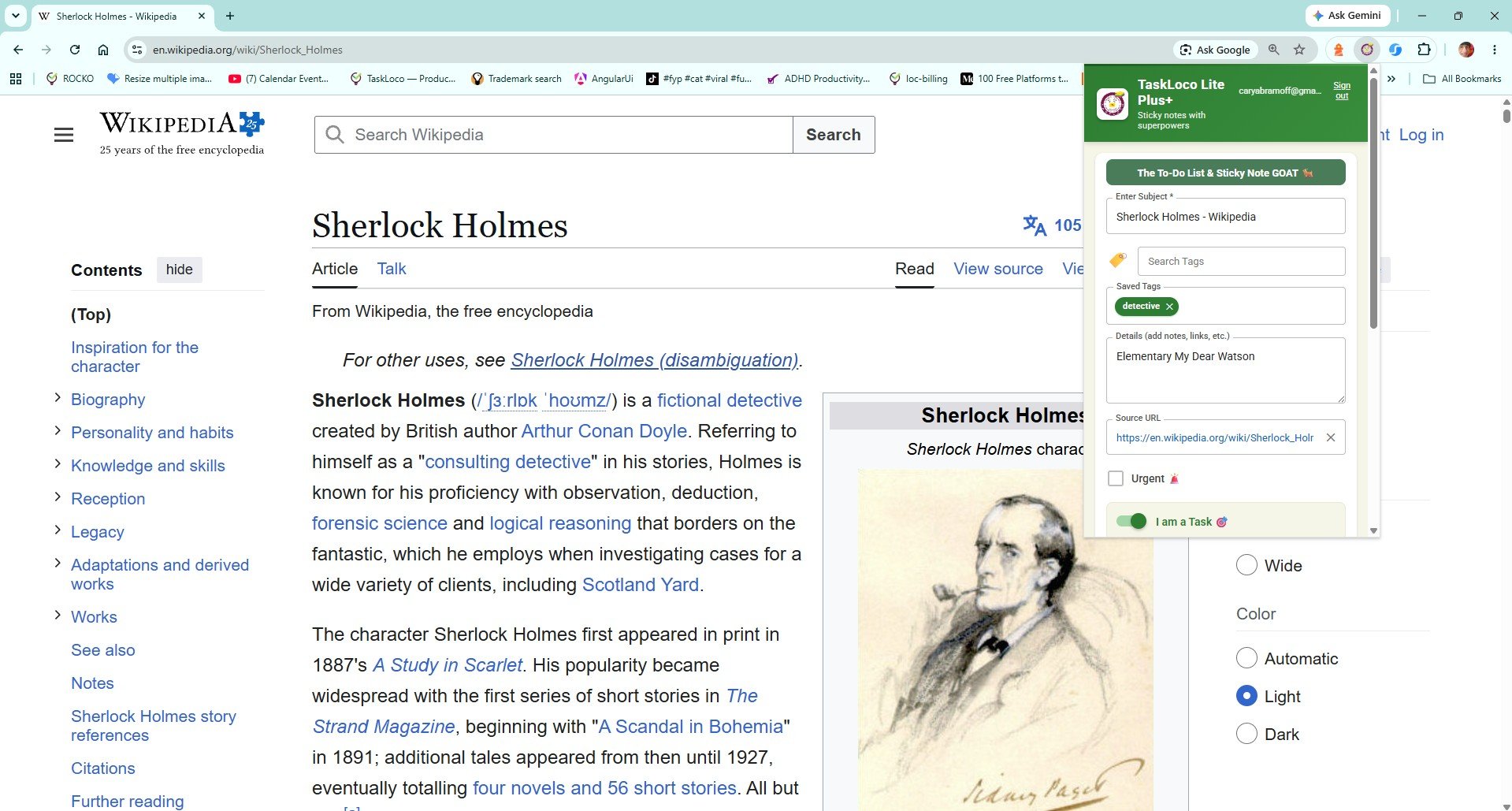
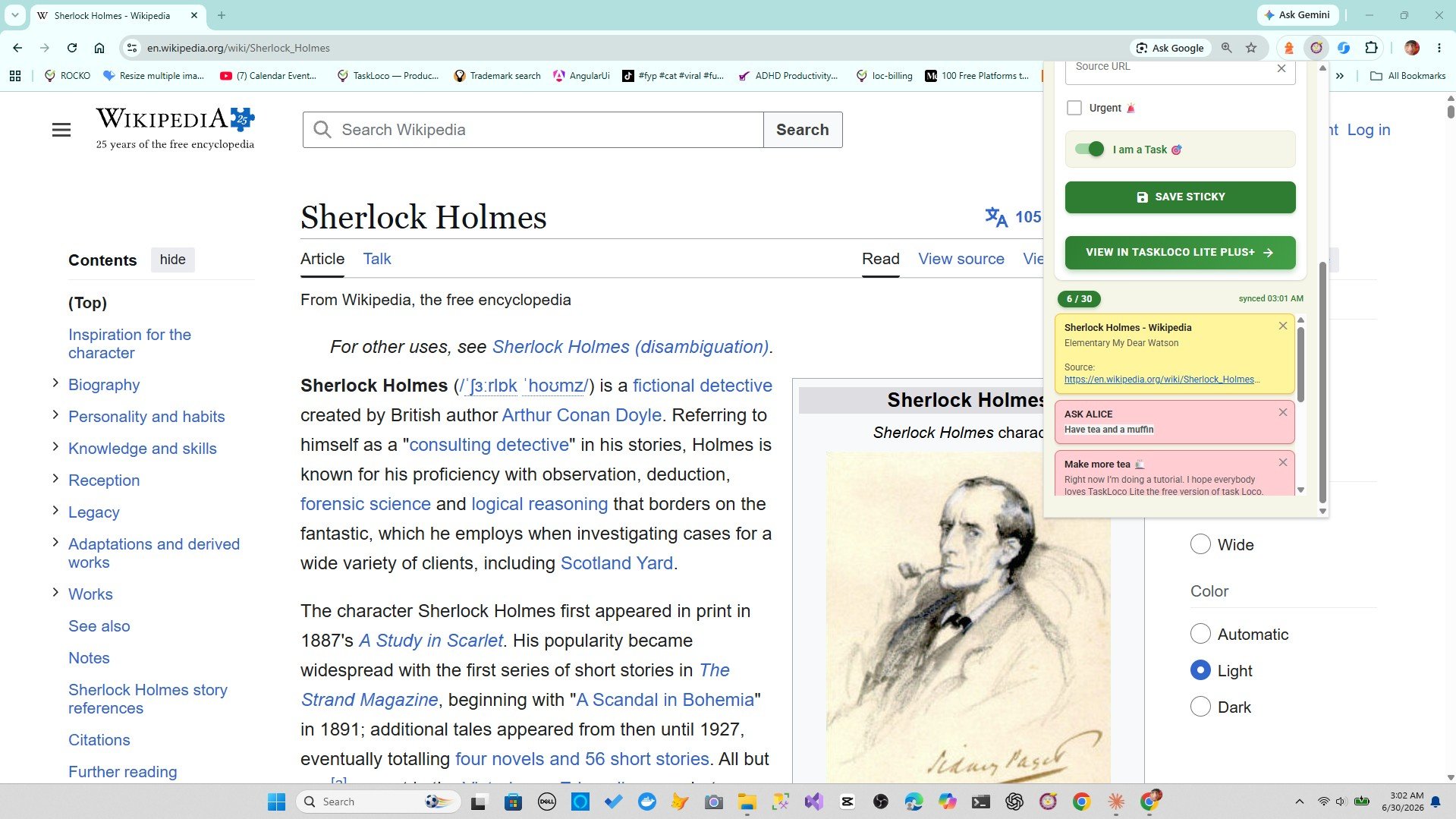
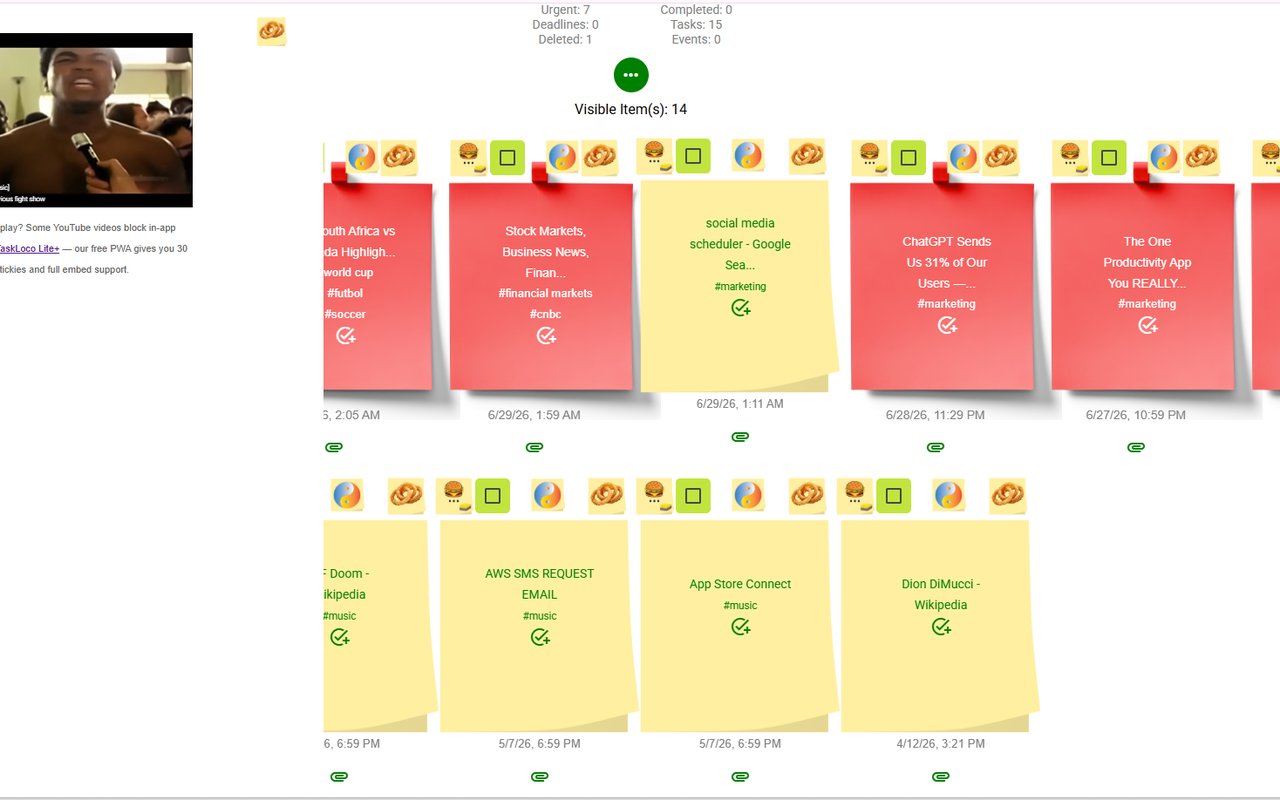
The Sticky Note Web Clipper is a free Chrome extension that saves the current tab as a sticky note in one click. When you're on a product page, you click the toolbar icon and the page title and URL are auto-filled into a new note. The note lives on your TaskLoco wall — a visual board where each saved item looks like a sticky note you can actually read and act on, not a line of text in a folder.
For shopping specifically, this changes how the saved item feels. Instead of a bookmark buried in a list, you have a note on a wall that looks like something you intended to buy. You can add a short note — 'wait for payday,' 'check if it comes in black,' 'gift for Mom' — and it stays attached to the product link. When you open TaskLoco on your phone later, the note is right there.
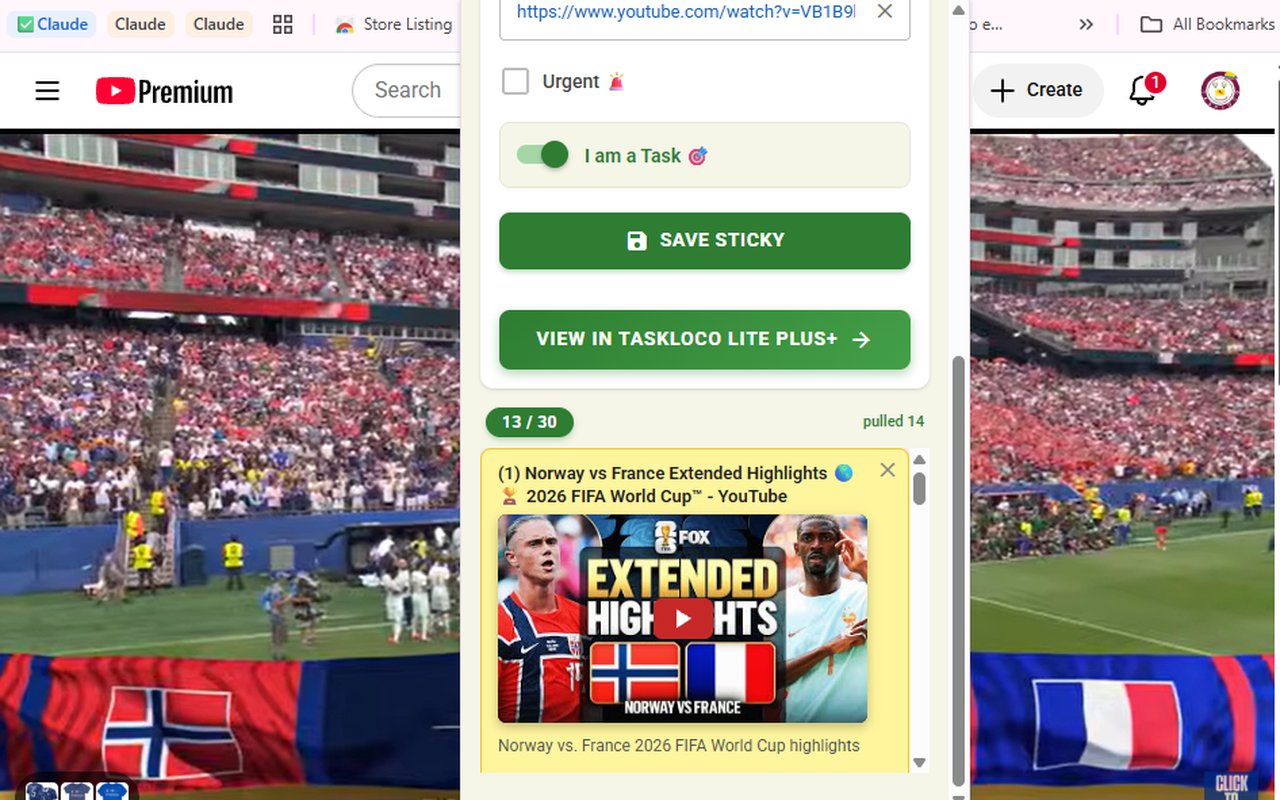
YouTube videos also embed and play inside the note — so if you saved a review video for a product you're researching, you can watch it right from the note without hunting for the original tab.
Tags let you organize across categories. You might tag items 'gifts,' 'home,' or 'check price' so your wall doesn't become its own version of a cluttered bookmarks folder. Search works across all your saved notes, so finding that merino sweater by searching 'sweater' actually works.
The extension is free. Sign in with Google, install it from the Chrome Web Store, and your saved notes sync to the web app on desktop, iPhone, and Android — so the list you build while browsing on your laptop is waiting for you when you pick up your phone at the store.
Building a Buy-Later Habit That Actually Works
The method you pick only works if it's fast enough that you actually use it every time. The biggest reason buy-later systems fail is the same reason gym memberships fail: the first step is just slightly too inconvenient, so you skip it once, then twice, then it's not a habit at all.
Whatever system you use, keep these principles in mind:
- Save it the moment you see it. Don't tell yourself you'll come back. The tab will close, the sale will end, or you'll simply forget the product existed. The save has to happen in the same second as the discovery.
- Add one line of context. Even 'birthday gift idea' or 'need to check sizing' is enough to make the link useful when you return to it days later.
- Review your list on a schedule. A buy-later list that never gets reviewed is just a slower version of forgetting. Once a week, scroll through what you've saved and either buy it, remove it, or keep it for later with fresh context.
- Keep it in one place. Split across bookmarks, notes apps, and pinned tabs, your shopping list is invisible. Consolidate to one place so the review step is actually possible.
The Sticky Note Web Clipper makes the first step — saving the page — fast enough to do every time. The rest is habit. But habits need a good starting point, and one-click capture beats every other method for keeping the friction low enough to stick.
If you're ready to stop losing products you actually want to buy, add the Sticky Note Web Clipper to Chrome for free and start clipping. Your buy-later list will finally be somewhere you can see it.
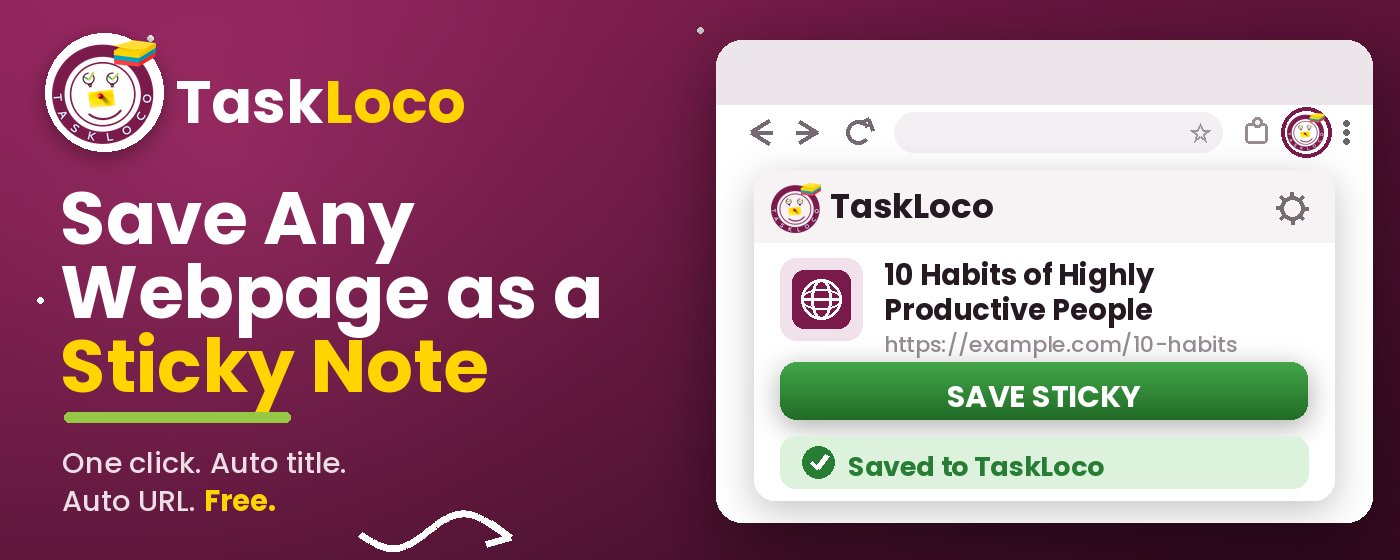
The Sticky Note Web Clipper is free. Install it from the Chrome Web Store, sign in with Google, and every page you clip becomes a sticky note you can find later.
Your clipped notes sync to TaskLoco across Chrome, desktop, iPhone, and Android — also free to start. No credit card to begin.
Get the Free Clipper
Sticky Note Web Clipper
- Free Chrome extension
- One-click save — any page, article, or video
- Title & URL auto-filled
- Tags & search
- Free forever
Synced to TaskLoco
- Sign in free with Google
- Your wall on Chrome, desktop, iPhone, Android
- YouTube videos embed & play in notes
- Visual sticky-note wall
- Free to start
Add It to Chrome — Free
One click saves any page, article, or YouTube video as a sticky note. Title and URL auto-filled.
Add to Chrome — FreeSee TaskLoco in Action
Frequently Asked Questions
How do I save a product page so I remember to buy it later?
The fastest method is to clip the page as a note while you're on it. The free Sticky Note Web Clipper saves the current tab as a visual sticky note in one click — title and URL auto-filled — so the product appears as something you intend to act on, not just a link in a list.
Why are bookmarks bad for saving shopping pages?
Bookmarks save a link and a title, but they have no visual preview, no space for notes about why you saved something, and no task-like quality that reminds you to act. They also pile up fast, making it hard to find a specific product later. A clipped sticky note shows you the page title, keeps the URL ready, and lets you add context like 'check sizing' or 'price drops Friday.'
Can I add a note to a saved shopping page — like a size or color reminder?
Yes. When you clip a page with the Sticky Note Web Clipper, the resulting note is editable. You can type directly into it to add reminders like 'size 10,' 'birthday gift for Dad,' or 'wait for a sale.' That note stays attached to the product link so you have full context when you come back.
Will my saved shopping pages sync to my phone?
Yes. Notes you clip in Chrome sync to TaskLoco, which is available as a web app on desktop and as apps on iPhone and Android. So the product you clipped on your laptop is there when you're at the store or ready to buy on your phone.
Is the Sticky Note Web Clipper free?
Yes — the extension is completely free. TaskLoco also has a free tier. Install the extension from the Chrome Web Store, sign in with Google, and start saving shopping pages as sticky notes immediately.
What if I save a YouTube product review along with the shopping page?
YouTube videos clip as sticky notes that embed and play directly inside the note — so you can watch the review without going back to find the original tab. It keeps the research and the product link in the same place on your TaskLoco wall.
How do I find a specific shopping page I saved earlier?
TaskLoco has search across all your saved notes, so you can search by keyword, product name, or tag. If you tagged the note 'gifts' or 'home,' you can filter by that tag too. Either way, you're not hunting through a flat list of hundreds of bookmarks — the right note surfaces quickly.
Born in Brooklyn. Powered by AWS. Your data stays yours.
TaskLoco is available on iPhone, Android, Chrome, and every web browser.