You found something worth keeping. Maybe it's a recipe, a research paper, a product you're comparing, or a YouTube video you want to watch later. So you do what browsers taught you to do: right-click, bookmark, done. Except it's never really done. Three clicks later, the page is buried in a folder you'll forget exists, with a title that means nothing by Thursday.
There's a faster way, and it doesn't require rethinking your entire workflow. One click on a browser extension icon. The page is saved. The title is filled in. The URL is there. Done. This article explains exactly how that works, what makes it better than bookmarks and multi-step clippers, and how to set it up in about sixty seconds.
Why Saving a Web Page Still Takes Too Many Steps
Bookmarks were designed in an era when people had dozens of websites they visited regularly. The workflow made sense then: Ctrl+D, pick a folder, give it a name, confirm. Today, people encounter hundreds of pages worth saving per week — articles mid-read, videos mid-watch, product pages mid-research. The old bookmark dialog is friction nobody needs.
Beyond the click count, the real problem is retrieval. Bookmarks are stored as plain text in a list. There's no visual preview, no context, no way to glance at your saved items and remember why you saved them. You end up with a folder called 'Useful Stuff' containing 200 links you'll never sort through.
Other browser clippers solve some of this but introduce new friction. Some require you to choose a destination notebook before saving. Some open a sidebar that asks you to confirm formatting. Some require a login flow every time. None of that is one click.
How to Actually Save a Web Page in One Click
Here's the method, step by step, using a browser extension that auto-fills everything for you:
- Install a one-click clipper extension — the free Sticky Note Web Clipper is available in the Chrome Web Store. After installing, you'll see its icon in your Chrome toolbar.
- Navigate to any page you want to save — an article, a YouTube video, a news story, a product listing, anything.
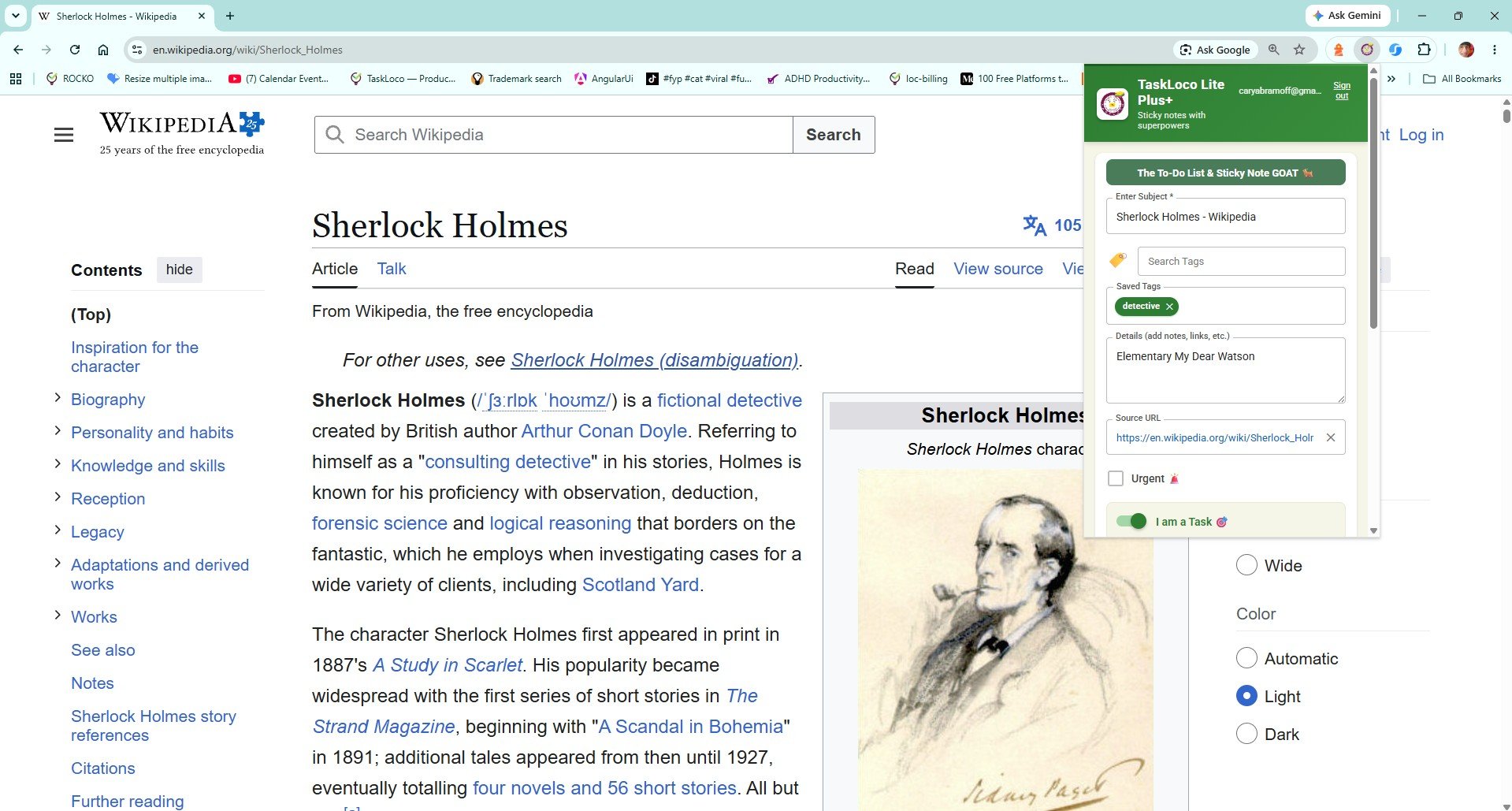
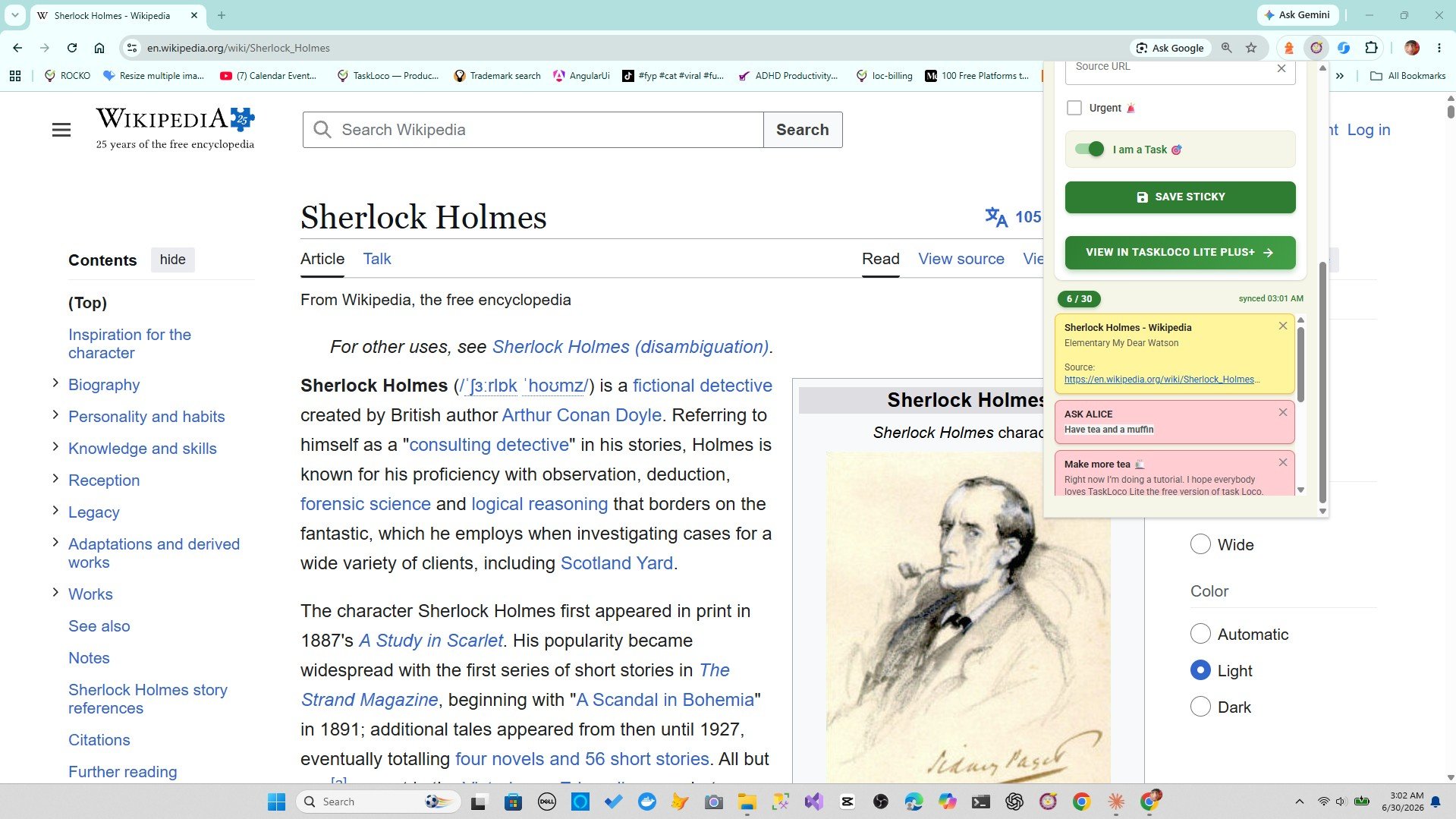
- Click the toolbar icon once — the extension captures the current tab. The page title and URL are auto-filled into a new sticky note. You don't type anything.
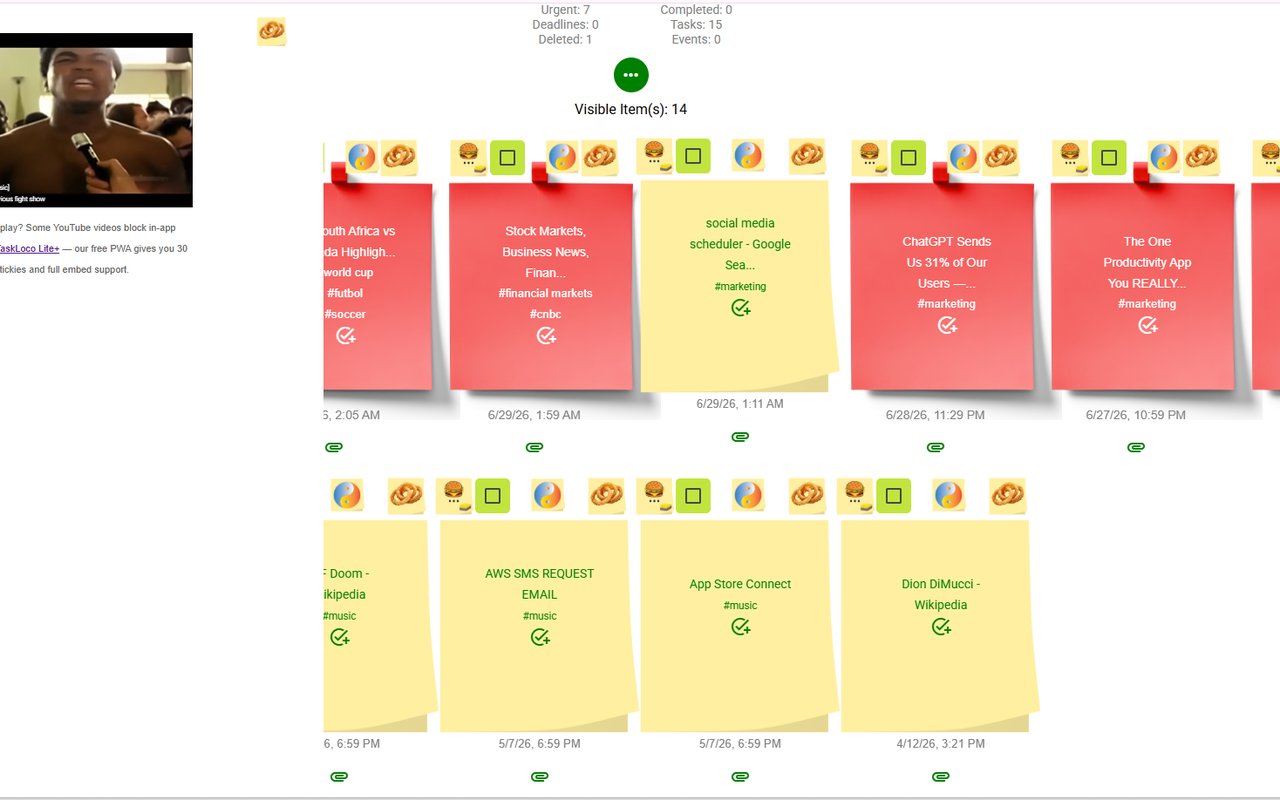
- The note appears on your TaskLoco wall — a visual board where all your saved items live. Each note shows what it is at a glance.
That's the entire process. No dialog box asking which folder. No typing a name. No copying the URL. The page is captured the moment you click.
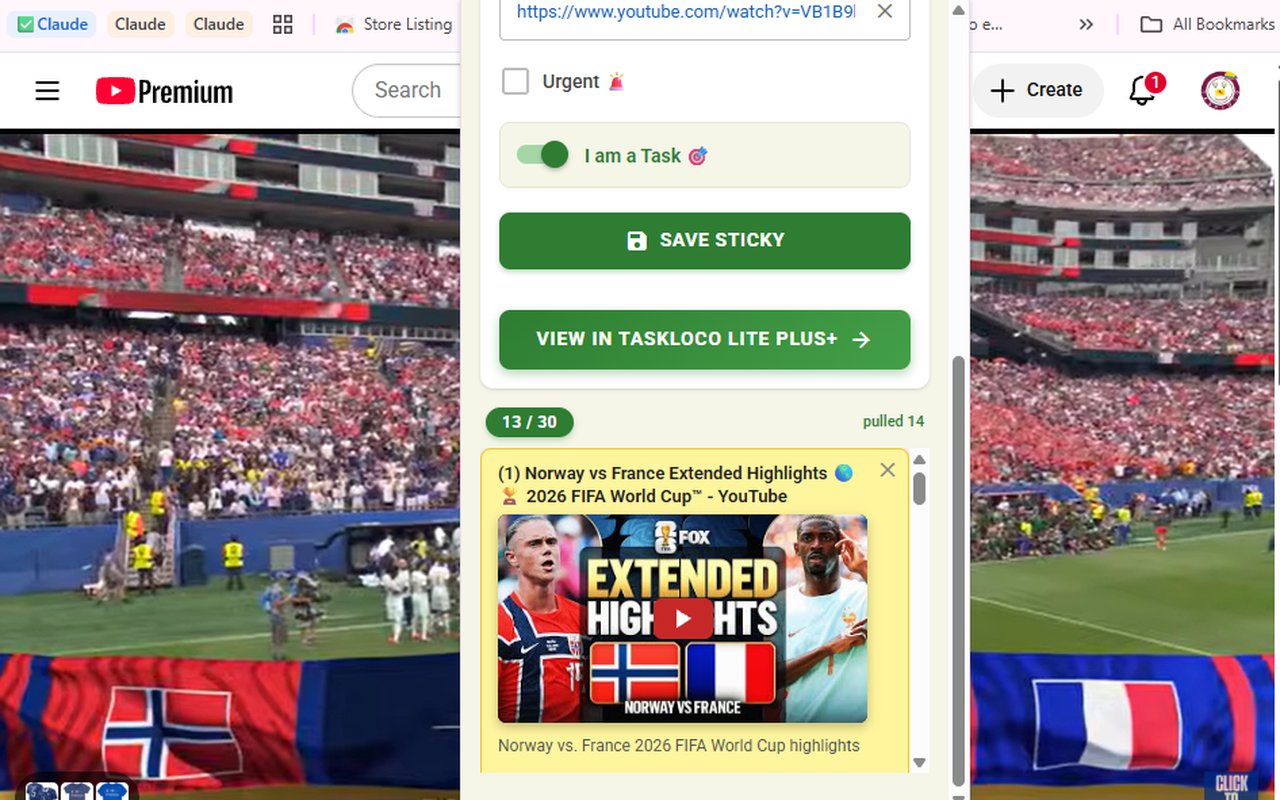
If you're saving a YouTube video, it goes further: the video embeds inside the note and plays directly there, so you never lose track of where a video lives.
If you prefer doing this without any extension at all, the manual equivalent is: copy the page URL, open your notes app, paste the URL, type a title, and add any context you want. That works — it's just four to six steps every time. For occasional saves, it's fine. For anything you do more than a few times a week, an extension pays for itself in recovered attention.
What Makes a Visual Sticky Note Better Than a Bookmark
The difference isn't cosmetic. When a saved item looks like something — when it has a visible title, maybe an image, a note you can add — your brain processes it differently than a line of blue text in a list. You remember why you saved it. You actually go back to it.
Sticky notes on a wall also give you spatial memory. You can see at a glance what's there, group things loosely by topic, and spot what you were working on last. A bookmark folder gives you none of that. It's a flat list sorted by the order you saved things, which is almost never the order you want to find them.
With the Sticky Note Web Clipper, each saved page becomes a note card on your TaskLoco wall. You can add tags to find things later, use search to pull up anything by keyword, and the wall syncs across Chrome, your desktop, your iPhone, and Android — all on the free tier. So what you save at your desk is available on your phone without any manual export step.
Try the One-Click Method Right Now
The Sticky Note Web Clipper is free to install. Open the Chrome Web Store, search for Sticky Note Web Clipper by TaskLoco, and click Add to Chrome. Sign in with Google — that's the whole setup. From that point, every page you want to keep is one click away from being saved as a visual sticky note on your TaskLoco wall.
Try it on this page if you want. Click the icon once. The title and URL fill themselves in. That's what one click actually feels like when it's done right.
If you've been keeping thirty tabs open because you're afraid to close them and lose the links, this is the fix. Save what matters, close the tabs, and find everything again by searching your wall instead of scanning a tab bar.
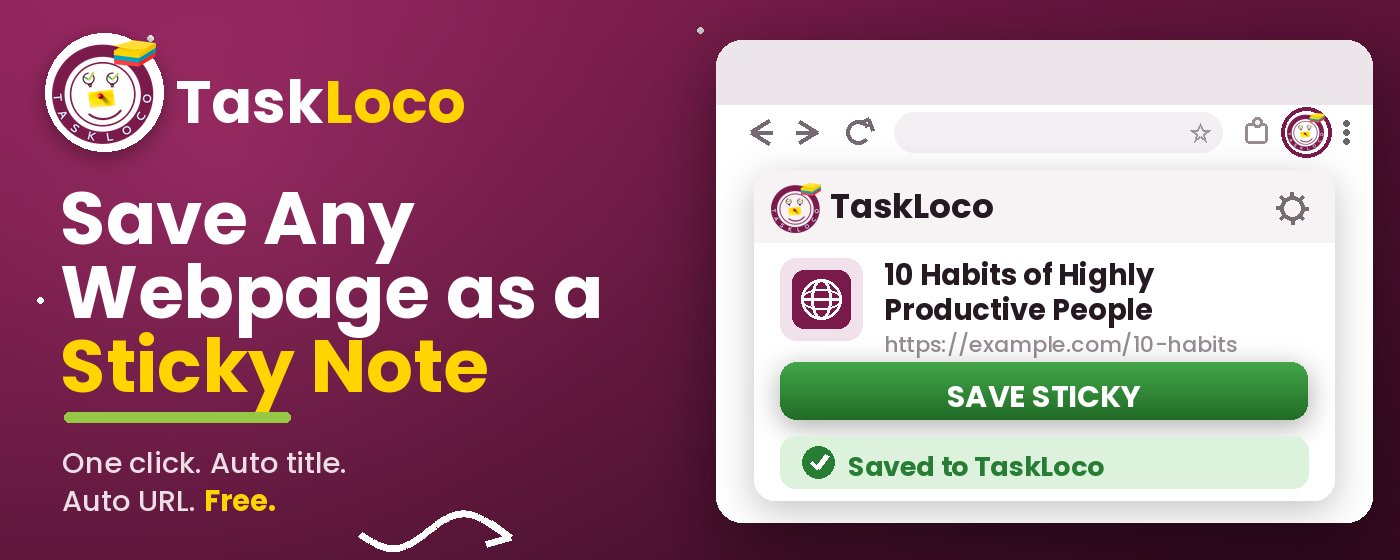
The Sticky Note Web Clipper is free. Install it from the Chrome Web Store, sign in with Google, and every page you clip becomes a sticky note you can find later.
Your clipped notes sync to TaskLoco across Chrome, desktop, iPhone, and Android — also free to start. No credit card to begin.
Get the Free Clipper
Sticky Note Web Clipper
- Free Chrome extension
- One-click save — any page, article, or video
- Title & URL auto-filled
- Tags & search
- Free forever
Synced to TaskLoco
- Sign in free with Google
- Your wall on Chrome, desktop, iPhone, Android
- YouTube videos embed & play in notes
- Visual sticky-note wall
- Free to start
Add It to Chrome — Free
One click saves any page, article, or YouTube video as a sticky note. Title and URL auto-filled.
Add to Chrome — FreeSee TaskLoco in Action
Frequently Asked Questions
What is the fastest way to save a web page in Chrome?
The fastest method is a one-click clipper extension. With the free Sticky Note Web Clipper installed, you click the toolbar icon once and the current page is saved as a sticky note — title and URL auto-filled, no dialogs, no folder selection. It's measurably faster than Ctrl+D bookmarking because you skip the naming and folder steps entirely.
How do I save a web page to read later without keeping the tab open?
Install a clipper extension, click it once on the page you want, then close the tab. The page is saved to your note wall with its URL intact — you can reopen it any time. The Sticky Note Web Clipper does this in one click and syncs the saved note to your phone so you can pick up reading on mobile without doing anything extra.
Is the Sticky Note Web Clipper free?
Yes — the extension is completely free. TaskLoco, where your notes sync, also has a free tier. Install it from the Chrome Web Store, sign in with your Google account, and start saving pages as sticky notes immediately.
How is a web clipper different from a bookmark?
A bookmark stores a plain link in a list — no preview, no context, no visual. A web clipper like the Sticky Note Web Clipper turns the page into a visual note card with the title and URL already filled in, displayed on a wall you can actually browse. You're far more likely to return to something you can see than something buried in a folder of undifferentiated blue text.
Can I save YouTube videos with the Sticky Note Web Clipper?
Yes. When you clip a YouTube page, the video embeds inside the sticky note and plays directly from the note — you don't have to reopen YouTube to watch it. This makes it easy to build a personal video library of tutorials, talks, or anything else worth watching without losing track of what you've saved.
Will my saved pages sync to my phone?
Yes. Notes saved with the Sticky Note Web Clipper sync to TaskLoco, which is available on iPhone, Android, and desktop. Sign in with the same Google account and everything you've clipped in Chrome is available on your phone without any manual export or copy-paste.
How do I find something I saved weeks ago?
Your TaskLoco wall supports search and tags. Type any keyword from the page title or a tag you added and your saved notes filter instantly. This is a major advantage over bookmarks, where finding something old usually means scrolling through a long unsorted list hoping you remember which folder you used.
Born in Brooklyn. Powered by AWS. Your data stays yours.
TaskLoco is available on iPhone, Android, Chrome, and every web browser.