You've been there. A folder of bookmarks, a graveyard of open tabs, a list of links you saved weeks ago — and absolutely no memory of why any of them mattered. The link title tells you what the page is called. It tells you nothing about what you were thinking when you saved it.
This is a solvable problem, and it doesn't require any app, any system, or any subscription. It requires one small habit change: capture context at the moment you save, not later. Later never comes. This article walks through exactly how to do that — with or without any tool — and then shows you the fastest mechanical way to make it stick.
Why Bookmarks Fail You (and It's Not Your Memory's Fault)
A bookmark saves a URL. That's it. When you return to it three weeks later, you're left reconstructing the mental state you were in when you found the page — and that reconstruction almost always fails. You click through, skim the article again, and either re-save it out of habit or delete it with a vague sense of guilt.
The core problem is that bookmarks have no place for your reasoning. There's no field that says "I saved this because I'm comparing standing desks and this one had the best warranty info" or "read before the meeting on Thursday." Some browsers let you add a bookmark description, but almost nobody uses it because the friction of opening that dialog kills the impulse.
Open tabs try to solve this by keeping pages visible — but a tab with no label context is just a bookmark you're afraid to close. After about eight tabs, the icons shrink down to favicons and the cognitive load of managing them replaces the original problem.
How to Save Pages With Context — The Actual Method
The principle is simple: write one sentence about why you saved something at the same time you save it. Not later. Not in a separate notes app you'll open after. Right now, in the same action.
Here's how to apply this across any tool you're already using:
- Browser bookmarks: Right-click the bookmark after saving and choose Edit. Replace or supplement the name with your reason — e.g., "Best standing desk warranty — compare with others". Takes ten seconds and transforms the bookmark's usefulness.
- Copy-paste into a notes app: Paste the URL, then immediately type one sentence of context before you close the tab. The act of typing forces you to articulate why the page matters, which also helps you remember it without re-reading.
- A dedicated web clipper: Most clippers let you add a note or tag at save time. The ones that don't — the ones that just silently grab the page and file it somewhere — replicate the bookmark problem at scale.
The pattern that works is: URL + one sentence of intent + at least one tag or label. That combination is retrievable. A lone URL is an archaeological mystery.
Tags are worth taking seriously here. A single tag like "research" is nearly useless. A tag like "desk-setup" or "client-johnson-project" narrows your future search to something manageable. Two specific tags per save is a sustainable habit. Folder hierarchies are not — they require decisions you don't have bandwidth for mid-browsing.
Organizing What You Save So You Actually Find It Again
Saving with context is only half the job. The other half is making sure your saved items are browsable and searchable when you need them — not buried in a folder structure you designed under optimistic conditions and abandoned within a week.
A few approaches that hold up over time:
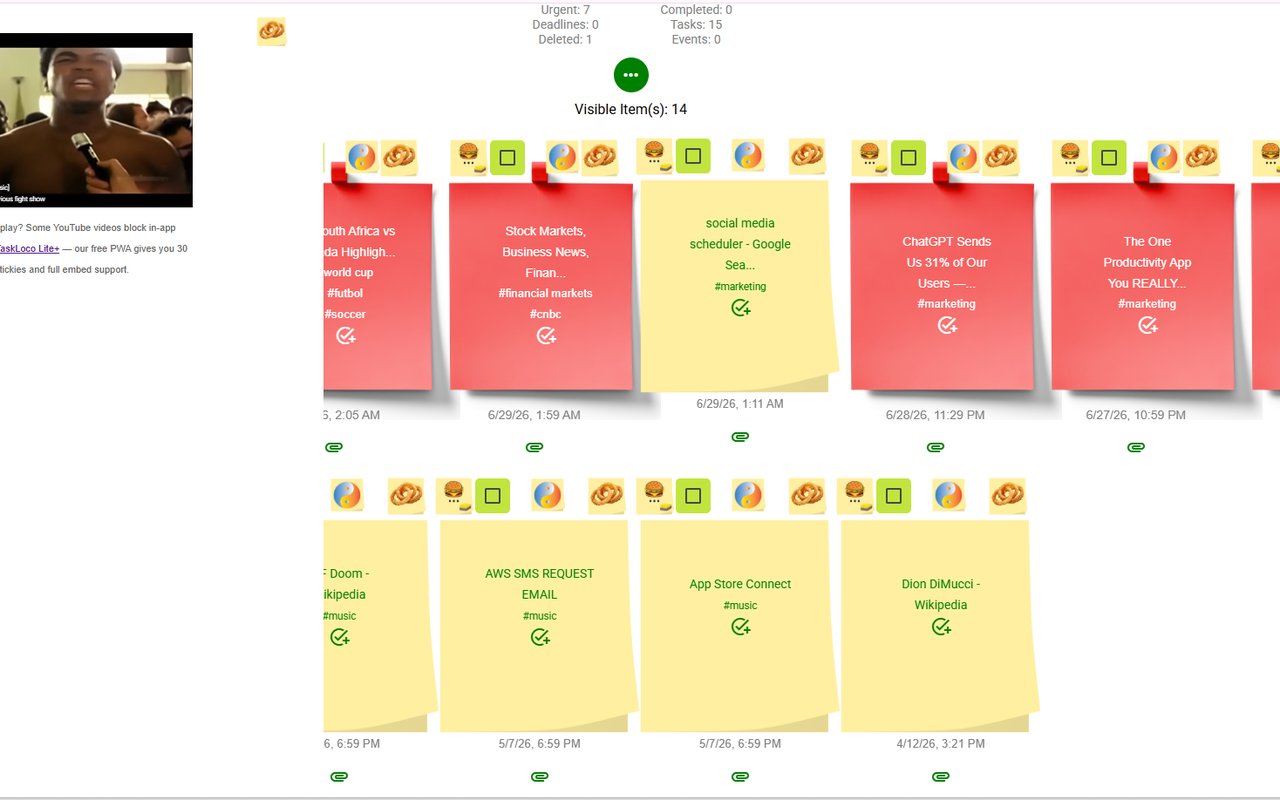
- Visual layout over folders: When saved items are visible as cards or notes rather than a list of link text, you scan by recognition rather than recall. You see the thumbnail or title and your brain connects it to the context you saved faster than reading a folder name ever could.
- Search over sorting: Don't spend time filing. Spend ten seconds on a good title or note, then use search to retrieve. Search scales; manual filing doesn't.
- Limit your intake deliberately: One of the best organizing strategies is saving less. Ask yourself — before saving — whether you'll actually use this in the next two weeks. If the honest answer is no, don't save it. The accumulation problem is partly a saving problem, not just a retrieval problem.
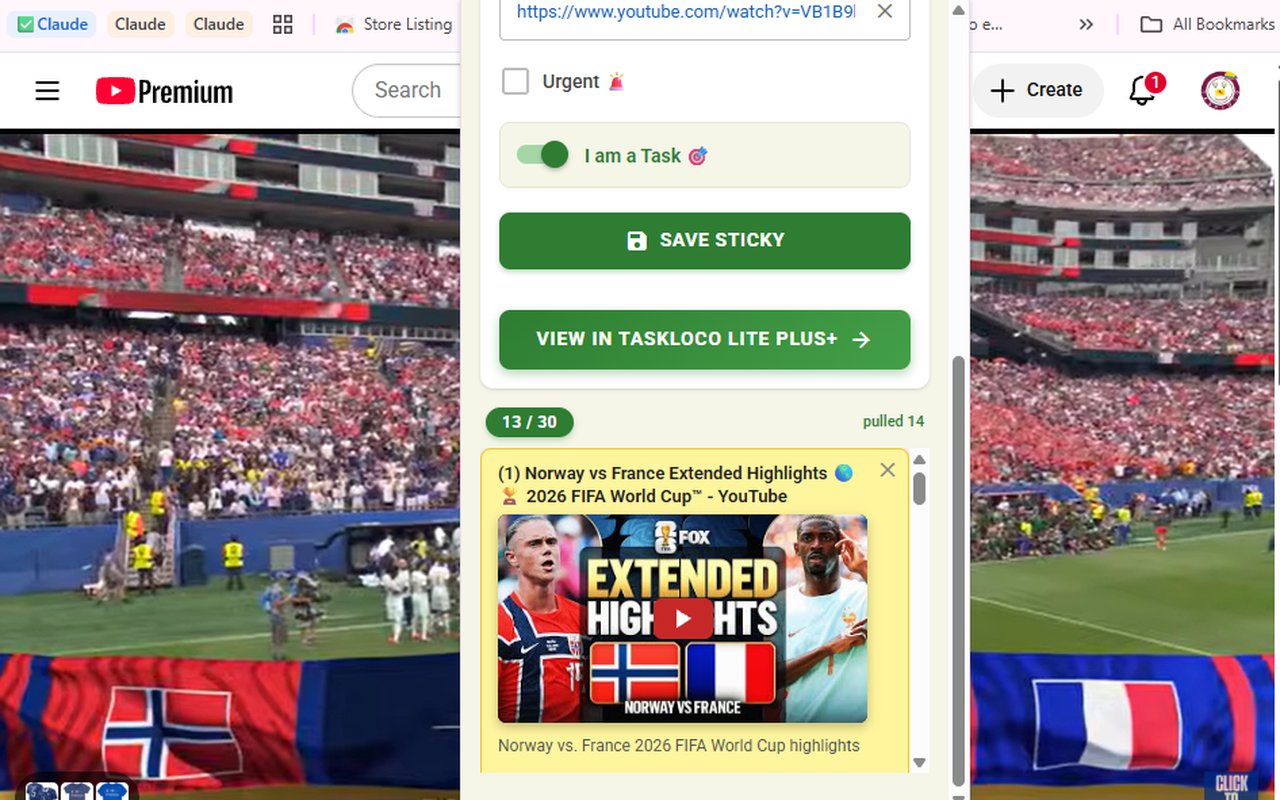
For YouTube videos specifically, saving the link is often not enough — you lose your place, you forget which part was relevant. A clipper that embeds the video inside the note so you can play it in context is meaningfully better than a link you have to re-navigate.
Where the Sticky Note Web Clipper Fits Into This
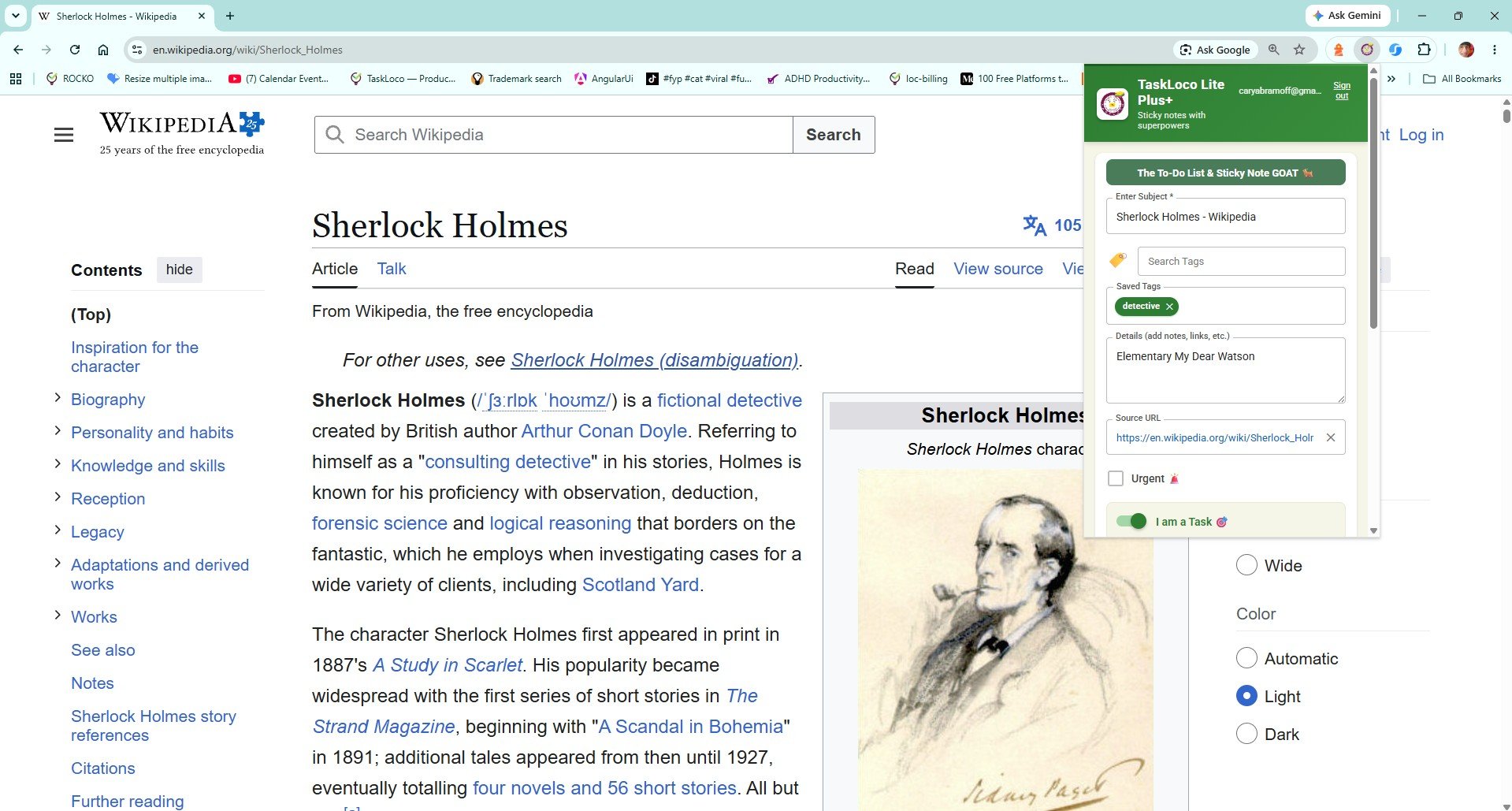
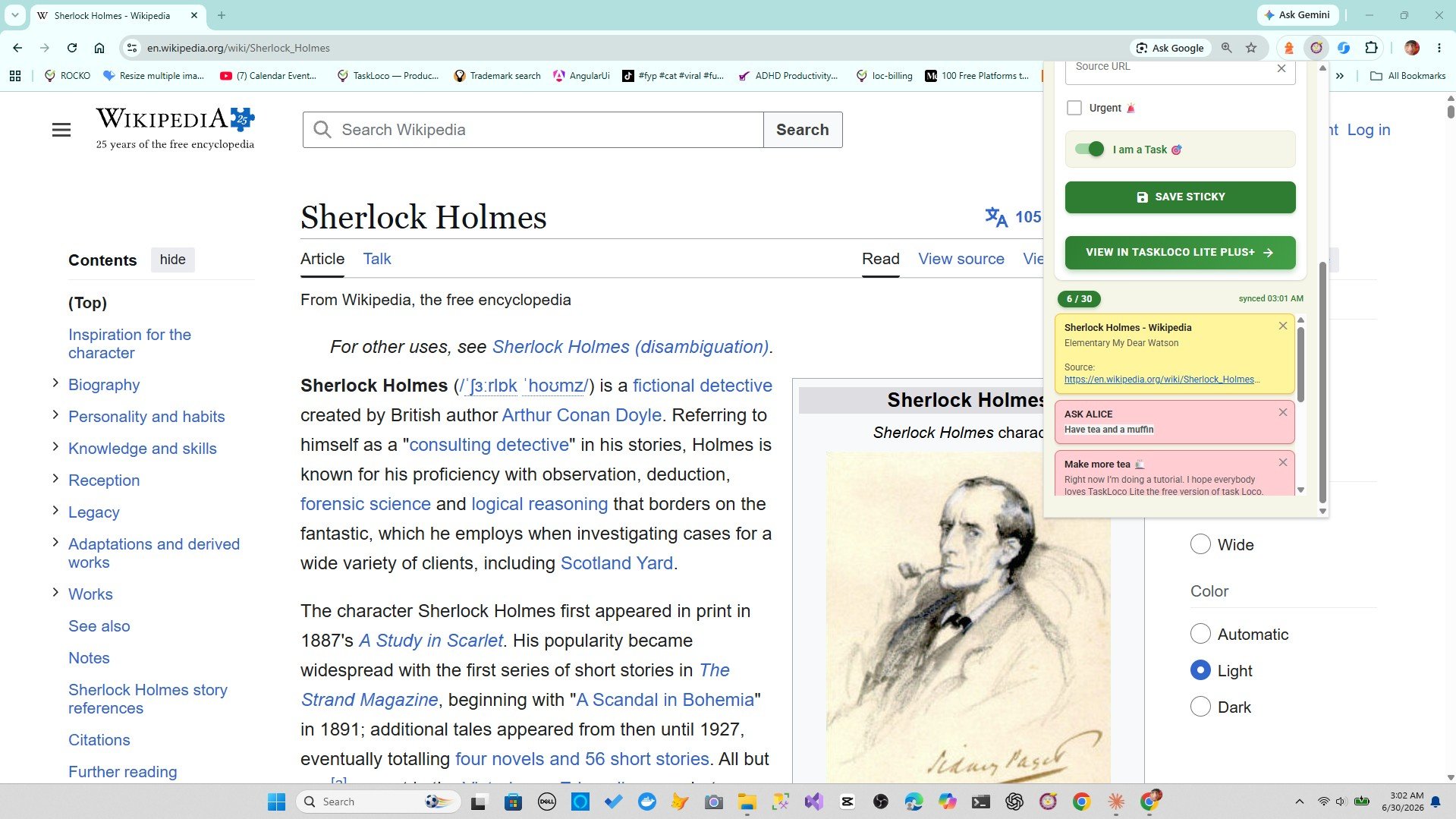
If you want the mechanical fastest version of the save-with-context habit, the Sticky Note Web Clipper (free Chrome extension by TaskLoco) is built exactly for it. Click the toolbar icon on any page and it saves that page as a sticky note — title and URL already filled in — so the only thing left for you to do is add your one sentence of context and a tag.
That's the whole workflow. You're not navigating to a bookmarks manager, not opening a separate app, not copying and pasting a URL. The note is already there, titled, linked, and waiting for your reasoning.
YouTube videos save differently: they embed inside the note and play there, so you're not losing your place or re-finding the right timestamp. Articles, research pages, news, product pages — all clip the same way, one click.
Your saved notes sync to TaskLoco, which means they're on your phone and desktop too — available whenever you need to get back to them. Sign in is free with Google.
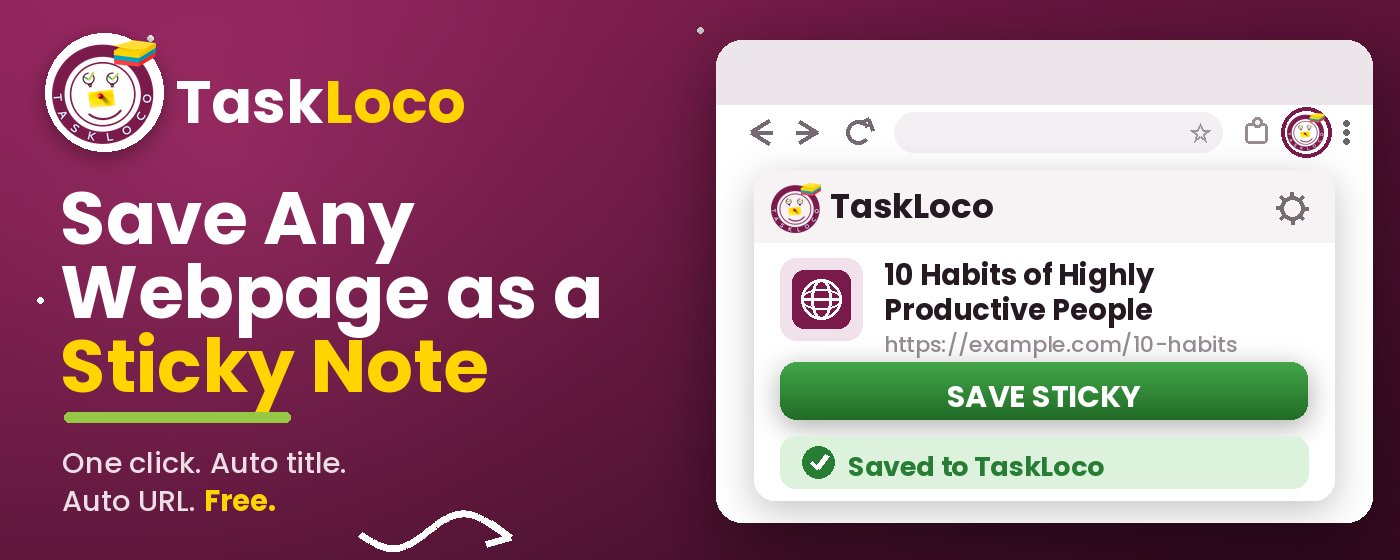
The Sticky Note Web Clipper is free. Install it from the Chrome Web Store, sign in with Google, and every page you clip becomes a sticky note you can find later.
Your clipped notes sync to TaskLoco across Chrome, desktop, iPhone, and Android — also free to start. No credit card to begin.
Get the Free Clipper
Sticky Note Web Clipper
- Free Chrome extension
- One-click save — any page, article, or video
- Title & URL auto-filled
- Tags & search
- Free forever
Synced to TaskLoco
- Sign in free with Google
- Your wall on Chrome, desktop, iPhone, Android
- YouTube videos embed & play in notes
- Visual sticky-note wall
- Free to start
Add It to Chrome — Free
One click saves any page, article, or YouTube video as a sticky note. Title and URL auto-filled.
Add to Chrome — FreeSee TaskLoco in Action
Frequently Asked Questions
Why do I keep forgetting why I saved a bookmark?
Because bookmarks only save the URL — they have no field for your reasoning. The fix is to add one sentence of context at the moment you save, not later. A web clipper that gives you a note field right at save time makes this fast enough to actually stick.
What's the best way to save a web page with notes attached?
Save the page using a clipper that creates a note — not just a link — so you can add context immediately. The free Sticky Note Web Clipper saves any page as a sticky note with the title and URL auto-filled, giving you a place to write your reason and add tags before you close the tab.
How do I save a YouTube video so I remember what I saved it for?
A bare link to a YouTube video loses context fast. With the Sticky Note Web Clipper, saving a YouTube page embeds the video inside the note so you can play it in place — and you can add a note right there explaining which part was relevant or why you saved it.
Is there a better alternative to browser bookmarks for saving articles?
Yes. Bookmarks give you a URL and a title — no place for context, no visual layout, no search worth using. A note-based clipper like the free Sticky Note Web Clipper saves articles as visual notes you can annotate, tag, and search, which makes retrieval genuinely faster.
How do I organize saved links so I can find them later?
Prioritize search over filing. Add one sentence of context and two specific tags when you save — then use search to retrieve rather than browsing folder hierarchies. The Sticky Note Web Clipper saves links as notes with tags and full-text search, so you're finding things by what you wrote, not where you filed them.
Does the Sticky Note Web Clipper cost anything?
No — the extension is free. Install it from the Chrome Web Store, sign in with Google, and start clipping. TaskLoco, where your notes sync, also has a free tier.
Can I access my saved pages on my phone?
Yes. Notes you clip with the Sticky Note Web Clipper sync to TaskLoco, which is available on iPhone, Android, and desktop — so anything you clip in Chrome while browsing is accessible on your phone without any extra steps.
Born in Brooklyn. Powered by AWS. Your data stays yours.
TaskLoco is available on iPhone, Android, Chrome, and every web browser.