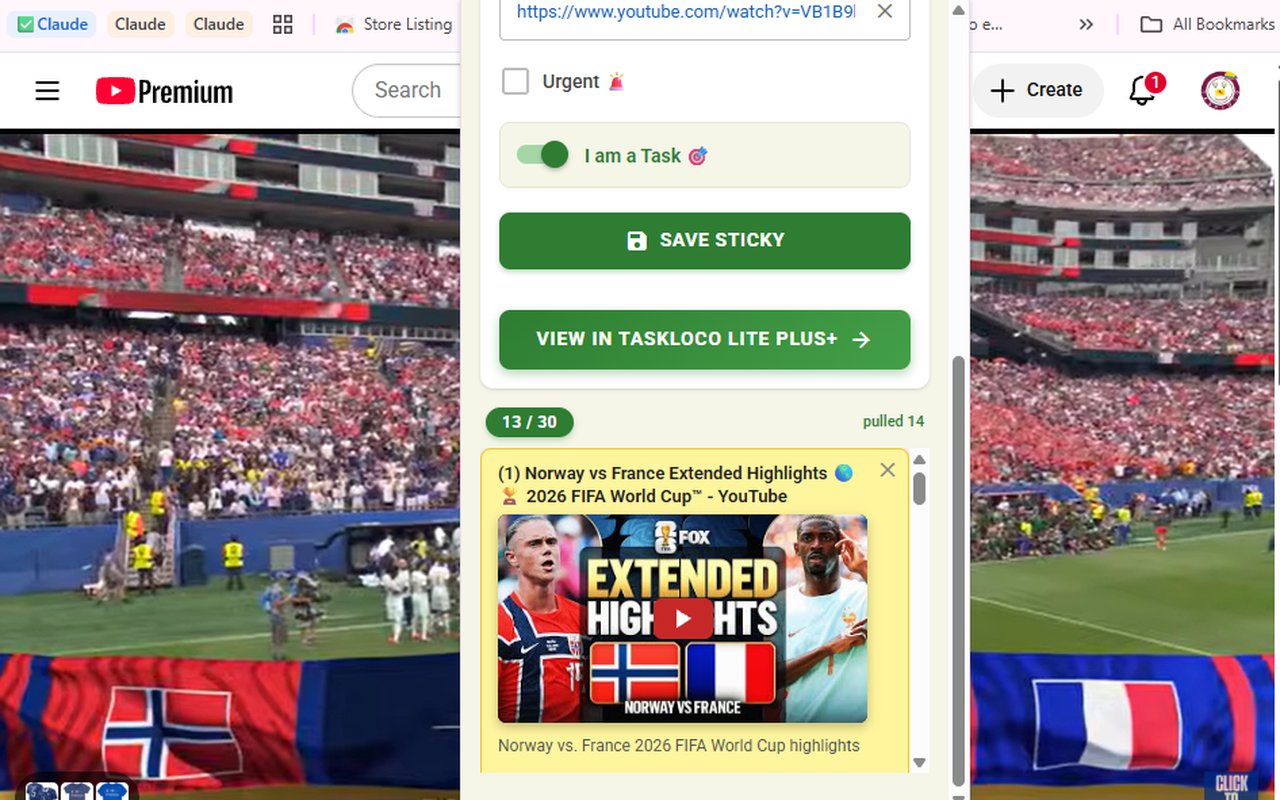
You find a YouTube video mid-way through a research session — a tutorial, a lecture, a documentary — and you know you won't finish it now. So you do what everyone does: leave the tab open, bookmark it, or paste the link somewhere you'll never look again. Three days later, the tab is gone and the bookmark is buried under forty others with zero context.
There is a better way to handle this, and it does not require a complicated workflow. The method is simple: save the video as a visual note that keeps the link alive, shows you what the video is, and lets you play it directly from your saved collection. This article walks through how to do that — with no tools, with basic tools, and then with the fastest approach available in a browser.
The Basic Methods: What Most People Already Try
Before reaching for any extension, it helps to understand why the obvious approaches keep failing — and what each one actually gives you.
- Browser bookmarks: Fast to save, but a bookmark is just a URL and a title in a list. There is no thumbnail, no context, no way to add a note about why you saved it. A folder of fifty YouTube bookmarks is nearly useless two weeks later.
- Copy-pasting the URL into a notes app: Better than bookmarks if you add context, but it's a three-step process — copy the URL, switch apps, paste and type a note — and you still have to click out to YouTube to watch it.
- YouTube's native Save feature (Watch Later): Decent for videos you want to watch passively, but Watch Later is isolated inside YouTube. It does not connect to anything else you're researching, and it does not let you annotate or group videos with related articles or links.
- Leaving the tab open: Honest, but not a system. Tabs crash, browsers restart, and the mental load of fifty open tabs is its own problem.
What actually works is treating the video like any other piece of research — saving it in a place where you can see it, annotate it, and play it without leaving your workflow.
How to Save a YouTube Video So It Actually Embeds and Plays Later
If you want a saved YouTube link to play without opening a new tab, the video needs to be embedded — not just linked. Here is how to do that in practice.
Manual method (no extension): In any note-taking tool that supports rich embeds (Notion, Obsidian with the right plugin, or a personal wiki), you can paste a YouTube URL and the tool will render an embedded player. This works, but it requires you to open the app, create a note, paste the link, and wait for the embed to render. It takes roughly ten to fifteen seconds per video and breaks your browsing flow every time.
YouTube's share options: You can use the Share button on any video to copy an embed code (the iframe snippet). This is designed for embedding videos in websites, not personal notes. Pasting raw HTML into a notes app generally renders nothing.
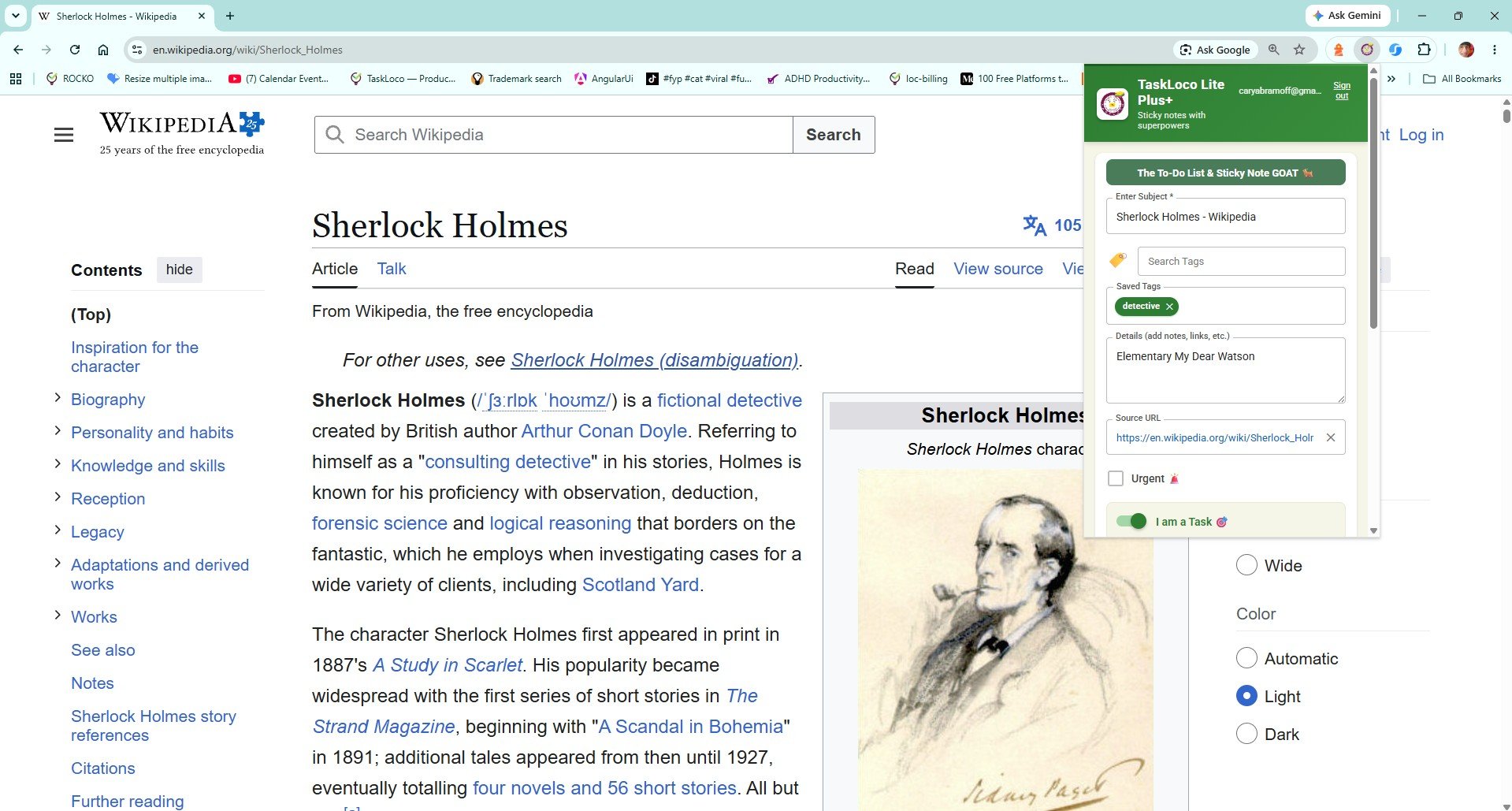
The faster approach — a browser extension that embeds on save: The Sticky Note Web Clipper for Chrome handles this automatically. When you are on a YouTube video page and click the extension's toolbar icon, it saves the video as a sticky note — title auto-filled, URL captured — and because it recognizes YouTube URLs, the note renders a playable embedded video. You can watch the video directly from your saved note without going back to YouTube. One click. No copy-paste. No app switching.
Using the Sticky Note Web Clipper to Save and Watch YouTube Videos
Here is exactly how the workflow looks with the free Sticky Note Web Clipper installed on Chrome.
- Install the extension free from the Chrome Web Store and sign in with your Google account — takes under a minute.
- Navigate to any YouTube video you want to save.
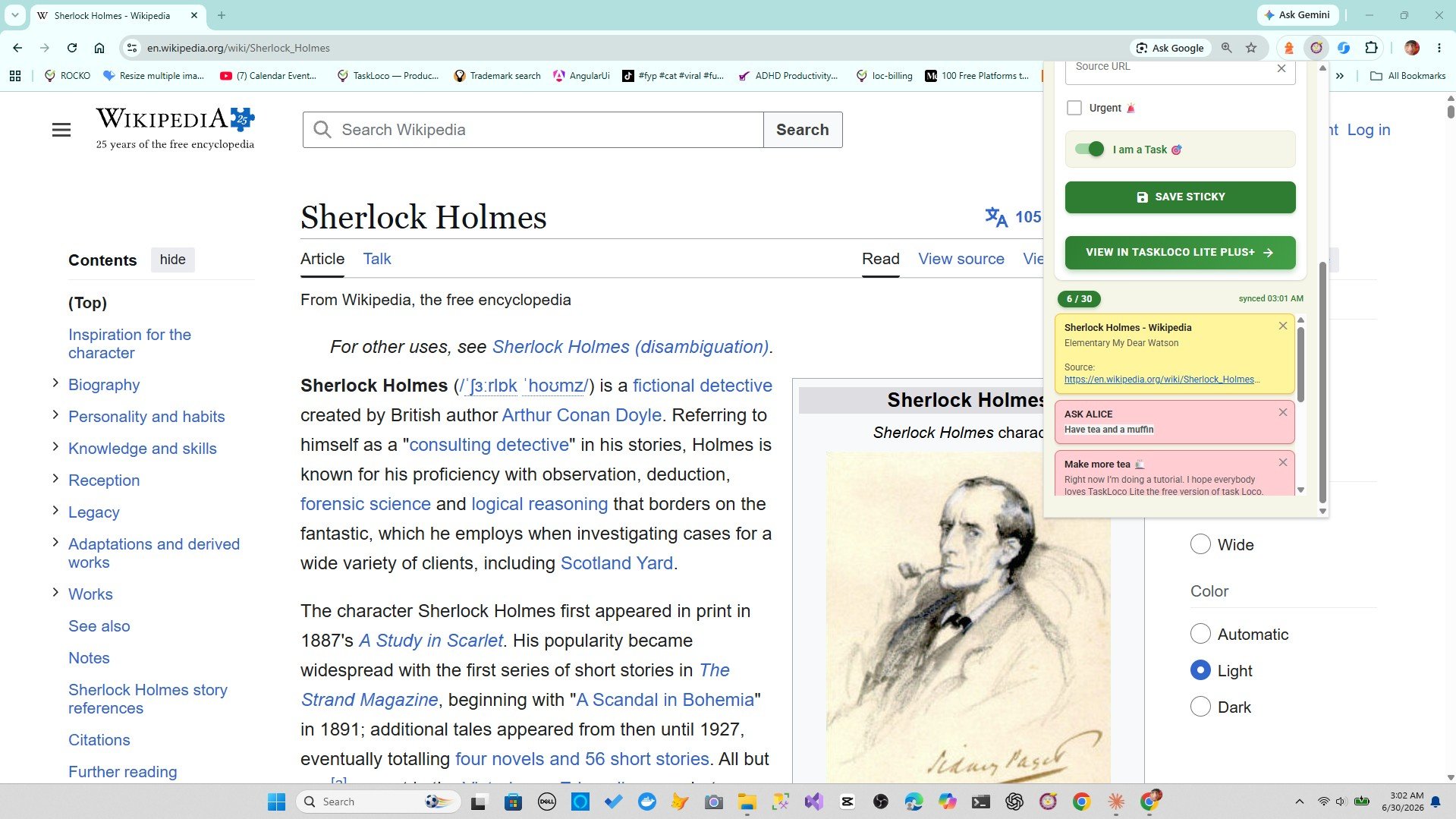
- Click the Sticky Note Web Clipper icon in your Chrome toolbar. The video is immediately saved as a sticky note, with the title and URL auto-filled. No dialog boxes, no forms.
- Open your TaskLoco wall — your saved notes appear as visual cards. The YouTube note shows the video embedded and playable right inside the note.
- Watch the video directly from the note, without opening a new tab or going back to YouTube.
Because your notes sync across Chrome, desktop, iPhone, and Android through TaskLoco, the same saved video is waiting on your phone if you want to watch it later on a commute. You can also add tags to your YouTube notes — useful if you save videos across multiple topics and want to filter by subject later.
You can save as many videos as you want alongside articles, research pages, and any other links — all on the same visual wall, all searchable by title or tag.
Keeping Your Saved Videos Organized and Findable
Saving is only half the problem. The other half is being able to find the right video a week later without scrolling through everything you've ever saved.
A few habits that work well with the sticky note system:
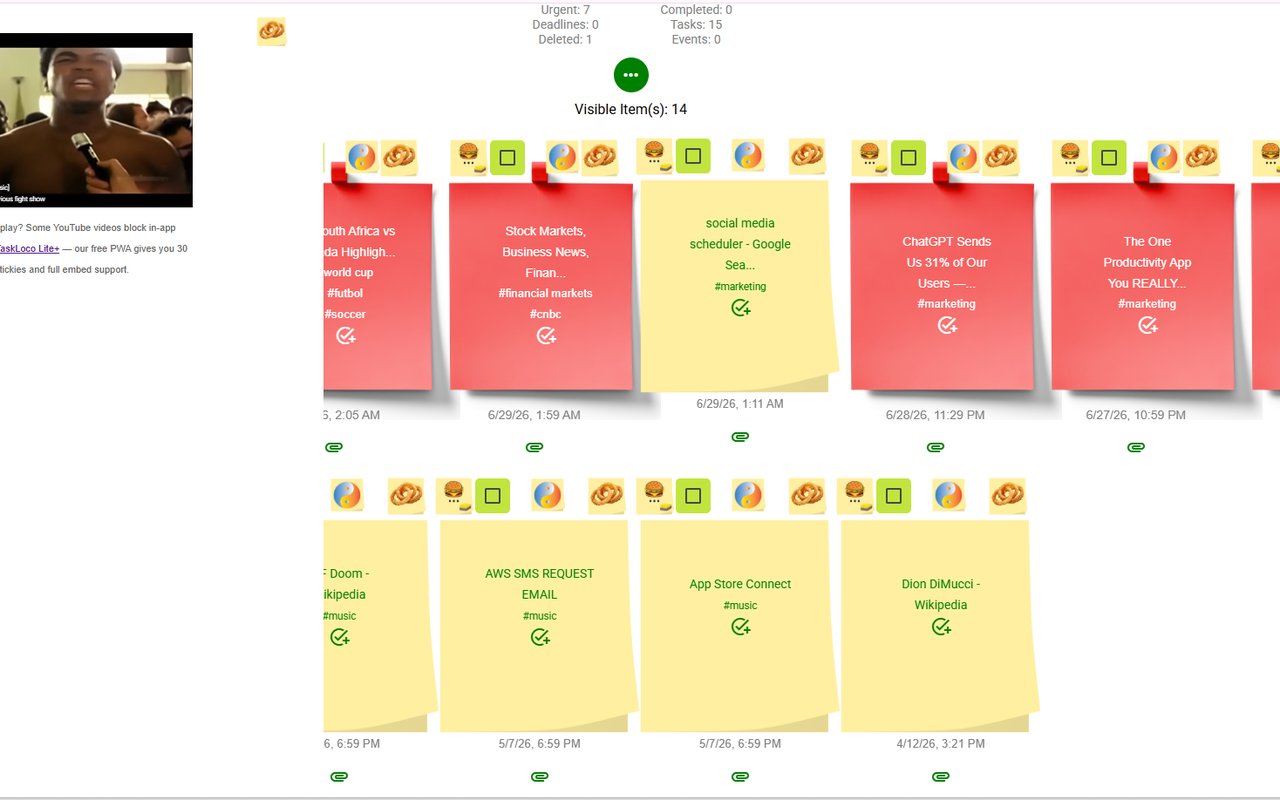
- Tag by topic at save time. The clipper saves the note in one click — you can open it immediately afterward and add a tag like design, cooking, or python. Tagging at save time costs five seconds and saves five minutes of searching later.
- Use the search bar on your wall. TaskLoco's search covers note titles, so if you remember any word from a video's title, you can find it instantly. YouTube video titles tend to be descriptive, which makes this especially effective.
- Group related videos with related articles. Because the clipper saves any web page — not just YouTube — you can clip the YouTube tutorial and the written guide from the same topic in the same session. They sit side by side on your wall, visually connected.
Contrast this with a YouTube Watch Later playlist: it only holds videos, it has no tags, no search beyond the video title within YouTube itself, and it is completely isolated from anything else you are researching. For casual viewing it is fine. For any kind of focused learning or research, it falls apart quickly.
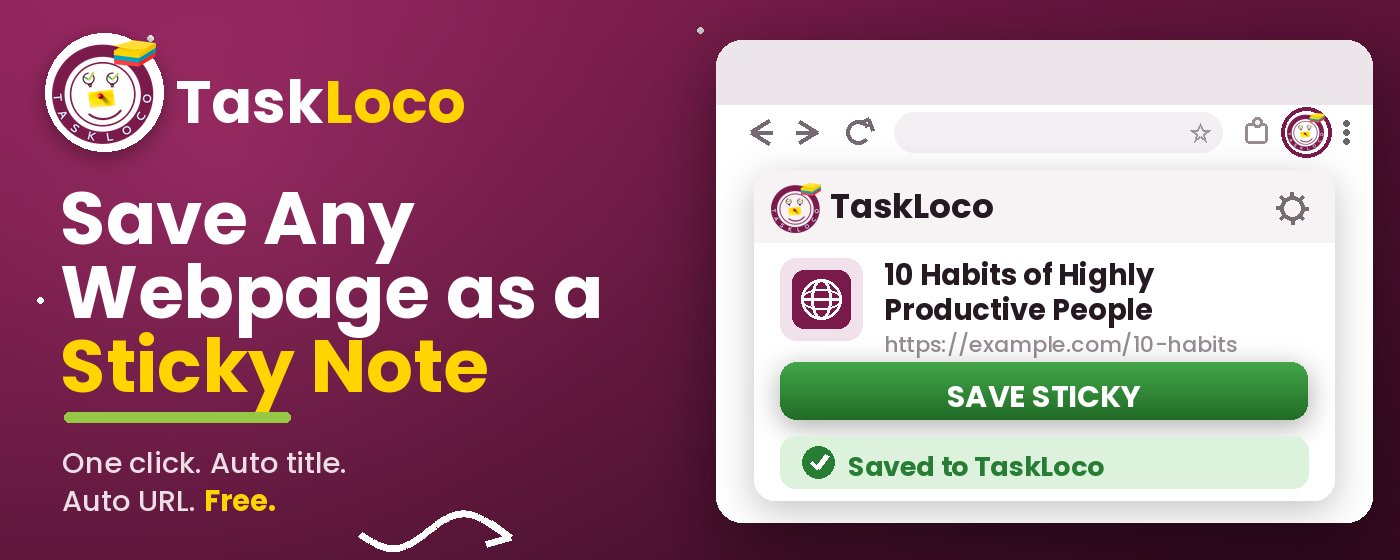
The Sticky Note Web Clipper is free. Install it from the Chrome Web Store, sign in with Google, and every page you clip becomes a sticky note you can find later.
Your clipped notes sync to TaskLoco across Chrome, desktop, iPhone, and Android — also free to start. No credit card to begin.
Get the Free Clipper
Sticky Note Web Clipper
- Free Chrome extension
- One-click save — any page, article, or video
- Title & URL auto-filled
- Tags & search
- Free forever
Synced to TaskLoco
- Sign in free with Google
- Your wall on Chrome, desktop, iPhone, Android
- YouTube videos embed & play in notes
- Visual sticky-note wall
- Free to start
Add It to Chrome — Free
One click saves any page, article, or YouTube video as a sticky note. Title and URL auto-filled.
Add to Chrome — FreeSee TaskLoco in Action
Frequently Asked Questions
Does the Sticky Note Web Clipper actually embed YouTube videos, or just save the link?
It embeds them. When you clip a YouTube video, the saved note renders a playable video player — not just a URL. You can watch the video directly from the note without opening YouTube in a new tab.
Is the Sticky Note Web Clipper free?
Yes — the extension is completely free. TaskLoco also has a free tier. Install from the Chrome Web Store, sign in with Google, and start clipping YouTube videos and any other pages right away.
What is the fastest way to save a YouTube video to watch later?
With the Sticky Note Web Clipper installed, the fastest method is a single click on the toolbar icon while you are on the YouTube page. The title and URL are auto-filled, and the video embeds automatically in the saved note.
Can I save YouTube videos and articles together in the same place?
Yes. The clipper saves any web page — YouTube videos, news articles, research sources, documentation, blog posts — as sticky notes on the same visual wall. You can tag them and search across all of them together.
Will my saved YouTube notes be available on my phone?
Yes. Notes saved with the Sticky Note Web Clipper sync to TaskLoco, which is available on iPhone, Android, and desktop. The same saved videos are accessible wherever you are.
Why not just use YouTube's Watch Later playlist?
Watch Later is limited to YouTube — it does not connect to articles, notes, or anything else you are researching. It has no tags, no custom organization, and no way to annotate why you saved a video. The sticky note approach keeps videos alongside all your other saved content in one searchable, visual place.
Can I add notes or context to a saved YouTube video?
Yes. After clipping, you can open the note and add your own text — a summary, a timestamp you want to remember, questions you had while watching. The video embed and your notes live in the same card.
Born in Brooklyn. Powered by AWS. Your data stays yours.
TaskLoco is available on iPhone, Android, Chrome, and every web browser.