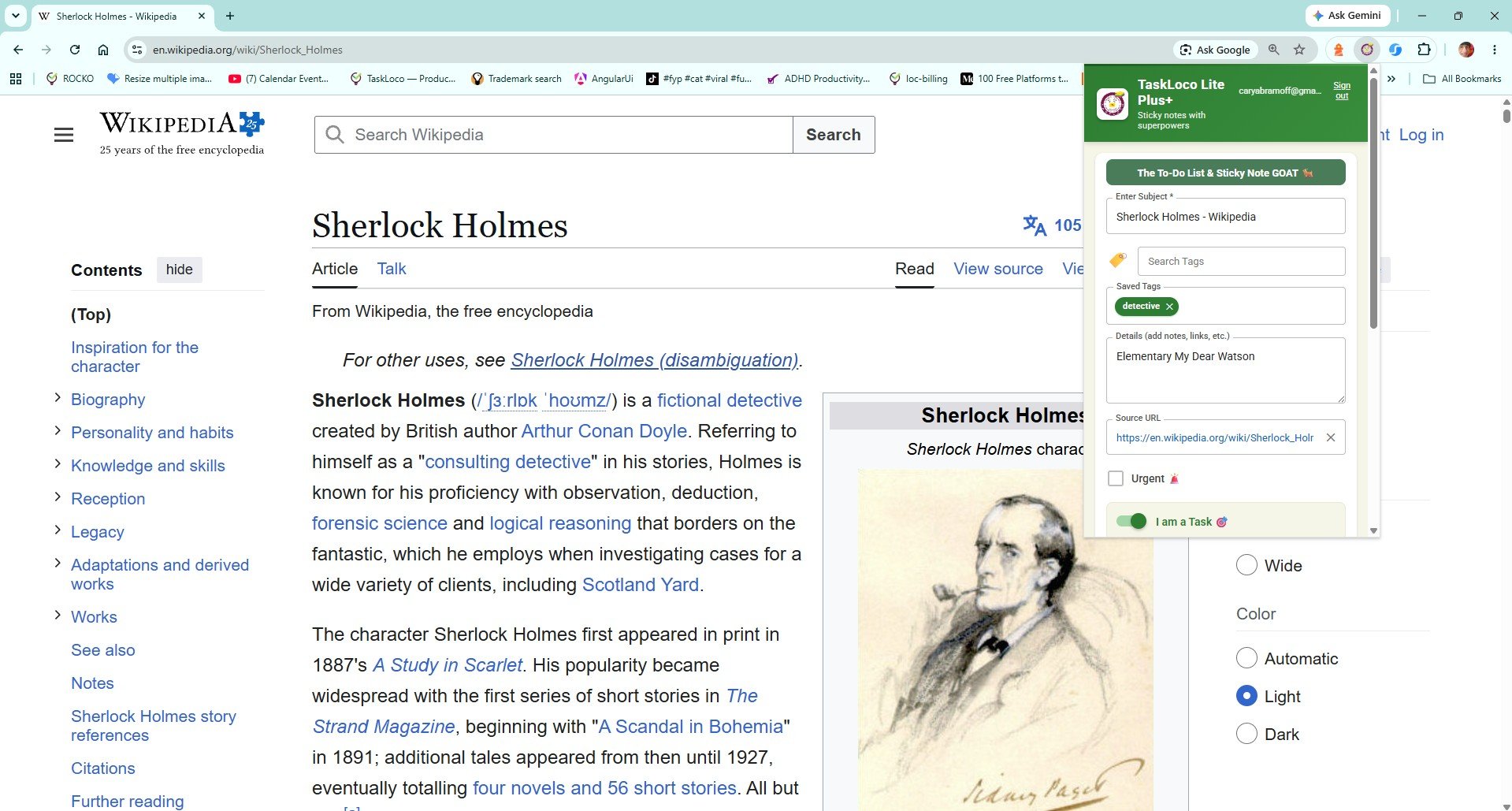
Newsletter writers have a particular problem: research happens in scattered bursts. You spot a perfect article while eating breakfast on your phone, a relevant YouTube interview while procrastinating at your desk, a stat-heavy study at midnight. By the time you sit down to write, half those tabs are gone, the bookmark folder is a graveyard you never open, and you are retracing your steps instead of writing.
Saving articles well is not about using the fanciest tool — it is about removing friction at the moment you find something worth keeping. This guide covers the practical methods for building a clean article library for your newsletter, from zero-cost browser tricks to a one-click clipper that turns any tab into a visual sticky note.
The Core Problem: You Find Good Articles at the Wrong Time
Most newsletter writers do not have a saving problem — they have a timing problem. You find good material when you are not writing, and you try to write when you can no longer find what you found. The solution is a capture habit, not a better filing system.
The golden rule: save at the moment of discovery, not later. Every extra step between 'I should save this' and 'it is saved' increases the chance you lose it. That means your saving method needs to be fast enough that you do not talk yourself out of using it mid-scroll.
Whatever system you pick, it needs to capture at minimum: the article title, the URL, and ideally a quick note about why you saved it. Those three things let you reconstruct intent when you finally sit down to write your issue.
Five Practical Methods for Saving Newsletter Research (No App Required)
Before reaching for any extension, understand what your options actually are and where each one breaks down for newsletter writers specifically.
- Browser bookmarks: Free, instant, always available. The problem is that bookmark folders accumulate fast and have no visual layout. Three weeks of research becomes an undifferentiated list of URLs you have to click one by one to remember why you saved them. Newsletter folders tend to collapse under their own weight.
- Open tabs: The most common 'system' — and the most fragile. A browser crash, an accidental close, or a restart wipes your working memory. Open tabs also make it impossible to see at a glance what you have collected for a given issue. Pinning tabs helps marginally, but it does not scale past eight or ten items.
- A shared Google Doc or Notion page: Copy the headline, paste the URL, add a note. Solid, searchable, free. The friction is that switching to a doc and pasting manually adds four to six steps per article. Over time, people stop doing it consistently — especially on mobile.
- Email yourself the link: Surprisingly effective as a quick capture on mobile. You will see it again. The downside is it mixes with your inbox noise, and you still have to move it somewhere useful before drafting.
- Read-later apps (Pocket, Instapaper): Good for long-form reading queues. Less good for capturing a mix of sources, YouTube interviews, and short news items that you want to reference during writing rather than read cover to cover.
None of these are wrong. The method you will actually use consistently is the right one. What most newsletter writers find, though, is that they need something that works equally fast in a browser tab and on their phone — and that shows them their saved material at a glance without making them click through a folder tree.
How to Organize What You Save by Issue or Theme
Saving articles is only half the job. The other half is being able to find them when you are staring at a blank draft. Organization does not need to be complex, but it does need to be consistent.
Tag by issue or theme, not by date. If you tag everything by the week you saved it, you will forget which week had the article you need. Tag by topic ('AI tools', 'creator economy', 'interview prep') or by issue number ('issue-42') and you can pull up a cluster of sources instantly when you sit down to write a specific piece.
Write a one-line note when you save. The title of an article tells you what it is about. Your note tells you why you care. 'Good stat on open rates' or 'counterpoint to my take on paywalls' is infinitely more useful than just the headline when you are deep in a draft and scanning your saved items quickly.
Do a weekly sweep. Once a week, before or after writing your issue, go through everything you saved since the last one. Archive what is no longer relevant, tag what is still useful, and move the best material to a running 'next issue' pile. This keeps your library from becoming a junk drawer.
Keep sources and ideas separate. Some writers mix 'articles I want to link to' with 'ideas I want to write about.' Those are different things and should live in different places — or at minimum carry different tags — or you will spend draft time puzzling out what each saved item actually is.
One Practical Way to Do All of This While Browsing: The Sticky Note Web Clipper
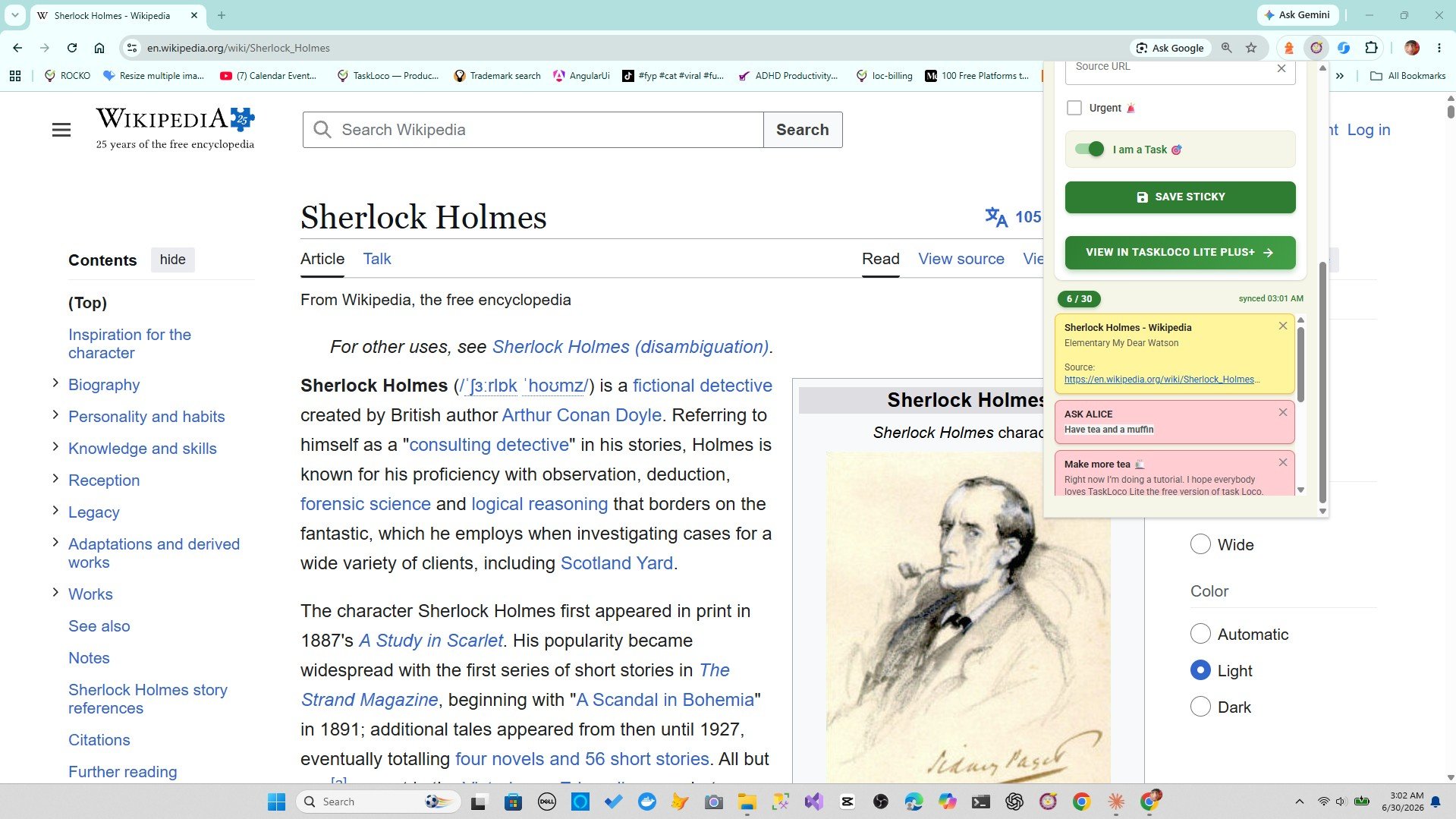
If the methods above sound right but the execution feels friction-heavy, the Sticky Note Web Clipper is worth a look. It is a free Chrome extension that turns any open tab into a sticky note in one click — title and URL auto-filled, no copy-paste required.
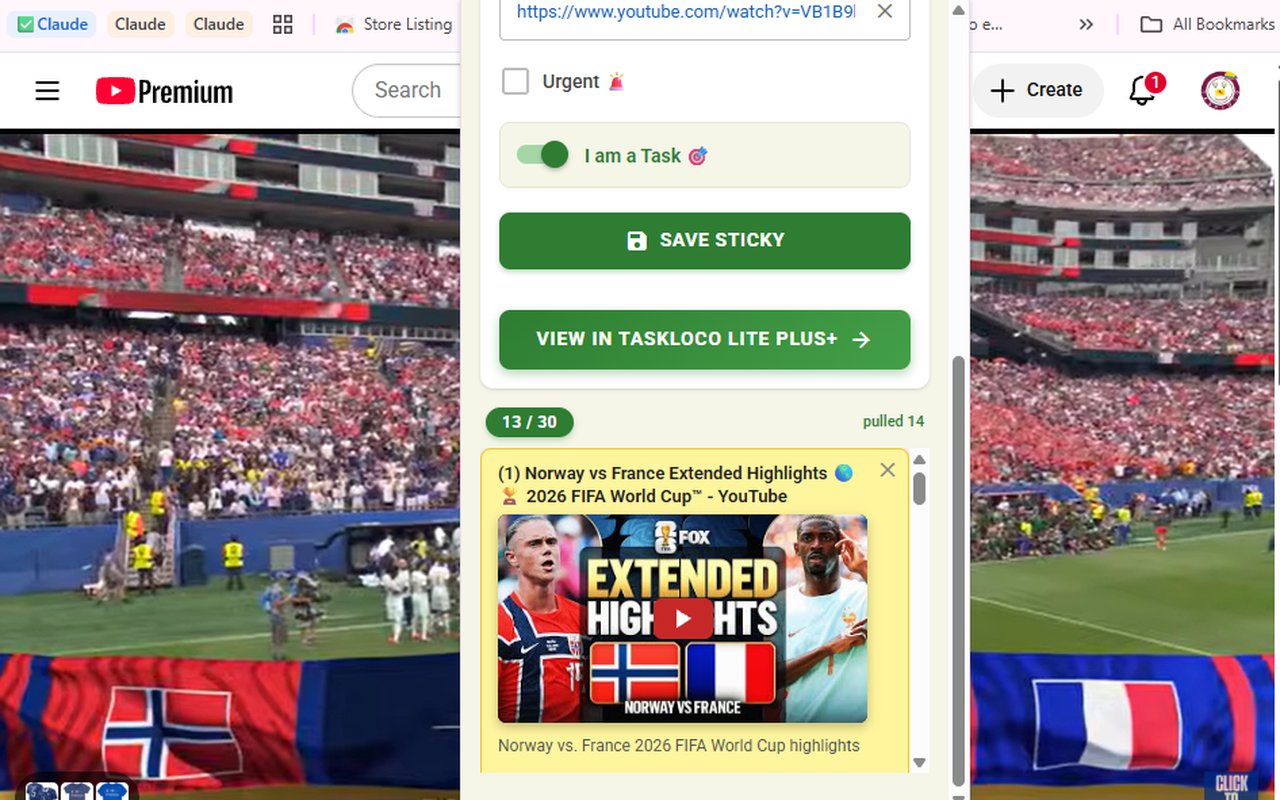
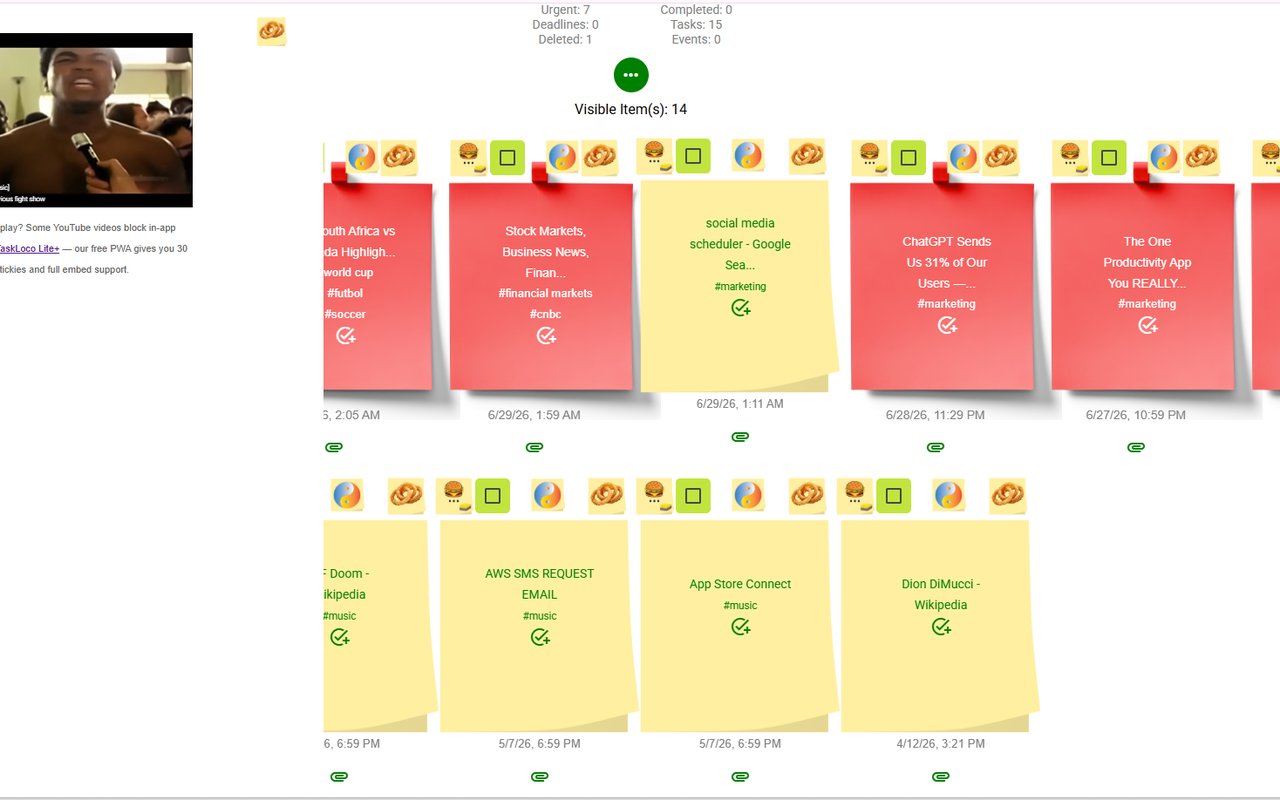
For newsletter writers specifically, it handles a few things that other quick-save tools do not. YouTube videos embed directly inside the note and play there, so a sourced interview or explainer video stays connected to your notes rather than living as a bare link you have to click out to remember. Any webpage, article, or link you find during research lands in the same visual wall, making it easy to scan what you have collected for a given issue without opening each item.
You can add tags to group saved notes by issue or topic, and search cuts across everything you have saved. Notes sync to TaskLoco, which is free to start, so what you clip on your laptop shows up on your phone — useful for the reality that good research finds you on multiple devices throughout the week.
It is not a replacement for having a system — the tagging and weekly sweep habits still matter. But it removes the friction that makes most ad-hoc saving methods fall apart, which is the point.
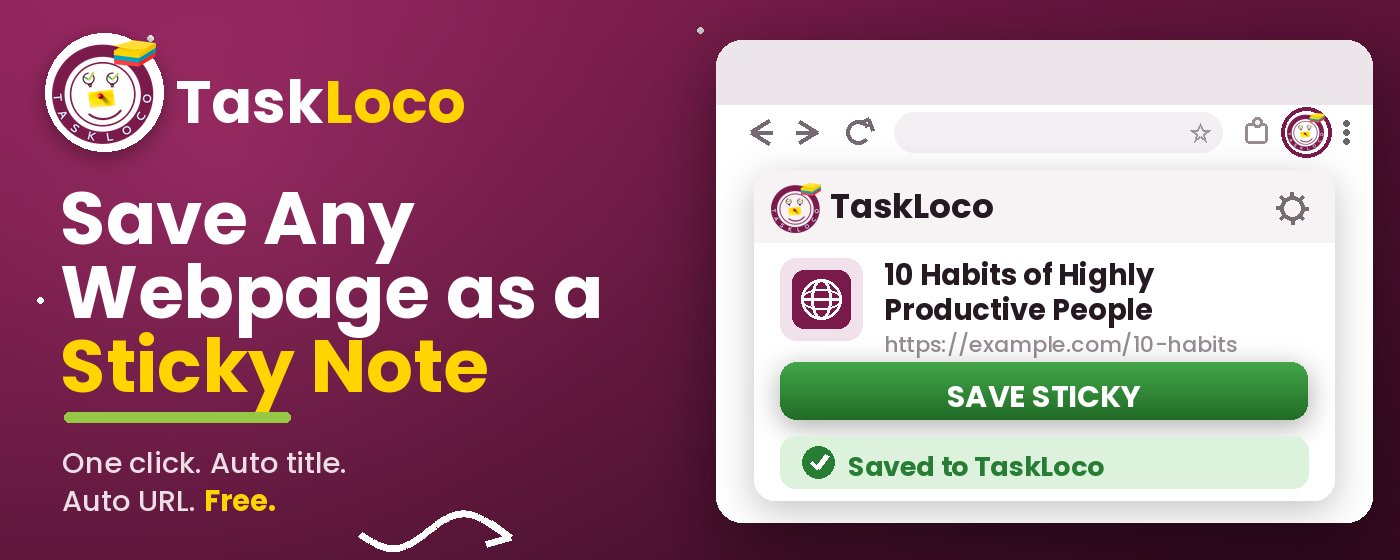
The Sticky Note Web Clipper is free. Install it from the Chrome Web Store, sign in with Google, and every page you clip becomes a sticky note you can find later.
Your clipped notes sync to TaskLoco across Chrome, desktop, iPhone, and Android — also free to start. No credit card to begin.
Get the Free Clipper
Sticky Note Web Clipper
- Free Chrome extension
- One-click save — any page, article, or video
- Title & URL auto-filled
- Tags & search
- Free forever
Synced to TaskLoco
- Sign in free with Google
- Your wall on Chrome, desktop, iPhone, Android
- YouTube videos embed & play in notes
- Visual sticky-note wall
- Free to start
Add It to Chrome — Free
One click saves any page, article, or YouTube video as a sticky note. Title and URL auto-filled.
Add to Chrome — FreeSee TaskLoco in Action
Frequently Asked Questions
What is the best way to save articles for a newsletter?
The best method is the one with the least friction at the moment you find something. Capture the title, URL, and a quick note about why it matters — then tag by issue or topic. A one-click clipper like the free Sticky Note Web Clipper removes the copy-paste step and keeps everything in one searchable place.
How do I organize saved articles so I can actually find them when writing?
Tag by topic or issue number rather than by date. Add a one-line note when you save each item explaining why it is relevant — not just what it is. Do a weekly sweep to archive dead ends and tag what is still useful. Visual layouts (like the sticky note wall in TaskLoco) let you scan your collection at a glance instead of clicking through a folder tree.
Can I save YouTube videos as research sources for my newsletter?
Yes — and it is worth doing. YouTube interviews, explainers, and data walkthroughs are legitimate sources. With the free Sticky Note Web Clipper, YouTube videos embed directly inside the saved note and play there, so they stay connected to your research context rather than sitting as a bare link you have to click out to.
Is the Sticky Note Web Clipper free?
Yes — the extension is completely free. TaskLoco, where your saved notes sync, also has a free tier. Install it from the Chrome Web Store, sign in with Google, and you can start clipping immediately.
How is a web clipper better than just bookmarking articles?
Browser bookmarks save the URL but give you no visual layout, no inline notes, and no way to tag by theme or issue. Bookmark folders accumulate fast and become lists you have to click through one by one. A clipper saves the same URL but presents it as a labelled card with your own notes attached — much easier to scan when you are drafting and need to find a specific source quickly.
How do I save articles on my phone for a newsletter I write on my laptop?
The cross-device gap is one of the real pain points for newsletter writers. The Sticky Note Web Clipper syncs saved notes to TaskLoco, which works on iPhone and Android as well as desktop. So anything you clip on your laptop appears on your phone — and vice versa if you browse on mobile and clip from the TaskLoco app.
Should I save articles as I find them or collect them in batches?
Save as you find them — always. Batching sounds efficient but it means revisiting your browser history or relying on memory, and you will miss things. The moment of discovery is when context is freshest: you know exactly why an article matters to your next issue. Capture it then, with a quick tag or note, and the batch review at the end of the week becomes an organizing pass rather than a recovery mission.
Born in Brooklyn. Powered by AWS. Your data stays yours.
TaskLoco is available on iPhone, Android, Chrome, and every web browser.