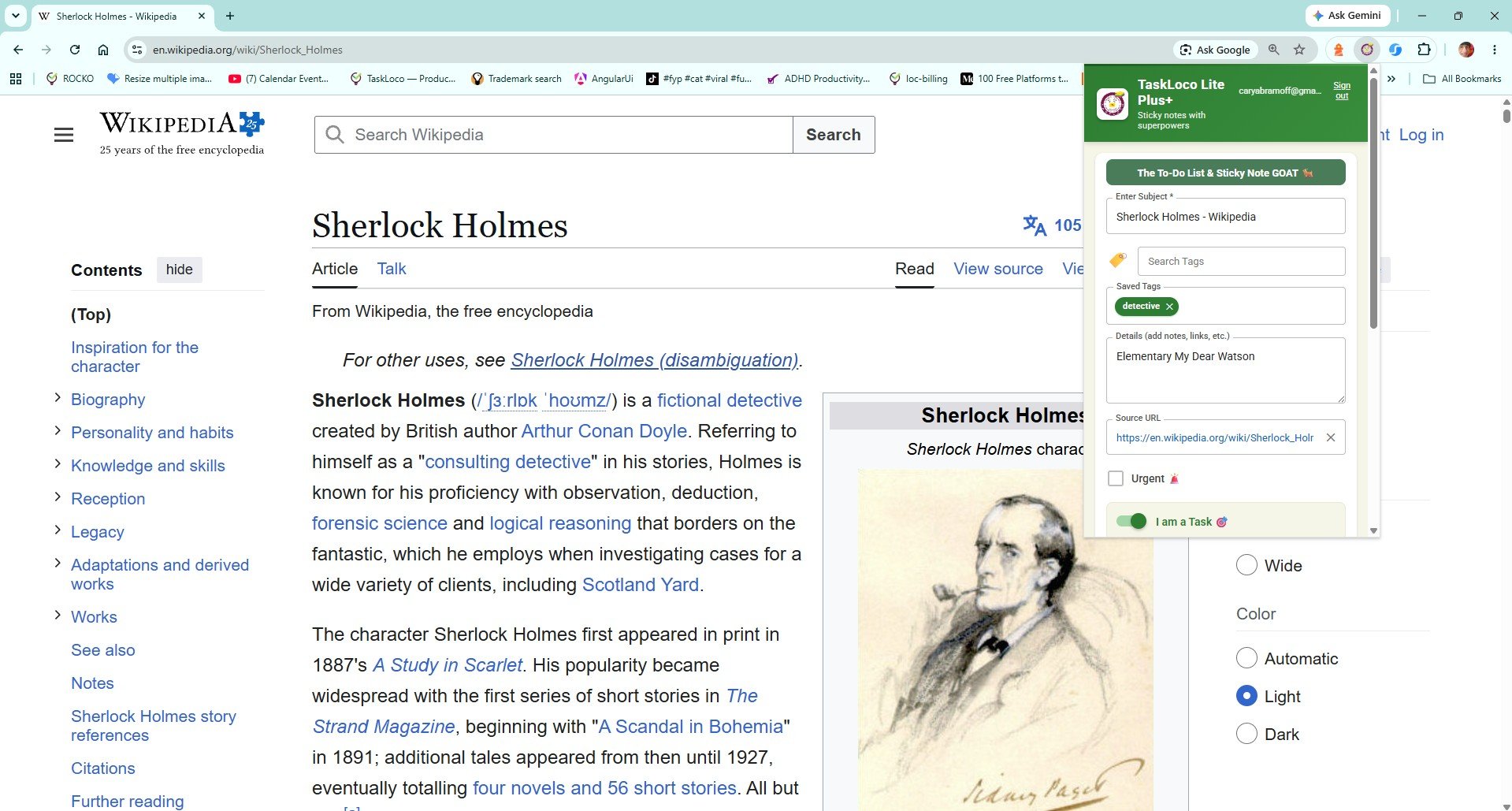
Job searching is research-heavy by nature. In a single afternoon you might scan a dozen job boards, read three company culture pages, watch a founder's talk on YouTube, and bookmark a salary guide — all before applying to a single role. The problem is never finding good pages. It's keeping them organized well enough to act on them later.
Most people fall back on browser bookmarks or a pile of open tabs. Both work for a minute and fall apart fast. Bookmarks give you a title and nothing else; open tabs eat RAM and disappear the moment Chrome crashes. This guide walks through a real, practical system for capturing job search materials as you browse — one that makes it easy to come back to the right thing at the right moment.
What You Actually Need to Save During a Job Search
Before building any system, it helps to name what you're collecting. A job search typically generates four types of content worth keeping:
- Job listings — the actual posting, including the role, requirements, and apply link. These expire, so saving early matters.
- Company research pages — About pages, culture pages, news articles, LinkedIn company profiles, Glassdoor reviews.
- Interview prep materials — industry guides, how-to-answer articles, explainer videos on YouTube.
- Salary and market research — compensation guides, industry reports, Reddit threads with first-person data.
Each type has a different purpose and a different shelf life. A job listing might be urgent; a salary guide you'll return to over months. Your saving system needs to handle both without forcing you to sort everything perfectly in the moment.
How to Organize Job Search Links Without Losing Your Mind
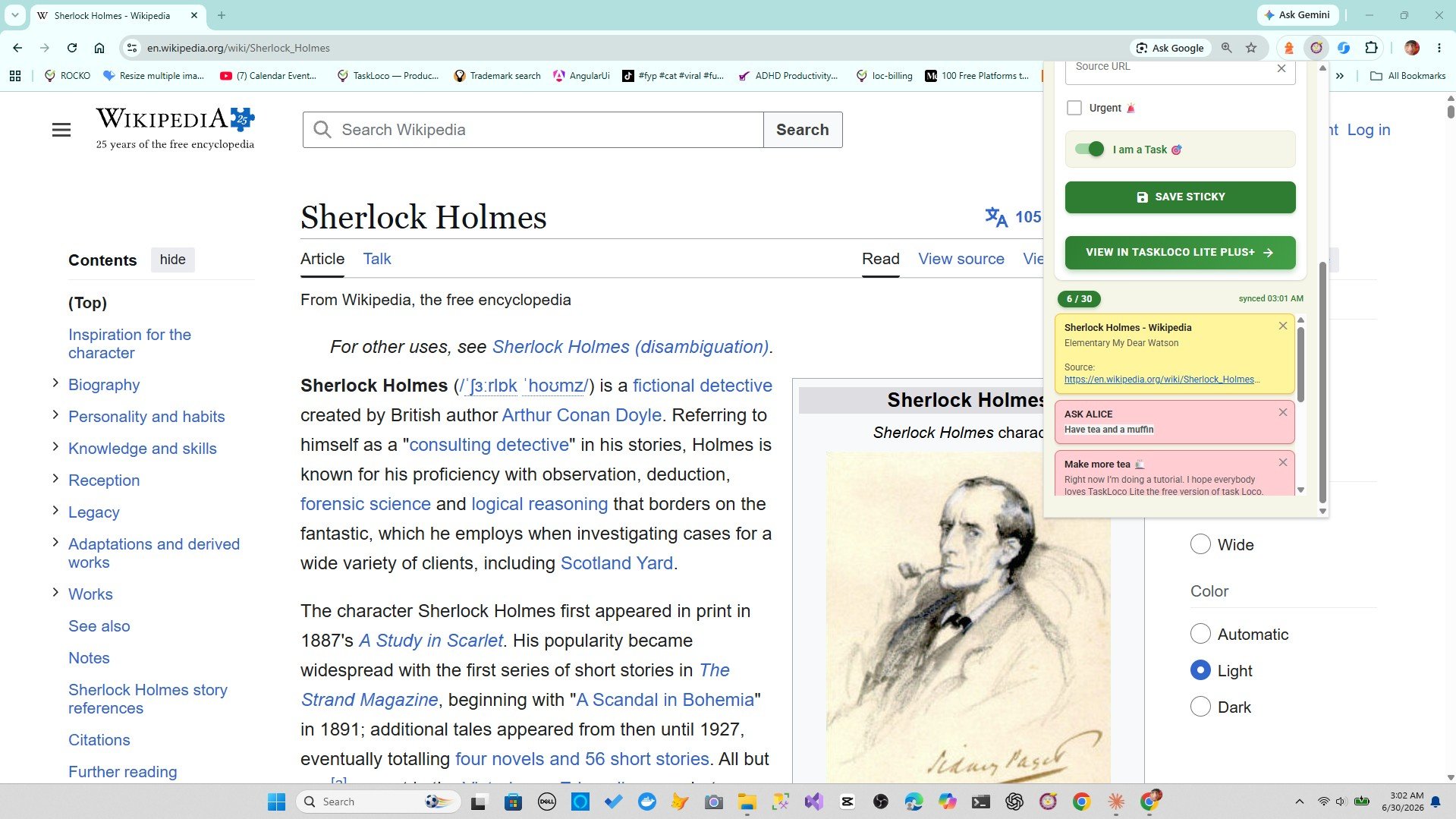
The simplest approach that actually works is a visual, tagged collection — one place where every saved item shows you what it is at a glance, and where you can filter or search when you need something specific.
Here is a practical method you can follow with any tool, including a plain notes app if that's all you have:
- Save immediately. When you find something worth keeping, save it before you read it fully. You can always delete it later. Missing a listing because you meant to save it and forgot is a real cost.
- Use a consistent tagging logic. Simple tags beat elaborate folders. Something like: apply, research, prep, salary. Four tags cover most of what a job search generates.
- Keep the URL attached. A page title without the link is nearly useless two weeks later. Always save the URL alongside the title.
- Make it cross-device. You may find a job listing on your laptop but want to review it on your phone before bed. Your collection needs to be reachable from anywhere.
The point of failure for most people is step one — the save itself. If the saving step requires more than a couple of seconds, most interesting pages never get captured. That's where a browser extension beats every other approach.
Why Browser Bookmarks Fall Short for a Job Search
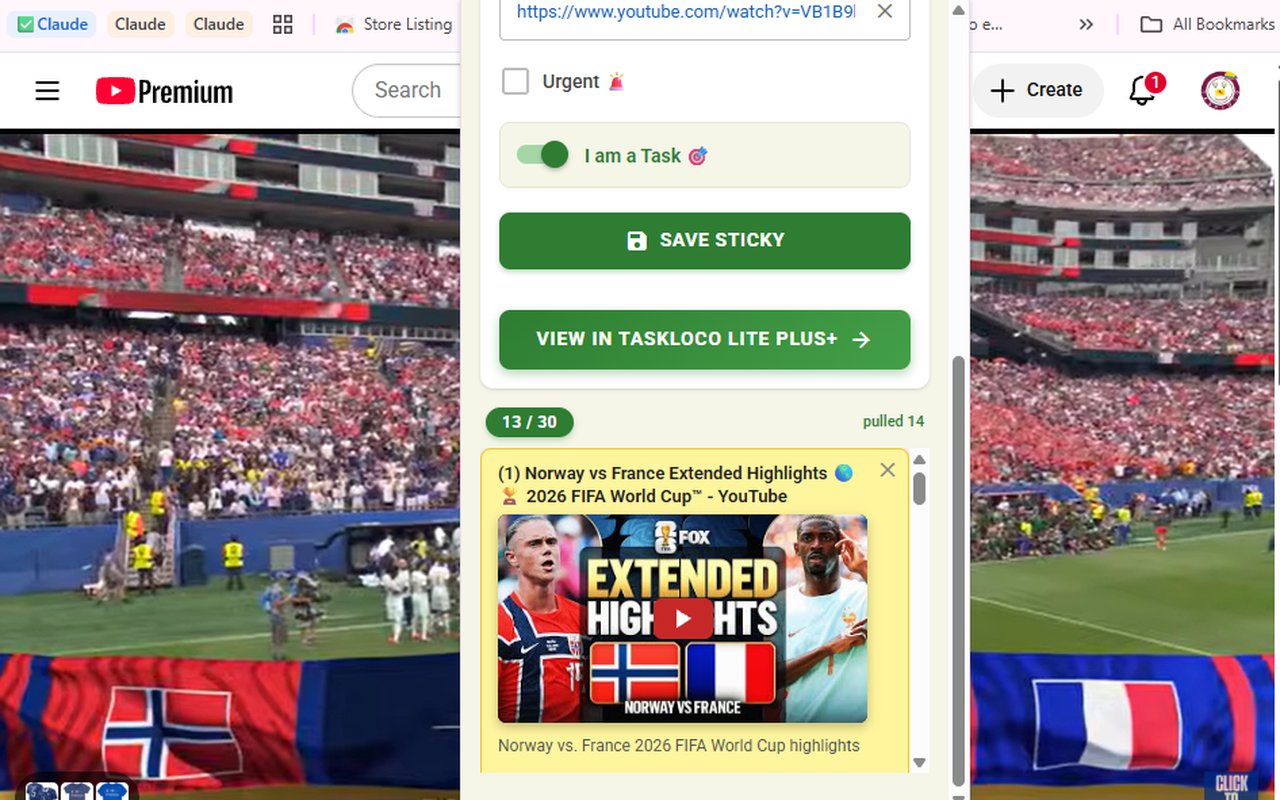
Bookmarks are the default and they have a real problem: they show you a title in a flat list, and nothing else. There's no visual preview, no way to add a quick note about why you saved something, and no search that understands context. Organizing bookmarks into folders takes effort you rarely have mid-search, and even well-organized folders become confusing after a week.
Open tabs are even worse as a long-term system. They feel like a memory aid but they're actually a liability — one browser crash or accidental close and the context is gone. Keeping twenty tabs open also makes it harder to focus on the task in front of you.
What a job search actually needs is something closer to a visual pinboard: each saved page shows up as its own card or note, the URL and title are already there, and you can add a tag or a line of your own text without breaking your flow. That's what a dedicated web clipper gives you over raw bookmarks.
One Practical Way to Apply This: The Sticky Note Web Clipper
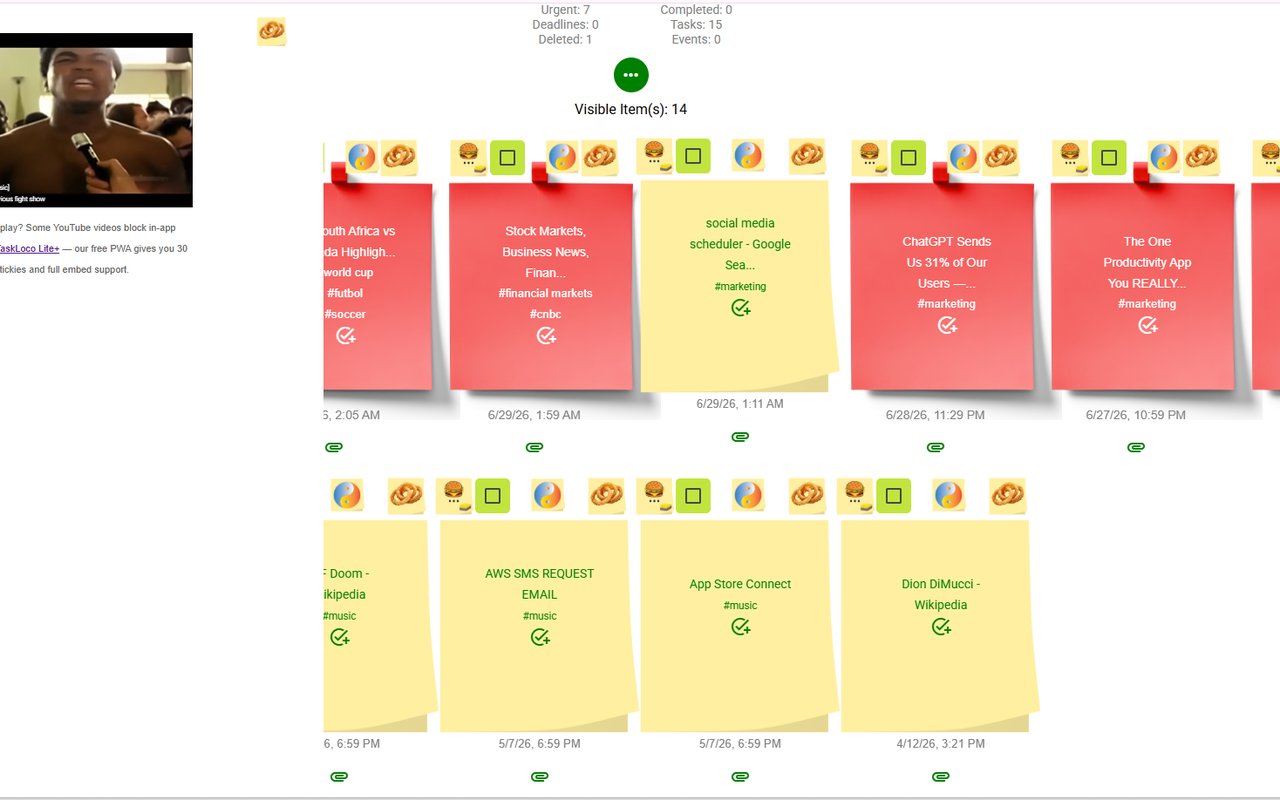
If you want to put the method above into practice without building a manual system, the Sticky Note Web Clipper is a free Chrome extension that handles the capture step in one click. You hit the toolbar icon on any page — a job listing, a company's About page, a YouTube interview prep video — and it saves instantly as a visual sticky note with the title and URL already filled in.
YouTube videos embed directly inside the note, so you can watch interview prep content without hunting for the link again. Notes sync to TaskLoco, which is free to access on desktop, iPhone, and Android — so whatever you save at your desk is there when you check your phone later.
Tags and search let you find things quickly. Save a listing with a tag like apply and it's one search away whenever you're ready to write the cover letter. The wall view shows all your saved notes visually, which makes it much faster to scan your research at a glance than scrolling a flat bookmark list.
The extension is free, sign-in is free with Google, and there's nothing to configure before it works. For a job search — where you're constantly finding things worth keeping but rarely have time to organize them in the moment — that low friction matters more than any advanced feature.
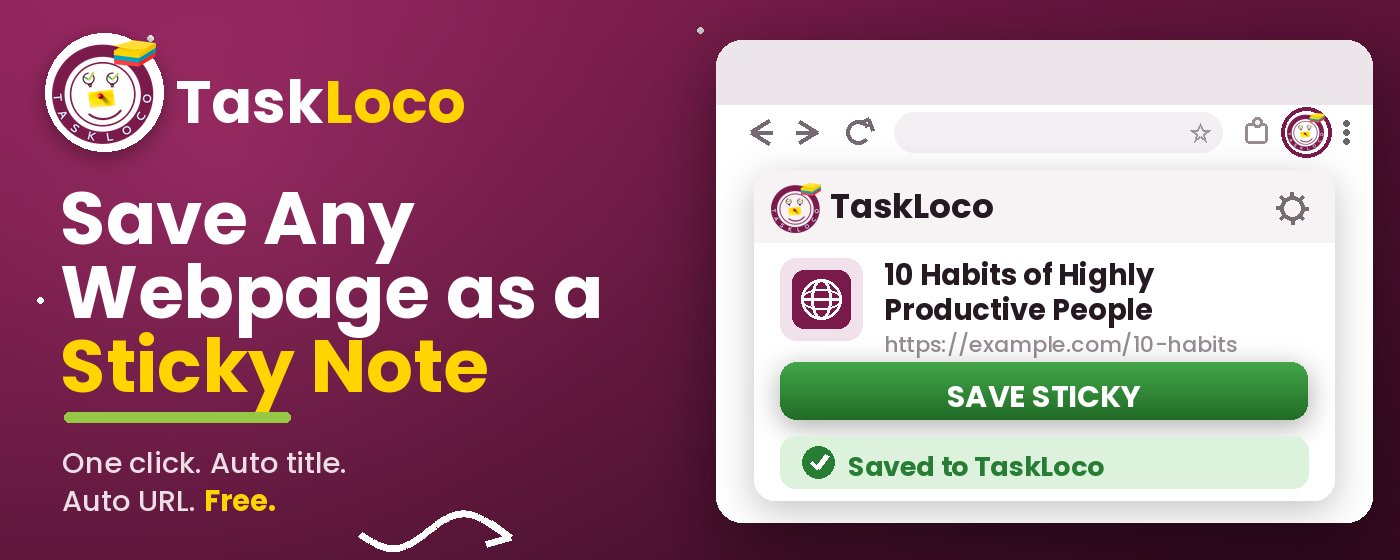
The Sticky Note Web Clipper is free. Install it from the Chrome Web Store, sign in with Google, and every page you clip becomes a sticky note you can find later.
Your clipped notes sync to TaskLoco across Chrome, desktop, iPhone, and Android — also free to start. No credit card to begin.
Get the Free Clipper
Sticky Note Web Clipper
- Free Chrome extension
- One-click save — any page, article, or video
- Title & URL auto-filled
- Tags & search
- Free forever
Synced to TaskLoco
- Sign in free with Google
- Your wall on Chrome, desktop, iPhone, Android
- YouTube videos embed & play in notes
- Visual sticky-note wall
- Free to start
Add It to Chrome — Free
One click saves any page, article, or YouTube video as a sticky note. Title and URL auto-filled.
Add to Chrome — FreeSee TaskLoco in Action
Frequently Asked Questions
What is the best way to save job listings so I don't lose them?
Save them the moment you find them, with the URL attached. Job listings expire and get removed, so a title without a link is useless fast. A one-click web clipper like the free Sticky Note Web Clipper captures the title and URL automatically — no copy-pasting required.
Can I use browser bookmarks to organize a job search?
You can, but bookmarks have real limits for job search use. They show a flat list of titles with no preview, no context notes, and no visual layout. Once you've saved more than a couple dozen links, finding the right one takes longer than it should. A visual clipper that saves pages as sticky notes is easier to scan and search.
How do I save a YouTube video for interview prep?
With the Sticky Note Web Clipper, you click the toolbar icon while the YouTube video is open in Chrome. It saves as a note with the video title and URL, and the video embeds directly inside the note so you can watch it without leaving your saved collection. No separate playlist or link needed.
How can I access my saved job search pages on my phone?
The Sticky Note Web Clipper saves notes to TaskLoco, which syncs across desktop, iPhone, and Android. Clip something on your laptop and it's available on your phone the next time you open TaskLoco. Sign-in is free with Google.
How should I tag job search saves to find things quickly later?
Keep tags simple and functional. Four tags cover most job search needs: apply for active listings you intend to pursue, research for company pages and news, prep for interview guides and videos, and salary for compensation data. Simple tags you'll actually use beat elaborate folders you won't maintain.
Is the Sticky Note Web Clipper free?
Yes — the extension is free. TaskLoco, where your notes sync, also has a free tier. Install it from the Chrome Web Store, sign in with Google, and start clipping right away. No credit card, no setup.
What kinds of pages can I save with the Sticky Note Web Clipper?
Any page you can open in Chrome — job listings, company websites, news articles, Glassdoor pages, LinkedIn profiles, salary guides, Reddit threads, and YouTube videos. The clipper works on any URL and auto-fills the title and link so you don't have to type anything.
Born in Brooklyn. Powered by AWS. Your data stays yours.
TaskLoco is available on iPhone, Android, Chrome, and every web browser.