Forty-three tabs. You know the feeling — each one is something you meant to read, a reference you didn't want to lose, a video you'll watch later. And somewhere in that mess is the one thing you actually needed five minutes ago.
Keeping tabs open is not a system. It's a gamble that your browser won't crash, your computer won't restart, and your memory won't fail you. There are real methods to break the habit, and once you're using one, you'll wonder why you ever let tabs stack up at all.
Why Tabs Stack Up in the First Place
Tabs accumulate because the cost of saving something feels higher than the cost of leaving it open. Bookmarks require a folder decision. Note-taking apps require you to switch context, paste a URL, type a title, and pick a category. So you do nothing — you just leave the tab there as a physical reminder.
The problem is that an open tab is a terrible reminder system. It has no context, no priority, and no way to search. After ten tabs it becomes visual noise. After thirty it becomes anxiety. The page you wanted is now indistinguishable from the nineteen others you haven't read either.
Once capturing a page takes less than two seconds and requires zero decisions, you'll naturally close tabs as you go instead of hoarding them.
A Real Method: Capture First, Organize Later
The single most effective habit for taming tab overload is decoupling capture from organization. When you find something worth keeping, save it immediately and close the tab. Do not decide right now whether it's a research source, a recipe, or a reference. Just capture it. Sorting can happen in a batch later, when you're not in the middle of doing something else.
Here's how to do this with no app at all:
- Reading list (browser built-in): Most browsers have a reading list separate from bookmarks. It's fast to add and clears the tab. The downside is it stays inside one browser on one device and is easy to forget entirely.
- A running document: Keep a Google Doc or plain text file open in a pinned tab. Paste URLs as you find them. Works fine for low volume — breaks down when the list hits fifty items with no titles or context.
- Email yourself: Sounds absurd but works as a temporary inbox. Send yourself the URL. Your email is already a trusted capture system. The friction is just high enough that you won't do it consistently.
- Dedicated web clipper: A browser extension that saves the current page in one click, auto-fills the title and URL, and puts it somewhere searchable. This is the lowest-friction option and the one most people stick with.
The key insight: every method above works if you actually use it. The one you'll use is the one that costs the least effort in the moment.
What Makes a Clipper Worth Using Every Day
Not all clippers are equal — and the differences matter when you're trying to build a habit around something you do twenty times a day.
Evernote Web Clipper is powerful but heavy. It opens a sidebar, asks you what format you want, what notebook to file it in, and what tags to add. For careful research archiving, that's fine. For quickly getting a tab out of your browser, it's too many steps.
Notion's clipper sends pages to a Notion database, which is great if you're already living in Notion. If you're not, it's adopting a second productivity system just to save URLs.
Plain browser bookmarks are the most underrated fast option — one keyboard shortcut, done. But bookmarks have no visual layout, no search that surfaces context, and no way to embed a YouTube video so you can watch it later without reopening the browser.
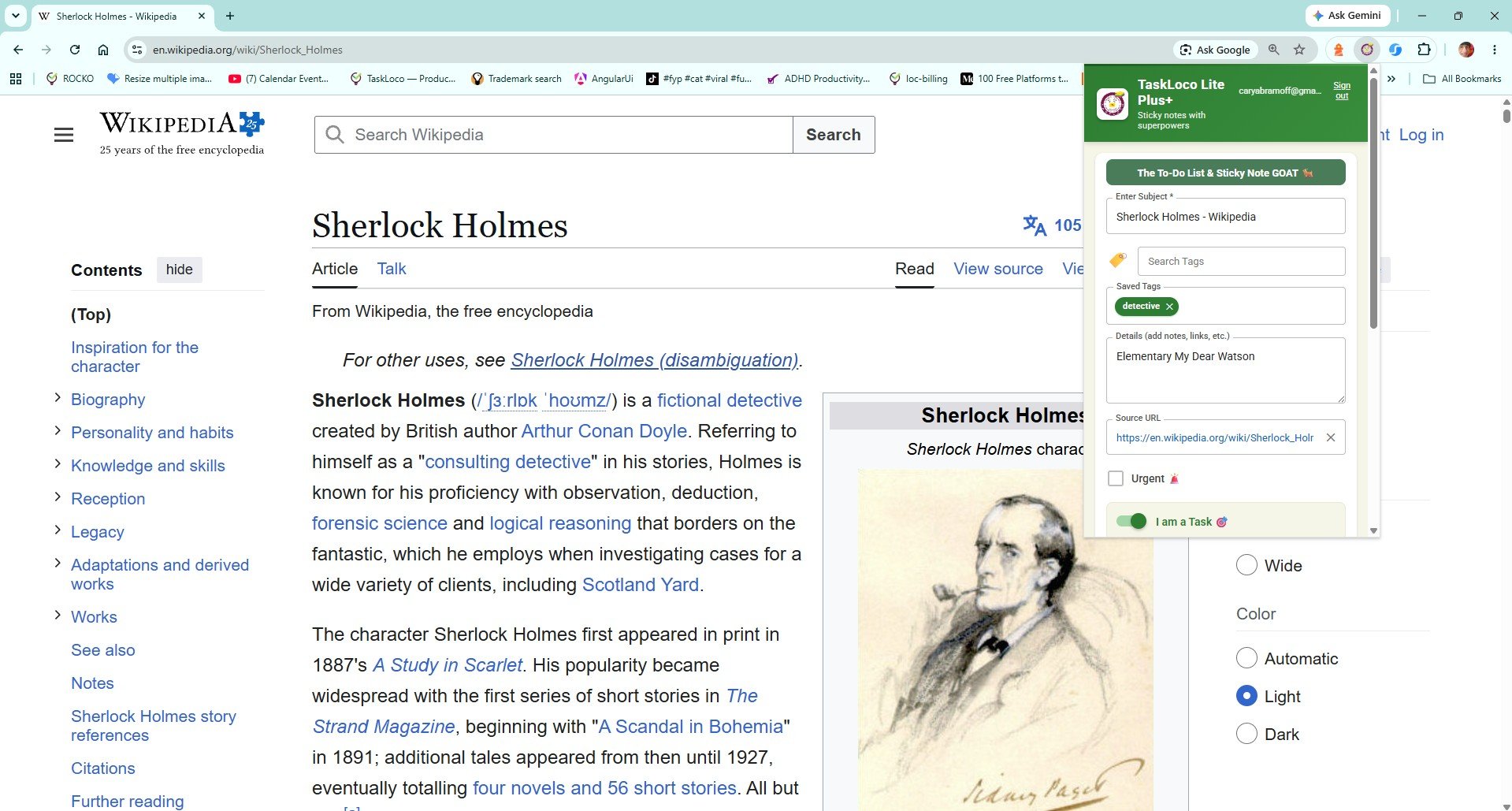
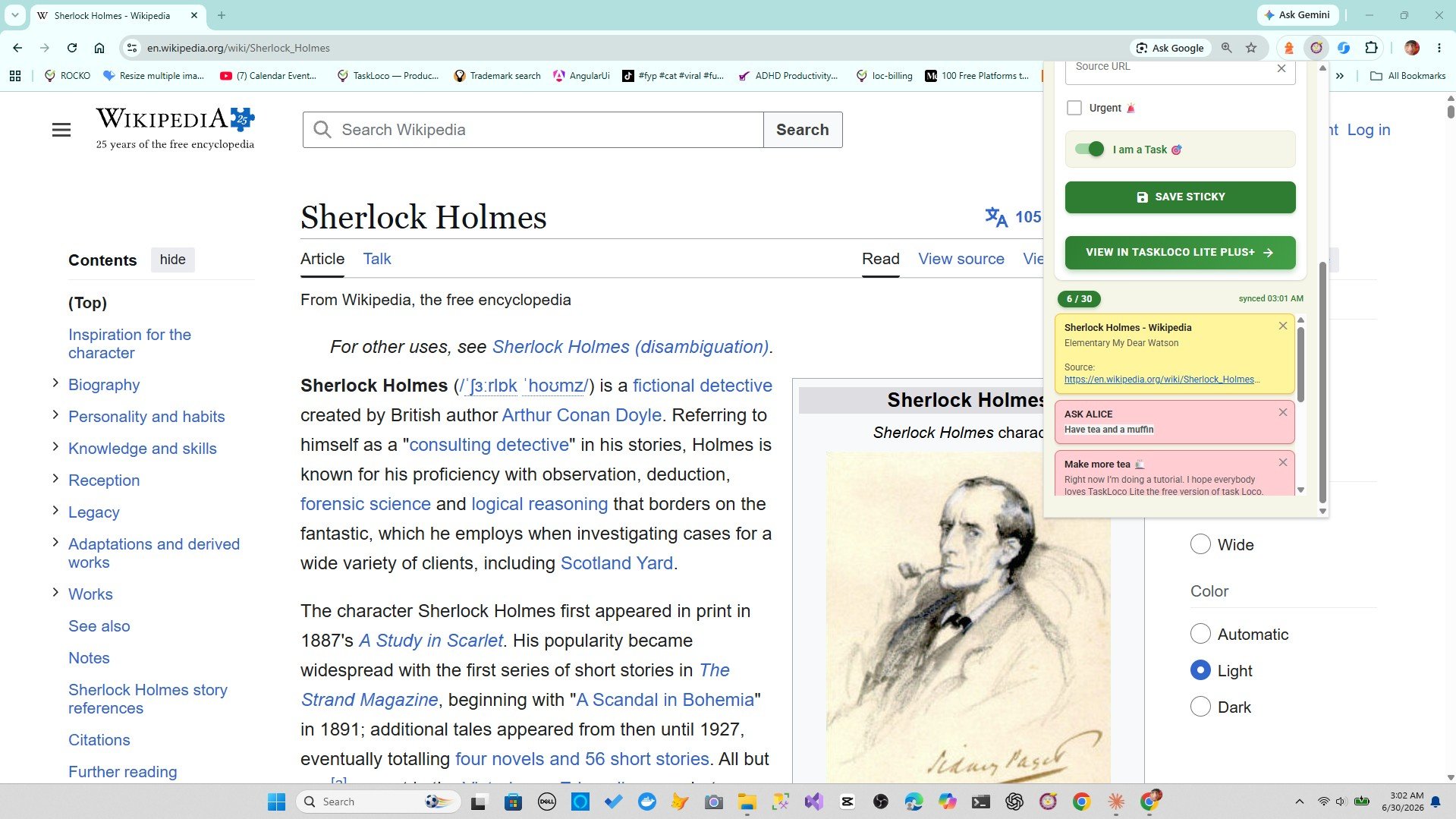
That's what the Sticky Note Web Clipper does. Click the toolbar icon. The note appears with the page title and URL already filled in. Close the tab. Done in under two seconds, no folder decision required.
Putting It Into Practice With the Sticky Note Web Clipper
Once you install the free Sticky Note Web Clipper from the Chrome Web Store, the workflow is straightforward: when you find a page worth keeping, click the extension icon in your toolbar. A sticky note pops up with the title and URL already filled in. You can add a quick thought if you want, or just close the tab and move on.
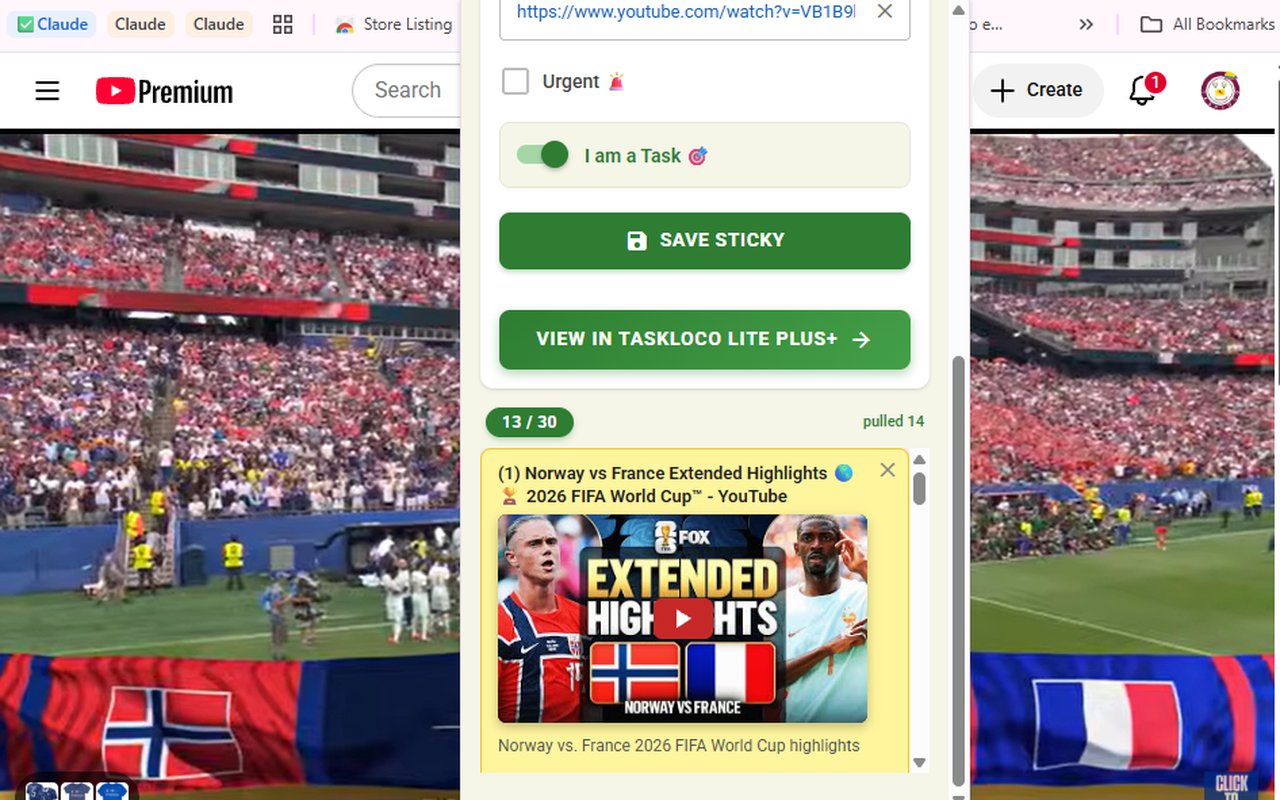
YouTube videos save with an embed that plays directly inside the note — so you're not just saving a link, you're saving something you can actually use without hunting for it again. Articles, research pages, news stories, tools, anything with a URL works the same way.
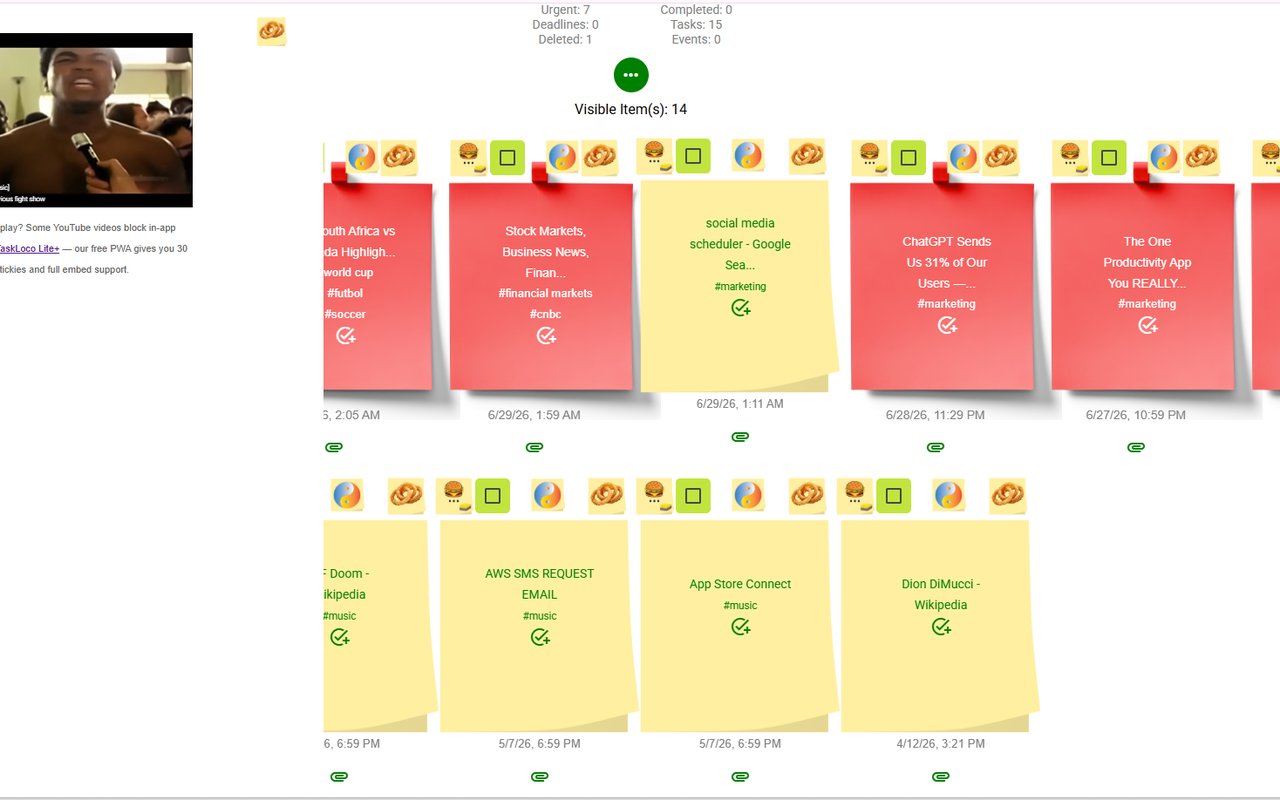
Your saved notes live in TaskLoco, which is free to start and syncs across Chrome, desktop, iPhone, and Android. So the page you clipped on your laptop is waiting on your phone when you want to read it later. You sign in with Google — no new account to create.
If you've been meaning to fix your tab problem, this is the lowest-effort place to start. The extension is free — add it to Chrome and try it on the next tab you would have left open.
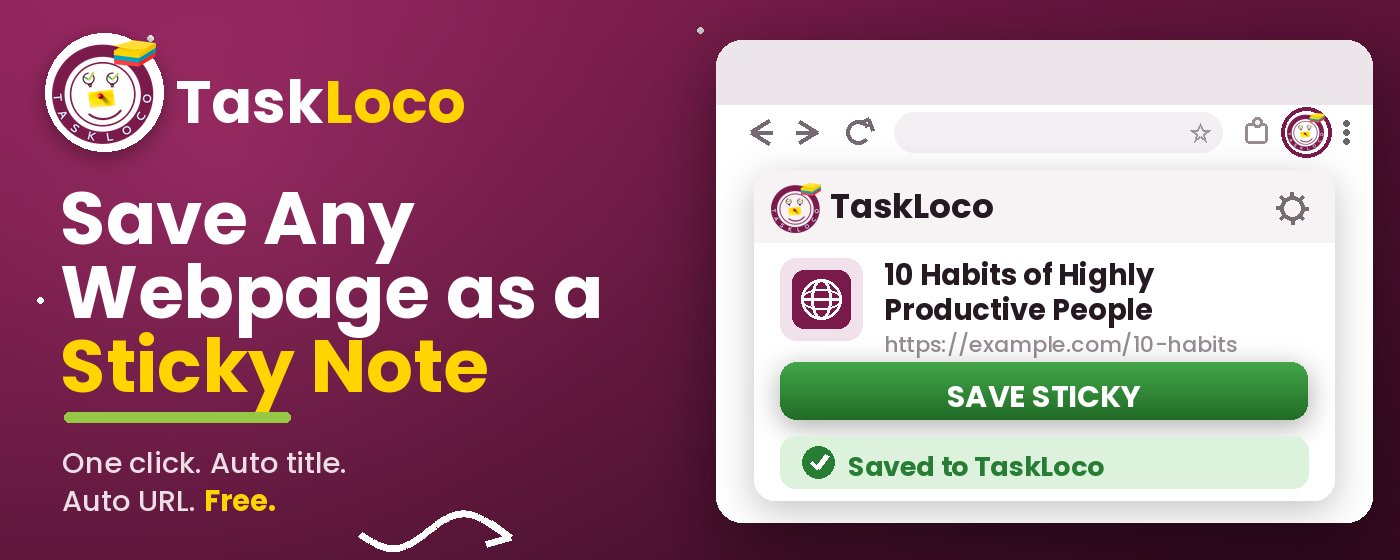
The Sticky Note Web Clipper is free. Install it from the Chrome Web Store, sign in with Google, and every page you clip becomes a sticky note you can find later.
Your clipped notes sync to TaskLoco across Chrome, desktop, iPhone, and Android — also free to start. No credit card to begin.
Get the Free Clipper
Sticky Note Web Clipper
- Free Chrome extension
- One-click save — any page, article, or video
- Title & URL auto-filled
- Tags & search
- Free forever
Synced to TaskLoco
- Sign in free with Google
- Your wall on Chrome, desktop, iPhone, Android
- YouTube videos embed & play in notes
- Visual sticky-note wall
- Free to start
Add It to Chrome — Free
One click saves any page, article, or YouTube video as a sticky note. Title and URL auto-filled.
Add to Chrome — FreeSee TaskLoco in Action
Frequently Asked Questions
What's the fastest way to save a webpage without leaving a tab open?
Click a browser extension icon and close the tab immediately. The Sticky Note Web Clipper for Chrome saves the current page as a sticky note in one click, with the title and URL auto-filled, so you never have to leave a tab open as a reminder again.
Do I lose my saved pages if my browser crashes?
If the page was only open as a tab, yes — a crash or forced restart can wipe unsaved tabs. Pages saved with the Sticky Note Web Clipper are stored in TaskLoco and sync to your other devices, so a browser crash doesn't affect them.
How is this different from just using bookmarks?
Bookmarks save a URL in a list. The Sticky Note Web Clipper saves the page as a visual sticky note with the title already filled in, and YouTube videos embed so you can play them inside the note. Notes also sync to your phone and desktop through TaskLoco, where you can search and tag them.
Can I save YouTube videos, or just regular pages?
Both. When you clip a YouTube video with the Sticky Note Web Clipper, it saves with an embed that plays directly inside the note. You don't need to reopen YouTube or search for the video again.
Does the Sticky Note Web Clipper cost anything?
The extension is free. TaskLoco, where your notes sync and live, has a free tier. Install the extension from the Chrome Web Store and sign in with Google to get started.
Will my saved notes be available on my phone?
Yes. Notes saved with the clipper sync to TaskLoco, which is available on iPhone, Android, and desktop in addition to Chrome. Sign in with the same Google account and your clips are there.
What should I do right now if I already have too many tabs open?
Go through each tab one at a time. If it's worth keeping, clip it with the Sticky Note Web Clipper and close the tab. If it's not, just close it. The Sticky Note Web Clipper is free — install it from the Chrome Web Store first, then work through your open tabs.
Born in Brooklyn. Powered by AWS. Your data stays yours.
TaskLoco is available on iPhone, Android, Chrome, and every web browser.