Bookmarks were designed for pages you visit repeatedly — your bank, your email, your news site. They were never meant to be a research archive, a reading list, a recipe collection, and a product comparison all at once. The moment you start saving things to read later, a flat list of links falls apart fast.
The good news is that the fix is simple, and it doesn't require reorganizing anything you've already saved. It just requires saving new things differently — as visual notes with actual context, not anonymous URLs buried three folders deep.
Why Bookmarks Get Cluttered So Quickly
Bookmarks have one real problem: they reward saving and punish finding. Every bookmark takes two seconds to add and twenty seconds to locate later — if you can locate it at all. The bar folder fills up, the "Unsorted Bookmarks" folder becomes a graveyard, and eventually most people either stop using bookmarks entirely or export them once a year to a file they never open.
The core issue is that a bookmark stores almost no context. It keeps the URL and maybe a title, but not why you saved it, what topic it belonged to, or what you were going to do with it. When you open the folder a week later, half the entries are meaningless without clicking into each one.
There are a few things you can do right now without any tool at all. The most effective habit is to treat your bookmark bar as a pinned shortlist — five to ten sites you visit daily, nothing else. For everything else you want to save, use a dedicated layer: a notes app, a read-later service, or a visual clipper. The moment you separate "frequent visits" from "saved for later," the clutter problem mostly solves itself.
Better Methods for Saving Pages You Actually Want to Revisit
If you want to cut clutter without giving up on saving useful things, here are the methods that actually work:
- Named folders with a maximum size rule. Pick a number — say, ten items per folder — and when a folder hits that limit, you either delete or move before adding anything new. This forces triage and keeps searches fast.
- A read-later app. Services like Pocket or Instapaper pull the article text out of the page and store it cleanly. They work well for long-form reading but tend to strip context — videos, interactive pages, and tools don't clip well into text-only formats.
- A notes app with a web clipper. Evernote and Notion both have browser extensions that let you save pages into your notes. The saved items are richer than bookmarks, but both workflows involve choosing a notebook, picking tags, and confirming — multiple steps for something that should take one.
- Visual sticky notes. The newest approach, and the one that translates best to how people actually browse: click once, the page becomes a note on a visual wall, and you can see the title at a glance without opening anything. This is exactly what the Sticky Note Web Clipper does.
Whatever method you choose, the discipline that makes it work is the same: save with intent, not as a reflex. If you wouldn't open the link again in the next two weeks, don't save it at all.
How the Sticky Note Web Clipper Changes the Workflow
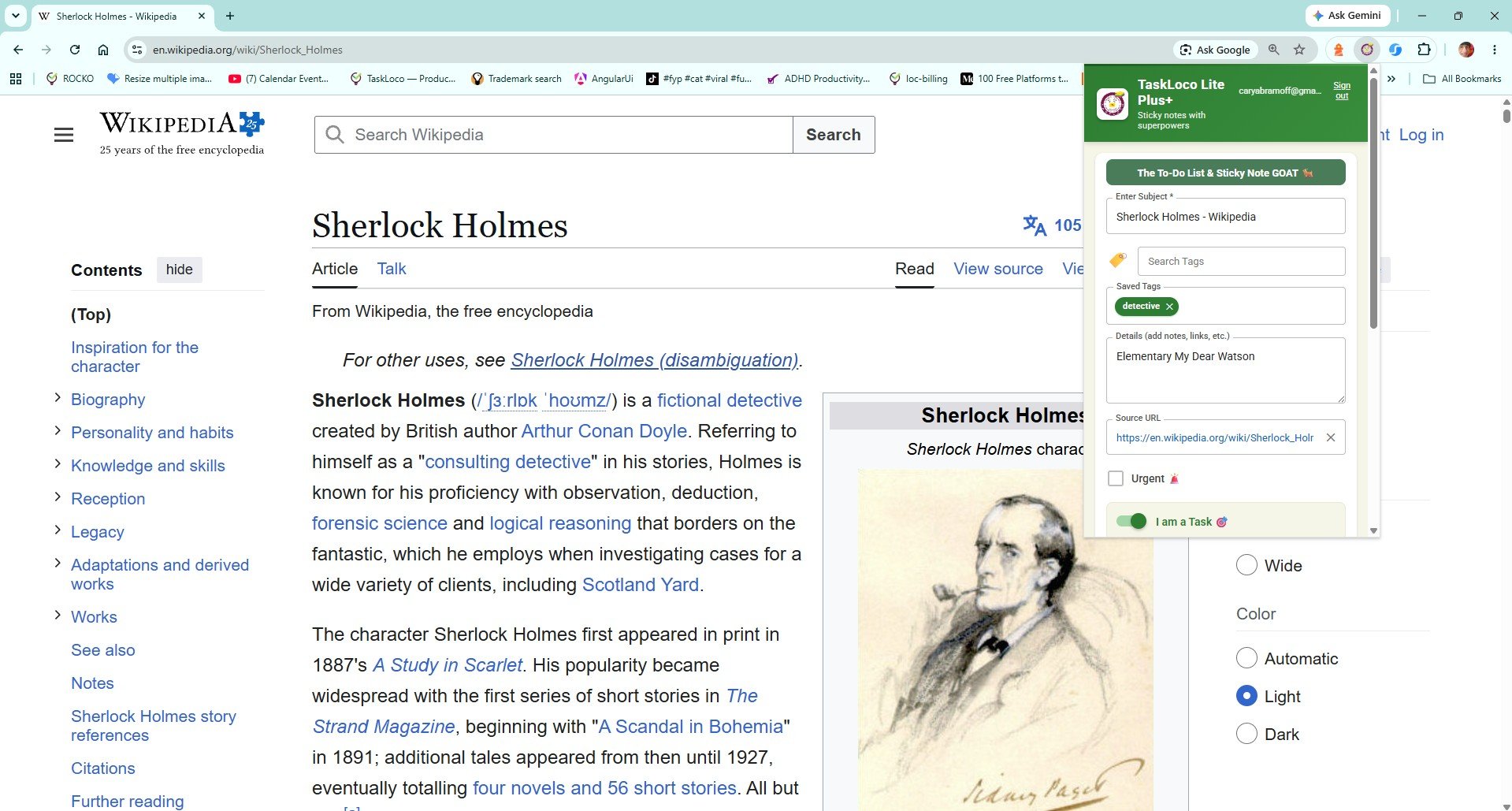
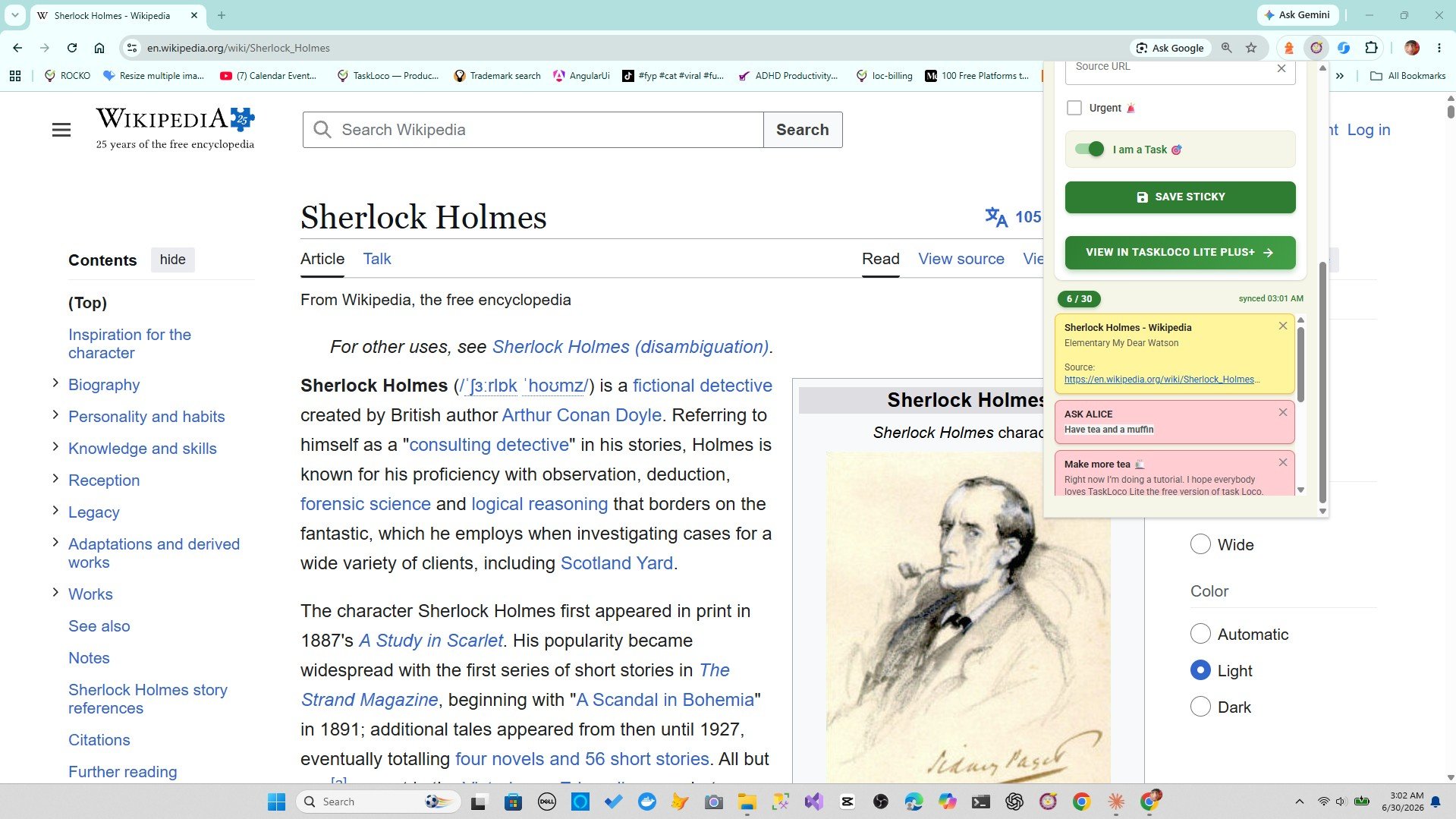
The Sticky Note Web Clipper is a free Chrome extension made by TaskLoco. The concept is straightforward: when you're on any page — an article, a research source, a YouTube video, a product page — you click the toolbar icon and the page is instantly saved as a sticky note. The title and URL fill in automatically. You don't type anything, you don't choose a folder, you don't confirm a destination.
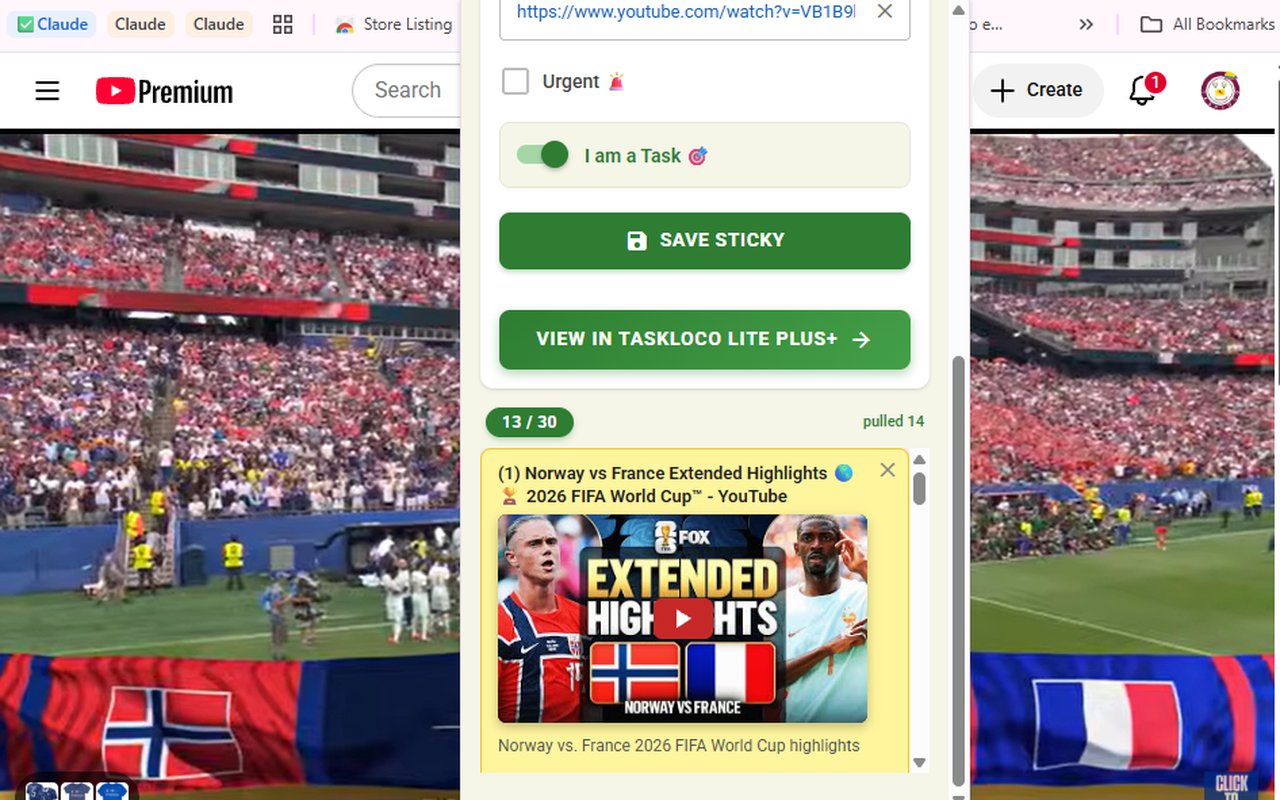
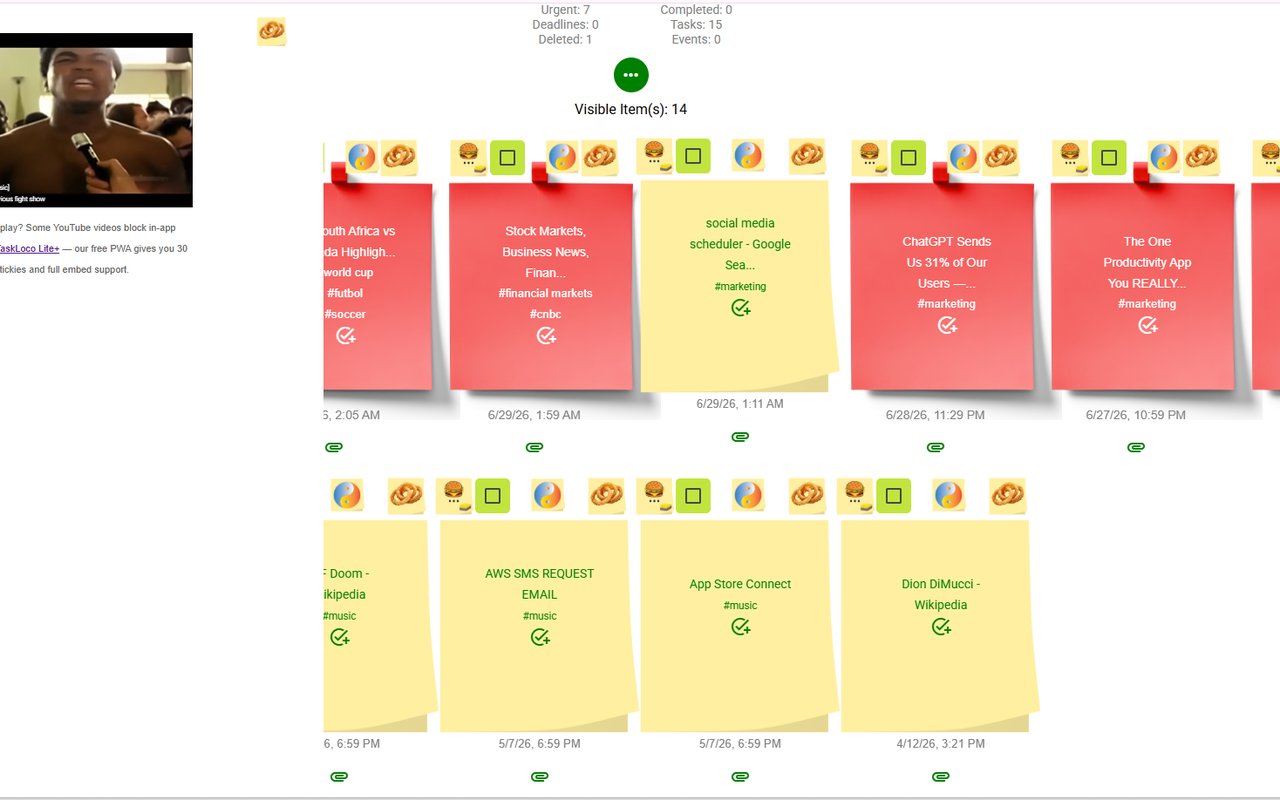
What makes it different from a bookmark is the format. Notes live on a visual wall where you can see them at a glance — titles, colors, and layout you control — instead of a scrolling list of indistinct URLs. YouTube videos are a good example: clip a YouTube page and the video embeds directly inside the note, so you can play it right there without navigating back to YouTube.
Everything you save syncs automatically through your free TaskLoco account, so the notes you clip in Chrome on your laptop are waiting for you in the TaskLoco app on your phone or any other device. Sign-in is free with Google — no separate account to create.
Tags and search mean you can find saved items without remembering which folder they're in, because there are no folders to remember. The visual wall also makes it obvious when you've saved too many things on one topic — which turns out to be a better way to manage clutter than any folder structure.
When to Clip vs. When to Bookmark
Neither approach is wrong — they're just for different things. Use your bookmark bar for sites you navigate to intentionally, repeatedly, and on a schedule: your email client, your calendar, a dashboard you open every morning. These belong in bookmarks because you're not saving them to revisit — you're pinning them for fast access.
Clip everything else. An article you want to read tonight, a recipe you might make this weekend, a research page you'll reference for a project, a YouTube tutorial you're not ready to watch yet — all of these benefit from being a sticky note rather than a link. They have context, they're searchable, and they live somewhere you'll actually look.
The practical split most people land on: bookmark bar holds fewer than ten items, permanently. Everything else gets clipped. This keeps the bar fast and keeps the saved-for-later pile actually usable.
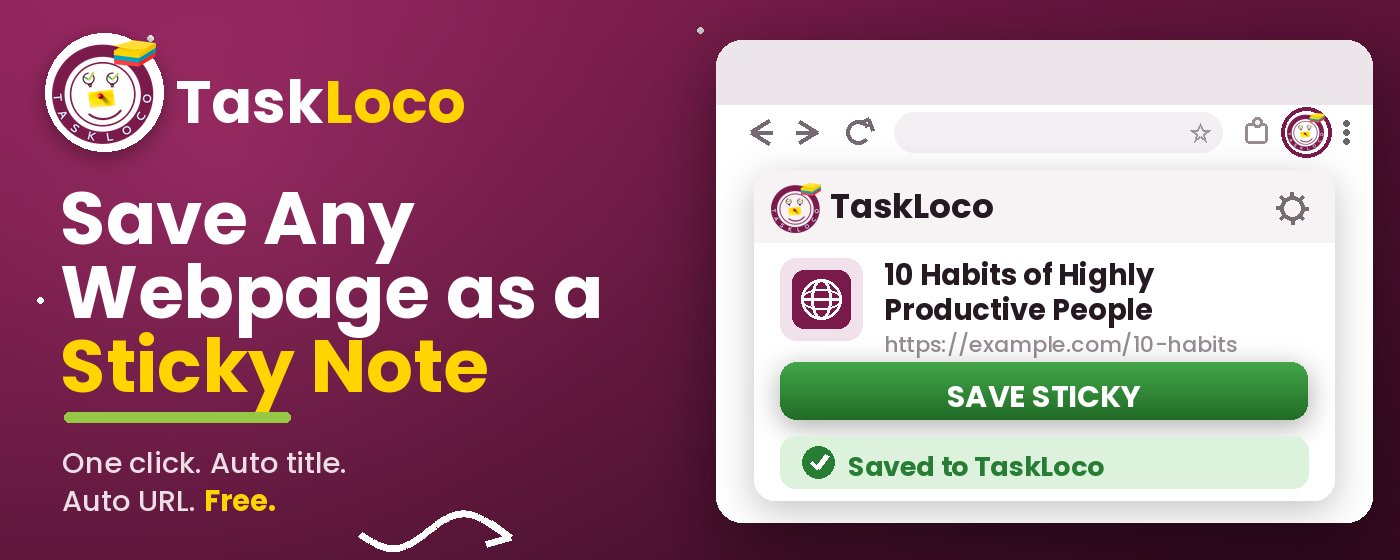
The Sticky Note Web Clipper is free. Install it from the Chrome Web Store, sign in with Google, and every page you clip becomes a sticky note you can find later.
Your clipped notes sync to TaskLoco across Chrome, desktop, iPhone, and Android — also free to start. No credit card to begin.
Get the Free Clipper
Sticky Note Web Clipper
- Free Chrome extension
- One-click save — any page, article, or video
- Title & URL auto-filled
- Tags & search
- Free forever
Synced to TaskLoco
- Sign in free with Google
- Your wall on Chrome, desktop, iPhone, Android
- YouTube videos embed & play in notes
- Visual sticky-note wall
- Free to start
Add It to Chrome — Free
One click saves any page, article, or YouTube video as a sticky note. Title and URL auto-filled.
Add to Chrome — FreeSee TaskLoco in Action
Frequently Asked Questions
How do I stop my bookmarks from getting out of control?
The most effective fix is to stop using bookmarks for "save for later" entirely. Keep your bookmark bar for sites you visit on a regular schedule — fewer than ten — and use a visual clipper for everything else. The Sticky Note Web Clipper lets you save any page as a note in one click, which keeps your bookmarks clean and your saved pages actually findable.
Is there a better way to save articles and research than bookmarks?
Yes. Visual sticky notes work better for articles and research because they preserve context — you can see the title, add your own notes, and organize by topic on a wall instead of hunting through folders. The free Sticky Note Web Clipper for Chrome saves any page in one click, and everything syncs to your phone and desktop through TaskLoco.
Can I save YouTube videos with a web clipper?
Yes — the Sticky Note Web Clipper handles YouTube pages specifically well. When you clip a YouTube video, it embeds directly inside the sticky note and you can play it right there without going back to YouTube. Useful for tutorials, talks, or videos you want to watch later without losing them in a playlist.
Does the Sticky Note Web Clipper cost anything?
The extension is free. TaskLoco, where your notes sync, also has a free tier. Install it from the Chrome Web Store, sign in with Google, and start clipping immediately — no credit card, no trial period.
How is a web clipper different from just bookmarking a page?
A bookmark stores a URL in a flat list. A clipped sticky note stores the page as a visual note with a readable title, searchable content, and an organized wall you can actually scan. Bookmarks answer "where is it?" — sticky notes also answer "what is it and why did I save it?" That context is what makes saved items useful instead of forgotten.
Will my saved pages sync across my devices?
Yes. Notes you clip in Chrome sync through your free TaskLoco account to the TaskLoco web app, iPhone app, and Android app. Whatever you save while browsing on your laptop is available on your phone without any extra steps.
What kinds of pages can I save with the clipper?
Any page you can open in Chrome — articles, news stories, research sources, blog posts, product pages, YouTube videos, and plain links all clip cleanly. YouTube videos embed and play inside the note. The title and URL fill in automatically for every page type, so you never have to copy and paste anything.
Born in Brooklyn. Powered by AWS. Your data stays yours.
TaskLoco is available on iPhone, Android, Chrome, and every web browser.