You're reading something on your laptop — an article, a recipe, a YouTube video — and you need it on your phone in ten seconds. What do you actually do? Email yourself a link? Copy the URL into a text? Leave the tab open and hope you remember? None of those are good answers, and yet most people are stuck doing exactly that.
There are several real methods for getting a web page from your computer to your phone, and they vary wildly in friction. Some are built into your browser and work fine for casual use. Others, like a web clipper, do much more than just transfer a link — they save the page as something you can actually find again later. This guide walks through all the main options so you can pick the one that fits how you actually browse.
The Built-In Browser Methods (No Extra Tools Needed)
If you just need a quick one-off transfer and aren't worried about organizing anything, these built-in options work without installing a thing.
- Chrome's Send to Your Devices: Right-click any tab in Chrome on your computer, choose Send to your devices, and pick your phone from the list. Your phone gets a notification with the link. This works well if your phone also runs Chrome and you're signed into the same Google account. The link shows up in Chrome's notification shade, and tapping it opens the page. Simple — but it's a one-shot transfer, not a saved note.
- Safari's Handoff (Apple users): If you're on a Mac and use an iPhone, Safari's Handoff feature lets you pick up browsing sessions across devices automatically. Open a page on your Mac and it appears in your iPhone's app switcher. No steps required — but both devices need to be near each other with Bluetooth and Wi-Fi on, and it only works within the Apple ecosystem.
- Firefox Sync: Firefox syncs open tabs across devices if you're signed into a Firefox account. Open the tab on your computer and access it from the Firefox menu on your phone under Recently synced tabs. Works across platforms, but the page has to stay open on your computer for it to appear.
- Email or text yourself the link: Old-fashioned but universally compatible. Copy the URL, paste it into an email or message, send it to yourself. This leaves zero organizational structure and is genuinely annoying at scale, but it requires nothing extra.
When You Want to Actually Save the Page, Not Just Transfer It
Transferring a link and saving a page are two different things. Sending a URL to your phone means you still have to remember to open it, find it buried in notifications or messages, and hope the content is still there. Saving a page means it lives somewhere organized, labeled, and ready when you need it.
This is where browser bookmarks come in — and where they fall short. Chrome bookmarks do sync across devices when you're signed in, so in theory you can bookmark something on your computer and find it on your phone in Chrome. But bookmarks are flat, visually identical text links with no context, and most people's bookmark folders become a graveyard they never revisit. There's no image, no title preview, no reminder of why you saved it.
The Evernote Web Clipper goes further — it captures the full text of a page and stores it in Evernote's notebook structure. But that only matters if you live inside Evernote, and it's heavy for quick saves. Notion's clipper has the same problem: great if Notion is already your system, overkill if you just want to grab something fast and find it on your phone later.
What most people actually want is something in between: one click to save, a visual result that actually looks like what you saved, and access from any device without thinking about it. That's the gap a visual web clipper fills.
How the Sticky Note Web Clipper Handles This
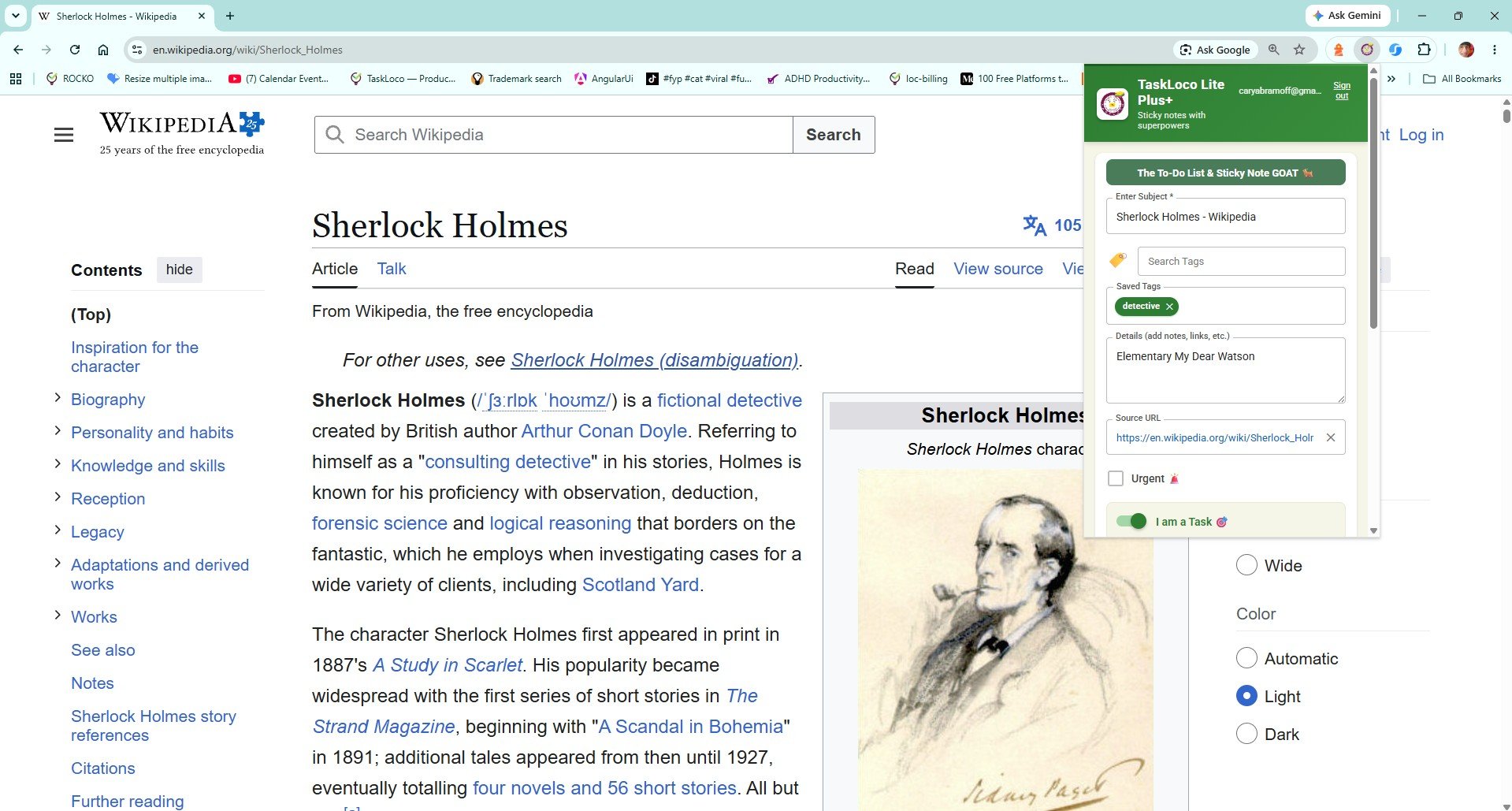
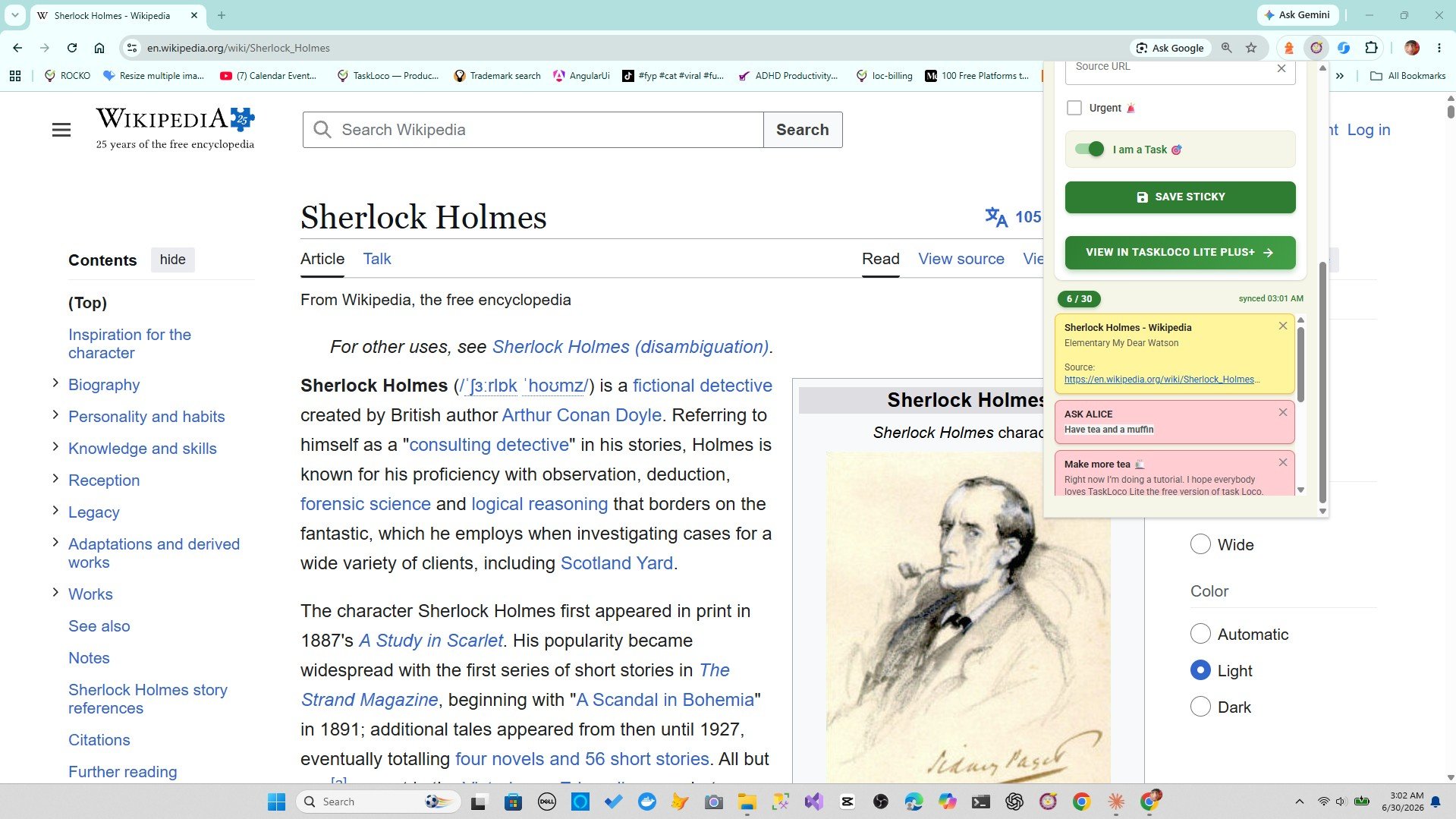
The Sticky Note Web Clipper is a free Chrome extension from TaskLoco. The workflow is about as direct as it gets: you're on a page you want to read later on your phone, you click the clipper icon in your Chrome toolbar, and the page is saved as a visual sticky note — title and URL already filled in, no copy-paste required.
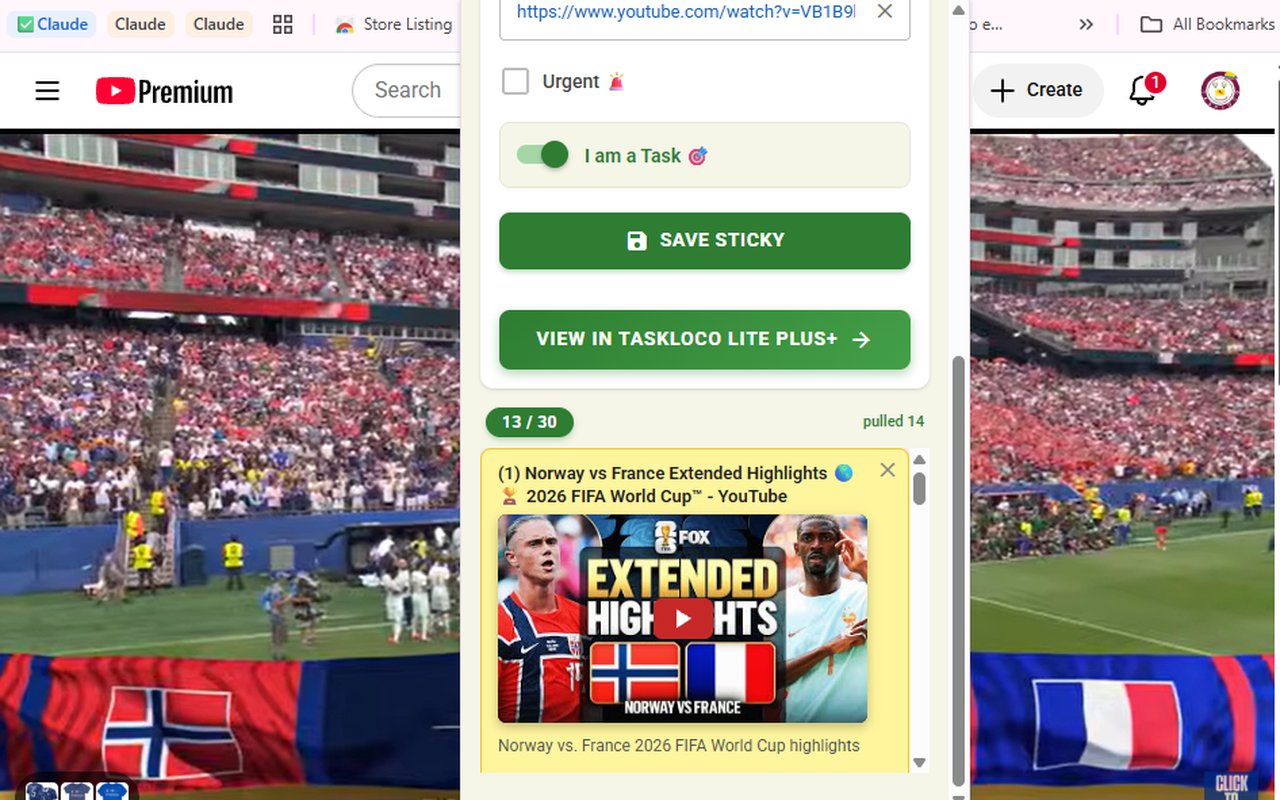
That note syncs to TaskLoco automatically. Open TaskLoco on your phone (iPhone or Android) or on any browser, and the sticky note is there. If you saved a YouTube video, it embeds directly in the note and plays from there — you don't have to leave TaskLoco to watch it. If you saved an article, the URL is right there to open with one tap.
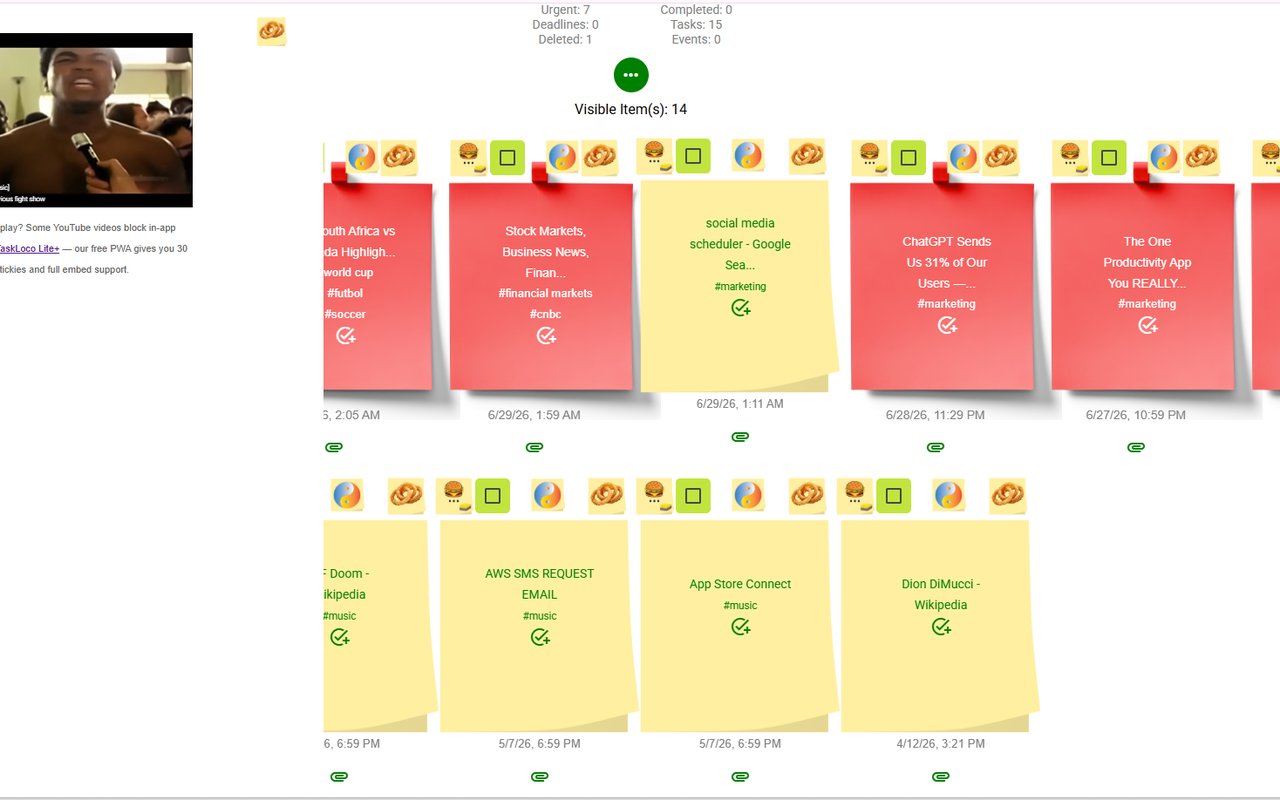
The visual wall format matters more than it sounds. When you saved something two weeks ago, a visual sticky note with the page title and a color is far easier to recognize than a raw URL in a list. You can add tags to notes and search them, so even if you've clipped dozens of things, finding the one you want takes seconds rather than scrolling through a flat bookmark list.
- On your computer: Click the clipper icon — done. One click, page saved.
- On your phone: Open TaskLoco, find the note, tap to visit the page or watch the video.
- No account setup friction: Sign in free with Google, and syncing starts immediately.
Which Method Should You Actually Use?
It depends on what you're trying to accomplish. Here's an honest breakdown:
- One-time transfer, same browser, don't care about saving it: Use Chrome's Send to your devices or Safari Handoff. Fast, no setup, and you'll never look at it again anyway.
- You're in the Apple ecosystem and already use Handoff: Safari syncing is nearly invisible and works well for carry-over browsing sessions.
- You save a lot of links and need them organized: Stop using bookmarks and use a clipper. Visual notes with tags beat a folder full of identical blue text links every time.
- You regularly save articles and YouTube videos to read or watch later: The Sticky Note Web Clipper is the right pick. One click from your computer, available on your phone, and YouTube videos actually play inside the note — no extra app or service needed.
- You're already deep in Evernote or Notion: Their native clippers feed into the system you already use. The tradeoff is more steps and more overhead for casual saves.
The pattern that works for most people is simple: use Chrome's built-in tab-sending for casual one-off moments, and use the web clipper for anything you actually want to keep, find again, or reference on your phone later. The two don't conflict — they solve different problems.
If you've ever lost a link, forgotten a tab, or sent yourself an email with nothing but a URL and no context, the clipper is the obvious upgrade. It's free, it takes one click to install, and the first time you reach for a saved article on your phone and it's actually there — labeled, visual, and ready — you'll understand why people stop relying on tab-transfer tricks.
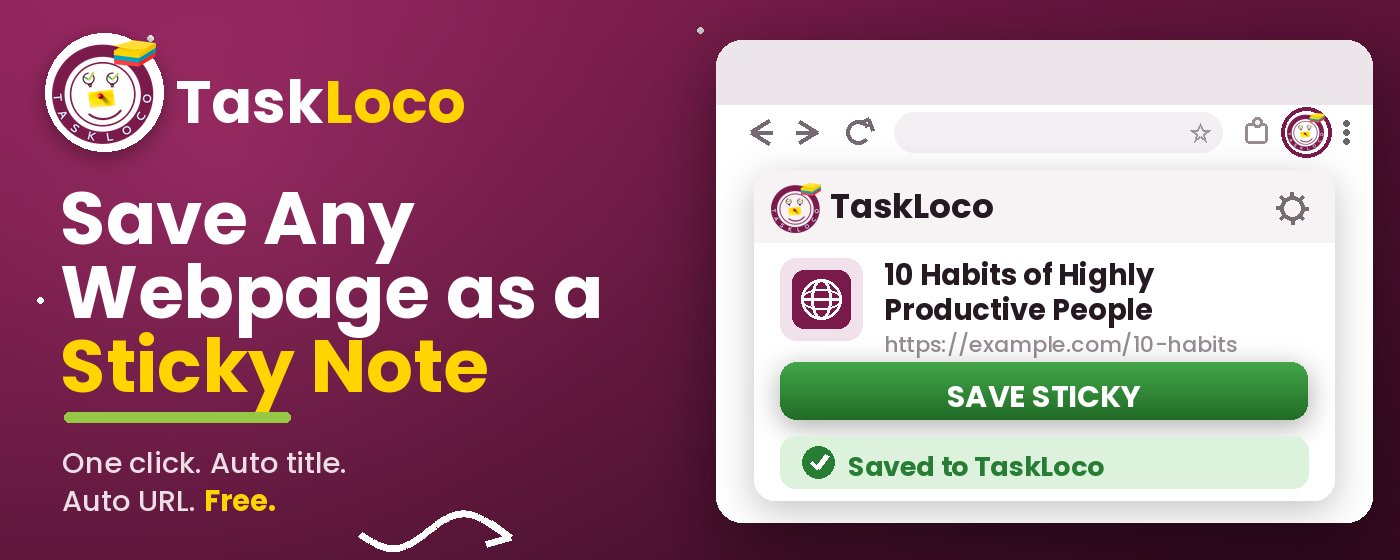
The Sticky Note Web Clipper is free. Install it from the Chrome Web Store, sign in with Google, and every page you clip becomes a sticky note you can find later.
Your clipped notes sync to TaskLoco across Chrome, desktop, iPhone, and Android — also free to start. No credit card to begin.
Get the Free Clipper
Sticky Note Web Clipper
- Free Chrome extension
- One-click save — any page, article, or video
- Title & URL auto-filled
- Tags & search
- Free forever
Synced to TaskLoco
- Sign in free with Google
- Your wall on Chrome, desktop, iPhone, Android
- YouTube videos embed & play in notes
- Visual sticky-note wall
- Free to start
Add It to Chrome — Free
One click saves any page, article, or YouTube video as a sticky note. Title and URL auto-filled.
Add to Chrome — FreeSee TaskLoco in Action
Frequently Asked Questions
How do I send a tab from Chrome on my computer to my phone?
Right-click the tab in Chrome and choose Send to your devices, then select your phone from the list. Your phone will receive a notification with the link. This works when both devices are signed into the same Google account with Chrome. For a more permanent save, use the Sticky Note Web Clipper — one click saves the page as a visual note that syncs to your phone automatically.
Can I sync my open tabs between my computer and phone without doing anything?
Yes, if you use Chrome signed into a Google account, your tabs sync and appear under Recently synced tabs in Chrome on your phone. Safari does the same across Apple devices using iCloud and Handoff. Firefox offers the same via Firefox Sync. The catch: the tab needs to stay open on your computer for most of these to stay current.
What's the best way to save a webpage to read later on my phone?
For casual reads, Chrome's Reading List or a basic bookmark works. For anything you want to actually find again, a visual web clipper is better. The free Sticky Note Web Clipper saves the page as a labeled sticky note in one click — syncs to your phone, searchable, and the title is already filled in so you remember what it was.
Does the Sticky Note Web Clipper work on iPhone and Android?
Yes. The clipper itself is a Chrome extension you install on your computer. When you clip a page, the note saves to TaskLoco, which you can access on iPhone, Android, and any browser. Everything syncs automatically when you sign in free with Google.
Can I save YouTube videos to watch later on my phone?
Yes — when you clip a YouTube page with the Sticky Note Web Clipper, the video embeds directly in the sticky note and plays from there. You don't have to leave TaskLoco or track down the URL again. Open the note on your phone and tap play.
Is the Sticky Note Web Clipper free?
Yes, the extension is completely free. Install it from the Chrome Web Store, sign in with Google, and start clipping immediately. TaskLoco, where your notes sync, also has a free tier.
Why is emailing yourself links a bad system?
It works, but it creates noise in your inbox, strips all context from the link, and gives you no way to organize or search what you saved. A week later you're searching your email for a URL with no idea what the subject line was. A web clipper saves the same link as a titled, visual note you can search and tag — no inbox clutter required.
Born in Brooklyn. Powered by AWS. Your data stays yours.
TaskLoco is available on iPhone, Android, Chrome, and every web browser.