You know the task is important. You've known for days. And yet here you are, reorganizing your desk, answering emails that could wait a week, doing literally anything else. That's not a character flaw — it's a predictable psychological response to tasks that feel threatening in some way: too big, too uncertain, too tied to your self-worth, or just too painfully dull.
Avoidance isn't laziness. It's a protection mechanism. Understanding that changes everything, because the solution stops being "just try harder" and starts being "change the conditions so avoidance becomes the harder choice." That's what this guide is actually about.
Why You Avoid Important Tasks (The Real Reason)
Research from Dr. Fuschia Sirois and others consistently shows that procrastination is primarily an emotion regulation problem, not a time management problem. You don't avoid the task because you're bad at scheduling — you avoid it because starting the task triggers something uncomfortable: fear of failure, fear of judgment, uncertainty about how to begin, or the grim realization that finishing it will create more work.
Important tasks carry more psychological weight precisely because they matter. A trivial task like sorting your inbox has no ego on the line. A report your boss will present to the board? That one has stakes attached. The higher the stakes, the stronger the avoidance pull.
There are a few common flavors:
- Vague tasks — "Work on the project" has no starting point. Your brain genuinely doesn't know what action to take, so it stalls.
- Perfectionistic tasks — If it has to be done perfectly, starting means risking failure, so not starting feels safer.
- Boring but high-stakes tasks — Your brain seeks stimulation. Important-but-dull tasks (taxes, compliance work, that admin backlog) get constantly bumped by things that feel more alive.
- Emotionally loaded tasks — Difficult conversations, performance reviews, saying no to someone — these feel threatening at a social or emotional level.
Seven Methods That Actually Stop Avoidance
These techniques are grounded in behavioral psychology and cognitive science. Use them in combination — they're not competing systems, they're layered defenses against the same enemy.
1. The Two-Minute Rule (modified)
David Allen popularized the original version, but the more powerful variant is this: your only commitment is to work on the task for two minutes. Not complete it — just start. The brain's avoidance mechanism is strongest at the moment of initiation. Once you're inside the work, the emotional threat fades dramatically. You'll almost always continue past two minutes. The rule is the permission slip, not the time limit.
2. Make the Next Action Insultingly Specific
"Finish the report" is not a task. "Open the report file and type one sentence in the conclusion section" is a task. The more specific the physical action, the lower the cognitive load of starting. Reduce every avoided task to a single, concrete, microscopic next step. If that step still feels hard, cut it in half again.
3. Implementation Intentions
Studies by Peter Gollwitzer show that forming an "if-then" plan dramatically increases follow-through: "When I sit down at my desk at 9am, I will open the draft and read the last paragraph I wrote." You're not relying on motivation — you're encoding a trigger. The context cue (desk, 9am) does the remembering for you.
4. Time-Block and Protect
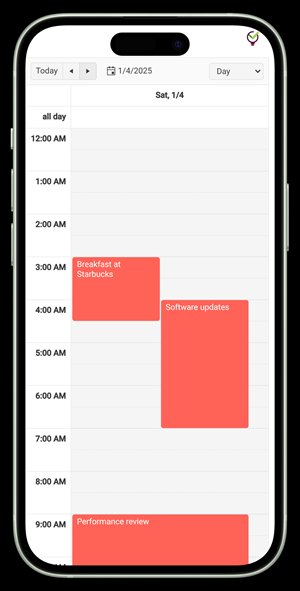
A task without a scheduled time slot is a wish, not a plan. Put the important task on your calendar as a non-negotiable block — same weight as a meeting. Then treat anything that tries to replace it as the rescheduling request it actually is. Most interruptions feel urgent but aren't; the important task almost never feels urgent, which is why it loses every head-to-head battle for your time unless the slot is defended in advance.
5. Shrink the Environment Barrier
Friction kills follow-through. If working on your novel requires opening a specific app, finding the right folder, scrolling to the right chapter, and then silencing notifications — that's four micro-decisions standing between you and starting. The night before, set up the exact environment: document open, cursor in place, distractions off. Tomorrow-you will follow the path of least resistance. Make that path lead toward the important task.
6. Identity-Based Framing
James Clear's formulation is useful here: instead of "I need to do this task," ask "what would a person who handles this kind of work actually do?" Avoidance often exists in the gap between how you see yourself and the task in front of you. Closing that gap — by deciding that someone who does this kind of work handles it before it festers — changes the emotional math.
7. Name What You're Avoiding
Write it down, explicitly: "I'm avoiding this because I'm afraid the client will hate the redesign." That act of naming is not journaling for its own sake — it's forcing the actual threat into the open where your rational brain can evaluate it. Vague dread is harder to defeat than a named, specific fear. Once it's named, you can ask: what's the actual worst case, and is that worse than what happens if I keep not doing this?
Building a System That Keeps You Honest
Methods work in the moment. Systems work across weeks. If you want to stop losing important tasks to avoidance on a repeating basis, the single most valuable habit is a daily review where you look at everything you're carrying and make a deliberate choice about what moves today.
Without a review, important tasks just sit on a list getting older. With a review, you're forced to either commit to a time slot, break the task down further, or consciously defer it — and conscious deferral feels different than avoidance-by-forgetting. You can defer something on purpose. You can't be honest about avoidance if the task is buried in a list you haven't looked at in four days.
A simple daily review takes under five minutes and covers three questions:
- What did I commit to yesterday that didn't happen? What needs to move?
- What is the most important thing I need to advance today — and what's the specific first step?
- What is threatening to crowd out that important thing, and how do I protect the time?
The review is not motivational. It's diagnostic. You're not trying to feel inspired — you're trying to spot the pattern before it plays out again.
Alongside the review, keep your important tasks visible. The deeper something is buried in a nested folder hierarchy, the easier it is for your brain to pretend it doesn't exist. Visibility creates mild, healthy pressure. A task you have to look at every day — even when you're not working on it — stays active in your mind in a way that a task in a closed tab never will.
How TaskLoco Makes These Methods Easier to Maintain
Everything above works with a legal pad. But if you want a digital system that fits naturally around these methods — without the overhead of a project management platform — TaskLoco is worth a look.
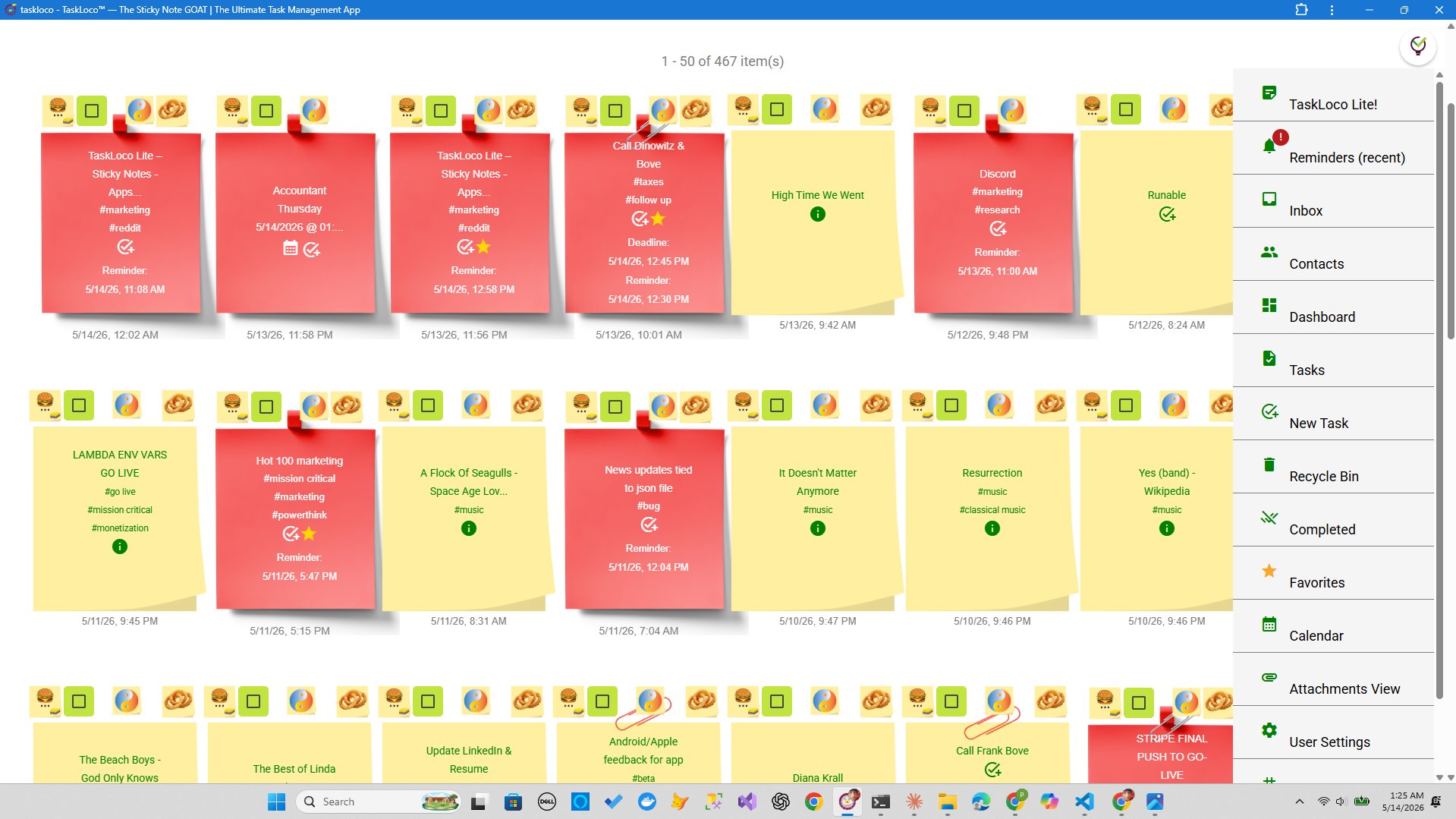
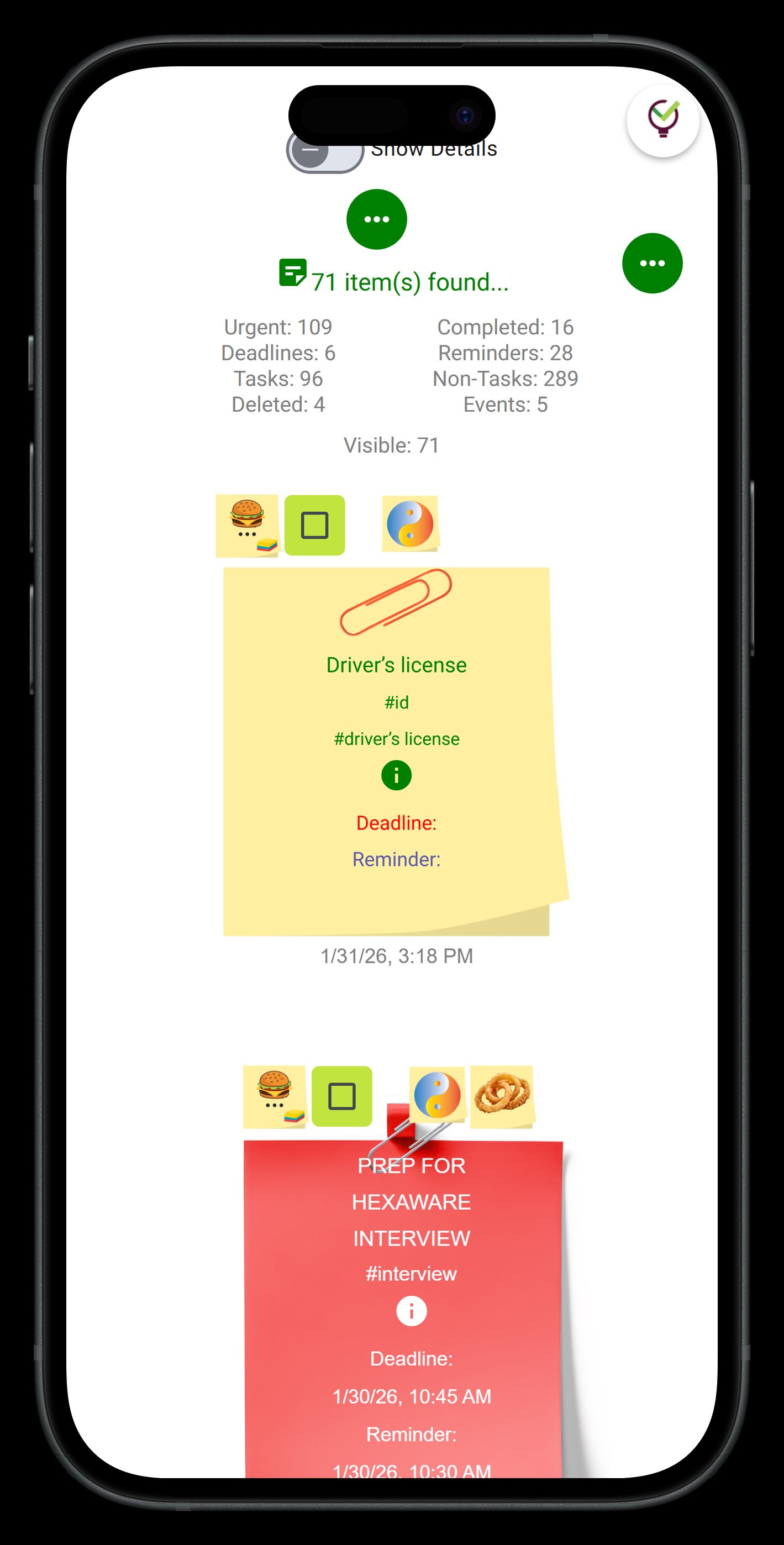
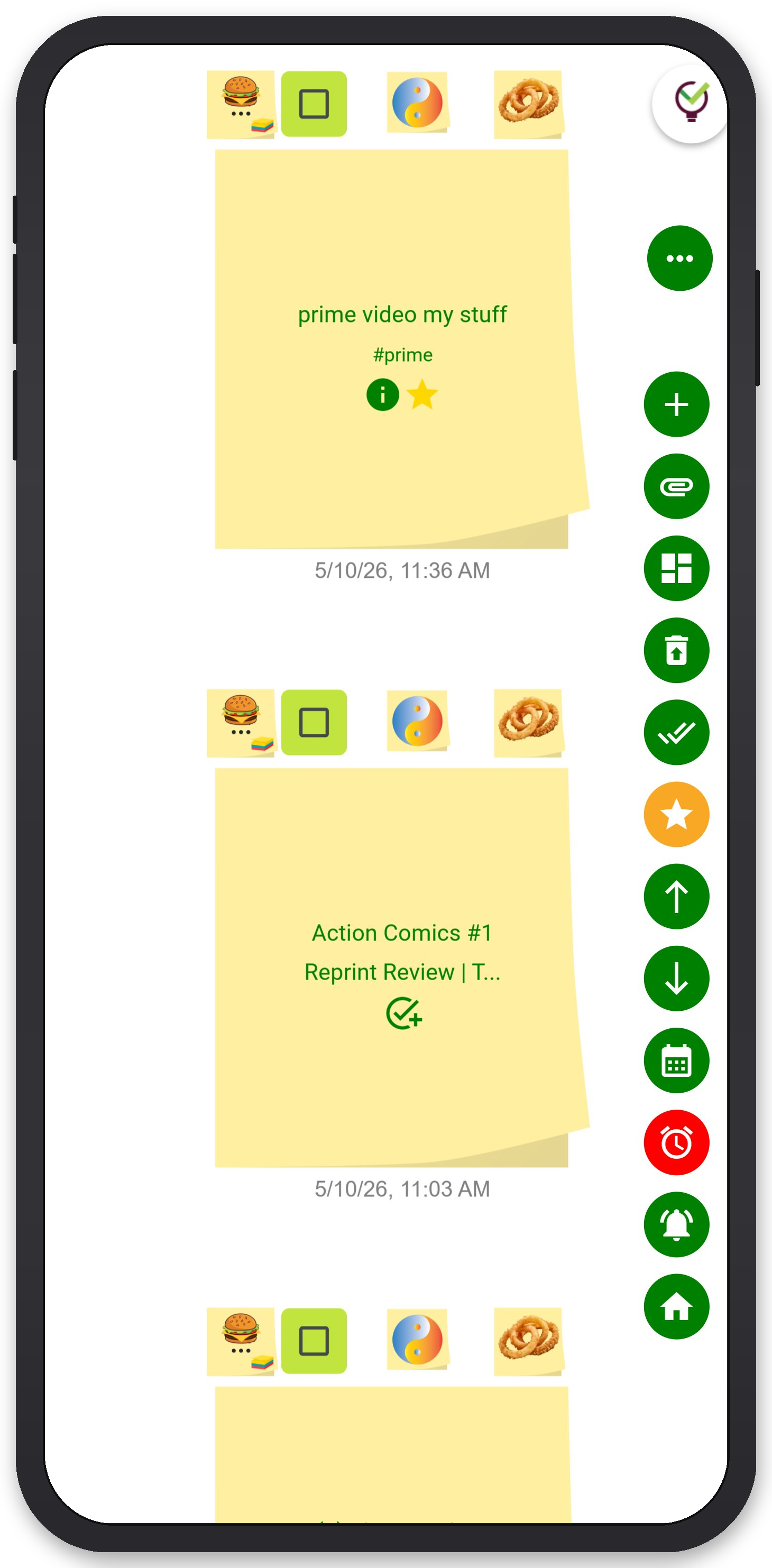
The core idea behind TaskLoco is sticky notes: each task, project chunk, or idea lives on its own note card on a wall you can see all at once. That visual layout directly addresses the "out of sight, out of mind" problem. Your most important tasks stay in front of you instead of buried in a list.
For the implementation intention method, TaskLoco Premium's reminder system is particularly useful: set a reminder on a note and it fires as a push notification that deep-links you directly back to the specific task. You're not just alerted — you're dropped back into the exact context of the work. Optional email and SMS notifications are available if you want backup channels, but the push notification is the thing that actually gets you moving.
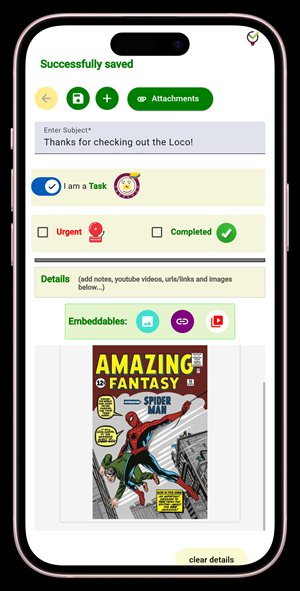
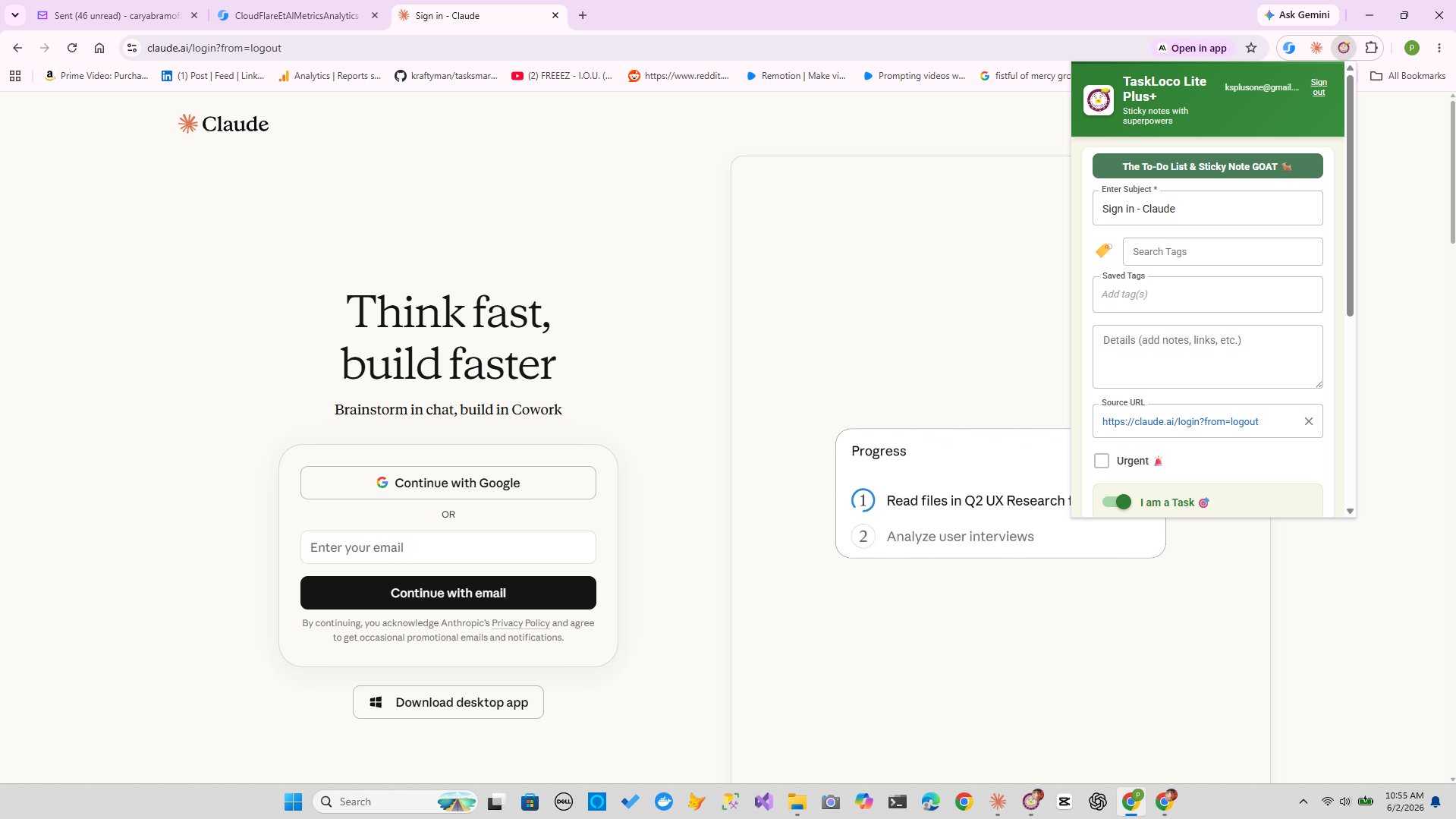
The Chrome extension lets you capture anything from the web — a brief, a reference article, a page you need to act on — directly into a note in one click. It's especially good for the "shrink the environment barrier" technique: the context you need is already attached to the task when you sit down to start.
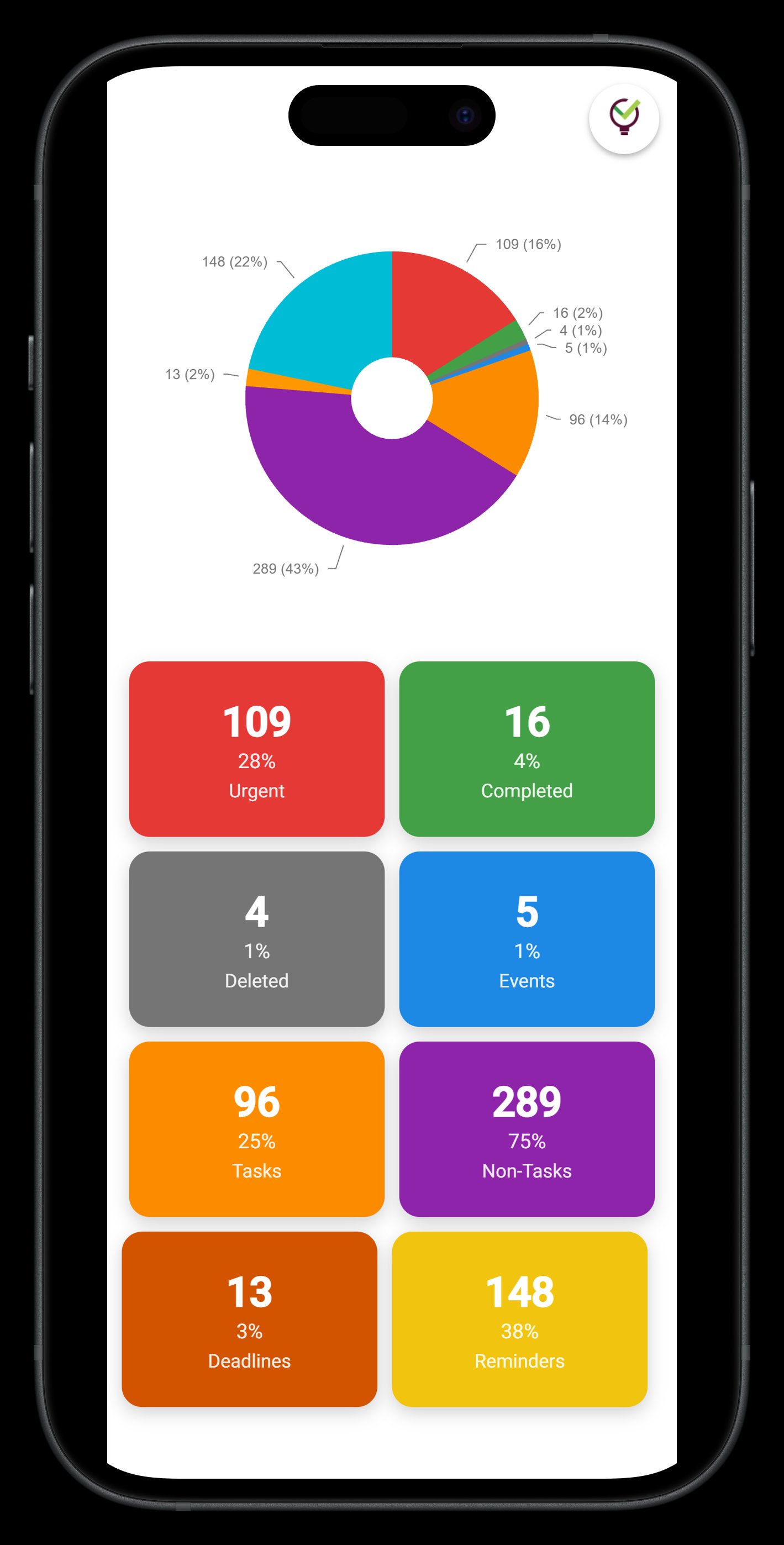
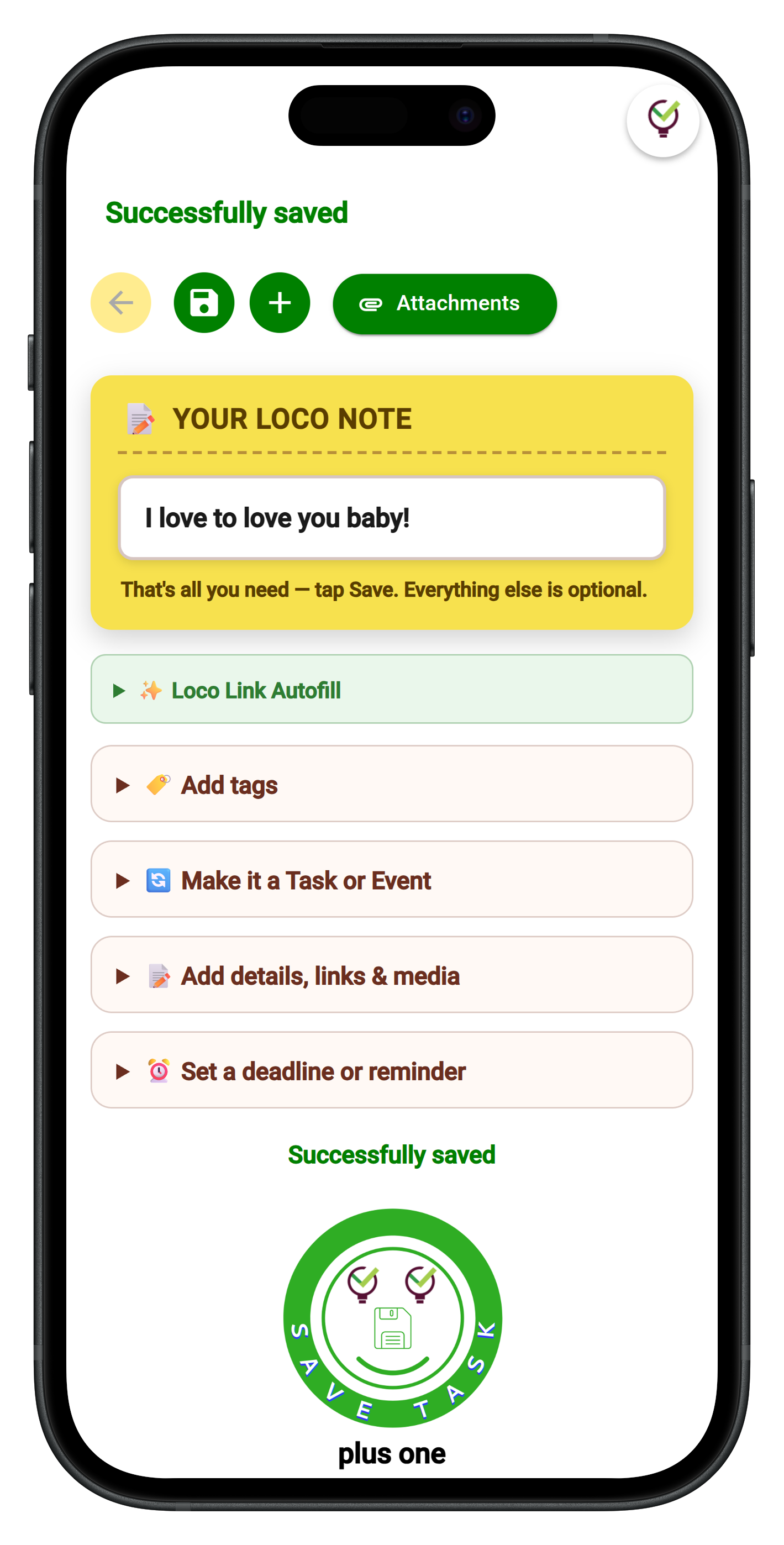
TaskLoco Lite (native iPhone and Android) is completely free and requires no account — good for a simple private note or two while you're figuring out your system. TaskLoco Lite Plus+ is also free, adds cross-device sync and up to 30 notes via the web app. For the full system — unlimited notes, reminders, file attachments, calendar view, and team sharing — you want TaskLoco Premium.
TaskLoco Premium is regularly $9.99/month per person. Right now, charter members can lock in 50% off the regular price — forever. That means $4.99/month per person today. And if our price ever goes up, you still pay half. Always.
Code CHARTER50 auto-applies at checkout. First 500 spots only — once they're gone, this offer is gone permanently. Act fast while spots last.
Every Premium subscription includes unlimited notes, 10GB file storage, reminders, calendar, and team sharing. Each team member requires a separate subscription. 7-day free trial — no charge until day 8. Cancel anytime.
Free Options: TaskLoco
TaskLoco Lite
- Native iPhone & Android app
- Completely anonymous — no sign-in
- Data stays on your device
- Up to 20 notes
- Free forever
TaskLoco Lite Plus+
- Web app + Chrome extension
- Sign in with Google
- Wall syncs across all devices
- Up to 30 notes
- Free forever
Lock In 50% Off — Forever
7-day free trial. No charge until day 8. CHARTER50 auto-applies at checkout.
🔒 Lock In My Charter SpotSee TaskLoco in Action
Frequently Asked Questions
Why do I keep putting off tasks I know are important?
Because importance doesn't make a task feel easier to start — it usually makes it feel more threatening. Important tasks carry more consequence, more potential for judgment, more uncertainty. Your brain reads that threat and signals avoidance as a form of protection. It's not a willpower problem; it's an emotional regulation problem. The fix is to reduce the perceived threat by making the first step tiny and specific, not to summon more discipline.
What is the fastest way to stop procrastinating on something right now?
Write down the single next physical action for the task in one sentence — as specific and concrete as possible. Then set a timer for two minutes and do only that action. Don't commit to finishing. Don't aim for momentum. Just start the timer and begin. In most cases, the avoidance evaporates once you're inside the work. The two-minute frame removes the psychological weight of "doing the whole thing."
Does making a to-do list help with task avoidance?
A list helps, but only if the items on it are specific enough to act on and you review the list daily. A list full of vague entries like "deal with the proposal" doesn't reduce avoidance — it just moves the avoidance one level up. The list becomes the thing you avoid. Specificity and visibility are what make a list work: each item should be a concrete next action, and the list should live somewhere you actually see it every day.
What's the difference between procrastination and being strategic about priorities?
The honest test is whether you have a plan. Deferring a task deliberately — with a specific scheduled time to return to it — is a priority call. Deferring a task because starting it feels uncomfortable, with no plan for when it will happen, is avoidance wearing a rational disguise. The language sounds the same: "I'm waiting for the right moment." The difference is whether a specific moment is actually on the calendar.
How do I stop avoiding a task that feels too big to start?
Break it down until the first step is almost embarrassingly small. "Write the report" becomes "open the document and type one sentence." "Launch the website" becomes "write the homepage headline in a notes file." The goal is to find the step that feels so small your brain can't justify avoiding it. Once you're moving, the next step usually reveals itself. Bigness is almost always a sign that the task hasn't been broken down far enough.
Can a reminder app actually help with task avoidance?
A reminder that just fires an alarm can help, but a reminder that takes you directly back to the task is more powerful. The gap between "I was reminded" and "I actually started" is where avoidance sneaks back in. TaskLoco's reminders fire as push notifications that deep-link straight to the original note — so you're not just alerted, you're dropped back into the specific context of the work with one tap. That friction reduction matters. $9.99/month per person (currently $4.99/month per person for first 500 charter members with code CHARTER50)
Does anxiety about a task mean I should stop doing that type of work?
Not necessarily. Anxiety about a task is normal for work that matters, involves uncertainty, or requires you to be evaluated. If the anxiety is specific to one high-stakes project, it's almost certainly avoidance talking, not a career signal. If you feel the same dread across an entire domain of work consistently over months, that's worth taking more seriously. The distinction: avoidance anxiety shrinks when you actually start the task. Career-misalignment doesn't.
Born in Brooklyn. Powered by AWS. Your data stays yours.
TaskLoco is available on iPhone, Android, Chrome, and every web browser.