You know the feeling. You open a notebook, a notes app, or a document and there they are — fifteen goals you wrote down at some point, half of them exactly where you left them six months ago. 'Launch the podcast.' 'Get certified.' 'Finally sort out the finances.' Still there. Still unfinished. Still quietly judging you.
The problem isn't motivation. It's architecture. Most people treat goal-setting like a wishlist and then wonder why nothing ships. The goals that actually get done share three things: they're small enough to start today, they're tied to a time slot, and there's exactly one person who owns them. This guide walks through exactly how to get there — no app required, just a clear method you can apply right now.
Why Goals Stay Unfinished (And It's Not Laziness)
Research on goal failure consistently points to the same culprits: vagueness, overload, and no committed time. 'Get fit' is not a goal — it's a direction. It has no finish line, no next step, and no date. When you sit down to work, there's nothing to actually do, so you do something else. The goal survives the week by doing absolutely nothing.
Overload is the second killer. The moment you have more than three or four active goals, your brain treats all of them as background noise. Neuroscience calls this ego depletion — the more open loops you carry, the less executive function you have available for any one of them. Collecting goals feels productive. It is the opposite of productive.
The third issue is ownership ambiguity. If a goal is 'we should probably...' rather than 'I will do X by Friday,' it belongs to no one. Even solo goals can suffer from this — the passive voice is a warning sign. 'The website needs to be updated' will never get done. 'I will rewrite the homepage copy by Thursday' has a real chance.
The Exact Method to Clear Your Backlog and Finish What Matters
This is a three-step process you can run in under an hour. Do it once now, then repeat it every Sunday for ten minutes.
Step 1 — The Ruthless Audit. Write out every goal you're currently 'working on.' All of them. The ones in your head, the ones in old notes, the ones you mention at dinner parties. Then apply this filter to each one: 'Am I willing to do at least one hour of work on this in the next seven days?' If the honest answer is no, delete it. Not archive it. Not 'someday/maybe' it. Delete it. You can always re-add a goal later when it genuinely becomes a priority. What you cannot do is carry forty goals and make progress on any of them. The goal is to get your active list down to three to five items maximum.
Step 2 — The Next Action Drill. For every goal that survived the audit, write down the single next physical action required — the smallest possible thing you could do that moves it forward. Not 'work on the business plan.' The actual next action: 'Open a blank document and write three sentences describing the target customer.' It should be specific enough that a stranger could do it without asking you a follow-up question. If you can't identify the next action in thirty seconds, the goal is still too vague — break it down further.
Step 3 — Block It or Bin It. A next action without a time slot is still wishful thinking. Look at your calendar for the coming week and assign each next action to a real block of time — even fifteen minutes counts. If you cannot find a single slot for a goal in the coming week, that goal is not actually a priority right now. Move it out of your active list. This is not failure — this is honesty, and honesty is what creates forward motion.
Staying Honest: The Habits That Keep Goals From Stalling Again
The audit clears the backlog. These habits keep it clear.
Write goals as outcomes, not activities. 'Run three times a week' is an activity. 'Complete a 5K without stopping by the end of next month' is an outcome. Outcomes give you a finish line. Activities never end, which means they never feel done, which means they quietly die.
Use friction as information. When you keep avoiding a goal — when it survives every weekly audit but never gets worked on — that's data. It usually means one of three things: the goal belongs to who you think you should be, not who you actually are; the next action is still too vague; or there's a prerequisite you haven't acknowledged. Investigate instead of pushing harder.
Celebrate completion, not just progress. The brain's reward system responds to closure. When you finish a goal — even a small one — take thirty seconds to actually mark it done, say it out loud, write it down. This is not soft productivity advice. It trains your brain to associate goal-work with reward, which makes starting the next one easier.
Separate capture from commitment. Have one place where you dump everything — ideas, half-formed goals, things you might want to do someday. That place is not your active goal list. Review it monthly and deliberately promote things to active status only when you're ready to assign a next action and a time block. Keep the two lists physically separate so that the 'someday' list never pollutes the 'this week' list.
How TaskLoco Puts This Into Practice
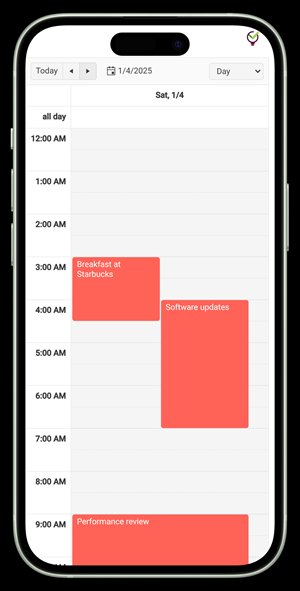
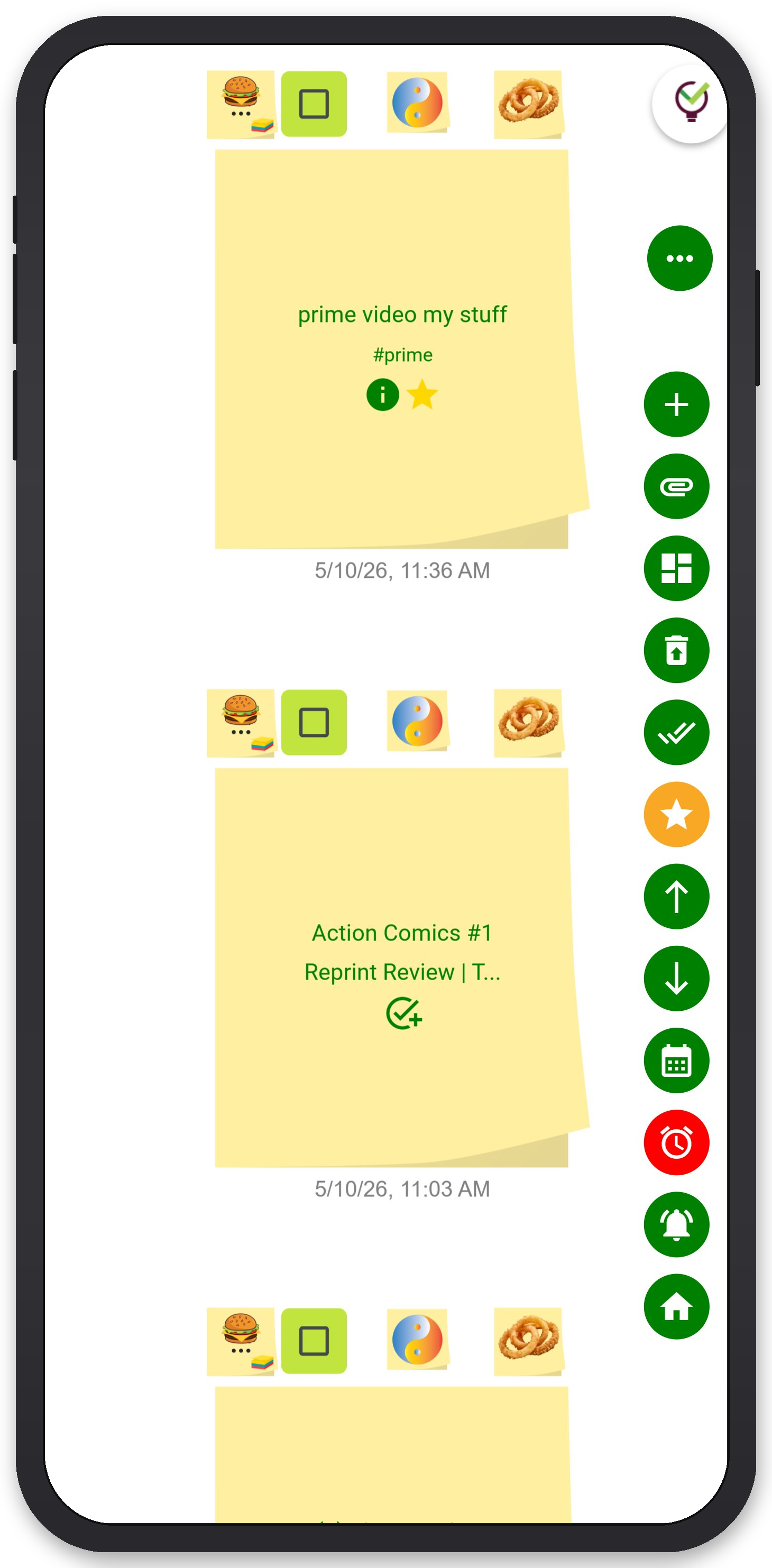
Once you have the method, you need somewhere to run it that doesn't add overhead. TaskLoco was built around sticky notes — each one a discrete item, visible at a glance, impossible to hide in a deep folder where goals go to die.
The setup maps directly to the method above. Keep one note per active goal. Write the next action at the top of that note — not buried in a list inside the note, but right at the top where it stares at you. When the action is done, update it. When a goal is finished, archive the note and actually feel that satisfaction. The wall view in TaskLoco shows all your active notes together, which means your entire active goal list is visible in one screen. If you can't see it all in one view, you have too many active goals. The layout enforces the discipline.
Premium adds reminders that push directly to your phone and computer — deep-linked back to the specific note so you land exactly where you need to be, not hunting through a list. When it's time to work on a goal, the reminder finds you. Optional email and SMS notifications are there if you want them. File attachments let you store reference material — plans, sketches, research — right alongside the goal it belongs to, so context is never one more click away.
Team sharing works exactly the way you'd expect: share a note with a teammate and they can clone it, make it their own, and run it independently. No permission layers, no access management, no administrative overhead. One person's goal becomes a shared goal without turning into a project management system.
TaskLoco Premium is regularly $9.99/month per person. Right now, charter members can lock in 50% off the regular price — forever. That means $4.99/month per person today. And if our price ever goes up, you still pay half. Always.
Code CHARTER50 auto-applies at checkout. First 500 spots only — once they're gone, this offer is gone permanently. Act fast while spots last.
Every Premium subscription includes unlimited notes, 10GB file storage, reminders, calendar, and team sharing. Each team member requires a separate subscription. 7-day free trial — no charge until day 8. Cancel anytime.
Free Options: TaskLoco
TaskLoco Lite
- Native iPhone & Android app
- Completely anonymous — no sign-in
- Data stays on your device
- Up to 20 notes
- Free forever
TaskLoco Lite Plus+
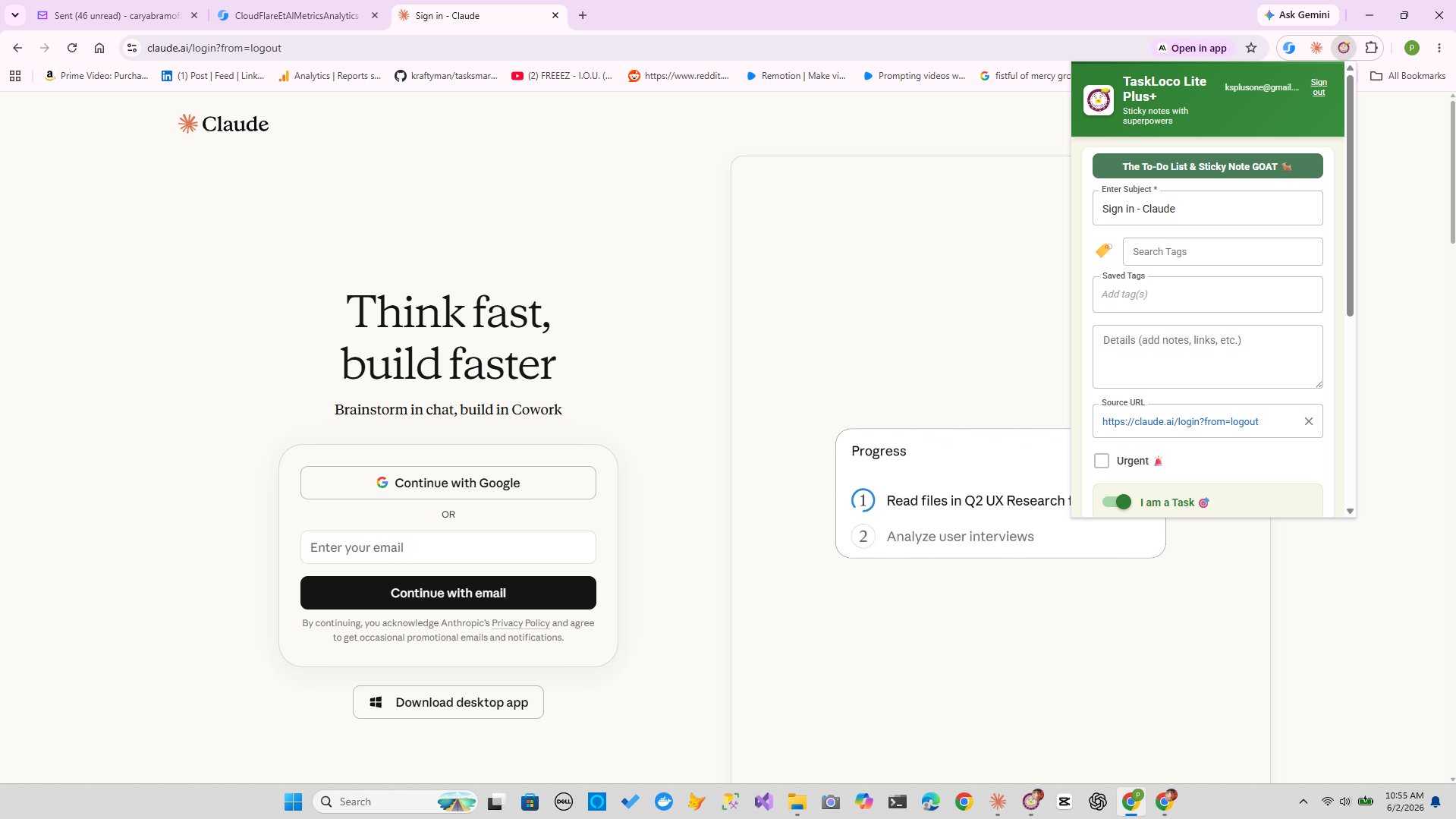
- Web app + Chrome extension
- Sign in with Google
- Wall syncs across all devices
- Up to 30 notes
- Free forever
Lock In 50% Off — Forever
7-day free trial. No charge until day 8. CHARTER50 auto-applies at checkout.
🔒 Lock In My Charter SpotSee TaskLoco in Action
Frequently Asked Questions
Why do I keep setting goals but never finishing them?
The most common reason is that goals are set as vague intentions rather than specific actions tied to a time. 'Get healthy' cannot be acted on. 'Go for a 20-minute walk on Tuesday at 7am' can. Without a defined next action and a committed time slot, goals stay permanently pending.
How many goals should I actively work on at once?
Three to five active goals is the practical limit for most people. Beyond that, your attention fragments across too many open loops and meaningful progress stalls on all of them. Keep your active list ruthlessly short and move everything else to a separate 'someday' list you review monthly.
What's the difference between a goal and a project?
A goal is an outcome you want to achieve. A project is a series of actions required to get there. Confusing the two is a major reason goals stall — you write 'write a book' as a goal and then have nothing actionable to do. Break it down: the project is 'write the book,' and today's action is 'write 300 words on chapter one.' Work on actions, not goals.
How do I stop adding new goals before finishing old ones?
Apply a hard cap — a rule that you cannot add a new goal to your active list until one leaves it. This forces a real decision: is this new thing more important than what you're already committed to? Most new 'goals' don't survive that question, which is exactly the point. Capture new ideas in a separate list and promote them deliberately, never impulsively.
Is it okay to abandon a goal?
Not only is it okay — for most backlogged goals, it's the right call. Goals that were set months ago often reflect an older version of your priorities. Deleting a goal you're no longer willing to work on is not failure, it's editing. The cleaner your active list, the more energy you have for the things that genuinely matter to you right now.
How can TaskLoco help me stop collecting unfinished goals?
TaskLoco's sticky-note layout keeps every active goal visible in one place — if your wall is crowded, that's an immediate signal you have too many active commitments. Premium reminders push directly to your phone and computer, deep-linking back to the exact note so you're always one tap away from the goal that needs your attention. $9.99/month per person (currently $4.99/month per person for first 500 charter members with code CHARTER50)
What's the best way to do a weekly goal review?
Block fifteen minutes on Sunday. Go through every active goal and ask three questions: Did I make progress this week? What is the single next action? When exactly will I do it this week? Any goal you can't schedule into the coming week moves off the active list. The whole review should take less time than a cup of coffee once you're in the habit.
Born in Brooklyn. Powered by AWS. Your data stays yours.
TaskLoco is available on iPhone, Android, Chrome, and every web browser.