You have a tab open for a recipe you want to try, another for an article you'll read later, two for research you're in the middle of, and one for that YouTube video someone sent you three days ago. You know you shouldn't close them — you'll lose track. So you don't. Tomorrow you'll have a few more. The week after, your browser is a wall of anxiety and your machine runs like it's trying to remember all those things for you, because it is.
The problem isn't that you open too many tabs. It's that you haven't built a habit of saving things when you find them. Tabs are a terrible holding area — they disappear when a browser crashes, they pile up, and they offer zero context about why you saved something in the first place. There are real, simple fixes for this, and most of them take about three seconds to implement.
Why the Same Tabs Keep Coming Back
Reopening the same tabs is almost always a symptom of one of three things: you saved something in a way that's too hard to find again, you didn't save it at all, or you saved it and then forgot you did. All three are fixable.
The most common culprit is the bookmark. Bookmarks sound like the right tool, but the standard browser bookmark folder is a graveyard. There's no visual preview, no context, no reason to go back in and dig. Most people have hundreds of bookmarks they've never revisited because finding something in a flat list of page titles requires remembering it existed in the first place.
The second culprit is the read-later pile. Services that let you queue up articles are great for articles — but most of what people actually want to keep isn't a long-form piece. It's a product page, a YouTube video, a news story, a forum thread, a reference doc. Pushing all of that into a reading queue turns it into another thing to manage rather than a resource to use.
Tabs fill the gap because at least an open tab is visible. But visibility and usefulness aren't the same thing either. Fifty open tabs are technically visible and practically invisible at the same time.
A Simple System for Saving Pages You'll Actually Use Again
The best systems for web content are ones that cost you almost nothing in the moment of saving. If the act of saving a page requires more than two or three seconds, you'll skip it — especially when you're mid-research or just browsing quickly. This is why the habit either sticks or it doesn't: friction kills it.
Here's what actually works for most people:
- Capture immediately, not later. The moment you think "I'll want this again," save it. Don't switch to another tab first. Don't finish reading. The save takes less than a second; finding the page again tomorrow takes much longer if you didn't.
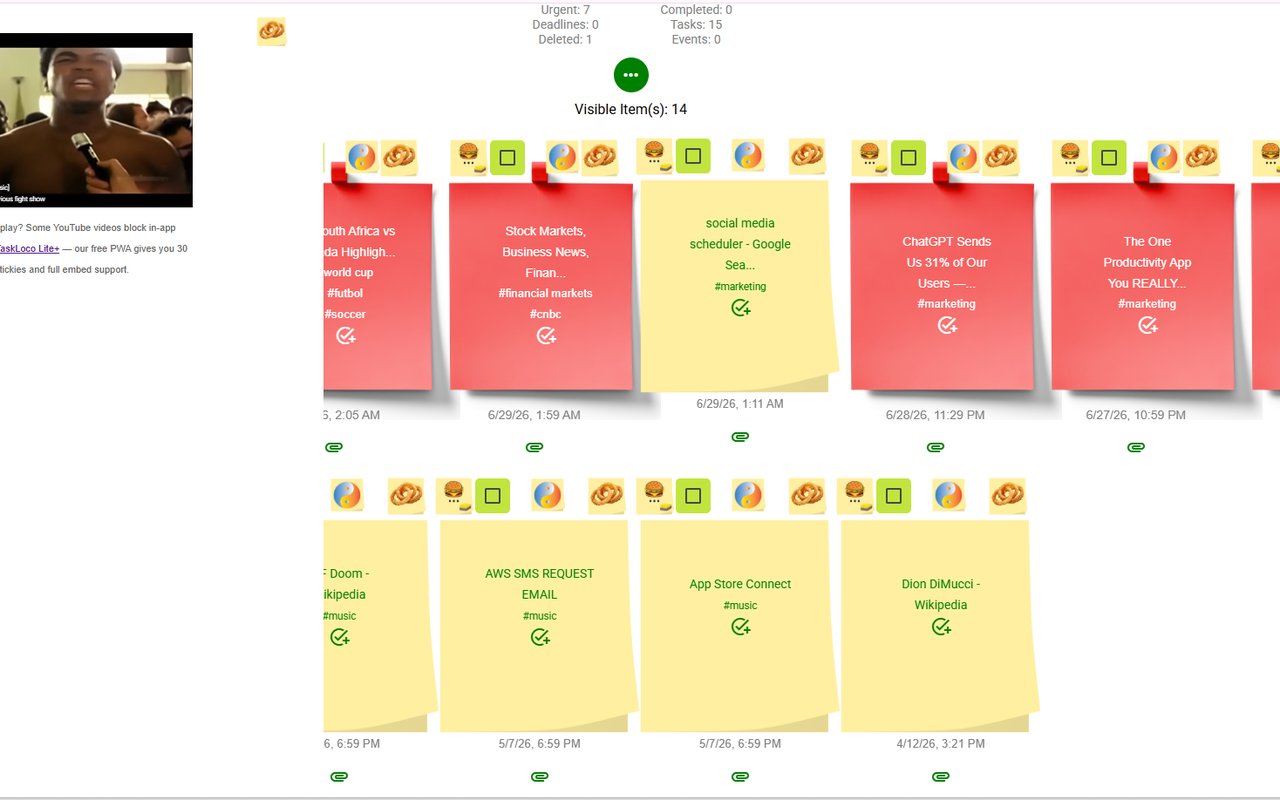
- Give saved things a visual identity. A title alone isn't enough context. The best saving systems show you a visual card or note that reminds you at a glance what something was about and why you cared. This is why physical sticky notes on a wall work better than a flat list — you can scan them spatially.
- Keep saved items in one place, not three. If articles go to one app, videos to another, and random links to bookmarks, you'll forget which bucket something is in. Consolidation wins.
- Make sure it works on your phone too. You'll find things worth saving on mobile as often as on desktop. If your saving system doesn't sync, you'll default back to texting yourself links or leaving browser tabs open on your phone.
None of these principles require any specific tool. You could apply them with a plain text file and a consistent habit. But practically speaking, having a single low-friction tool that handles all four makes a big difference.
How the Sticky Note Web Clipper Solves This for Free
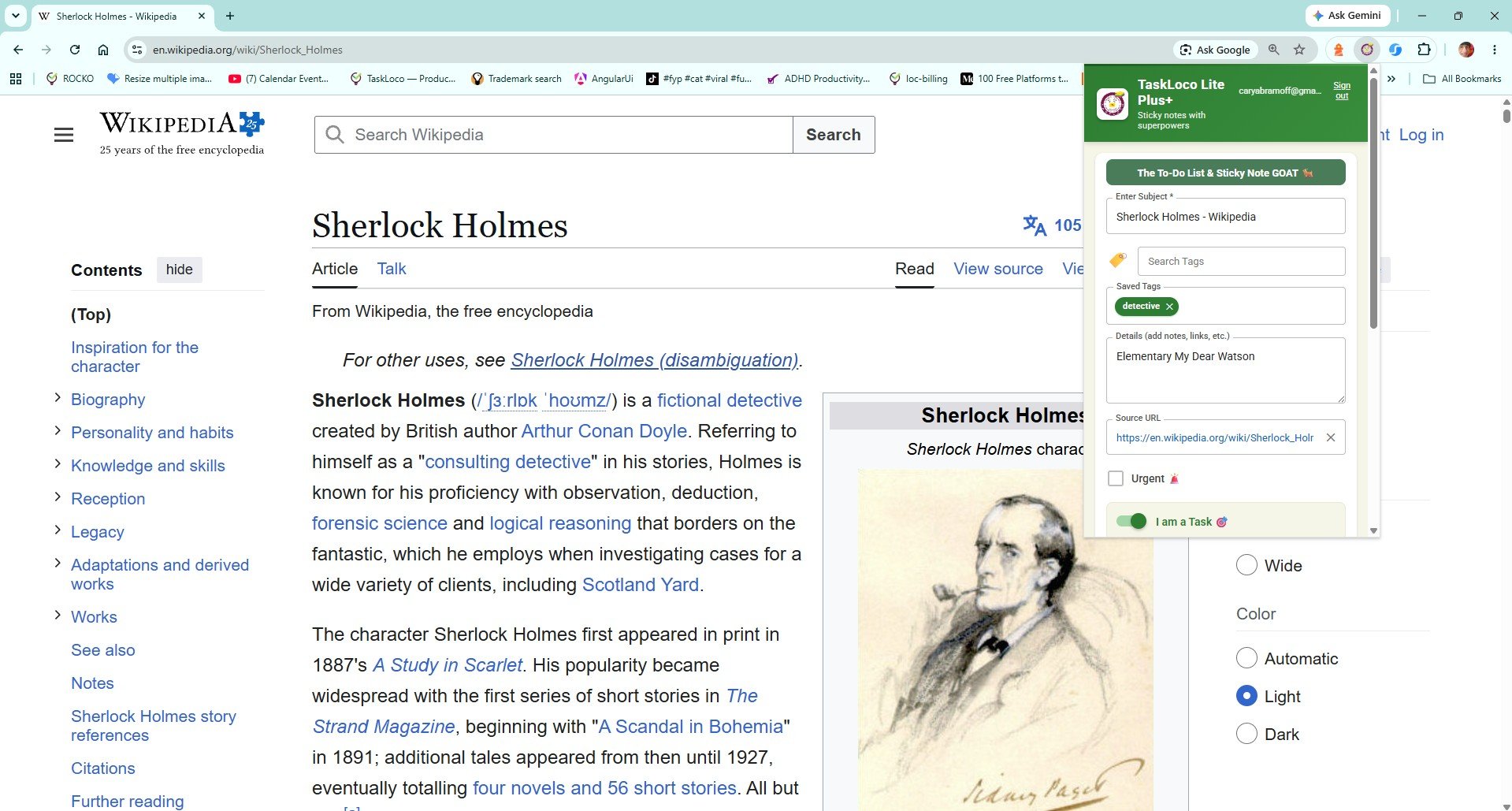
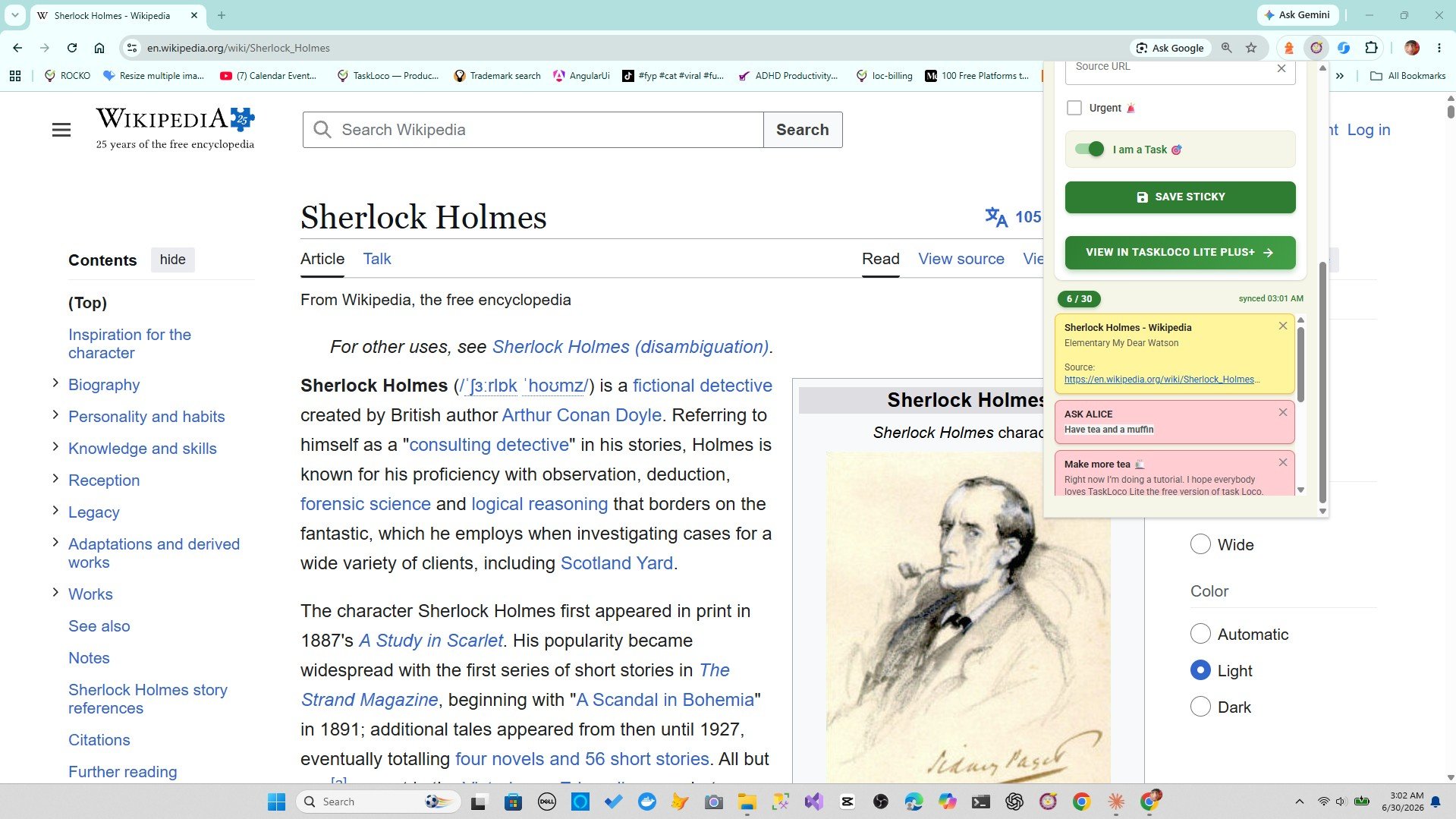
The Sticky Note Web Clipper is a free Chrome extension made by TaskLoco. It does one thing extremely well: when you're on any page — an article, a product, a YouTube video, a research source, anything — you click the toolbar icon and it saves that page as a visual sticky note with the title and URL already filled in. You can add your own note about why you saved it, then close the tab.
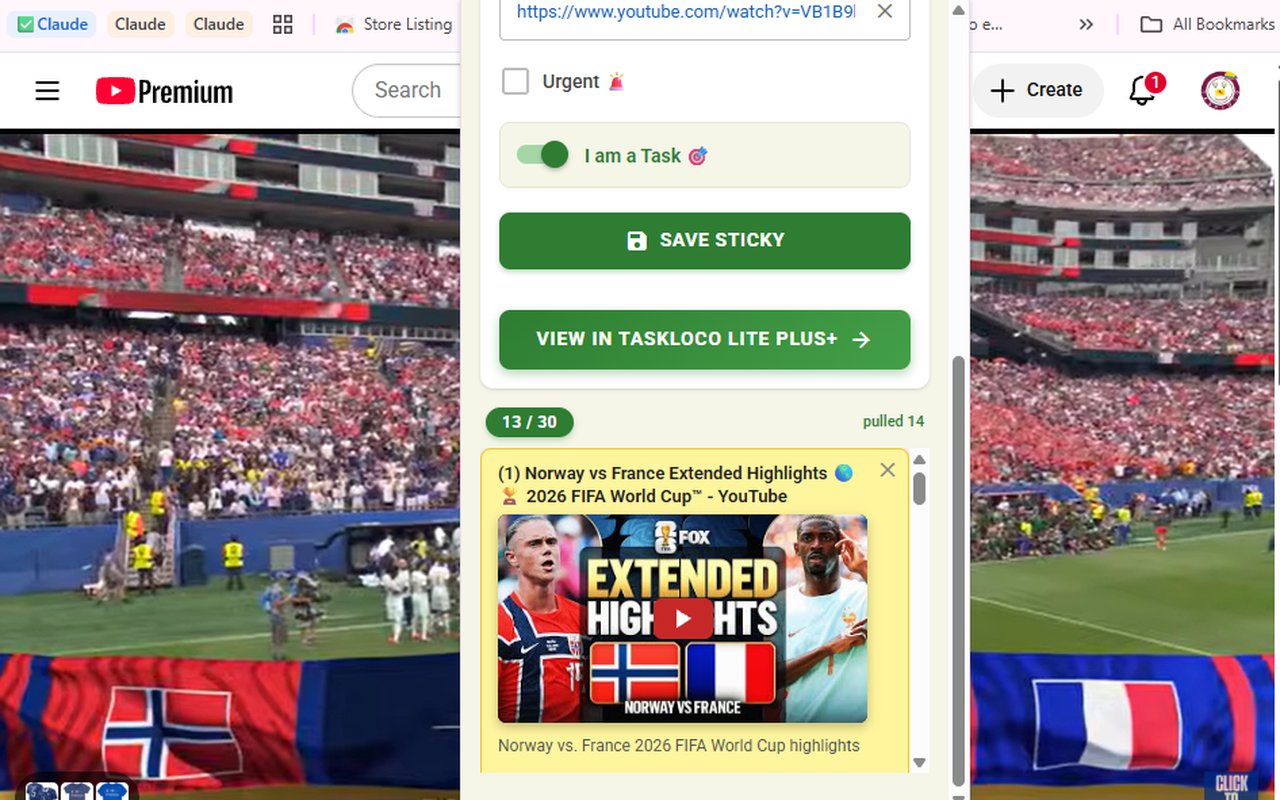
What you saved lands on your TaskLoco wall: a visual board of sticky notes you can scan at a glance, search by keyword, or filter by tag. YouTube videos embed directly inside the note and play without leaving the board. You don't have to go hunting for a link — it's right there in the card.
Because it syncs across Chrome, desktop, iPhone, and Android, the wall you build while browsing on your laptop is the same one you see on your phone. Sign-in is free with Google. There's nothing to configure. The entire setup takes about thirty seconds: install the extension, sign in, clip a page, done.
This isn't a pitch to use TaskLoco for everything you do. It's specifically the answer to one problem: you keep reopening tabs because you have nowhere good to put the things those tabs represent. A visual sticky note wall — one click to add, synced everywhere, free to start — is a direct solution to that problem.
Comparing Your Options: What Each Approach Gets Right
It's worth being honest about the alternatives, because none of them are worthless — they're just optimized for different things.
Browser bookmarks are built in and require no setup, which makes them the default for most people. The weakness is that a flat list of page titles offers almost no visual context, and folders don't scale well once you have more than a few dozen saved links. They work fine for sites you visit every day. They're a poor fit for things you save once and need to find weeks later.
Evernote Web Clipper is powerful for clipping the full text and formatting of articles into notebooks — ideal for deep research where you want the content itself, not just the link. But it's a heavier tool than most people need for quick day-to-day saving, and it's optimized for long documents rather than the mix of links, videos, and quick references that make up most browser sessions.
Notion's Web Clipper sends pages to a Notion database, which is excellent if you're already deep in a Notion workflow. If you're not, it adds complexity rather than removing it.
Leaving tabs open is not a strategy — it's the absence of one. It works right up until your browser crashes, your laptop restarts, or you hit thirty tabs and can no longer see any of the favicons.
The Sticky Note Web Clipper isn't trying to replace a research workflow or a document management system. It's solving the specific, everyday problem of "I found something, I don't want to lose it, I want to get back to it easily." For that problem, it's the fastest and most visual option available for free.
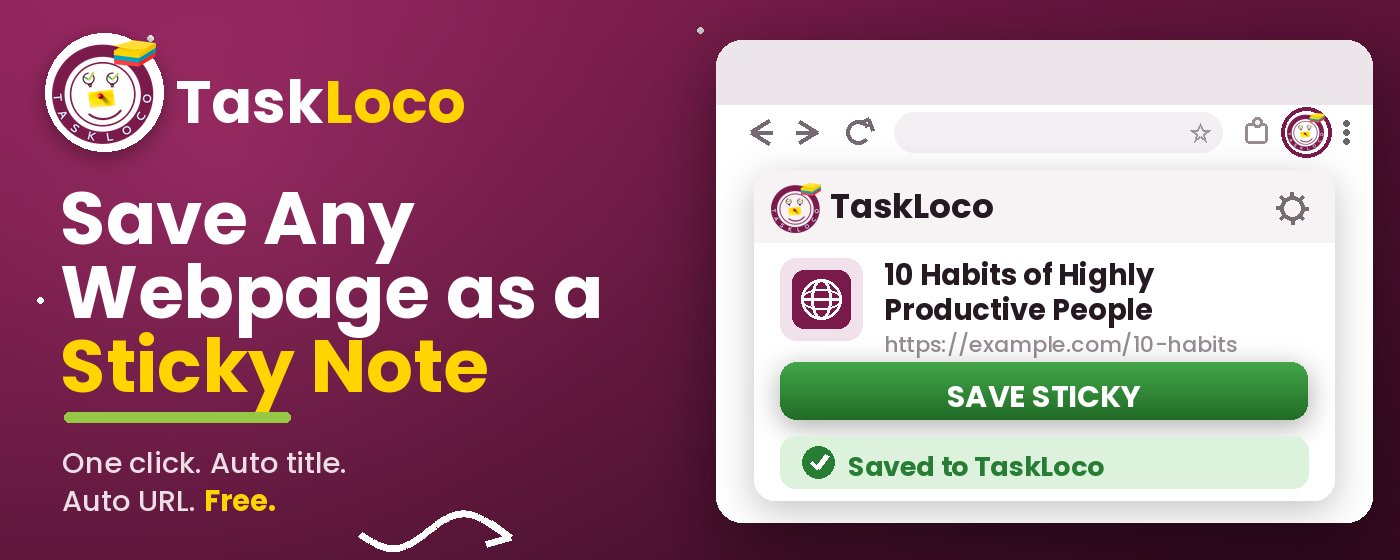
The Sticky Note Web Clipper is free. Install it from the Chrome Web Store, sign in with Google, and every page you clip becomes a sticky note you can find later.
Your clipped notes sync to TaskLoco across Chrome, desktop, iPhone, and Android — also free to start. No credit card to begin.
Get the Free Clipper
Sticky Note Web Clipper
- Free Chrome extension
- One-click save — any page, article, or video
- Title & URL auto-filled
- Tags & search
- Free forever
Synced to TaskLoco
- Sign in free with Google
- Your wall on Chrome, desktop, iPhone, Android
- YouTube videos embed & play in notes
- Visual sticky-note wall
- Free to start
Add It to Chrome — Free
One click saves any page, article, or YouTube video as a sticky note. Title and URL auto-filled.
Add to Chrome — FreeSee TaskLoco in Action
Frequently Asked Questions
Why do I keep reopening the same browser tabs?
Usually because you never gave those pages a permanent home — you left them open as a visual reminder, but open tabs disappear when browsers crash or restart. The fix is to save pages somewhere intentional the moment you find them, not leave them open hoping you'll get back to them.
What's the fastest way to save a webpage so I can close the tab?
Install the free Sticky Note Web Clipper for Chrome. Click the toolbar icon on any page and it saves instantly as a sticky note with the title and URL auto-filled. You can close the tab immediately and the page is waiting for you on your TaskLoco wall whenever you need it.
Why don't browser bookmarks fix the tab problem?
Bookmarks save the URL but give you almost no visual context. A flat list of page titles is hard to scan quickly, and most people never revisit their bookmark folders because finding something requires remembering it existed. Visual sticky notes are easier to scan and act on.
Does the Sticky Note Web Clipper work for YouTube videos?
Yes. Save a YouTube page with the clipper and the video embeds directly inside the sticky note on your TaskLoco wall. You can play it right there without navigating to YouTube, so there's no reason to leave a YouTube tab open.
Will my saved pages be available on my phone?
Yes. Notes you save with the Sticky Note Web Clipper sync to your TaskLoco wall, which is available on iPhone, Android, and desktop. Whatever you clip while browsing on your laptop is there when you pick up your phone.
Is the Sticky Note Web Clipper free?
Yes — the extension is completely free. TaskLoco also has a free tier. Install from the Chrome Web Store, sign in with Google, and start saving pages in one click. No payment required to start.
How is the Sticky Note Web Clipper different from Evernote or Notion clippers?
Evernote's clipper is built for saving full article text into notebooks — great for deep research but heavier than most people need for quick daily saves. Notion's clipper works best if you're already inside a Notion workflow. The Sticky Note Web Clipper is optimized for speed and visual scanning: one click, a sticky note card appears, done. It handles articles, videos, news, and any link equally well.
Born in Brooklyn. Powered by AWS. Your data stays yours.
TaskLoco is available on iPhone, Android, Chrome, and every web browser.