You're getting through the day, but only just. The coffee stops working. You forget what you walked into a room for. You snap at people you like. You sit down to do something important and just... stare. That's not laziness. That's what running on empty actually feels like — and it's more common than anyone admits.
The tricky part is that the usual advice — sleep more, take a vacation, try yoga — rarely touches the root cause. Depletion isn't random. It has specific sources, and until you identify yours, you'll keep refueling a car with a leak in the tank. This guide walks through exactly how to find the leak, patch it, and build a sustainable rhythm that keeps you operating at full capacity.
Step 1: Diagnose What's Actually Draining You
Not all depletion is the same. Sleep deprivation drains you differently than decision fatigue. Emotional overload feels nothing like physical exhaustion. Before you can fix the problem, you need to know which problem you actually have.
Spend three days logging your energy level — on a simple 1-to-10 scale — at four points each day: morning, midday, afternoon, and evening. You don't need an app for this. A piece of paper works fine. What you're looking for are patterns: Do you start strong and crash by 2pm? Are you fine Monday through Wednesday and destroyed by Friday? Do certain people or meetings leave you noticeably flatter than others?
Common culprits that rarely get named:
- Decision overload — Too many small choices made throughout the day (what to eat, what to reply, what to tackle next) quietly exhaust your prefrontal cortex. This is why surgeons and CEOs famously wear the same thing every day.
- Unfinished loops — Every task you've started but not finished sits in mental RAM. Your brain keeps pinging it in the background. Ten open loops feel manageable. Forty will hollow you out.
- Shallow work masquerading as progress — Clearing emails, attending status meetings, and reorganizing your to-do list feel productive but generate almost no sense of real accomplishment. That gap between effort and output is exhausting.
- Chronic context-switching — Every time you jump between tasks, your brain spends 15–20 minutes recalibrating. If you switch six times before lunch, you've burned two hours of cognitive capacity before you've done anything substantial.
Step 2: Stop the Bleeding Before You Try to Refuel
Most energy-recovery advice jumps straight to restoration — sleep, nutrition, exercise, meditation. Those matter. But if you pour water into a cracked cup, it empties as fast as you fill it. The leaks come first.
Once your three-day log shows you where the drops happen, pick the two or three highest-impact drains and reduce them specifically. Here's how to approach the most common ones:
If decision fatigue is the culprit: Batch your decisions. Eat the same breakfast for a week. Block 20 minutes each morning to set your three non-negotiable tasks for the day — and make no new priority decisions after that until tomorrow. The structure feels constraining at first and liberating within 72 hours.
If open loops are draining you: Do a full brain dump — every task, worry, errand, half-formed idea — onto paper or a note. Get it out of your head and into a trusted system. The relief is immediate and measurable. Your brain stops running background checks on things once it trusts they're recorded somewhere.
If meetings or certain relationships are the drain: Audit your calendar for the past two weeks. For every recurring meeting, ask one question: what would actually break if this stopped? Most people find two or three meetings that answer with silence. Cancel those. For energy-draining relationships, you don't always have control — but you can shorten exposure time and build buffer around it.
If shallow work is the problem: Time-block two 90-minute sessions of deep, undistracted work before noon. Protect these like appointments. Most people find that two real hours of focused work produces more satisfaction — and more actual output — than a full day of reactive busyness.
Step 3: Build Restoration Into the Structure of Your Day
Rest isn't the absence of work. Passive rest — collapsing on the couch, scrolling your phone, zoning out — helps less than most people expect because it doesn't actually restore the specific systems that work depletes. Real recovery is active and specific.
Research on cognitive restoration consistently points to a few things that actually work:
- Micro-recoveries during the day — Five minutes of genuine non-stimulation (eyes closed, no screen, no music) every 90 minutes does more for afternoon performance than any amount of coffee. The instinct to push through is almost always wrong.
- Physical movement as a cognitive reset — A 10-minute walk after a demanding task isn't wasted time. It flushes cortisol, re-oxygenates, and returns your working memory to baseline. The people who skip this in the name of productivity consistently produce less by 3pm.
- Sleep as a non-negotiable, not a variable — Most chronic depletion traces back to treating sleep as the first thing to cut when deadlines pile up. Even one week of six-hour nights measurably degrades decision quality, emotional regulation, and creative thinking — in ways you can't subjectively detect because sleep deprivation also impairs self-assessment.
- Completion rituals — A short end-of-day routine that closes your loops — reviewing what you finished, writing tomorrow's three priorities, and physically closing your workspace — signals your nervous system that work is genuinely over. Without this, many people stay in low-grade work mode until midnight without realizing it.
None of these require a retreat or a life overhaul. The entire framework — log, reduce drains, restore actively — takes about 20 minutes a day and produces results within one week that feel disproportionate to the effort. That's because you're not adding effort. You're removing waste.
How TaskLoco Can Help You Put This Into Practice
Everything in this guide can be done with a pen and paper. But if you want a digital system that stays out of your way while keeping your priorities and open loops visible, TaskLoco is a natural fit for this kind of work.
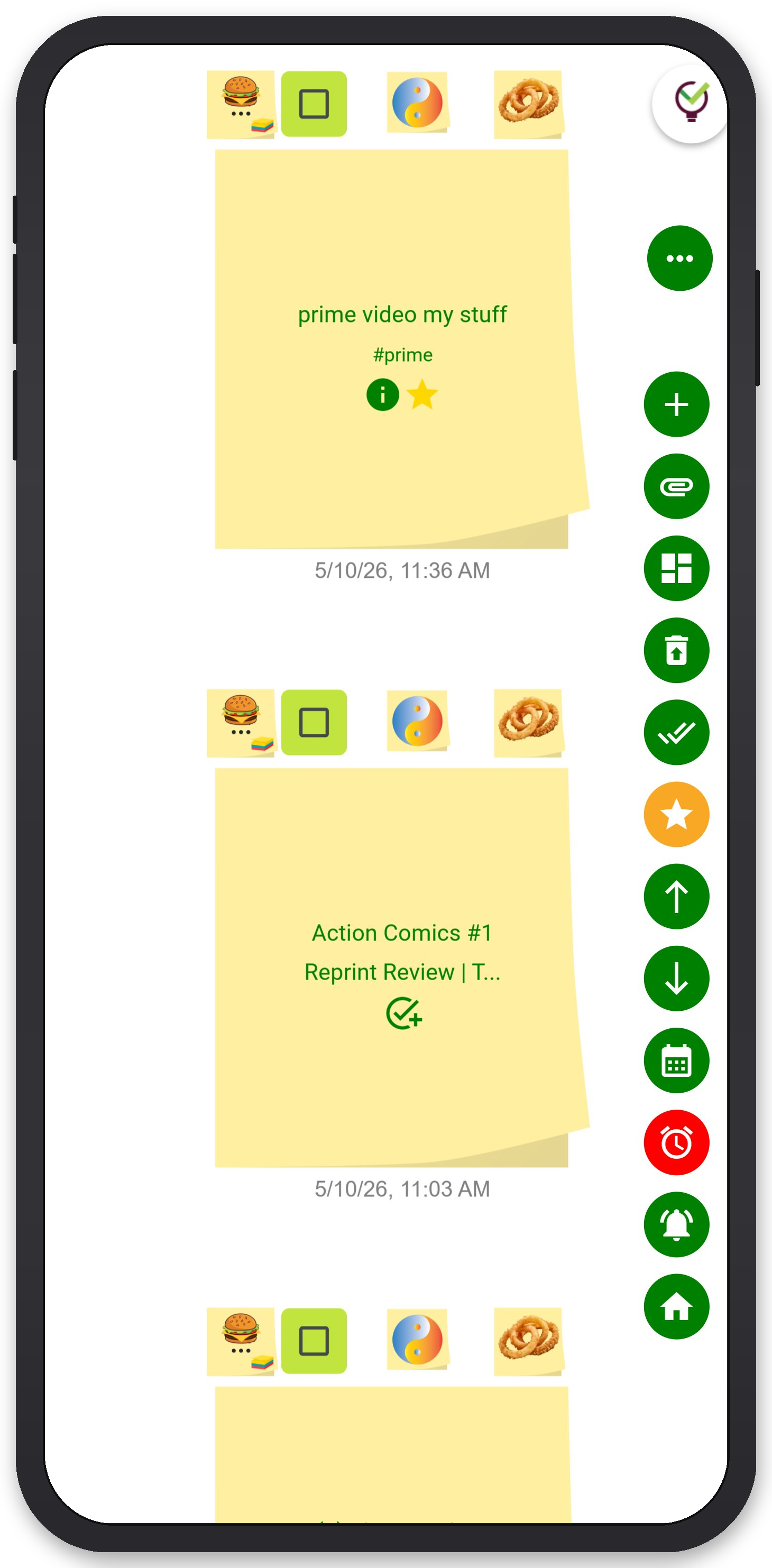
The core idea — sticky notes — maps directly to how most people actually think when they're trying to reduce mental clutter. You capture a thought, pin it somewhere visible, and stop carrying it in your head. TaskLoco's wall view lets you do exactly that across devices: your morning priorities, your brain dump, your three daily non-negotiables, your completion ritual checklist.
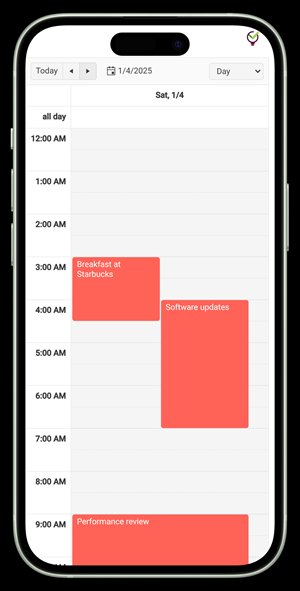
With TaskLoco Premium, reminders are delivered as push notifications directly to your phone and computer — and each one deep-links back to the original note, so you land exactly where you need to be instead of hunting through your system. File attachments let you keep reference material — that article on sleep, those meeting notes — attached to the relevant note rather than scattered across folders. The calendar view gives you a clean picture of what's actually committed versus what's floating, which is half the battle when you're trying to close open loops.
For teams, shared notes work the way email does — recipients can clone the note and make it their own, with real-time sync keeping everyone current. No permissions maze, no access levels to manage.
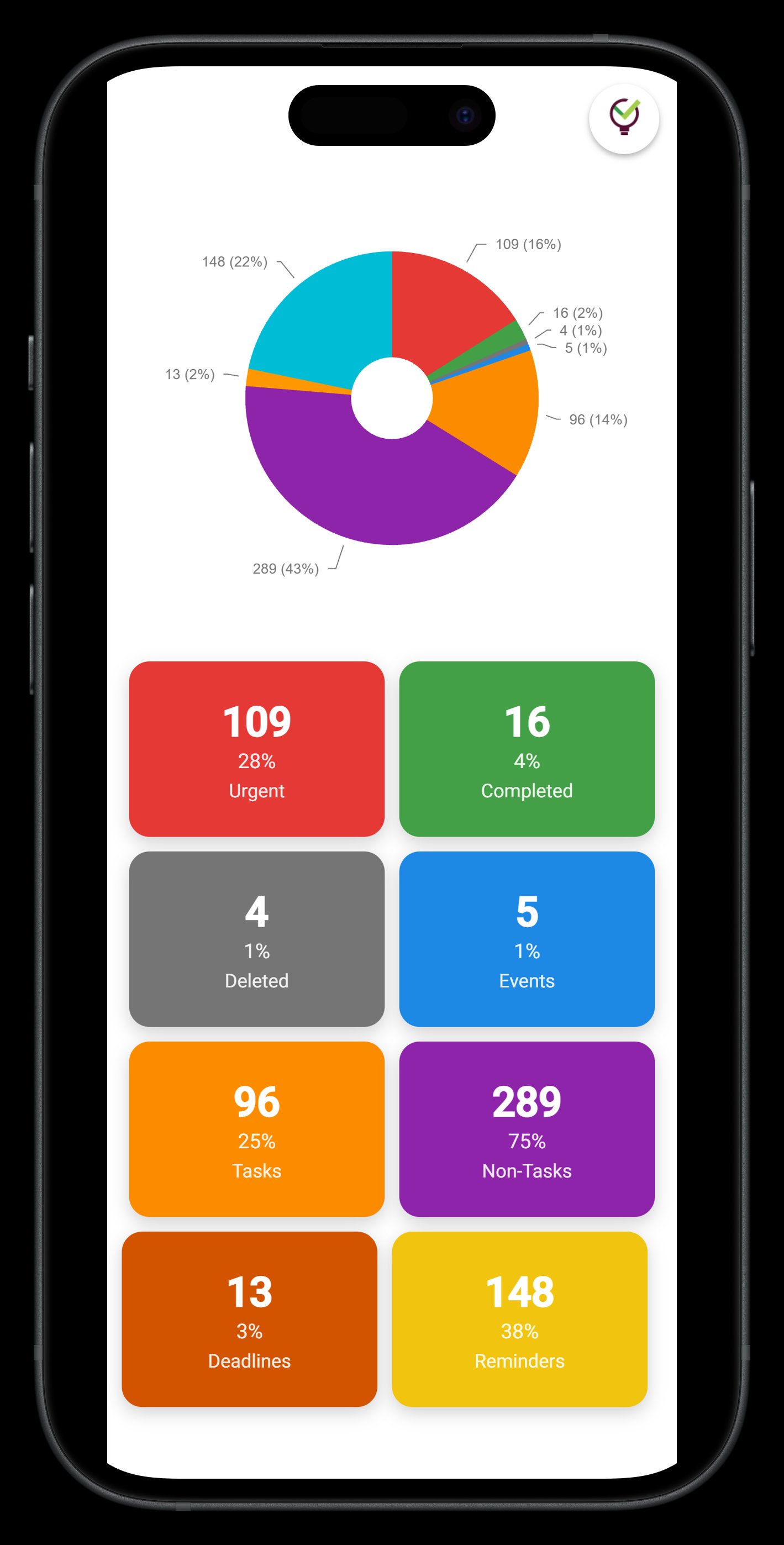
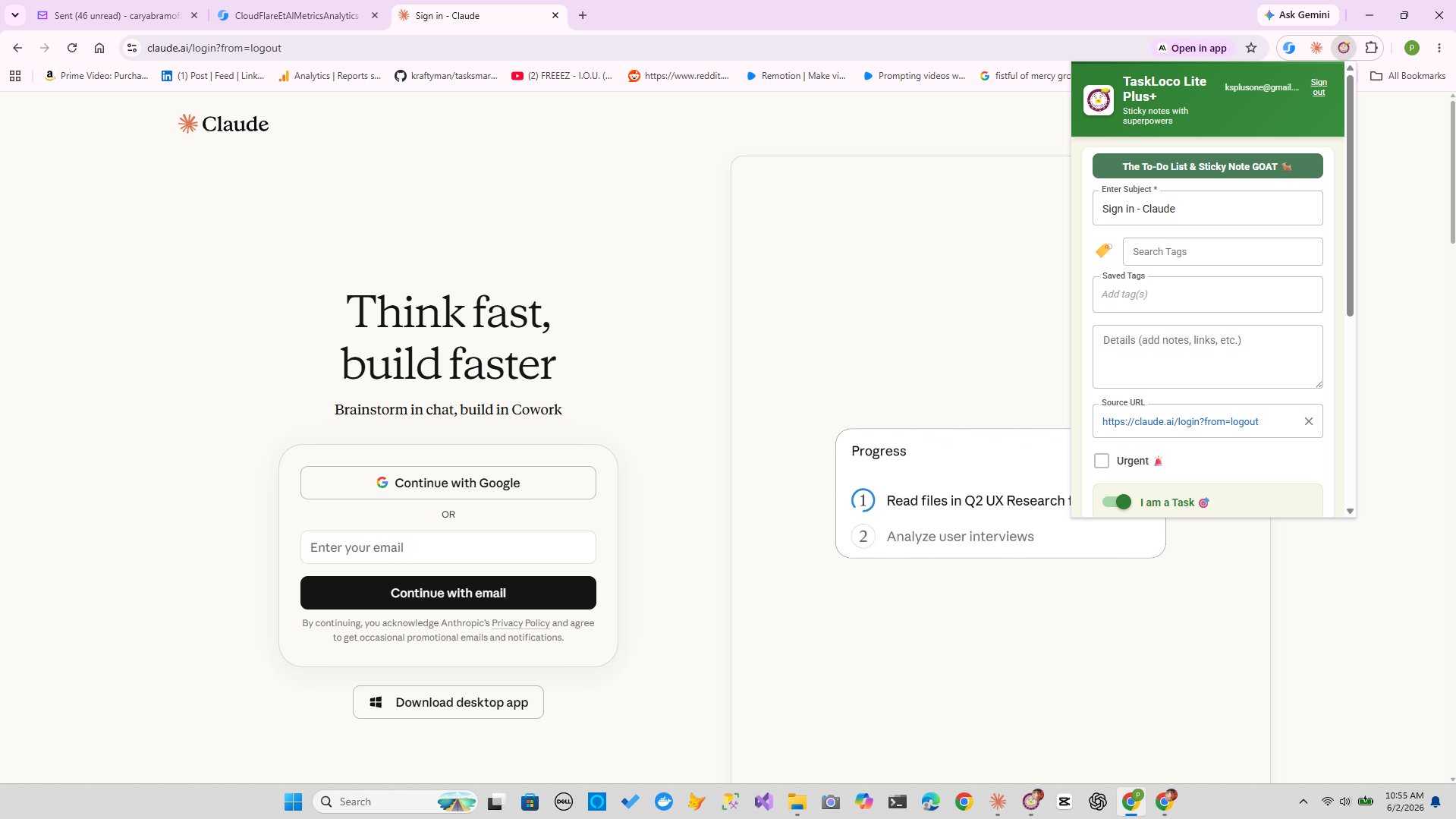
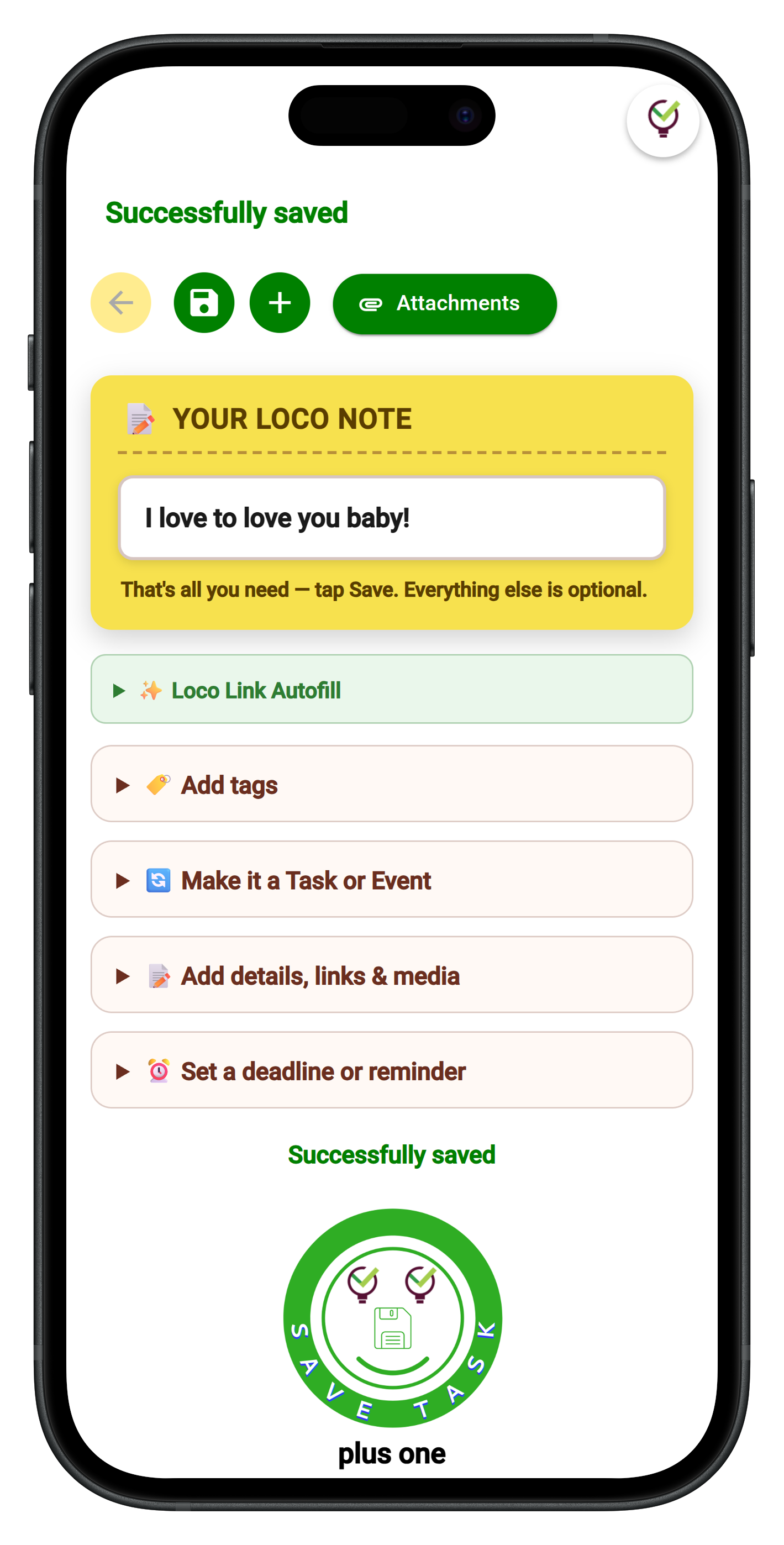
TaskLoco Lite is a free native iPhone and Android app — completely anonymous, no sign-in, up to 20 notes stored on your device. It's a clean starting point. TaskLoco Lite Plus+ is free on the web and Chrome extension, syncs across all your devices, and handles up to 30 notes. Premium unlocks unlimited notes, reminders, file storage, calendar view, and team sharing.
TaskLoco Premium is regularly $9.99/month per person. Right now, charter members can lock in 50% off the regular price — forever. That means $4.99/month per person today. And if our price ever goes up, you still pay half. Always.
Code CHARTER50 auto-applies at checkout. First 500 spots only — once they're gone, this offer is gone permanently. Act fast while spots last.
Every Premium subscription includes unlimited notes, 10GB file storage, reminders, calendar, and team sharing. Each team member requires a separate subscription. 7-day free trial — no charge until day 8. Cancel anytime.
Free Options: TaskLoco
TaskLoco Lite
- Native iPhone & Android app
- Completely anonymous — no sign-in
- Data stays on your device
- Up to 20 notes
- Free forever
TaskLoco Lite Plus+
- Web app + Chrome extension
- Sign in with Google
- Wall syncs across all devices
- Up to 30 notes
- Free forever
Lock In 50% Off — Forever
7-day free trial. No charge until day 8. CHARTER50 auto-applies at checkout.
🔒 Lock In My Charter SpotSee TaskLoco in Action
Frequently Asked Questions
What does it mean to be running on empty?
Running on empty means you're operating in a state of chronic depletion — where your mental, physical, or emotional reserves are so low that you're functioning below your real capacity. It's not a bad day. It's a sustained pattern where effort costs more than it used to, focus is unreliable, and even rest doesn't feel restorative. The cause is almost always a combination of too many drains and not enough genuine recovery — not simply a lack of sleep.
Why do I feel exhausted even after a full night's sleep?
Sleep restores one type of depletion — physical and neurological fatigue — but it doesn't resolve decision fatigue, emotional exhaustion, or the mental load of too many open loops. If you wake up tired despite adequate sleep, the drain is likely cognitive or emotional rather than purely physical. Start logging your energy through the day and look for which activities — or which people — produce the biggest drops. The source is almost never what you expect.
How do I stop feeling mentally exhausted all the time?
Mental exhaustion usually comes from one of three things: too many decisions, too many unfinished tasks living in your head, or too much context-switching. The fix is structural, not motivational. Batch your decisions, do a full brain dump to clear open loops, and protect at least one 90-minute block of deep, undistracted focus per day. These three changes alone — implemented consistently for one week — produce measurable relief. The key is doing all three, not just picking the one that sounds easiest.
What are the signs you're burning out before it gets serious?
Early warning signs include: difficulty concentrating on tasks you used to find easy, irritability that feels disproportionate to what triggered it, a growing sense of going through the motions without real engagement, physical symptoms like persistent headaches or tension, and a feeling that rest never quite lands. The most telling sign is when things that used to restore you — a weekend off, a vacation, a good night's sleep — stop producing the recovery they once did. That's when a structural intervention becomes urgent.
How long does it take to recover from burnout or chronic depletion?
It depends on severity and how quickly you remove the primary drains. Mild-to-moderate depletion — where you're exhausted but still functional — typically shows meaningful improvement within two to four weeks of structural changes (reduced decision load, protected sleep, genuine recovery time). Full burnout recovery, where you've hit a wall and can barely work, often takes three to six months with consistent attention. The biggest mistake is expecting recovery to come from rest alone while leaving the drains intact.
Can a to-do list app actually help with energy management?
Yes — but not the way most people think. The benefit isn't time management. It's cognitive offloading. Every unfinished task you carry in your head uses working memory and generates background anxiety. Getting it into a trusted external system — even a simple one — lets your brain stop monitoring it. The relief is immediate. The key is choosing a system that's low enough friction that you actually maintain it, because an abandoned system creates more stress than none at all. TaskLoco's sticky-note model is deliberately simple for this reason. $9.99/month per person (currently $4.99/month per person for first 500 charter members with code CHARTER50)
What's the single most effective thing I can do today to stop running on empty?
Do a complete brain dump. Take 15 minutes, write down every task, worry, errand, unfinished project, and half-formed idea that's occupying mental space. Put it somewhere outside your head — paper, a note app, anything. Then pick three items from that list that actually matter this week and put everything else aside. The combination of emptying your mental RAM and creating clear, limited focus for the near term produces a disproportionate energy recovery. It's not glamorous, but it works faster than almost anything else you could do in 15 minutes.
Born in Brooklyn. Powered by AWS. Your data stays yours.
TaskLoco is available on iPhone, Android, Chrome, and every web browser.