Motivation is a terrible engine. It runs hot for a day or two, then sputters out right when you need it most. The people who actually get things done consistently are not more motivated than everyone else — they have simply designed their environment and habits so that starting feels automatic and stopping feels odd.
This is not about hustle culture or waking up at 5 a.m. It is about understanding how decisions drain energy, how friction kills follow-through, and how a few structural changes turn action from a daily battle into a background process. Everything below is actionable with nothing more than a piece of paper if that is all you have.
The Real Reason You Stop Taking Action
Before you can fix inconsistency, you need to diagnose it honestly. There are three common culprits, and they rarely announce themselves clearly.
Decision fatigue. Every time you sit down to work and ask yourself "what should I do first?" you burn mental energy before you have done a single productive thing. By the time you figure out the answer, part of you is already tired. The fix is not to work harder — it is to make the decision the night before, or even the week before, so tomorrow-you just executes.
The gap between intention and environment. You intend to write every morning, but your desk is covered in distractions and your browser opens to social media by default. Your environment is quietly vetoing your intentions. James Clear's research on habit formation shows that most behavior is cued by context, not conscious choice. Change the context first.
The task is too large to start. "Work on the report" is not a real task — it is a category. Your brain looks at it, calculates how much effort the entire report requires, and quietly persuades you to check email instead. Break it into the single next physical action: "open the report and write the first sentence of section two." That is a task you can start in ten seconds.
Five Methods That Actually Build Consistent Action
These are not motivational tips. They are structural interventions with a track record. Use one to start — not all five at once.
1. Habit stacking. Attach the new action you want to take consistently to something you already do without thinking. "After I pour my morning coffee, I will write three sentences." The existing habit becomes the trigger. The key is specificity — "after I do X, I will do Y" dramatically outperforms a vague intention to do Y sometime during the day.
2. The two-minute rule. If an action takes less than two minutes, do it immediately. More importantly, use two minutes as an entry ramp for bigger tasks. Commit only to starting for two minutes. Most of the time, momentum carries you past the two-minute mark. The hard part is always starting, not continuing.
3. Visual streaks. Put an X on a calendar every day you complete the target action. After a week, you have a chain. The chain becomes a motivator on its own — "don't break the chain" is a surprisingly powerful psychological pull. Paper works. A whiteboard works. An app works. What matters is that you see the streak.
4. Reduce friction to near zero. Lay your running shoes by the door the night before. Keep your notebook open on your desk, not in a drawer. Close browser tabs that are not relevant to today's work before you finish the previous day. Each small friction reduction is a micro-commitment that pulls future-you toward action before they have a chance to resist.
5. Implementation intentions. Research by psychologist Peter Gollwitzer found that specifying when, where, and how you will act — not just what you plan to do — roughly doubles follow-through rates. "I will write for 25 minutes at my desk at 8 a.m. with my phone in the other room" is not the same as "I want to write more." One is a plan. The other is a wish.
Building a Weekly Review That Keeps Momentum Going
Consistent action over days is a habit. Consistent action over months requires a system for catching drift before it becomes derailment. The weekly review is that system.
It does not need to be elaborate. Fifteen minutes, same time each week. Ask three questions: What did I actually complete this week? What stalled, and why? What are the three most important actions for next week?
The "why" on stalled items is where most of the value lives. If the same task has been stalling for three weeks in a row, it is not a willpower problem — it is either the wrong task, a task that needs to be broken down further, or a task with a hidden dependency you have not resolved yet. Weekly review surfaces these patterns fast.
Write next week's three priorities down before you close out the review. Not in your head. On paper or in a note. Research consistently shows that writing a goal increases the probability of acting on it, likely because the act of writing forces specificity and creates a mild commitment.
What to capture during the week, not just during the review:
- Any idea that crosses your mind about a project — capture it immediately, file it later
- Any blocker or dependency you notice — write it down so it doesn't stay as ambient anxiety
- Any win, however small — reviewing small wins at the end of the week reinforces the behavior that created them
How TaskLoco Fits Into a Consistent Action System
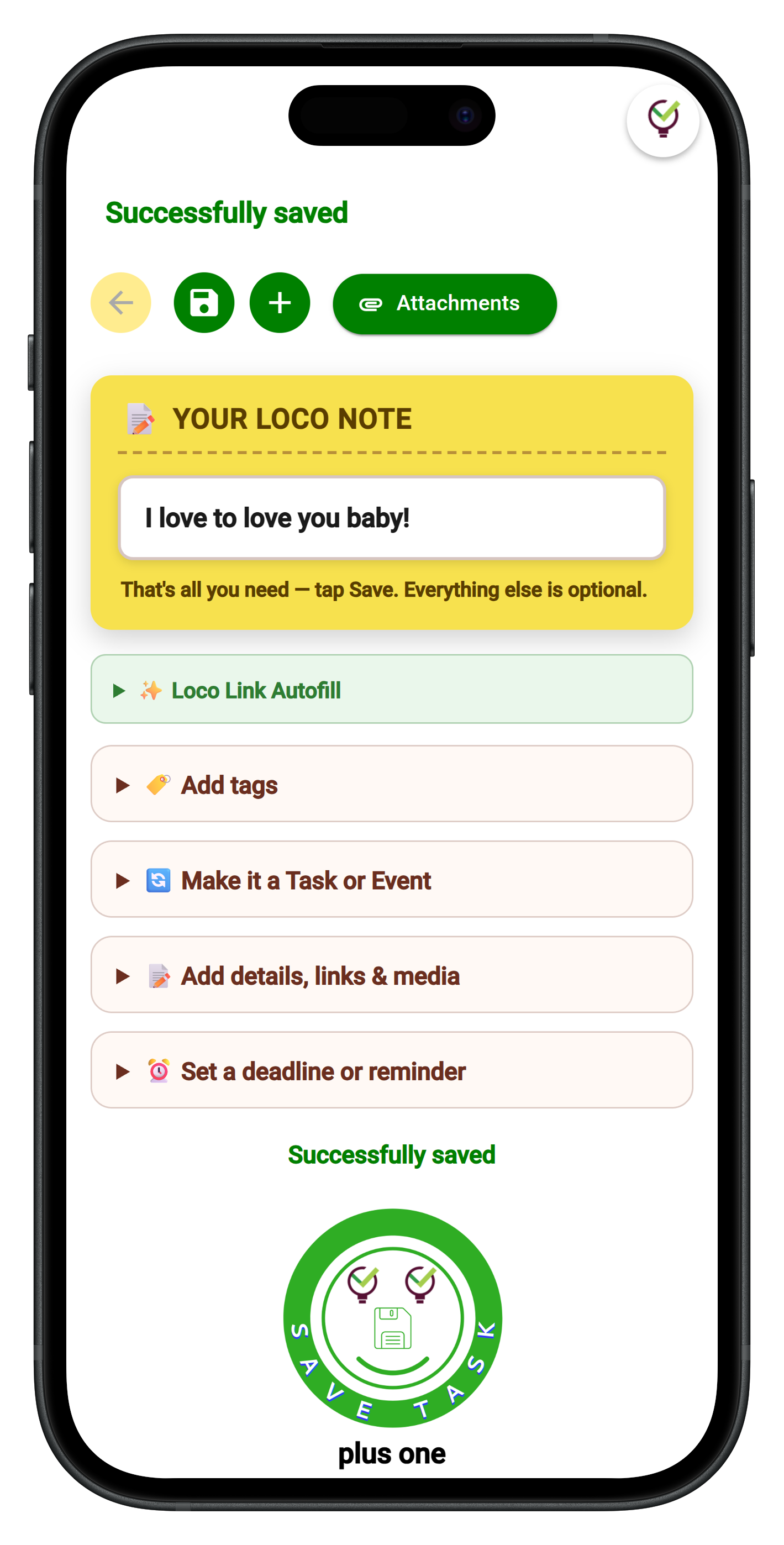
Once you have the method clear, the question is where to put everything so it does not get lost. TaskLoco is built around sticky notes — which sounds simple, and it is. That simplicity is the point.
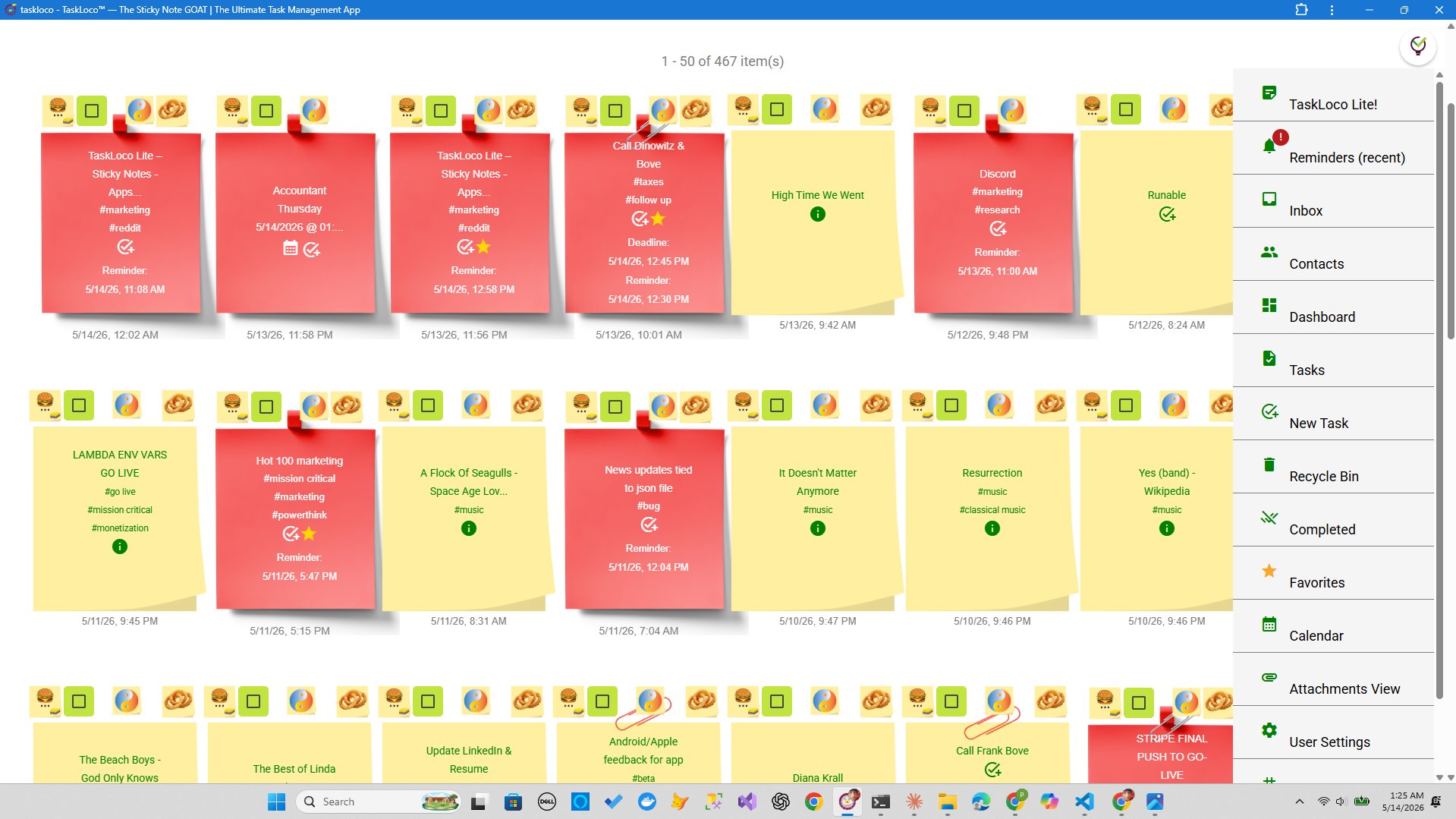
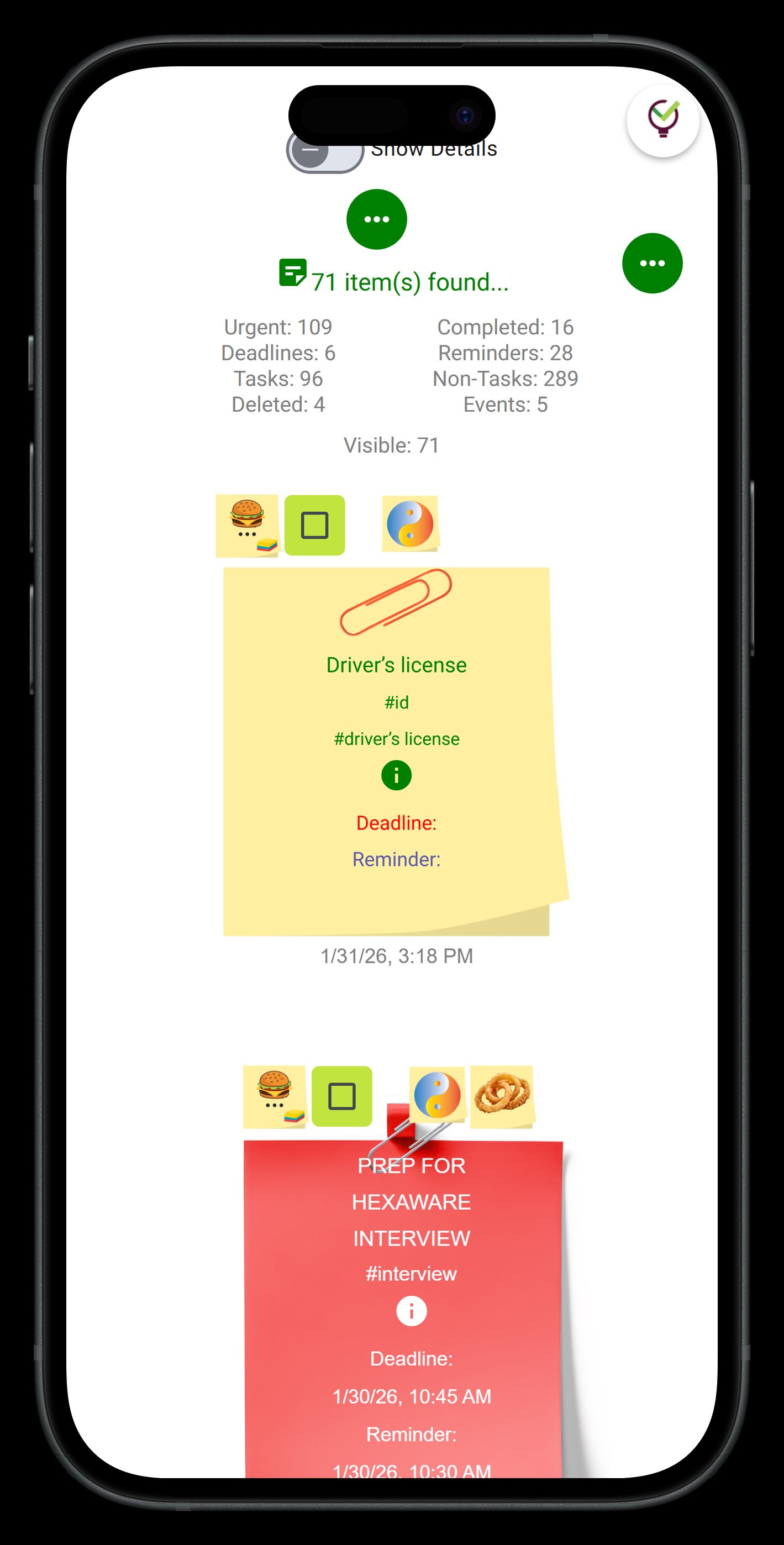
TaskLoco Premium lets you keep one note per project with the single next action written at the top. When you open the app, you see your wall of notes — a visual snapshot of everything live without clicking into folders or dashboards. It behaves the way a physical sticky note does, except it syncs across every device, supports file attachments, and sends you a push notification reminder that deep-links directly back to the note so you land exactly where you need to be.
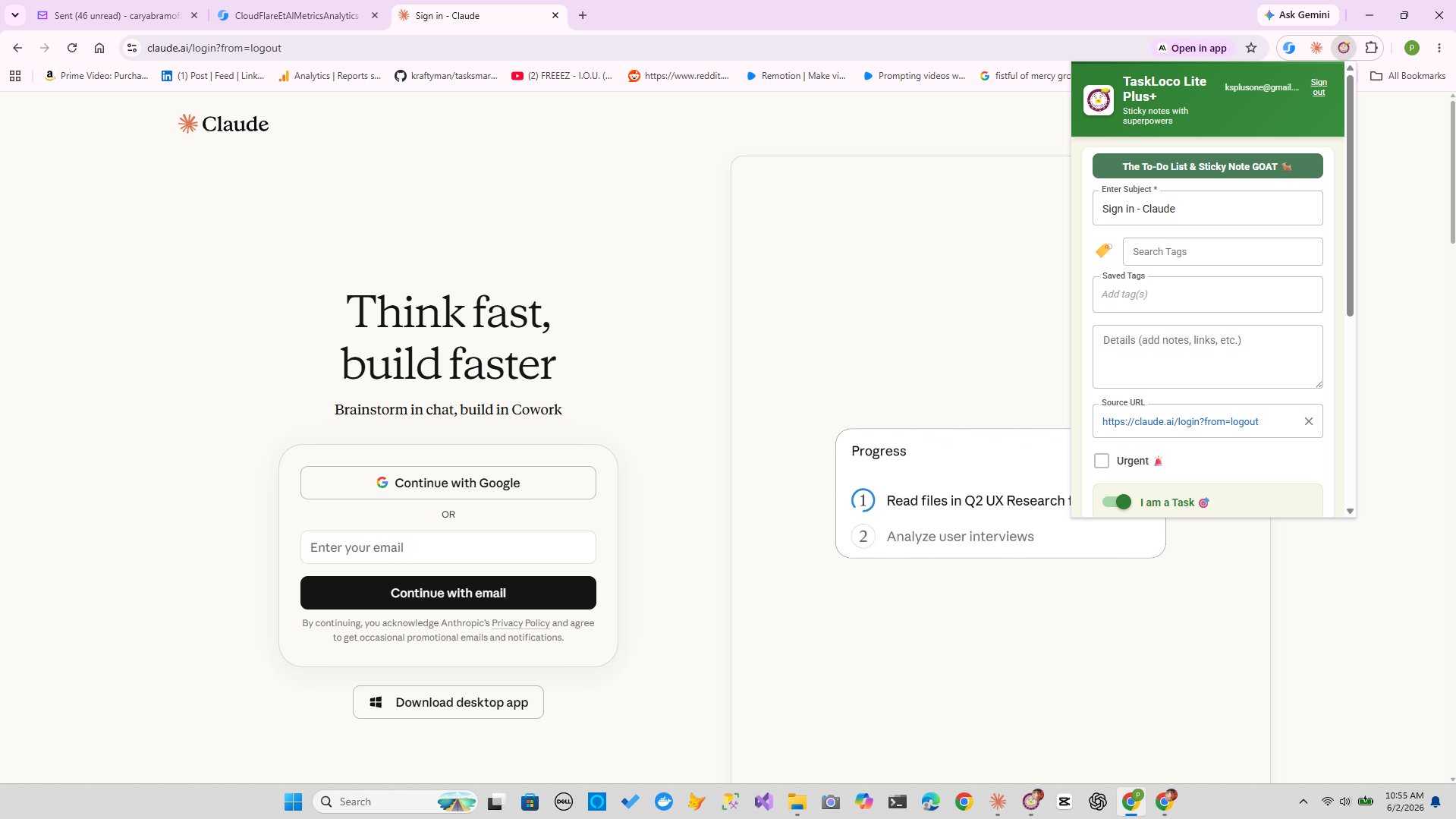
The Chrome extension is genuinely useful for the "capture immediately, file later" habit. One click saves any webpage as a note. If you read something relevant to a project while browsing, it takes about two seconds to capture it and move on. Nothing falls into a tab graveyard.
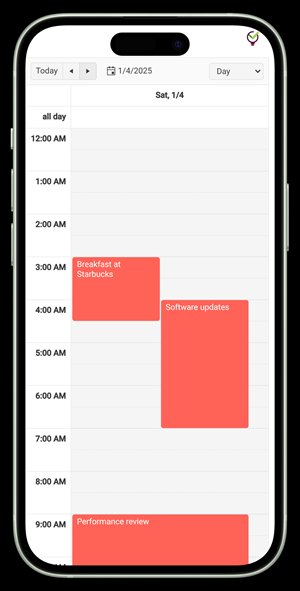
For weekly reviews, the calendar view in Premium shows you everything with a date against a timeline, making it easy to see what was scheduled, what moved, and what is coming up. You can attach files — research, screenshots, documents — directly to the relevant note rather than hunting through folders.
Team sharing works like email: you share a note and the recipient can clone it and make it their own. No permissions layers, no access management, no "view only" friction. The note lands in their workspace and they own it from there.
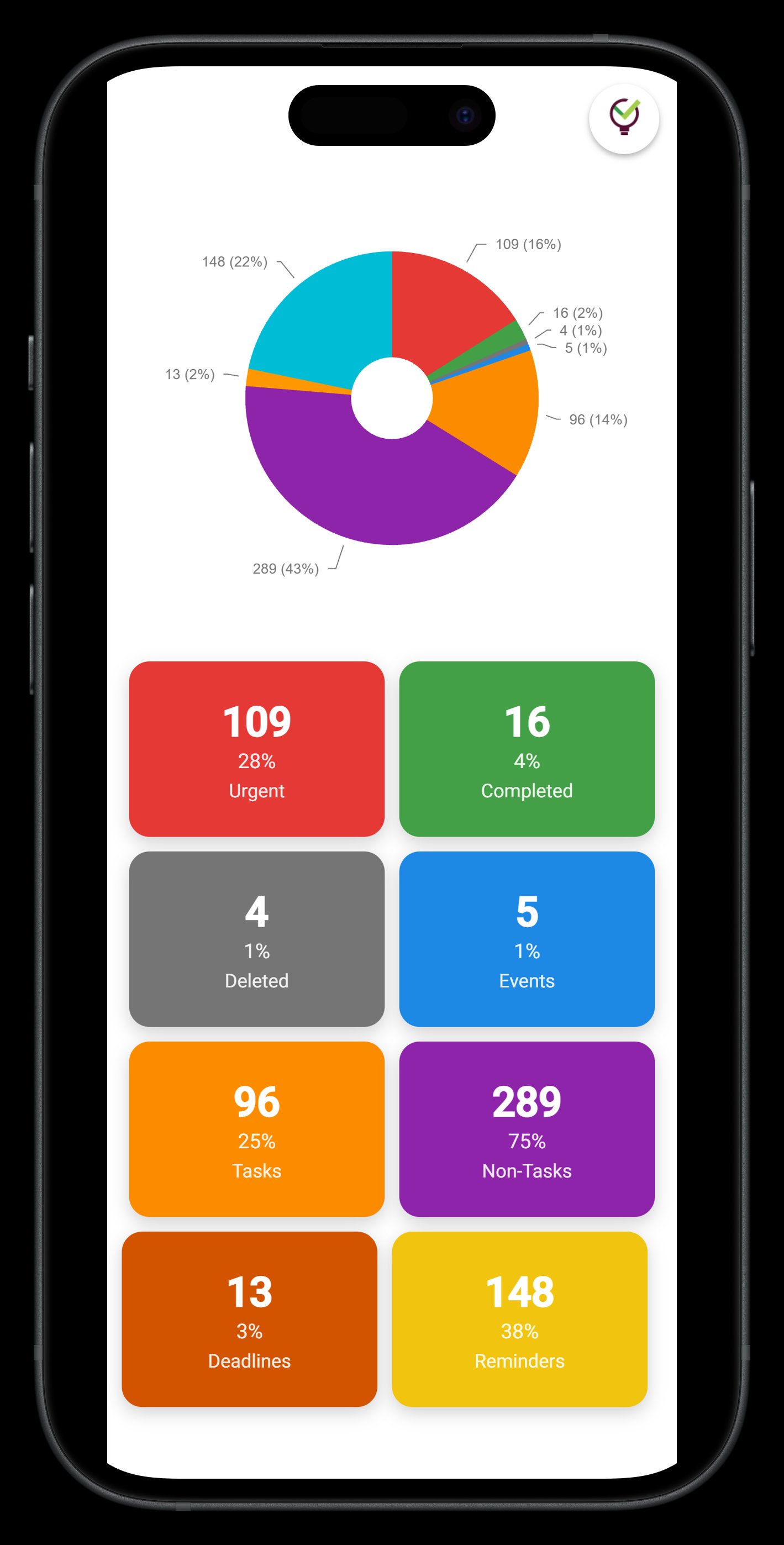
TaskLoco Lite is the native iPhone and Android app — completely free, anonymous, no sign-in required, stores up to 20 notes on your device. It is a good starting point if you just want to test the sticky note format. Lite Plus+ is the free web app: sign in with Google, up to 30 notes, syncs across all your devices, and includes the Chrome extension for one-click captures. Premium unlocks reminders, unlimited notes, file storage, calendar, and team sharing.
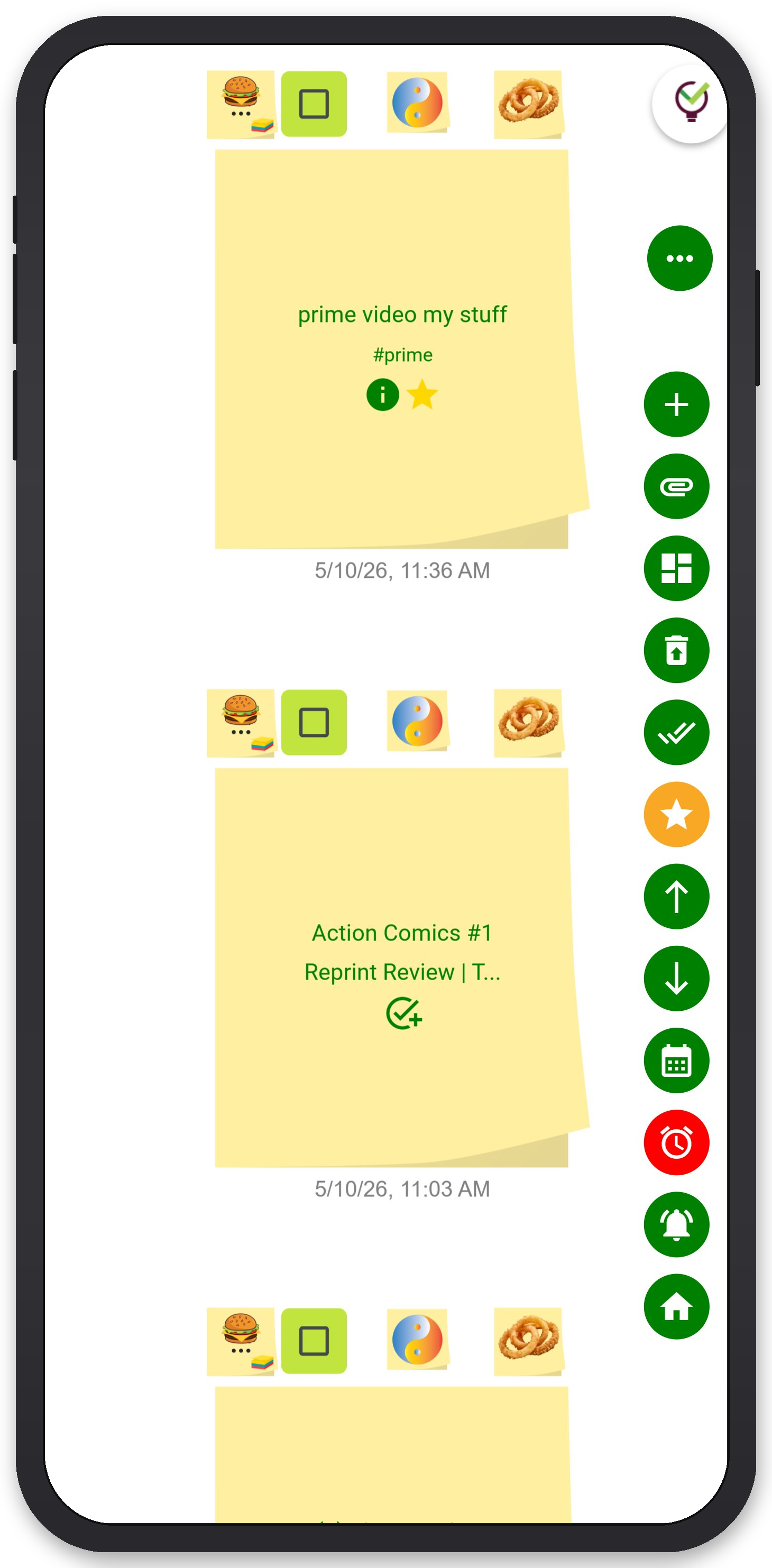
TaskLoco Premium is regularly $9.99/month per person. Right now, charter members can lock in 50% off the regular price — forever. That means $4.99/month per person today. And if our price ever goes up, you still pay half. Always.
Code CHARTER50 auto-applies at checkout. First 500 spots only — once they're gone, this offer is gone permanently. Act fast while spots last.
Every Premium subscription includes unlimited notes, 10GB file storage, reminders, calendar, and team sharing. Each team member requires a separate subscription. 7-day free trial — no charge until day 8. Cancel anytime.
Free Options: TaskLoco
TaskLoco Lite
- Native iPhone & Android app
- Completely anonymous — no sign-in
- Data stays on your device
- Up to 20 notes
- Free forever
TaskLoco Lite Plus+
- Web app + Chrome extension
- Sign in with Google
- Wall syncs across all devices
- Up to 30 notes
- Free forever
Lock In 50% Off — Forever
7-day free trial. No charge until day 8. CHARTER50 auto-applies at checkout.
🔒 Lock In My Charter SpotSee TaskLoco in Action
Frequently Asked Questions
Why is it so hard to take action consistently?
The biggest barrier is decision cost, not laziness. Every time you have to decide what to do, where to start, or how to approach a task, you burn energy before you have done anything useful. Add an environment full of distractions and tasks that are defined too vaguely to start, and inconsistency is the predictable result — not a character flaw. Structural fixes work far better than trying harder.
What is the single most effective habit for consistent action?
A nightly two-minute review where you decide exactly what the first action of tomorrow will be. Not a category or a project — one specific, completable step. This eliminates the morning decision cost and lets you start executing immediately rather than planning. Paired with a dedicated trigger time ("right after coffee" for example), it becomes automatic within a few weeks.
How do I stay consistent when motivation drops?
Stop relying on motivation — it is unreliable by nature. Instead, reduce the friction required to start. If starting requires almost no effort, you will start even on low-energy days. The two-minute rule helps here: commit only to doing the first two minutes. Most of the time, starting creates its own momentum. Also maintain a visible streak — the psychological pull of "don't break the chain" works even when motivation is absent.
How does a weekly review help with consistency?
A weekly review catches drift before it compounds. It takes about fifteen minutes and answers three questions: what did I complete, what stalled and why, and what are the three priorities for next week. The "why" on stalled items is the most valuable part — repeated stalls usually signal a task that needs to be broken down, a hidden dependency, or a goal that is no longer the right one. Without the review, small drift accumulates silently until motivation collapses entirely.
How do I stop procrastinating on big tasks?
Break the task until it cannot be broken further, then identify only the next physical action. "Write the report" is a project, not a task. "Open the document and write the first sentence of the introduction" is a task. Your brain evaluates the full cost of a vague task and flinches. Give it a concrete, completable action and the flinch disappears. Implementation intentions help too — decide in advance when, where, and for how long you will work on it. Specificity dramatically increases follow-through.
Does TaskLoco help with taking consistent action?
TaskLoco Premium is built around visible, sticky-note-style tasks — one note per project, single next action at the top, a wall view so nothing is buried. Push notification reminders deep-link back to the exact note so you land where you need to be instantly. The Chrome extension captures ideas in one click so nothing falls through the cracks. $9.99/month per person (currently $4.99/month per person for first 500 charter members with code CHARTER50)
What is the difference between TaskLoco Lite, Lite Plus+, and Premium?
TaskLoco Lite is the native iPhone and Android app — completely free, anonymous, no sign-in, up to 20 notes stored on your device only. Lite Plus+ is the free web app — sign in with Google, up to 30 notes, syncs across all devices, includes the Chrome extension, but no reminders or file attachments. Premium adds reminders with push notifications, unlimited notes, 10GB file storage, calendar view, and team sharing. Each team member needs their own subscription. There is a 7-day free trial on Premium with no charge until day 8.
Born in Brooklyn. Powered by AWS. Your data stays yours.
TaskLoco is available on iPhone, Android, Chrome, and every web browser.