Most habit advice tells you to focus on outcomes: lose 20 pounds, write a book, meditate daily. It sounds logical. It almost never works long-term. Identity based habits flip the entire model. Instead of chasing a result, you decide who you are — and then act accordingly. A person who runs doesn't need willpower to lace up their shoes. That's just what runners do.
The concept was popularized by James Clear in Atomic Habits, but the underlying psychology goes deeper than any single book. Every action you take is a vote for the kind of person you believe yourself to be. Cast enough votes, and the belief becomes fact. The challenge isn't motivation — it's building a system that makes casting those votes feel natural, visible, and worth continuing.
What Identity Based Habits Actually Are — and Why They Work
An identity based habit is a behavior that you adopt not because it produces a specific result, but because it reflects who you believe yourself to be. The result is downstream. The identity comes first.
There are three layers to any behavioral change: outcomes (what you get), processes (what you do), and identity (what you believe about yourself). Most people try to change from the outside in — they set an outcome goal and hope the process and identity follow. Identity based habits work from the inside out: define the identity first, build processes that confirm it, and outcomes become almost inevitable side effects.
Here's the practical difference. Outcome-based thinking: I want to read more books this year. Identity-based thinking: I am a reader. Then ask: what would a reader do right now? They'd read a page before bed. Not because they're chasing a number — because that's who they are.
Three reasons identity habits outperform outcome habits over time:
- Internal motivation: You act because it's consistent with who you are, not because a deadline is looming.
- Resilience to failure: Missing one workout doesn't break your identity as someone who exercises — it's just a bad day. Outcome-based trackers treat missed days as evidence you're failing.
- Compounding reinforcement: Every habit you keep is evidence that the identity is real. The more evidence you accumulate, the stronger the belief — and the easier the next repetition becomes.
What to Look for in a System to Support Identity Based Habits
You can run identity based habits with a paper journal, a whiteboard, or a spreadsheet. The medium doesn't matter as much as the consistency of the feedback loop. That said, there are a few things that separate a system that sustains momentum from one that slowly gets abandoned.
1. Low friction, high visibility. If logging a habit takes more than five seconds, you'll skip it when motivation is low — which is exactly when it matters most. The best systems live where you already are: your phone, your browser, your desktop. They don't require opening a separate app, navigating menus, or remembering a workflow you invented last month.
2. Qualitative space, not just checkboxes. Identity habits aren't only about streaks. Some days you want to note why you did the thing, how it felt, what shifted. A system that only lets you tick a box strips out the narrative — and the narrative is where identity actually forms. You need somewhere to write the story you're telling yourself.
3. Reminders that connect back to context. Generic reminders — "Time to exercise!" — are easy to dismiss. A reminder that deep-links straight back to your habit note, your intention, your last reflection? That's harder to wave away. Context-aware nudges outperform generic pings because they reconstruct the why at exactly the moment you need it.
4. Flexibility without chaos. Your habits will evolve. The person you're becoming at month six isn't identical to the person you were at week one. Your system should make it easy to rename, reframe, and reorganize without losing your history or starting over from scratch.
How TaskLoco Supports the Identity Habit Framework
TaskLoco was built around sticky notes — the most frictionless capture surface that exists. That design philosophy turns out to be a near-perfect match for identity based habits, where speed of capture and clarity of context are the two things that keep people consistent.
Here's how the pieces fit together:
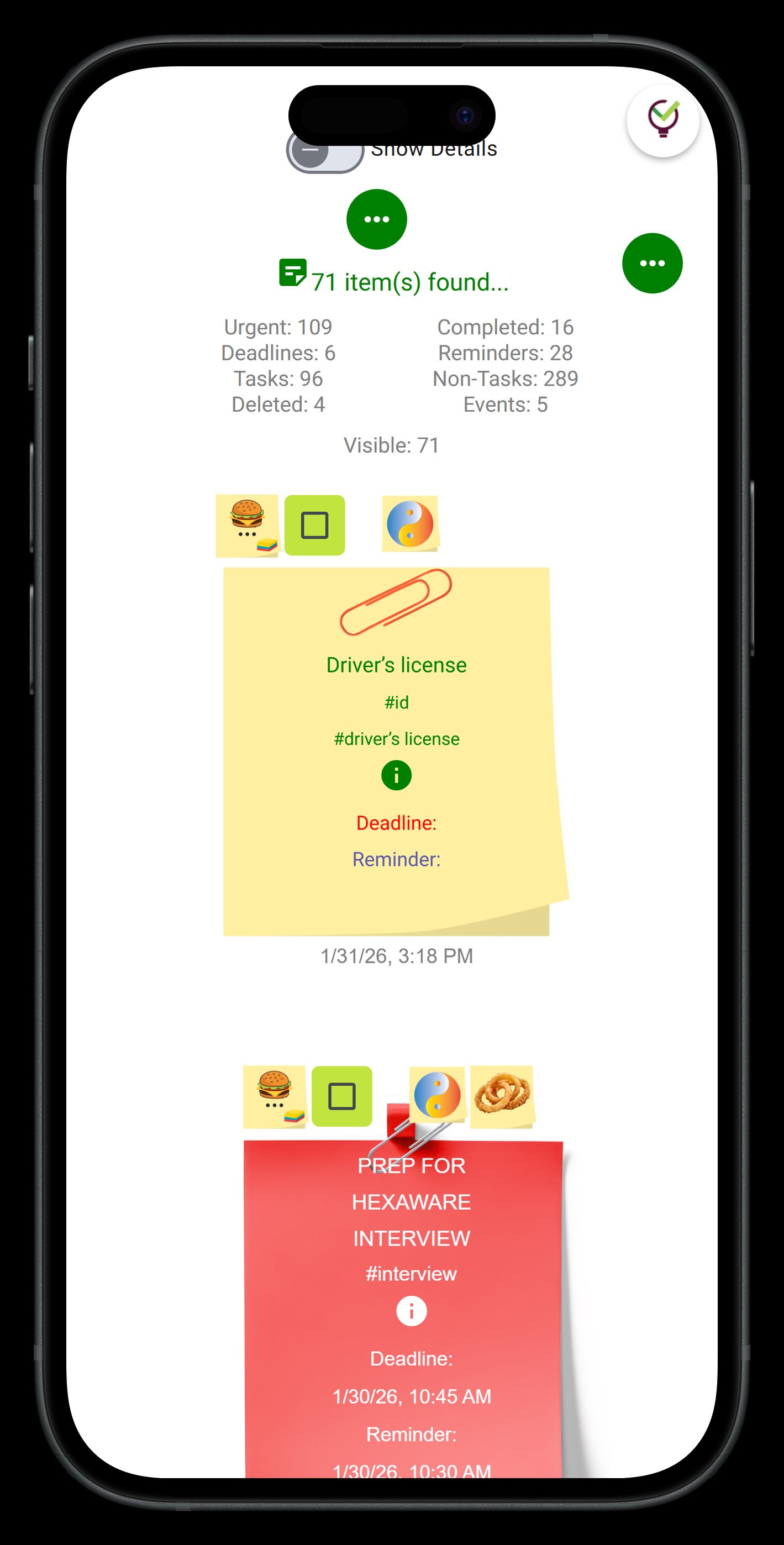
One note per identity statement. Create a Premium note titled with your identity: I am someone who moves every day. Under it, log each instance — date, what you did, one sentence on how it felt. You're not just tracking behavior. You're building a document of evidence that the identity is real. Over weeks, that note becomes one of the most motivating things you own.
Reminders that pull you back in. TaskLoco Premium reminders deliver as push notifications directly to your phone and computer — and they deep-link straight back to the note. When the reminder fires, you're not just seeing an alert. You're one tap from your identity statement, your last reflection, your streak. That context is what separates a reminder you act on from one you dismiss.
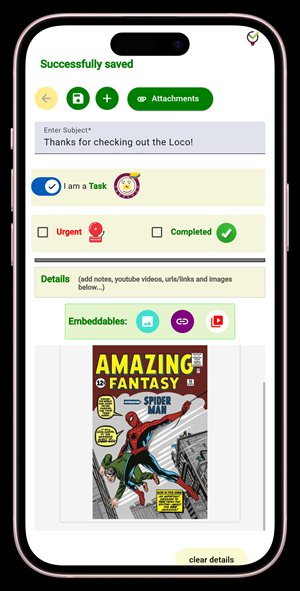
File attachments as habit artifacts. Some identity habits produce things: a photo from the run, a voice memo after meditation, a screenshot of the article you finished. TaskLoco Premium gives you 10GB of storage per person, so you can attach those artifacts directly to the habit note. Over time, the note becomes a portfolio of who you're becoming — not just a log of what you did.
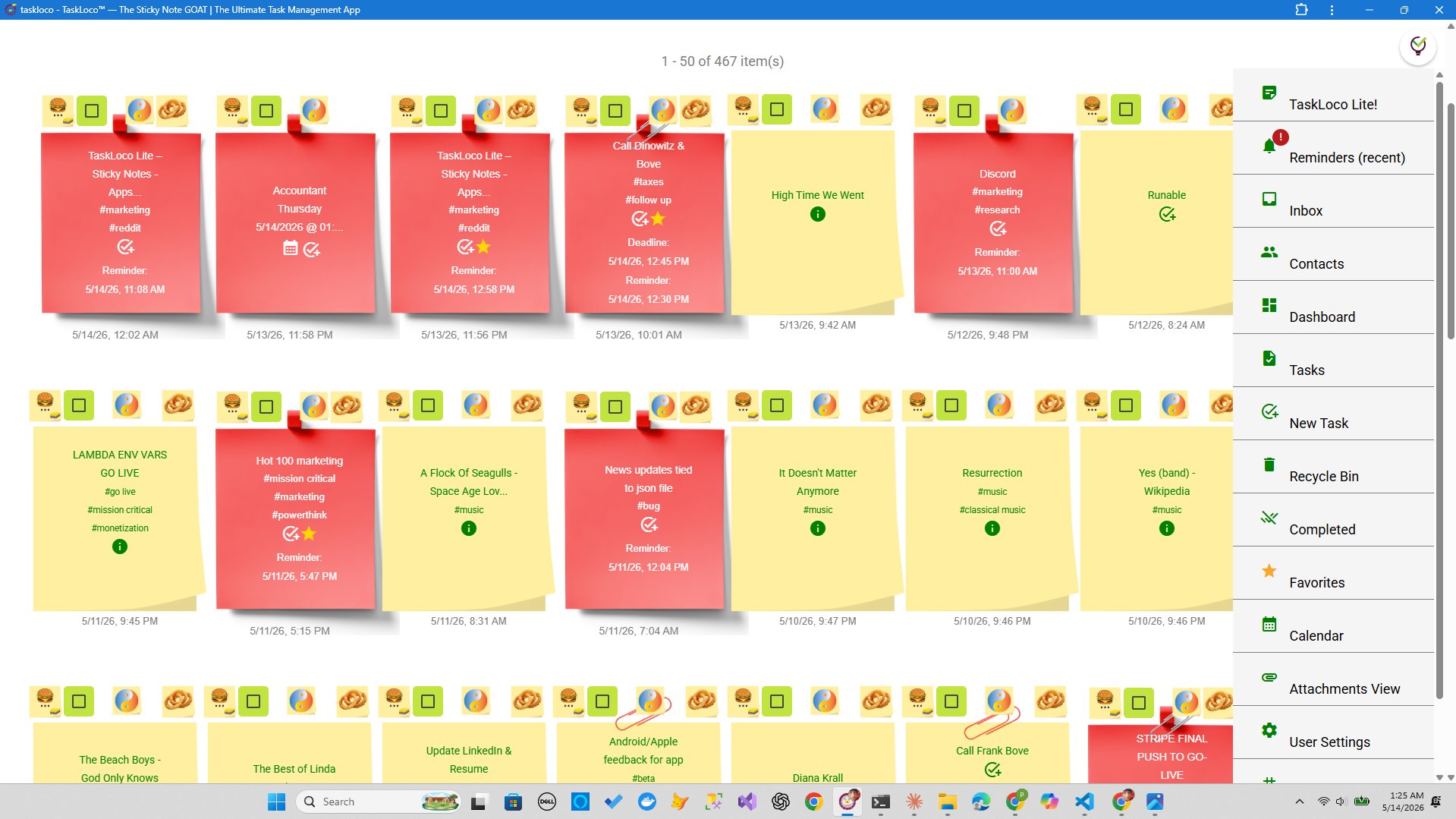
The wall view as an identity dashboard. Premium's calendar and wall views let you see all your habit notes at once. Seeing your identity notes pinned together — each one representing a different dimension of who you're building — creates a kind of ambient accountability. It's not a streak chart. It's a portrait.
TaskLoco Lite (the free native app on iPhone and Android) gives you up to 20 anonymous, no-sign-in notes stored on your device — a great starting point if you want to experiment with identity journaling before committing. Lite Plus+ (free, web app and Chrome extension) syncs up to 30 notes across all your devices. For the full habit system — reminders, attachments, unlimited notes, calendar view — you'll want Premium.
Building Your Identity Habit Stack in TaskLoco
Here's a concrete setup you can start today. It takes about ten minutes to build and almost no time to maintain.
Step 1: Write your identity statements. Don't start with habits. Start with the person. Who are you becoming? Write three to five identity statements — plain, present-tense, first person. I am someone who reads every day. I am someone who takes care of my body. I am someone who creates before I consume. Each one becomes a note in TaskLoco.
Step 2: Add your opening intention. Under each identity statement, write one sentence about why this identity matters to you. Not a goal — a reason. This is the context that the reminder will surface later, and it's what keeps the habit from feeling mechanical.
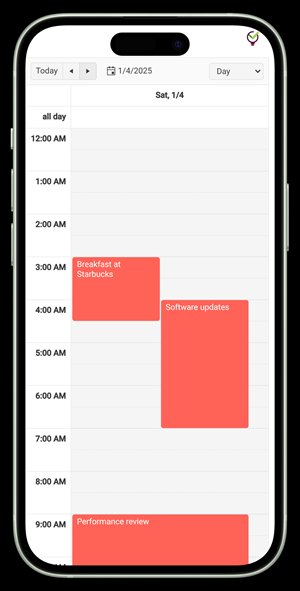
Step 3: Set a daily reminder. In TaskLoco Premium, set a reminder on each habit note. It fires as a push notification to your phone and computer, and taps straight back into the note. You're one touch from your intention, your last entry, and your running log of evidence.
Step 4: Log as you go. After each repetition, add a line. Date, what you did, one honest sentence. Don't overthink it. The point isn't eloquence — it's evidence accumulation. You're casting votes.
Step 5: Review weekly. Once a week, scroll through your habit notes. Not to judge the streak — to read the story. You're looking for patterns in when you struggled, what the entries look like on good days versus hard ones, and whether the identity statement still resonates or needs to evolve.
This isn't a complicated system. That's the point. The more layers you add, the more the system competes with the habit. TaskLoco keeps it fast, visual, and connected — so the only friction left is the good kind: the moment of choice to show up or not.
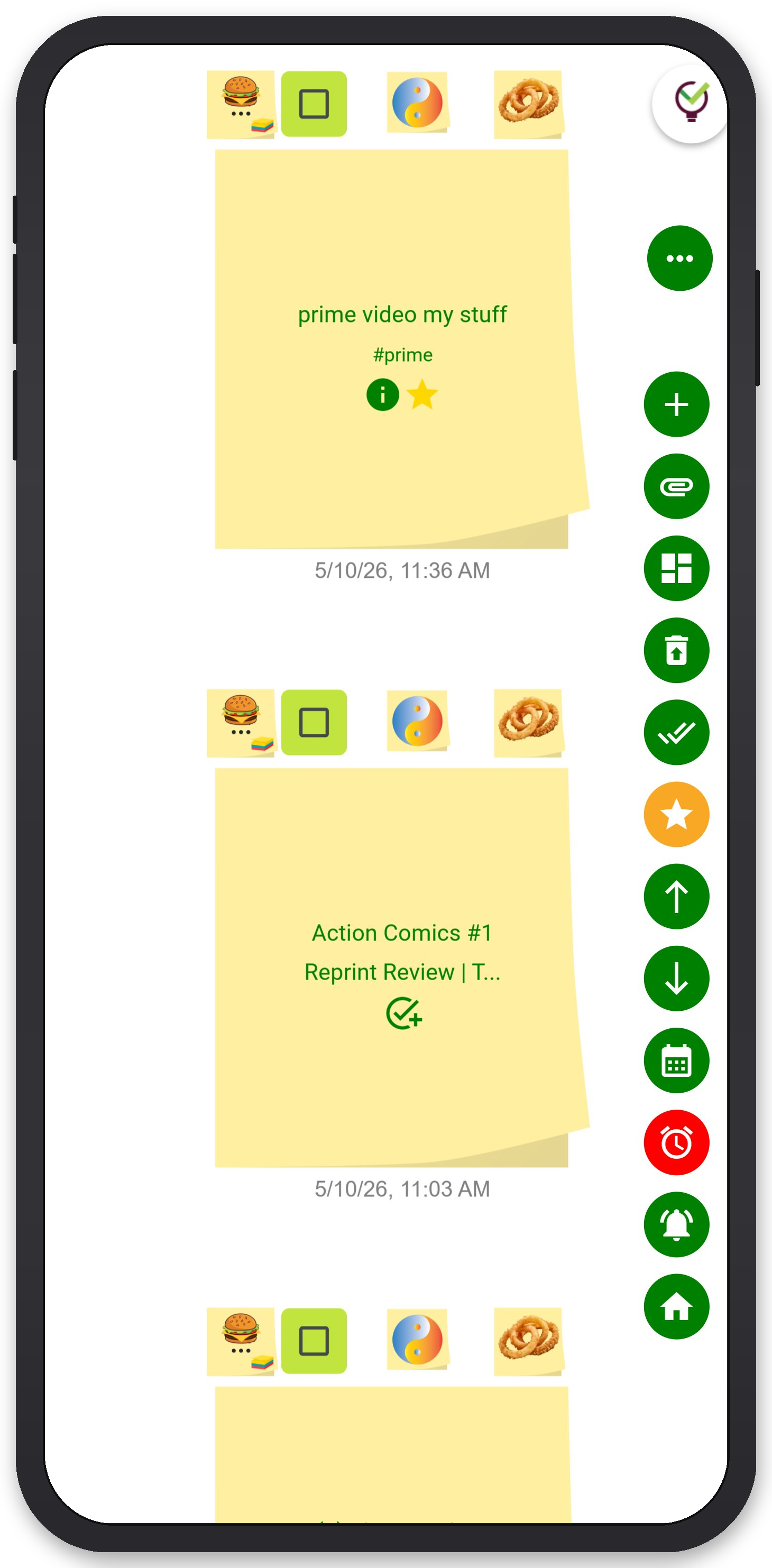
TaskLoco Premium is regularly $9.99/month per person. Right now, charter members can lock in 50% off the regular price — forever. That means $4.99/month per person today. And if our price ever goes up, you still pay half. Always.
Code CHARTER50 auto-applies at checkout. First 500 spots only — once they're gone, this offer is gone permanently. Act fast while spots last.
Every Premium subscription includes unlimited notes, 10GB file storage, reminders, calendar, and team sharing. Each team member requires a separate subscription. 7-day free trial — no charge until day 8. Cancel anytime.
Free Options: TaskLoco
TaskLoco Lite
- Native iPhone & Android app
- Completely anonymous — no sign-in
- Data stays on your device
- Up to 20 notes
- Free forever
TaskLoco Lite Plus+
- Web app + Chrome extension
- Sign in with Google
- Wall syncs across all devices
- Up to 30 notes
- Free forever
Lock In 50% Off — Forever
7-day free trial. No charge until day 8. CHARTER50 auto-applies at checkout.
🔒 Lock In My Charter SpotSee TaskLoco in Action
Frequently Asked Questions
What are identity based habits?
Identity based habits are behaviors tied to who you believe yourself to be, rather than what you want to achieve. Instead of setting an outcome goal, you define an identity — I am someone who exercises — and let your actions flow from that self-concept. The psychological advantage is that identity-consistent behavior doesn't require willpower; it feels like self-expression.
What's the difference between identity based habits and outcome based habits?
Outcome based habits start with a result: lose weight, read 24 books, save money. Identity based habits start with a belief about who you are: I am healthy, I am a reader, I am financially responsible. Outcome habits collapse when the goal is reached or missed. Identity habits compound over time because every repetition strengthens the belief, which makes the next repetition easier.
How do I start building identity based habits?
Start by writing identity statements in present tense, first person — not aspirational, but declarative. Then ask: what is the smallest action that proves this identity today? Do that action. Log it. Repeat. The habit isn't the goal; it's the evidence. Over time, the accumulation of evidence makes the identity feel undeniable. A note-based system like TaskLoco Premium makes logging fast and keeps your evidence visible.
How does TaskLoco help with identity based habits?
TaskLoco lets you create one note per identity statement and build a running log of evidence beneath it. Premium reminders fire as push notifications that deep-link straight back to the note, so context is one tap away. You can attach habit artifacts — photos, voice memos, clippings — directly to the note with 10GB of storage included. The wall view gives you a visual dashboard of every identity you're building at once.
Can I track habits with the free version of TaskLoco?
Yes, at a basic level. TaskLoco Lite (free native app, no sign-in required) gives you up to 20 notes stored on your device — enough to set up a handful of identity notes and log entries. TaskLoco Lite Plus+ (free, web app and Chrome extension) syncs up to 30 notes across all your devices. For the full system — reminders that deep-link to notes, file attachments, unlimited notes, and calendar view — you'll want TaskLoco Premium. $9.99/month per person (currently $4.99/month per person for first 500 charter members with code CHARTER50)
How is identity based habit tracking different from a streak tracker?
Streak trackers measure consecutive days. They're motivating until you break the streak — then they become demoralizing evidence of failure. Identity based tracking measures evidence of who you are. A missed day doesn't erase the 40 entries before it. Your notes still show up; the story doesn't reset. That's a fundamentally more resilient feedback loop, especially for habits that are inherently irregular — creative work, social connection, physical recovery.
What should I write in a habit note after completing a habit?
Keep it short. Date, what you did, and one honest sentence about how it felt or what you noticed. The goal isn't journaling for its own sake — it's casting a vote and acknowledging it. Over time, those one-sentence entries become a surprisingly accurate record of your patterns: when you thrive, when you struggle, what makes the habit easier or harder. That's data you can actually use.
Born in Brooklyn. Powered by AWS. Your data stays yours.
TaskLoco is available on iPhone, Android, Chrome, and every web browser.