Most productivity advice treats habits like a checklist — do more, do it faster, do it consistently. But Charles Duhigg's research behind The Power of Habit uncovered something more interesting: certain habits are disproportionately powerful. They don't just improve one behavior — they quietly reshape others around them. Those are keystone habits, and finding yours is worth more than any productivity framework you'll read about this year.
The concept sounds simple. Exercise regularly and you start eating better without trying. Journaling each morning and your focus sharpens at work. Meal prepping on Sundays and your budget tightens mid-week. The magic isn't in the habit itself — it's in the cascade it triggers. This article breaks down what keystone habits actually are, which ones have the strongest evidence behind them, and how to track them in a way that sticks.
What Makes a Habit a Keystone Habit?
Not every habit is a keystone habit. A keystone habit has three defining traits that set it apart from ordinary routines:
- It creates small wins. The habit itself is achievable and gives you a quick sense of momentum. That momentum is contagious.
- It establishes structure. It anchors a part of your day, which makes it easier for adjacent behaviors to fall into place around it.
- It changes your identity. Doing it repeatedly shifts how you see yourself — and that self-image drives further behavior changes without willpower.
The research most cited here is Duhigg's reporting on Alcoa, where a new CEO focused obsessively on one metric — worker safety — and company performance improved across the board. Safety was a keystone metric. The same principle applies at the individual level: fix the right habit and the surrounding ones start to self-correct.
When choosing your keystone habit, the two criteria that matter most are: (1) Does this habit have a natural ripple effect into other areas of your life? And (2) Is it specific enough that you can do it consistently without decision fatigue? Vague intentions like "be healthier" aren't keystone habits. "A 20-minute walk before breakfast" can be.
The Keystone Habits With the Strongest Track Record
You don't have to invent your keystone habit from scratch. Decades of behavioral research have surfaced a handful of routines that reliably trigger cascading improvements. Here are the most evidence-backed ones:
- Daily exercise (any kind, any duration). Exercise is the single most studied keystone habit. Studies consistently show that people who begin a regular exercise routine also improve their diet, sleep, spending habits, and stress management — without targeting those areas directly. Even a 15-minute walk qualifies.
- Consistent sleep and wake times. Irregular sleep is a hidden tax on everything else. When you fix your wake time — even on weekends — focus, mood regulation, and decision-making improve measurably. It's one of the lowest-effort, highest-impact habits available.
- Weekly planning sessions. Taking 20–30 minutes on Sunday or Monday to map out your week creates a mental scaffold. Work falls into blocks. Priorities become visible. Reactive days become rarer. This habit shows up in virtually every high-performer's routine across industries.
- Journaling or morning pages. A short daily writing practice builds metacognitive awareness — you notice your patterns, your stressors, and your wins. That awareness naturally reduces impulsive decisions and increases intentional ones.
- Meal prepping. People who prepare food in advance consistently report lower food spend, fewer midday energy crashes, and better focus in afternoon work blocks. The habit solves three downstream problems at once.
The pattern across all of these is the same: they each provide a daily or weekly anchor point, they require relatively low willpower once established, and they have documented second-order effects in unrelated life domains.
How to Track Keystone Habits So They Actually Stick
Identifying your keystone habit is step one. The second step — and the one most people skip — is tracking it in a way that keeps it front of mind without adding friction. The research on habit formation is clear: visibility and low friction are the two biggest drivers of consistency. If your tracker lives three menu levels deep in an app you rarely open, it won't work.
The most effective tracking systems share a few properties. First, they put the habit somewhere you already look. Second, they make completion a single action — not a task that has to be organized, categorized, and filed. Third, they connect the habit to the broader context of your day — your tasks, goals, and upcoming commitments — so it doesn't live in an isolated silo.
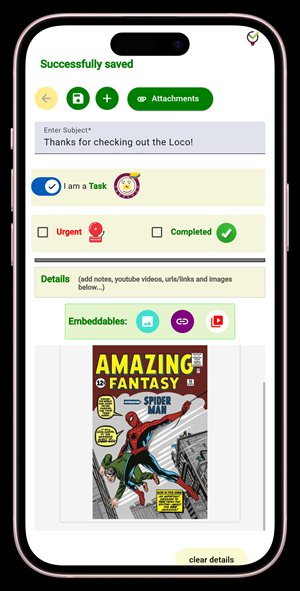
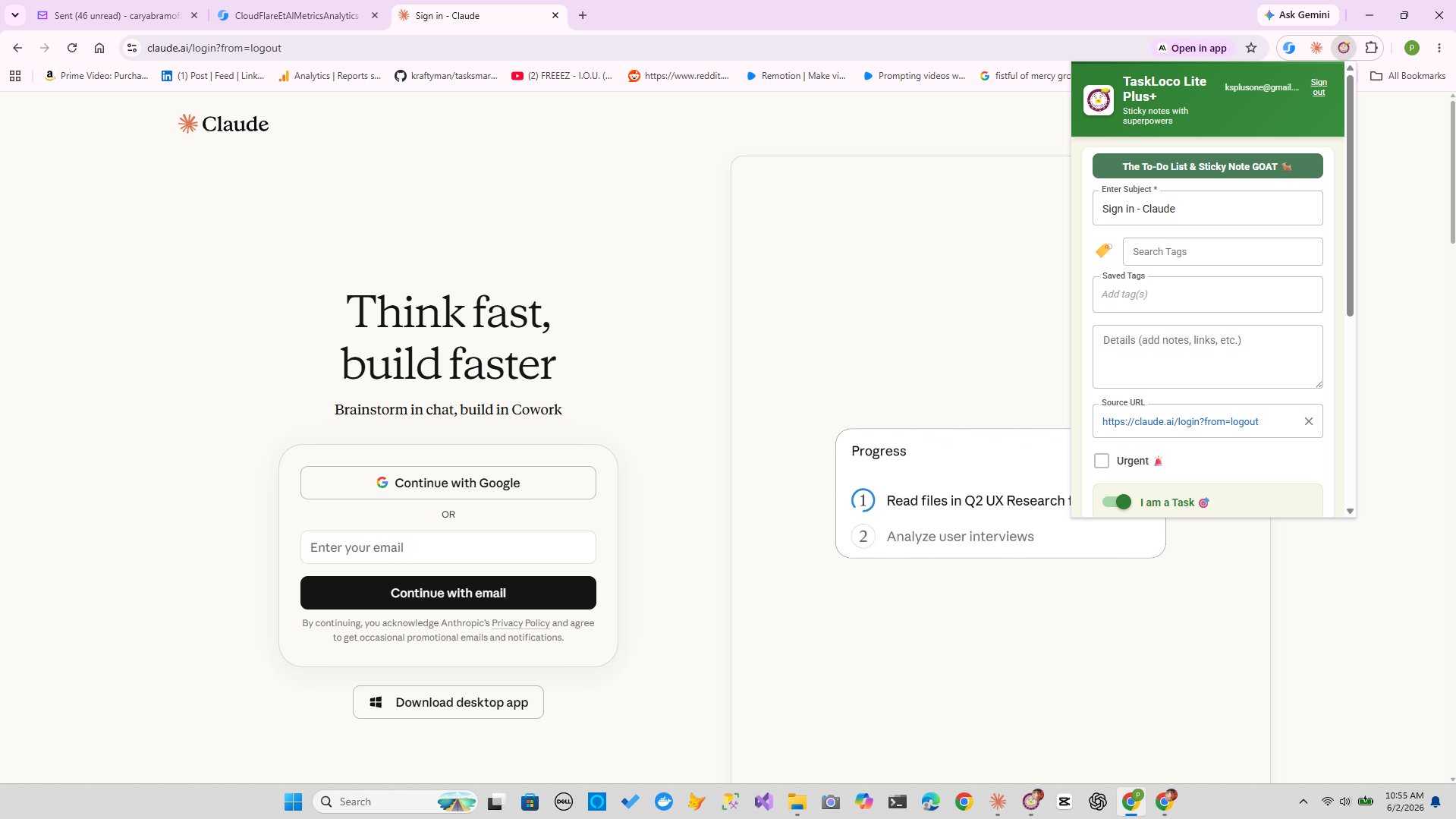
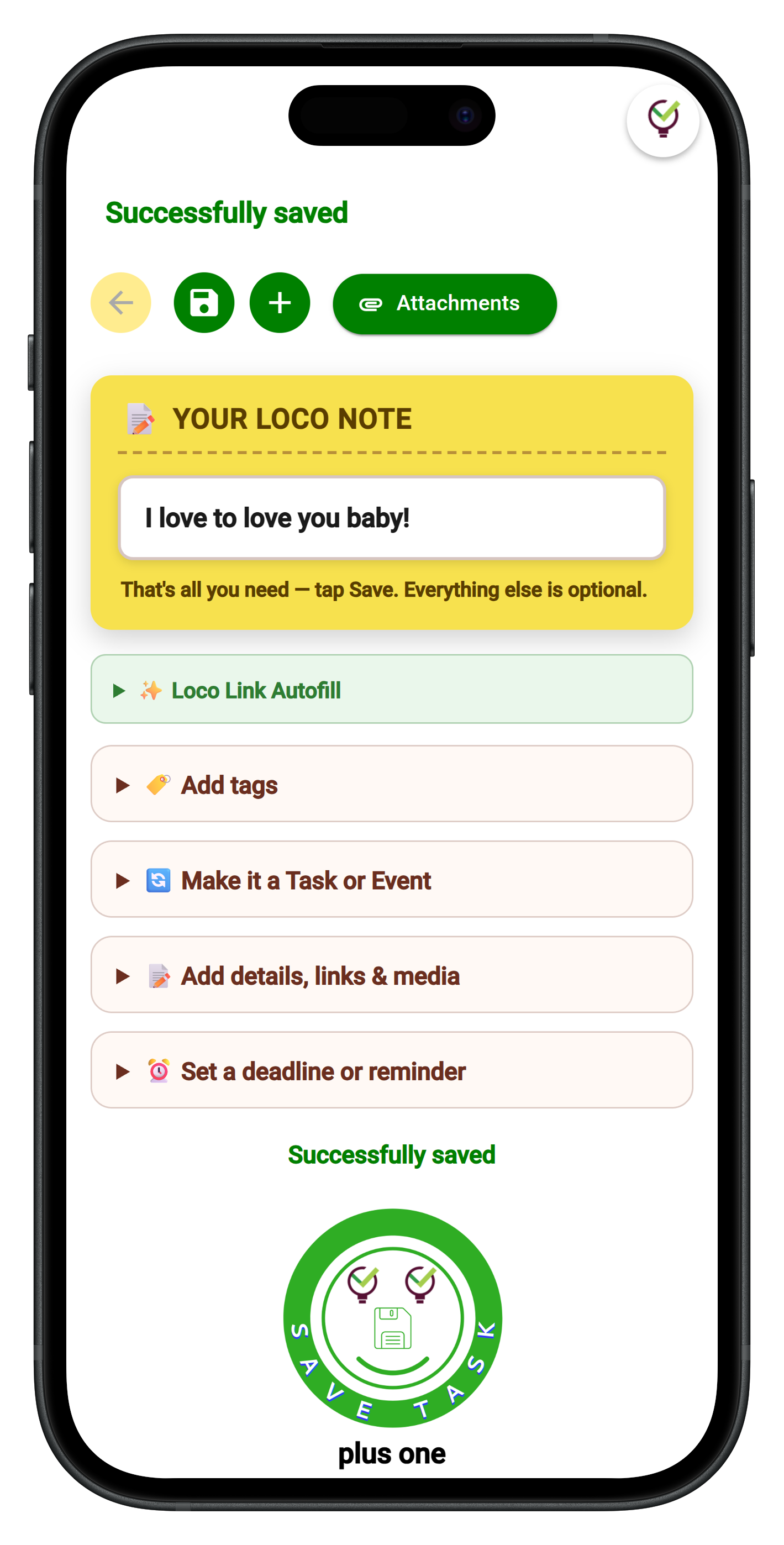
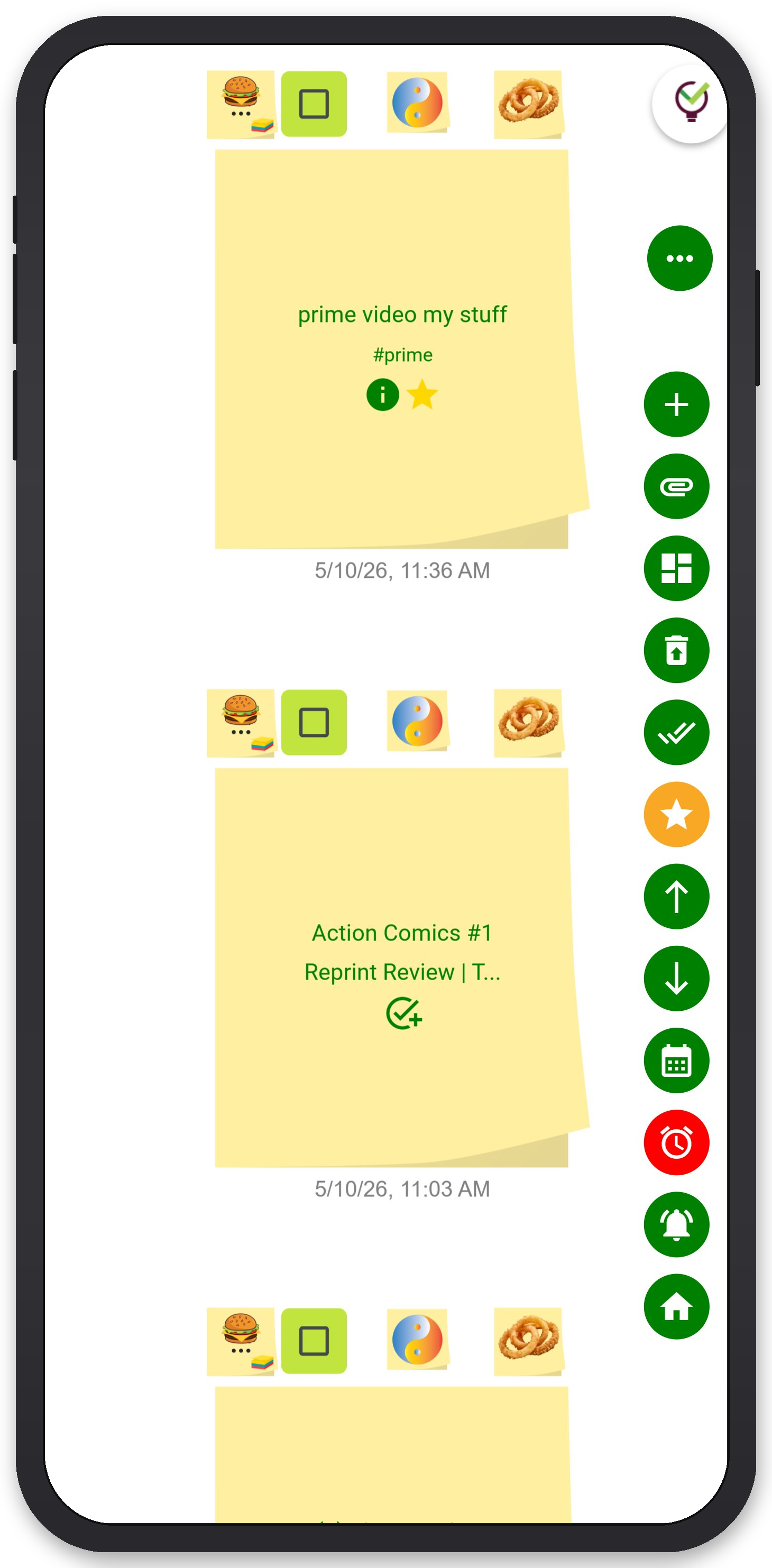
This is where TaskLoco's sticky-note approach has a genuine edge over dedicated habit trackers or complex project tools. With TaskLoco Premium, you can pin a note for your keystone habit directly on your main wall — visible the moment you open the app. Set a reminder that delivers as a push notification to your phone and computer, deep-linking straight back to that note so you're one tap away from logging it. No navigation, no menus, no hunting.
You can also attach supporting files — a workout plan, a weekly template, a meal prep guide — directly to the note using TaskLoco's 10GB file storage. And when your keystone habit connects to team commitments (a weekly planning sync, a shared project milestone), TaskLoco's team sharing lets colleagues clone your shared note and make it their own — no access levels or permission juggling required.
TaskLoco Premium is regularly $9.99/month per person. Right now, charter members can lock in 50% off the regular price — forever. That means $4.99/month per person today. And if our price ever goes up, you still pay half. Always.
Code CHARTER50 auto-applies at checkout. First 500 spots only — once they're gone, this offer is gone permanently. Act fast while spots last.
Every Premium subscription includes unlimited notes, 10GB file storage, reminders, calendar, and team sharing. Each team member requires a separate subscription. 7-day free trial — no charge until day 8. Cancel anytime.
Free Options: TaskLoco
TaskLoco Lite
- Native iPhone & Android app
- Completely anonymous — no sign-in
- Data stays on your device
- Up to 20 notes
- Free forever
TaskLoco Lite Plus+
- Web app + Chrome extension
- Sign in with Google
- Wall syncs across all devices
- Up to 30 notes
- Free forever
Lock In 50% Off — Forever
7-day free trial. No charge until day 8. CHARTER50 auto-applies at checkout.
🔒 Lock In My Charter SpotSee TaskLoco in Action
Frequently Asked Questions
What is a keystone habit?
A keystone habit is a single routine that, when practiced consistently, triggers positive change in other unrelated areas of your life. The term was popularized by Charles Duhigg in The Power of Habit. Unlike ordinary habits, keystone habits have a cascading effect — start exercising and you start sleeping better, eating better, and spending more intentionally, often without consciously trying to change those behaviors.
What are the best keystone habits for productivity?
The most evidence-backed keystone habits for productivity are: daily exercise (even a short walk), consistent sleep and wake times, and weekly planning sessions. Each of these anchors your day or week, reduces decision fatigue, and reliably produces second-order improvements in focus, energy, and output. Journaling and meal prepping are close runners-up with strong research support.
How do I identify my personal keystone habit?
Ask two questions: Which single habit, if done consistently, would make other good behaviors easier or automatic? And: Is it specific enough that I can do it daily without decision fatigue? Look for habits that naturally create structure (a fixed time in your day), produce a small win (achievable and satisfying), and have a documented ripple effect into other life domains. Exercise, sleep timing, and planning are the safest starting points because they're the most studied.
How long does it take to form a keystone habit?
The popular "21 days" figure is a myth — it comes from a misread of Maltz's 1960 self-image research. More rigorous studies, including a University College London study published in the European Journal of Social Psychology, found that habit formation takes an average of 66 days, with a range of 18 to 254 days depending on the person and the behavior. Complex habits take longer than simple ones. The practical takeaway: give yourself at least 8–10 weeks before judging whether a habit has stuck.
What's the best way to track a keystone habit?
The best tracker is one that lives where you already spend time. Visibility and low friction are the two biggest drivers of consistency. A dedicated note in TaskLoco Premium — pinned to your main wall, with a push notification reminder that deep-links back to the note — keeps your habit front of mind without adding a separate tool to your workflow. You can log each day's completion directly in the note and attach supporting materials like plans or templates using the built-in 10GB file storage.
Can I track keystone habits in a productivity app instead of a dedicated habit tracker?
Yes — and for most people it works better. Dedicated habit trackers sit in isolation, disconnected from your actual tasks, calendar, and commitments. When your keystone habit lives on the same surface as everything else in your day, you're more likely to act on it. TaskLoco Premium integrates reminders, calendar view, file attachments, and unlimited notes — so your habit, your tasks, and your schedule all live together. $9.99/month per person (currently $4.99/month per person for first 500 charter members with code CHARTER50)
What if I miss a day — does that break my keystone habit?
Missing one day does not break a habit. Research consistently shows that a single lapse has no statistically significant effect on long-term habit formation — as long as you return to the behavior the next day. What breaks habits is the pattern of missing two or more consecutive days, which resets the automaticity you've built. The rule of thumb: never miss twice in a row. One missed day is a data point; two missed days is a new pattern.
Born in Brooklyn. Powered by AWS. Your data stays yours.
TaskLoco is available on iPhone, Android, Chrome, and every web browser.