You already know what you need to do. You've known for days, maybe weeks. The project is real, the deadline is real, the stakes are real — and you still haven't started. That's not laziness. That's a bar problem. You've decided that starting requires the right conditions: the right tool, the right block of time, the right mental state. You've made starting harder than doing.
There's a counterintuitive fix that actually works: make starting embarrassingly easy. Not motivating. Not inspiring. Easy. One sticky note with one ugly half-formed thought is worth more than a perfectly organized project board you never touch. This article is about why that's true, how to wire that habit into your day, and what kind of tool actually supports that mindset instead of fighting it.
What 'lowering the bar' actually means — and why it works
Lowering the bar has nothing to do with lowering your standards for the finished work. It's about lowering the threshold for the first action. Most productivity advice focuses on the system — the framework, the workflow, the tool. Almost none of it addresses the invisible tax of starting: the moment right before you do anything where your brain demands a reason this is worth beginning right now.
That tax compounds when the tool you're using requires setup. If capturing a thought requires opening an app, logging in, choosing a project, picking a due date, assigning a priority level, and selecting a label — you will skip it. The friction is greater than the value of the thought in that moment. So the thought dies. And the project sits still another day.
The principle behind lowering the bar is simple: match the weight of the tool to the weight of the action. A fleeting idea deserves a sticky note, not a requirements document. A half-formed task deserves a quick capture, not a five-field form. When you accept that imperfect capture is infinitely better than no capture, your output changes immediately — because you stop losing the raw material of your best work before it ever gets recorded.
Research in behavioral psychology consistently shows that the activation energy required to begin a task is a better predictor of completion than the task's difficulty. Lower the activation energy, and completion rates rise — not because the work got easier, but because the psychological cost of starting dropped. That's the mechanism. That's why a sticky note on your wall can outperform a sophisticated project management platform for the kinds of tasks that actually dominate most people's days.
The three habits that make low-bar starting stick
Knowing the principle isn't enough. Habits are built on structure, and structure requires specific behaviors you repeat until they become automatic. Here are the three that actually work:
- The ugly first note. Give yourself explicit permission to write a terrible note. 'Call Dave re: thing' is a valid note. 'Figure out the budget mess' is a valid note. The standard for capture is: did the thought leave your head and land somewhere retrievable? That's it. Nothing else. Perfectionism at the capture stage is the enemy of momentum.
- The two-minute wall review. Once a day — morning works best for most people — spend two minutes looking at your notes. Not organizing them, not rewriting them. Just reading them. Your brain will start connecting threads and prioritizing naturally. You're not managing a system; you're having a conversation with your past self about what matters right now.
- The immediate next action note. When a note is too vague to act on, don't delete it — add one child note that answers: what is the single next physical action this requires? Not 'work on presentation.' 'Open slides and write the first bullet for the intro slide.' Specificity at the action level, not the capture level.
These three habits share a structure: they are all low-resistance, low-duration, and immediately actionable. None of them require a system to be in place first. They are the system, and they work in any tool that lets you write and see your notes quickly.
One practical trap to avoid: don't wait until you have a clean capture environment to begin. The phone in your pocket, the browser tab already open, the sticky note on your physical desk — these are all valid starting points. The goal is zero gap between thought and capture. Every second between having the idea and recording it is a risk that the idea disappears.
What your capture tool needs to support this — and what gets in the way
Not every productivity tool is built for low-bar starting. Many are built for the opposite: they reward completeness, enforce structure, and make half-formed input feel wrong. That's fine for project management. It's catastrophic for daily capture and momentum building.
A tool that supports low-bar starting needs to pass a simple test: can you go from closed to captured in under ten seconds? If the answer is no — if you have to log in, navigate to the right project, fill out required fields, or choose a workspace before you can write anything — the tool is working against the habit you're trying to build.
Beyond speed of capture, a few other things genuinely matter:
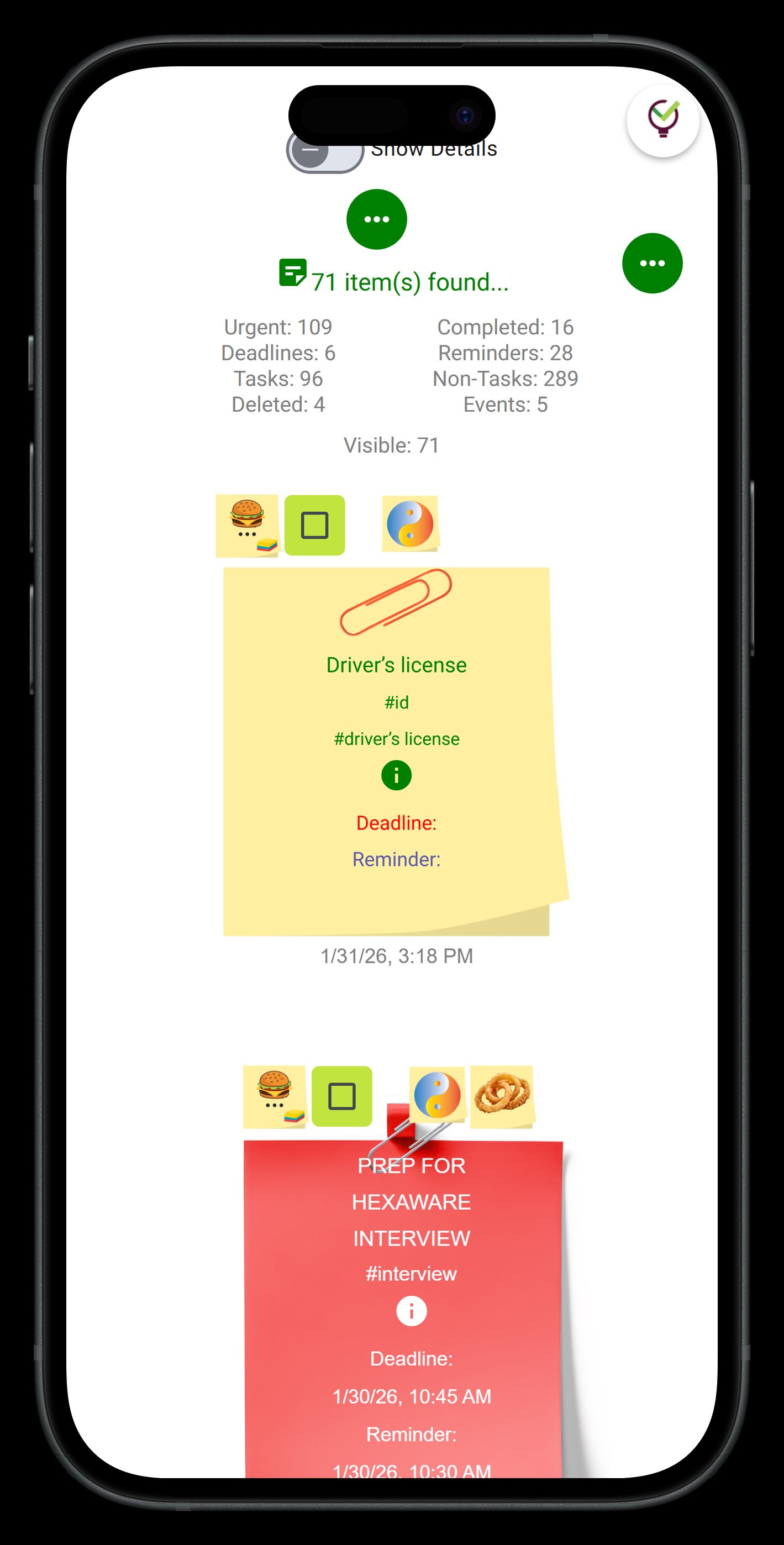
- Visibility. If your notes live in a list buried three taps deep, you will forget they exist. A wall view — where all your notes are visible at once, like a physical sticky note board — keeps everything in your peripheral awareness without requiring a dedicated review session.
- Reminders that find you. A note without a reminder relies on you remembering to check. A reminder that arrives as a push notification to your phone or computer — and deep-links directly back to the original note — closes the loop without any friction. You tap the notification, you're looking at the note, you act.
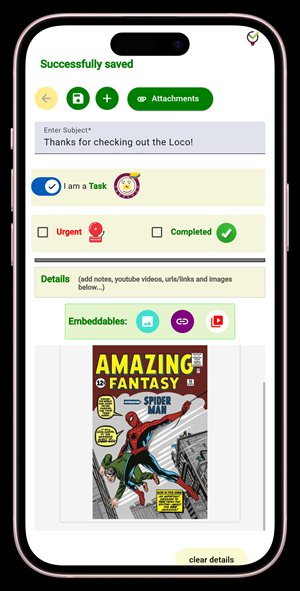
- File attachments without leaving. When a note needs context — a photo of the whiteboard, a PDF, a screenshot — you shouldn't have to leave the note to find it. Attachments in the note keep the context together with the task.
- Sync that just works. If you capture on your phone and it isn't there on your laptop, you've broken the system. Cross-device sync isn't a premium nicety — it's a requirement for any serious capture workflow.
Tools that are built around projects, dependencies, and team workflows are excellent for managing work in flight. They are poor tools for the moment right before work begins — the capture moment, the half-thought moment, the 'I need to remember this before it disappears' moment. You need something lighter for that job, and lighter doesn't mean worse. It means right-sized.
Why TaskLoco is built for exactly this
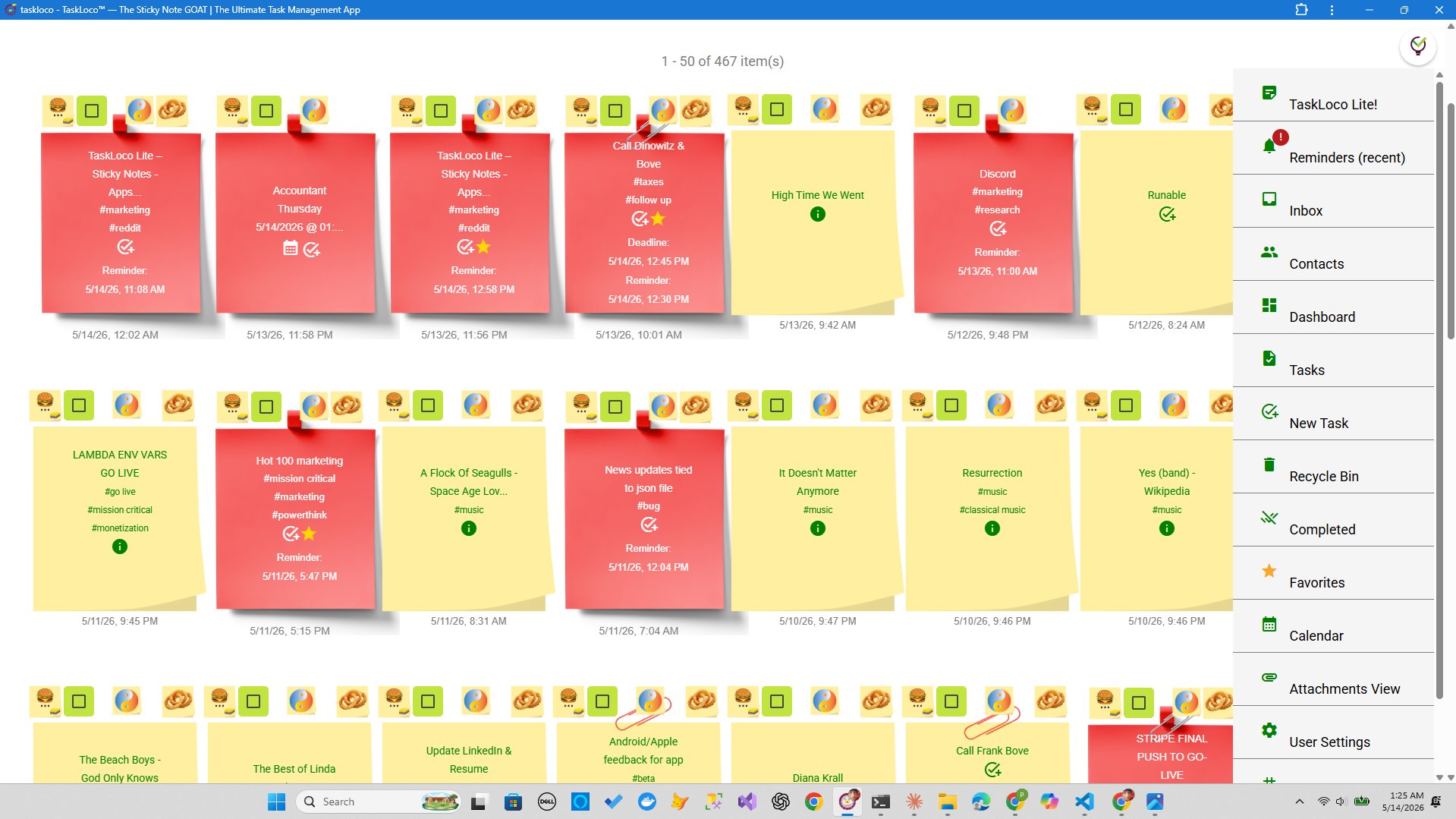
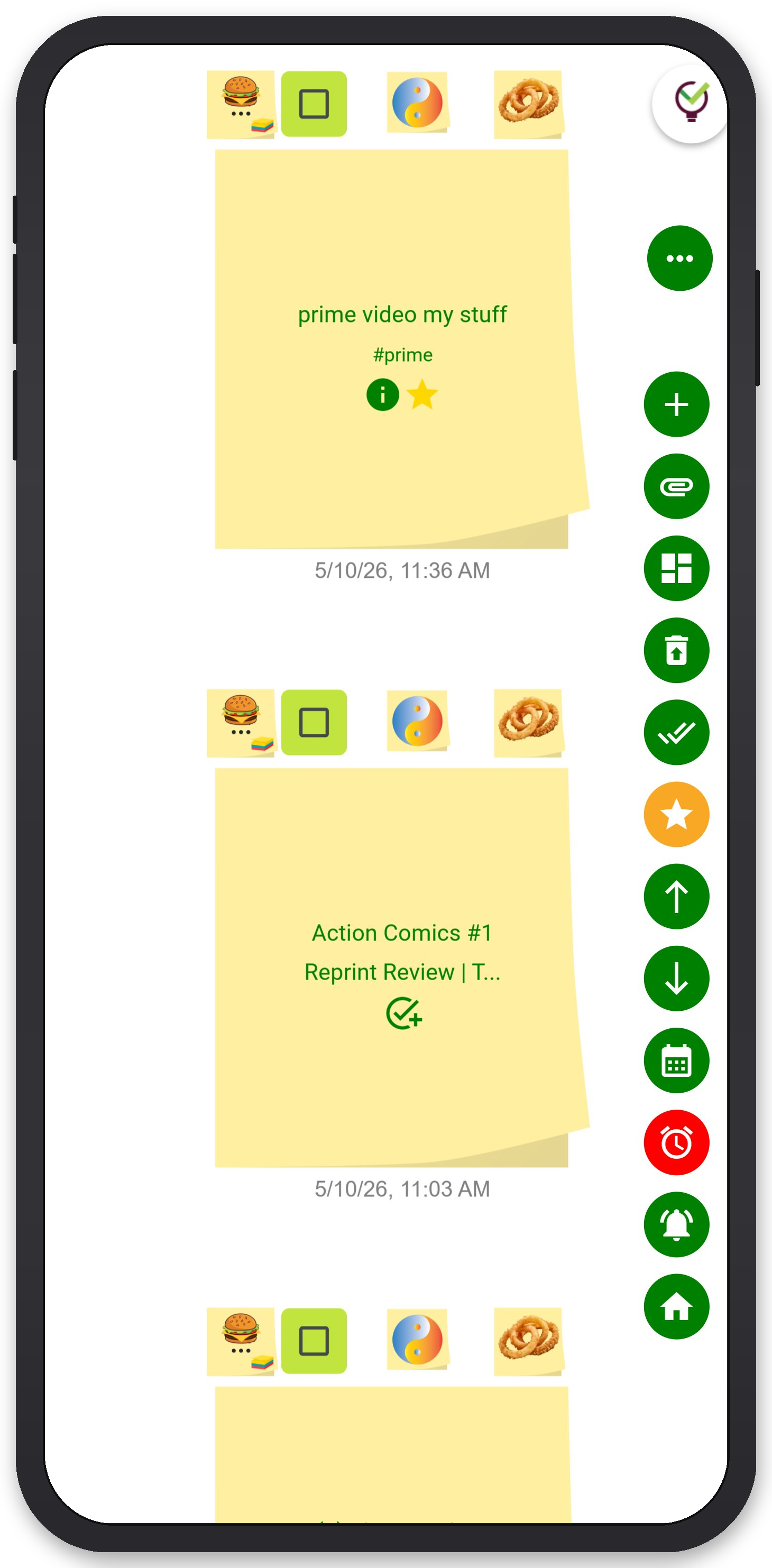
TaskLoco started as a sticky note app — not a project manager, not an enterprise platform, not a team wiki. That origin matters, because every design decision reflects it. The default view is a wall of notes, not a list. Adding a note takes one tap or one click. There's no required structure, no mandatory fields, no project you have to slot things into before you can write.
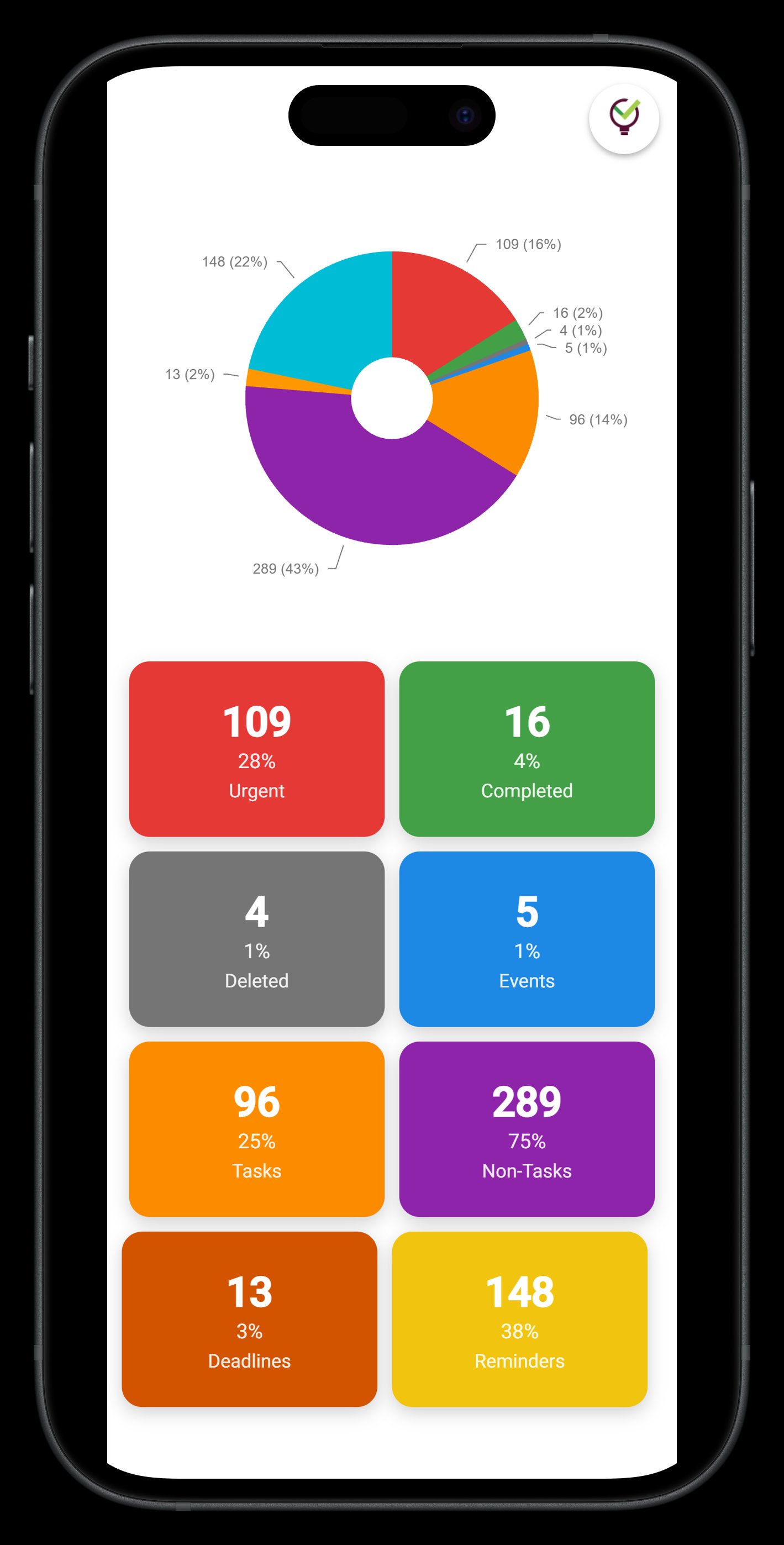
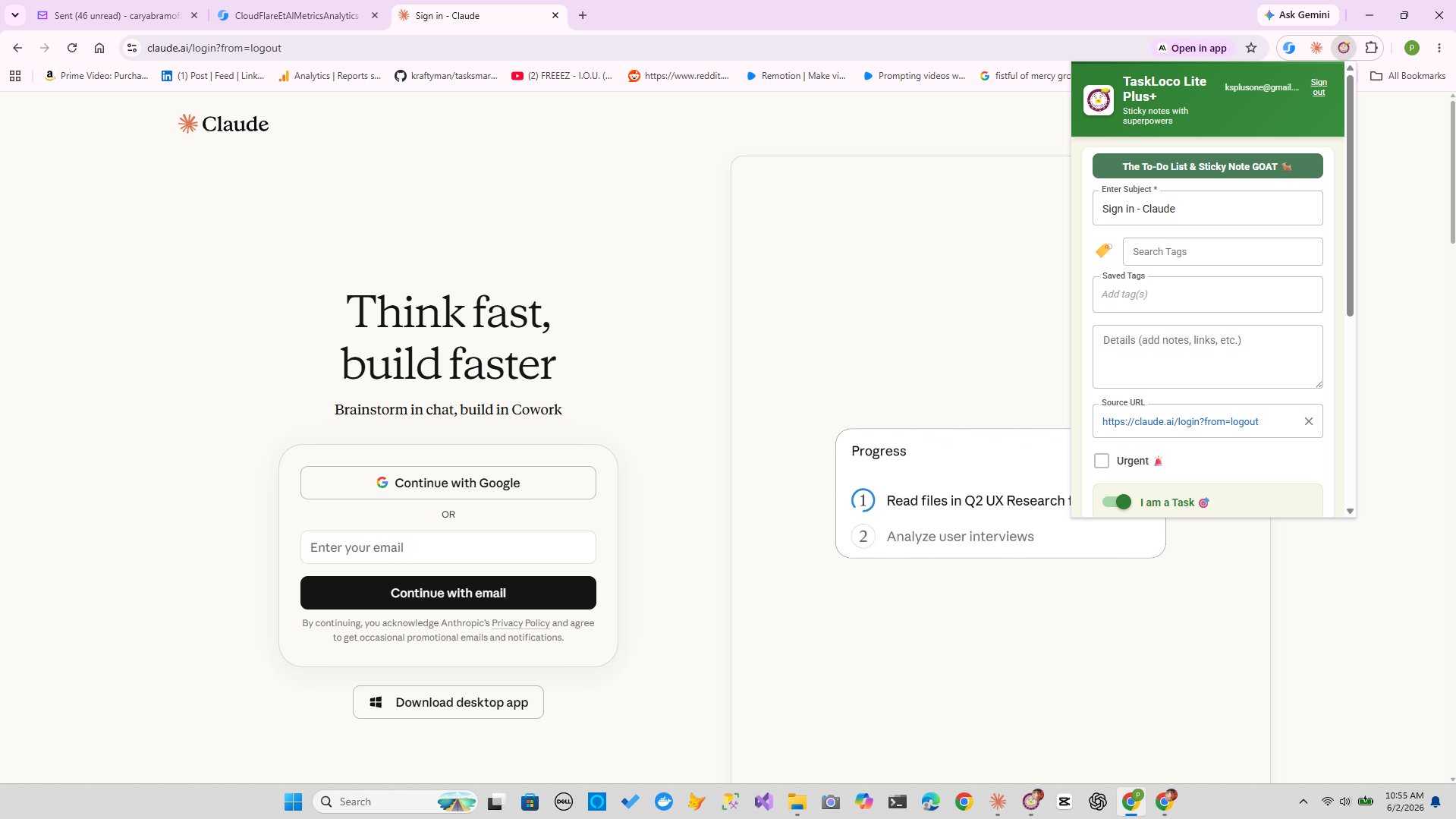
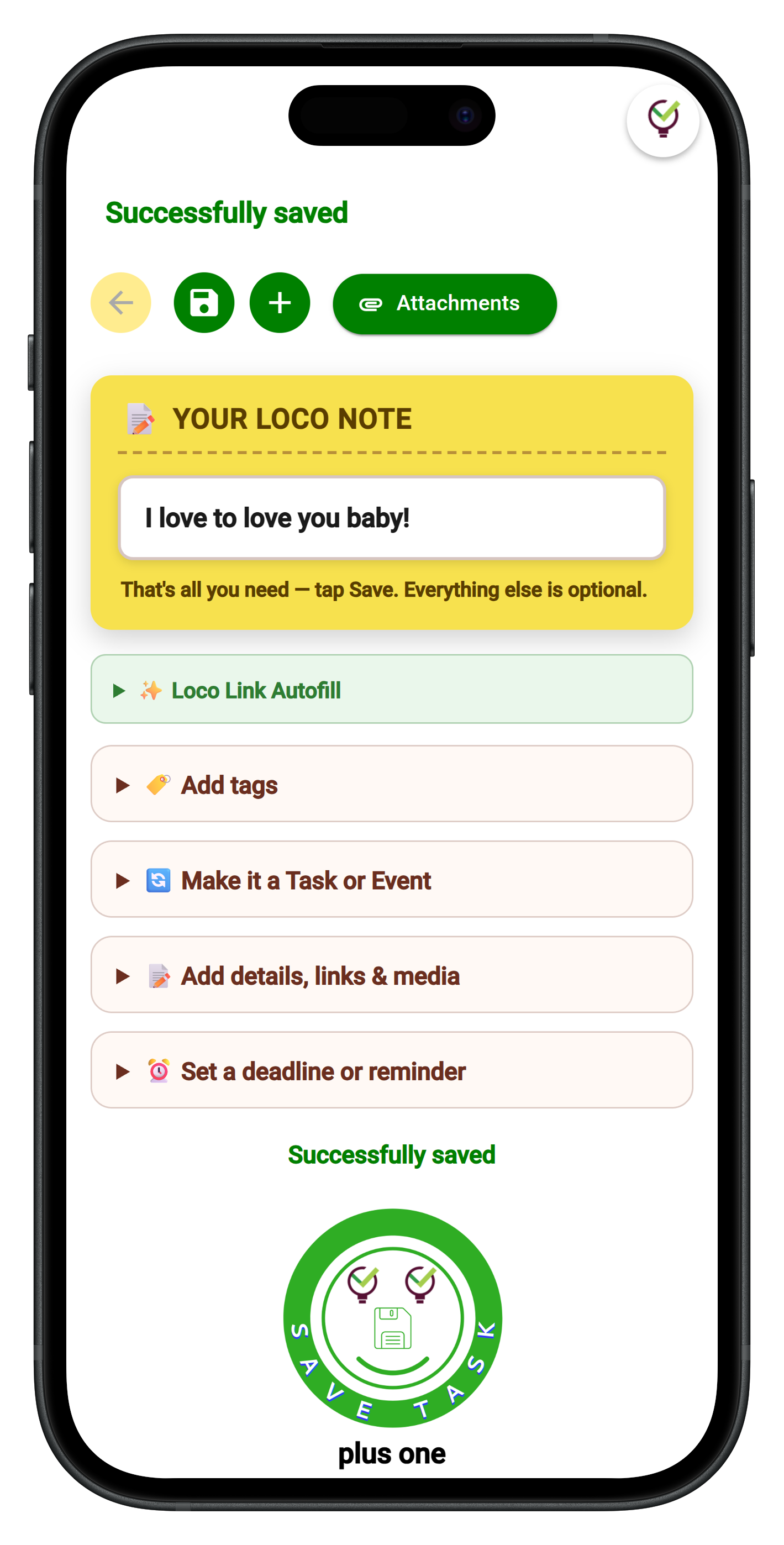
For the low-bar starting habit specifically, TaskLoco removes the two biggest friction points: capture speed and visibility. The Chrome extension lets you grab any webpage in one click — the page title, the URL, and any text you highlight lands in a new note instantly. No copy-paste, no context switching. For mobile, TaskLoco Lite is a completely anonymous native app — no sign-in, no account required — that stores up to 20 notes directly on your device. Nothing between you and the note.
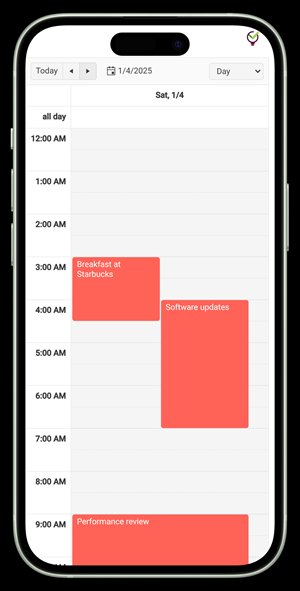
TaskLoco Premium builds on that foundation with the features that turn captured notes into completed work: unlimited notes so you never have to delete to make room, reminders delivered as push notifications that deep-link back to the original note, 10GB of file attachments so context stays with the task, a calendar view so time-sensitive notes have a home, and full team sharing where shared notes work like email — the recipient clones the note and makes it their own, with no permissions or access levels to manage.
TaskLoco Lite Plus+ sits between the free native app and Premium: free, web-based, sign in with Google, syncs across all your devices, and stores up to 30 notes. It's a real working tool — not a trial. The Chrome extension is included free at every tier.
TaskLoco Premium is regularly $9.99/month per person. Right now, charter members can lock in 50% off the regular price — forever. That means $4.99/month per person today. And if our price ever goes up, you still pay half. Always.
Code CHARTER50 auto-applies at checkout. First 500 spots only — once they're gone, this offer is gone permanently. Act fast while spots last.
Every Premium subscription includes unlimited notes, 10GB file storage, reminders, calendar, and team sharing. Each team member requires a separate subscription. 7-day free trial — no charge until day 8. Cancel anytime.
Free Options: TaskLoco
TaskLoco Lite
- Native iPhone & Android app
- Completely anonymous — no sign-in
- Data stays on your device
- Up to 20 notes
- Free forever
TaskLoco Lite Plus+
- Web app + Chrome extension
- Sign in with Google
- Wall syncs across all devices
- Up to 30 notes
- Free forever
Lock In 50% Off — Forever
7-day free trial. No charge until day 8. CHARTER50 auto-applies at checkout.
🔒 Lock In My Charter SpotSee TaskLoco in Action
Frequently Asked Questions
What does 'lowering the bar' mean in productivity?
It means reducing the activation energy required to begin — not reducing the quality of the finished work. The bar you're lowering is the threshold for taking the first action, not the standard for the final result. A half-formed note captured immediately is worth more than a perfectly written task that never gets recorded because the moment passed.
Why do I keep procrastinating even when I know what I need to do?
Usually because the gap between knowing and starting feels larger than it actually is. The brain treats 'start the project' as a single massive action when it's actually a hundred small ones. The fix isn't motivation — it's shrinking the first action until it's almost embarrassingly small. Write one bad sentence. Open one file. Put one sticky note on your wall. Movement generates momentum in a way that thinking about movement never does.
Is a sticky note system actually serious enough for real work?
Yes — and for most people, it's more effective than the complex systems they abandon after two weeks. Sticky notes enforce simplicity: one thought per note, visible at a glance, easy to reorganize. The limit forces clarity. The visibility keeps things from falling off the radar. TaskLoco Premium adds reminders, file attachments, calendar view, and team sharing on top of that foundation — so it scales with you without requiring a complete workflow overhaul to start.
How is TaskLoco different from a regular notes app?
The core difference is the wall view — TaskLoco displays your notes spatially, like a physical sticky note board, rather than hiding them in a scrolling list. That visibility changes how you interact with your work. You can also add reminders that arrive as push notifications and deep-link directly back to the note, attach files, use a calendar view, and share notes with teammates. TaskLoco Lite is completely anonymous — no account, no sign-in. Lite Plus+ syncs across all devices for free. Premium adds unlimited everything.
What TaskLoco plan should I start with?
Start with whichever removes the most friction right now. If you want zero commitment, zero account, and a native iPhone or Android app: TaskLoco Lite is completely free and anonymous — 20 notes stored on your device, no sign-in ever. If you want sync across devices and up to 30 notes for free: Lite Plus+ is the web app, sign in with Google. If you need reminders, file attachments, unlimited notes, calendar, and team sharing: that's Premium. $9.99/month per person (currently $4.99/month per person for first 500 charter members with code CHARTER50)
Do TaskLoco reminders work on mobile?
Yes. Reminders in TaskLoco Premium are delivered as push notifications to your phone and computer. Each notification deep-links directly back to the original note — so you tap the alert and you're already looking at the task, no hunting required. Optional email notifications are also available. SMS is an optional add-on.
Can I use TaskLoco for team work, or is it just personal?
Both. TaskLoco Premium includes full team sharing — it works like email, where you share a note and the recipient can clone it and make it their own. No permissions to configure, no access levels to manage. Each team member needs their own Premium subscription. It's designed for real collaboration without the overhead of enterprise project management tooling.
Born in Brooklyn. Powered by AWS. Your data stays yours.
TaskLoco is available on iPhone, Android, Chrome, and every web browser.